






“Take heed to yourselves: If thy brother trespass against thee, rebuke him; and IF HE REPENT, forgive him. 4 And if he trespass against thee seven times in a day, and seven times in a day turn again to thee, saying, I repent; thou shalt forgive him.” Luke 17:3-4
Though we should forgive from our hearts those who harm us, forgiving seems to be spoken of here as concerning bringing them back into fellowship. It’s one thing to forgive someone in your heart and another thing to continue to spend time and energy on a relationship with them.
Of this passage, John Wesley wrote:
“If he sin against thee seven times in a day, and seven times in a day return, saying, I repent – That is, if he give sufficient proof that he does really repent, after having sinned ever so often, receive him just as if he had never sinned against thee. But this forgiveness is due only to real penitents. In a lower sense we are to forgive all, penitent or impenitent; (so as to bear them the sincerest good will, and to do them all the good we can;) and that not seven times only, but seventy times seven.”
Wondering about reconciling with someone? You will know when someone should be back in your life when they truly repent and openly confess their sins before the LORD and their offence against you. And, until they do this, you can know they have not repented before the LORD. WHEN they truly repent before the LORD, He will send them back to you to sincerely admit they were wrong. Fruit.
God requires that we forgive and yet, He also instructed us not to give our pearls to the swine – don’t put yourself in harms way unnecessarily by remaining in fellowship with those who have not truly repented and therefore are under the influence, the control of and operate according to the agenda of their father, the devil – to steal, to kill, and to destroy (Mark 11:25-26; Matthew 7:6; John 10:10).
“Neither give place to the devil.” Ephesians 4:27
God’s Word commands us to forgive and yet, this is qualified. That’s not all it says.
QUESTION RECEIVED:
“Are we to still forgive them even if they never repent to God or apologize to us? What is true forgiveness? The world has their ways but I want to know what it really looks like.”
REPLY:
Yes we must forgive and yet, receiving them back into our lives seems to be another issue.
We must of necessity view all things from the full counsel of God’s Word. Remember: It was the LOVE and MERCY manifested to the unrepentant fornicator which was the goodness of God which led him to repentance, lest he perish irrevocably in hell.
In Luke 17, Jesus seems to teach that we are not to let some offending brother back until they repent. He is not to be shown the LORD’s acceptance until he truly repents and that will always bring forth making amends with those he’s offended (fruit). Offending one of God’s children is punishable by eternal damnation:
“Then said he unto the disciples, It is impossible but that offences will come: but woe unto him, through whom they come! 2 It were better for him that a millstone were hanged about his neck, and he cast into the sea, than that he should offend one of these little ones.” Luke 17:1-2
This teaching from our LORD seems to coincide with His teaching about not giving that which is holy to dogs (Matthew 7:6). Church Discipline
Forgive unconditionally from the heart yes and yet there’s the Luke 17:1-4 teaching.
PERHAPS we should today consider that God is attempting to protect His children. Following His wisdom, His Word, will do just that (Proverbs 30:5). Those who allow a swine, a heretic, to remain in close range, will again be stabbed in the back by that swine (Matthew 7:6; Titus 3:10). Swine – unrepentant evil doers are to be rejected (Titus 3:10). In this life, there are people you will have to forgive and also, to get out of your life, to keep them at a distance. Beware of the Swine
“Years ago I was hurt by a certain person, and when I found myself in a prayer meeting with that one lady I felt I should ask her for forgiveness if I had offended her someway and the Lord spoke clearly and immediately, saying, ‘Do not cast your pearls before swine’ and stopped me seconds before I asked.” Anita A.
Perhaps we can say that if we forgive too early, we may hurt someone – prevent them getting right with God due to the divine working of repentance not being able to take its full course.
“Now I rejoice, not that ye were made sorry, but that ye sorrowed to repentance: for ye were made sorry after a godly manner, that ye might receive damage by us in nothing. 10 For godly sorrow worketh repentance to salvation not to be repented of: but the sorrow of the world worketh death.” 2 Corinthians 7:9-10
Repentance is a yielding to the conviction of the Spirit upon our conscience. Repentance is a work of God and yet GOD requires that we hearken to it. Repentance is an absolute work of God and yes He made it an essential (Luke 13:3, 5, etc.). Repentance is the very first word of the Gospel (Matthew 3:2; 4:17; Acts 2:38; 3:19; 17:30-31, etc.).
“True repentance is actually speaking of firstly an internal change more than outward expression or external change of behavior.”
The inward change by the working of the Spirit of God will always bring the fruit of that change on the outward (Matthew 3:7-10). In this case that would bring forth the fruit of an apology, readily confessing ones sin, wrongdoing – a leaving of ones gift before the altar until things are cleared up (Matthew 5:23-24; James 5:16).
“Now I rejoice, not that ye were made sorry, but that ye sorrowed to repentance: for ye were made sorry after a godly manner, that ye might receive damage by us in nothing. 10 For godly sorrow worketh repentance to salvation not to be repented of: but the sorrow of the world worketh death.” 2 Corinthians 7:9-10
Repentance is a gift and yet that gift must be received and CAN be rejected:
“And the servant of the Lord must not strive; but be gentle unto all men, apt to teach, patient, 25 In meekness instructing those that oppose themselves; if God peradventure will GIVE (it’s a gift) them repentance to the acknowledging of the truth; 26 And that they may recover themselves out of the snare of the devil, who are taken captive by him at his will.” 2 Timothy 2:24-26
Remember, when someone sins against God by deliberately harming a one of God’s people, it’s only because their own heart is not right with God.
The consequences for harming one of Christ’s people is severe and will be eternally irrevocably if that sinning soul isn’t brought to repentance. Jesus issues this severe warning:
“But whoso shall offend one of these little ones which believe in me, it were better for him that a millstone were hanged about his neck, and that he were drowned in the depth of the sea.” Matthew 18:6
When a professing believer wrongs you, this is no excuse to retain hatred in your heart toward them even though there’s a separation and before there’s a reconciliation or restoring of fellowship. God will not forgive us lest we forgive others from our hearts (Matthew 6:14-16; 18:21-35; Mark 11:25-25).
God is not going to bless our lives unless we are willing to sincerely admit our sins, repent and confess them, and make amends (restitution) with anyone we’ve harmed (Proverbs 28:13). In the divine economy, there’s no such thing as being right with God when you’ve done another person wrong, haven’t repented, and haven’t made amends for what you’ve done. Such a person will be outside of the will and blessings of God until he makes things right with God and man (Matthew 5:23-24; 7:12; 22:37-39).
God will not answer the prayer of any person who does not honor and obey His Word and if a person has an outstanding offense He wants them to clear up these matters (Proverbs 28:9, 13).
The LORD requires that His people “examine” and “judge” themselves.
“Examine yourselves, whether ye be in the faith; prove your own selves. Know ye not your own selves, how that Jesus Christ is in you, except ye be reprobates? 2 Corinthians 13:5
Examine and honest judge yourself and amend your ways or God will judge you.
“For if we would judge ourselves, we should not be judged. 32 But when we are judged, we are chastened of the Lord, that we should not be condemned with the world.” 1 Corinthians 11:31-32
Divine wisdom and mercy would have the offending, backslidden believer to be restored and He has chosen His people to be His “ministers of reconciliation” in such matters due to desiring that none should perish (2 Corinthians 5:18; 2 Peter 3:9).
When the believer forgives and restores an unrepentant sinning saint, giving that approval, they short circuit the repentance needed in the offending party and without which God will not forgive them. So, they stand in danger of hell fire.
Also, when we restore a departed saint who has not truly repented before God and rendered the fruit of true repentance by sincerely admitting and apologizing to us, we bring a “swine” back into our lives who will certainly stab us in the back again (Matthew 7:6). Jesus instructed us not to do this.
When you allow an offending person back into your life without them having truly repent and show that by their fruits, you have brought a swine in to wreak more havoc.
If you seek to reconcile with someone who has clearly attacked you without their real, sincere repentance before God and confession to you of their wrong doing, it’s just going to be a patch job that will again end tragically. They are still a “swine” until after they hearken to the LORD’s conviction and repent.
Jesus instructed us:
“Give not that which is holy unto the dogs, neither cast ye your pearls before swine, lest they trample them under their feet, and turn again and rend you.” Matthew 7:6
“Wait, the Bible says we must forgive no matter what.”
Good point. Can we seek to sort this out as we seek out the whole counsel of Scripture? Jesus says:
“So likewise shall my heavenly Father do also unto you, if ye from your hearts forgive not every one his brother their trespasses.” Matthew 18:35
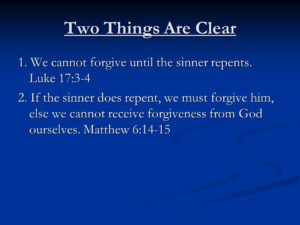 This is in context with a man who was wronged and humbling asking for forgiveness. Read Matthew 18:21-35 for the context.
Are we to forgive no matter what or are we to forgive freely, unlimited those who truly repent? Perhaps “forgive” in this context below is dealing with restoring that person back to fellowship.
“IF he repent”
“Take heed to yourselves: If thy brother trespass against thee, rebuke him; and IF HE REPENT, forgive him. 4 And if he trespass against thee seven times in a day, and seven times in a day turn again to thee, saying, I repent; thou shalt forgive him.” Luke 17:3-4
The words of Jesus immediately preceding the above passage are very important….
“Then said he unto the disciples, It is impossible but that offences will come: but woe unto him, through whom they come! 2 It were better for him that a millstone were hanged about his neck, and he cast into the sea, than that he should offend one of these little ones.” Luke 17:1-2
The LORD is a God of Restoration! | God’s Desire to have Unity Among the Brethren
The Miracle Working Power of God Manifesting in Your Daily Life [podcast]
Articles
PURGATORY: CATHOLIC FRAUD [podcast]
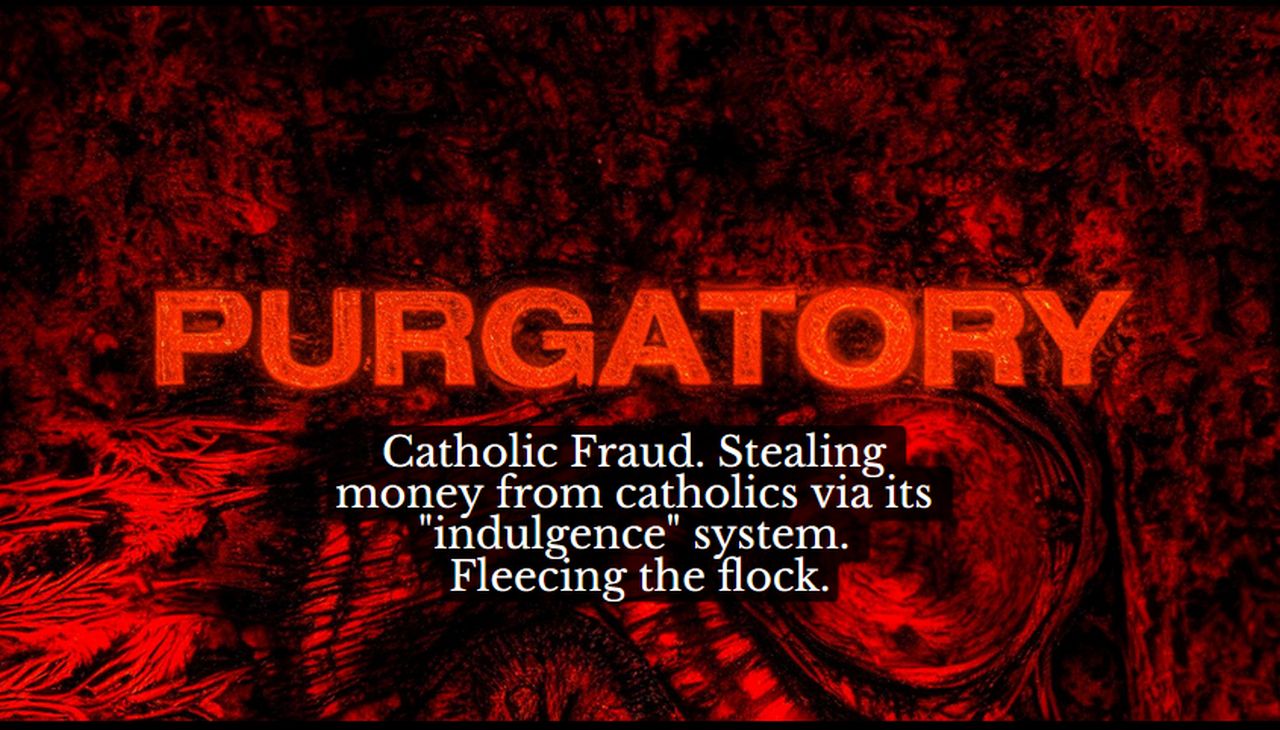
Purgatory is never once mentioned in God’s Word and is a blatant and antichrist denial of the efficacy of the precious blood of Jesus Christ.
“One of the scandalous practices of the Catholic church was the sale of “indulgences” to raise money. Indulgences allowed Catholics to buy forgiveness for their sins with cold, hard cash. Most remember that indulgences were one of the primary reasons Martin Luther made the cataclysmic decision to leave the Catholic church and start the “Protestant” movement. However, few realize that indulgences were used by the Catholic church as a primary source of revenue for over a thousand years, and that the practice did not end as a result of Luther’s protests:
“The cost of running the church’s kingdom while maintaining the profligate lifestyle of one of Europe’s grandest courts pressured the Vatican always to look for ways to bring in more money. Taxes and fees levied on the Papal States paid most of the empire’s basic expenses. The sales of produce from its agriculturally rich northern land as well as rents collected from its properties throughout Europe brought in extra cash. But over time that was not enough to fuel the lavish lifestyles of the Pope and his top clerics. The church found the money it needed in the selling of so-called indulgences, a sixth-century invention whereby the faithful paid for a piece of paper that promised that God would forgo any earthly punishment for the buyer’s sins. The early church’s penances were often severe, including flogging, imprisonment, or even death. Although some indulgences were free, the best ones — promising the most redemption for the gravest sins — were expensive. The Vatican set prices according to the severity of the sin and they were initially available only to those who made a pilgrimage to Rome.” Delancyplace.com
“And as it is appointed unto men once to die, but after this the judgment: 28 So Christ was once offered to bear the sins of many; and unto them that look for him shall he appear the second time without sin unto salvation.” Hebrews 9:27-28
Notice that after a person dies, “after this the judgment” and not purgatory!
Jesus Christ, the only begotten Son of God died for, paid the full and complete price for all sin one time on the cross and anyone believing in purgatory spits in the face of a holy God, openly claiming that the sacrifice of Christ was not enough. Such openly deny Christ and are antichrists.
—— CATHOLIC PURGATORIAL FAIRY TALE SCAM ….. ABSOLUTE BLASPHEMY AND OPEN DENIAL OF THE EFFICACY OF THE VERY BLOOD OF JESUS CHRIST. PURE GIMMICK – $–PAY YOUR DEAD RELATIVE OUT OF PURGATORY? The Catholic indulgence system is completely diabolical and antichrist. This system teaches that living relatives can $ pay $ their dead relatives out of purgatory (no such thing) by giving monies to the Catholic church. This system wasn’t even initiated until the twelfth century by the then pope in order to raise money for the financially hurting Roman Catholic church. This delusional lie, myth, and exploitation is antichrist in that it brazenly denies the efficacy and power of the blood of Jesus shed once, and good for all time (John 19:30; Hebrews 10:12).
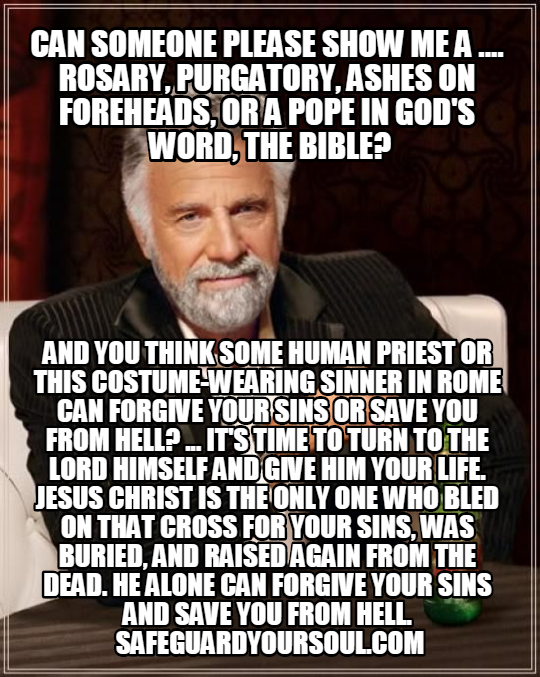
***IN THE MIDDLE AGES, A CERTAIN POPE AT THAT TIME INVENTED THE TEACHING OF PURGATORY TO RAISE $MONEY$ FOR THE FINANCIALLY HURTING ROMAN CATHOLIC CHURCH.
IS PURGATORY A CATHOLIC FRAUD? IS THERE EVEN ONE MENTION OF A purgatory in the Bible? Could it be that PURGATORY is a mere scheme to obtain money from poor souls who pay the Catholic church $$$ thinking they are getting some loved one out of a place that doesn’t even exist – purgatory? THE INVENTION OF PURGATORY is but one of the diabolic devices the aCtholic church holds over its people to deceive, delude and ultimately destroy them in eternal damnation.
Heaven and hell (as eternal destinations) appear approximately 600 times in God’s Word and purgatory appears no where – not even once in Holy Scripture.
$$$–Catholic “indulgences” are monies/revenues paid to the Catholic church to get people out of “purgatory” – a place that doesn’t even exist – THIS IS FRAUDULENT!!!
$$$–Purgatory is nothing less than a money-making scam of the Catholic church exploiting its own people$$$.
Does not purgatory exploit the precious Catholic people FOR WHOM CHRIST DIED TO COMPLETELY FORGIVE?
Is purgatory a money-making $$$ lie? – through the sale of Catholic “indulgences”??
 The most blasphemous element about this fraud is that PURGATORY DENIES CHRIST’S REDEMPTION by saying His blood was not enough to pay for ALL sins.
Purgatory is simply another Catholic lie.
If God named “Heaven” 582 times and “hell” 54 times by name in His Word, He certainly would have named “purgatory” (by name) if such a place existed.
Purgatory IS a big deal because the Roman religion stands or falls on whether it is teaching God’s holy Word which is final authority.
IF “THE BLOOD OF JESUS CLEANSES US FROM ALL SINS” (1 John 1:7), WHY WOULD GOD INSTITUTE A SO-CALLED PLACE OF “PURIFICATION” NAMED PURGATORY? HE SIMPLY DIDN’T. “the blood of Jesus Christ his Son cleanseth us from ALL sin” (1 John 1:7).
Only the blood of Jesus applied by the grace of God and faith can save from eternal damnation.
Jesus says that justification is instantaneous (John 6:47).
IS PURGATORY A MONEY-MAKING SCHEME?
PURGE-atory is a lie because it purports that once a “good Catholic” dies, he is then PURGED in an intermediate state. Purgatory is blasphemy against the finished work of Jesus Christ who stated on the cross that “It IS finished” (John 19:30). The teaching of purgatory is just one more way the roman church denies the total sufficiency of the cross of Jesus Christ our LORD causing millions to be deluded and lost and without true love and peace that only God can give as a person comes to Him the way He prescribed – in His Word – Jesus Christ, the only begotten Son of the Father.
CHRIST’S BLOOD IS GOD’S MERCY.
Jesus is the only Hope God gave us for forgiveness of sins. Jesus stated, “The Son of man hath power ON EARTH (not in purgatory) to forgive sins” (Matthew 9:6).
PURGATORY EXISTS NOWHERE IN HOLY SCRIPTURE IN WORD NOR CONCEPT.
THE CATHOLIC CHURCH IS A WASTELAND OF IDOLS.
WHERE ARE SINS FORGIVEN? ON EARTH OR “PURGATORY”??? Jesus stated, “The Son of man hath power ON EARTH to forgive sins” (Matthew 9:6).
WHO ARE SINS FORGIVEN BY???? Jesus stated, “The Son of man hath power ON EARTH to forgive sins” (Matthew 9:6).
1 John 1:7 “the blood of Jesus cleanses us from ALL sins.” No need for a so-called “purgatory” OR CATHOLIC PRIEST.
THE BIBLE CLEARLY TEACHES US THAT THE PUNISHMENT FOR ALL OUR SINS WAS POURED OUT UPON CHRIST ON THE CROSS – ONE TIME, 2,000 YEARS AGO – THEY ARE DEALT WITH COMPLETELY FOR THOSE WHO ARE BORN AGAIN.
DID GOD DO A COMPLETE AND “FINISHED” WORK THROUGH CHRIST? ARE YOU CALLING HIM A LIAR? JESUS SAID, WHILE DYING ON THE CROSS FOR US “IT IS FINISHED (COMPLETE)” (John 19:30).
DID CHRIST FAIL IN HIS MISSION? DO WE NOW NEED SOME COSTUME-WEARING PRIESTHOOD OF SODOMITES TO HELP GOD OUT AND TELL US WHAT TO DO? ABSURD!
ARE YOU CALLING THE SON OF GOD A LIAR?
“It IS finished” simply means that the total and complete price for the sins of the whole world were paid for “one time” on the cross by Christ alone (John 19:30; Heb. 10:12-14).
ONLY JESUS CAN CLEANSE: “Peter saith unto him, Thou shalt never wash my feet. Jesus answered him, If I wash thee not, thou hast no part with me” (John 13:8).
ONLY JESUS CAN WASH AWAY SINS, NOT PURGATORY. JESUS TOLD PETER: “If I wash thee not, thou hast no part with me” (John 13:8).
OFFICIAL CATHOLIC TEACHING/DOGMA:
The following statements can be verified by consulting volumes 1 and 2 of the book, Vatican Council II printed by Costello Publishing Co., Northport, New York. Austin Flannery, O. P., is the general editor and each volume contains the Nihil Obstat and the Imprimatur. The editions are: 1984 (Vol. 1) and 1982 (Vol. 2).
This most recent Roman Catholic Council, which closed on December 8, 1965, is the current official stand of Roman Catholicism. The following quotes are that official stand. (Bold print has been used for emphasis. Furthermore, brackets have been used to increase clarity.)
(10) “We believe that the souls of all those who die in the grace of Christ — whether they must still make expiation in the fire of Purgatory, or whether from the moment they leave their bodies they are received by Jesus into Paradise like the good thief — go to form that People of God ….” (Vol. 2, p. 394)
(12) “The doctrine of purgatory clearly demonstrates that even when the guilt of sin has been taken away, punishment for it or the consequences of it may remain to be expiated or cleansed.” (Vol. 1, p. 64)
(d) “If anyone says that after the reception of the grace of justification the guilt is so remitted and the debt of eternal punishment so blotted out to every repentant sinner, that no debt of temporal punishment remains to be discharged either in this world or in purgatory before the gates of heaven can be opened, let him be anathema.” (ibid., p. 46 — Sixth Session, Chapter XVI, Canon 30)
1 Corinthians 3 is where Paul is simply using this imagery to show that the works true believers did while on earth that were not truly out of the right heart motive, would not be rewarded.
Have you ever been told in a Catholic church that you could not go to Heaven unless you are “born again”? The Son of God said “Ye MUST be born again” (John 3:7). You can’t go to Heaven without being “born again” – the Bible way.
Purgatory simply is not found in the Bible and actually blatantly contradicts Bible doctrine.
If you are a Catholic defender, please quote the verses verbatim and tell everyone here how many times the word “purgatory” appears in the Bible.
Purgatory is a mere proofless myth – invented to steal money from the Catholic people.
Purgatory is a fool’s hope – eternal hell awaits all who die without being born again (the Bible way).
The Bible never mentions purgatory … it’s a myth and wasn’t invented till the 12th century in order to scam money from the Catholic people by selling indulgences.
Hell is the eternal and unending judgment of the holy God of Heaven and earth upon all those who do not repent, falling upon His mercy through the blood of Jesus Christ – BEFORE THEY LEAVE THE EARTH.
We are only made holy by God through Jesus’ blood – THIS IS THE GOSPEL OF JESUS CHRIST – not some mythical and unbiblical place called “purgatory.”
THOSE WHO DISREGARD THE BLOOD OF CHRIST MUST SUFFER ETERNAL PUNISHMENT IN HELL: “Of how much sorer punishment, suppose ye, shall he be thought worthy, who hath trodden under foot the Son of God, and hath counted the blood of the covenant, wherewith he was sanctified, an unholy thing, and hath done despite unto the Spirit of grace?” (Hebrews 10:29).
THE WORD OF GOD IS THE FINAL AUTHORITY NOT THE ROMAN CHURCH – who are you going to trust? God or the Catholic church?
What is there to understand other than the Catholic teaching of purgatory is a blatant denial of the sufficiency of Christ’s blood which was shed to pay for ALL sins one time on the cross (John 19:30; Heb. 10:12, etc.). While dying on the cross for our sins, Jesus said “It IS finished” which simply means that all the sins of mankind were paid for in full by His blood and there was therefore no need ever for any other sacrifice for sin – including the vile and vain idea that man could ever pay for his own sin debt in a place that doesn’t even exist (“purgatory”).
PURGATORY IS JUST ONE OF MANY exploitational devices of the Catholic church. Purgatory exploits the Catholic people, leading them to destitution and despair and ultimately damnation. These poor souls, most of which are in dire straits financially, to afford a funeral are then asked to give $$$money$$$ to the Roman church (which is already the richest organization in the world). How can this be!
JESUS also said “Sanctify them through thy Word, the Word is truth” (John 17:17).
If Jesus’ blood totally cleanses of all sins those who believe upon Him, what need would God have for a purgatory? HE simply never mentioned such a place – it is a Catholic myth – A LIE FROM HELL.
What is your faith built on? God’s Word/truth or religious myth? Your eternity is in the balance – better check it out;)
WILL YOU TRUST THE CONFUSED & CHANGING TEACHINGS OF SINFUL MEN OR THE CLEAR AND UNCHANGING TRUTHS OF A LOVING AND HOLY GOD WHOSE WORD NEVER CHANGES?
JESUS WARNED US TO “Beware of false prophets, which come to you in sheep’s clothing, but inwardly they are ravening (devouring) wolves” (Matthew 7:15).
Catholic Church Exposed | Making Peace with God | Born Again: What Does that Mean?
Sign up for free email devotional HERE… The Moments with My Master email devotional is sent out for the edification of the body of Christ.
Support | STORE | Podcasts | The Return of Christ | Stewardship | Where to Give and Where Not to Give | Fruit Abounding to Your Account! | Consider Your Ways [podcast] | Consider and Build [podcast] | Holes in Your Money Bags? [podcast] | Dollar Dialogue | Jesus Sat Over Against The Treasury [podcast] | Escaping Sodom! | Waste | Stewardship | Giving



Abiding
“Lord, Teach us to Pray” [podcast]
“Truly our fellowship is with the Father, and with his Son Jesus Christ.” 1 John 1:3
Prayer is simply communing with God.
“One of his disciples said unto him, Lord, teach us to pray.” Luke 11:1
“Lord, teach us to pray.” Christ’s disciples today should ask the LORD to “teach us to pray.” The disciples called on Jesus to teach them to pray—to have a prayer life, to live a life of prayer, to commune with Him and the Father perpetually. Christ answered them and us by giving the whole Church a model prayer to be followed in spontaneous and joyful relationship. Here it is:
“And it came to pass, that, as he was praying in a
certain place, when he ceased, one of his disciples
said unto him, Lord, teach us to pray, as John also
taught his disciples. 2 And he said unto them,
When ye pray, say, Our Father which art in
heaven, Hallowed be thy name. Thy kingdom
come. Thy will be done, as in heaven, so in earth. 3
Give us day by day our daily bread. 4 And forgive
us our sins; for we also forgive every one that is
indebted to us. And lead us not into temptation;
but deliver us from evil.” Luke 11:1-4
When addressing the remove of the words “Our” and “which art in heaven” by the fake, the corrupted “bibles,” one writes asks:
“Is your Bible geared to glorify antichrist? Is your Bible going to be used by antichrist to convince you he is Jesus?” unknown
Jesus is coming—ready or not.
“Watch and pray, that ye enter not into temptation: the spirit indeed is willing, but the flesh is weak.” Matthew 26:41
Prayer is to spiritual life what breathing is to the natural life. If you stop breathing, you die. If we don’t “pray without ceasing” we will not be in the will of God, will not be obeying God, and will fall into temptation, into sin.
“Pray without ceasing.” 1 Thessalonians 5:17
You cannot and will not overcome sin and Satan, the world, and the flesh, without living a life of prayer.
Prayer: Father in Heaven, in the name of Jesus Christ, I ask You
to teach me to pray. Here and now, I lay my life into Your holy
hands afresh. You must increase, and I must decrease. In the
name of Jesus, please bless this life to be dead and buried and
raised up by You, LORD. In Jesus’ name. Amen.
Support | STORE | Podcasts | Jail/Prison Ministry | Mexico Mission here | All Ministry Updates | Because You Care Page | The Greatest of these is Charity | Be Ready in the Morning [podcast] | The Sure Mercies of David [podcast] | That Repentance and Remission of Sins should be Preached [podcast] | At His Feet | Prepared to be Used of God | Walking with Jesus on His Stated Terms – the Cross | Fasting and Prayer | The Old Man Must be Put Down [podcast] | The 5 Sins That Keep God’s People Out of Their Promised Land [podcast] | What Did Paul Mean by “I Keep Under My Body”? [podcast] | “Jesus the Author and Finisher of our Faith” [podcast] | A Living Sacrifice unto God [podcast] | Departing from Hell Beneath | Prayer




Articles
7 Questions on Justification [podcast]
Justification by grace is the biblical doctrine that God freely declares sinners righteous, not based on their own merits, goodness, or works, but through faith in Jesus Christ’s redeeming work (book of Romans). It is an undeserved act of God’s love (grace) that forgives sins, reconciles believers to God, and imparts new spiritual life.

7 Questions on Justification
- How is fallen mankind made righteous, justified in the eyes of a holy God? (Romans 3:21-28; Galatians 2:16)
- What law makes New Testament believers “free from the law of sin and death”? (Romans 8:2)
- What could the law not do? (Romans 8:3-4)
- What is fulfilled in the life of the born again, Spirit-led New Testament follower of Christ? (Romans 3:31; 8:3-4)
- How does the Law apply to saints? How does it apply to sinners? (1 Timothy 1:9-11)
- Can anyone be justified by the works of the law, by law-keeping? Become intimately familiar with Galatians 2:4-5, 16; 3:1-3; 5:4.
- What is the over-arching divine revelation of Hebrews 8-10?
We owe a debt we cannot pay.
He paid a debt He did not owe!
Anyone who gets saved and then doesn’t drill down into the doctrinal letters and epistles and get grounded in grace through faith justification and living, will be susceptible to being deceived by the antichrist judaizers in our midst. It will cost many of them their eternal souls. There will be not 1 law-keeping judaizing snake in Heaven. If you don’t know that, you are biblically illiterate. Romans. Galatians. Ephesians. Philippians. Colossians. Hebrews.
ANY PERSON who teaches that blood-bought NEW Testament saints, saved by grace through faith, are under the law of Moses is an antichrist! Run!
“O foolish Galatians, who hath bewitched you, that ye should not obey the truth, before whose eyes Jesus Christ hath been evidently set forth, crucified among you? 2 This only would I learn of you, Received ye the Spirit by the works of the law, or by the hearing of faith? 3 Are ye so foolish? having begun in the Spirit, are ye now made perfect by the flesh?” Galatians 3:1-3
MANY who have refused to study and get grounded in the NEW Testament revelation of the saving grace of God in Christ, have now departed from the faith into the hell bound heresy of law keeping!
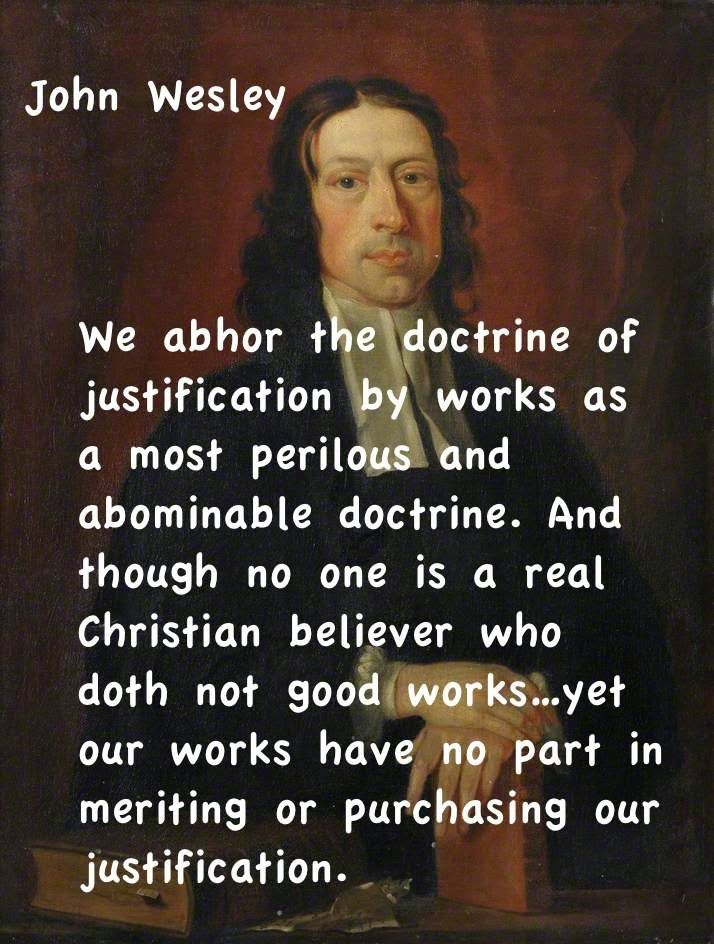
“Be it known unto you therefore, men and brethren, that through this man (Christ) is preached unto you the forgiveness of sins: 39 And by him all that believe are justified from all things, from which ye could not be justified by the law of Moses.” Acts 13:38-39
When Jesus told us the law would not pass away, He was in no way contradicting Himself by saying that one must keep the law to be saved (Matthew 5:17-18). That is a heresy. Paul picks this up in 1 Timothy 1 when he tells us that the law, law keeping is NOT for the righteous – “Knowing this, that THE LAW IS NOTTT MADE FOR A RIGHTEOUS MAN, but for the lawless and disobedient, for the ungodly and for sinners, for unholy and profane, for murderers of fathers and murderers of mothers, for manslayers…” (1 Timothy 1:9)
Dear law-keeper who thinks you can earn your own justification …. There is no justification in the law as pertains to fallen mankind and he cannot possibly fulfill it, and has broken it (Romans 3:10, 23, 28). Works mean nothing until one is first justified by faith in Christ alone and not the vain attempt to keep the whole law perfectly – which no one except Jesus did!
“For whosoever shall keep the whole law, and yet offend in one point, he is guilty of all.” James 2:10
ANY person who is trying to be justified by laughable law-keeping, is 100% a vile Christ-rejecting antichrist lost soul. As He died, shedding His precious blood on that cross for the sins of the world, Jesus Christ the only Messiah declared “It IS finished” which means simply “Paid in FULL.” (John 19:30) Law-keeping devils call Christ a liar, pretending that their own obedience and futile attempt to keep the law is needed for them to be saved – as they declare that Jesus’ sacrifice was not enough, was not sufficient. Blasphemy!
“Who is a liar but he that denieth that Jesus is the Christ? He is antichrist, that denieth the Father and the Son. 23 Whosoever denieth the Son, the same hath not the Father: (but) he that acknowledgeth the Son hath the Father also.” 1 John 2:22-23
“But we believe that through the grace of the Lord Jesus Christ we shall be saved, even as they.” Acts 15:11
Gary Nygard writes:
“Trying to keep ONE IOTA of the law (to be righteous); ala, tithing, sabbath keeping, etc puts you under the bondage of the ENTIRE law and makes the Righteousness of God/GRACE completely and totally ineffective to you!
What you think enhances your walk with God actually DESECRATES it!
The works of the law are the arch enemies of GRACE!
The law worketh WRATH!
Romans 4:15
Because the law worketh wrath!
It makes those who attempt to keep it self righteous religious zealots like Apostle Paul BEFORE he got saved!
He warned the Galatian Church that they were like he was and they better take heed “lest they bite and devour one another.”
And we wonder why our churches have become a dysfunctional self righteous mess?!?”
It’s pride in the hearts of self-righteous men who want to believe THEY are meriting their own salvation by their own works! Nonsense! Read Romans 3-5 over and over and over again!
SAINTS, we are saved by the LORD Himself, by His grace and not our own works. People who are still self-righteous, thinking THEY are earning their own justification, get very uneasy when the saving grace of God is preached. They are not yet students of NEW Testament truth. WE MUST have an ever-deepening biblical revelation of God’s justification by grace and faith! Please begin by memorizing Romans 5:1-2. AND, please read Romans chapters 3-5 prayerfully and over and over, this week.
The highest insult to a holy God is to say that the sacrifice of his only begotten Son is insufficient! Is Christ dead in vain? Did He come for nothing? WHY did Jesus even bother coming if men could be justified by their own futile attempt at law keeping or trying to keep the whole law? James 2:10 anybody?
“I do not frustrate the grace of God: for if righteousness come by the law, then Christ is dead in vain.” Galatians 2:21
IF the law was sufficient, why did God replace it with an infinitely superior covenant, paid for, ratified in the blood of His only begotten Son? (Hebrews 8-10) WHY O WHY did Jesus come and die if the law was sufficient? (Galatians 2:21) Are you denying Christ and don’t realize it – by saying you can personally keep the law while despising His perfect sacrifice as He nailed the law to the cross and took it out of the way in His death? (Colossians 2:14-19) If you name the name of Christ, you’d better study until you understand this – biblical justification! We are saved and overcome by grace and not law – the law simply magnifies sin. Only JESUS can save! Read Romans 6-8 over and over and over, prayerfully.
One is justified immediately upon believing, true saving faith (John 6:47). Then, as that person chooses to abide, to continue with Christ, good fruit will be produced including obedience and yet, those things do not save, they are only the proof that such a person has been saved and is enduring to the end, abiding, continuing in Christ (John 8:31-32; 15:1-6, etc.). Attempting to add the law and keeping it to the NEW Testament message of Christ and His apostles is a gross, insidious addition to the original Gospel. The Old Covenant was infinitely inferior and had to and was replaced by the infinitely superior NEW Covenant which was ratified by the very blood of the one the old merely foreshadowed (Hebrews 8-10, etc.).
Obedience as an expression of our relationship with and love for our Savior – not to save us. We know that saving faith will always result in good works, good fruit (Ephesians 2:8-10, etc.).
“For by grace are ye saved through faith; and that not of yourselves: it is the gift of God: 9 Not of works, lest any man should boast.” Ephesians 2:8-9
The law is not completely removed but rather present to convict, magnify the sin, and bring sinners to the Savior (Galatians 3:24).
“Whosoever committeth sin transgresseth also the law: for sin is the transgression of the law. 5 And ye know that he was manifested to take away our sins; and in him is no sin. 6 Whosoever abideth in him sinneth not…” 1 John 3:4-6
And we keep the “law of the spirit of life in Christ Jesus” we is impossible without the saving grace of God and Holy Spirit (Rom 3:31; 8:2-4). New Testament believers are the only ones able to fulfill the law as did the Savior perfectly. The law demands perfection which it does not provide the divine, saving, enabling grace to fulfill. –“For the law was given by Moses, but grace and truth came by Jesus Christ.” (John 1:17)
ARE YOU justified by sinful self or the Savior? Good luck flashing those “filthy rags” at the Throne of the Almighty who sent His only begotten Son to die for you! (Isaiah 64:6) Righteousness comes from knowing and trusting the only One to ever keep the law perfectly and not from trying to keep the law (Galatians 2:16). Though the law be righteous, there is NO righteousness in the law other than repenting of your own efforts and putting your full trust in the only One who ever kept the law! (Romans 10:4) You deserve judgment and hell – you have nothing to offer God except a deeply repentant, honest, contrite, humble heart! (Psalms 34:18; 51:17; Matthew 5:3) You are a guilty sinner and must trash your religious fig leaves which are a sham at best!
“The aprons of fig leaves speak of man’s attempt to save himself by a bloodless religion of good works.” William MacDonald
True NEW Testament saints are dead to the law (Romans 7:1-4). Law keepers, do-gooders, and moralists are completely self-righteous antichrists who’ve put themselves in place of Jesus Christ as their own savior – denying Christ that place while vainly believing they can earn their own justification before a holy God and Judge of their eternal soul (James 2:10). Anti means “in place of.” Selah (meditate on that) God doesn’t want His children trying to keep the old law but rather to choose to worship, love, trust, and obey Him who is the only One to keep it and then nailed it to the cross and took it out of the way!
Are you under the law or under Christ? Can’t be both (John 19:30). The law for righteousness is over and to deny such is to deny Christ, to deny that His one sacrifice satisfied the righteousness of the law, that the law of Moses demanded, and the claims of the Father’s justice to redeem fallen man (Romans 8:2-4; 10:4).
The law is still in force for the unbeliever and for those who backslide (1 Timothy 1:9-11). Yet Believers are not under the law – the law convicted them and they ran to the foot of the cross, falling prostate upon the mercy of God poured out to us in the blood of Jesus (John 19:30; Romans 5:6-9; 2 Corinthians 5:19, 21). Jesus’ New Testament saints are under the law of Christ who fulfilled the law perfectly and nailed it to the cross and took it out of our way (Colossians 2:14-19). It’s all about JESUS to true New Testament believers, not law.
MAKE NO MISTAKE: The vain attempt of law-keeping for righteousness is the highest insult to the Almighty who sent His only begotten Son to die for our sins! (Galatians 2:21) Torah-Keeping Judaizing Devils Busted and Exposed as Hell Bound Frauds!!!
The “circumcision” Lives to Deny Christ and Destroy Souls!
Titus 1:10-11
“For there are many unruly and vain talkers and deceivers, specially they of the circumcision:
Whose mouths must be stopped, who subvert whole houses, teaching things which they ought not, for filthy lucre’s sake.”
One thing we should take heed from James is:
Acts 15:19-21
“Wherefore my sentence is, that we trouble not them, which from among the Gentiles are turned to God:
But that we write unto them, that they abstain from pollutions of idols, and from fornication, and from things strangled, and from blood.
For Moses of old time hath in every city them that preach him, being read in the synagogues every sabbath day.”

Galatians 2:1-10
STAND FIRM FOR TRUTH by FB Meyer
The great controversy in Paul’s career was over the initial rite of Judaism. It would have been comparatively calm, if he had been willing to admit that Christianity was a sect of Judaism, and that men must become Jews before becoming Christians. His contention was that the ceremonial aspect of the Law did not apply to converts from heathendom. Gentile sinners had the right to go directly to Jesus Christ for salvation, without traveling around the circuitous route of Judaism. When men insisted on the outward rite, he resisted it with all the fiery vehemence of his nature, Gal 2:3; Gal 2:12. But when his opponents were willing to admit that circumcision was not essential, he administered it to one of Jewish blood, as a concession to the weak and uninstructed, Acts 16:3.
Galatians 3:1-10
RIGHTEOUSNESS BASED ON FAITH by Life in the Spirit Study Bible
The strong tendency of the Galatian Christians to depend upon ceremonies or upon legal obedience, in addition to their faith in Christ, elicits in this chapter a magnificent demonstration of the simplicity and sufficiency of faith alone.
Faith had underlain the commencement of their Christian life, Gal_3:1-5. They had found peace with God through faith. Through faith they had received the fullness of the Holy Spirit. As they had begun, so let them finish!
Faith had been the means, too, of Abraham’s acceptance with God, Gal_3:6-10. From the first the gospel of faith had been proclaimed to him by the divine Spirit. Long before he had become a Jew by the initial rite of Judaism, he had been a humble believer in God’s promise, on the basis of which he was reckoned righteous. Simple faith was the only condition that he had fulfilled, and the promise that all flesh should be blessed through him had been given when he was still a believing Gentile. Surely what had sufficed for the father of the faithful was good enough for his children! Let each reader see to it that he does not merely believe about Christ, but believes in Him, so as to be no longer under the curse, but within the blessing.
Justification | Judaizing Devils Busted and Exposed
Support | STORE | Podcasts | Jail/Prison Ministry | Mexico Mission here | Zambia Mission | All Ministry Updates |






PURGATORY: CATHOLIC FRAUD [podcast]

“Lord, Teach us to Pray” [podcast]

7 Questions on Justification [podcast]

Psalm 141 [podcast]

The Danger of Joining a Modern Church [podcast]

Jesus Conquered Sin, Satan, and Death by Dying [podcast]

JT with Todd Tomasella of SAFEGUARD YOURSOUL – Evangelism Encouragement [video]

7 Ways to Forgive [podcast]

Christ’s Non-Negotiable Original Gospel Imperative [podcast]

The Book of Proverbs Alexander Scourby [video]

TORAH Keepers Slammed

What is our Highest Priority as we see Christ’s Return Nearing? [podcast]

“But God, who is Rich in Mercy” [podcast]

Dancing on Hell’s Grave: Why We Need not Fear Death: Resurrection Joy – Fearless in Death [podcast]

Young’s Literal Translation YLT Exposed

4 Verse KJV Comparison [podcast]
Dancing on Hell’s Grave: Why We Need not Fear Death: Resurrection Joy – Fearless in Death [podcast]
PURGATORY: CATHOLIC FRAUD [podcast]
Young’s Literal Translation YLT Exposed
TORAH Keepers Slammed

Racism: Nation Rising Against Nation [radio]
7 Questions on Justification [podcast]
Jesus Conquered Sin, Satan, and Death by Dying [podcast]
The Book of Romans Narrated [podcast]

When God Says to STOP PRAYING! [podcast]

LESS than the Least! Filthy Rags Fellowship! [podcast]

What’s Wrong with the Modern Church World? [podcast]

Full of The Holy Ghost [podcast]
Christ’s Non-Negotiable Original Gospel Imperative [podcast]

Occultic Origins of the Law of Attraction and the Secret and Word of Faith Theology [video]
PURGATORY: CATHOLIC FRAUD [podcast]
“Lord, Teach us to Pray” [podcast]
7 Questions on Justification [podcast]


 America1 year ago
The Drugging of America: The Pharmakeia Sorcery Deception [podcast]
- Articles2 years ago
Children being Rescued in Tunnels: Happening Now – UPDATE!
- Articles8 years ago
Self-Examination in Preparation for the Lord’s Return
- Apostasy2 years ago
SHOCKING List of False Prophets Most Believe are True