




The Glories of the Scarlet Thread
(Few things could be this important to your spiritual life)
When the man and woman whom God had created chose to sin against Him, He separated them from His presence. They attempted to cover their nakedness by sewing fig leaves together and girding them around their waists (Gen. 2:7). This was man’s attempt to cover his own sin and shame.
“The aprons of fig leaves speak of man’s attempt to save himself by a bloodless religion of good works.” William MacDonald
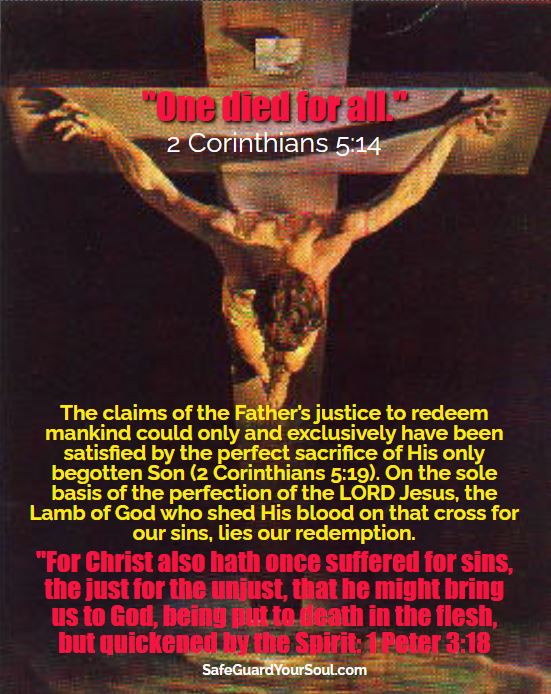
God did not honor the fig leaves so He shed the blood of animals to make them “coats of skins, and clothed them” (Gen. 3:21). Because He had already foretold that His Son would be sent to redeem the fallen race (Gen. 3:15), God chose to depict the sacrifice that the coming Redeemer would make by the sacrifice of innocent animals. The atonement for the man and woman by the sacrifice of these animals pointed to the prophesied Savior who would later come and personally shed His blood to atone for the sins of His creation which had been contaminated by sin.
“And almost all things are by the law purged with blood; and without shedding of blood is NO remission.” Hebrews 9:22
God obviously instructed Adam and Eve to sacrifice animals to continue to cover their sin because their son Abel brought “the firstlings of his flock” at the time of sacrifice (Gen. 4:4).
The blood sacrifice that Abel offered to God was accepted because it demonstrated faith in the coming Redeemer.
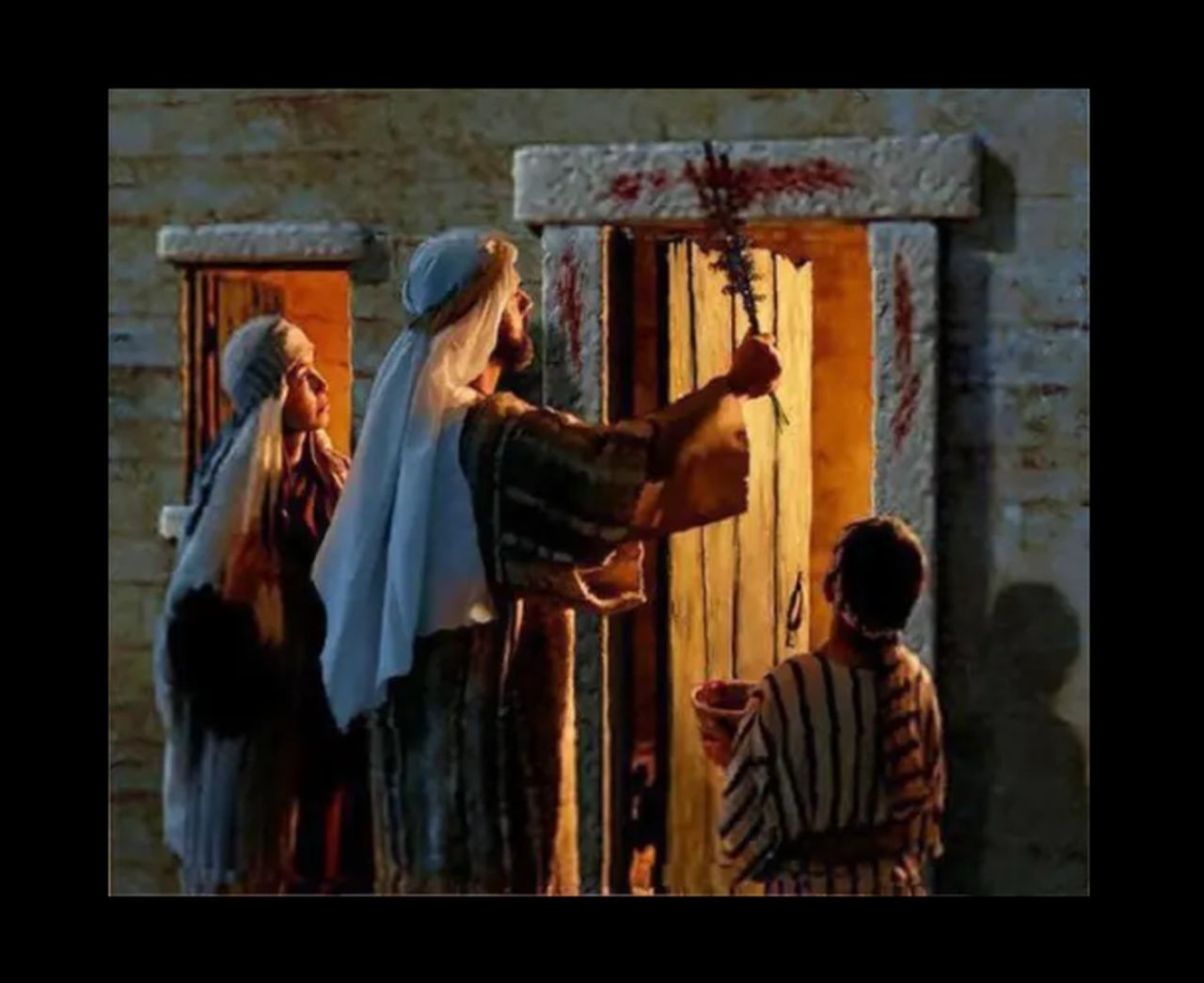
When Israel was in the bondage of sin, God informed the nation that each family was to shed the blood of an unblemished lamb and place the blood upon their doorposts before He delivered them from Egypt (Ex. 12). He said that this blood would save them from His wrath. The unblemished lamb was a type of the spotless Lamb of God which was to come to be slain (1 Peter 1:19), saving those who would receive Him, from the wrath of God (Rom. 5:9).
When the death angel (Satan) was going to pass through the land where God’s people were, the LORD instructed them to apply the blood of the animal sacrifices to the upper and side posts of their doors – in the sign of a cross, prefiguring the coming of the Messiah and His ultimate blood sacrifice that He would make on the cross.
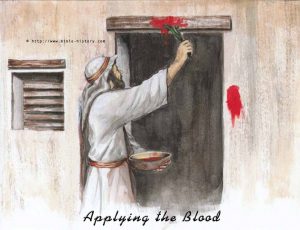 “And they shall take of the blood, and strike it on the two side posts and on the upper door post of the houses, wherein they shall eat it.” Exodus 12:7
“And ye shall take a bunch of hyssop, and dip it in the blood that is in the bason, and strike the lintel (upper frame) and the two side posts with the blood that is in the bason; and none of you shall go out at the door of his house until the morning.” Exodus 12:22
Revelation 12:11 tells us that God’s people overcome sin and Satan “by the blood of the Lamb.”
Not Just Any Blood
“WHEN HE HAD BY HIMSELF purged our sins, sat down on the right hand of the Majesty on high.” Hebrews 1:3
ALL “BY HIMSELF” Jesus redeemed us, bought, brought us back to God by the shedding of His precious blood on that cross. Jesus needed no help: He alone was sufficient to propitiate, expiate, atone for the sins of mankind.
“But when the fulness of the time was come, God sent forth his Son, made of a woman, made under the law, To redeem…” Galatians 4:4-5
Sin separated men from their holy Maker and God (Isa. 59:2). Under the law God instructed the nation of Israel to approach Him by the sacrifice of animals. The sins of the people were atoned for by the blood of animals because this demonstrated faith in the prophesied and coming Redeemer (Lev. 16:34, 17:11). In Leviticus 16 there is a twofold typology of Christ found. Aaron, the priest of Israel, was to take two goats to atone for the sins of the people (Lev. 16:8-10). One of these two goats was used as a “sin offering” and the other for a “scapegoat“. The “sin offering” goat that was sacrificed was a type of Christ who would later shed His blood, “offering Himself without spot to God” (Heb. 9:14). His blood, which was depicted here in the blood of the animal, was to be the ultimate price for atonement (at-one-ment) that the Father required for the removal of the sins of the fallen race. The word “scapegoat” here literally means the goat of departure. Concerning this live goat of departure, the LORD instructed Aaron to lay both hands upon him and confess all the sins and iniquities of Israel upon him and then send him away into the wilderness (Lev. 16:20-22). This goat, the scapegoat, was a type of Christ in that it would carry the sins of God’s people away from them. It would separate them from sin so that their sin wouldn’t separate them from God. This is a type of Christ in that He was to come and shed His perfect blood to “take away the sin of the world.” (John 1:29)
Discover the age old falsehood responsible for the ruin of millions since the dawn of creation. Are you being deceived? What is the LIE of the Ages? Find out in this revolutionary new book.
This prophetic pattern continued to cover the sins of His people from the time of the fall until the One whom these sacrifices foreshadowed appeared (Heb. 10). Those in Israel who truly loved the LORD fervently anticipated the arrival of the prophesied Messiah an Lamb of God. About 4,000 years after man had fallen, a prophet named John the baptist, saw Jesus approaching and declared “Behold, the Lamb of God, which taketh away the sin of the world” (John 1:29). It was the fullness of time and the Father had sent the promised Redeemer into the earth to “take away the sin of the world“. The sacrifices that once atoned for Israel would now be superseded by the one sacrifice of God’s only begotten Son (Heb. 10:1-23). His pure and spotless blood would now be shed to remove the sins of the world. The Lamb which was slain before the foundation of the world (in the mind of God) was now manifest in the flesh to redeem mankind from his sinful and separated state (Revelation 13:8; John 1:14). He became the “propitiation” (atoning sacrifice) for our sins (1 John 2:2).
Just before He went to His ordained altar, the cross, to be offered up for the sin of the world, Jesus said;
“For this is my blood of the new testament, which is shed for many for the remission of sins.” Matthew 26:28
As is clearly announced in the God-breathed New Testament records, redemption, remission, and the forgiveness of sins comes only from the blood of Jesus, the one and only Redeemer of men (Ephesians 1:7).
“In whom we have redemption through his blood, the forgiveness of sins, according to the riches of his grace.” Ephesians 1:7
THE FINAL SACRIFICE
He who knew no sin became the atoning sacrifice for the sins of the world (2 Cor. 5:21).
“When Jesus therefore had received the vinegar, he said, It is finished: and he bowed his head, and gave up the ghost.” John 19:30
It was out of the riches of His mercy and grace that our sins have been remitted by the one sacrifice of Jesus Christ, the Lamb of God. Note the finality of language He uses to convince you of this in the following passage:
“But this man, after he had offered one sacrifice for sins for ever, sat down on the right hand of God…For by one offering he hath perfected for ever them that are sanctified…. And their sins and iniquities will I remember no more. Now where remission of these is, there is no more offering for sin. Having therefore, brethren, boldness to enter into the holiest by the blood of Jesus, By a new and living way, which he hath consecrated for us, through the veil, that is to say, his flesh; And having an high priest over the house of God; Let us draw near with a true heart in full assurance of faith…” Hebrews 10:12-22
Not only does the blood of Jesus take away/remove the sins of the one who personally receives Him, but also the guilt that is always coupled with sin (Heb. 9:14; 1 John 1:9). “Great salvation”! (Hebrews 2:3)
“And from Jesus Christ, who is the faithful witness, and the first-begotten of the dead, and the prince of the kings of the earth. Unto him that loved us, and washed us from our sins in his own blood.” Revelation 1:5
For a topical study of deeper proportions on this subject, see The Blood of Jesus.
Sign up for free email devotional HERE… The Moments with My Master email devotional is sent out for the edification of the body of Christ.
STORE | Support | The Return of Christ | Stewardship | Jesus Sat Over Against The Treasury [podcast] | 10 Clues Your Love for God has Waxed Cold [podcast] | Where to Give and Where Not to Give | Fruit Abounding to Your Account! | Parable of the Talents [podcast] | Proving Jesus Matters [podcast] | Money, Material Wealth, and Riches | Rusted Gold and Fire Untold [podcast]
Abiding
10 Clues Your Love for God has Waxed Cold [podcast]

The wise virgin saints are keeping their lamps full of divine oil, they are taking personal responsibility for their own spiritual state with Christ the great and soon coming Bridegroom. Read Matthew 25:1-13.
“The Love of Many Shall Wax Cold”
“And then shall many be offended, and shall betray one another, and shall hate one another. 11 And many false prophets shall rise, and shall deceive many. 12 And because iniquity shall abound, the love of many shall wax cold. 13 But he that shall endure unto the end, the same shall be saved. 14 And this gospel of the kingdom shall be preached in all the world for a witness unto all nations; and then shall the end come.” Matthew 24:10-14
Did you notice in verse 14 that those who hot for Jesus are participating in the preaching of His Word to the end of the earth (Mark 16:15).
Anyone not devouring God’s Word daily is falling away, is not enduring to the end, is choosing the let their love for Jesus wax cold, and on the wrong, the losing end of this prophecy Jesus gave here on record in Matthew 24:10-14.
“I will spue (vomit, reject) thee out of my mouth”
“So then because thou art lukewarm, and neither cold nor hot, I will spue thee out of my mouth. 17 Because thou sayest, I am rich, and increased with goods, and have need of nothing; and knowest not that thou art wretched, and miserable, and poor, and blind, and naked:” Revelation 3:16-17
Praying God will help you love Him more (Matthew 22:37-40). It really all boils down to WHO we love most. THAT is exactly who we are serving (Romans 6:16).
Loving God is everything as far as what’s in our control – because it’s a choice, daily, and will determine if one remains in Christ to the end.
“Jesus said unto him, Thou shalt love the Lord thy God with all thy heart, and with all thy soul, and with all thy mind. 38 This is the first and great commandment. 39 And the second is like unto it, Thou shalt love thy neighbour as thyself. 40 On these two commandments hang all the law and the prophets.” Matthew 22:37-40
“Thou hast left thy first love”
“Nevertheless I have somewhat against thee, because thou hast left thy first love. 5 Remember therefore from whence thou art fallen, and repent, and do the first works; or else I will come unto thee quickly, and will remove thy candlestick out of his place, except thou repent.” Revelation 2:4-5
1. When you are choosing not to spend quality time with God in prayer each and every morning… When you are choosing not to spend quality time with God in His Word each and every morning (Luke 9:23-24; 1 Chronicles 16:11).
2. When your love for God’s people is being reduced instead of increased (Philippians 2:12-13; 1 John 5:1) Marks of the True Christian …. “Let love be without dissimulation. Abhor that which is evil; cleave to that which is good. 10 Be kindly affectioned one to another with brotherly love; in honour preferring one another; 11 Not slothful in business; fervent in spirit; serving the Lord;” (Romans 12:9-11) See John 13:35.
“And it was told him by certain which said, Thy mother and thy brethren stand without, desiring to see thee. 21 And he answered and said unto them, My mother and my brethren are these which hear the word of God, and do it.” Luke 8:20-21
“We know that we have passed from death unto life, because we love the brethren. He that loveth not his brother abideth in death.” 1 John 3:14
“Whosoever believeth that Jesus is the Christ is born of God: and every one that loveth him that begat loveth him also that is begotten of him.” 1 John 5:1
Reading 1 Corinthians 13 today will refresh your heart and mind on the divine importance placed upon LOVE.
3. You are not denying self and not taking up the cross daily (Luke 9:23-24; 19:27; Galatians 2:20; Colossians 3:3, etc.).
4. You aren’t communicating the light of truth to others because you no longer seek or fear the LORD and so His divine virtue isn’t teeming in and flowing out of you. Your cup no longer runs over but instead is running empty (Psalms 23). You have a lampshade over the light and are not letting His light shine in and through your life and words… “Cry aloud, spare not, lift up thy voice like a trumpet, and shew my people their transgression, and the house of Jacob their sins.” (Isaiah 58:1)
5. You live in fear instead of faith and the joy of being with Jesus (Luke 21:28; 1 John 4:16-18; Proverbs 28:1; Psalms 2:11).
6. You preach promises and not conditions…following the apostate modern church and you don’t preach the cardinal doctrines of the original Gospel which we are commanded to “earnest contend for.” (Jude 3) You begin meditating on and living by trends instead of truth (Jeremiah 9:3; 2 Timothy 4:2-4; Philippians 4:8; Romans 12:1-2).
7. You have little or no true fellowship with other born- again Bible believing disciples of Jesus as is defined in God’s Word and not by the modern church world (Acts 2:42).
The Word of God is to run rich, to be abundant among God’s people … “In all wisdom” and “all in the name of the Lord Jesus” … “Let the word of Christ dwell in you richly in all wisdom; teaching and admonishing one another in psalms and hymns and spiritual songs, singing with grace in your hearts to the Lord. 17 And whatsoever ye do in word or deed, do all in the name of the Lord Jesus, giving thanks to God and the Father by him.” (Colossians 3:16-17)
8. You know you are backsliding when your main thrust and identity become politics, not the work of the Gospel. YOU are a blood bought disciple of Jesus, not a conservative. You are a Bible believing follower of Christ (Luke 9:62; Galatians 6:14).
9. When you love this world…..When you spend more time and money on hobbies and the things of this fleeting world than you do on attending to knowing, walking with the LORD and preparing to be used of Him (Mark 4:17-19; 1 John 2:15; James 4:4).
10. When you spend more money on trash and trinkets then helping the work of the One you claim to love and the poor. You know you are backslidden when you are not obeying God with what He’s placing in your temporal possession. He shall bring you into full account for this.
Regrettably, people will give their money to any and every pleasure under the sun but make excuses when the opportunity to support the work of the One they claim to love and serve. The Holy Spirit foretold that in the final days before the return of Jesus, there would be those with a mere “form of godliness”, “men shall be lovers of their own selves, covetous,” and “lovers of pleasures more than lovers of God.” (2 Timothy 3:1-7) According to the LORD, one of the main ways to measure our true love for Him or lack thereof, is by peering into our personal stewardship of the resources He’s placed into our temporary possession. Luke 12 and 16 offer a plethora of divine wisdom and warning concerning the judgment to come, the judgment we shall endure in giving account for our stewardship in this life.
The clear proof that God is working in our lives, that we are truly following Jesus, is that we are becoming less and less vested in this fleeting, fallen world (James 4:4; 1 John 2:15-17). And that we, our good works, our giving are more and more invested in eternity – in the eternal kingdom of Christ, laying up treasures in Heaven, sending them before us, relinquishing the things of this world for the glory of God – putting them to work for the eternal Gospel of Christ – for saints to be fed and equipped and the lost to hear the Word of God (Matt. 6:19-21).
“Lay not up for yourselves treasures upon earth, where moth and rust doth corrupt, and where thieves break through and steal: 20 But lay up for yourselves treasures in heaven, where neither moth nor rust doth corrupt, and where thieves do not break through nor steal: 21 For where your treasure is, there will your heart be also. 22 The light of the body is the eye: if therefore thine eye be single, thy whole body shall be full of light. 23 But if thine eye be evil, thy whole body shall be full of darkness. If therefore the light that is in thee be darkness, how great is that darkness! 24 No man can serve two masters: for either he will hate the one, and love the other; or else he will hold to the one, and despise the other. Ye cannot serve God and mammon.” Matthew 6:19-24
To underscore the importance of stewardship, we should realize that 16 of our LORD’s 38 parables involved stewardship. Those who now do not wish to face and confront this truth, are apparently those who are in the most need of hearing it.
PRAYER: Father I come to You now in the name of Jesus Christ. Please cause my conscience to be super sensitive to Your conviction, Your leading, and to evade all that defiles me in Your holy eyes, sin. Here and now I submit my life afresh to You dear LORD. You must increase but I must decrease. I am crucified with Christ and thank You for conforming me to His holy image. I am all Yours LORD and thank You that You are all mine. I love You Jesus. Please make me one with You and the Father and with Your beloved body. In Jesus’ name. Amen.
Support | STORE | Podcasts | Christology | Be Ready in the Morning [podcast] | The Sure Mercies of David [podcast] | That Repentance and Remission of Sins should be Preached [podcast] | At His Feet | The 7 Sayings of Jesus on the Cross | How We Know the Bible is the Only Holy Book

Articles
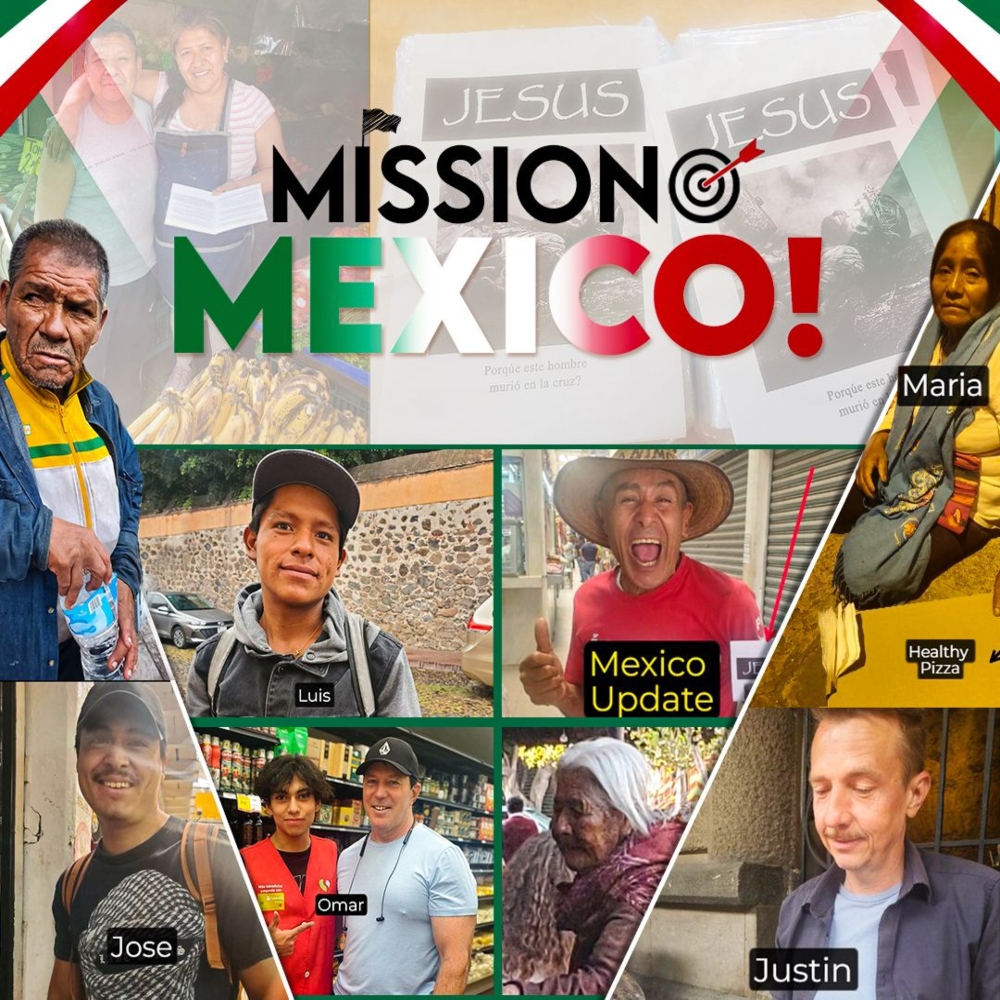
More Good News! Mission Mexico Part 42
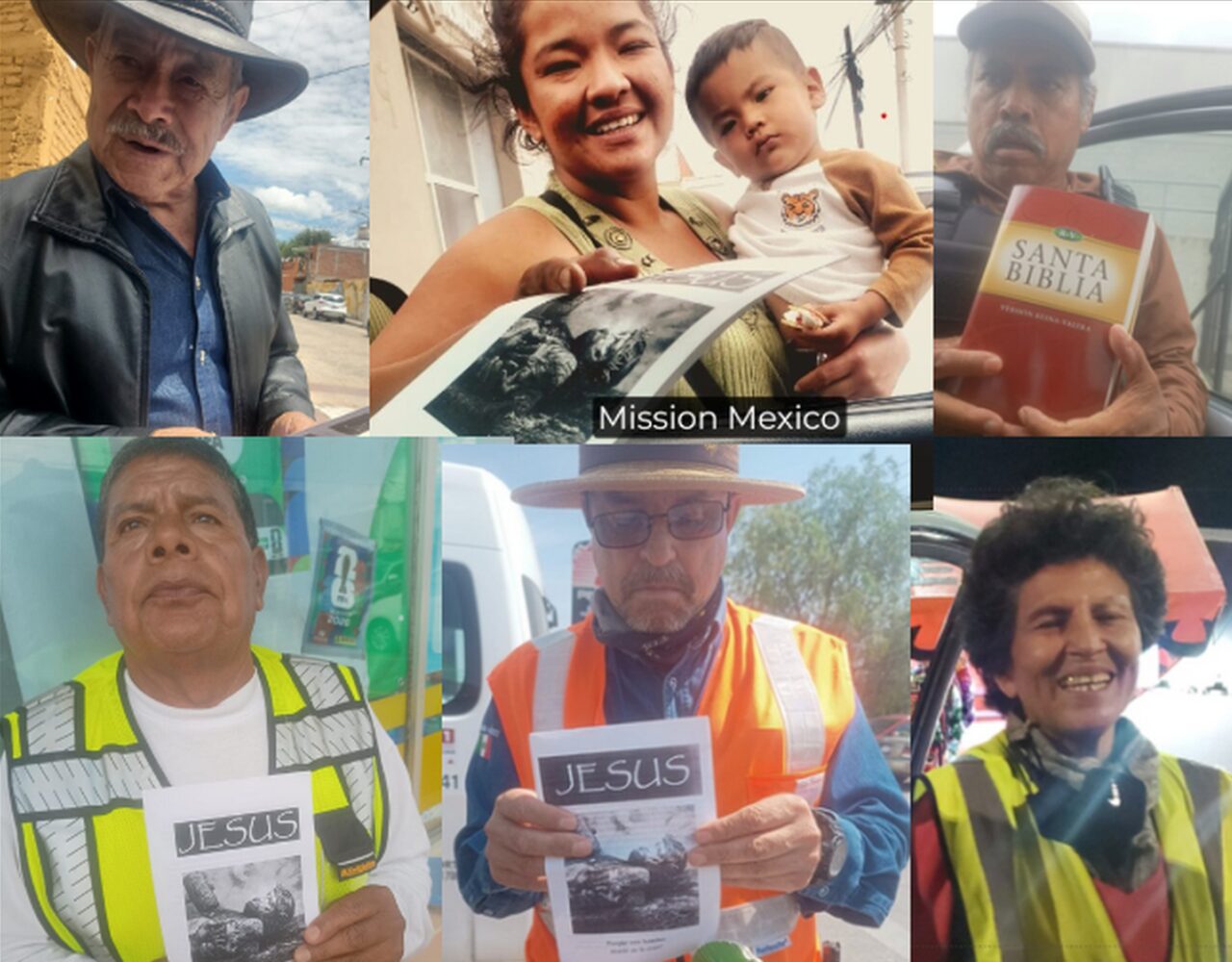
IF YOU SAINTS WEREN’T SO FAITHFUL TO JESUS, NONE OF THIS WOULD BE HAPPENING…..

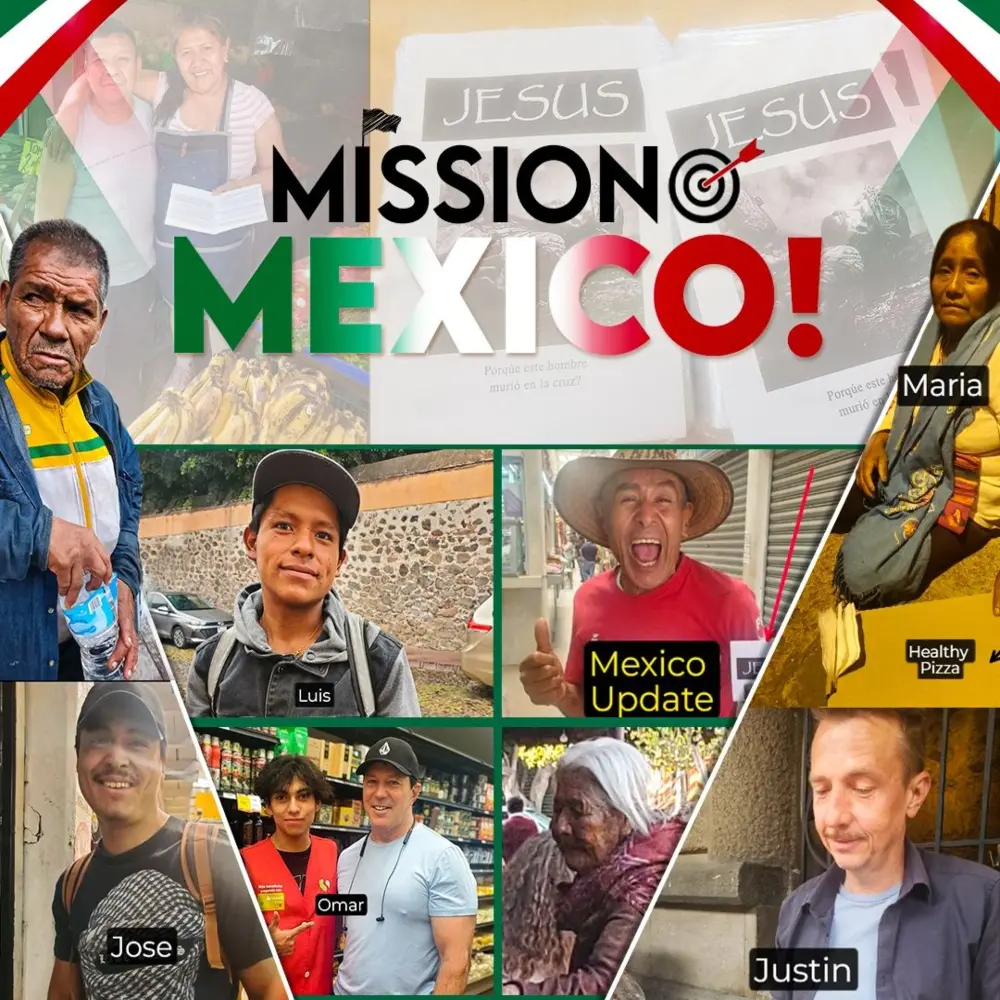
So while going to bring a good supply of food and household essentials to Clara and her boys, by divine ordination I tracked and spoke God’s Word to a Holy Spirit filled sister in Christ. Her name is Maria La Luz. She eagerly took about 100 or more JESUS tracts with her to distribute!!!! That’s how Mexican people are – If they have something good to give, they give it!
Boom. Oh, and Maria LaLuz are in touch by phone so she will be letting me know when she needs more. Thank you for continuing to pray as Jesus instructed in Matthew 9:35-38 – that the Father would send forth labourers into the harvest!
Working with, supporting, equipping, fueling, and supply indigenous missionaries in key to exponential kingdom momentum in the spread of Christ’s Gospel in this beautiful nation.
Just think if this kingdom operation can be duplicated throughout Mexico and Latin America! (Matthew 24:14; 28:18-20) Do we think God has a plan? Yes He does!
Because you care, prayed, and gave, another sister who was just saved recently, was given (purchased) a brand new study Bible (Life in the Spirit Study Bible) KJB. She is elated and devouring God’s Word and growing daily! (2 Peter 3:18)
Also, once again Clara was elated that you prayed and gave. She just now texted me the following after receiving your gifts today:
“Seriously, thank you very much for helping me, it means a lot to me that you help me because I have not been able to find a good job and with this we survived a few days my children and I but just like if you have work do not hesitate to send me a message and I will also go it would be very helpful since the day comes when I have to pay my rent. And again, thank you very much, you are an angel that our Lord sent me, thank you, thank you, thank you 🙏🏻” Clara
Okay now get this…. Clara has been ministered to directly and she has read the JESUS tract. I don’t think she’s saved yet. She has seen your love for Christ in action by your prayers and giving. At first I didn’t know how she was receiving the Gospel but now, from above, it’s obvious that she is being ministered to by our LORD. Perhaps she’s already saved. I don’t know due to the language barrier. But we do know God is showing her His love and power! (1 Corinthians 3:6-9)
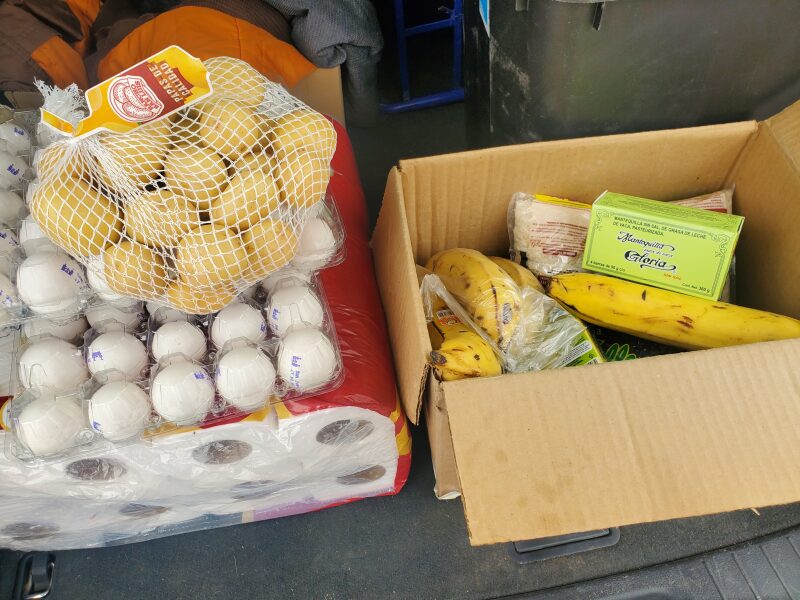
Here’s some of the food you purchased for this single mother today! See pic.
*More than half the 10,000 JESUS tracts are already passed out or in the hands of Christ’s witnesses!!! Yes more than half in just 2 weeks.
God is hearing your prayers and honoring your giving to Him!
“And this gospel of the kingdom shall be preached in all the world for a witness unto all nations; and then shall the end come.” Matthew 24:14
In Christ
Todd
Ever feel like just hitting the eject button and leaving the USA? If so, why not consider a town in Mexico? Pray. Ask God where HE wants you on His planet. Rest.
Also, perhaps begin research Mexico or Latin America on youtube.
A few days ago ….. WHEN we first arrived to refresh and minister to our LORD servant Maria, she was not her usual self, not overflowing with joy. Then when the body of Christ ministered to her, including replenishing her supply of JESUS tracts, there was a notable difference. See if you agree. Your prayers and support make this possible. | Mission Mexico Updates
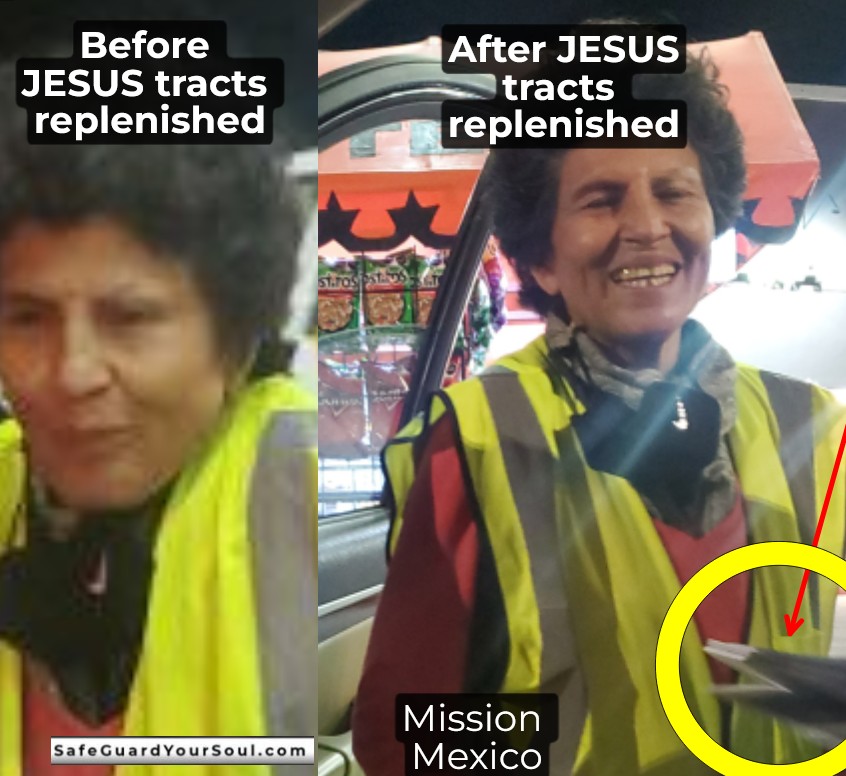
“Wow!! I think of Jesus when he marveled at the faith of the centurions faith! Luke 7:9. I marvel at all the Lord is doing among the Mexican people! And now He is raising up Labourers into the harvest who emanate the joy of the Lord and His fruits! Some are crying when receiving these Jesus tracts and some are actually kissing the picture. Actually kissing the son (Psalm 2:12). Fills my heart with so much joy and I am not even there! But I am part of Team Jesus!” Karen Cochran | Mission Mexico
The meeting fellowships with Juan and Maria the evangelists continue. They are both, for the time being, stocked up on their supply of JESUS tracts and distributing them daily!
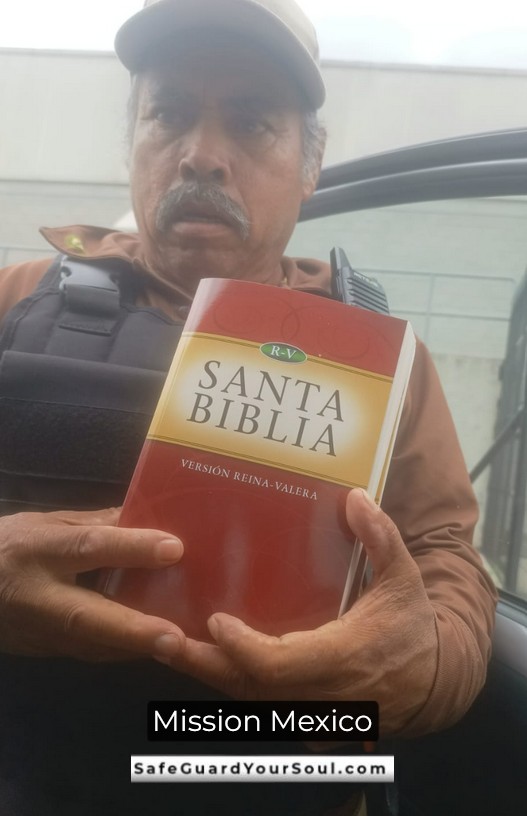
Over breakfast, when I brought the first shipment of the Spanish Bibles to Juan, he asked me if he could give them away to people who are not in prison. Of course I said “Yes” and that these Bibles are for him to be used of God to give wherever he wishes, as he ministers.
Juan is a man who is filled with God’s Word. He speaks verbatim Scripture in Spanish perpetually. The reason I know that is that when we sit down to talk at length he speaks and it’s translated into English and is pure Scripture. He has volumes of Holy Scripture memorized.
Here is Juan ministering to a dear lady. And remember, most Mexicans it seems, do not have a Bible in their home. They greatly treasure God’s Word.
“PRICELESS, LIKE OUR SAVIOR!!! She reminds me of my Great Grandma…she glowed with God’s love. It was written all over her face. She brightened the room, and you KNEW she loved you! It wasn’t till I knew the Lord, that I realized where that glow and love came from. This little light of mine, I’m a gonna let it shine… The tragedy is when that light goes out, and you can see and feel that also. VERY SAD. It’s like shutting off a light switch…from light to darkness. And they can’t see it?! So, I thank God for those who are sharing that light of God’s love, and sharing with them. Will keep praying for Maria, you, your ministry, and the family of God. Felipe, Mark, all the brethren. I keep wondering about Paul and Carol Galloway–will keep praying. God knows. May the LORD bless you Brother Todd….What a wonderful first E-mail of the day! GOD’S JOY.” Crystal
Message from brother Juan on the Spanish communications group (WA whatsapp).
“There are many injustices in life; the Word of God says so. Many receive no visitors. God works in us both to will and to act according to His good pleasure. We are called to be doers of God’s Word. And knowing the good we ought to do, yet failing to do it, is sin. To Him be all glory and honor.” Brother Juan
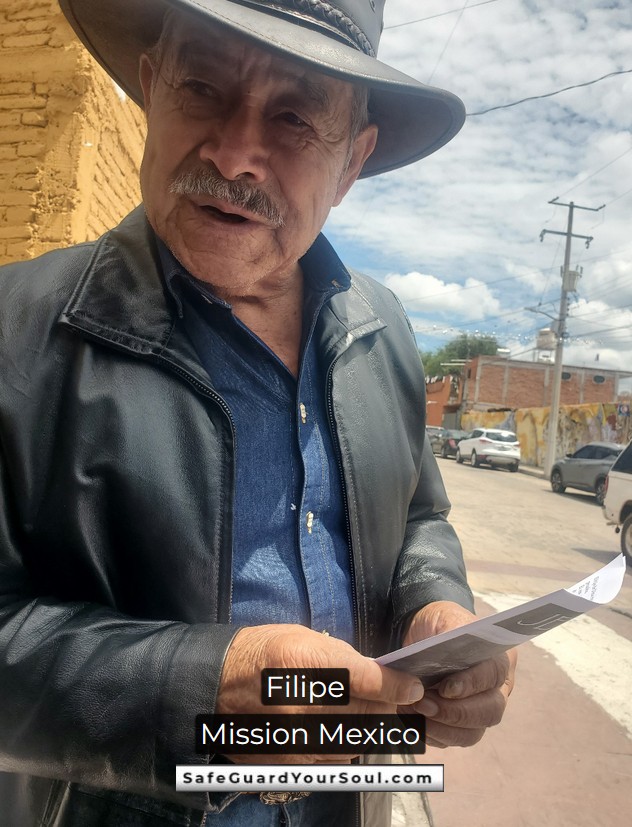
RECENTLY: Immediately upon beginning to hear God’s Word spoken to him in Spanish, this man began to weep and to profusely thank God, to call out to Jesus, to kiss the Jesus tract he was given, to kiss my hand and cheek. Need I state the obvious, of how hungry these beloved people are to hear and believe Jesus’ bless-ed Gospel? …. Beloved Filipe was given the Gospel of Christ and instructed to go home and repent and receive Christ for the forgiveness of his sins and that only Jesus can forgive him and that it’s not about religion but relationship. Like the vast majority of Mexicans (99%), Filipe had never heard the Gospel of Jesus till today. Please lift beloved Filipe and the Mission Mexico heavenly operation in prayer. Thank you.
WHERE does God want you in this last hour – doing HIS will, being about the “Father’s business”? (Luke 2:49) Are you surrendered and therefore crying out to the LORD to put you on HIS EARTH exactly where you can please Him the most? | Mission Mexico
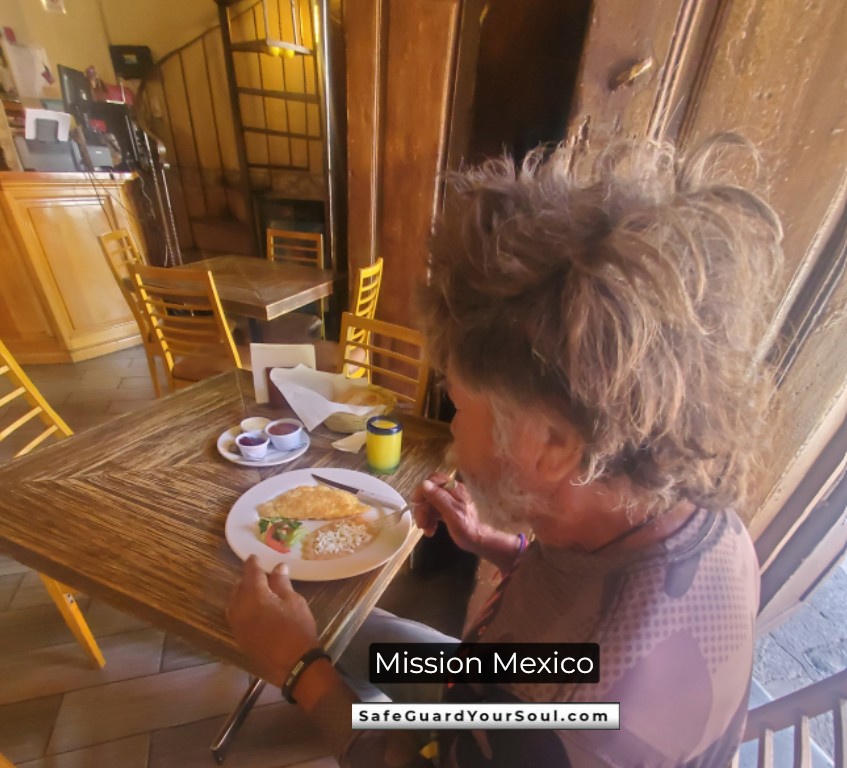
It’s all because of God’s love in Christ and your prayers and support…. This homeless man received God’s love in the form of the spoken Word, a JESUS track in Spanish, and a warm breakfast and hot coffee! Jesus is moving!
“For this purpose the Son of God was manifested, that he might destroy the works of the devil.” 1 John 3:8
Mission Mexico
https://safeguardyoursoul.com/mexico-mission/
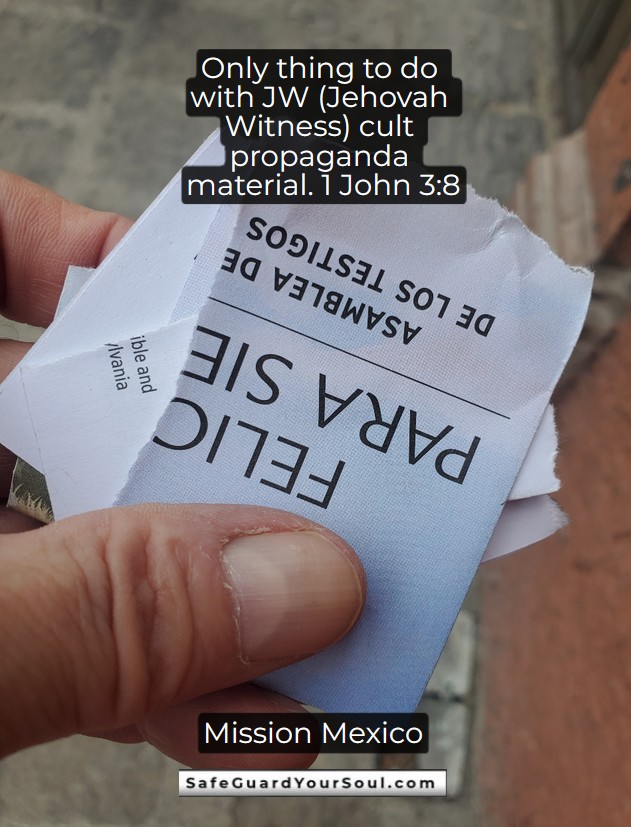
Issidro asked for prayer. He’s catholic but he’s open, a little bit. He received an abundance of truth from God’s Word today and a JESUS tract in Spanish. Thank you for lifting these precious souls in prayer saints.


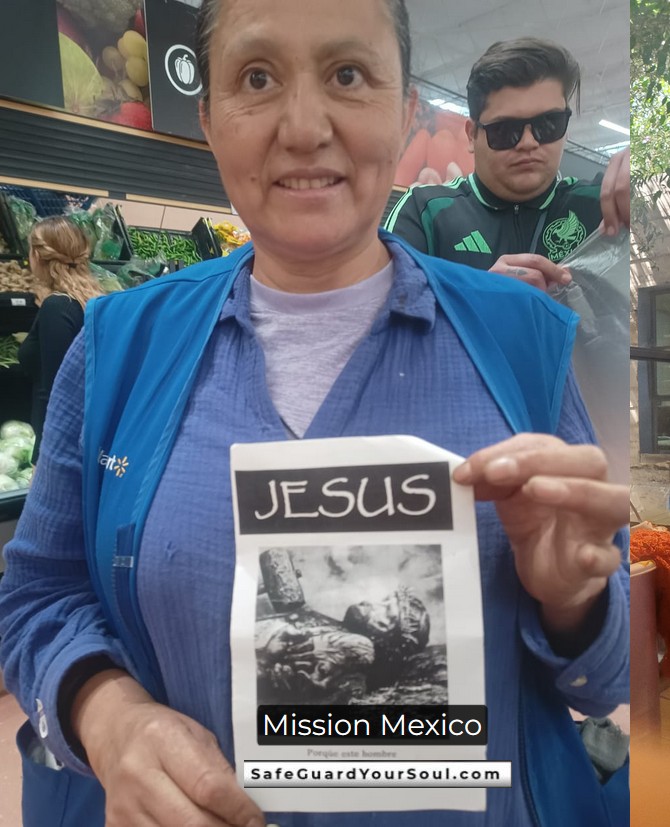


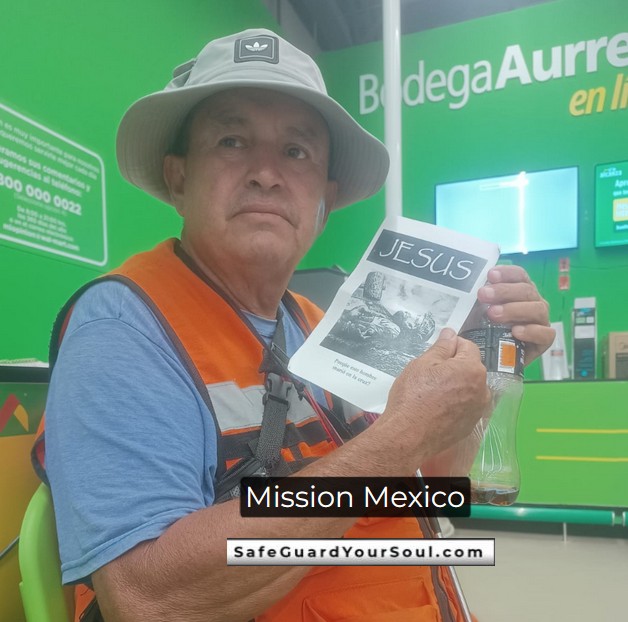
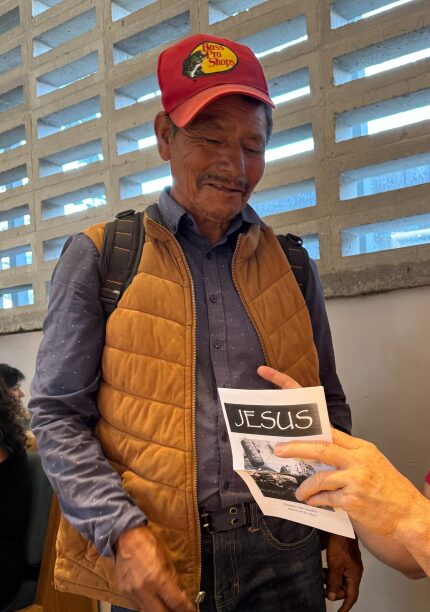
“Praise the Lord ! She is shining for Jesus! Overflowing Joy! It’s a blessing to see how God is moving in the ministry, Mexico for Jesus, Glory to God!!” Darlene
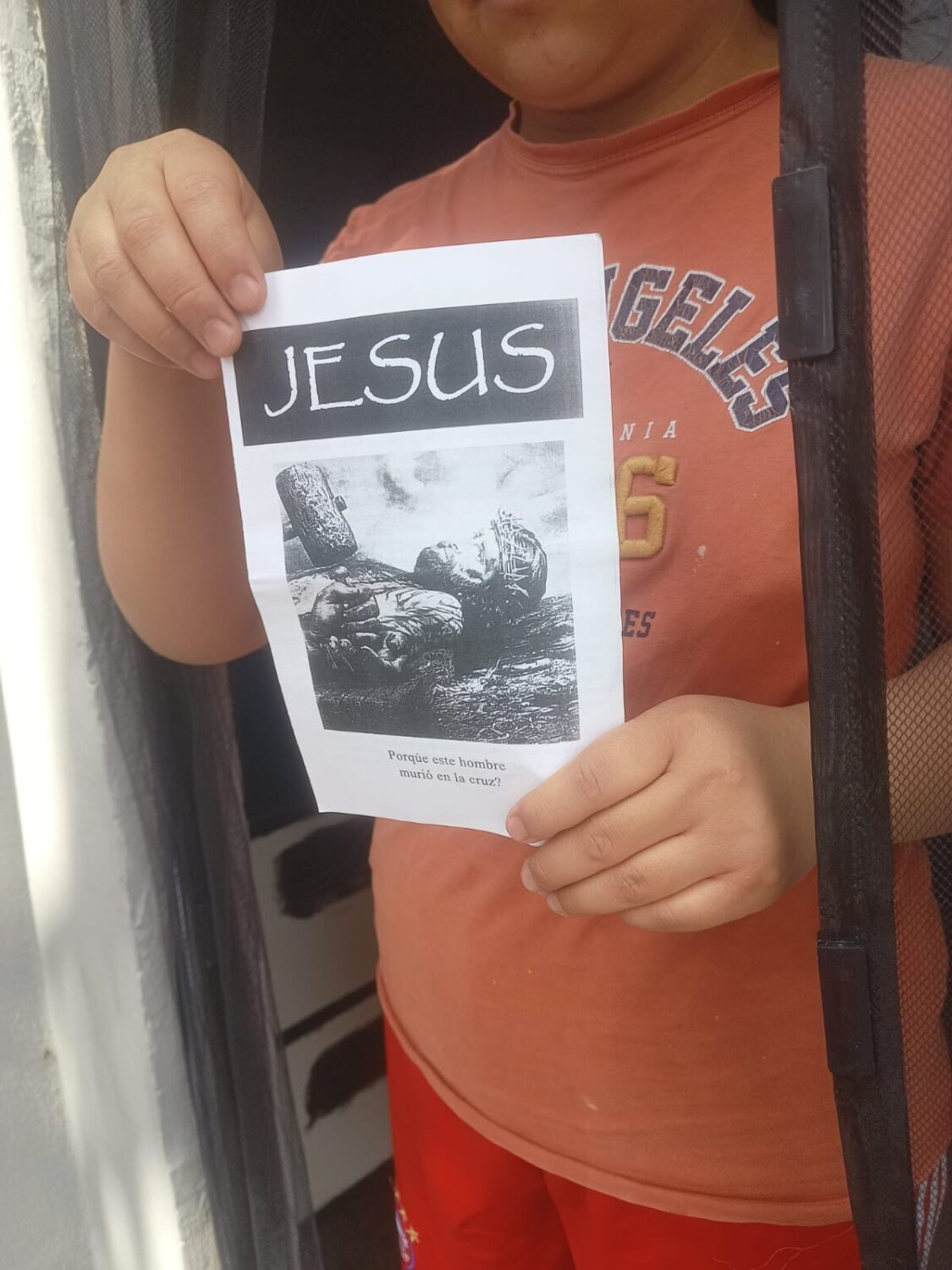
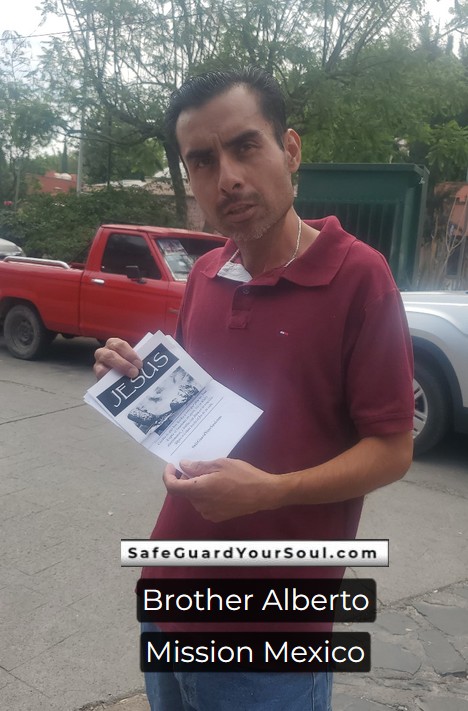
“For the Son of man is come to seek and to save that which was lost.” Luke 19:10
Mission Mexico – See more here. | Give support here. Many options
Download. Read. Print out your supply of the JESUS tract – English and Spanish.
Articles
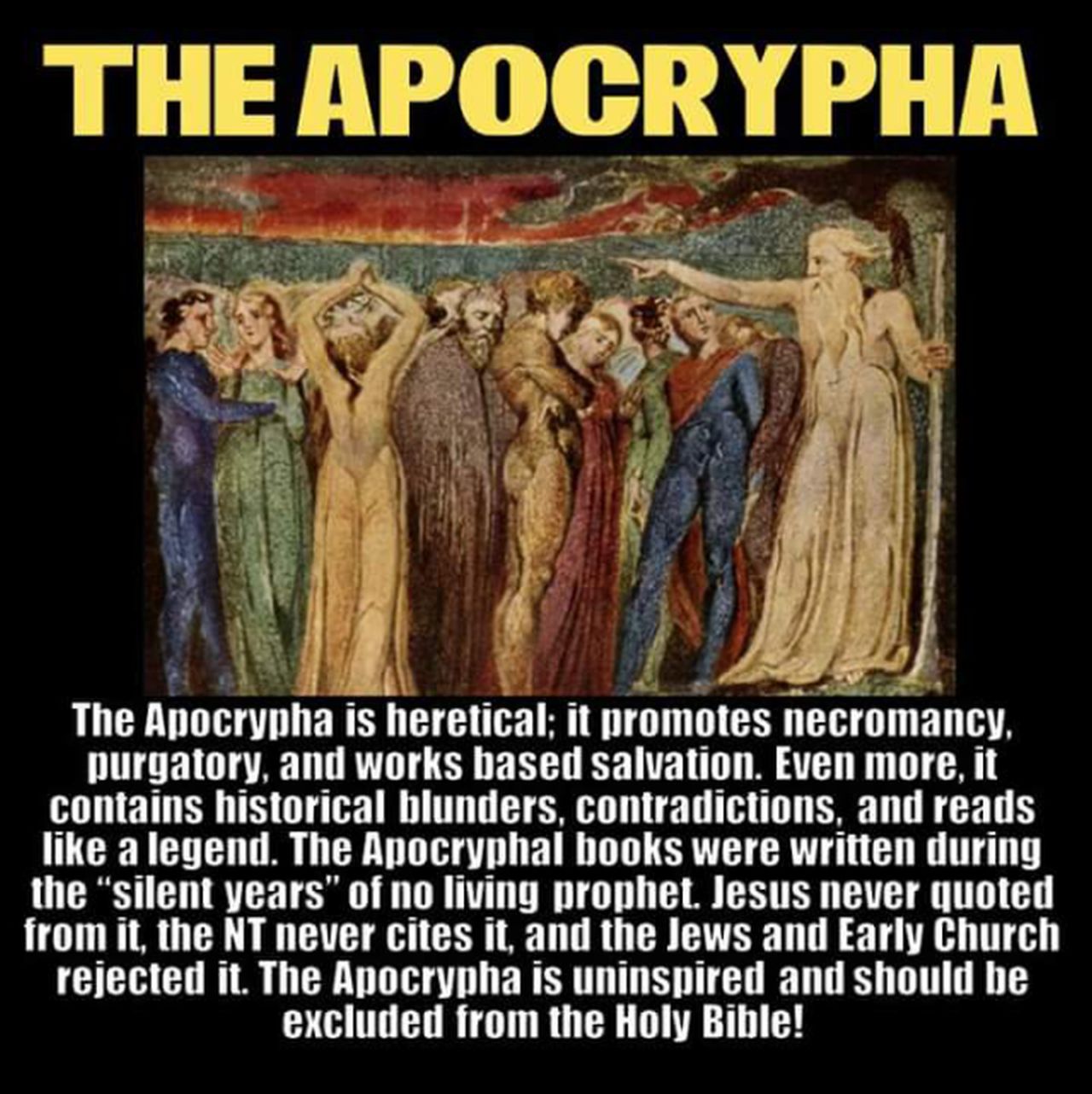
Why the Apocrypha Isn’t in the Bible
MESSAGE GIVEN:
“I’m reading the apocrypha now and you can tell it’s definitely from the Bible and seems like it should be in there. I guess that is why God said in revelation if anyone changes or removes or adds anything to this Holy book all the plagues in it will come on them, cos he knew that it would happen.” V.
REPLY:
You are missapplying Revelation 22:18-19. God oversaw the canon of His Word, just as He promised to do in Ps 12:6-7. It’s exactly how He desired, ordained it to be in the King James Bible. To say God checked out, was negligent, is a lie, is bearing false witness, and is an indictment against the Almighty (Psalms 121:4; Daniel 4:32, etc.). There were specific reasons those apocryphal books were not included in the real Bible, as opposed to the catholic “bible.”
Roman Catholics may tell you, “You Protestants are missing part of the Bible. We have the rest of it.” [Note: These people’s leaders (popes, priests, etc.) have led them astray to this wrong belief.] This comment about missing books can throw people off, but it no longer has to. These popish additions to the Bible are commonly called the Apocrypha or sometimes the Deuterocanonical books. This is a short treatise on WHY these books are not in the Bible.
What is the Apocrypha anyway?
The Apocrypha is a collection of uninspired, spurious books written by various individuals. The Catholic religion considers these books as scripture just like a Bible-believer believes that the 66 books in the 1611 Authorized Version of the Bible are the Word of God, i.e., Genesis to Revelation. We are going to examine some verses from the Apocrypha later in our discussion.
At the Council of Trent (1546) the Roman Catholic institution pronounced the following apocryphal books sacred. They asserted that the apocryphal books together with unwritten tradition are of God and are to be received and venerated as the Word of God. So now you have the Bible, the Apocrypha and Catholic Tradition as co-equal sources of truth for the Catholic. In reality, it seems obvious that the Bible is the last source of truth for Catholics. Roman Catholic doctrine comes primarily from tradition stuck together with a few Bible names. In my reading of Catholic materials, I find notes like this: “You have to keep the Bible in perspective.” Catholics have been deceived into not believing that the Bible is God’s complete revelation for man [but they can come out of these deceptions in an instant if they will only believe the Bible as it is written].
THE ROMAN CATHOLIC APOCRYPHA
- Tobit
- Judith
- Wisdom
- Ecclesiasticus
- Baruch
- First and Second Maccabees
- Additions to Esther and Daniel
Apocryphal Books Rejected by the Catholic Religion:
- First and Second Esdras
- Prayer of Manasses
- Susanna*
*A reader says: “Susanna is in the Roman Catholic canon. It is Daniel 13.”
Why the Apocrypha Isn’t in the Bible.
Not one of the apocryphal books is written in the Hebrew language (the Old Testament was written in Hebrew). All Apocryphal books are in Greek, except one which is extant only in Latin.
None of the apocryphal writers laid claim to inspiration.
The apocryphal books were never acknowledged as sacred scriptures by the Jews, custodians of the Hebrew scriptures (the apocrypha was written prior to the New Testament). In fact, the Jewish people rejected and destroyed the apocrypha after the overthow of Jerusalem in 70 A.D.
The apocryphal books were not permitted among the sacred books during the first four centuries of the real Christian church (I’m certainly not talking about the Catholic religion. The Roman Catholic “Church” is not Christian).
The Apocrypha contains fabulous statements which not only contradict the “canonical” scriptures but themselves. For example, in the two Books of Maccabees, Antiochus Epiphanes is made to die three different deaths in three different places.
The Apocrypha includes doctrines in variance with the Bible, such as prayers for the dead and sinless perfection. The following verses are taken from the Apocrypha translation by Ronald Knox dated 1954:
Basis for the doctrine of purgatory:
2 Maccabees 12:43-45, 2.000 pieces of silver were sent to Jerusalem for a sin-offering…Whereupon he made reconciliation for the dead, that they might be delivered from sin.
Salvation by works:
Ecclesiasticus 3:30, Water will quench a flaming fire, and alms maketh atonement for sin.
Tobit 12:8-9, 17, It is better to give alms than to lay up gold; for alms doth deliver from death, and shall purge away all sin.
Magic:
Tobit 6:5-8, If the Devil, or an evil spirit troubles anyone, they can be driven away by making a smoke of the heart, liver, and gall of a fish…and the Devil will smell it, and flee away, and never come again anymore.
Mary was born sinless (immaculate conception):
Wisdom 8:19-20, And I was a witty child and had received a good soul. And whereas I was more good, I came to a body undefiled.
It teaches immoral practices, such as lying, suicide, assassination and magical incantation.
No apocryphal book is referred to in the New Testament whereas the Old Testament is referred to hundreds of times.
Because of these and other reasons, the apocryphal books are only valuable as ancient documents illustrative of the manners, language, opinions and history of the East.
Wasn’t the Apocrypha in the King James Bible?
The King James translators never considered the Apocrypha the word of God. As books of some historical value (e.g., details of the Maccabean revolt), the Apocrypha was sandwiched between the Old and New Testaments as an appendix of reference material. This followed the format that Luther had used. Luther prefaced the Apocrypha with a statement:
“APOCRYPHA–THAT IS, BOOKS WHICH ARE NOT REGARDED AS EQUAL TO THE HOLY SCRIPUTRES, AND YET ARE PROFITABLE AND GOOD TO READ.” KING JAMES VERSION DEFENDED, PAGE 98.
In 1599, TWELVE YEARS BEFORE the King James Bible was published, King James himself said this about the Apocrypha:
“AS TO THE APOCRIPHE BOOKES, I OMIT THEM BECAUSE I AM NO PAPIST (AS I SAID BEFORE)…” KING JAMES CHARLES STEWART BASILICON DORON, PAGE 13
In his, “A Premonition to All Most Mightie Monarches,”–found in his Workes (a collection of the king’s writings)–King James said this–
“…IS IT A SMALL CORRUPTING OF THE SCRIPTURES TO MAKE ALL, OR THE MOST PART OF THE APOCRYPHA OF EQUALL FAITH WITH THE CANONICALL SCRIPTURES…?”
Not only this, but the sixth article of the Thirty-nine Articles of the Church of England (1571 edition. The Church of England published the Authorized King James Version) states that
(1) the Old and New Testaments are the Bible–
IN THE NAME OF THE HOLY, WE DO VNDERSTANDE THOSE CANONICAL BOOKES OF THE OLDE AND NEWE TESTAMENT, OF WHOSE AUTHORITIE WAS NEVER ANY DOUBT IN THE CHURCHE…
(2) the apocrypha is not the Bible–
AND THE OTHER BOOKES, (AS HIEROME SAYETH), THE CHURCHE DOTH READE FOR EXAMPLE OF LIFE AND INSTRUCTION OF MANNERS: BUT YET DOTH IT NOT APPLIE THEM TO ESTABLISH ANY DOCTRENE. PHILIP SCHAFF, CREEDS OF CHRISTENDOM. GRAND RAPIDS: BAKER BOOK HOUSE, 1977, VOL. III, PP. 489-491.
The Hampton Court Document came as a result of the famous Hampton Court Conference of 1604 when King James specially commanded the translation of the Bible that would one day bear his name. Concerning the apocrypha and the Church of England, it states–
THE APOCRYPHA, THAT HATH SOME REPUGNANCY TO THE CANONICAL SCRIPTURES, SHALL NOT BE READ…
Select Statutes and Other Constitutional Documents Illustrative of the Reigns of Elizabeth and James I, edited by G.W. Prothero, Fellow of King’s College, Cambridge, 1894, p. 416
The Apocrypha began to be omitted from the Authorized Version in 1629. Puritans and Presbyterians lobbied for the complete removal of the Apocrypha from the Bible and in 1825 the British and Foreign Bible Society agreed. From that time on, the Apocrypha has been eliminated from practically all English Bibles–Catholic Bibles and some pulpit Bibles excepted.
Not even all Catholic “Church Fathers” believed the Apocrypha was scripture.
Not that this really means anything. The truth is not validated by the false. Nevertheless, this may be of interest to some… Jerome (340-420) rejected the Apocrypha:
“AS THE CHURCH READS THE BOOKS OF JUDITH AND TOBIT AND MACCABEES BUT DOES NOT RECEIVE THEM AMONG THE CANONICAL SCRIPTURES, SO ALSO IT READS WISDOM AND ECCLESIASTICUS FOR THE EDIFICATION OF THE PEOPLE, NOT FOR THE AUTHORITATIVE CONFIRMATION OF DOCTRINE.” JEROME, JEROME’S PREFACE TO THE BOOKS OF SOLOMON
According to Edward Hills in The King James Version Defended p. 98 other famous Catholics with this viewpoint include Augustine (354-430 who at first defended the Apocrypha as canonical), Pope Gregory the Great (540-604), Cardinal Ximenes, and Cardinal Cajetan.
There are other spurious books.
These include the Pseudepigrapha which contains Enoch, Michael the Archangel, and Jannes and Jambres. Many spurious books falsely claim to have been written by various Old Testament patriarchs. They were composed between 200 B.C. and 100 A.D. There are lots of these spurious books like The Assumption of Moses, Apocalypse of Elijah, and Ascension of Isaiah.
Concerning the Dead Sea Scrolls, there may be some information in them that parallels the Masoretic Text, but there are fables in them, too. I went to see the scrolls a few years ago with great expectation but found a bunch of fables. The best defense against error in any form (unauthorized Bibles and religions) is a solid knowledge of the AUTHORIZED (King James) Version of 1611 of the Bible. If you read it, forgeries become readily apparent.
BIBLIOGRAPHY:
King James VI & I Page
The Workes of the Most High and Mightie Prince Iames [James], By the Grace of God, King of Great Britaine, France, and Ireland, Defender of the Faith, &c.
Translators Revived, Alexander McClure, p. 142
Bible Believing Study, Edward F. Hills, p. 15
The King James Version Defended, Edward F. Hills, p. 96, 97, 98
God Wrote Only One Bible, Jasper James Ray, p. 90
An Understandable History of the Bible, Dr. Samuel Gipp, p. 245
Making Peace with God | Bible Versions Issue | Why Did the 1611 KJV Include the Apocrypha? | THE NEW AMERICAN BIBLE OR DOUAY? Catholic “Bibles” Exposed | Lineage of the Modern Corrupt | The Catholic Church Exposed





10 Clues Your Love for God has Waxed Cold [podcast]

More Good News! Mission Mexico Part 42

Why the Apocrypha Isn’t in the Bible

What is the difference between a “Textus Receptus Man” and a “King James Man?”

David’s Farewell Prayer [podcast]

Water Baptism: Understanding It [study guide]

Favorite Eternal Security “Proof” Text? [podcast]

Laboring Fervently for Christ’s Body [podcast]

Abiding Under the Shadow of the Almighty [podcast]

The Warnings of the Book of Jude [podcast]

Attend to My Words [podcast]

Gathering Fruit for Christ’s Eternal Glory [podcast]

Acquaint now thyself with him, and be at peace: thereby good shall come unto thee [podcast]

Dwelling in the Secret Place of the Most High [podcast]

The Over Population Delusion Exposed [video]
10 Clues Your Love for God has Waxed Cold [podcast]

The Damning Myth of Unconditional Eternal Security! [podcast]

Calvinism’s Origins and Historical Roots [podcast]

Name Cult Warning: Beware of the Yahweh, Yahushua, Yahuah Cults!
Favorite Eternal Security “Proof” Text? [podcast]
Water Baptism: Understanding It [study guide]
Dwelling in the Secret Place of the Most High [podcast]
Acquaint now thyself with him, and be at peace: thereby good shall come unto thee [podcast]
Why the Apocrypha Isn’t in the Bible
The Warnings of the Book of Jude [podcast]

“You Who are Troubled Rest with Us” [podcast]

Penknife Sacrilege [podcast]
Attend to My Words [podcast]
The Over Population Delusion Exposed [video]

Diminishing Returns or Divine Blessings? [podcast]
10 Clues Your Love for God has Waxed Cold [podcast]
More Good News! Mission Mexico Part 42
Why the Apocrypha Isn’t in the Bible


 America1 year ago
The Drugging of America: The Pharmakeia Sorcery Deception [podcast]
- Articles2 years ago
Children being Rescued in Tunnels: Happening Now – UPDATE!
- Articles8 years ago
Self-Examination in Preparation for the Lord’s Return
- Apostasy2 years ago
SHOCKING List of False Prophets Most Believe are True