





“THE LIVING BIBLE” EXPOSED!
By David Otis Fuller, D.D.
When we handle God’s Holy Word, we are fully persuaded it is different from any other book ever written. It is a supernatural Book, a Book that our Sovereign God has written through His inspired servants of old. Thus we should have the utmost reverence and respect for it. This is our Infallible Guide through a dark world. It is the Anchor of our souls in a world of storm.
We have every reason to believe that Dr. Kenneth Taylor, the author of the Paraphrased Living Bible, is a true Christian, but we cannot possibly keep silent when such unwarranted liberties are taken with the Holy Word of God. Our earnest prayer would be that these and other changes might be made. Such language that is used in a number of paraphrased verses we have pointed out, shocks the Bible believers and Bible lovers over America and the world.
We will let you, reader, be the judge as you compare the KJV and TLB. We make this comparison because we have the strongest kind of proof to show clearly that the King James Version is nearest to the original manuscripts. Again we would gladly challenge anyone to produce better or more proof that there is another version that is nearer to the original autographs than the KJV.
* KJV (Lev. 3:13) “And the sons of Aaron shall sprinkle the blood thereof upon the altar round about.”
TLB “The priest shall throw its blood against the sides of the altar.”
* KJV (Num. 25:11) “Phine-has…hath turned my wrath away from the children of Israel.”
TLB “Phinehas has turned away my anger for he was as angry as I.” (Who could ever be as angry as God?)
* KJV (Num. 27:1) All the names of the daughters of Zelophehad are found here.
TLB These names are omitted, and all of verse 2, yet in (Num. 36:10) all the names are given, and also in (Josh. 17:3). Why the omission here?
* KJV (Judges 7:20b) “And they cried, the sword of the Lord and of Gideon.”
TLB “All yelling for the Lord and for Gideon.”
* KJV (Judges 19:2) “And his concubine played the whore against him.”
TLB “But she became angry with him and ran away.”
* KJV (1 Sam. 20:30) “Thou son of a perverse rebellious woman.”
TLB “You son of a b___.”
* KJV (2 Sam. 16:4b) And Ziba said, I humbly beseech thee that I may find grace in thy sight, My Lord, O King.”
TLB “Thank you, thank you, sir, Ziba replied.”
* KJV (1 Kings 18:27) “Cry aloud: for He is a God: either He is talking or He is pursuing.”
TLB “Perhaps he is talking to someone or else is out sitting on the toilet.”
* KJV (2 Kings 21:6b) “He wrought much wickedness in the sight of the Lord, to provoke Him to anger.”
TLB “So the Lord was very angry, for Manasseh was an evil man in God’s opinion.” (God does not hold opinions!)
* KJV (2 Chron. 26:4) “And he did that which was right in the sight of the Lord according to all that his father Amaziah die.”
TLB “He followed in the footsteps of his father Amaziah and was in general a good king as far as the Lord’s opinion of him was concerned.” (Again we say, God does not hold opinions. Only men hold opinions.)
* KJV (Job 3:26) “I was not in safety, neither had I rest, neither was I quiet: yet trouble came.”
TLB “I was not fat and lazy yet trouble struck me down.” (The majesty and accuracy of the KJV is certainly missing here.)
* KJV (Psa. 34:20) “He keepeth all His bones: not one of them is broken.”
TLB “God even protects him for accidents.” (There are no accidents with God.)
* KJV (Ezek. 2:1) “And He said unto me, son of man, stand upon thy feet, and I will speak unto thee.”
TLB “And he said unto me, Stand up, son of dust and I will talk to you.” (All through Ezekiel this phrase `son of dust’ is used in place of `son of man’.)
* KJV (Zech. 2:8) “He that toucheth you toucheth the apple of His eye.”
TLB “For he who harms you sticks his finger in Jehovah’s eye.”
* KJV (Zech. 13:6) “And one shall say unto him, What are these wounds in thine hands? Then he shall answer, Those with which I was wounded in the house of my friends.”
TLB “And if someone asks then, what are these scars on your chest and your back, you will say, I got into a brawl at the home of a friend.” (The note at the bottom of this page of the Living Bible is as follows: “That this is not a passage referring to Christ is clear from the context. This is a false prophet who is lying about the reasons for his scars.” We would like to know where Dr. Taylor got his authority for saying this.)
* KJV (Mark 9:29) “And he said unto them, This kind can come forth by nothing, but by prayer and fasting.”
TLB “Jesus replied, Cases like this require prayer.” (Where is the authority for changing this version this way?)
* KJV (Luke 5:8) “When Simon Peter saw it, he fell down at Jesus’ knees, saying, Depart from me; for I am a sinful man, O Lord.”
TLB “When Simon Peter realized what had happened he fell to his knees before Jesus and said, O sir, please leave us. I’m too much of a sinner for you to have around.”
* KJV (Luke 23:42) “And he said unto Jesus, Lord, remember me when thou comest into thy kingdom.”
TLB “Then he said, Jesus, remember me when you come into your kingdom.” (Where does Dr. Taylor get the authority for leaving out `Lord’?)
* KJV (John 1:17) “For the law was given by Moses, but grace and truth came by Jesus Christ.”
TLB “For Moses gave us only the law with its rigid demands and merciless justice while Jesus Christ brought us loving forgiveness as well.” (All through the Old Testament you will find the love and mercy and grace of God demonstrated.)
* KJV (John 2:4) “Jesus saith unto her, Woman, what have I to do with thee? mine hour is not yet come.”
TLB “I can’t help you now, He said, It isn’t yet my time for miracles.” (His hour was Calvary.)
* KJV (John 3:13) “And no man hath ascended up to heaven, but he that came down from heaven, even the Son of man which is in heaven.”
TLB “For only I, the Messiah, have come to earth and will return to heaven again.”
* KJV (John 6:69) “And we believe and are sure that thou art that Christ, the Son of the living God.”
TLB “And we believe them and know you are the holy Son of God.” (Where is the authority for omitting the name of Christ, and the son of the Living God?)
* KJV (John 13:26) “Jesusanswered, He it is, to whom I shall give a sop, when I have dipped it. And when he had dipped the sop, he gave it to Judas Iscariot, the son of Simon.”
TLB “He told me it is the one I honor by giving the bread dipped in the sauce.” (Was the Lord Jesus honoring Judas here?)
* KJV (Acts 9:5) “And he said, Who art thou, Lord? And the Lord said, I am Jesus whom thou persecutest: it is hard for thee to kick against the pricks.”
TLB “Who is speaking, sir, Paul asked. And the voice replied, I am Jesus, the one you are persecuting. Now get up and go into the city and await for further instructions.” (Where is the authority for the omission here, or using `sir’ in the place of `Lord’, or using `Paul’ in the place of `Saul’?)
* KJV (Rom. 5:1) “Therefore being justified by faith, we have peace with God through our Lord Jesus Christ:..”
TLB “So now since we have been made right in God’s sight by faith in His promises we can have real peace with Him because of what Jesus Christ our Lord has done for us.” (There is a vast difference between `we have peace with God’ and `we can have real peace with Him.”)
* KJV (1 Cor. 16:22) “If any man love not the Lord Jesus Christ, let him be Anathema Maranatha.”
TLB “If anyone does not love the Lord, that person is cursed. Lord Jesus, come.” (Where did Dr. Taylor get the authority to omit Jesus Christ from the title of our Lord?)
* KJV (2 Cor. 5:21) “For he hath made him to be sin for us, who knew no sin; that we might be made the righteousness of God in him.”
TLB “For God took the sinless Christ and poured into Him our sins. Then in exchange He poured God’s goodness into us.”
* KJV (2 Cor. 8:9) “For ye know the grace of our Lord Jesus Christ, that, though he was rich, yet for your sakes he became poor, that ye through his poverty might be rich.”
TLB “You know how full of love and kindness our Lord Jesus was:…” (Where is the authority for omitting the name Christ?)
* KJV (1 Tim. 2:5,6) “For there is one God, and one mediator between God and men, the man Christ Jesus; Who gave himself a ransom for all, to be testified in due time.”
TLB “That God is on one side and all people on the other side, and Christ Jesus Himself, man, is between them to bring them together by giving His life for all mankind.”
* KJV (1 Tim. 3:16) “And without controversy great is the mystery of godliness: God was manifest in the flesh,…”
TLB “It is quite true that the matter to live a godly life is not an easy matter, but the answer lies in Christ who came to earth as a man.”
* KJV (1 John 1:7) “…and the blood of Jesus Christ his Son cleanseth us from all sin.”
TLB “…the blood of Jesus, His Son, cleanses us from every sin.” (Where is the authority for omitting the name Christ?)
* KJV (Rev. 6:17) “For the great day of his wrath is come; and who shall be able to stand?”
TLB “Because the great day of their anger is come and who can survive it?”
There are passages in the Living Bible that we feel have made the meaning a little clearer, but we only wish, and sincerely so, that Dr. Taylor had not sacrificed so badly the majesty and accuracy of the King James Version. We do not publish this pamphlet in any divisive sense. The one reason for so doing is because we hold a jealous regard for God’s Holy Word, and we cannot keep silent when it is being tampered with.
If the reader will but stop and think of how the prophets and apostles and patriarchs of old treated the Holy Word of God with such reverence and adoration, it can clearly be seen that we need to adopt the same attitude, and more in particular when God Himself tells us, “Thou hast magnified Thy Word above all Thy Name.” And when the Lord Jesus Christ, God manifest in the flesh, had in such deep reverence and respect the Word of God, we certainly should act in the same way.
Articles
More Good News! Mission Mexico Part 42
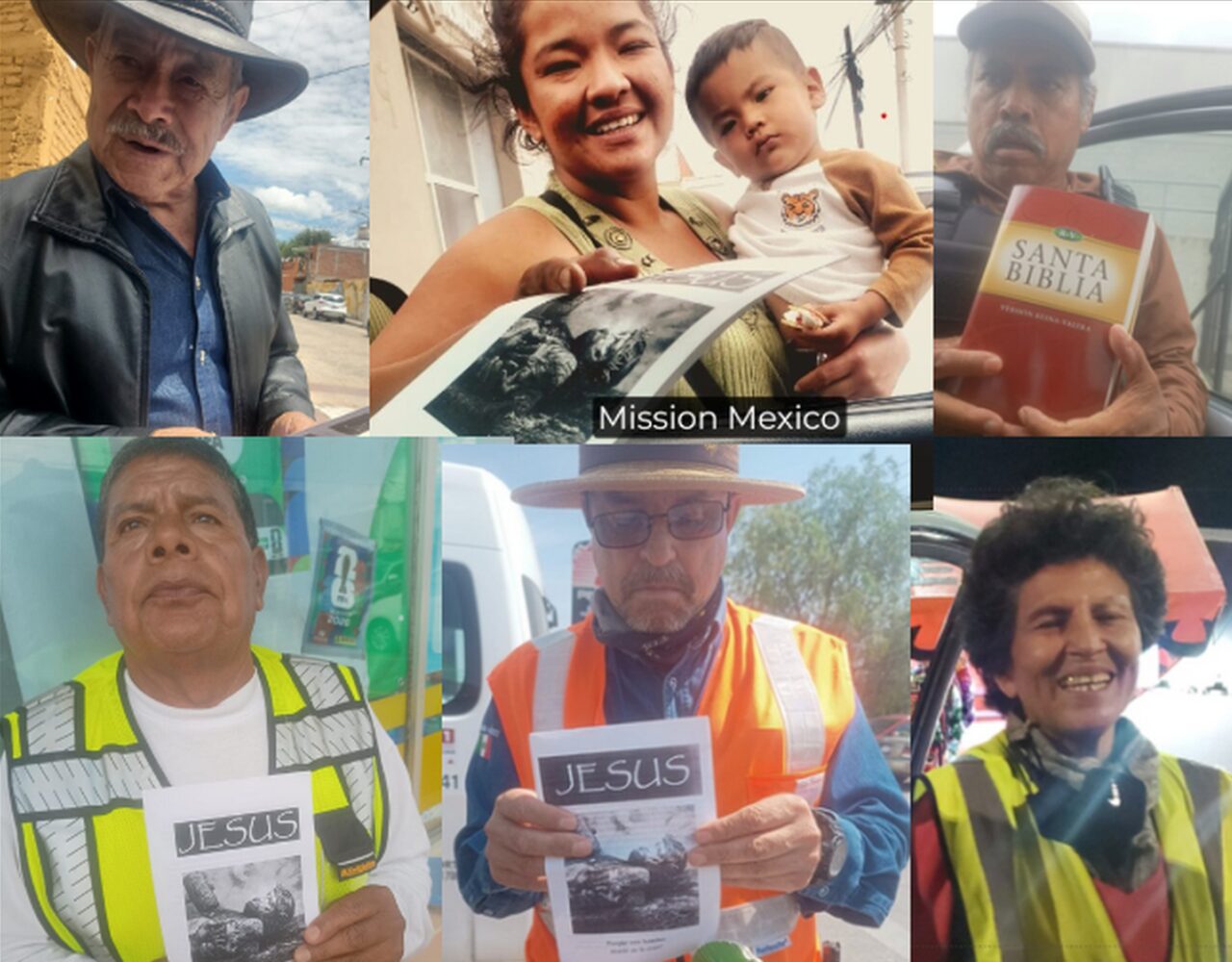
IF YOU SAINTS WEREN’T SO FAITHFUL TO JESUS, NONE OF THIS WOULD BE HAPPENING…..

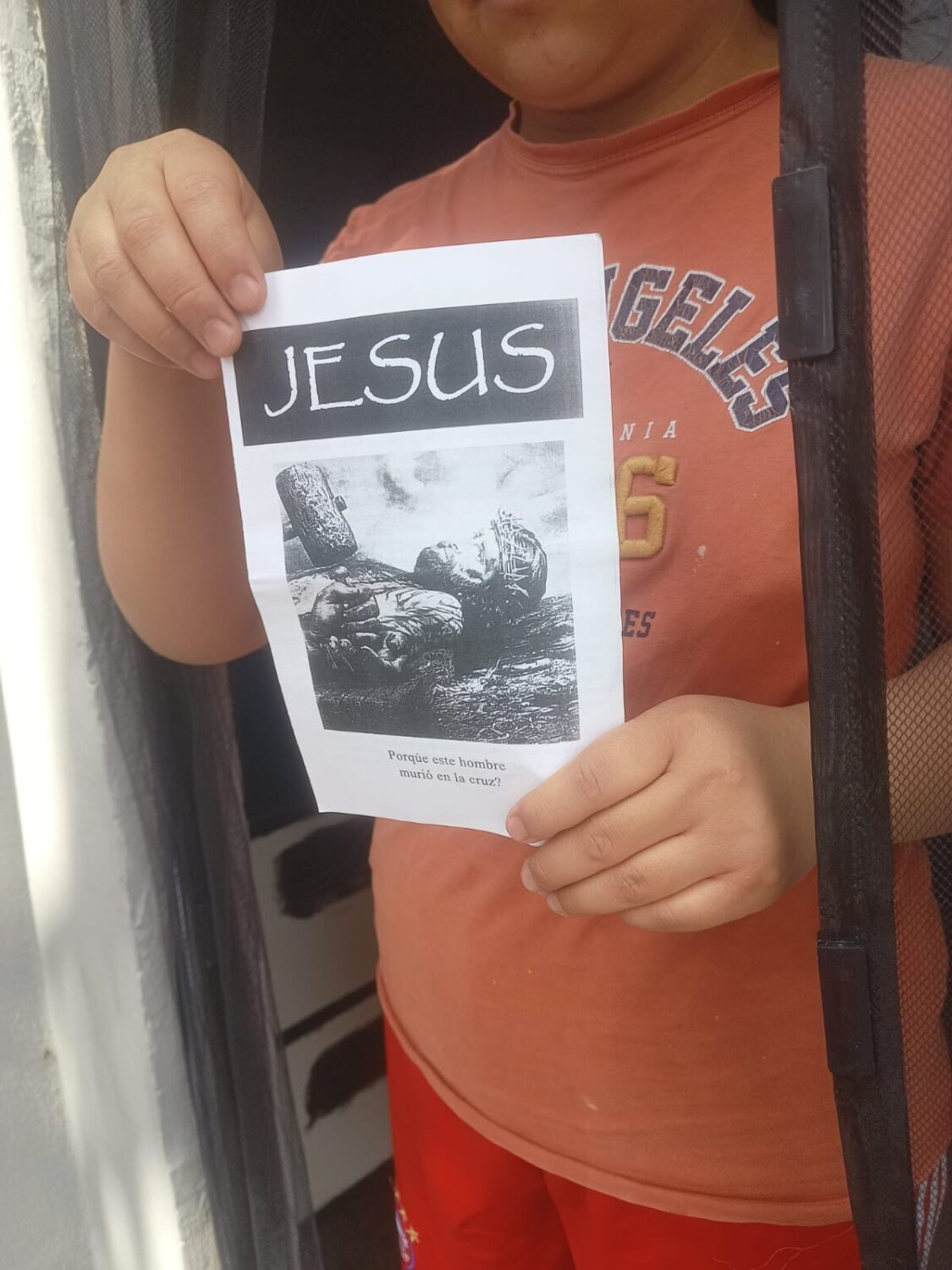
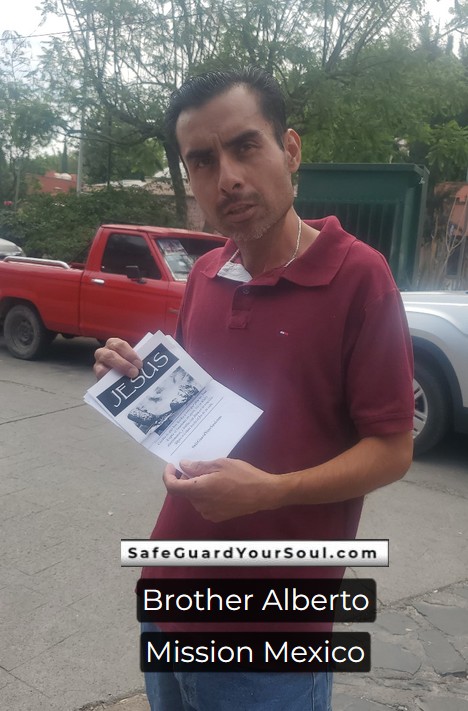
So while going to bring a good supply of food and household essentials to Clara and her boys, by divine ordination I tracked and spoke God’s Word to a Holy Spirit filled sister in Christ. Her name is Maria La Luz. She eagerly took about 100 or more JESUS tracts with her to distribute!!!! That’s how Mexican people are – If they have something good to give, they give it!
Boom. Oh, and Maria LaLuz are in touch by phone so she will be letting me know when she needs more. Thank you for continuing to pray as Jesus instructed in Matthew 9:35-38 – that the Father would send forth labourers into the harvest!
Working with, supporting, equipping, fueling, and supply indigenous missionaries in key to exponential kingdom momentum in the spread of Christ’s Gospel in this beautiful nation.
Just think if this kingdom operation can be duplicated throughout Mexico and Latin America! (Matthew 24:14; 28:18-20) Do we think God has a plan? Yes He does!
Because you care, prayed, and gave, another sister who was just saved recently, was given (purchased) a brand new study Bible (Life in the Spirit Study Bible) KJB. She is elated and devouring God’s Word and growing daily! (2 Peter 3:18)
Also, once again Clara was elated that you prayed and gave. She just now texted me the following after receiving your gifts today:
“Seriously, thank you very much for helping me, it means a lot to me that you help me because I have not been able to find a good job and with this we survived a few days my children and I but just like if you have work do not hesitate to send me a message and I will also go it would be very helpful since the day comes when I have to pay my rent. And again, thank you very much, you are an angel that our Lord sent me, thank you, thank you, thank you 🙏🏻” Clara
Okay now get this…. Clara has been ministered to directly and she has read the JESUS tract. I don’t think she’s saved yet. She has seen your love for Christ in action by your prayers and giving. At first I didn’t know how she was receiving the Gospel but now, from above, it’s obvious that she is being ministered to by our LORD. Perhaps she’s already saved. I don’t know due to the language barrier. But we do know God is showing her His love and power! (1 Corinthians 3:6-9)
Here’s some of the food you purchased for this single mother today! See pic.
*More than half the 10,000 JESUS tracts are already passed out or in the hands of Christ’s witnesses!!! Yes more than half in just 2 weeks.
God is hearing your prayers and honoring your giving to Him!
“And this gospel of the kingdom shall be preached in all the world for a witness unto all nations; and then shall the end come.” Matthew 24:14
In Christ
Todd

Ever feel like just hitting the eject button and leaving the USA? If so, why not consider a town in Mexico? Pray. Ask God where HE wants you on His planet. Rest.
Also, perhaps begin research Mexico or Latin America on youtube.
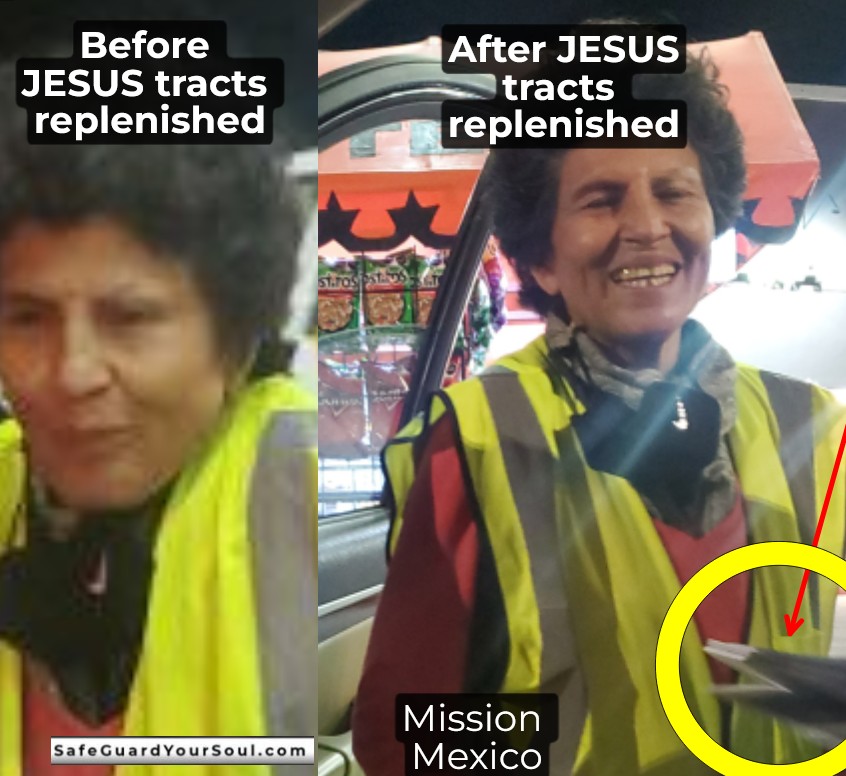
A few days ago ….. WHEN we first arrived to refresh and minister to our LORD servant Maria, she was not her usual self, not overflowing with joy. Then when the body of Christ ministered to her, including replenishing her supply of JESUS tracts, there was a notable difference. See if you agree. Your prayers and support make this possible. | Mission Mexico Updates
“Wow!! I think of Jesus when he marveled at the faith of the centurions faith! Luke 7:9. I marvel at all the Lord is doing among the Mexican people! And now He is raising up Labourers into the harvest who emanate the joy of the Lord and His fruits! Some are crying when receiving these Jesus tracts and some are actually kissing the picture. Actually kissing the son (Psalm 2:12). Fills my heart with so much joy and I am not even there! But I am part of Team Jesus!” Karen Cochran | Mission Mexico
The meeting fellowships with Juan and Maria the evangelists continue. They are both, for the time being, stocked up on their supply of JESUS tracts and distributing them daily!
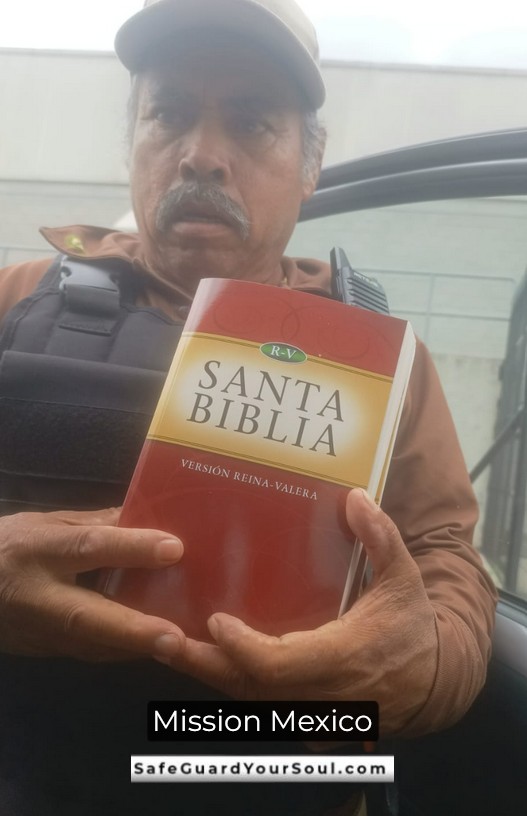
Over breakfast, when I brought the first shipment of the Spanish Bibles to Juan, he asked me if he could give them away to people who are not in prison. Of course I said “Yes” and that these Bibles are for him to be used of God to give wherever he wishes, as he ministers.
Juan is a man who is filled with God’s Word. He speaks verbatim Scripture in Spanish perpetually. The reason I know that is that when we sit down to talk at length he speaks and it’s translated into English and is pure Scripture. He has volumes of Holy Scripture memorized.
Here is Juan ministering to a dear lady. And remember, most Mexicans it seems, do not have a Bible in their home. They greatly treasure God’s Word.
“PRICELESS, LIKE OUR SAVIOR!!! She reminds me of my Great Grandma…she glowed with God’s love. It was written all over her face. She brightened the room, and you KNEW she loved you! It wasn’t till I knew the Lord, that I realized where that glow and love came from. This little light of mine, I’m a gonna let it shine… The tragedy is when that light goes out, and you can see and feel that also. VERY SAD. It’s like shutting off a light switch…from light to darkness. And they can’t see it?! So, I thank God for those who are sharing that light of God’s love, and sharing with them. Will keep praying for Maria, you, your ministry, and the family of God. Felipe, Mark, all the brethren. I keep wondering about Paul and Carol Galloway–will keep praying. God knows. May the LORD bless you Brother Todd….What a wonderful first E-mail of the day! GOD’S JOY.” Crystal
Message from brother Juan on the Spanish communications group (WA whatsapp).
“There are many injustices in life; the Word of God says so. Many receive no visitors. God works in us both to will and to act according to His good pleasure. We are called to be doers of God’s Word. And knowing the good we ought to do, yet failing to do it, is sin. To Him be all glory and honor.” Brother Juan
RECENTLY: Immediately upon beginning to hear God’s Word spoken to him in Spanish, this man began to weep and to profusely thank God, to call out to Jesus, to kiss the Jesus tract he was given, to kiss my hand and cheek. Need I state the obvious, of how hungry these beloved people are to hear and believe Jesus’ bless-ed Gospel? …. Beloved Filipe was given the Gospel of Christ and instructed to go home and repent and receive Christ for the forgiveness of his sins and that only Jesus can forgive him and that it’s not about religion but relationship. Like the vast majority of Mexicans (99%), Filipe had never heard the Gospel of Jesus till today. Please lift beloved Filipe and the Mission Mexico heavenly operation in prayer. Thank you.
WHERE does God want you in this last hour – doing HIS will, being about the “Father’s business”? (Luke 2:49) Are you surrendered and therefore crying out to the LORD to put you on HIS EARTH exactly where you can please Him the most? | Mission Mexico
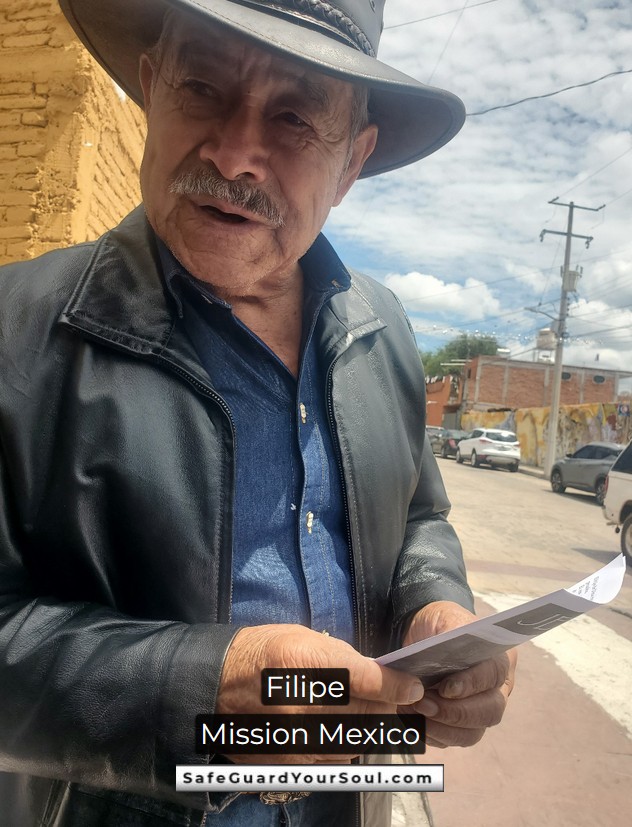

It’s all because of God’s love in Christ and your prayers and support…. This homeless man received God’s love in the form of the spoken Word, a JESUS track in Spanish, and a warm breakfast and hot coffee! Jesus is moving!
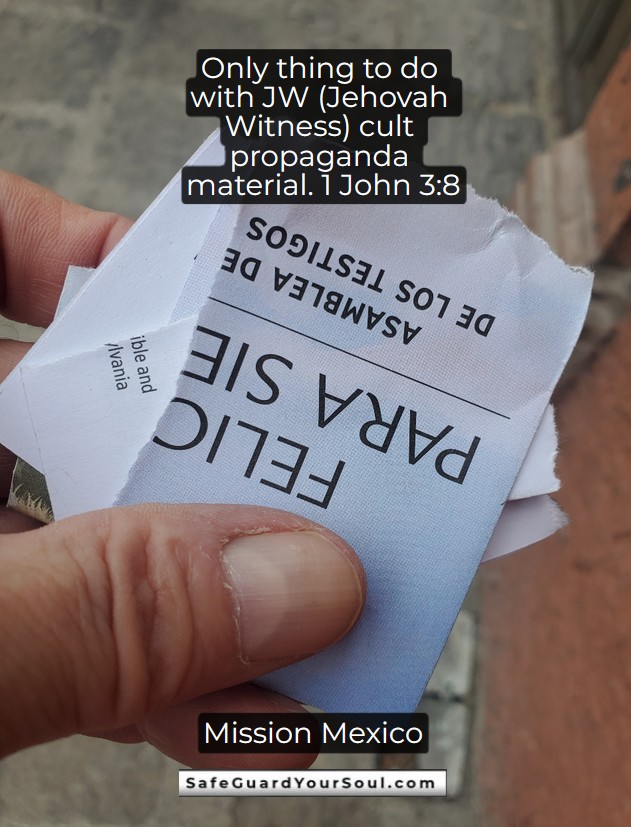
“For this purpose the Son of God was manifested, that he might destroy the works of the devil.” 1 John 3:8
Mission Mexico
https://safeguardyoursoul.com/mexico-mission/
Issidro asked for prayer. He’s catholic but he’s open, a little bit. He received an abundance of truth from God’s Word today and a JESUS tract in Spanish. Thank you for lifting these precious souls in prayer saints.


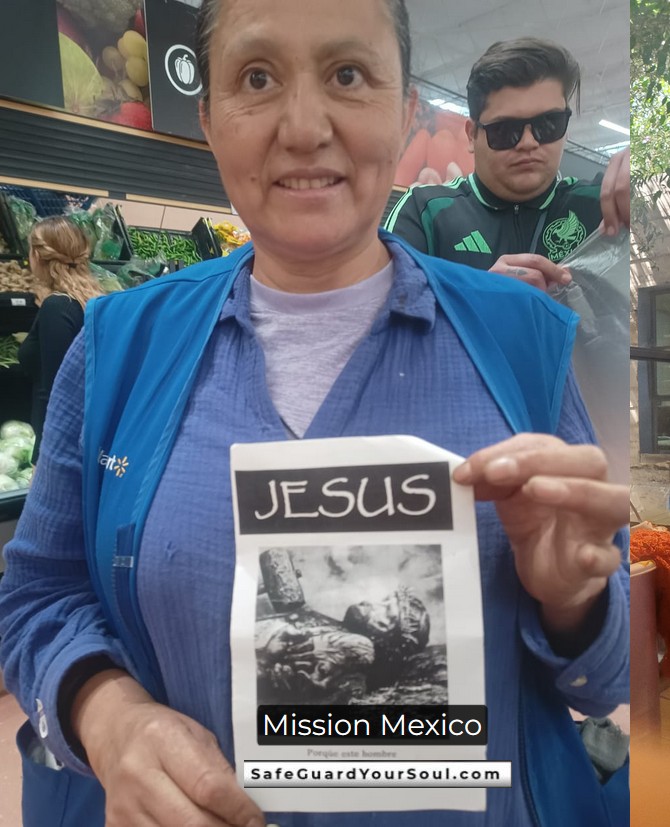



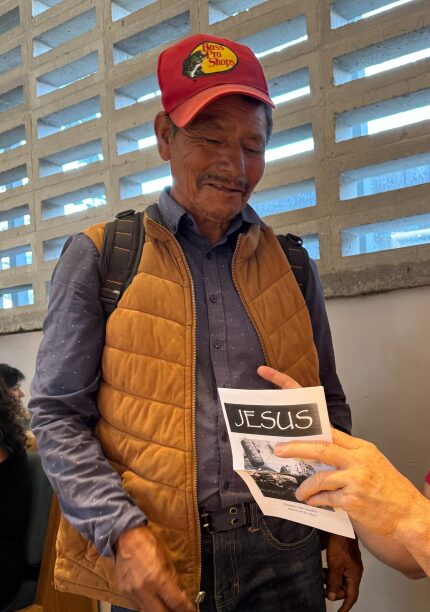
“Praise the Lord ! She is shining for Jesus! Overflowing Joy! It’s a blessing to see how God is moving in the ministry, Mexico for Jesus, Glory to God!!” Darlene
“For the Son of man is come to seek and to save that which was lost.” Luke 19:10
Mission Mexico – See more here. | Give support here. Many options
Download. Read. Print out your supply of the JESUS tract – English and Spanish.

Articles
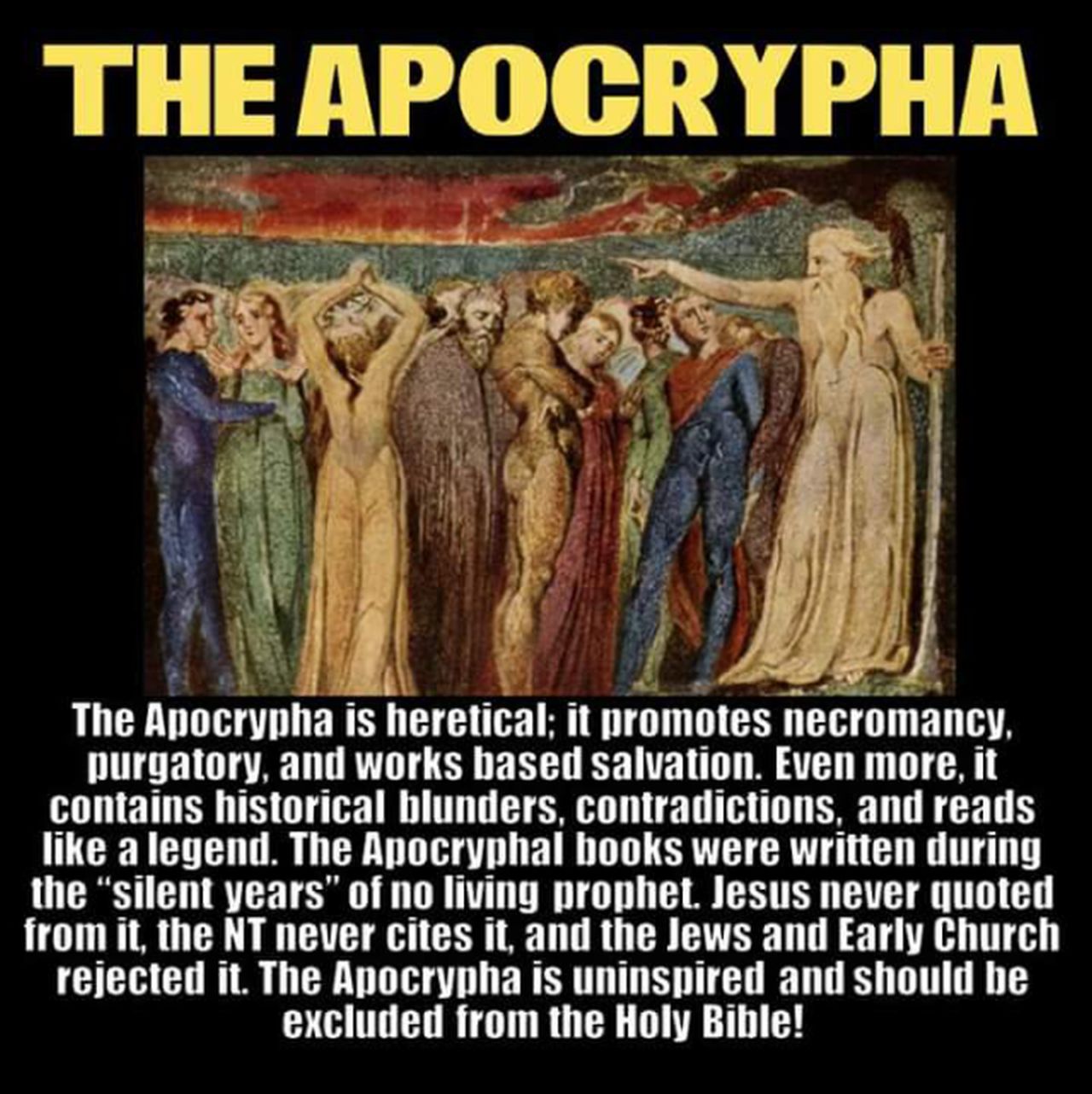
Why the Apocrypha Isn’t in the Bible
MESSAGE GIVEN:
“I’m reading the apocrypha now and you can tell it’s definitely from the Bible and seems like it should be in there. I guess that is why God said in revelation if anyone changes or removes or adds anything to this Holy book all the plagues in it will come on them, cos he knew that it would happen.” V.
REPLY:
You are missapplying Revelation 22:18-19. God oversaw the canon of His Word, just as He promised to do in Ps 12:6-7. It’s exactly how He desired, ordained it to be in the King James Bible. To say God checked out, was negligent, is a lie, is bearing false witness, and is an indictment against the Almighty (Psalms 121:4; Daniel 4:32, etc.). There were specific reasons those apocryphal books were not included in the real Bible, as opposed to the catholic “bible.”
Roman Catholics may tell you, “You Protestants are missing part of the Bible. We have the rest of it.” [Note: These people’s leaders (popes, priests, etc.) have led them astray to this wrong belief.] This comment about missing books can throw people off, but it no longer has to. These popish additions to the Bible are commonly called the Apocrypha or sometimes the Deuterocanonical books. This is a short treatise on WHY these books are not in the Bible.
What is the Apocrypha anyway?
The Apocrypha is a collection of uninspired, spurious books written by various individuals. The Catholic religion considers these books as scripture just like a Bible-believer believes that the 66 books in the 1611 Authorized Version of the Bible are the Word of God, i.e., Genesis to Revelation. We are going to examine some verses from the Apocrypha later in our discussion.
At the Council of Trent (1546) the Roman Catholic institution pronounced the following apocryphal books sacred. They asserted that the apocryphal books together with unwritten tradition are of God and are to be received and venerated as the Word of God. So now you have the Bible, the Apocrypha and Catholic Tradition as co-equal sources of truth for the Catholic. In reality, it seems obvious that the Bible is the last source of truth for Catholics. Roman Catholic doctrine comes primarily from tradition stuck together with a few Bible names. In my reading of Catholic materials, I find notes like this: “You have to keep the Bible in perspective.” Catholics have been deceived into not believing that the Bible is God’s complete revelation for man [but they can come out of these deceptions in an instant if they will only believe the Bible as it is written].
THE ROMAN CATHOLIC APOCRYPHA
- Tobit
- Judith
- Wisdom
- Ecclesiasticus
- Baruch
- First and Second Maccabees
- Additions to Esther and Daniel
Apocryphal Books Rejected by the Catholic Religion:
- First and Second Esdras
- Prayer of Manasses
- Susanna*
*A reader says: “Susanna is in the Roman Catholic canon. It is Daniel 13.”
Why the Apocrypha Isn’t in the Bible.
Not one of the apocryphal books is written in the Hebrew language (the Old Testament was written in Hebrew). All Apocryphal books are in Greek, except one which is extant only in Latin.
None of the apocryphal writers laid claim to inspiration.
The apocryphal books were never acknowledged as sacred scriptures by the Jews, custodians of the Hebrew scriptures (the apocrypha was written prior to the New Testament). In fact, the Jewish people rejected and destroyed the apocrypha after the overthow of Jerusalem in 70 A.D.
The apocryphal books were not permitted among the sacred books during the first four centuries of the real Christian church (I’m certainly not talking about the Catholic religion. The Roman Catholic “Church” is not Christian).
The Apocrypha contains fabulous statements which not only contradict the “canonical” scriptures but themselves. For example, in the two Books of Maccabees, Antiochus Epiphanes is made to die three different deaths in three different places.
The Apocrypha includes doctrines in variance with the Bible, such as prayers for the dead and sinless perfection. The following verses are taken from the Apocrypha translation by Ronald Knox dated 1954:
Basis for the doctrine of purgatory:
2 Maccabees 12:43-45, 2.000 pieces of silver were sent to Jerusalem for a sin-offering…Whereupon he made reconciliation for the dead, that they might be delivered from sin.
Salvation by works:
Ecclesiasticus 3:30, Water will quench a flaming fire, and alms maketh atonement for sin.
Tobit 12:8-9, 17, It is better to give alms than to lay up gold; for alms doth deliver from death, and shall purge away all sin.
Magic:
Tobit 6:5-8, If the Devil, or an evil spirit troubles anyone, they can be driven away by making a smoke of the heart, liver, and gall of a fish…and the Devil will smell it, and flee away, and never come again anymore.
Mary was born sinless (immaculate conception):
Wisdom 8:19-20, And I was a witty child and had received a good soul. And whereas I was more good, I came to a body undefiled.
It teaches immoral practices, such as lying, suicide, assassination and magical incantation.
No apocryphal book is referred to in the New Testament whereas the Old Testament is referred to hundreds of times.
Because of these and other reasons, the apocryphal books are only valuable as ancient documents illustrative of the manners, language, opinions and history of the East.
Wasn’t the Apocrypha in the King James Bible?
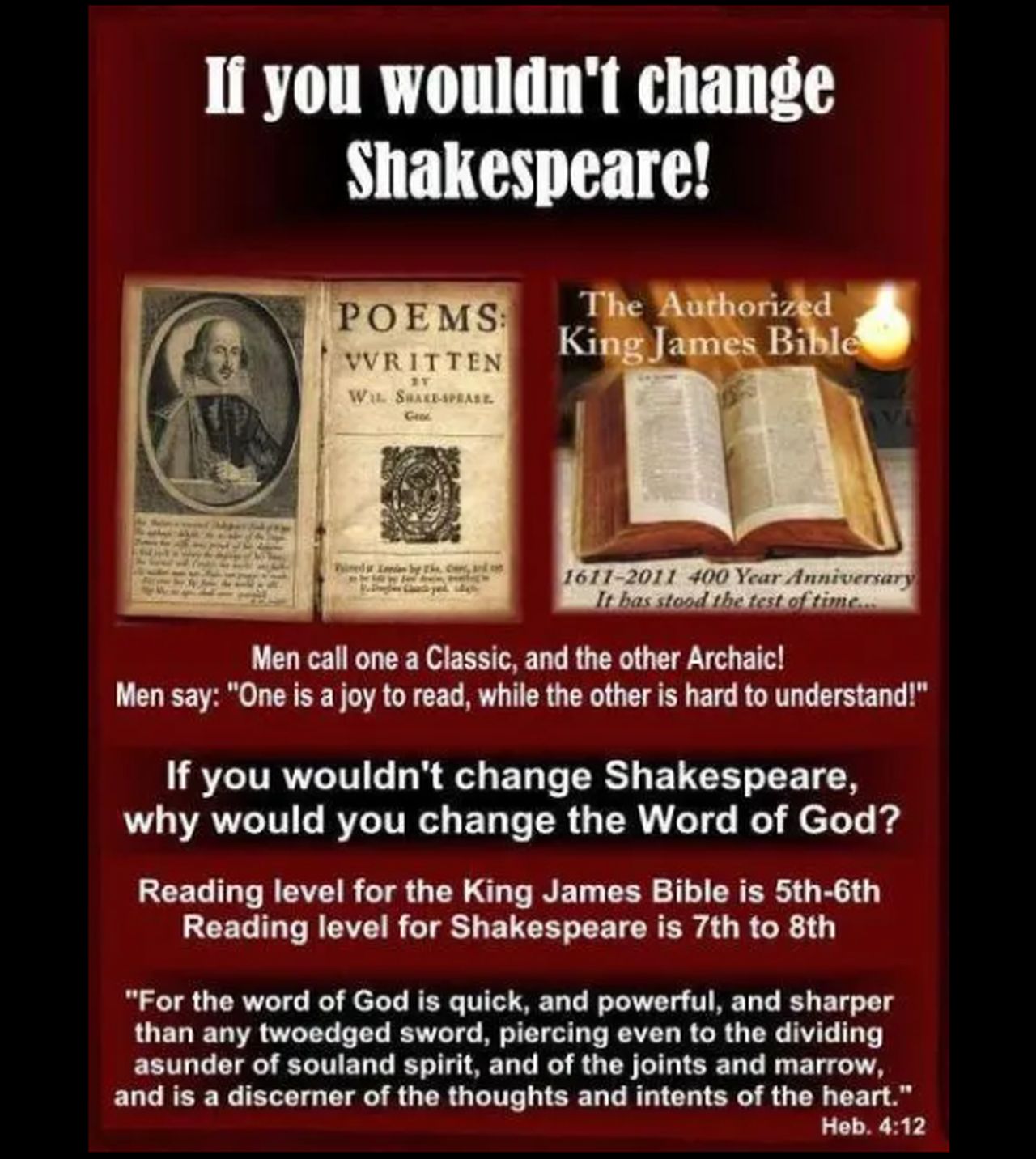
The King James translators never considered the Apocrypha the word of God. As books of some historical value (e.g., details of the Maccabean revolt), the Apocrypha was sandwiched between the Old and New Testaments as an appendix of reference material. This followed the format that Luther had used. Luther prefaced the Apocrypha with a statement:
“APOCRYPHA–THAT IS, BOOKS WHICH ARE NOT REGARDED AS EQUAL TO THE HOLY SCRIPUTRES, AND YET ARE PROFITABLE AND GOOD TO READ.” KING JAMES VERSION DEFENDED, PAGE 98.
In 1599, TWELVE YEARS BEFORE the King James Bible was published, King James himself said this about the Apocrypha:
“AS TO THE APOCRIPHE BOOKES, I OMIT THEM BECAUSE I AM NO PAPIST (AS I SAID BEFORE)…” KING JAMES CHARLES STEWART BASILICON DORON, PAGE 13
In his, “A Premonition to All Most Mightie Monarches,”–found in his Workes (a collection of the king’s writings)–King James said this–
“…IS IT A SMALL CORRUPTING OF THE SCRIPTURES TO MAKE ALL, OR THE MOST PART OF THE APOCRYPHA OF EQUALL FAITH WITH THE CANONICALL SCRIPTURES…?”
Not only this, but the sixth article of the Thirty-nine Articles of the Church of England (1571 edition. The Church of England published the Authorized King James Version) states that
(1) the Old and New Testaments are the Bible–
IN THE NAME OF THE HOLY, WE DO VNDERSTANDE THOSE CANONICAL BOOKES OF THE OLDE AND NEWE TESTAMENT, OF WHOSE AUTHORITIE WAS NEVER ANY DOUBT IN THE CHURCHE…
(2) the apocrypha is not the Bible–
AND THE OTHER BOOKES, (AS HIEROME SAYETH), THE CHURCHE DOTH READE FOR EXAMPLE OF LIFE AND INSTRUCTION OF MANNERS: BUT YET DOTH IT NOT APPLIE THEM TO ESTABLISH ANY DOCTRENE. PHILIP SCHAFF, CREEDS OF CHRISTENDOM. GRAND RAPIDS: BAKER BOOK HOUSE, 1977, VOL. III, PP. 489-491.
The Hampton Court Document came as a result of the famous Hampton Court Conference of 1604 when King James specially commanded the translation of the Bible that would one day bear his name. Concerning the apocrypha and the Church of England, it states–
THE APOCRYPHA, THAT HATH SOME REPUGNANCY TO THE CANONICAL SCRIPTURES, SHALL NOT BE READ…
Select Statutes and Other Constitutional Documents Illustrative of the Reigns of Elizabeth and James I, edited by G.W. Prothero, Fellow of King’s College, Cambridge, 1894, p. 416
The Apocrypha began to be omitted from the Authorized Version in 1629. Puritans and Presbyterians lobbied for the complete removal of the Apocrypha from the Bible and in 1825 the British and Foreign Bible Society agreed. From that time on, the Apocrypha has been eliminated from practically all English Bibles–Catholic Bibles and some pulpit Bibles excepted.
Not even all Catholic “Church Fathers” believed the Apocrypha was scripture.
Not that this really means anything. The truth is not validated by the false. Nevertheless, this may be of interest to some… Jerome (340-420) rejected the Apocrypha:
“AS THE CHURCH READS THE BOOKS OF JUDITH AND TOBIT AND MACCABEES BUT DOES NOT RECEIVE THEM AMONG THE CANONICAL SCRIPTURES, SO ALSO IT READS WISDOM AND ECCLESIASTICUS FOR THE EDIFICATION OF THE PEOPLE, NOT FOR THE AUTHORITATIVE CONFIRMATION OF DOCTRINE.” JEROME, JEROME’S PREFACE TO THE BOOKS OF SOLOMON
According to Edward Hills in The King James Version Defended p. 98 other famous Catholics with this viewpoint include Augustine (354-430 who at first defended the Apocrypha as canonical), Pope Gregory the Great (540-604), Cardinal Ximenes, and Cardinal Cajetan.
There are other spurious books.
These include the Pseudepigrapha which contains Enoch, Michael the Archangel, and Jannes and Jambres. Many spurious books falsely claim to have been written by various Old Testament patriarchs. They were composed between 200 B.C. and 100 A.D. There are lots of these spurious books like The Assumption of Moses, Apocalypse of Elijah, and Ascension of Isaiah.
Concerning the Dead Sea Scrolls, there may be some information in them that parallels the Masoretic Text, but there are fables in them, too. I went to see the scrolls a few years ago with great expectation but found a bunch of fables. The best defense against error in any form (unauthorized Bibles and religions) is a solid knowledge of the AUTHORIZED (King James) Version of 1611 of the Bible. If you read it, forgeries become readily apparent.
BIBLIOGRAPHY:
King James VI & I Page
The Workes of the Most High and Mightie Prince Iames [James], By the Grace of God, King of Great Britaine, France, and Ireland, Defender of the Faith, &c.
Translators Revived, Alexander McClure, p. 142
Bible Believing Study, Edward F. Hills, p. 15
The King James Version Defended, Edward F. Hills, p. 96, 97, 98
God Wrote Only One Bible, Jasper James Ray, p. 90
An Understandable History of the Bible, Dr. Samuel Gipp, p. 245
Making Peace with God | Bible Versions Issue | Why Did the 1611 KJV Include the Apocrypha? | THE NEW AMERICAN BIBLE OR DOUAY? Catholic “Bibles” Exposed | Lineage of the Modern Corrupt | The Catholic Church Exposed


Articles
What is the difference between a “Textus Receptus Man” and a “King James Man?”
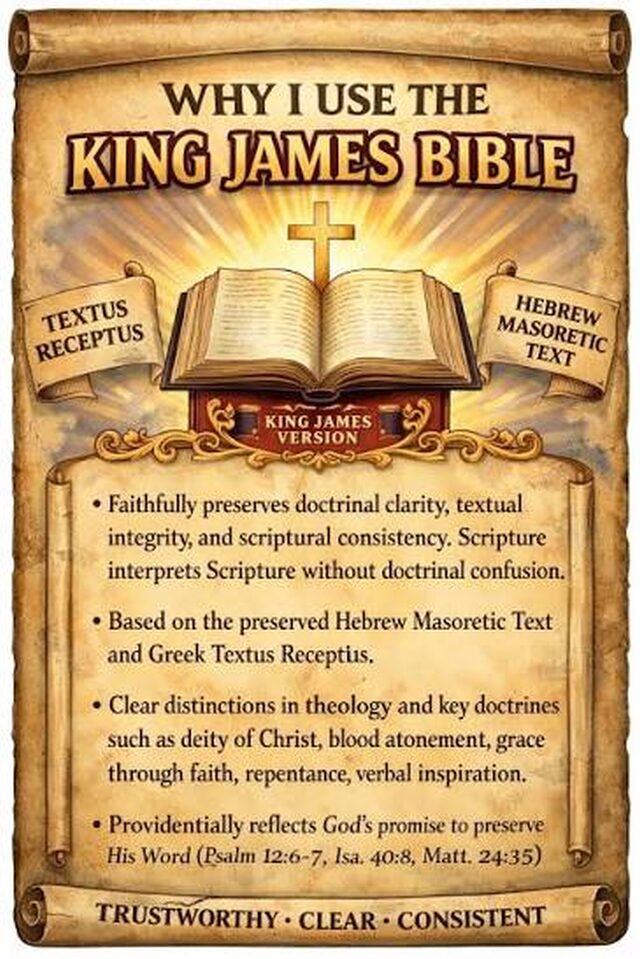
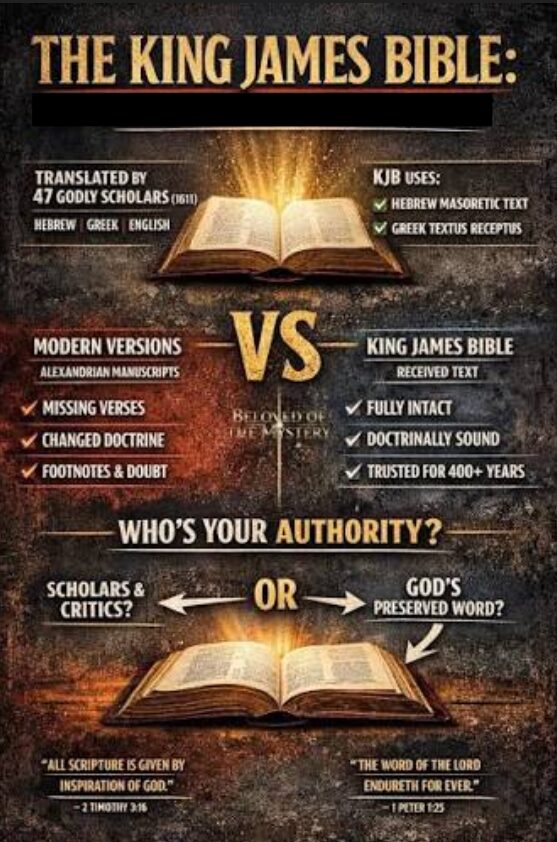
It’s not so much about King James. It’s about the manuscripts from which it was translated. The Received Text, or Textus Receptus.
From “The Answer Book” ©1989 Samuel C. Gipp.
QUESTION: What is the difference between a “Textus Receptus Man” and a “King James Man?”
ANSWER: A “TR Man” gets his manuscripts from Antioch and his philosophy from Egypt.
EXPLANATION: Under Question #8 concerning Alexandria and Antioch it was pointed out that we derive two things from each of these locations. We derive manuscripts and an ideology through which we judge those manuscripts.
From Alexandria we receive corrupted manuscripts, tainted by the critical hand of Origen. We also receive an ideology that believes the Bible to be divine, but not perfect, not without error.
From Antioch we receive the pure line of manuscripts culminating in what is known as the “Received Text” or Textus Receptus. We also receive the ideology that the Bible is not only Divine, but perfect, without error.
1. Most Bible critics do not believe that the Bible is perfect (The Alexandrian Ideology). They usually also accept the Alexandrian manuscripts as superior to those of Antioch.
2. A King James Bible believer accepts the Antiochian manuscripts or Textus Receptus as superior to the Alexandrian. They also accept the Antiochian Ideology in that they accept the Bible as infallible and do not believe it contains any errors or mistranslations and that it cannot be improved.
3. A Textus Receptus man also accepts the Antiochian manuscripts or Textus Receptus as superior to the Alexandrian. But a Textus Receptus man accepts the Antiochian manuscripts yet he views them with the Alexandrian Ideology.
He does not accept any translation as perfect and without error. He generally feels that the King James is the best translation but can be improved. He usually stumbles at Acts 12:4 and states that it is a mistranslation.
This contradiction is NOT the result of a bad or dishonest heart so much as it is the result of a bad education. Most Textus Receptus men have been taught by others who have been deceived into accepting, unconsciously, the Alexandrian Ideology.
Let’s Grow Together! Sign up here to begin receiving the Moments with Our Master email devotional that is sure to help you grow in His grace and in the knowledge of our LORD and Savior Jesus Christ (2 Pet. 1:2; 3:18). It’s sent out for the edification of the body of Christ. Sign Up HERE.
Support | STORE | Podcasts | Jail/Prison Ministry | Mexico Mission here | All Ministry Updates | H.O.T. Bible Study [podcast] | Church History Exposed | Bible Agnostics Exposed | How to Spot a Fake Bible [podcast] | WHAT ABOUT PEOPLE WHO CAN’T UNDERSTAND THE KJB? [podcast] | New American Standard Version “Bible” NASV Catastrophe Exposed | The Audacity of Defending the New Versions | Do We Have God’s Word or Do You Need to Know the Original Languages? [podcast] | Bible Versions Category |







More Good News! Mission Mexico Part 42

Why the Apocrypha Isn’t in the Bible

What is the difference between a “Textus Receptus Man” and a “King James Man?”

David’s Farewell Prayer [podcast]

Water Baptism: Understanding It [study guide]

Favorite Eternal Security “Proof” Text? [podcast]

Laboring Fervently for Christ’s Body [podcast]

Abiding Under the Shadow of the Almighty [podcast]

The Warnings of the Book of Jude [podcast]

Attend to My Words [podcast]

Gathering Fruit for Christ’s Eternal Glory [podcast]

Acquaint now thyself with him, and be at peace: thereby good shall come unto thee [podcast]

Dwelling in the Secret Place of the Most High [podcast]

The Over Population Delusion Exposed [video]

Are You Bless-able? English and Spanish [podcast]

The Damning Myth of Unconditional Eternal Security! [podcast]

Calvinism’s Origins and Historical Roots [podcast]

Name Cult Warning: Beware of the Yahweh, Yahushua, Yahuah Cults!
Favorite Eternal Security “Proof” Text? [podcast]
Water Baptism: Understanding It [study guide]
Dwelling in the Secret Place of the Most High [podcast]
Acquaint now thyself with him, and be at peace: thereby good shall come unto thee [podcast]
Why the Apocrypha Isn’t in the Bible
The Warnings of the Book of Jude [podcast]

“You Who are Troubled Rest with Us” [podcast]

Penknife Sacrilege [podcast]
Attend to My Words [podcast]
The Over Population Delusion Exposed [video]

Diminishing Returns or Divine Blessings? [podcast]

Be Not Moved Away from the Hope of the Gospel [podcast]
More Good News! Mission Mexico Part 42
Why the Apocrypha Isn’t in the Bible
What is the difference between a “Textus Receptus Man” and a “King James Man?”


 America1 year ago
The Drugging of America: The Pharmakeia Sorcery Deception [podcast]
- Articles2 years ago
Children being Rescued in Tunnels: Happening Now – UPDATE!
- Articles8 years ago
Self-Examination in Preparation for the Lord’s Return
- Apostasy2 years ago
SHOCKING List of False Prophets Most Believe are True