






Use the 10 Commandments to bring conviction to the consciences of the lost and backslidden. THAT’s exactly how New Testament saints are instructed to use the Law.
Do you have the 10 Commandments memorized? Do it now.

GOSPEL/KINGDOM TRUTH:
People must become convicted of their sin before they are broken and shown the need to repent. This truth is essential to successful ministering. Gal 3:24; 1 Tim 1:7-10; Ps 19:7 … You cannot and will never talk anyone into being saved. You don’t have that power. God does. And He instructs us to give them the divine sword which cuts straight into the consciences of men, convicting and drawing them.
“The law of the LORD is perfect, converting the soul: the testimony of the LORD is sure, making wise the simple.” Psalms 19:7
Notice, not your words or mine but rather “The law of the LORD is perfect, converting the soul.” Memorize this verse and the 10 Commandments. THAT’s when you will be armed and dangerous!
Today we have many ideas and notions concerning the important calling to evangelize the lost. Much of it is based upon mere human reason as an approach. Remember, we are but dust and that God knows what people, sinners need. And He told us what they need and how to engage them. Giving them the law, perhaps at times incorporating it conversationally, speaking it with care, lovingly, is the stated divine prescription.
The law convicts the sinner that he is just that – a sinner separated from his Maker, “alienated from the life of God.” (Ephesians 4:18) Then comes the Good News, the grace, the cross.
The law of God convicts. The Word of God rejoices the heart and enlightens the eyes.
“The law of the LORD is perfect, converting the soul: the testimony of the LORD is sure, making wise the simple. 8 The statutes of the LORD are right, rejoicing the heart: the commandment of the LORD is pure, enlightening the eyes.” Psalms 19:7-8
The law of God convicts sinners and brings them to Christ.
“Wherefore the law was our schoolmaster to bring us unto Christ, that we might be justified by faith.” Galatians 3:24
BIBLICAL EVANGELISM: When people realize they are lost through the law, by being convicted of their sin against God, they sense the separation and impending judgment. At this point, by divine design, they will be more readily accepting of being saved. The law clearly conveys, exposes our sin, convicts the conscience of the guilt of sin and opens the door wide for them to be saved. Law must precede grace. Moses (the law) preceded Jesus (grace) (John 1:17). The sinner must be convicted by the law that he’s a sinner before he realizes his need to receive Christ! (Galatians 3:24; 1 Timothy 1:8-11)
The law convicts deeply. Let the law of God do its work. It’s futility (without the law) to attempt to convince a sinner of his sin and therefore his need to be saved, forgiven. God’s law does this!
“And of some have compassion, making a difference: 23 And others save with fear, pulling them out of the fire; hating even the garment spotted by the flesh.” Jude 22-23
The ultimate divine goal is to convict and to save the soul. This is why we must obey God by preaching HIS WORDS – law to convict and gospel to save (Romans 1:16; Psalms 19:7, etc.).

“But we know that the law is good, if a man use it lawfully; 9 Knowing this, that the law is NOT made for a righteous man, but (it is made) for the lawless and disobedient, for the ungodly and for sinners, for unholy and profane, for murderers of fathers and murderers of mothers, for manslayers, 10 For whoremongers, for them that defile themselves with mankind, for menstealers, for liars, for perjured persons, and if there be any other thing that is contrary to sound doctrine; 11 According to the glorious gospel of the blessed God, which was committed to my trust.” 1 Timothy 1:8-11
Notice closely…. the law IS made for sinners…. to convict them of their sin so they may come to Christ!
“The law is not made for a righteous man, but for the lawless and disobedient, for the ungodly and for sinners…” 1 Timothy 1:9
Presenting the Word: First, employ the law to cut, to convict, and to expose how wicked the sinner is and deserving of nothing but damnation, THEN the Gospel of Jesus’ saving grace to make the sinner whole. Amen!
Let’s look at it again and you may wish to memorize this truth:
“Wherefore the law was our schoolmaster to bring us unto Christ, that we might be justified by faith.” Galatians 3:24
The sharp edge of the law convicts the sinner unto repentance.
NO one will BE saved before becoming greatly convicted of their sin. give them the Law then they will desire Christ (Galatians 3:24; 1 Timothy 1:9-11). The law convicts and brings them to Christ – it serves God’s purpose. We don’t lead them to Christ so much as God’s law convicts and leaves them feeling the reality of their alienation from God – and then they will be prepared to hear the saving Gospel of Christ. This is the New Testament way of winning souls to Jesus.
Jesus only saves those who truly repent and not those who just say a prayer! In order for one to repent, he must receive the Law, be convicted, repent and believe on the LORD Jesus Christ. Many have said a prayer but didn’t repent. The fact that their life is not completely changed by Christ proves they didn’t repent. The Law of God (the Ten Commandments) when used correctly and verbatim, convicts the sinner and leads him to repentance.
Gary Skinner writes: “God’s 10 Commandments should be memorized by every believer.”
God spoke for Himself when He told us that His law convicts the lost sinner and brings him to Christ (Galatians 3:24). “According to the glorious gospel” the LORD told us that His law is made, not for the saved but rather “for the lawless.” ….
“Knowing this, that the law is not made for a righteous man, but for the lawless and disobedient, for the ungodly and for sinners, for unholy and profane, for murderers of fathers and murderers of mothers, for manslayers, 10 For whoremongers, for them that defile themselves with mankind, for menstealers, for liars, for perjured persons, and if there be any other thing that is contrary to sound doctrine; 11 According to the glorious gospel of the blessed God, which was committed to my trust.” 1 Timothy 1:9-11
DO you know and do you access the 10 Commandments in God’s Word – to convict sinners?
What Bible chapter are the 10 Commandments found in? Exodus 20
10 Commandment Evangelism in Action: Derek’s Dilemma and Deliverance!
Today we have several well-known apologists who often appear before secular crowds at universities, king of like the apostle Paul as he spoke with the Athenians and those on Mars’ Hill.
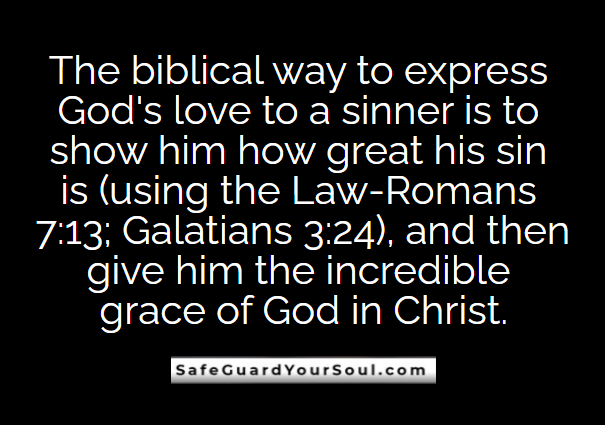
What’s most important and the biblical model for evangelism, is to give the lost the law of God (10 Commandments), to convict them which in turn will bring them to Christ (Romans 7:12; Galatians 3:24; 1 Timothy 1:7-10). Placating lost souls with scientific arguments in defense of the faith seems to seldom if ever result in a lost sinner coming to the Savior in repentance. It is the law of God that pierces directly into the consciences of men and converts sinners to Christ (Psalms 19:7). When Paul spoke with the secularists of his day on Mars’ Hill he spoke to them of their idolatry (a sin violating the first 2 of the 10 Commandments), called them to repentance, and warned them that Judgment Day was coming (Acts 17:22-34).
Social media is full of people telling sinners the benefits of salvation, before they are saved, instead of obeying God and preaching the essentials of the law and call to repentance to convict them of that sin. In order for the sinner to experience the blessings of Christ’s salvation, they must be convicted of their sin, their separation from God. This is done by giving them the law, the 10 Commandments.
Give sinners the LAW to convict them of sin and therefore their separation from God. That is Bible evangelism (Galatians 3:24; 1 Timothy 1:7-11). Then preach the Gospel (Mark 16:15). No one can be talked into being saved. They must be preached into the kingdom, into being saved. It doesn’t matter how badly you want them to be saved, they will not be saved unless someone gives them the law to convict them – to expose their sin to them, bringing conviction and repentance. In being crucified with Christ, your personal sentiments will be mortified out of the way.
God begs no one. We all need Him. He doesn’t need us.
The law convicts the heart of sin and causes people to run to the LORD for the forgiveness He alone can give.
THE TEN COMMANDMENTS
Exodus 20
- “Thou shalt have no other gods before me.” v3
- “Thou shalt not make unto thee any graven image, or any likeness of any thing that is in heaven above, or that is in the earth beneath, or that is in the water under the earth:” v4
- “Thou shalt not take the name of the LORD thy God in vain; for the LORD will not hold him guiltless that taketh his name in vain.” v7
- “Remember the sabbath day, to keep it holy.” v8
- “Honour thy father and thy mother: that thy days may be long upon the land which the LORD thy God giveth thee.” v12
- “Thou shalt not kill.” v13
- “Thou shalt not commit adultery.” v14
- “Thou shalt not steal.” v15
- “Thou shalt not bear false witness against thy neighbour.” v16
- “Thou shalt not covet thy neighbour’s house, thou shalt not covet thy neighbour’s wife, nor his manservant, nor his maidservant, nor his ox, nor his ass, nor any thing that is thy neighbour’s.” v17
After copying and pasting the Ten Commandments above, recently I sent the following to a sinner:
How does what you are saying to deflect and mock Christians and the LORD change your own personal accountability to your Maker who is the Judge of your eternal soul? We have all sinned against Him…. you included …. He sees the lies you’ve told, the people you’ve hated, the lust of the heart, the use of His holy name in vain, having other gods before Him (idolatry)…. why not settle out of court? Why not surrender in an honest heart and admit to Him what He already knows…. all of your sin? (Exodus 20)
Always, always, always use the Law to bring conviction of sin with sinners. That is the Bible, the New Testament way.
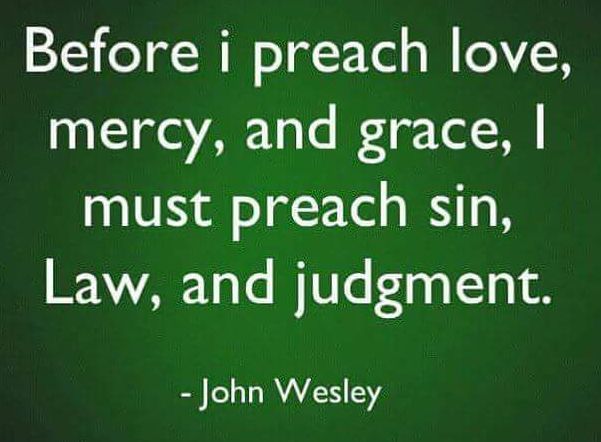
“ACCORDING TO THE GLORIOUS GOSPEL” we are to teach New Testament believers to use the law to bring conviction to lost souls (Psalms 19:7; Galatians 3:24; 1 Timothy 1:11). In order to be “meet (fit) for the master’s use,” one should know those 10 commandments in order to use them when evangelizing (2 Timothy 2:21).
Do you have the 10 Commandments memorized in order to help sinners be convicted of their sin and be saved?
Regrettably, the essential doctrine of repentance is a lost doctrine of the modern church and without it, one cannot possibly be born again, regenerated (Luke 13:3; John 3:3, 7; Titus 3:5-7). The sinner must first become convicted by the Law to be moved by the Holy Spirit to repent.
The New Testament way of evangelizing begins with putting the law of God, the 10 Commandments, in the hearts of sinners (1 Timothy 1:8-11).
New Testament believers are to use the law, the 10 commandments…. dropping them in people’s hearts and talking with them about how sinful we all are and in need of the Savior’s forgiveness and quoting the commandment and asking them specifically if they’ve committed that sin…. Watch God convict!
The law of God convicts the sinner that he’s sinned against a Holy God. The believer can assist in this process by asking them the questions of breaking His holy law, using the 10 Commandments. This is specifically according to the Gospel. Read 1 Timothy 1:7-10.
Eunice Tabuzo writes:
“The Gospel is only good news to those who understand the bad news about sin. By comparing the Law (God’s ten commandments), with our lives, we will realize by the power of the Holy Spirit that it is impossible for any of us to perfectly keep the Law. It becomes clear that all people have sinned and therefore, we are all worthy of condemnation; being guilty in the sight of God, and that we are all lawbreakers in need of forgiveness.
The good news is that God has provided forgiveness in the Person and work of Jesus. By His perfect life, death, burial and resurrection, Jesus accomplished all that God’s law requires of us in order to attain righteousness and full payment for our disobedience. Jesus Christ gave Himself to pay for our sins and provide the way of salvation—freedom from the condemnation we deserve.
God requires complete obedience. Jesus provides complete salvation for the disobedient who confess their sin before Him, repent of their transgressions, of their rebellion, and trust in Him as their Savior and Lord. Every repenting sinner who turns away from sin and trusts Jesus will be saved from sin.
What God requires in His Law He provides in His Gospel. That is the message of the Bible and it is what everyone needs to hear and believe to be saved.
So, Christians, when we share the Gospel, we need to declare the Law and the Gospel, and pray for the Spirit to bless the hearer to reveal Christ to them and to establish them in His way. God’s Truth is a powerful instrument in the hands of His Spirit. By the Spirit, may God’s truth bring conviction through His commandments and salvation through His Son.
Blessed be the only true God who has poured out His great mercy to bring us unto salvation through His Son Jesus Christ! To Him alone be the glory forever, amen!”
Below is an exciting real life example of the law being used to bring a sinner to Christ.
YOUR PRAYER: Holy Father, prepare me, Your vessel, to be mightily used of Thee, in Jesus’ name. Amen.
Support | STORE | Podcasts | Light of the World | Evangelism | Jesus, Light of the Word | Compassion in Light of Christ’s Soon Return | Striving Together for the Faith of the Gospel [podcast] | Prepared to be Used of God | The Return of Christ


Articles
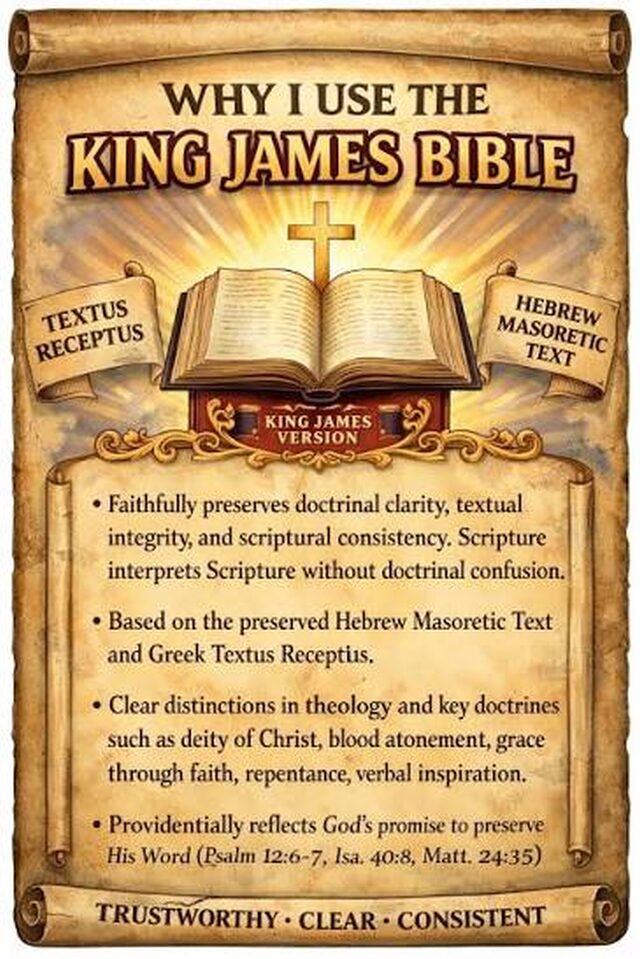
What is the difference between a “Textus Receptus Man” and a “King James Man?”

It’s not so much about King James. It’s about the manuscripts from which it was translated. The Received Text, or Textus Receptus.
From “The Answer Book” ©1989 Samuel C. Gipp.
QUESTION: What is the difference between a “Textus Receptus Man” and a “King James Man?”
ANSWER: A “TR Man” gets his manuscripts from Antioch and his philosophy from Egypt.
EXPLANATION: Under Question #8 concerning Alexandria and Antioch it was pointed out that we derive two things from each of these locations. We derive manuscripts and an ideology through which we judge those manuscripts.
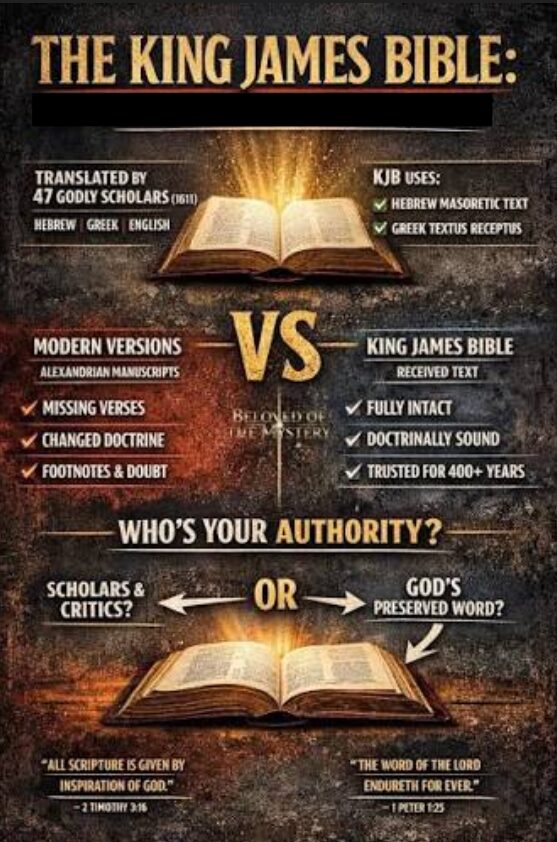
From Alexandria we receive corrupted manuscripts, tainted by the critical hand of Origen. We also receive an ideology that believes the Bible to be divine, but not perfect, not without error.
From Antioch we receive the pure line of manuscripts culminating in what is known as the “Received Text” or Textus Receptus. We also receive the ideology that the Bible is not only Divine, but perfect, without error.
1. Most Bible critics do not believe that the Bible is perfect (The Alexandrian Ideology). They usually also accept the Alexandrian manuscripts as superior to those of Antioch.
2. A King James Bible believer accepts the Antiochian manuscripts or Textus Receptus as superior to the Alexandrian. They also accept the Antiochian Ideology in that they accept the Bible as infallible and do not believe it contains any errors or mistranslations and that it cannot be improved.
3. A Textus Receptus man also accepts the Antiochian manuscripts or Textus Receptus as superior to the Alexandrian. But a Textus Receptus man accepts the Antiochian manuscripts yet he views them with the Alexandrian Ideology.
He does not accept any translation as perfect and without error. He generally feels that the King James is the best translation but can be improved. He usually stumbles at Acts 12:4 and states that it is a mistranslation.
This contradiction is NOT the result of a bad or dishonest heart so much as it is the result of a bad education. Most Textus Receptus men have been taught by others who have been deceived into accepting, unconsciously, the Alexandrian Ideology.
Let’s Grow Together! Sign up here to begin receiving the Moments with Our Master email devotional that is sure to help you grow in His grace and in the knowledge of our LORD and Savior Jesus Christ (2 Pet. 1:2; 3:18). It’s sent out for the edification of the body of Christ. Sign Up HERE.
Support | STORE | Podcasts | Jail/Prison Ministry | Mexico Mission here | All Ministry Updates | H.O.T. Bible Study [podcast] | Church History Exposed | Bible Agnostics Exposed | How to Spot a Fake Bible [podcast] | WHAT ABOUT PEOPLE WHO CAN’T UNDERSTAND THE KJB? [podcast] | New American Standard Version “Bible” NASV Catastrophe Exposed | The Audacity of Defending the New Versions | Do We Have God’s Word or Do You Need to Know the Original Languages? [podcast] | Bible Versions Category |



Abiding
David’s Farewell Prayer [podcast]

“For whatsoever things were written aforetime were written for our learning, that we through patience and comfort of the scriptures might have hope.” Romans 15:13
May God bless His people, in their times of tribulations, to find comfort, guidance, with Holy Scripture, and may they find His peace during seasons and transitions.
The most famous biblical farewell is Jesus’ High Priestly Prayer in John 17:1–26, where He commits His disciples into the Father’s care before departing.
Classic Farewell Blessings
- The Aaronic Blessing (Numbers 6:24–26): “The LORD bless thee, and keep thee: 25 The LORD make his face shine upon thee, and be gracious unto thee: 26 The LORD lift up his countenance upon thee, and give thee peace.”
- The Pauline Benediction (2 Corinthians 13:14): “The grace of the Lord Jesus Christ, and the love of God, and the communion of the Holy Ghost, be with you all. Amen.”
- God’s Promise (Jeremiah 29:11): “For I know the thoughts that I think toward you, saith the LORD, thoughts of peace, and not of evil, to give you an expected end.”
At the end of his life, David prayed to God for His kingdom and people. One source notes the following:
“King David’s life is defined by extreme highs and devastating lows. Rising from a humble shepherd to an unbeatable warrior-king who established Jerusalem, he suffered catastrophic personal failures, including his adultery with Bathsheba, the murder of Uriah, and tragic family calamity that culminated in his son Absalom’s rebellion.”
At the end of his life on earth, David, the man after God’s own heart, prayed.
Of this magnificent kingdom prayer of David, one source notes the following:
“King David’s famous prayer in 1 Chronicles 29 (King James Version) is a profound declaration of God’s absolute sovereignty, majesty, and ownership of all creation. Spoken near the end of his life, it serves as a prayer of thanksgiving and dedication for the materials gathered to build the Temple.
Summary of Key Verses (1 Chronicles 29:10-19 KJV)
- Verses 10-13: David blesses God, declaring His greatness, power, and glory. He affirms that God owns all things in heaven and earth, including riches and honor.
- Verses 14-16: David expresses humility, noting that all gifts come from God and that human life is short and temporary.
- Verses 17-19: He prays for the people’s continued devotion and asks for Solomon to have a “perfect heart” to keep God’s commandments and build the temple.”
1 Chronicles 29
David Prays in the Assembly
10 Wherefore David blessed the LORD before all the congregation: and David said, Blessed be thou, LORD God of Israel our father, for ever and ever.
11 Thine, O LORD, is the greatness, and the power, and the glory, and the victory, and the majesty: for all that is in the heaven and in the earth is thine; thine is the kingdom, O LORD, and thou art exalted as head above all.
12 Both riches and honour come of thee, and thou reignest over all; and in thine hand is power and might; and in thine hand it is to make great, and to give strength unto all.
13 Now therefore, our God, we thank thee, and praise thy glorious name.
14 But who am I, and what is my people, that we should be able to offer so willingly after this sort? for all things come of thee, and of thine own have we given thee.
15 For we are strangers before thee, and sojourners, as were all our fathers: our days on the earth are as a shadow, and there is none abiding.
16 O LORD our God, all this store that we have prepared to build thee an house for thine holy name cometh of thine hand, and is all thine own.
17 I know also, my God, that thou triest the heart, and hast pleasure in uprightness. As for me, in the uprightness of mine heart I have willingly offered all these things: and now have I seen with joy thy people, which are present here, to offer willingly unto thee.
18 O LORD God of Abraham, Isaac, and of Israel, our fathers, keep this for ever in the imagination of the thoughts of the heart of thy people, and prepare their heart unto thee:
19 And give unto Solomon my son a perfect heart, to keep thy commandments, thy testimonies, and thy statutes, and to do all these things, and to build the palace, for the which I have made provision.
20 And David said to all the congregation, Now bless the LORD your God. And all the congregation blessed the LORD God of their fathers, and bowed down their heads, and worshipped the LORD, and the king.
21 And they sacrificed sacrifices unto the LORD, and offered burnt offerings unto the LORD, on the morrow after that day, even a thousand bullocks, a thousand rams, and a thousand lambs, with their drink offerings, and sacrifices in abundance for all Israel:”
Ephesians | Galatians Outline | Grounded in Grace |
Support | STORE | Podcasts | Jail/Prison Ministry | Mexico Mission here | All Ministry Updates | Colossians | Upholding Jesus | H.O.T. Bible Study [podcast] | Divine Blessings | Exhort One Another Daily | The Return of Christ | The Joy of Fulfilling the Great Commission | The Love of Many Shall Wax Cold | Lie of the Ages (book) | Soul Damning Sins (small book) | Why We Need not Fear Death | Revelation Bombshell!
Articles
Water Baptism: Understanding It [study guide]

“Repent and be baptized.” Acts 2:38
Water Baptism (PDF)
(Duplication encouraged. An open King James Bible should accompany your study of this topic. Carefully, prayerfully study each verse given in order to answer each question correctly. Print this document out and pencil in the answers in the blanks provided. It may be best to cut and paste it to your word processing software and then print it out. Your life in Christ will be enriched forever as you embrace and put into practice His Word.)
Water baptism is important. Every believer should understand and be water baptized. Yet water baptism does not save – but is only for those already saved. The blood of Jesus saves – upon repentance and faith. In short, water baptism symbolizes/illustrates the life in Christ we now have – where daily, we are dying and buried and risen in new life with Christ. Concerning water baptism, one disciple writes: “We must faith thru many mini-daily-baptisms in which we are immersed into calamities and the old self is drowned.”
SATAN wants people trusting in water and not the BLOOD of Jesus. Beware. We are saved by the blood of Jesus – water baptism is for those who have already repented and believed upon Jesus Christ. It’s an outward profession of the inward work of regeneration God has already done! (Titus 3:5-7)
“And almost all things are by the law purged with blood; and WITHOUT SHEDDING OF BLOOD IS NO REMISSION.” Hebrews 9:22
ANY person who claims sinners are justified by water instead of the BLOOD of Jesus, is an antichrist.
“Much more then, being now justified by his blood, we shall be saved from wrath through him.” Romans 5:9
Salvation should never be complicated.
We are saved, justified by grace through faith.
Can you find the word water in the following passage? No.
“For by grace are ye saved through faith; and that not of yourselves: it is the gift of God: 9 Not of works, lest any man should boast.” Ephesians 2:8-9
Thief on the cross. Philippian jailer. Acts 16:30-31; Faith. Romans 5:1-2; Ephesians 2:8-9.
Raised to New Life with Christ
“Now I praise you, brethren, that ye remember me in all things, and keep the ordinances, as I delivered them to you.” 1 Corinthians 11:2
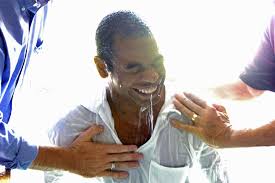 The LORD seems to have given His New Testament church 2 ordinances: 1. Water baptism – to depict our own death, burial, and resurrection with Christ, and 2. Communion – where we are brought into remembrance of our LORD’s death – broken body and shed blood – which alone redeems us.
Note in this passage below that no water is even mentioned and yet this is exactly what water baptism is symbolic of:
“Know ye not, that so many of us as were baptized into Jesus Christ were baptized into his death? 4 Therefore we are buried with him by baptism into death: that like as Christ was raised up from the dead by the glory of the Father, even so we also should walk in newness of life.” Romans 6:3-4
WATER BAPTISM: What it is and what it’s not. In some cases, water baptism has become a ritual among those who are a part of the visible, apostate church world. In those circles, water baptism seems to be a type of right of passage in a fleshly way. Water baptism is useless unless it’s connected with Christ, that is, in His redemption – death, burial and resurrection. He alone redeemed us and yet, He calls us to deny self, and allow Him who is the resurrection and the life to raise us upward (John 11:25; Romans 8:11; 2 Corinthians 4:10-12, etc.). Water baptism – going down under that water – is meant to be the symbolism of dying, being buried, and being raised up into a new life with Christ who is “the life” (John 14:6). The old man is dead and buried! See Colossians 3:3, and read Romans 6:3-4. Water baptism was never intended to become a ritual but rather the symbol of that which begun at the instant Christ saved us. The crucified, dead, buried, and raised up life comes at the moment Jesus saves us, We are dead and He now lives in us as Redeemer, Ruler and King, Savior, and Friend. The life of the crucified believe is symbolized at water baptism (Galatians 2:20). Water baptism is a representation of what is to be a life lived allowing Christ to reign in place. It’s symbolic of the daily cross! – Where Christ alone reigns supreme!
Water baptism saves no one. No, it’s merely a picture of your life now that Christ saved you – your personal daily death, burial, resurrection (2 Corinthians 4:10-12, etc.). God saved you the moment you repented and believed on Jesus (Acts 20:21, etc.). And now He’s ordained that you “walk in newness of life.” (Romans 6:4)
“Water baptism symbolizes your spiritual identification with Christ in His death, burial, and resurrection. The water does not itself join you to or identify you with Christ. It is only a symbol. It’s not even a requirement yet important due to the importance of what it is representative of. Water baptism is not a law like circumcision was. It is not essential. The thief on cross next to Christ was never water baptized but he was baptized in spiritual fact.”
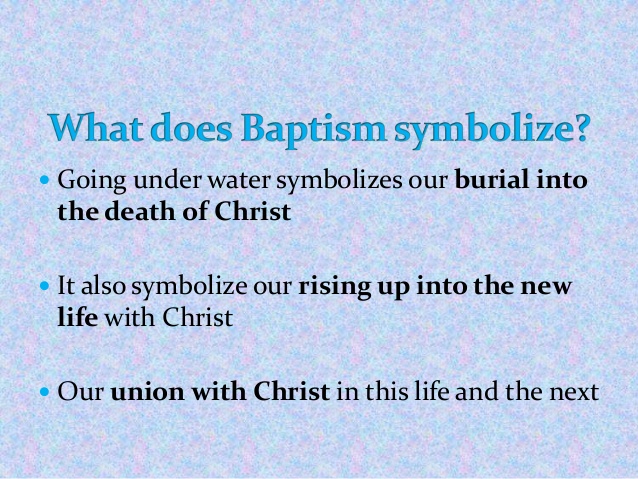
One of the main points here on topics like this is priority, putting the first things first and not adding to what is essential to salvation. And yet it is biblically accurate that water baptism should be put forth as something Jesus commands, because He does.
Beware of the baptismal regeneration heresy. A thorough reading of the New Testament Scriptures reveals to us that water baptism saves no one. Saying people are saved by being water baptized is just another fake salvation – another excuse not to have to repent, lay down the life in this fleeting world, deny self, take up the cross daily and follow Jesus – on His stated terms, right? Sinners are in darkness and the unrepentant love to hear that they are not required to repent which means to change course, to give one’s life up to the LORD who made us all.
So “saved” doesn’t mean saved in Acts 16:31? Where O Where is the water? The water baptism didn’t happen till after the jailer and his family were “saved” (Acts 16:33). “Sirs, what must I do to be saved? 31 And they said, Believe on the Lord Jesus Christ, and thou shalt be saved, and thy house.” Acts 16:30-31
“By faith” appears 37 times in the Word of God. “By water” appears 4 times.
Without what is it impossible to please God? Faith or water?
“But without faith it is impossible to please him.” Hebrews 11:6
Is salvation “by faith” in the only Redeemer, or by water? Water baptism is totally futile, a 100% complete waste without being first saved by Christ through FAITH (Romans 3-5; Ephesians 2:8-9, etc.).
“And as they went on their way, they came unto a certain water: and the eunuch said, See, here is water; what doth hinder me to be baptized? 37 And Philip said, IF thou believest with all thine heart, thou mayest. And he answered and said, I believe that Jesus Christ is the Son of God.” Acts 8:36-37
When the Ethiopian eunuch asked to be baptized in water, Philip told him he had to believe on the LORD Jesus Christ first – as a prerequisite! – “IF THOU BELIEVEST WITH ALL THINE HEART, THOU MAYEST.” Also…. many of the fake “bibles” removed Acts 8:37. The devil is a liar!!!! Let’s use the King James Bible saints!!!! Let’s trash satan’s corruption.
Recently I had an in-depth conversation with a man who was over emphasizing water baptism and after a lengthy discussion he said he’d “said enough.” To him I wrote:
“You’ve certainly told me enough and showed you are misled by what you’ve stated. And you claim it came by revelation. It sure didn’t come from divine revelation.”
REPLY:
“Notice how you lifted Acts 16:33 out of it’s context. WHAT came BEFORE the water baptism and without which the water baptism was futile?
‘And brought them out, and said, Sirs, what must I do to be saved? 31And they said, BELIEVE on the Lord Jesus Christ, and thou shalt be saved, and thy house. 32 And they spake unto him the word of the Lord, and to all that were in his house. 33 And he took them the same hour of the night, and washed their stripes; and was baptized, he and all his, straightway.’ Acts 16:30-33
Christ saves by faith not water. Water baptism is only effectual if the person is first saved by the blood through faith.
‘Being justified freely by his grace through the redemption that is in Christ Jesus: 25 Whom God hath set forth to be a propitiation through faith in his blood, to declare his righteousness for the remission of sins that are past, through the forbearance of God;’ Romans 3:24-25
Of course water baptism is important but it’s not the essential, believing is.
Satan’s agenda is to remove the focus from Christ and His blood without which there is ‘NO remission of sins’ (Hebrews 9:22). That’s what we see here.
Those who like to focus on the water do so because they are moral cowards who refuse to truly repent which is something that must occur in their hearts.”
The thief on the cross was not water baptized, yet Jesus told him “To day shalt thou be with me in paradise” (Luke 23:43).
Water baptism is only for those already saved. Here’s a New Testament example of how these disciples were first saved and filled with the Holy Spirit, only then were they water baptized.
“For they heard them speak with tongues, and magnify God. Then answered Peter, 47 Can any man forbid water, that these should not be baptized, which have received the Holy Ghost as well as we? 48 And he commanded them to be baptized in the name of the Lord. Then prayed they him to tarry certain days.” Acts 10:46-48
The only value that water baptism has is in identifying you with the death, burial and resurrection of Jesus Christ!
One disciple wrote:
“The only way to promotion is by demotion. Are you today seeking a demotion? Do you want self to be advanced, enhanced, prominent, recognized, satisfied, aggrandized, indulged, promoted, noticed, or applauded? Or do you want self demoted, crucified, and killed to all these worldly things?”
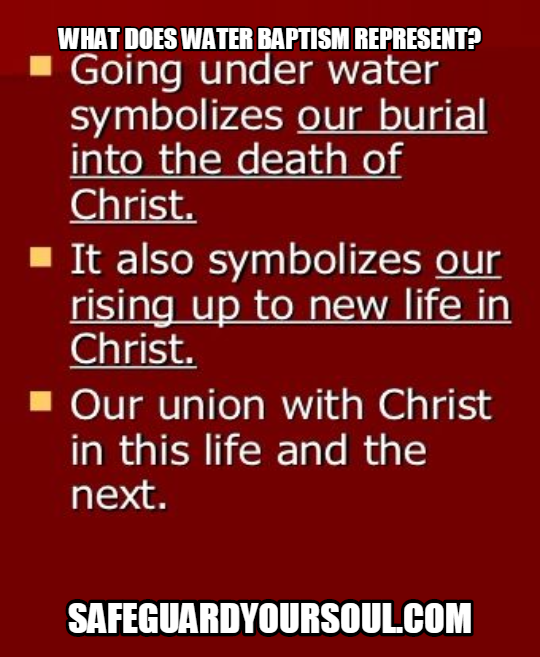
Perhaps loving obedience and gratitude to the Lord should be the foundational motives for the believer being water baptized. When a person genuinely repents of his sins and receives Jesus Christ, He is then under the command of a new Master. He is no longer a member of Satan’s kingdom, but rather has been delivered from the power of darkness and translated into God’s kingdom of light (Colossians 1:13). His past sins have been completely washed away by the blood of Christ, and God has called him by name to serve Him in sincerity and in truth (Romans 3:25; 1 Cor. 5:7-8).
Jesus commands all of His disciples to be baptized in water. In demonstration of our love for Him, every believer should obey and follow the LORD in water baptism. He says, “If ye love me, keep my commandments” (John 14:15).
1. As seen in Scripture, what does the actual act of being water baptized consist of – in the literal sense? Acts 8:38 Please read this verse in the King James Bible and check one of the following.
_____ splashing with water
_____ sprinkling with water as an infant
_____ fully submerging the body under water
Notice that Philip and the eunuch “went down both into the water” (Acts 8:38). The English word “baptize” comes from the Greek word BAPTIZO which means to dip, submerge; to make whelmed, fully wet. Baptism is a burial.
Water baptism should always be in actual water and not sprinkling or pouring water on the new believer being baptized. This is because of what it represents; not a mere sprinkling but rather a whole immersion, a going under and being completely whelmed – representing being now dead, buried, and raised up.
2. Read 1 Peter 3:21 closely. Note here that water baptism does not cleanse one from the “filth of the flesh (sin).” Trust in that which baptism is a “figure” of, does cleanse from sin and save the soul. The word “figure” is the key to understanding this verse. Read it again. Being dipped in water does not save the soul. What saves the soul is faith in what water baptism is figurative or symbolic of – the death, burial, and resurrection of Jesus Christ. Water baptism merely answers to the already blood-washed conscience of the Believer. It is an outward testimony of the inward work of God in making the repentant person completely new from the inside out (2 Cor. 5:17-18).
Christ must reign in the daily life of every believer and He is “Holy, holy, holy” and so sinfulness must be put away so that the believer can spring forth into the fullness of Christ’s resurrection life (Isaiah 6:3; Revelation 4:8). Baptism in water is the figure of this process. It’s a death, burial, and resurrection. Water baptism is symbolic of death to the sinful nature and resurrection into a life lived in the nature of Jesus and out of God’s abundant grace which fills the believer’s heart.
3. Did Jesus submit Himself to water baptism? Matthew 3:13-16
_______YES
_______NO
Water baptism was practiced by the Son of God.
4. How old was Jesus when He was baptized? Luke 3:21-23
____________________________________________________
Notice here that Jesus was a full grown adult when water baptized. Only those who are of age to understand and partake of the salvation of God are candidates for water baptism. Infant baptism or sprinkling is un-scriptural.
5. Did Jesus’ disciples practice water baptism in their ministry? John 4:1, 2
_______YES
_______NO
Jesus’ disciples and the early Church believers water baptised all new converts.
6. Jesus sent His disciples forth to “teach all nations.” What else did He command them to do? Matthew 28:19; Mark 16:16
____________________________________________________
Mark 16:16 does NOT say “he that is not baptized shall not be saved.” No Jesus says “he that believeth not shall be damned.” He put the essential on believing, not water baptism. Here are Christ’s words: “He that believeth and is baptized shall be saved; but he that believeth not shall be damned” (Mark 16:16). The believing is the essential, not water baptism, otherwise Jesus would have said “he that believeth and is not baptized shall be damned.” He did not.
7. In what names did Jesus command His disciples to baptize? Matthew 28:18-19
____________________________________________________
The name of Jesus Christ equals the authority of Jesus Christ.
“Then Peter said unto them, Repent, and be baptized every one of you in the name of Jesus Christ for the remission of sins, and ye shall receive the gift of the Holy Ghost.” Acts 2:38
Here in Matthew 28:18-19, Jesus authorized baptism in the name of the Father, Son, and Holy Ghost. When Scripture speaks of baptism in Jesus’ Name, it is referring to baptism by His authority. So, some disciples safely perform water baptism by saying: “You are now being baptized in the name, in the authority of Jesus Christ, in the name of the Father, the Son, and Holy Ghost.” Does this not cover all basis? I think so.
8. What were the three fundamental New Testament experiences preached and practiced by the early Church? Acts 2:38
A.____________________________________________________
B.____________________________________________________
C.____________________________________________________
9. Has God changed since Acts 2:38? Malachi 3:6; Hebrews 13:8
_______YES
_______NO
Note that God, by the mouth of Peter, commanded the new believers to “Repent and be baptized every one of you” (Acts 2:38).
10. What experience did the three thousand new converts partake of when they received the Word of God that Peter preached? Acts 2:41
____________________________________________________
As was clearly understood by the early followers of Jesus, the first step in discipling a new convert is to baptize him in water. This is the Lord’s first commandment to new believers. God seals the faith of the new convert at the time of water baptism. The new believer makes a statement of trust toward God in his water baptism experience and is confirmed in the faith by the Holy Spirit through this New Testament practice.
11. After Phillip preached the Gospel, what did the believers at Samaria do to openly declare their faith in Jesus? Acts 8:12
____________________________________________________
12. After Philip preached Jesus, what was the Ethiopian eunuch’s immediate question? Acts 8:35, 36
____________________________________________________
The Ethiopian eunuch had obviously made a heart-felt decision to believe on Jesus. He instantly desired to be baptized in water to exhibit his new found faith.
13. What did Philip tell the eunuch that he must do before he could be water baptized? Acts 8:37
____________________________________________________
The Bible only authorizes water baptism after the born again experience. Philip told the eunuch that the prerequisite for water baptism is to be born into the kingdom of God by personally receiving Jesus Christ. Here is another proof that the early Church disciples only baptized those who had already received Jesus.
God set forth as a pattern in the first century Church, believers who were zealous to baptize new converts in water. This solidifies the new converts’ faith in Jesus. Water baptism is the first command given to the new believer, and is therefore the responsibility of the members of the Body of Christ to see that every new believer is baptized.
14. What did the apostle Peter “command” the new Gentile converts to do after they had believed on Jesus and also received the gift of the Holy Ghost? Acts 10:43-48
v48 __________________________________________________
15. What did Paul and Silas do to the Philippian jailor who believed on the Lord after the jailbreak? Acts 16:25-34
____________________________________________________
Note that Paul and Silas baptized these new believers without delay and in the middle of the night. This very act makes two authoritative statements: (1) If at all possible, disciples should water baptize new converts immediately following their salvation experience, and (2) The apostles counted water baptism very important, it was an integral part of the Gospel they preached and administered.
16. When “many” of the Corinthian’s “believed”, what followed? Acts 18:8
____________________________________________________
17. As followers of Jesus what are we baptized into? Romans 6:3
____________________________________________________
To the believer the water grave signifies that the time of living after the sinful nature of the flesh is over. This burial represents death to the nature of sin and resurrection into the life of God. Jesus Himself was baptized to signify His own death, burial, and resurrection. The follower of Jesus in like manner is to be baptized, signifying death to the old man and resurrection into the new nature of God resident within him. Sin lost its power at Calvary, and loses its dominion over the believer when he identifies with Christ in water baptism. In water baptism, the believer identifies with Jesus. All true disciples are crucified with Christ and water baptism is the marked beginning of this state of existence (Gal. 2:20, 5:24; Rom. 6:11). It is his announcement to deny himself, take up his cross, and follow Jesus.
18. What is the believer to “walk in” after God raises him from the dead? Romans 6:4
____________________________________________________
Beloved, God has called you to “walk in newness of life.” The believer must be “dead indeed unto sin, but alive unto God through Jesus Christ our Lord” (Romans 6:11). Water baptism is so very important because it introduces the new believer into the life to which God has called him – a life of death and resurrection. The old person and his deeds are dead. “For ye are dead, and your life is hid with Christ in God” (Colossians 3:3). The disciple is to live separate from sin. “If any man be in Christ, he is a new creature: old things are passed away; behold, all things are become new. And all things are of God” 2 (Corinthians 5 :17,18).
19. What are two reasons that we are to be “crucified” with Jesus? Romans 6:6
A. __________________________________________________
B. __________________________________________________
Water baptism is a public announcement of your decrease and His increase (John 3:30). God can only raise up those things that are dead. To resurrect is to raise to life again – to cause something or someone once alive to live again. One must die to the things of this world to live in the resurrected life of Jesus. This is a must if one will be His disciple (John 12:24-26). To live in the resurrection life of God one must be dead to the sins of the flesh. The definition of being “dead” to sin, is living life as if sin didn’t even exist in the sense that one is separate from it – you do not partake of it in spirit, soul, or body.
Water baptism is the beginning of the life lived after the Spirit instead of after the flesh. It’s a heartfelt broadcast to the Lord, the world, and the devil that you are now going to be true to the Most High God by living in holy conformity to the Lord Jesus Christ. At the moment of baptism God imparts a sufficient measure of grace to enable the believer to walk out his new life in Christ.
20. Why do you personally believe that baptism in water is so important in God’s eyes?
____________________________________________________
God has saved you and has set you apart to live after His nature that He has imparted to you (Rom. 6, 8). You are a new creature in Christ Jesus and God requires that you make this known (Matthew 10:32, 33). Jesus was fearless and unashamed when He came to the earth to do His Father’s will and die for the sins of the world. He requires that His disciples be bold and unashamed in testifying of His work of redemption. Water baptism should be the first act of obedience rendered by the disciple of Jesus.
21. What does Jesus do for all who “confess” Him before men? Matthew 10:32
____________________________________________________
22. What does Jesus do to all those who “deny” Him before men? Matthew 10:33
____________________________________________________
Water baptism is an open declaration of one’s identification with and faith in Jesus. Water baptism is generally the new believer’s first act of confession before men. It should be the personal and spoken testimony of the believer about to be baptized. The new convert should be given time to give account of his born again experience and God’s work presently in progress in his life.
IF YOU HAVE NOT YET BEEN WATER BAPTIZED, OBEY THE LORD BY ARRANGING A TIME AND PLACE TO PUBLICLY TESTIFY OF YOUR NEW LIFE IN JESUS CHRIST BY BEING BAPTIZED.
ASSIGNMENT:
In 250 words or more, detail the ways that the Word of God should be incorporated into the daily life of the believer. (Tips for your essay’s content: study, performance, prayer, warfare, proclaiming, meditating upon, memorizing, etc.) Search the Scriptures as your source for this essay and use Scripture and references to validate your statements. Begin with deep and prayerful meditation on God’s Word. Write your essay neatly and in an organized manner.
SCRIPTURE MEMORIZATION: Matthew 28:19
It would be very advantageous for you to cross reference all of the Scriptures in this study. For example, pencil in each topically similar verse into the margin next to the corresponding verses on this same subject. Write out these verses with references on index cards – make it a priority to carry and post them where you will study and meditate upon them. These two measures will build in you a wealth of truth on each topic. This will help you to retain and become resourceful in the Word of God – ready to be used of Him. Capture the knowledge that you have learned, don’t let it slip away from you.
Capitalize on your efforts. This is preparation in earnest (2 Timothy 2:21).
STUDY GUIDES
Evangelism
Holy Word of God
The Blood of Jesus
Holy Ghost Baptism
Water Baptism
The Believer and The Word
Sign up for free email devotional HERE… The Moments with My Master email devotional is sent out for the edification of the body of Christ.
Study Guides | Bible School | Bible/Word of God Category








What is the difference between a “Textus Receptus Man” and a “King James Man?”

David’s Farewell Prayer [podcast]
Water Baptism: Understanding It [study guide]

Favorite Eternal Security “Proof” Text? [podcast]

Laboring Fervently for Christ’s Body [podcast]

Abiding Under the Shadow of the Almighty [podcast]

The Warnings of the Book of Jude [podcast]

Attend to My Words [podcast]

Gathering Fruit for Christ’s Eternal Glory [podcast]

Acquaint now thyself with him, and be at peace: thereby good shall come unto thee [podcast]

Dwelling in the Secret Place of the Most High [podcast]

The Over Population Delusion Exposed [video]

Are You Bless-able? English and Spanish [podcast]

Mexico Mission Momentum Part 41

“Cursed be the Man that Trusteth in Man” [podcast]

The Damning Myth of Unconditional Eternal Security! [podcast]

Calvinism’s Origins and Historical Roots [podcast]

Name Cult Warning: Beware of the Yahweh, Yahushua, Yahuah Cults!
Favorite Eternal Security “Proof” Text? [podcast]
Water Baptism: Understanding It [study guide]
Dwelling in the Secret Place of the Most High [podcast]
Acquaint now thyself with him, and be at peace: thereby good shall come unto thee [podcast]
The Warnings of the Book of Jude [podcast]

“You Who are Troubled Rest with Us” [podcast]

Penknife Sacrilege [podcast]
Attend to My Words [podcast]
The Over Population Delusion Exposed [video]

Diminishing Returns or Divine Blessings? [podcast]

Be Not Moved Away from the Hope of the Gospel [podcast]

Conspiracy is Reality [podcast]
What is the difference between a “Textus Receptus Man” and a “King James Man?”
David’s Farewell Prayer [podcast]
Water Baptism: Understanding It [study guide]


 America1 year ago
The Drugging of America: The Pharmakeia Sorcery Deception [podcast]
- Articles2 years ago
Children being Rescued in Tunnels: Happening Now – UPDATE!
- Articles8 years ago
Self-Examination in Preparation for the Lord’s Return
- Apostasy2 years ago
SHOCKING List of False Prophets Most Believe are True