





by Martin Bobgan, PhD.
Do children and adults really need self-esteem? Does low self-esteem lead to serious life problems? Should parents attempt to build self-esteem in their children? Does the Bible encourage self-esteem? Many Christians have assumptions about self-esteem. But, what does the Bible say? What does research say?
The Genesis of Self-Esteem
The self-esteem movement has its most recent roots in clinical psychology, namely in the personality theories of such men as William James, Alfred Adler, Erich Fromm, Abraham Maslow, and Carl Rogers. It became further popularized by their many followers. Nevertheless, the roots of the self-esteem movement reach further back into human history.
What is the LIE of the Ages? Find out in this revolutionary new book.
The self-esteem movement began in the third chapter of Genesis. Initially Adam and Eve were God-conscious and aware of one another and their surroundings rather than being self-conscious. Their awareness of themselves was incidental and peripheral to their focus on God and one another. Adam realized that Eve was bone of his bone and flesh of his flesh, but he was not self-aware in the same sense that his descendants would be. Self was not the issue until the Fall.
Partaking of the tree of the knowledge of good and evil did not bring godly wisdom. It brought guilt, fear, and separation from God. Thus, when Adam and Eve heard God approaching, they hid in the bushes. But God saw them and asked, “Who told thee that thou wast naked? Hast thou eaten of the tree, whereof I commanded thee that thou shouldest not eat?” (Genesis 3:11).
Sinful Self
Adam and Eve answered with the first example of self-justification. First Adam blamed Eve and God, and then Eve blamed the serpent. The fruit of the knowledge of good and evil spawned the sinful self with all of its self-love, self-esteem, self-acceptance, self-justification, self-righteousness, self-actualization, self-denigration, self-pity and other forms of self-focus and self-centeredness.
The present Self-Etc. movement is thus rooted in Adam and Eve’s sin. Through the centuries mankind has continued to feast at the tree of the knowledge of good and evil, which has spread its branches of worldly wisdom. It has branched out into the vain philosophies of men and, more recently, the “scientized” philosophies and metaphysics of modern psychology.
Religious incantations for self-worth, self-love, and self-acceptance ooze out of the TV tube, drift across radio waves, and entice through advertising. From the cradle to the grave, self-promoters promise to cure all of society’s ills through doses of self-esteem, self-worth, self-acceptance, and self-love. And everyone, or nearly everyone echoes the refrain: “You just need to love and accept yourself the way you are. You just need to forgive yourself” and “I just have to accept myself the way I am. I’m worth it. I am a lovable, valuable, forgivable person.”
Christian Response to the World
How is the Christian to combat the thinking of the world, which glorifies the self and places self at the center as the be-all and end-all of existence? How is the Christian to be faithful to our Lord’s command to be in the world, but not of the world? Can he adopt and adapt the popular philosophy/psychology of his culture, or must he stand apart as one who has been set apart by God and view his culture by the light of the Word? Jesus said:
Come unto me, all ye that labour and are heavy laden, and I will give you rest. Take my yoke upon you, and learn of me; for I am meek and lowly in heart: and ye shall find rest unto your souls. For my yoke is easy, and my burden is light (Matthew 11:28-30).
Here is a call to give up one’s own way and to come under the yoke of humility and service – an emphasis on yoking – on a teaching and living relationship. Jesus described His call for followers in different words, but to the same relationship and with the same intent, when He said:
If any man will come after me, let him deny himself, and take up his cross, and follow me. For whosoever will save his life shall lose it: and whosoever will lose his life for my sake shall find it (Matthew 16:24-25).
No Self-Love Commandment
Jesus does not command self-love, but rather love for God and love for one another. The Bible presents an entirely different basis for love than humanistic psychology preaches. Rather than promoting self-love as the basis for loving others, the Bible says that God’s love is the true source. Human love is mixed with self-love and may be ultimately self-serving. But God’s love is self-giving. Therefore, when Jesus calls His disciples to deny self and to take up His yoke and His cross, He is calling them to a self-giving love, not a self-satisfying love. Until the advent of humanistic psychology and its heavy influence in the church, Christians generally thought of self-esteem as a sinful attitude.
In Part Two of this series, we will look at what the Bible says about self-love, particularly the Second Great Commandment, and what research says about self-esteem.
Part Two
Even though the Bible does not teach self-love, self-esteem, self-worth, or self-actualization as virtues, helps, or goals, a vast number of present-day Christians have been deceived by the self-teachings of humanistic psychology. Rather than resisting the enticement of the world they become culture-bound. Not only do they not resist the tidal wave of selfism; they are riding the crest of self-esteem, self- acceptance, and self-love. One can hardly tell the difference between the Christian and the non-Christian in the area of the self, except that the Christian adds God as the main source for his self-esteem, self-acceptance, self-worth, and self-love.
Through slogans, one-liners, and twisted Scripture, many Christians jump on the existential bandwagon of humanistic psychology and set up their own cheering section. Thus, any criticism voiced against the teachings of self-worth, self-love, and self-esteem is regarded as ipso facto proof that the speaker wants people to be miserable. Moreover, any criticism against the self-esteem movement is seen as dangerous to society, since self-esteem is considered to be the panacea for its ills. Then, in the church, if one does not wholly endorse a self-esteem theology, he is accused of promoting worm theology.
If there is one thing the world and many in the church have in common these days, it’s the psychology of self-esteem. Although Christians may disagree about some of the nuances of self-esteem, self-worth, and self-acceptance, and even on some of the finer points of definition and how it is attained, too many have joined forces against what they believe is a formidable enemy – low self-esteem. Yet, even the world cannot justify promoting high self-esteem through its own methods of research.
No Research Justification for Self-Esteem
A few years ago the California legislature passed a bill creating the California Task Force to Promote Self-Esteem and Personal and Social Responsibility. The legislature funded the bill with $245,000 a year for three years, for a total of $735,000. The twofold title of the Task Force was quite an assumption. No one has ever demonstrated that promoting self-esteem is in any way related to personal and social responsibility. Nor has anyone proved that all those who exhibit personal and social responsibility have high self-esteem. Self-esteem and social and personal responsibility actually appear to be negatively rather than positively related.
The Mission Statement of the Task Force is as follows:
- Seek to determine whether self-esteem, and personal and social responsibility are the keys to unlocking the secrets of healthy human development so that we can get to the roots of and develop effective solutions for major social problems and to develop and provide for every Californian the latest knowledge and practices regarding the significance of self-esteem, and personal and social responsibility.1
The Task Force believed that esteeming oneself and growing in self-esteem would reduce “dramatically the epidemic levels of social problems we currently face.”2
Is There a Positive Relationship Between High or Low Self-Esteem and Personal and Social Responsibility?
In order to investigate this relationship the state Task Force hired eight professors from the University of California to look at the research on self-esteem as it relates to the six following areas:
1. Crime, violence and recidivism.
2. Alcohol and drug abuse.
3. Welfare dependency.
4. Teenage pregnancy.
5. Child and spousal abuse.
6. Children failing to learn in school.
Seven of the professors researched the above areas and the eighth professor summarized the results. The results were then published in a book titled The Social Importance of Self-Esteem.3 Has the relationship been established between self-esteem and social problems? David L. Kirk, syndicated writer for the San Francisco Examiner,4 said it bluntly:
- That . . . scholarly tome, The Social Importance of Self-Esteem, summarizes all the research on the subject in the stultifyingly boring prose of wannabe scientists. Save yourself the 40 bucks the book costs and head straight for the conclusion: There is precious little evidence that self-esteem is the cause of our social ills.
Even though they searched for a connection between low self-esteem and problematic behavior, they could not find a cause and effect link. However, more recent studies indicate a definite relationship between violent behavior and high self-esteem. Nevertheless, faith in self-esteem dies hard and schools continue to work on building high self-esteem.
Worse than the continuance of self-esteem teachings in the world is the faith that Christians continue to place in self-esteem and self-worth teachings. Thus, the secular self-esteem movement is not a frontal attack against the Bible with the battle-lines clearly displayed. Instead it is skillfully subversive and is truly the work, not of flesh and blood, but of principalities, powers, the rulers of darkness of this world, and spiritual wickedness in high places, just as delineated by Paul near the end of Ephesians. The sad thing is that many Christians are not alert to the dangers. More than we can number are being subtly deceived into another gospel: the gospel of self.
Biblical Love
Jesus calls His own into a love relationship with Himself and with one another. Their joy is to be found in Him, not in self. Their love comes from His love for them. Thus, their love for one another does not come from self-love or self-esteem, nor does it enhance self-esteem. The emphasis is on relationship, fruitfulness, and readiness to be rejected by the world. A believer’s identification is in Jesus to the point of suffering and following Him to the cross. Only through strained semantics, labored logic and exploited exegesis can one even attempt to demonstrate that self-esteem is biblical or even a part of the church tradition or teaching.
The focus of love in the Bible is upward and outward instead of inward. Love is both an attitude and action to one another. And while love may include sentiment and emotional affection, it is primarily volitional action for the glory of God and the good of others. Thus when Jesus said, “Thou shalt love the Lord thy God with all thy heart, and with all thy soul, and with all thy mind, and with all thy strength” (Mark 12:30), He was saying that all of our being is to be committed to loving and, therefore, pleasing God. Love for God is expressed with a thankful heart committed to doing what pleases God according to what has been revealed in the Bible. It is not a grudging kind of obedience, but an eagerness to conform to His gracious will and to agree with God that He is the source and standard for all that is right and good.
The Second commandment is an extension or expression of the First Commandment: “Thou shalt love thy neighbor as thyself” (Mark 12:31). John elaborates on this. He describes the sequence of love. In contrast to the teachers of self-love, who say that people cannot love God and others until they love themselves, John says that love originates with God and then extends to others:
- We love Him because He first loved us. If a man say, I love God, and hateth his brother, he is a liar: for he that loveth not his brother whom he hath seen, how can he love God whom he hath not seen? And this commandment have we from Him, that he who loveth God love his brother also (1 John 4:19-21).
God loved us first, which enables us to love Him, which then expresses itself in love for one another.
From Adam’s first breath, mankind was designed to live in relationship with God, not as autonomous selves. The entire Bible rests on that relationship, for after Jesus answered the Pharisee by saying that the Greatest Commandment is to love God and the second is to love neighbor as oneself, He said: “On these two commandments hang all the law and the prophets” (Matthew 22:40). Jesus came to save us from self and to reestablish that love relationship for which we were created. Through the centuries books have been written about loving God and loving one another. However, today the church is increasingly inundated with books telling us how to love ourselves better, esteem ourselves more, accept ourselves no matter what, and build our own self-worth.
Sign up here to receive the Moments with My Master email sent out for the edification of Jesus’ body.
End Notes
1 California Task Force to Promote Self-Esteem and Personal and Social Responsibility. “1987 Annual Report to the Governor and the Legislature,” p. V.
2 Andrew M. Mecca, “Chairman’s Report.” Esteem, Vol. 2, No. 1, February 1988, p. 1.
3 Andrew M. Mecca, Neil J. Smelser, and John Vasconcellos, eds. The Social Importance of Self-Esteem. Berkeley: University of California Press, 1989.
4 David L. Kirk, “Lack of Self Esteem is Not the Root of All Ills.” Santa Barbara News-Press, 15 January 1990.
More on PsychoHeresy here.
Support | STORE | Podcasts | Jail/Prison Ministry | Mexico Mission here | All Ministry Updates | Fresh Start with God | “Fear hath Torment” – 100% Deliverance from all Fear! [podcast] | Resurrection Grace [podcast] | G.O.D. = Game Over Devil [podcast] | Justification | Grace and Good Works [podcast] | More on Assurance here | Eternal Security Debunked | The Cross Life | 100’s of Christ-centered, Scripture-rich podcasts for your edification in Christ.


Articles
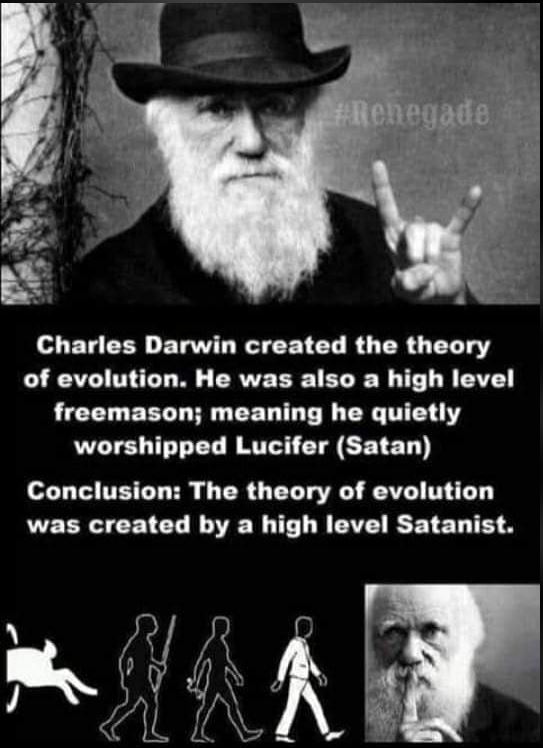
Darwin’s Demise: What they don’t want You to know about Charles Darwin! [podcast]
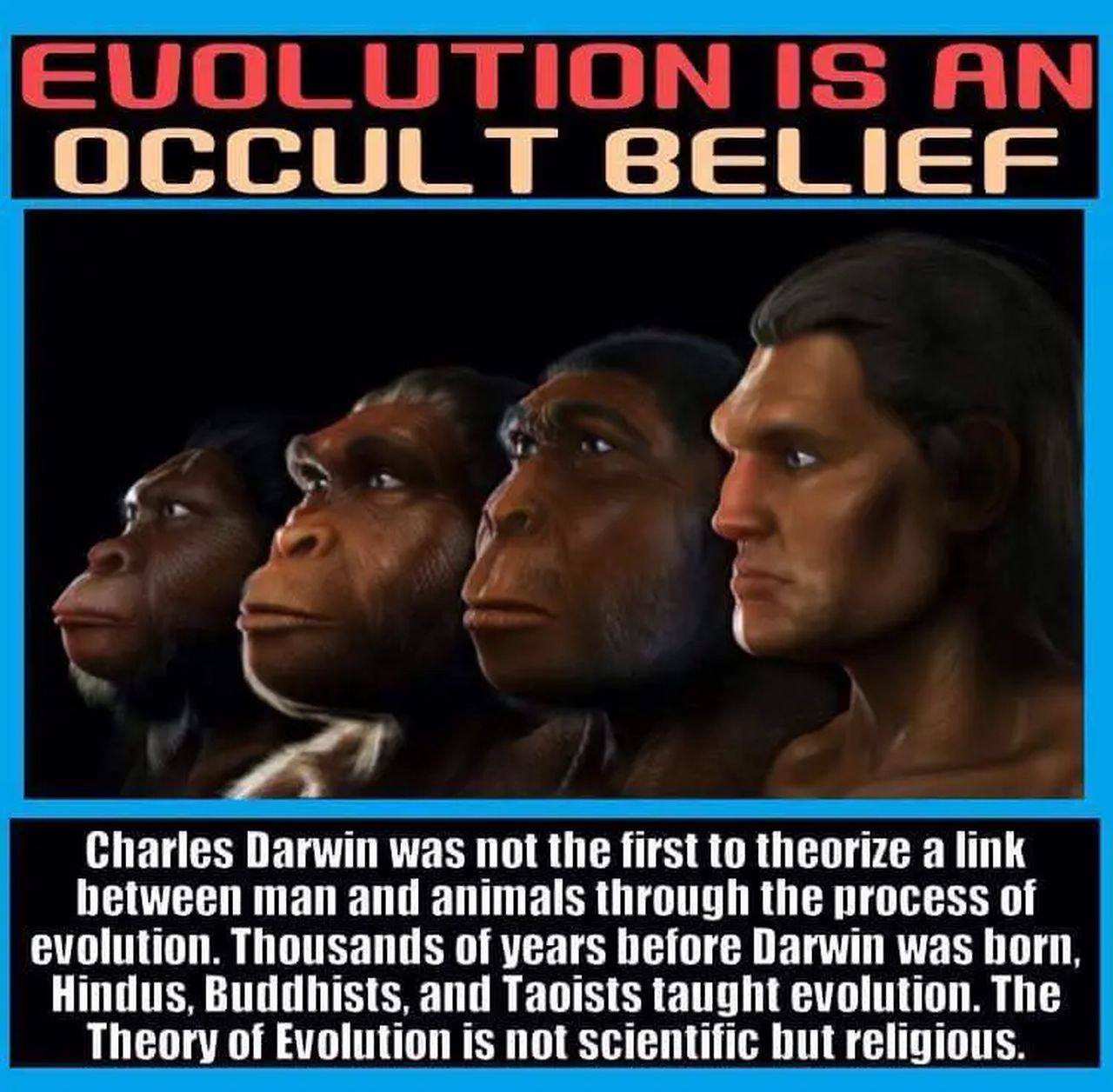
“Darwin’s theories are hardly irrefutable. He refuted them himself. This is how science works. Even he conceded that his theories would never be proven. Any actual learned Darwinist would have to concede the same. Also, we use the term ‘evolution’ so improperly that it’s become desensitized to actual facts of biology. We misuse it. Evolution is most often times intertwined with ‘adaptation’, which it is not. It’s like saying the term ‘free’ is the same as the term ‘no cost to you.’ Those are also obviously different. In any case, the ‘evolution of hominids’ is nonsense. These are nothing more than piles of various bones cherry picked to put the skeletons that they hope to display together. God made man in His image. Not in a monkey’s image. His.” Dave Fury
Darwin himself described the lack of transitional fossils as, “… the most obvious and gravest objection which can be urged against my theory.”
With the theory of evolution, we still lack much evidence. Where do we go from here?
Why do we not have unlimited fossil records of missing links of transitional forms if Darwin’s theory of evolution is true?
For example: If man came from apes, why are there still apes? And, where is the fossil record of the intermediary, transitional stages?
Shocking Charles Darwin Quotes
“But, as by this theory, innumerable transitional forms must have existed, why do we not find them embedded in countless numbers in the crust of the earth?” (Darwin, Origin of Species, 1859).
“When we descend to details we can prove that no one species has changed (i.e., we cannot prove that a single species has changed): nor can we prove that the supposed changes are beneficial, which is the groundwork of the theory.” Charles Darwin, 1863
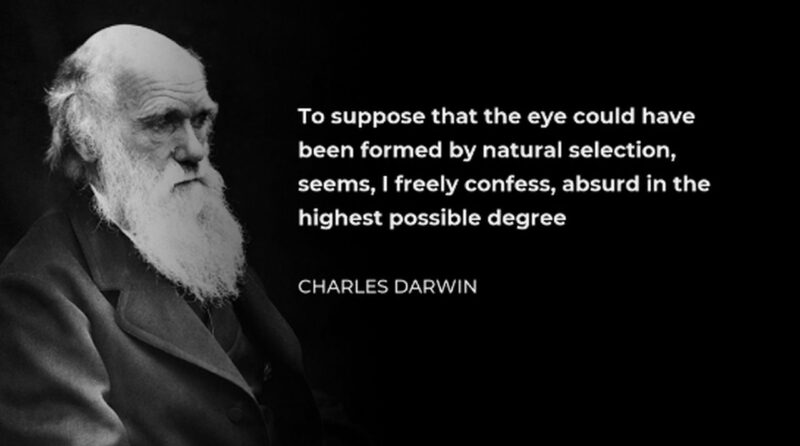
“To suppose that the eye, with all its inimitable contrivances for adjusting the focus to different distances, for admitting different amounts of light, and for the correction of spherical and chromatic aberration, could have been formed by natural selection, seems, I freely confess, absurd in the highest possible degree.” – Charles Darwin, Origin of Species, 1st Ed., p. 186.
“I have asked myself whether I may not have devoted my life to a fantasy . . . I am ready to cry with vexation at my blindness and presumption” Charles Darwin [12].
“Often a cold shudder has run through me, and I have asked myself whether I may have not devoted myself to a fantasy.” (Charles Darwin, Life and Letters, 1887, Vol. 2, p. 229)
“The number of intermediate varieties, which have formerly existed must be truly enormous. Why then is not every geological formation and every stratum full of such intermediate links? Geology assuredly does not reveal any such finely graduated organic chain; and this, perhaps is the most obvious and serious objection which can be urged against the theory.” (Darwin, Charles, Origin of Species, 6th edition, 1902 p. 341-342)
“The FOOL hath said in his heart, There is no God.” Psalms 14:1
If “The fool hath said in his heart, There is no God,” the wise people say in their hearts that “There is a God, you’re not Him – and we are all accountable to Him.”
“As it is appointed unto men once to die, but after this the judgment.” Hebrews 9:27
Not one library the world over contains a stitch of proof that evolution is true.
“Professing themselves to be wise, they became fools,” Romans 1:22
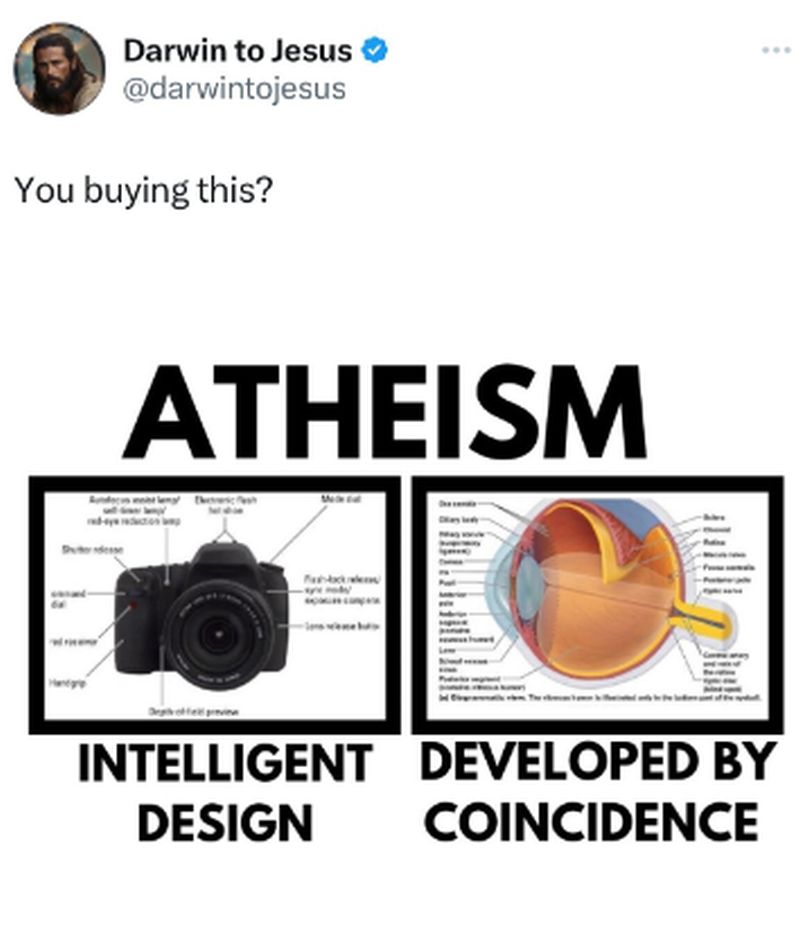
Atheism – The belief that there was nothing and nothing happened to nothing and then nothing magically exploded for no reason, creating everything and then a bunch of everything magically rearranged itself for no reason whatsoever into self-replicating bits which then turned into dinosaurs. Makes perfect sense.
It simply doesn’t matter how many scientific sounding words or theories one uses, we know from the first law of thermodynamics that matter cannot appear accidentally, by chance. We didn’t need someone to coin a “law” to know what the very first law of thermodynamics admits – that something cannot come out of nothing.
In His Word, God warns us of “avoiding profane and vain babblings, and oppositions of science falsely so called” (1 Timothy 6:20). False science is designed to oppose true science which acknowledges that which is self-evident. Much of what presents itself today, that which comes in the mere name of “science” is nothing more than an atheistic religion designed to deny that creation has a Creator. Consider the source. The atheistic peddlers of the debunked mere theory of evolution can be found to be miserable deniers of the obvious. More in a moment on how it’s been rightly stated that evolution is a “fairy tale for grownups.”
Remember, science is the mere study of the creation of an Almighty infinite Creator by the mere finite human.
Making Peace with God – Before it’s too late. | Atheism/Evolution
Support | STORE | Podcasts | Jail/Prison Ministry | Mexico Mission here | All Ministry Updates | Purifying Ourselves as He is Pure [podcast] | 10 Clues Your Love for God is Waxing Cold [podcast]

Apostasy
Beware of “Private Interpretation” [podcast]
NO MAN GAVE THE TRUTH AND NO MAN CONTROLS IT
ANY person who doesn’t uphold God’s Word as final divine authority on all matters of faith, is 100% “NOT of God” according to the Son of God (John 8:47).
“Let God be true and EVERY man a liar.” Romans 3:4
Is God or are mere men confused?
“For God is not the author of confusion, but of peace, as in all churches of the saints.” 1 Corinthians 14:33
Beware of those who violate, who speak contradictory to other parts of God’s Word in order to sell you on their “revelation.” Known truth, biblically stated truth must never be contradicted. The LORD is not confused and so we conclude that anyone upholding what they believe to be truth that contradicts known biblical truth, is confused at best. Beware of what the Holy Spirit calls “private interpretation.” (2 Peter 1:19-21) More in a moment on this.
Many seek to use commentaries, historians and the like to paint the picture, the outcome they desire because they do not love the LORD and therefore His truth. If God wanted us to have more it’d be in His Word…. I am not opposed to background information but that’s not divinely inspired Holy Scripture and many people try to change the outcome of biblical truth by using extra-biblical sources. Beware. They attempt to create a path to an unbiblical conclusion because they are “not valiant for the truth.” (Jeremiah 9:3)
It’s convoluted theology to speak against, contrary to the whole of the Word of God which among other things says “ALL scripture is given by inspiration of God.” (2 Timothy 3:16) Ignoring known, clearly stated Bible truth to perpetrate a certain view is bearing false witness against the LORD, is confusion, and is violence against the Holy Scriptures and the picture painted by the WHOLE of God’s Word. This is also a refusal to rightly divide the Word of truth but instead a deliberate, subjective ignoring of divine truth in order to perpetrate an agenda (1 Corinthians 2:13; 2 Timothy 2:15).
Many today interpret the Bible for their own self-serving purpose or liking, based on being predisposed to certain traditions, philosophies, and clichés. This is exactly what Jesus cited the false religionists of His day for doing (Mark 7:6-9).
God gave His Word to us and will reveal Himself and His will to each of His saints as they seek Him, studying His words thoroughly, diligently, daily.
“Search the scriptures; for in them ye think ye have eternal life: and they are they which testify of me. 40 And ye will not come to me, that ye might have life.” John 5:39-40
God gave us the Holy Scriptures to reveal to us who He is and yet, the individual must come to Jesus personally to know Him and understand His Precepts, His kingdom truths. Like the religionists Jesus is addressing above, many who think they know God are not known of God at all because they refuse to truly repent and seek His holy face.
Exactly as Jesus warned, there are “many false prophets” today to accommodate counterfeits, tares (Matthew 7:15; 24:11).
 Many times we hear men stand up to speak, claiming they’ve been studying a topic in the Bible extensively – and insinuating that on the basis of THEIR study, you should just buy wholesale everything they’re about the say. There are “many deceivers” operating today (2 John 7-11). Out of the pride of their hearts we hear men preface their message this way, boasting of their study, to set up and snare the unlearned, the gullible when in reality many of them have simply borrowed the errors of other men. Yet we must judge all that is taught against our own personal, diligent study of the whole of God’s Word and never buy the subjective claims of mere men. This is the very reason so many are deceived today. Following man’s supposed revelation, interpretations, instead of getting God’s revelation for ourselves, firsthand, is the recipe to be deceived. There are no shortcuts to personally, thoroughly studying the whole counsel of God’s Word for ourselves. | The Importance of Personal, Organic Bible Study
This scenario often plays out when someone is teaching on the end times, claiming or insinuating that they have come up with special revelation. At times they will claim to definitely know and have figured out who the antichrist is, the specifics and timing of end time events, and secrets about these last days. Yet, at least some of those things they claim to have special knowledge of are not specifically, expressly written in the Bible. Beware of the “private interpretation” of mere men.
“We have also a more sure word of prophecy; whereunto ye do well that ye take heed, as unto a light that shineth in a dark place, until the day dawn, and the day star arise in your hearts: 20 Knowing this first, that no prophecy of the scripture is of any private interpretation. 21 For the prophecy came not in old time by the will of man: but holy men of God spake as they were moved by the Holy Ghost.” 2 Peter 1:19-21
God’s Word, the words of God recorded in Holy Writ, were inspired by the Holy Spirit and were not written from any mere man’s “private interpretation”, nor are the words of God to be twisted and done violence to by anyone today for their own “private interpretation” to promulgate their own view, doctrine, or agenda.
Notice in this passage above that through Peter, the Holy Spirit puts the personal responsibility upon the individual disciple to “take heed” to the Word of God, to study it daily, diligently as the revelation of Christ and His will rises in our hearts, dawns on us – “ye do well that ye take heed, as unto a light that shineth in a dark place, until the day dawn, and the day star arise in your hearts.”
God expects His people to study thoroughly and to know His Word for themselves.
“Study to shew thyself approved unto God, a workman that needeth not to be ashamed, rightly dividing the word of truth.” 2 Timothy 2:15
No man controls the truth nor does he control the interpretation of divine truth which is self-evident and to be first and foremost studied and understood by individual disciples. Yes, God calls elders out to teach HIS Word, to let God’s Word dwell richly among His people, and yet the LORD alone teaches the individual believers heart His truth (Colossians 3:16). This is the individual priesthood of each and every blood bought saint of Christ. Jesus saves the individual sinner first and foremost who is then and only then an individual member of His one body (Ephesians 4; 1 Corinthians 12).
“But ye have an unction from the Holy One, and ye know all things. 21 I have not written unto you because ye know not the truth, but because ye know it, and that no lie is of the truth. …26 These things have I written unto you concerning them that seduce you. 27 But the anointing which ye have received of him abideth in you, and ye need not that any man teach you: but as the same anointing teacheth you of all things, and is truth, and is no lie, and even as it hath taught you, ye shall abide in him.” 1 John 2:20-27
Ultimately, and most importantly, God teaches each and every one of His individual saints – “My sheep hear my voice, and I know them, and they follow me:” (John 10:27)
Those who aren’t objective with the whole counsel of Scripture clearly prove their hearts are not honest, not authentic, and sincere before the LORD (Luke 8:15; John 7:16; 2 Corinthians 2:17; 2 Peter 3:16, etc.).
Beware of Being a “Back it Up” Bubba
Personally studying God’s Word from Genesis to Revelation, organically, is ultra-important. | The Importance of Personal, Organic Bible Study
To “back up” a belief with Scripture seems to really mean: “I believe ABC doctrine and I’m hell bent on finding Bible verses to prove it!” In other words someone like this doesn’t really care what the whole of Scripture teaches as much as they care to hold on to some pet doctrine (it’s usually something to justify their sin such as the falsehood of eternal security).
Some put forth their subjective beliefs and defend those beliefs by saying “I can back everything up with scripture.” Satan can too as we see him do when tempting Jesus (Luke 4). The devil used Scripture out of context as many today do. Are we merely backing up what WE say and what WE currently believe with Scripture or are we simply reading and diligently studying the whole counsel of Holy Scripture and letting GOD speak for Himself as we “compare spiritual things (Scripture, known truth) with spiritual things”? (1 Corinthians 2:13; 2 Timothy 2:15) Big difference. Think about that. Men and devils can deceitfully make the Bible say anything THEY want it to say but that doesn’t make it biblically sound and true. We must beware of our own tendency to espouse and hold on to philosophies, notions, and doctrines that do not line up with the whole counsel of God’s Word and we must be corrected (2 Timothy 3:16-17).
“All scripture is given by inspiration of God, and is profitable for doctrine, for reproof, for correction, for instruction in righteousness: 17 That the man of God may be perfect, throughly furnished unto all good works.” 2 Timothy 3:16-17
The disciple of Jesus, without exception, will be ever more rooted and grounded in the final divine authority of the written Word of God.
Jesus told us exactly who is “of God” and who is “NOT of God.”
“He that is OF GOD heareth God’s words: ye therefore hear them not, because ye are NOT OF GOD.” John 8:47
ALL who are “of God” uphold His Word as final divine authority, with no exception.
When discussing any matter, specifically spiritually, the main issue is what God’s Word says, which is His “truth” and when one is valiant for His truth, such a man will not rely on anything except God’s Word (Jeremiah 9:3; John 17:17). God says we can be CERTAIN about what He says concerning any topic revealed in His Word – “Have not I written to thee excellent things in counsels and knowledge, 21 That I might make thee KNOW the CERTAINTY of the words of truth; that thou mightest answer the words of truth to them that send unto thee?” (Proverbs 22:20-21)
We must honestly examine our own selves to see WHY we believe WHAT we currently believe. Discernment, “rightly dividing the word of truth” seem to be concretely connected to searching the Scriptures as we see with the Bereans who tested Paul and all that he taught, right? (2 Timothy 2:15; Acts 17:10-11) Lots of people who talk about discernment trust their own subjective discernment instead of letting the written WORD be their two edged sword of discernment (Hebrews 4:12). Many believe they are discerning correctly and yet aren’t daily, diligently being grounded in the written Word, which God will never contradict (2 Timothy 3:16-17; 2 Peter 1:19-21).
The Berean Saints are a Great Example to us Today
“And the brethren immediately sent away Paul and Silas by night unto Berea: who coming thither went into the synagogue of the Jews. 11 These were more noble than those in Thessalonica, in that they received the word with all readiness of mind, and searched the scriptures daily, whether those things were so.” Acts 17:10-11
May the reader be exhorted to become intimately familiar with the above passage, noticing that the Bereans didn’t even take Christ’s apostle Paul at his word. No, they “searched the scriptures daily” for themselves to see “whether those thing were so” that Paul was preaching.
As was the case with the Berean disciples who listened to Paul preach, God intends for us to partake in, to hear preaching and yet, all must be cross examined against our own personal searching of His Word for ourselves (2 Timothy 2:15; 3:16-17). On that note, do you remember when the LORD Jesus spoke to the woman at the well and how when He revealed Himself to her as the Messiah she ran out and told everyone? Yet, those men didn’t fully embrace Christ till they personally went to see Him for themselves.
“The woman then left her waterpot, and went her way into the city, and saith to the men, 29 Come, see a man, which told me all things that ever I did: is not this the Christ? 30 Then they went out of the city, and came unto him. … 42 And said unto the woman, Now we believe, not because of thy saying: for we have heard him ourselves, and know that this is indeed the Christ, the Saviour of the world.” Acts 4:28-30, 42
No Greek or Hebrew is needed and is certainly not the main rule of interpretation. We must take God’s preserved Word for what it clearly states in our own language, as we compile, compound, put together Scripture with Scripture (Isaiah 28:16; 1 Corinthians 2:13). This is the method of priority in apprehending truth, the highest, stated rule of interpreting truth. A thorough gathering of all Scripture pertaining to the given study, is essential.
“TAUGHT OF GOD”
“It is written in the prophets, And they shall be all TAUGHT OF GOD. Every man therefore that hath heard, and hath learned of the Father, cometh unto me.” John 6:45
“But as touching brotherly love ye need not that I write unto you: for ye yourselves are TAUGHT OF GOD to love one another.” 1 Thessalonians 4:9
The LORD alone is “the truth”, gave us His truth – His written Word – and presides over it, teaching it to His people (John 14:6; Psalms 146:6, etc.). His written Word is final divine authority and taught by Him to His people in abiding relationship (John 14:26; 16:13-14).
Beware of “Private Interpretation”
Being crucified with Christ means one is emptied of self, self-will, self-agenda, and abandoned to God’s will. This means that such a person searches out and embraces the biblical truth, no matter where it leads. He never bends the truth to try to fit a tradition or doctrine but rather reject any previous believed notion when the Word says differently (Romans 3:4; 2 Timothy 2:15; 3:15-17, etc.).
Those who engage in the sinful activity of privately interpreting Scripture, do so because …
- They themselves are un-repentant, not denying self, taking up the cross, and following Jesus (Luke 9:23-24; 2 Timothy 4:2-4)
- They refuse to let God be true and every man a liar – beginning with their own wicked hearts (Romans 3:4)
- They value tradition about divine truth (Mark 7:6-9)
- They do no hold God’s Word as final divine authority though they claim to (John 8:47)
- They refuse to be honest with the whole counsel of Holy Scripture (2 Timothy 2:15; 3:15-17)
Beware of those who seek to control the interpretation of God’s Word – those who impose their own notions and doctrine onto God’s truth. There are many who read things into Scripture which are not in the Scriptures. Let’s read again our central passage:
“We have also a more sure word of prophecy; whereunto ye do well that ye take heed, as unto a light that shineth in a dark place, until the day dawn, and the day star arise in your hearts: 20 Knowing this first, that NO PROPHECY OF THE SCRIPTURE IS OF ANY PRIVATE INTERPRETATION. 21 For the prophecy came not in old time by the will of man: but holy men of God spake as they were moved by the Holy Ghost.” 2 Peter 1:19-21
“Private interpretation” seems to point to the agenda and act of self application based on tradition or preconceived notions. Not allowing God to speak for Himself via a thorough study of the whole counsel of His written Word. Application or interpretation based on self desires or that which conforms to some extra-biblical notion or doctrine of men.
Here’s the Greek word for “private”
G2398
ἴδιος
idios
id’-ee-os
Of uncertain affinity; pertaining to self, that is, one’s own (agenda); by implication private or separate: – X his acquaintance, when they were alone, apart, aside, due, his (own, proper, several), home, (her, our, thine, your) own (business), private (-ly), proper, severally, their (own).
Greek word for “interpretation”
G1955
ἐπίλυσις
epilusis
ep-il’-oo-sis
From G1956; explanation, that is, application: – interpretation.
Total KJV occurrences: 1
Not only did the Holy Ghost give us God’s written Word, but also it’s the Holy Ghost that teaches individual saints. Here’s how:
“Which things also we speak, not in the words which man’s wisdom teacheth, but which THE HOLY GHOST TEACHETH; comparing spiritual things with spiritual.” 1 Corinthians 2:13
Believers are “taught of God” as they study and collate Scripture. This is never to be infringed upon or controlled by elders. That’s one reason for the plurality of elders in the local expressions, the gatherings of Christ’s body. There’s safety in a plurality of elders who should thereby be held accountable and rebuked when needed (Titus 1:5, etc.).
As Christ’s saints continue “stedfastly in the apostles’ doctrine and fellowship, and in breaking of bread, and in prayers”, they compare, put together, collate line upon line, Bible verse upon Bible verse, in ordain to be “taught of God” His truth (Acts 2:42; Colossians 3:16).
“Reprove, rebuke, exhort with all longsuffering and doctrine”
RED FLAG: When you witness a man, an elder, who dodges or doesn’t want certain BIBLE verses read, due to that truth contradicting his tradition/heresy, you know you have a man who is in need of repentance (Mark 7:6-9). Such a man’s heart is not captive to the Word of God. He has his own evil agenda. Such a wolf will seek to impose his doctrine of men and devils on others and must be rebuked.
“Against an elder receive not an accusation, but before two or three witnesses. 20 Them that sin rebuke before all, that others also may fear.” 1 Timothy 5:19-20
“Preach the word; be instant in season, out of season; reprove, rebuke, exhort with all longsuffering and doctrine.” 2 Timothy 4:2
The root reason people choose the lie of OSAS is that they simply refuse to truly repent and lay down their lives in this fleeting world. So they are willing to wax over and avoid mountains of biblical truths and warnings. They have their own agenda they hold in reserve. They are not given over to Christ. They believed and were saved and yet didn’t continue in the truth – which Jesus says is essential.
Many times, the ones who cry “context, context, context” are those taking God’s Word out of context in order to perpetrate their heresy. They don’t want the real context because though they pose as Christians, they are not men of truth and so don’t honestly follow the Word of God honestly, no matter where it may lead. They don’t like the context of Holy Scripture – because it simply doesn’t say what they want it to say. They have a predetermined outcome, a doctrinal goal they want to reach and are willing to bait and switch, do acrobats, and ignore Scripture that doesn’t agree with their heresy. These are not honest people. Their goal is to reach their predetermined conclusion.
The Bible reveals that un-repentant people migrate to false teachers, false doctrines (2 Timothy 4:3-4).
“For the time will come when they will not endure sound doctrine; but after their own lusts shall they heap to themselves teachers, having itching ears; 4 And they shall turn away their ears from the truth, and shall be turned unto fables.” 2 Timothy 4:3-4
Counterfeits invent ways to excuse themselves from accountability to Scripture. Though they regularly and selectively refer to and read the Old Testament Scriptures, when you quote or read them Holy Scripture from the Old Testament to expose OSAS, they will scream “but that’s Old Testament!” Nice try. But “ALL scripture” is given to New Testament saints and we are told that we are taught by those very Scriptures (2 Timothy 3:17; Romans 15;4; 1 Corinthians 10:11). Also, this same truth as is taught in the passage below, is also taught and confirmed all over the New Testament and from Genesis to Revelation.
“Say unto them, As I live, saith the Lord GOD, I have no pleasure in the death of the wicked; but that the wicked turn from his way and live: turn ye, turn ye from your evil ways; for why will ye die, O house of Israel? 12 Therefore, thou son of man, say unto the children of thy people, The righteousness of the righteous shall not deliver him in the day of his transgression: as for the wickedness of the wicked, he shall not fall thereby in the day that he turneth from his wickedness; neither shall the righteous be able to live for his righteousness in the day that he sinneth. 13 When I shall say to the righteous, that he shall surely live; if he trust to his own righteousness, and commit iniquity, all his righteousnesses shall not be remembered; but for his iniquity that he hath committed, he shall die for it.” Ezekiel 33:11-13
Eternal Security is a Lie from Hell.
The Ultimate Teacher is Divine
“But the Comforter, which is the Holy Ghost, whom the Father will send in my name, he shall teach you all things, and bring all things to your remembrance, whatsoever I have said unto you.” John 14:26
“Howbeit when he, the Spirit of truth, is come, he will guide you into all truth: for he shall not speak of himself; but whatsoever he shall hear, that shall he speak: and he will shew you things to come. 14 He shall glorify me: for he shall receive of mine, and shall shew it unto you.” John 16:13-14
GOD alone “keepeth truth”, is the Divine Source and Steward of His Truth
“…the LORD his God: 6 Which made heaven, and earth, the sea, and all that therein is: which keepeth truth for ever:” Psalms 146:6
Notice the Hebrew word for “keepeth” here….
H8104
שָׁמַר
shâmar
shaw-mar’
A primitive root; properly to hedge about (as with thorns), that is, guard; generally to protect, attend to, etc.: – beware, be circumspect, take heed (to self), keep (-er, self), mark, look narrowly, observe, preserve, regard, reserve, save (self), sure, (that lay) wait (for), watch (-man).
Total KJV occurrences: 468
Support | STORE | Podcasts | Jail/Prison Ministry | Mexico Mission here | All Ministry Updates | Making Peace with God | It is Finished! | Discipleship | The Gospel Centers Upon Christ’s Blood | Christology | The Gospel: What is It? | H.O.T. Bible Study [podcast]

Abiding
The Benefits of Knowing and Delighting in the LORD [podcast]

Delighting ourselves in Him
“Delight thyself also in the LORD; and he shall give thee the desires of thine heart.” Psalms 37:4
Loving God with a Whole Heart, our Whole Being
“Jesus said unto him, Thou shalt love the Lord thy God with all thy heart, and with all thy soul, and with all thy mind. 38 This is the first and great commandment. 39 And the second is like unto it, Thou shalt love thy neighbour as thyself. 40 On these two commandments hang all the law and the prophets.” Matthew 22:37-40
Abiding in Christ, Asking
“If ye abide in me, and my words abide in you, ye shall ask what ye will, and it shall be done unto you.” John 15:7
Jesus Must Be Our “First love”
“Nevertheless I have somewhat against thee, because thou hast left thy first love. 5 Remember therefore from whence thou art fallen, and repent, and do the first works; or else I will come unto thee quickly, and will remove thy candlestick out of his place, except thou repent.” Revelation 2:4-5
“That Your Joy May be Full”
“And in that day ye shall ask me nothing. Verily, verily, I say unto you, Whatsoever ye shall ask the Father in my name, he will give it you. 24 Hitherto have ye asked nothing in my name: ask, and ye shall receive, that your joy may be full.” John 16:23-24
“That is the only place I want to be at the feet of Jesus drinking in His word. Soaking up all He has to say to me! I do not ever want to be arrogant enough to believe I can make it without Jesus. Everyday I tell Him how much I need Him. I am nothing without Jesus!! Oh how I long to be with Him! Yearning for the day when I shall see Him in the clouds. Coming to take us home! Hallelujah!” Karen Cochran
Truly Delighting in the LORD
“Many take this verse out of context (Psalm 37:4). For many years all I would hear Christians say was, ‘He will give you the desires of your heart.’ This then becomes all about you. They would leave out the first part, which says you must delight yourself in the Lord. I came to realize that when you delight in Him, He changes your heart, and you begin to desire what He desires. He aligns your heart with His heart!” Karen Cochran
The subject matter of your prayers reveals if you are about you, or about Jesus.
To illustrate our relationship with Christ, one write of old noted:
“The life of self is death.
The death of self is life.”
There cannot and will not be a resurrection until there is a death. Death and burial must precede raising up. Read Romans 6 each morning this week and ask God to help you life a doornail dead life!
Am I delighting in the LORD? If not, how can He possibly grant the desires of my heart?
“Delight thyself also in the LORD; and he shall give thee the desires of thine heart.” Psalms 37:4
When we delight in the LORD, our lives are crucified with Christ, we are one with Him and He is filling our hearts with His desires – to worship, love, and obey Him. What we ask Him for in prayer will change. Instead of “LORD, please give me this or that fleeting trinket,” it will be “LORD, please let this life be crucified with Thee. Help me to love You more. Use me to edify Your people and minister Your bless-ed Gospel to the lost souls You died and raise against to save.”
“For whom he did foreknow, he also did predestinate to be conformed to the image of his Son, that he might be the firstborn among many brethren.” Romans 8:29
Run from any wolf who is not squaring you up regularly to inform you that the LORD mandates your death so that He can fill and raise your life upward, Heavenward, for His eternal glory.
YOUR PRAYER: Holy Father, thank You so very much for sending Your only begotten Son to find, rescue, forgive, and save me into Your glorious eternal kingdom. Please help me to know and love You more. Sanctify my life and conform me to the image of Christ. Please wash me afresh with Your precious blood LORD Jesus. Use me to help others know You dear LORD. In Jesus’ name. Amen.
Support | STORE | Podcasts | Jail/Prison Ministry | Mexico Mission here | All Ministry Updates| More on Assurance here | Because You Care Page | The Greatest of these is Charity | Be Ready in the Morning [podcast] | The Sure Mercies of David [podcast] | That Repentance and Remission of Sins should be Preached [podcast] | At His Feet









Darwin’s Demise: What they don’t want You to know about Charles Darwin! [podcast]

Beware of “Private Interpretation” [podcast]

The Benefits of Knowing and Delighting in the LORD [podcast]

Cons and Crooks who Do Not Preach the Cross [podcast]

NET New English Translation Fake “bible” Exposed

Doubt Casting Wolves Exposed

Thank You for Declaring that the Mexican People Matter to Jesus! Mission Mexico Part 50

John Wesley on Calvinism, Once Saved Always Saved, and Conditional Security

Arrogant Bible Correctors Rebuked

In a Small Prison Cell, Justin was about to Commit Suicide … [podcast]

“A Land Flowing with Milk and Honey” [podcast]

Nicolaitan Nightmare [podcast]

A PLACE CALLED HELL [podcast]

Following the Faith of Abraham [podcast]

The Flesh will Never be Reformed it Must be Crucified [podcast]
John Wesley on Calvinism, Once Saved Always Saved, and Conditional Security

Why Did God Give Us His Word? [podcast]
Beware of “Private Interpretation” [podcast]

Beware of the Hebrew Roots Judaizing Snakes! [podcast]

The Highest Form of His Creation
The Flesh will Never be Reformed it Must be Crucified [podcast]

The High Treason of False Leaders [podcast]

Direction in God’s Word? [podcast]

Can and Will God Use You? [podcast]
A PLACE CALLED HELL [podcast]
Arrogant Bible Correctors Rebuked
Nicolaitan Nightmare [podcast]

The Golden Rule Life: What’s that Really Mean? [podcast]

The Daily Cross in Prayer [podcast]
Doubt Casting Wolves Exposed
Darwin’s Demise: What they don’t want You to know about Charles Darwin! [podcast]
Beware of “Private Interpretation” [podcast]
The Benefits of Knowing and Delighting in the LORD [podcast]


 America2 years ago
The Drugging of America: The Pharmakeia Sorcery Deception [podcast]
- Articles3 years ago
Children being Rescued in Tunnels: Happening Now – UPDATE!
- Articles9 years ago
Self-Examination in Preparation for the Lord’s Return
- Apostasy3 years ago
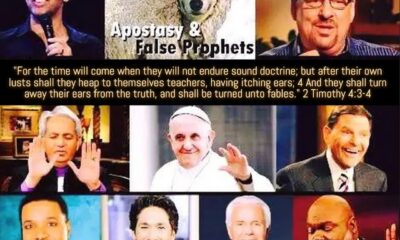
SHOCKING List of False Prophets Most Believe are True