






Ridiculous KJB Bible Corrections:
Who is Yahweh?
by John Hinton, Ph.D.
jhinton@post.harvard.edu
Ex 6:3 And I appeared unto Abraham, unto Isaac, and unto Jacob, by the name of God Almighty, but by my name JEHOVAH was I not known to them.
Ps 83:18 That men may know that thou, whose name alone is JEHOVAH, art the most high over all the earth.
Isa 12:2 Behold, God is my salvation; I will trust, and not be afraid: for the LORD JEHOVAH is my strength and my song; he also is become my salvation.
Isa 26:4 Trust ye in the LORD for ever: for in the LORD JEHOVAH is everlasting strength:
The above quoted verses are the four verses where the name of God is pronounced in the KJV (as well as the ASV, and a few other English versions). There is a popular movement to replace the name of God, Jehovah, with the name Yahweh. This is being pushed especially hard among those in the Identity and Christian patriot movements, and especially among the alternative news community prominent on the shortwave, which some Christians perceive of as being a source of more purer form of broadcasted Christianity. There are exceptions, but overall this is nonsense because the shortwave Christian broadcasts are frequently every bit as commercialized (just different products) and apostate as the “Christianity” that is broadcasted on TV.
Eph 2:2 Wherein in time past ye walked according to the course of this world, according to the prince of the power of the air, the spirit that now worketh in the children of disobedience:
This movement to alter God’s name with absolutely nothing that resembles scriptural, textual, or linguistic support, has misled huge numbers of Christians into denying the Bible and accepting the work of Bible-scoffing atheists who have dominated the academic field of biblical studies since the mid-nineteenth century. I even hear people who claim to be King James Bible supporters use this perversion of the name of God. If they deny what the KJV says about the name of God, then they do not believe the KJV is God’s word. In fact, they do not believe that the Hebrew Old Testament is God’s word either, because it clearly says Yehovah, which becomes Jehovah in English pronunciation, and pronounced He’ova in Spanish. If one can change that word simply on a whim, which is all the Yahweh spelling is, then they can deny the spelling of absolutely any other word in the entire Hebrew Bible.
This is one of the times that it is particularly important to use the proper Hebrew text. The perverted Hebrew text of Rudolf Kittel, derived from the Ben Asher text with Kittel’s amendments, which is known as the Biblia Hebraica Stuttgartensia (BHS), may mislead any Hebraicist who tries to follow my argument if he looks at the wrong verses. The better Ben Hayim text, which is what the KJV and earlier translators utilized, should be used to understand the issue properly. The BHS is inconsistent in its vowel markings for YHVH (Yehovah), while the Ben Haim text is consistent. Among the Jehovah verses listed above, the second vowel (O) is included only in the Exodus verse in the BHS text, although it does appear in numerous other passages throughout the text. It is better not to use the text that was derived from the work of a Nazi and atheist, which is promoted by atheists, and instead use the unaltered text that was traditionally used before the great falling away of the modern era. If the reader does choose to use the faulty text, the results will be the same, but he may be confused by inconsistency of the diacritics, although in no verse can the diacritics be claimed to spell out Yahweh.
Myth of No Vowels
First we must deal with the common myth and that is that there are no vowels expressed in the Hebrew text. This is a convenient line of nonsense for those who want to change the text to fit their own views, but it is a dishonest line. Elaborate diacritic marks, called pointing by English-speaking Hebrew scholars, provide extensive information for vowels, doubled letters, stops, and other phonological features. Bible “correctors” are either ignorant of this fact or they pretend that they do not exist. Those who are aware of them and argue that they may be ignored because they were introduced into the text by the Massoretes at a later date are giving themselves free rein to alter virtually every word in the entire Hebrew Old Testament. Not only do these biblical detractors deny God’s promise to forever preserve his word, every jot and tittle, but they open the door for Bible manipulation that has no other criteria than personal judgment or fancy. If we are to deny the Masoretic reading we can do no end of mischief to the text by inserting our own vowels, doubled letters, and stops. This allows us to change positives into negatives, passives into actives and vice versa, statement verbs into causative verbs and vice versa, to convert verbs into nouns and vice versa, and to even change the entire meaning of the verb itself. Many words could have several or even a dozen different varied meanings by toying with the pointing. Furthermore, some diacritics indicate different letters entirely. A dot over the right side of a shin indicates an SH, while a dot over the left side of it indicates an S. A dot inside of a vav is pronounce like a long U while a dot over the vav turns it into an O, so the removal or addition of such a dot is fair game to the Yahweh crowd. A dot inside a Pe is pronounced like P, while if it lacks a dot it become an F. Similarly a Bet with a dot is a B and a V without one. A number of other letters have similar features of changing their sounds according to the presence or position of a dot. If we are to ignore the vowel pointings, we are equally justified in changing S to SH and vice versa, or many other consonant changes, since the Massoretes were responsible for the consonant identifying diacritics as well. Suggestions to alter the text is a common method of attacking the Bible that has been employed by Bible-scoffing scholars in academia for over 100 years, it is a common practice that I encountered frequently among fellow students in Hebrew classes. The practice is taught and encouraged by those who consider the Bible to be mythology.
It is amazing to see this being done by people who claim to honor the Bible. Dr. G.A. Riplinger, in her tome, In Awe of His Word, points out that ignoring the vowel marks in the Hebrew allow Jews and atheists to remove future references to our Saviour from the Old Testament by toying with these vowels. [Riplinger, pp. 433-434]. For this reason vowelless Tanakhs (Hebrew name for Old Testament) are sometimes used. In fact, if the Masoretic diacritics are ignored, there is scarcely a word in the entire Bible, if there is any at all, that cannot be altered or changed completely. Why is it that alleged Bible-believers think that it is wrong to change words in the Bible into entirely different words, but it is alright to ignore the reading of the Hebrew text and alter the name of God without any evidence to support their altered reading other than the opinion of 19th century atheists? In fact, they are changing it when linguistic evidence shows that the pronunciation that they are using is wrong.
Textual Preservation
The suggestion that the diacritics of the Hebrew text can be ignored not only indicates a belief that God not only lied about preserving his word, but that texts cannot be preserved without the help of modern style scholarship. Texts have survived intact without the help of modern scholarship and computers throughout history, and these include texts that God did not promise to preserve.
The Qur’an was not originally written down, but was only memorized. Still today men called hafizes exist all over the Muslim world who memorize the entire Qur’an and can recite any part of it at will. For the first couple hundred years or so that the Qur’an was written down there were no dots at all in the text due to the lack of an actual established alphabet for Arabic (early scripts like Nabatean previously existed, but were regional and temporal). This meant that not only were vowels, doubled letters, and stops not indicated, but most consonants were indistinguishable. There was no orthographic way to distinguish B, T, TH, N, and Y. Likewise the same can be said of J, H, and KH, or D and DH, or R and Z, or S and SH, or emphatic D and emphatic S, or emphatic T and emphatic DH, or F and Q, or Ayn and Ghayn, Imagine the confusion that a diacritic-free Qur’an could have caused, but through the work of hafizes and serious Muslims who had great familiarity with the words of the Qur’an, the text has been preserved since the seventh century with only very slight variations in a few minor spots in an Egyptian recension.
The Vedas are another example. The generally accepted date for the Rigveda is somewhere between 1500 to 1200 B.C. It was not written down for centuries, but memorized by individuals whose whole lives were devoted to retaining it in their heads and passing it on. To this day all four Vedas are completely memorized by certain Hindu priests who no longer even know what the text means (Vedic is quite different from later Sanskrit). There were a number of different geographically separated traditions of Vedic priesthoods. Centuries later some of these schools wrote down the text, and it was discovered to the shock of western scholars that they completely agreed with only minor insignificant discrepancies in a few places.
If Muslims and Hindus can accurately preserve their texts, why is it so hard for Christians to accept that a the text that they consider to be divinely inspired could not be accurately preserved when God promised that it would be! The faith of modern Christians is weak indeed!
The Pointing of YHVH
Throughout the Hebrew text the name YHVH appears with two different forms of pointing. The first and most common is with the pointings, sheva, holem, and kamats, (e-o-a), and the second with the vowels E-o-i. I have used e to represent the short vowel that is similar to the English schwa (the Hebrew Sheva can also indicate a stop, but the short vowel sound is phonetically required here), while E is used for the long vowel. Notice that nowhere is there a stop and an E as in Yahweh, nor is there an A as in father in the first syllable. Clearly the y-e-h-o-v-ah spells out Yehovah. How on earth does one get Y-a-h-stop-E out of that? If you want to butcher his name by calling him Yahweh, you have to do so by disregarding the text. Do so at your own peril. In the second pointing the name should be read as Elohim, which will be discussed below.
There is vast historical evidence showing that the pronunciation of Jehova/Yehova goes back thousands of years. In the 18th century John Gill outlined examples of the Jehovah pronunciation going back before the time of Christ. The following examples of its use appear in Gill’s work and are listed In Awe of Thy Word: “An occurrence from 277 B.C. (p. 249), Josephus in 70 A.D. (pp. 219, 221), the Zohar from 120 AD, A copy of Lamentations from 200 AD, Origen in Psalm 250 quotes Psalm 118:25 where Jehovah is mentioned three times, Jerome in 380 AD, and the grammarian Saadiah Gaon’s book on Hebrew diacritics cited the vowels of Jehovah.” [Gill, quoted in Riplinger, p.425]
GOD, LORD, and JEHOVAH
We have to deal with the issue of why the KJV, and most ancient and modern versions of the Bible, do not translate this name as Yehova or Jehova in all but a few verses. For centuries Jewish tradition, without which we would have no Bible, considered the name of God to be too lofty to pronounce. There were differences in the extent to which this reverence was expressed, since some spoke his name only when his name was being emphasized, as it is in the four verses above, and others would never utter it at all. For this reason the word for Lord, Adonai, is uttered wherever his name YHVH appears. The tradition of translating this occurrence as LORD in all caps is understood to represent YHVH, but is used to show respect for him as a superior. Wherever the actual word for “Lord” appears with YHVH, Elohim was uttered, hence the diacritics E-o-i. This is done so that he is not referred to as Lord Lord.
This practice should not be difficult to understand, but apparently in the modern day where etiquette and formality have been cast aside, it is not understood at all. We know God the Father’s name, but that does not mean that is the name that we should use casually as we would an equal. Doing so on a regular basis is overly familiar and indicates an attitude of chumminess rather than showing the respect and pious fear that God demands from us. Almost everyone knows the name of their fathers and mothers, but few address them or even refer to them by their names. I address my mother as mom. Forty some years ago I addressed her as mommy, and even earlier as mama. I will never get old enough to consider it proper to address her by her first name. She is my friend, but she will always be my elder and parent, and I would not undermine that relationship and show her disrespect by addressing her by her first name. The only time that I use her name is when I am introducing her to others who do not know her name, and then I introduce her as my mother before I provide her name. When I refer to her to that person from then on, I refer to as my mother and not by her name. I wonder if the crowd that throws God’s name out so casually do the same with their parents. Do they refer to their own fathers as Bill or Joe. Why do they do so with The Father. Jesus did not even do that when he addressed God The Father.
Mr 14:36 And he said, Abba, Father, all things are possible unto thee; take away this cup from me: nevertheless not what I will, but what thou wilt.
Mt 26:39 And he went a little further, and fell on his face, and prayed, saying, O my Father, if it be possible, let this cup pass from me: nevertheless not as I will, but as thou wilt.
Mt 26:42 He went away again the second time, and prayed, saying, O my Father, if this cup may not pass away from me, except I drink it, thy will be done.
Nowhere do we find an occurrence of Jesus referring to God The Father by his personal name. We are supposed to be using Jesus as the model for our behavior, not 19th century atheist scholars and white supremist Identity cult members.
At this point it should not be necessary to explain why the name Jehovah was used in these passages instead of LORD. God’s name is being identified in them. The Exodus passage is where this name of God is introduced to the Israelites for the first time. The Psalm 83 is also mentioning that it is his name, and the Isaiah verses are referring to a name of God, Lord Jehova (YHVH is not pointed like Elohim as it is in other occurrences where the name is not being emphasized). These passages indicate how God might be introduced to someone who does not know him or recognize him as Lord; they are not invitations to address him by his name as you would an equal.
Modern Jews will still not utter his name even here when it is being identified, but they do not treat the occurrence in Exodus 6 the same way that they treat the name YHVH elsewhere. The Jewish Publication Society Version uses the actual Hebrew letters for YHVH with a footnote that reads: “The ineffable name, read Adonai, which means the L.”
Here modern versions like the RSV really blew it with “I appeared to Abraham, to Isaac, and to Jacob, as God Almighty, but by my name the LORD I did not make myself known to them.” Numerous other modern versions make similar errors. The ever foolish NIV has: “I appeared to Abraham, to Isaac and to Jacob as God Almighty, but by my name the LORD I did not make myself known to them.” It should be noted that these verses are serious evidence of the superiority and efficiency of the King James Bible translators. These occurrences of YHVH are different in the way that they are presented and the KJV translators and others before them recognized them as such. The RSV and other modern version “translators” had the KJV as a reference, which they all used, and they still failed to recognize it. The ASV and Darby got it right, but only because they were using the KJV as their “translation” guide (although they were perverting it).
Pronunciation
Those who are opposed to the KJV and call God by name Yahweh are not only giving an erroneous pronunciation of his name according to the pointing of the text, but according to the pronunciation of the Hebrew itself. As Gail Riplinger astutely points out in her Awe of Thy Word, the Hebrew vav is pronounced as V not W. This error came about due to the misreading of German Hebrew grammars, which use W for the English V (note: the German V is pronounced like the English F). If these Bible “correctors” want to ignore the Hebrew text and pronounce his name as suggested by 19th century atheistic mythologists, they should use the name Yahveh so that at least they would appear less ignorant. It always puzzled me to hear atheistic scholars at Harvard pronounce the name as Yahweh when the same scholars would always pronounce the vav as a V every other place that they use it. Apparently this perversion of his name has become so well established within the Bible-scoffing and Bible-correcting communities that even those who know better mispronounce even the perverted variation of his name. It confused me that they would pronounce it as if it were an Arabic word instead of Hebrew word until I understood the purpose of the corruption, which is the subject of the next section.
Yahweh the Storm God
Kittel, like most biblical scholars within the academic community today, was a believer in the storm god theory. Storm gods of Near Eastern and Vedic mythology were responsible for storms and disease. Riplinger quotes from an article that he wrote in The New Schaff:
“The origins of Yahweh worship…it appears that this cult was established before Deborah…Thus Yahweh appears as an old deity of Sinai, revered in untold antiquity as a weather-god…” (The New Schaff, Vol. XII, p. 472).” Riplinger also points out theat the early perversion of the name of God was used by a Catholic in the fifth century who did not know Hebrew by the name of Theodoret who confused it with a Syrian Jabe. (The New Schaff-Herzog Encyclopedia of Religious Knowledge, Vol. XI). Later, prominent atheist scholars such as Driver of Brown, Driver and Briggs Hebrew Dictionary fame (the text that James Strong plagiarized for his concordance’s dictionary), proposed connections with deities from Aramaic and Babylonian texts named Yaho, Ya-hu, or Yave.
Riplinger also provides a list of reference of critics who proposed that the God of the Bible’s name was derived from various Canaanite gods with names such as Yave “(These critics include: von Bohlen (Genesis, 1835, p. civ.), Von der Alm (Theol. Briefe, I,1862, pp. 524-527), Colenso (The Pentateuch, V, 1865, pp. 269-84), and Goldziher (Der Mythus bei den Hebrern, 1867, p. 327). (See also: Driver, Studia Biblica, I. 20; I, 5; Encyclopedia Britannica, 11th edition, 1910-11, vol. 15, pp. 311-314, s.v. Jehovah; Delitzsch, “Wo lag das Paradies,” 1881, pp. 158-164; “Lesestucke,” 3rd ed., 1885, p. 42, Syllab. A, col. I, 13-16).”
Many etymologies have been suggested for the meaning of the name YHVH. The eternal one is one suggested by some Christians, and is how it is actually translated in French translations (l’Eternel). This is based on the root of the verb hava’ or havah, meaning to be or exist. Obviously this could also be translated as “the one who is.” Another verb havah (spelled the same, but with a different set of meanings) means to blow. It could be theorized that the name YHVH means “he who breathes life into living things.” An intensive meaning of this same verb means to blow furiously or to storm. This meaning can be used by modern scholars to support their storm god theory, which shows the possible mischief that can be created through imaginative etymologies. Riplinger refers to the suggestion of some atheist scholars that Yahwe means to destroy. This is in line with the storm god theory, that is that it comes from another similar Semitic root that means to destroy, hence they suggest that God’s name means the destroyer.
This is not the only example of God’s name being perverted by modern atheist scholars. I was taught that a possible meaning of God’s name of El Shaddai could be “god of the Mountains” being derived from an Ugaritic word meaning mountain. The common Semitic root shadd means to be mighty, powerful, violent, and the like. It appears in Hebrew and Arabic. In Ugaritic it appears that there is a word that means mountain that contains the same radicals. It could be an unrelated word, or it could actually mean volcano, which is a violent or powerful mountain, but in any event there is no reason to connect the Ugaritic meaning with the Hebrew word. The biblical word’s meaning is very obvious by examining the Bible, and even the modern versions know that Almighty is the proper translation. A simple verse comparison is all that it is needed, since the Bible contains its own definitions of its words. Only scholars who want to reduce God to a tribal storm god like those of the Mesopotamian and Hittite cultures suggest El Shaddai is the name of an Ugaritic storm god. The same storm god that they also call Yahweh.
The name El also is used to conflate the mythological god of Ugaritic texts, ‘Il, with God. In order to make this comparison more convincing ‘Il is almost always transliterated as El in spite of the fact that ‘I is the vowel normally used (Ugariticists almost invariably follow the a,i,u vowel scheme of Arabic). In either case ‘Il, ‘El, or ‘Al, is the word for God or a god in Semitic languages (Akkadian & Ugaritic illum, etc.). Textual evidence exists for many ancient cultures that show that a belief in an all powerful creator, or single God, once prevailed. Later demons, or what they call lesser gods (asuras or devas in the Vedic and Hindu spheres) began to be worshiped in place of God, and God himself was reduced to a powerless weakling or even a fool in the literature of these cultures. The ‘Il, or El as they call him, of Ugaritic texts was the worst mockery of God the Creator to ever survive in literature. Scholars of Ugaritic know very little about the language, and much of what they present as translation of the corpus is nothing but guesswork and tomfoolery, but what comes through in their interpretations is that the Ugaritic El is a mockery of God. He is presented by some scholars as a drunk who falls down in his own feces and urine. He is described in pornographic sexual terms by some, and as impotent by others. The only thing that we can be reasonably sure of is that this mythological perversion of divinity is not a noble figure at all. The illum of Mesopotamian cultures were little better. They were nothing but petty demons with petty desires. The same thing happened with the Vedic of Central Asia, the Hindu cultures of India, the Egyptians, and the ancient Chinese. This ancient plot to cast God aside, to mock him, and replace him with multitudes of demons is thousands of years old, and modern scholars perpetuate it by their efforts to conflate God with such perversions.
This perversion of the name of God is carried into the rhetoric of modern day heretics and apostates. I remember hearing the New Age, pseudo-patriot named Len Horowitz ranting about the word God. His contention is that God is dog spelled backward and that somehow this was done intentionally. This backward spelling has long been noticed by overt Satanists (Horowitz being a covert one) and used for the purpose of maligning God. Horowitz is doing the same through the back door. It should be noted that the German word for God is Gott, while their word for dog is hund. The Gothic words, which are much older than any occurrence in English or German is Gud and hund, so positing that the word God came about because it is dog spelled backward is ludicrous like most of his perverse Hindu-based theology.
Using reasoning that is at least as stupid, many modern day heretics and apostates also attack the title Lord as applied to God. Their reasoning is based on the fact that the word Baal means lord, so they posit that the biblical title of God as Lord comes from Baal worship. This convoluted argument ignores the fact that baal is only used for petty lords and husbands in Hebrew when it is applied to men. Only Adonai is used for Lord in the Bible, while Baal is used as a name for the false god of the Canaanites, who is always denounced. The actual word Adonai appears frequently in the Bible and is represented by the spelling Lord with lower case letters in the KJV and other translations. Removing the word Lord from the Bible is blasphemy of the worst order. What the Yahweh cult is doing in essence is proclaiming that God is not their God, nor is he their their Lord, but a storm god whom they address on equal terms is their master.
Y to J Issue
The final issue that must be addressed concerns the conversion of Y to J. This is such an utterly silly and ignorant criticism that I find it embarrassing that there are actually Christians that present it as an argument. I already dealt with the issue in my article on the name of Jesus, but I will restate some of it here with some additional historical linguistic information provided by Dr. Riplinger. Y becomes a J in every name in English, French, and Spanish. In English the J is pronounced like J in Japan, while in French it is pronounced like S in pleasure, in Spanish it is pronounced like an H, in German it is pronounced like Y. This is a phonological and orthographical issue, not a theological one. There is no theological issue at stake in how one language interprets a certain phoneme. In every case of a name in Hebrew that begins with a yod (Y) it is pronounced with the appropriate phoneme for that language. This came about through phonological and orthographical changes in the developments of those languages. Even Hebrew itself went through huge phonological and orthographical changes in its long history. God’s name is not a magic word to be chanted for power as the name cult seems to suggest for both the names of God and Jesus. My name comes from a Hebrew word meaning given by God, which begins with a Y in Hebrew. It is Jean (zhan) in French, Juan (hwan) in Spanish, Giovanni in Italian, Hans in German, Yani in modern Greek, Ivan (eevan) in Russian, Yahya or Hanna (with a heavy H) in Arabic, and other variations exist in other languages. They all translate as John and I have no trouble adapting to any of them within the respective cultures and there is no reason for me to be insulted by any of these names. On the other hand, being addressed by a made up name based on a pagan deity would insult me.
If these name cultists find the J so objectionable, why don’t they refer to Elijah as Elaiyah, Jeramiah as Yeramaiyah, Jacob as Yakov, Jonathan as Yanatan, Jerusalem as Yerushaleem, and so forth. For that matter why don’t they use the Hebrew pronunciation for all of the names in the Bible, such as Dahveed, Moshe (Moses), Shmu’el (Samuel), Sha’ul (Saul), Shlomo (Solomon), and so forth, if they consider the issue to be so important. Since those who call God by a name that is not even Hebrew at all, and since they do so without a scrap of evidence to override the very solid evidence to the contrary, why do they have any constraints at all about inventing whimsical pointings for other names in the Bible? Why not call David Dahwid, Duwad, Diwad, or Deewud. Or how about Da’ud as Arabic pronounces it? Since Yahwe sounds like an Arabic word (except for the long A) this should go over well. Better yet, why not Dood. After all, as I have already pointed out, the vav is read as a long U when there is a dot in the middle of it. The modern translations that want to relate to the modern youth could spell him Dude. Think of the great “Christian” rock lyrics that could come from that. While we are at it why not call Moses Mose instead of Moshe so it fits the atheist scholars view that his name is related to an Egyptian pharaoh with a similar name. Moshe could also be Masih (Arabic for Messiah), Shlomo could be Sulemaw, and Shmu’el could be Smiwal?
For those who still who are still confused about the phonological issue of sound changes between and within languages, the following historical-linguistic summary from the World Book Encyclopedia concerning the Y to J conversion as it relates to English should be helpful.
“The sound of the Hebrew letter jod came into English as the letter ‘I,’ used as a consonant and having the soft ‘g’ sound, like today’s ‘j.’ In the past the letter ‘I’ was used as both a vowel (i) sound and as the consonant ‘j’ sound. The OED says that the sound of ‘j,’ though originally printed as ‘I,’ was pronounced as a soft ‘g’ (Oxford English Dictionary, Unabridged, 2nd Edition, Oxford: Clarendon Press, 1991, s.v. J). The ‘JE’ sound in JEHOVAH was spelled ‘IE’ and pronounced as ‘JE.’ To distinguish the consonant sound (soft ‘g’) of the letter ‘I’ from the vowel sound of ‘I,’ many scribes in the 1200s began putting a tail on the soft ‘g’ ‘I’,’ making it look like our modern ‘J.’ The Spanish, in the 1500s, were the first to more consistently try to distinguish the consonant I (soft ‘g’) sound as the shape of a ‘J.’ At that same time English printers used ‘J’ and ‘I’ fonts interchangeably (as documented elsewhere in this book). During the 1600s, most languages began consistently using the extended ‘I’ form, now called a ‘J,’ to represent the ‘j’ (soft ‘g’) sound.” [quoted in Riplinger, p. 418]
Summary
What it boils down to is that modern rebels wish to change the names of God, eliminate them, malign them, and assimilate them into false religions. It is more than just a way to puff themselves up as possessing arcane metaphysical knowledge lacking in others, but as a way to get around the issue of having to be born again. To these rebels the possession of this Kabalistic knowledge, and its usual return to the Old Testament law (which they only do in words, not deeds), replaces repentance and rebirth. Conversion, repentance, and living by Christian standards has been replaced by using a mantra that is based upon using a “corrected” name of God, and a “corrected” name of Jesus (I dealt with his name in RBC #58). Unfortunately for them, God’s Word tells them in John 3:3 that “. except a man be born again, he cannot see the kingdom of God.” We are also told the same thing in John 3:7 and 1 Peter 1:23:
Joh 3:7 Marvel not that I said unto thee, Ye must be born again.
1Pe 1:23 Being born again, not of corruptible seed, but of incorruptible, by the word of God, which liveth and abideth for ever.
What is amusing is that those who make a big deal out of the conversion to J, and who contradict the Bible by calling God Yahweh while still calling themselves Bible-believers generally know about as much about Hebrew as the average Australian aborigine knows about Lithuanian. It troubles me how very few people realize that the god that they now worship, named Yahweh, is derived from a storm god created by atheist scholars following in the steps of the late 19th century skeptics, and that these atheists are feeding them much of their theology (although this was the last thing that any of them intended).
Some may wonder why I know so much about these Bible-scoffing atheists of the scholarly community. It is because I used to be one of them. This familiarity is a byproduct of years of intense comparative religion study without the Holy Spirit to guide me. The Bible cannot be understood without spiritual discernment, no matter how deeply one studies philology, archaeology, history, and allied fields of scholarship. Like other secular scholars I studied Hebrew with intensity in order to understand the Bible from the perspective of a historian and philologist. I did the same thing with cuneiform languages (Akkadian, Sumerian, and Hittite), Arabic, Sanskrit, and Greek, and their associated religious traditions. I was given numerous fellowships, scholarships, and awards as a student, so I was quite successful in their world, but one thing separated me from my colleagues, which was an awareness that something was wrong with the whole endeavor. It is one-sided, spiritually empty, misguided, destructive, without merit, grossly naïve, ignorant, and void of anything resembling value, and even from an atheistic point of view it is without value (what could have value in a Godless universe?). After a while I could no longer consider my work to be a worthy labor, and I was unable to justify anything that I was doing at all. Only after I came to the point that I could no longer take serious the acquisition of knowledge for knowledge’s sake alone, and face the truth of my own miserable and sinful nature and my need for salvation, did the Lord, whom I had previously denied and blasphemed, call on me to humble myself before him and seek his forgiveness and guidance. It was only after I responded that I began to really read the Bible and to understand it. I also knew immediately that the KJV was the only Bible that I could use, because it was the only one that was attacked by the atheist and apostate Christian crowd that I had come to know so intimately, and it was the only one that had the power of God upon it. Reading the NIV, RSV and so forth, were like drinking Kool Aide with aspartame instead of fresh squeezed fruit juice, or like listening to a recording of Britney Spears instead of a Bach Cantata. Reading the Anchor Bible, the favorite of many “higher” critics, was like drinking antifreeze instead freshly squeezed fruit juice, and Black Sabbath instead of a Bach Cantata. I no longer tried to view God as a local Near Eastern storm god (or plague deity), or as a god with similarities to Varuna or Rudra of the Rigveda, because I am no longer blind. Today, I find it mind boggling that many who have been calling themselves Christians for years use a name for God that is derived from the world that I left behind, not the one that I entered upon when I got saved.
I will end this essay with three questions addressed to those Christians who abuse God’s word by perverting the name of God. (1) Why would you allow yourself to be influenced by Bible-scoffers who treat the Bible as a book of mythology instead of as Scripture? (2) Where did you get the authority to change both the English and Hebrew texts of the Bible when neither one of them is ambiguous in the least? (3) Do you think that God is going to honor you for doing so?
I hope that those of you who call God Yahwe who really do want to be Bible-believing Christians are not so proud and arrogant that you feel that you cannot repent of a clear error that you have made in ignorance. As for those of you who choose to continue to slander the Lord now that you can no longer claim ignorance, I will dust off my sandals.
For Further Reading
Gill, John (1697-1771). A Dissertation Concerning the Antiquity of the Hebrew Language, Letters, Vowel-Points and Accents.
Riplinger, Gail. In Awe of Thy Word: Understanding the King James Bible, Its Mystery and History, Letter by Letter, 2003.
The preceeding is part of a series of examples of KJV verses that arrogant would-be scholars have tried to correct and showed themselves to be fools. These examples are for the benefit of those who would like more ammunition to defend God’s Word against the attacks of the arrogant Bible “correcting” modernists. I hope that some of you find them useful.
Your servant in Christ,
John Hinton, Ph.D.
Bible Restoration Ministry
A ministry seeking the translating and reprinting of KJV equivalent Bibles in all the languages of the world.

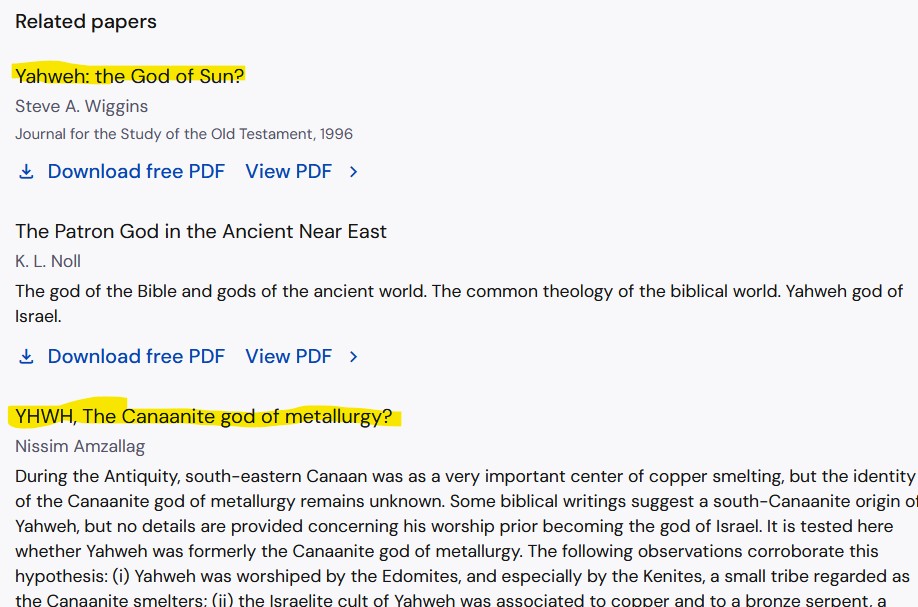
WHY DOESN’T THE KING JAMES BIBLE ALWAYS TRANSLATE “YAHWEH” AS JEHOVAH?
 From “Answers To Your Bible Version Questions” ©2001 David W. Daniels.
Why doesn’t the King James Bible always translate “Yahweh” as Jehovah?
Answer: You expressed a concern about the following statement by Gail Riplinger:
“Now we are seeing a parallel move within the new Bible versions where it’s not Jehovah anymore it’s just ‘Lord.’ It’s not Jesus Christ it is just ‘the Christ.’”
You are correct that the KJV uses “LORD” to translate the divine name in most instances. However, there are seven instances in which the KJV translators used “Jehovah” for very specific reasons. Gail Riplinger actually was correct that modern Bibles have removed “Jehovah” in these seven instances.
The KJV translators used the name “Jehovah” whenever the name Yahweh was found under one of the following three conditions:
1. When YHWH is used as God’s personal name.
Exodus 6:3 And I appeared unto Abraham, unto Isaac, and unto Jacob, by the name of God Almighty, but by my name JEHOVAH was I not known to them.
Ps 83:18 That men may know that thou, whose name alone is JEHOVAH, art the most high over all the earth.
2. When God’s name is repeated as “Jah Jehovah.”
Isaiah 12:2 Behold, God is my salvation; I will trust, and not be afraid: for the LORD JEHOVAH is my strength and my song; he also is become my salvation.
Isaiah 26:4 Trust ye in the LORD for ever: for in the LORD JEHOVAH is everlasting strength:
3. When God’s personal name is part of a place name.
Jehovah-jireh
Genesis 22:14 And Abraham called the name of that place Jehovah-jireh: as it is said to this day, In the mount of the LORD it shall be seen.
Jehovah-nissi
Exodus 17:15 And Moses built an altar, and called the name of it Jehovah-nissi:
Jehovah-shalom
Judges 6:24 Then Gideon built an altar there unto the LORD, and called it Jehovah-shalom: unto this day it is yet in Ophrah of the Abi-ezrites.
Jehovah was the pronunciation of JHVH (YHWH) that the English speaking people understood as the Personal Name of God. So in places where the Personal Name of God was emphasized, the King James translators transliterated the Name Jehovah.
Jehovah or Yahweh?
While I am sure that God does not care whether we pronounce His personal Name as Jehovah or Yahweh, even the New American Standard translators admit the fact that “It is known that for many years YHWH has been transliterated as Yahweh, however no complete certainty attaches to this pronunciation” (Principles of Translation from the “Preface to the New American Standard Bible,” 1997 edition). The pronunciation is a moot point.
If the vowels added later in Hebrew (200-700 AD by the Massoretes) are not the way to pronounce the Name of God, then there is nowhere that we can find the correct pronunciation. Many modernist “scholars” say that Yahweh was a local god that was elevated by the tribe of Israelites to the One God. They say Yahweh was the consort (lover) god of Baal, maybe even female! But if you say, “Jehovah” (just like when you say, “hell” instead of “sheol”) people know what you are talking about: The One Personal, Invisible God of Israel and the Christian Church.
Gail Riplinger has a point. Something as clear and meaningful as this has been stripped of its significance by the generic word “LORD” or “GOD” in these specific seven instances. Just because the modern bibles (including the NKJV) changed it does not mean they IMPROVED it.
The King James translators understood, as our modernist translators do not, that there was significance in these specific seven places, where the personal name of God was referred to. They transliterated JHVH as Jehovah only in these places, for these good reasons. The modernists have once again simply decided to hide these significant points from the reader.
Support | STORE | Podcasts | H.O.T. Bible Study [podcast] | Church History Exposed | Bible Agnostics Exposed | How to Spot a Fake Bible [podcast] | WHAT ABOUT PEOPLE WHO CAN’T UNDERSTAND THE KJB? [podcast] | New American Standard Version “Bible” NASV Catastrophe Exposed | The Audacity of Defending the New Versions | Do We Have God’s Word or Do You Need to Know the Original Languages? [podcast] | Bible Versions Category |

Articles
In a Small Prison Cell, Justin was about to Commit Suicide … [podcast]

In a small prison cell, Justin Weeks prepared the noose and was about to commit suicide when the LORD interrupted him, spoke to him only God could have known, and saved him. Hear this amazing testimony in this podcast. SafeGuardYourSoul Ministry Update
“To give light to them that sit in darkness and in the shadow of death, to guide our feet into the way of peace.” Luke 1:79

back below

Here’s a picture below of Justin just after being released from prison, having somehow, miraculously been released when he face 25 to 99 years in jail! We gathered clothes for him to be able to pick out to wear.

The Return of Christ | Support | STORE | Podcasts | Jail/Prison Ministry | Mexico Mission here | All Ministry Updates



Abiding
“A Land Flowing with Milk and Honey” [podcast]

DADDY’S IN THE HOUSE!
There will not be even one rebel in glory …. The LORD loves and calls you to Himself today….. to settle down humbly in true repentance …. asking God to forgive your sinful stubbornness, rebellion, and self-idolatry, self-adultery. Ask Him to give you a heart of flesh and to take away every trace of a stony heart in you (Ezekiel 36:24-26).
If you had a real dad growing up, you know HE was large and in charge in his house…. and so is God!
He’s Large and in Charge!
He’s Daddy, “Abba Father”! (Romans 8:15).
He’s Your Father – yet only if you endure His chastening! (Hebrews 12:5-12)
“A land flowing with milk and honey” (Exodus 3:8) is a biblical phrase that describes a place of great abundance and prosperity, symbolizing the fulfillment of God’s promises and the richness of the Promised Land. It emphasizes a land that is fertile, nourishing, and provides an abundance of sustenance, with milk and honey serving as symbolic representations of this richness.”
“For ye have not received the spirit of bondage again to fear; but ye have received the Spirit of adoption, whereby we cry, Abba (Daddy), Father. 16 The Spirit itself beareth witness with our spirit, that we are the children of God: 17 And if children, then heirs; heirs of God, and joint-heirs with Christ; if so be that we suffer with him, that we may be also glorified together.” Romans 8:15-17
Growing up in daddy’s house, you did things his way, right? Not your way but his way…. he was the man of the house, not you. You abode under his provision and his care and love for you, as your daddy, right? Well, that’s how it is with God. He loves you beyond measure and yet you must simply humble yourself and do things His way. When you do, the blessings will flow, will overwhelm you, will consume you, will flood your life! BAM. Memorize Matthew 6:33 today.
Let’s get something straight …
NO DOUBT: There’s no doubt that God wants to bless your life! Yet, you must do it His way beloved. He wants to bless you and yet, you must ask yourself if you really want Him. Are you truly hungering and thirsting for more of Jesus, more of His righteousness?
“Blessed are they which do hunger and thirst after righteousness: for they shall be filled.” Matthew 5:6
The Old Testament summed up: In dealing with His people, His transactions, our LORD’s business concerned their salvation and restoration – promised land blessings! Read Numbers 13-14; 1 Corinthians 10:1-13. And, we are now “the Israel of God” (Galatians 6:16). All these things were written and are on record for us – for our learning, comfort, peace, and blessings (Romans 15:4; 1 Corinthians 10:11).
As was the case with Old Testament Israel, God brought you out of a life of sin in this fallen world (Egypt) in order to bring you IN – into His land of abundant blessings, walking victoriously in a cross-abiding relationship with Christ (John 15).
“And he brought us OUT from thence, that he might bring us IN, to give us the land which he sware unto our fathers.” Deuteronomy 6:23
There’s a promised land of blessedness, of abundant fruit, the likes of which we have not even begun to taste. Yet, appropriating, walking into this treasure house, this field, this gold mine of blessedness, requires that we closely, diligently trust and obey the Giver of “every good gift … every perfect gift” (James 1:17).
HE BROUGHT YOU OUT OF SOMETHING FOR GOOD REASON – TO BRING YOU INTO SOMETHING MUCH GREATER – WHICH HE PURCHASED WITH HIS OWN BLOOD ON THAT CROSS!
Many who read these words are seeking to get and to live out what God alone can provide – as you abide in a real relationship with Him, loving Him with all you are, wholeheartedly.
“Delight thyself also in the LORD; and he shall give thee the desires of thine heart.” Psalms 37:4
Delighting in the LORD assures that we will be possessed with His desires and they will be granted!

Truly Trusting and OBEYING God
Are you forgetting any of His “benefits” – the ones Jesus died to give? Are you neglecting to appropriate them by a real walk with Him? “Bless the LORD, O my soul, and forget not all his benefits” (Psalms 103:2).
Jesus was the perfect example of delighting in God. In the days of His flesh, Jesus toiling as He faced going to that cross for us, cried “not my will, but thine, be done” (Luke 22:42). Have we cried out to the LORD today with a “Not my will but thine be done”?
“First” means First, not Second. Putting God where He Belongs in Your Life – “First”
“But seek ye first the kingdom of God, and his righteousness; and all these things shall be added unto you.” Matthew 6:33
If you are out of Bible order, you are out of Bible blessings!
If your life is not in Bible order where Jesus is literally FIRST, you will not walk in the blessings of God – the blessings Jesus died to give you!
“IF”
“If ye be willing and obedient, ye shall eat the good of the land: 20 But if ye refuse and rebel, ye shall be devoured with the sword: for the mouth of the LORD hath spoken it.” Isaiah 19-20
GOD DESIRES TO BLESS YOU – to bring you into “A Land Flowing with Milk and Honey.”
The phrase “milk and honey” appears 20 times in God’s Word and in every case, refers to God’s desire and declaration to bring His people into His land of rich blessings, flowing with the bounty of His goodness!
“And I am come down to deliver them (salvation) out of the hand of the Egyptians (the world), and to bring them up out of that land unto a good land and a large, unto a land flowing with milk and honey; unto the place of the Canaanites, and the Hittites, and the Amorites, and the Perizzites, and the Hivites, and the Jebusites” (Exodus 3:8).
In other words, “I’m going to bring you into a land flowing with milk and honey right in the middle of your enemies!”
The LORD brings us OUT of sin, “OUT of darkness INTO his marvellous light”!
“But ye are a chosen generation, a royal priesthood, an holy nation, a peculiar (special) people; that ye should shew forth the praises of him who hath called you OUT of darkness INTO his marvellous light:” 1 Peter 2:9
“Unto a land flowing with milk and honey: for I will not go up in the midst of thee; for thou art a stiffnecked people: lest I consume thee in the way.” Exodus 33:3
The LORD brings, saves us out of the world and into His kingdom family and blessings!
“And I have said, I will bring you up OUT of the affliction of Egypt (sin; the lost world) unto the land of the Canaanites, and the Hittites, and the Amorites, and the Perizzites, and the Hivites, and the Jebusites, unto a land flowing with milk and honey (salvation).” Exodus 3:17
The “Milk and Honey” of Christ’s Salvation!
God brought His beloved people OUT of Egypt (represents the world) to bring them INTO the promised land He ordained for them! In the same way, God has brought you and me out of sin, out of the kingdom of the world, in order to bring us IN to His promised land of blessing in Christ! Read Ephesians 1 afresh beloved of God.
“Giving thanks unto the Father, which hath made us meet (fit) to be partakers of the inheritance of the saints in light: 13 Who hath delivered us FROM (out of) the power of darkness, and hath translated us INTO the kingdom of his dear Son: 14 In whom we have redemption through his blood, even the forgiveness of sins:” Colossians 1:12-14
God never brings you OUT of something not to bring you INTO something much better! safeguardyoursoul.com
He made us to bless us and yet – will only do so as we walk with Him on His stated terms.
“That I may perform the oath which I have sworn unto your fathers, to give them a land flowing with milk and honey, as it is this day. Then answered I, and said, So be it, O LORD.” Jeremiah 11:5
“And that ye may prolong your days in the land, which the LORD sware unto your fathers to give unto them and to their seed, a land that floweth with milk and honey.” Deuteronomy 11:9
God Sent His Son to Bless Us – His People
“Unto you first God, having raised up his Son Jesus, sent him to bless you, in turning away every one of you from his iniquities.” Acts 3:26
Repentance Always Leads to Refreshing from Heaven!
“Repent ye therefore, and be converted, that your sins may be blotted out, when the times of refreshing shall come from the presence of the Lord; 20 And he shall send Jesus Christ, which before was preached unto you: 21 Whom the heaven must receive until the times of restitution of all things, which God hath spoken by the mouth of all his holy prophets since the world began.” Acts 3:19-21
God Requires Repentance and Faith in All Who will be His and Receive His Ultimate Blessings
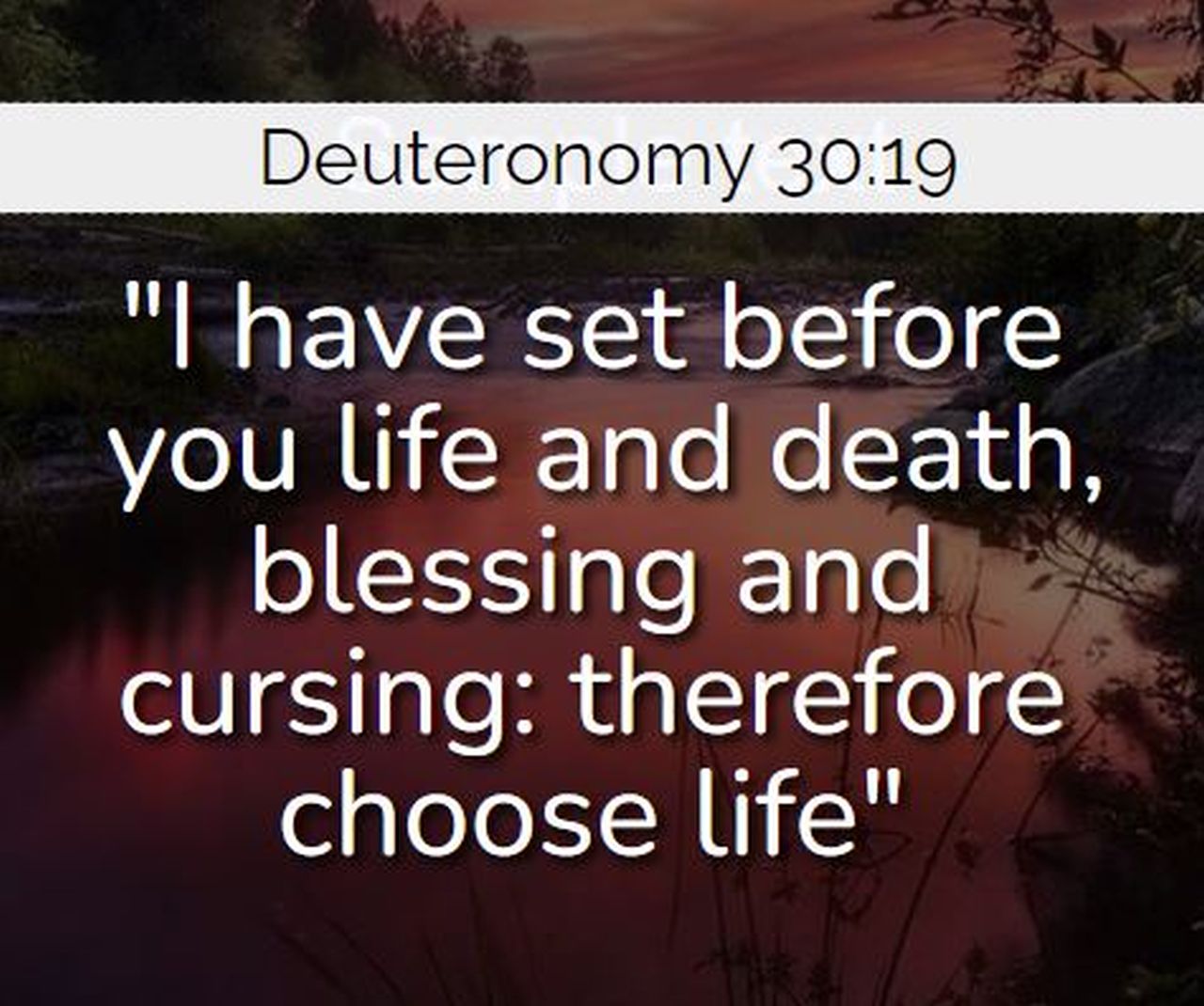
¨I call heaven and earth to record this day against you, that I have set before you life and death, blessing and cursing: therefore choose life, that both thou and thy seed may live: 20 That thou mayest love the LORD thy God, and that thou mayest obey his voice, and that thou mayest cleave unto him: for he is thy life, and the length of thy days: that thou mayest dwell in the land which the LORD sware unto thy fathers, to Abraham, to Isaac, and to Jacob, to give them.¨ Deuteronomy 30:19-20
¨Numbers 14:8 says if He delights in us, then He will give us a land flowing with milk and honey. This means in order to receive a land flowing with milk and honey He must delight in us. This notes a condition of obedience and faith. We have to embrace and conform with His ways (the cross) to receive the spiritual blessings and to receive eternal life.¨ Karen Cochran
¨And now, I beseech thee, let the power of my Lord be great, according as thou hast spoken, saying, 18 The LORD is longsuffering, and of great mercy, forgiving iniquity and transgression, and by no means clearing the guilty, visiting the iniquity of the fathers upon the children unto the third and fourth generation. 19 Pardon, I beseech thee, the iniquity of this people according unto the greatness of thy mercy, and as thou hast forgiven this people, from Egypt even until now.¨ Numbers 14:17-19
PRAYER: Heavenly Father thank You for being so unimaginably loving and benevolent to Your creation, to all those You made in Your very image. I love You LORD Jesus and here and now give You praise and thanksgiving for coming to die for my sins and then buried and raised again for my justification. Now dear LORD, please make me whole, from the inside out. Please pour out Your Holy Ghost on my life now and use this vessel to bring eternal glory to You. Bless Your people to abide in You Jesus, to have vital union with You and thereby the abundance of fruit, more fruit, and much fruit. In Jesus´ name. Amen.
Support | STORE | Podcasts | Jail/Prison Ministry | Mexico Mission here | More on Assurance here | Because You Care Page | The Greatest of these is Charity | Be Ready in the Morning [podcast] | The Sure Mercies of David [podcast] | That Repentance and Remission of Sins should be Preached [podcast] | At His Feet


Articles
Nicolaitan Nightmare [podcast]

The Scourge of Beguilers
Controlling, Gaslighting, Manipulating Operatives of Satan Exposed
Conquering and controlling people by deceit has long been the work of deceivers and “There is no new thing under the sun” (Ecclesiastes 1:9). In fact, in this last hour, the Bible tells us that “Evil men and seducers shall wax worse and worse” and “Woe to the inhabiters of the earth and of the sea! for the devil is come down unto you, having great wrath, because he knoweth that he hath but a short time” (2 Timothy 3:13; Revelation 12:12).
“While they promise them liberty, they themselves are the servants of corruption: for of whom a man is overcome (by lies), of the same is he brought in bondage.” 2 Peter 2:19
Why did Jesus say He Hates the Deeds and Doctrine of the Nicolaitans?
“But this thou hast, that thou hatest the deeds of the Nicolaitans, which I also hate.” Revelation 2:6
“So hast thou also them that hold the doctrine of the Nicolaitans, which thing I hate.” Revelation 2:15
Jesus told us that He hates the “doctrine” and “deeds of the Nicolaitans” (Revelation 2:6, 15). When we simply break down this word Jesus uses here – “Nicolaitans” – we gain insight into its meaning and what our LORD says He hates. Nico means “to conquer” while laitans means “the laity” which is the people. So, “Nicolaitans” simply means, “to conquer the laity.” This is the doctrine of control that the Master addresses here. In fact, this doctrine and the deeds that accompany it, so infuriate the LORD that it is the only thing that Christ ever went on record to say that He “hates”! Selah!
Beware of this usurpish witchcraft demon that seeks to bring believers under its control through false ministers.
JESUS CHRIST IS YOUR LORD AND SAVIOR! NO MERE MAN, NO SINNER DIED FOR YOUR SINS – TO PURCHASE YOU TO HIMSELF! THE DECLARATION OF EVERY ONE OF CHRIST’S TRUE UNDER-SHEPHERDS is – “Not for that we have dominion over your faith, but are helpers of your joy: for by faith ye stand.” 2 Corinthians 1:24
The fear and nightmare of nicolaitan wolves is that they will be seen for who they really are. Their nemesis is informed and discerning believers who quickly identify them and mark and expose them as the Bible says to do (Romans 16:17-18).
“For though I should boast somewhat more of our AUTHORITY, which the Lord hath given us for EDIFICATION, and not for your DESTRUCTION, I should not be ashamed:” 2 Corinthians 10:8
“Authority” from the LORD is “given us for edification, and not for your destruction.”
The Holy Ghost would never anoint any of His servants to control or destroy but rather to edify.

YOU BELONG TO JESUS CHRIST: He made you (Colossians 1:16). Then He came for you. JESUS alone died for you – on that cross where the Son of God bore, carried away your sins with His own life blood (Isaiah 53:5; John 1:29). Then He found you when you were a lost sheep. He brought you into His family. You don’t belong to some church or pastor. You belong to the LORD Himself. He is jealous over you (Exodus 34:14; Beware of the controllers, the pastors who are operating in witchcraft and seek to assert undue control over your life.
The apostle Paul espoused the members of the body of Christ to CHRIST Himself and not to Paul!
“For I am jealous over you with godly jealousy: for I have espoused you to one husband (JESUS!), that I may present you as a chaste virgin to Christ.” 2 Corinthians 11:2
Wolves are very cunning and manipulating. They deceitfully conflate you submitting to them with submitting to God Himself. Not.
Support | STORE | Podcasts | The Deeds and Doctrines of the Nicolaitans 1 | Witchcraft in the Pulpits | Witchcraft in the Church | Are You Under the Spell of Witchcraft? | Getting Delivered from Witchcraft | Fellowship God’s Way | Beware of the “I Love My Church” Deception [podcast] | Un-Biblical Local Church Structures [podcast] |
Sign up for free email devotional HERE… The Moments with My Master email devotional is sent out for the edification of the body of Christ.
MESSAGE RECEIVED:
“Good morning brother! I’m troubled by this statement I am being told …here it is: ‘You need to submit to leadership and learn humility and not rebuke an elder or pastor or any leader, no matter what you should always go with the direction of leadership.'”
REPLY:
God gave us a Bible in order to grant us discernment… and that our faith and trust and obedience would be in HIM….and in that Bible He warns us repeatedly to beware of such false Nicolaitan (means to conquer the people) wolves (Rev. 2:6, 15). The LORD primarily leads His New Testament church through the Holy Scriptures which were given by the Holy Ghost (2 Timothy 3:15-17, etc.). “THY WORD is a lamp unto my feet, and a light unto my path” (Psalms 119:105).
The LORD applauds His disciples at Berea for not taking even Christ’s apostle Paul at his word but rather searching the Scriptures daily to see if what Paul was saying was divine truth (Acts 17:10-1; 2 Timothy 3:15-17). 1 John 4:1 says “Beloved, believe not every spirit, but try the spirits whether they are of God: because many false prophets are gone out into the world.”
Any man or men saying that you must obey THEM no matter where they lead or what they say are diabolical wolves. Read 1 Corinthians 2:1-5.
There are 2 chapters in the book Deceivers and False Prophets Among Us dealing directly and in detail on this Nico-Laitan (means to conquer the people) leadership which Jesus says He hates (Revelation 2:6, 15).
Support | STORE | Podcasts | Jail/Prison Ministry | Mexico Mission here | All Ministry Updates | Because You Care Page | The Greatest of these is Charity | Be Ready in the Morning [podcast] | The Sure Mercies of David [podcast] | That Repentance and Remission of Sins should be Preached [podcast] | At His Feet | Prepared to be Used of God | Word of Faith Wolves and Delusion Exposed | Confess This | Personal Testimony of Todd Tomasella | Beware of False Promises and Half Truths | Exposing the False Prophetic Movement [podcast]







In a Small Prison Cell, Justin was about to Commit Suicide … [podcast]

“A Land Flowing with Milk and Honey” [podcast]
Nicolaitan Nightmare [podcast]

A PLACE CALLED HELL [podcast]

Following the Faith of Abraham [podcast]

The Flesh will Never be Reformed it Must be Crucified [podcast]

Gospel Preached at Funeral of a Decorated United States Marine Officer in Mexico [podcast]

The High Treason of False Leaders [podcast]

Why Did God Give Us His Word? [podcast]

If it’s not the Word, it’s Waste [podcast]

Being Made Whole in Christ [podcast]

Mission Mexico Part 49

Beware of the Hebrew Roots Judaizing Snakes! [podcast]

Can and Will God Use You? [podcast]

The Highest Form of His Creation
Why Did God Give Us His Word? [podcast]
Beware of the Hebrew Roots Judaizing Snakes! [podcast]

False Apostles Exposed!

SINLESS PERFECTIONISM: WHOSE Righteousness are You Trusting? [podcast]

Jesus Answered Questions with Questions [podcast]
The Highest Form of His Creation
The Flesh will Never be Reformed it Must be Crucified [podcast]
The High Treason of False Leaders [podcast]

Direction in God’s Word? [podcast]

Addiction’s Only Solution [podcast]
Can and Will God Use You? [podcast]
A PLACE CALLED HELL [podcast]
Nicolaitan Nightmare [podcast]

The Golden Rule Life: What’s that Really Mean? [podcast]

The Daily Cross in Prayer [podcast]
In a Small Prison Cell, Justin was about to Commit Suicide … [podcast]
“A Land Flowing with Milk and Honey” [podcast]
Nicolaitan Nightmare [podcast]


 America2 years ago
The Drugging of America: The Pharmakeia Sorcery Deception [podcast]
- Articles3 years ago
Children being Rescued in Tunnels: Happening Now – UPDATE!
- Articles9 years ago
Self-Examination in Preparation for the Lord’s Return
- Apostasy3 years ago
SHOCKING List of False Prophets Most Believe are True