






“When Jesus heard it, he saith unto them, They that are whole have no need of the physician, but they that are sick: I came not to call the righteous, but sinners to repentance.” Mark 2:17
 Those who refuse to see their need for the Great Physician cannot possibly see their need to go to Him in repentance.
After all, who would schedule an appointment to see a doctor if they haven’t first realized and admitted they have an ailment?
Ever notice how some seem to preach repentance as if EVERYONE needs to repent except themselves and those in their little self-righteous clique?
The cross reveals your sin, and God’s love, not how wonderful you are! Repent!
By biblical definition, anyone who is self-righteous has less chance than harlots to go to Heaven (Matthew 21:31).
The reason we don’t freely forgive others is because we don’t yet realize just how wicked and depraved we ourselves are and how utterly in need we are of divine mercy.
“For the LORD seeth not as man seeth; for man looketh on the outward appearance, but the LORD looketh on the heart.” (1 Samuel 16:7) Men see church-goers, religious people and think they’re saved/going to Heaven. Jesus sees harlots (whores) and sees them as closer to the kingdom (closer to getting saved) than the self-righteous (Matthew 21:31).
“ALL have sinned” against our God and so our own good works do not atone for our sins (Isaiah 64:6; Romans 3:10, 23). ONLY Jesus could and did do that for us.
Sinful self-righteousness has no place in the life of a disciple of Jesus. Matthew 21:31
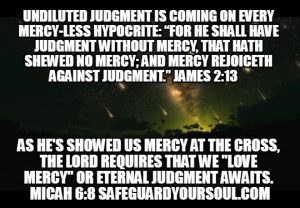 When God calls us to repent, it’s because we are sinners. “ALL have sinned and come short of the glory (acceptance) of God” (Romans 3:23). Of this verse of truth, John Wesley wrote:
“I came not to call the righteous – Therefore if these were righteous I should not call them. But now, they are the very persons I came to save.”
When our conscience is convicted, when our hearts weigh heavy under the burden of sin, that is the divine call for us to repent—to turn back to the LORD with sincerity and contrition—confessing our sins.
Those not admitting they are sinners cannot possibly see the need of repentance. This is the sin that blinds the self-righteous and seems to be most egregious to God.
Of this passage, F.B. Meyer writes:
“The sinner’s friend, Mark 2:13-22. They thought to coin a term of reproach, but they added a crown of glory. In eternity the Friend of sinners will surround His table with saved sinners who have become His guests.”
A Verse of Truth to Remember
 “Whether of them twain did the will of his father? They say unto him, The first. Jesus saith unto them, Verily I say unto you, That the publicans and the harlots go into the kingdom of God before you.” Matthew 21:31
Here the Son of God seems to make it clear what infuriates God the most. Jesus is speaking here of the self-righteous religionists who refuse to realize their own sinful state and need for divine forgiveness. He informs us that the fornicators will go to Heaven before the self-righteous. And, we know that no unrepentant fornicator will be in glory (Revelation 21:8, etc.).
The fornicators will go into the eternal kingdom of Christ before those who did not admit their need for divine forgiveness and carry through with repentance that was manifested in a holy life (Matthew 3:7-10).
Jesus came for and saves those who admit they have sinned and are sinners, and their desperate, great need for Him. This is in eternally stark contrast with those who think they are righteous in themselves. Jesus told us that even the prostitutes, the harlots, will be in Heaven before self-righteous religionists! (Matthew 21:31)
“Greater Damnation”
If you still don’t perceive the divine anger against self-righteousness, watch this:
In Christ’s most scathing lambasting on record, He is seen rebuking the self-righteous religionists who used their positions to lord it over and to rob the people. The Son of God foretells their “damnation” which He makes clear will be “greater” than that of others.
“Woe unto you, scribes and Pharisees, hypocrites! for ye devour widows’ houses, and for a pretence make long prayer: therefore ye shall receive the greater damnation.” Matthew 23:14
Jesus used this term – “greater damnation” – just one time and He applied it to the self-righteous (this was recorded by all 3 of the synoptic Gospels). “Greater damnation” is coming to the self-righteous religionists of our day.
Of this truth, Debbie Lord writes:
“Jesus clearly spelled out that self-righteousness is the worst sin in that the self-righteous will have to stand in line to enter Heaven behind the very ones they judge and condemn, which we are told will not enter (unrepentant) into the kingdom of Heaven. Our flesh, which rises up in self-righteousness is an adherence to the lie from Satan which blinds us to our own sin — which ultimately denies and takes the place of the work of Christ’s righteousness the Holy Spirit desires to work in us to fruition — being changed into the image of Christ.”
Is self-righteousness not the product of pride and “an evil heart of unbelief”? (Hebrews 3:12-14)
According to Christ, many today who in their hearts and attitudes judge fornicators, thieves, liars and adulterers, are possessed with a worse sin—self-righteousness.
Self-righteousness is the ultimate sin of rejecting the only saving righteousness God provided through Christ. The self-righteous spit in the face of the Almighty as they call Him a liar! The self-righteous impugn the God they claim to serve by casting doubt and indictment upon Him as a fool who sent His only begotten Son in vain!
“I do not frustrate the grace of God: for if righteousness come by the law, then Christ is dead in vain.” Galatians 2:21
Whatever you do, if you will be with Christ, you’d better cry out to the LORD today to strip from every whit of your being, any and all traces, all vestiges of self-righteousness!
If you cast judgment on others in your attitudes toward them for their sin, check yourself (James 1:20). Just because the flavor of their sin may be different than yours, in no way makes your sin any less vile in the eyes of a holy God who is the Judge of your eternal soul (James 2:10)! He sees the very intent and thought of your heart (Luke 9:47; Hebrews 4:13).
The sin that should concern us the most, is our own sin!
If we vainly imagine that someone else’s sin is more vile than our own in the eyes of a holy God, we still don’t have a Gospel clue! (Genesis 32:10; Jeremiah 17:9; James 2:10, 13; Titus 3:3-7, etc.)
Of this verse, the words of Christ in Matthew 21:31, Adam Clarke wrote:
“The publicans and the harlots – In all their former conduct they had said No. Now they yield to the voice of truth when they hear it, and enter into the kingdom, embracing the salvation brought to them in the Gospel. The others, who had been always professing the most ready and willing obedience, and who pretended to be waiting for the kingdom of God, did not receive it when it came, but rather chose, while making the best professions, to continue members of the synagogue of Satan.”
F.B. Meyer writes the following of this verse:
“The parable of the two sons teaches that hard hearts may lie under fair words, while those of whom we expect least and whose first greeting is abrupt and disappointing, may later prove to be the most devoted and hopeful disciples. If a man repels the gospel with violence, he is more likely ultimately to be won than he who gives a polite and facile assent.”
Of this passage, John Wesley wrote:
“He answered, I go, sir: but went not – Just so did the scribes and Pharisees: they professed the greatest readiness and zeal in the service of God: but it was bare profession, contradicted by all their actions.”
What righteousness does any person have in and of themselves— without that righteousness that God alone provided?
“But we are all as an unclean thing, and all our righteousnesses are as filthy rags; and we all do fade as a leaf; and our iniquities, like the wind, have taken us away.” Isaiah 64:6
Christ’s apostle Paul declared this of himself:
“For I know that in me (that is, in my flesh,) dwelleth no good thing: for to will is present with me; but how to perform that which is good I find not. … O wretched man that I am! who shall deliver me from the body of this death?” Romans 7:18, 24
“And be found in him, not having mine own righteousness, which is of the law, but that which is through the faith of Christ, the righteousness which is of God by faith:” Philippians 3:9
No teaching in the Bible more profoundly states the need for contrition and humility when approaching God than does Jesus’ parable of the two men who went up to pray.
It’s either Christ’s righteousness or it’s our own. One is from glory, the other from hell beneath. The harlots will be in Heaven before the self-righteous (Matthew 21:31).
Men successfully approach God only when they do it in the realization of their own sin and need, and on the basis of the shed blood of Jesus Christ!
All who approach God any other way than that plain way in which He prescribed, will be found by Him to be “a thief and a robber.”
“Verily, verily, I say unto you, He that entereth not by the door into the sheepfold, but climbeth up some other way, the same is a thief and a robber. 2 But he that entereth in by the door is the shepherd of the sheep.” John 10:1-2
Bible Verses to Get to Know — To Memorize and Meditate Upon
“Not by works of righteousness which we have done, but according to his mercy he saved us, by the washing of regeneration, and renewing of the Holy Ghost; 6 Which he shed on us abundantly through Jesus Christ our Saviour;” Titus 3:5-6
“I am not worthy of the least of all the mercies, and of all the truth, which thou hast shewed unto thy servant;” Genesis 32:10
Showing God’s mercy as He freely gave it to us in Christ “while we were yet sinners.” (Romans 5:6, 8) Mercy
PRAYER: Precious dear Father in Heaven, I come to You now in the name of Jesus Christ, confessing my utter need for You. As a vile, wretched, rank sinner, I have no righteousness of my own. On Thy mercy, poured out in the Person of Jesus Christ, as He offered His life blood for me on that cross, I now fall. Without You, I can do nothing LORD Jesus. In this very instant, I now turn fully to You and ask You to please take me into Thy kingdom, wash me in the blood of Jesus. Jesus Christ the LORD is from this moment forth the Master of my life. Please cleanse and fill this vessel to love, worship, and serve You Holy Father. In the name of Jesus Christ I pray, amen!
Self-Righteousness | SINLESS PERFECTIONISM: WHOSE Righteousness are You Trusting?
“Two Men Went Up into the Temple to Pray” [podcast]
Abiding
“David Encouraged Himself in the LORD his God” [podcast]
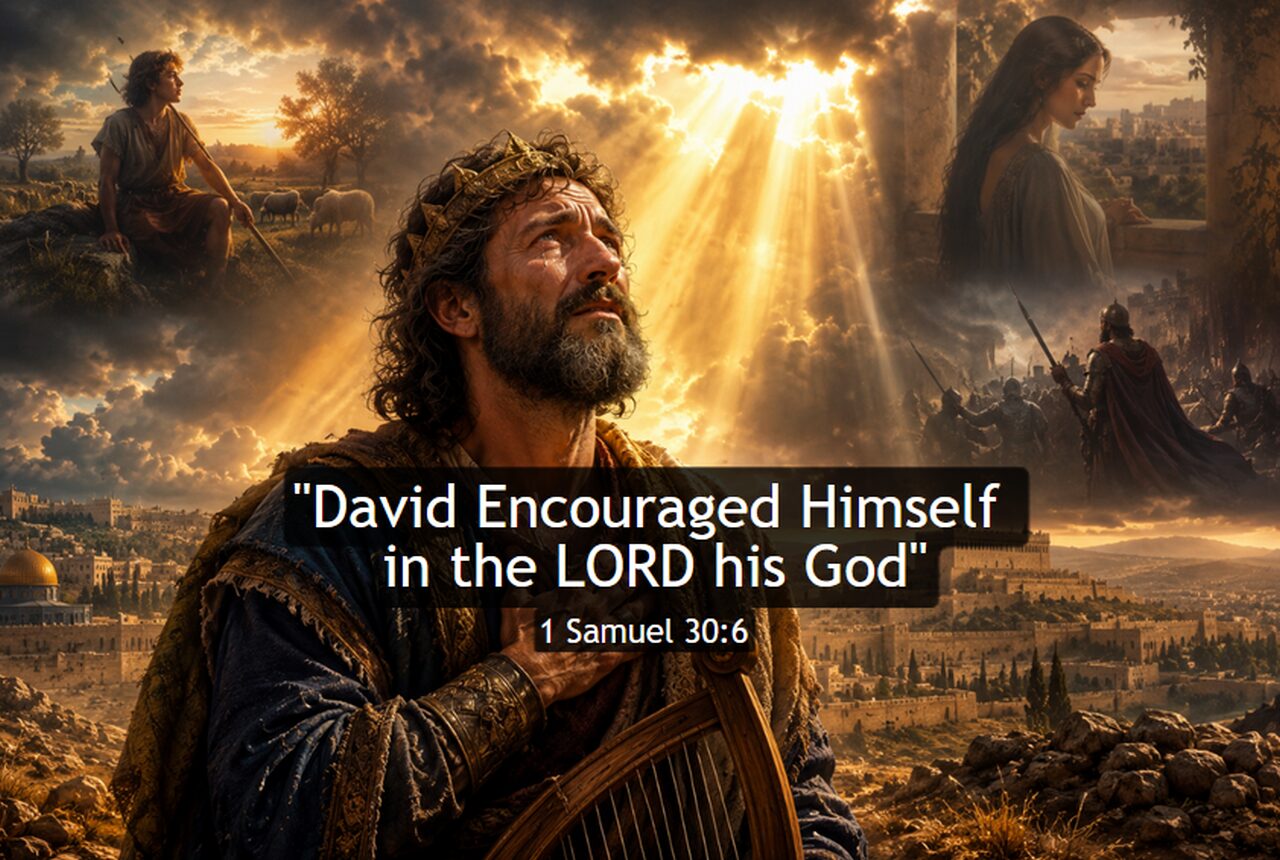
“And David was greatly distressed; for the people
spake of stoning him, … but David encouraged
himself in the LORD his God.” 1 Samuel 30:6
Gathering from several commentaries on this passage, one source notes the following:
“Faced with the devastating loss of Ziklag and a mutinous army threatening to stone him, David found supernatural resilience. Rather than yielding to panic or despair, he actively turned his focus away from the overwhelming crisis and strengthened his faith directly in God.
Key Context and Lessons
- The Crisis: Amalekite raiders had burned the city and captured all the women and children, including David’s own wives.
- The Breaking Point: His loyal men were now grieving and broken, turning their deep anguish into violent anger against their leader.
- The Shift: David did not look to his men, his own strength, or his circumstances for hope. He preached truth to his own soul, drawing on his past history with God’s faithfulness and inquiring of the Lord for his next steps.
Practical Takeaways
- Self-Talk: When no one else is around to lift you up, you must learn to speak God’s promises to your own heart.
- Refocusing: Encouraging yourself in the Lord means anchoring your identity and security in His unchanging character rather than shifting public opinion.
- Actionable Faith: David’s inward strengthening immediately led to outward action—he sought God’s direction and pursued the enemy, resulting in complete victory and restoration.”
“Confirming the souls of the disciples, and exhorting them to continue in the faith, and that we must through much tribulation enter into the kingdom of God.” Acts 14:22
“In the world ye shall have tribulation”
“These things I have spoken unto you, that in me ye might have peace. In the world ye shall have tribulation: but be of good cheer; I have overcome the world.” John 16:33
During seasons of great stress, this man after God’s own
heart sought the LORD. This time only served as a blessing,
hastening David to the feet of Christ. Beloved David gave us
the most amazing Scriptures concerning seeking God.
“My soul followeth hard after thee.” Psalms 63:8
“As the hart panteth after the water brooks, so
panteth my soul after thee, O God. 2 My soul
thirsteth for God, for the living God: when shall I
come and appear before God?” Psalms 42:1-2
“One thing have I desired of the LORD, that will I
seek after; that I may dwell in the house of the
LORD all the days of my life, to behold the beauty of
the LORD, and to enquire in his temple.” Psalms
27:4
“When thou saidst, Seek ye my face; my heart said
unto thee, Thy face, LORD, will I seek.” Psalms 27:8
Prayer: Father in Heaven, in the name of Jesus, please grant
me, Your mere servant, to be possessed with a heart after You
dear LORD. I love You Jesus. In Jesus’ name. Amen.
Support | STORE | Podcasts | Jail/Prison Ministry | Mexico Mission here | All Ministry Updates | Because You Care Page | Bible/Word of God | The Greatest of these is Charity | Be Ready in the Morning [podcast] | The Sure Mercies of David [podcast] | That Repentance and Remission of Sins should be Preached [podcast] | At His Feet | Prepared to be Used of God | Grace and Truth Bible School [modules] | 7 Study Guides to a Greater Foundation in Christ | Knowing God | The Cross Life | Christology = the Study of Christ


Abiding
10 Clues Your Love for God has Waxed Cold [podcast]

The wise virgin saints are keeping their lamps full of divine oil, they are taking personal responsibility for their own spiritual state with Christ the great and soon coming Bridegroom. Read Matthew 25:1-13.

“The Love of Many Shall Wax Cold”
“And then shall many be offended, and shall betray one another, and shall hate one another. 11 And many false prophets shall rise, and shall deceive many. 12 And because iniquity shall abound, the love of many shall wax cold. 13 But he that shall endure unto the end, the same shall be saved. 14 And this gospel of the kingdom shall be preached in all the world for a witness unto all nations; and then shall the end come.” Matthew 24:10-14
Did you notice in verse 14 that those who hot for Jesus are participating in the preaching of His Word to the end of the earth (Mark 16:15).
Anyone not devouring God’s Word daily is falling away, is not enduring to the end, is choosing the let their love for Jesus wax cold, and on the wrong, the losing end of this prophecy Jesus gave here on record in Matthew 24:10-14.
“I will spue (vomit, reject) thee out of my mouth”
“So then because thou art lukewarm, and neither cold nor hot, I will spue thee out of my mouth. 17 Because thou sayest, I am rich, and increased with goods, and have need of nothing; and knowest not that thou art wretched, and miserable, and poor, and blind, and naked:” Revelation 3:16-17
Praying God will help you love Him more (Matthew 22:37-40). It really all boils down to WHO we love most. THAT is exactly who we are serving (Romans 6:16).
Loving God is everything as far as what’s in our control – because it’s a choice, daily, and will determine if one remains in Christ to the end.
“Jesus said unto him, Thou shalt love the Lord thy God with all thy heart, and with all thy soul, and with all thy mind. 38 This is the first and great commandment. 39 And the second is like unto it, Thou shalt love thy neighbour as thyself. 40 On these two commandments hang all the law and the prophets.” Matthew 22:37-40
“Thou hast left thy first love”
“Nevertheless I have somewhat against thee, because thou hast left thy first love. 5 Remember therefore from whence thou art fallen, and repent, and do the first works; or else I will come unto thee quickly, and will remove thy candlestick out of his place, except thou repent.” Revelation 2:4-5
1. When you are choosing not to spend quality time with God in prayer each and every morning… When you are choosing not to spend quality time with God in His Word each and every morning (Luke 9:23-24; 1 Chronicles 16:11).
2. When your love for God’s people is being reduced instead of increased (Philippians 2:12-13; 1 John 5:1) Marks of the True Christian …. “Let love be without dissimulation. Abhor that which is evil; cleave to that which is good. 10 Be kindly affectioned one to another with brotherly love; in honour preferring one another; 11 Not slothful in business; fervent in spirit; serving the Lord;” (Romans 12:9-11) See John 13:35.
“And it was told him by certain which said, Thy mother and thy brethren stand without, desiring to see thee. 21 And he answered and said unto them, My mother and my brethren are these which hear the word of God, and do it.” Luke 8:20-21
“We know that we have passed from death unto life, because we love the brethren. He that loveth not his brother abideth in death.” 1 John 3:14

“Whosoever believeth that Jesus is the Christ is born of God: and every one that loveth him that begat loveth him also that is begotten of him.” 1 John 5:1
Reading 1 Corinthians 13 today will refresh your heart and mind on the divine importance placed upon LOVE.
3. You are not denying self and not taking up the cross daily (Luke 9:23-24; 19:27; Galatians 2:20; Colossians 3:3, etc.).
4. You aren’t communicating the light of truth to others because you no longer seek or fear the LORD and so His divine virtue isn’t teeming in and flowing out of you. Your cup no longer runs over but instead is running empty (Psalms 23). You have a lampshade over the light and are not letting His light shine in and through your life and words… “Cry aloud, spare not, lift up thy voice like a trumpet, and shew my people their transgression, and the house of Jacob their sins.” (Isaiah 58:1)
5. You live in fear instead of faith and the joy of being with Jesus (Luke 21:28; 1 John 4:16-18; Proverbs 28:1; Psalms 2:11).
6. You preach promises and not conditions…following the apostate modern church and you don’t preach the cardinal doctrines of the original Gospel which we are commanded to “earnest contend for.” (Jude 3) You begin meditating on and living by trends instead of truth (Jeremiah 9:3; 2 Timothy 4:2-4; Philippians 4:8; Romans 12:1-2).
7. You have little or no true fellowship with other born- again Bible believing disciples of Jesus as is defined in God’s Word and not by the modern church world (Acts 2:42).

The Word of God is to run rich, to be abundant among God’s people … “In all wisdom” and “all in the name of the Lord Jesus” … “Let the word of Christ dwell in you richly in all wisdom; teaching and admonishing one another in psalms and hymns and spiritual songs, singing with grace in your hearts to the Lord. 17 And whatsoever ye do in word or deed, do all in the name of the Lord Jesus, giving thanks to God and the Father by him.” (Colossians 3:16-17)
8. You know you are backsliding when your main thrust and identity become politics, not the work of the Gospel. YOU are a blood bought disciple of Jesus, not a conservative. You are a Bible believing follower of Christ (Luke 9:62; Galatians 6:14).
9. When you love this world…..When you spend more time and money on hobbies and the things of this fleeting world than you do on attending to knowing, walking with the LORD and preparing to be used of Him (Mark 4:17-19; 1 John 2:15; James 4:4).
10. When you spend more money on trash and trinkets then helping the work of the One you claim to love and the poor. You know you are backslidden when you are not obeying God with what He’s placing in your temporal possession. He shall bring you into full account for this.
Regrettably, people will give their money to any and every pleasure under the sun but make excuses when the opportunity to support the work of the One they claim to love and serve. The Holy Spirit foretold that in the final days before the return of Jesus, there would be those with a mere “form of godliness”, “men shall be lovers of their own selves, covetous,” and “lovers of pleasures more than lovers of God.” (2 Timothy 3:1-7) According to the LORD, one of the main ways to measure our true love for Him or lack thereof, is by peering into our personal stewardship of the resources He’s placed into our temporary possession. Luke 12 and 16 offer a plethora of divine wisdom and warning concerning the judgment to come, the judgment we shall endure in giving account for our stewardship in this life.
The clear proof that God is working in our lives, that we are truly following Jesus, is that we are becoming less and less vested in this fleeting, fallen world (James 4:4; 1 John 2:15-17). And that we, our good works, our giving are more and more invested in eternity – in the eternal kingdom of Christ, laying up treasures in Heaven, sending them before us, relinquishing the things of this world for the glory of God – putting them to work for the eternal Gospel of Christ – for saints to be fed and equipped and the lost to hear the Word of God (Matt. 6:19-21).

“Lay not up for yourselves treasures upon earth, where moth and rust doth corrupt, and where thieves break through and steal: 20 But lay up for yourselves treasures in heaven, where neither moth nor rust doth corrupt, and where thieves do not break through nor steal: 21 For where your treasure is, there will your heart be also. 22 The light of the body is the eye: if therefore thine eye be single, thy whole body shall be full of light. 23 But if thine eye be evil, thy whole body shall be full of darkness. If therefore the light that is in thee be darkness, how great is that darkness! 24 No man can serve two masters: for either he will hate the one, and love the other; or else he will hold to the one, and despise the other. Ye cannot serve God and mammon.” Matthew 6:19-24
To underscore the importance of stewardship, we should realize that 16 of our LORD’s 38 parables involved stewardship. Those who now do not wish to face and confront this truth, are apparently those who are in the most need of hearing it.
PRAYER: Father I come to You now in the name of Jesus Christ. Please cause my conscience to be super sensitive to Your conviction, Your leading, and to evade all that defiles me in Your holy eyes, sin. Here and now I submit my life afresh to You dear LORD. You must increase but I must decrease. I am crucified with Christ and thank You for conforming me to His holy image. I am all Yours LORD and thank You that You are all mine. I love You Jesus. Please make me one with You and the Father and with Your beloved body. In Jesus’ name. Amen.
Support | STORE | Podcasts | Christology | Be Ready in the Morning [podcast] | The Sure Mercies of David [podcast] | That Repentance and Remission of Sins should be Preached [podcast] | At His Feet | The 7 Sayings of Jesus on the Cross | How We Know the Bible is the Only Holy Book



Articles
More Good News! Mission Mexico Part 42
IF YOU SAINTS WEREN’T SO FAITHFUL TO JESUS, NONE OF THIS WOULD BE HAPPENING…..

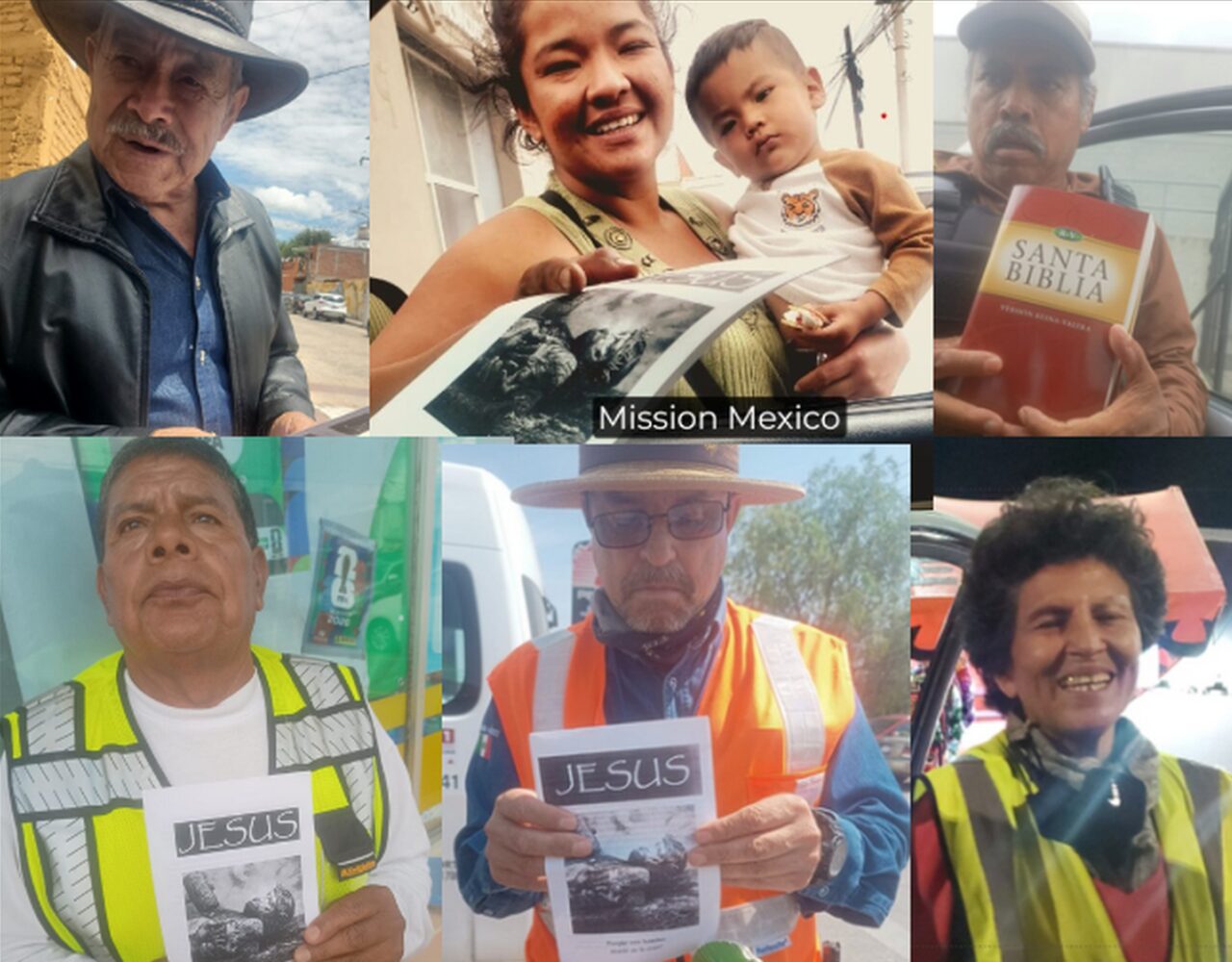
So while going to bring a good supply of food and household essentials to Clara and her boys, by divine ordination I tracked and spoke God’s Word to a Holy Spirit filled sister in Christ. Her name is Maria La Luz. She eagerly took about 100 or more JESUS tracts with her to distribute!!!! That’s how Mexican people are – If they have something good to give, they give it!
Boom. Oh, and Maria LaLuz are in touch by phone so she will be letting me know when she needs more. Thank you for continuing to pray as Jesus instructed in Matthew 9:35-38 – that the Father would send forth labourers into the harvest!
Working with, supporting, equipping, fueling, and supply indigenous missionaries in key to exponential kingdom momentum in the spread of Christ’s Gospel in this beautiful nation.
Just think if this kingdom operation can be duplicated throughout Mexico and Latin America! (Matthew 24:14; 28:18-20) Do we think God has a plan? Yes He does!
Because you care, prayed, and gave, another sister who was just saved recently, was given (purchased) a brand new study Bible (Life in the Spirit Study Bible) KJB. She is elated and devouring God’s Word and growing daily! (2 Peter 3:18)
Also, once again Clara was elated that you prayed and gave. She just now texted me the following after receiving your gifts today:
“Seriously, thank you very much for helping me, it means a lot to me that you help me because I have not been able to find a good job and with this we survived a few days my children and I but just like if you have work do not hesitate to send me a message and I will also go it would be very helpful since the day comes when I have to pay my rent. And again, thank you very much, you are an angel that our Lord sent me, thank you, thank you, thank you 🙏🏻” Clara
Okay now get this…. Clara has been ministered to directly and she has read the JESUS tract. I don’t think she’s saved yet. She has seen your love for Christ in action by your prayers and giving. At first I didn’t know how she was receiving the Gospel but now, from above, it’s obvious that she is being ministered to by our LORD. Perhaps she’s already saved. I don’t know due to the language barrier. But we do know God is showing her His love and power! (1 Corinthians 3:6-9)
Here’s some of the food you purchased for this single mother today! See pic.
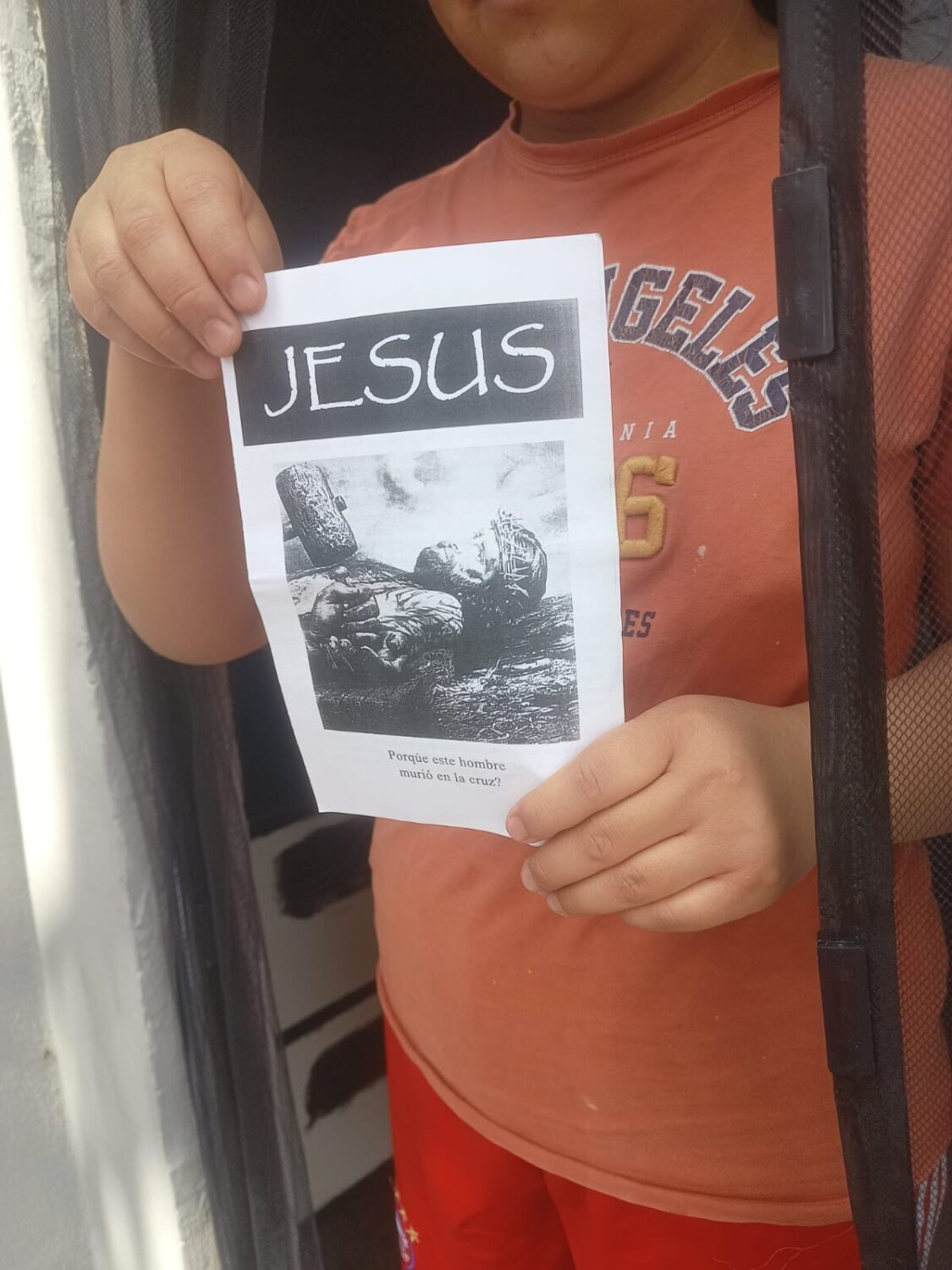
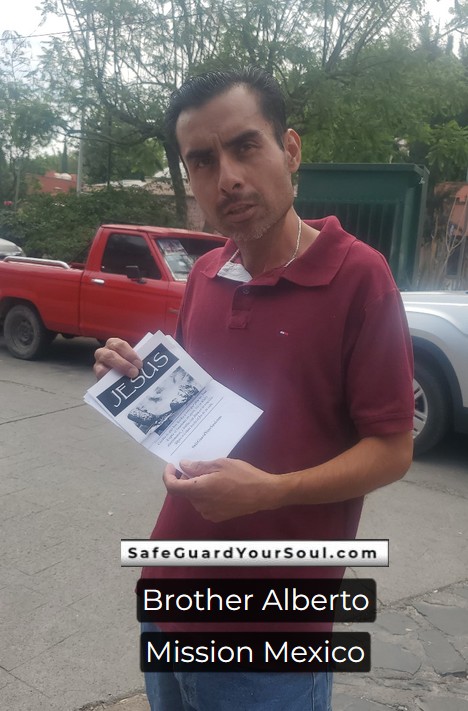
*More than half the 10,000 JESUS tracts are already passed out or in the hands of Christ’s witnesses!!! Yes more than half in just 2 weeks.
God is hearing your prayers and honoring your giving to Him!
“And this gospel of the kingdom shall be preached in all the world for a witness unto all nations; and then shall the end come.” Matthew 24:14
In Christ
Todd

Ever feel like just hitting the eject button and leaving the USA? If so, why not consider a town in Mexico? Pray. Ask God where HE wants you on His planet. Rest.
Also, perhaps begin research Mexico or Latin America on youtube.
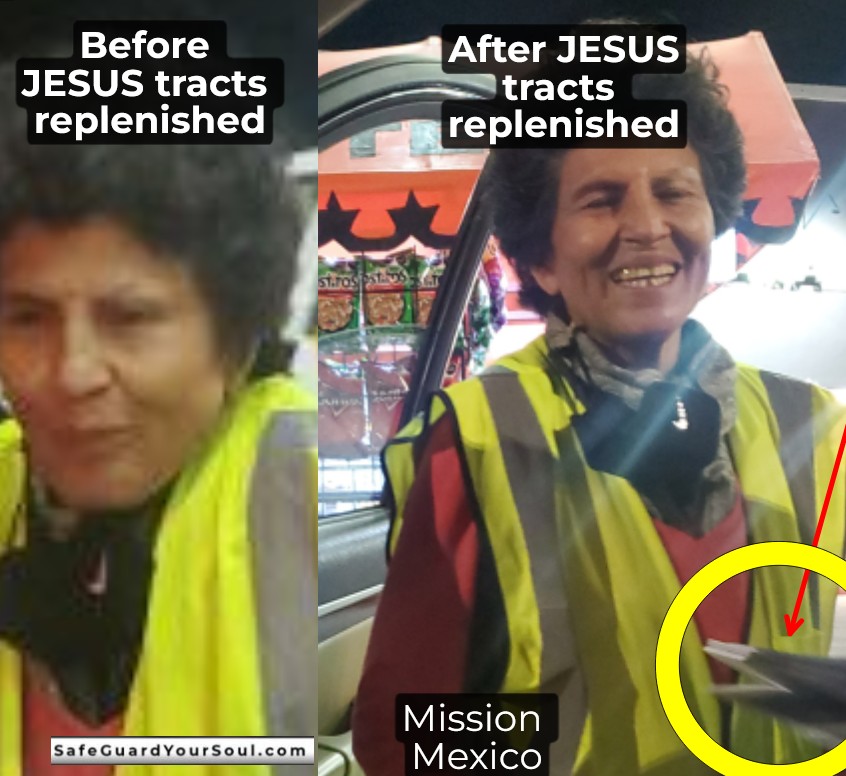
A few days ago ….. WHEN we first arrived to refresh and minister to our LORD servant Maria, she was not her usual self, not overflowing with joy. Then when the body of Christ ministered to her, including replenishing her supply of JESUS tracts, there was a notable difference. See if you agree. Your prayers and support make this possible. | Mission Mexico Updates
“Wow!! I think of Jesus when he marveled at the faith of the centurions faith! Luke 7:9. I marvel at all the Lord is doing among the Mexican people! And now He is raising up Labourers into the harvest who emanate the joy of the Lord and His fruits! Some are crying when receiving these Jesus tracts and some are actually kissing the picture. Actually kissing the son (Psalm 2:12). Fills my heart with so much joy and I am not even there! But I am part of Team Jesus!” Karen Cochran | Mission Mexico
The meeting fellowships with Juan and Maria the evangelists continue. They are both, for the time being, stocked up on their supply of JESUS tracts and distributing them daily!
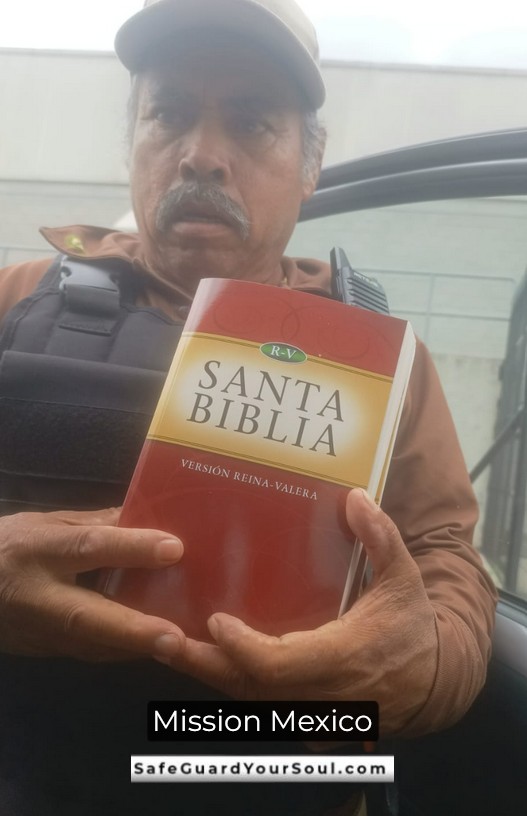
Over breakfast, when I brought the first shipment of the Spanish Bibles to Juan, he asked me if he could give them away to people who are not in prison. Of course I said “Yes” and that these Bibles are for him to be used of God to give wherever he wishes, as he ministers.
Juan is a man who is filled with God’s Word. He speaks verbatim Scripture in Spanish perpetually. The reason I know that is that when we sit down to talk at length he speaks and it’s translated into English and is pure Scripture. He has volumes of Holy Scripture memorized.
Here is Juan ministering to a dear lady. And remember, most Mexicans it seems, do not have a Bible in their home. They greatly treasure God’s Word.
“PRICELESS, LIKE OUR SAVIOR!!! She reminds me of my Great Grandma…she glowed with God’s love. It was written all over her face. She brightened the room, and you KNEW she loved you! It wasn’t till I knew the Lord, that I realized where that glow and love came from. This little light of mine, I’m a gonna let it shine… The tragedy is when that light goes out, and you can see and feel that also. VERY SAD. It’s like shutting off a light switch…from light to darkness. And they can’t see it?! So, I thank God for those who are sharing that light of God’s love, and sharing with them. Will keep praying for Maria, you, your ministry, and the family of God. Felipe, Mark, all the brethren. I keep wondering about Paul and Carol Galloway–will keep praying. God knows. May the LORD bless you Brother Todd….What a wonderful first E-mail of the day! GOD’S JOY.” Crystal
Message from brother Juan on the Spanish communications group (WA whatsapp).
“There are many injustices in life; the Word of God says so. Many receive no visitors. God works in us both to will and to act according to His good pleasure. We are called to be doers of God’s Word. And knowing the good we ought to do, yet failing to do it, is sin. To Him be all glory and honor.” Brother Juan
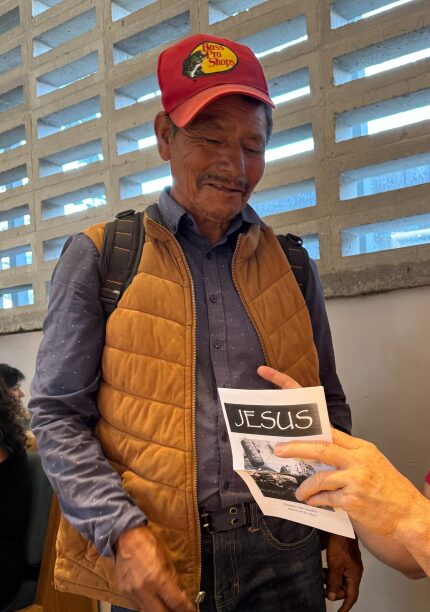
RECENTLY: Immediately upon beginning to hear God’s Word spoken to him in Spanish, this man began to weep and to profusely thank God, to call out to Jesus, to kiss the Jesus tract he was given, to kiss my hand and cheek. Need I state the obvious, of how hungry these beloved people are to hear and believe Jesus’ bless-ed Gospel? …. Beloved Filipe was given the Gospel of Christ and instructed to go home and repent and receive Christ for the forgiveness of his sins and that only Jesus can forgive him and that it’s not about religion but relationship. Like the vast majority of Mexicans (99%), Filipe had never heard the Gospel of Jesus till today. Please lift beloved Filipe and the Mission Mexico heavenly operation in prayer. Thank you.
WHERE does God want you in this last hour – doing HIS will, being about the “Father’s business”? (Luke 2:49) Are you surrendered and therefore crying out to the LORD to put you on HIS EARTH exactly where you can please Him the most? | Mission Mexico


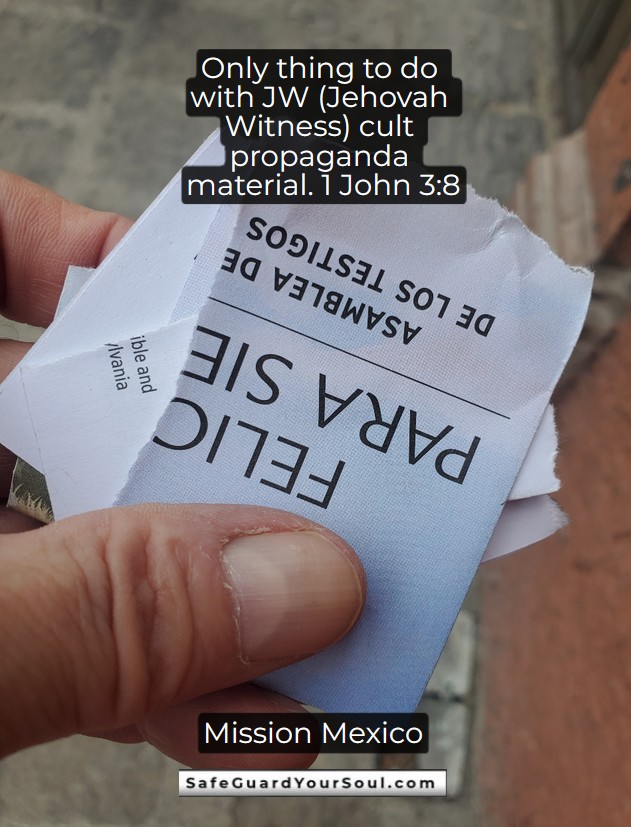
It’s all because of God’s love in Christ and your prayers and support…. This homeless man received God’s love in the form of the spoken Word, a JESUS track in Spanish, and a warm breakfast and hot coffee! Jesus is moving!
“For this purpose the Son of God was manifested, that he might destroy the works of the devil.” 1 John 3:8
Mission Mexico
https://safeguardyoursoul.com/mexico-mission/
Issidro asked for prayer. He’s catholic but he’s open, a little bit. He received an abundance of truth from God’s Word today and a JESUS tract in Spanish. Thank you for lifting these precious souls in prayer saints.


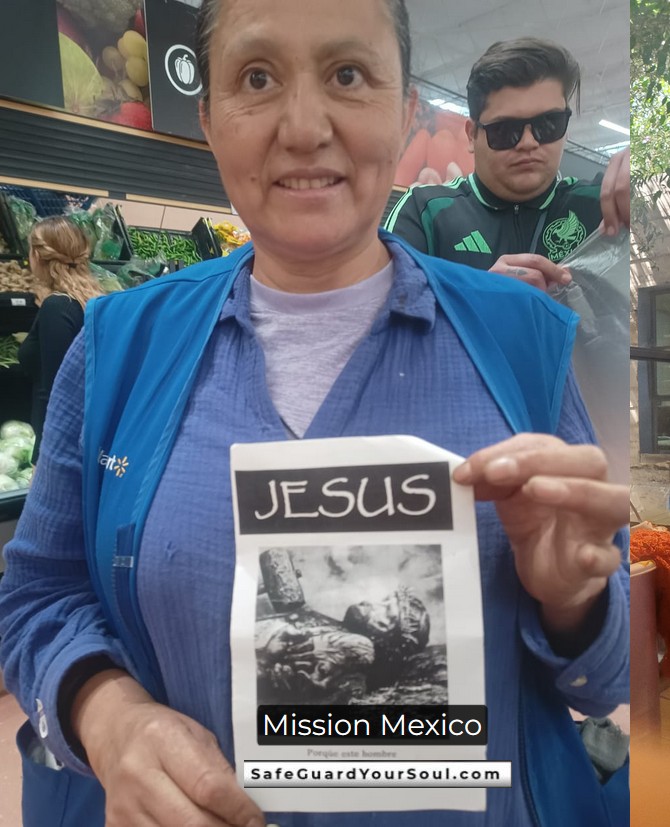



“Praise the Lord ! She is shining for Jesus! Overflowing Joy! It’s a blessing to see how God is moving in the ministry, Mexico for Jesus, Glory to God!!” Darlene
“For the Son of man is come to seek and to save that which was lost.” Luke 19:10
Mission Mexico – See more here. | Give support here. Many options
Download. Read. Print out your supply of the JESUS tract – English and Spanish.







“David Encouraged Himself in the LORD his God” [podcast]

10 Clues Your Love for God has Waxed Cold [podcast]

More Good News! Mission Mexico Part 42

Why the Apocrypha Isn’t in the Bible

What is the difference between a “Textus Receptus Man” and a “King James Man?”

David’s Farewell Prayer [podcast]

Water Baptism: Understanding It [study guide]

Favorite Eternal Security “Proof” Text? [podcast]

Laboring Fervently for Christ’s Body [podcast]

Abiding Under the Shadow of the Almighty [podcast]

The Warnings of the Book of Jude [podcast]

Attend to My Words [podcast]

Gathering Fruit for Christ’s Eternal Glory [podcast]

Acquaint now thyself with him, and be at peace: thereby good shall come unto thee [podcast]

Dwelling in the Secret Place of the Most High [podcast]
10 Clues Your Love for God has Waxed Cold [podcast]

The Damning Myth of Unconditional Eternal Security! [podcast]

Calvinism’s Origins and Historical Roots [podcast]

Name Cult Warning: Beware of the Yahweh, Yahushua, Yahuah Cults!
Favorite Eternal Security “Proof” Text? [podcast]
Water Baptism: Understanding It [study guide]
Dwelling in the Secret Place of the Most High [podcast]
Acquaint now thyself with him, and be at peace: thereby good shall come unto thee [podcast]
Why the Apocrypha Isn’t in the Bible
The Warnings of the Book of Jude [podcast]

“You Who are Troubled Rest with Us” [podcast]

Penknife Sacrilege [podcast]
Attend to My Words [podcast]

The Over Population Delusion Exposed [video]

Diminishing Returns or Divine Blessings? [podcast]
“David Encouraged Himself in the LORD his God” [podcast]
10 Clues Your Love for God has Waxed Cold [podcast]
More Good News! Mission Mexico Part 42


 America1 year ago
The Drugging of America: The Pharmakeia Sorcery Deception [podcast]
- Articles2 years ago
Children being Rescued in Tunnels: Happening Now – UPDATE!
- Articles8 years ago
Self-Examination in Preparation for the Lord’s Return
- Apostasy2 years ago
SHOCKING List of False Prophets Most Believe are True