






Exploding the Lies – one by one. There are always the whiners who are looking to take issue with that which is of God, namely the written Word of God. Beware of the deceitful detractors – who, as their father the devil, whisper questions and doubts upon the LORD, His character, and His Word. Share to bless. The LORD kept His promise to preserve His Word to us (Psalms 12:6-7). Always remember saints, it is SATAN who is always behind the doubt casting upon God’s words, sowing confusion. Yet we have the “MORE sure word of prophecy” in the “exceeding great and precious promises” of the Holy Scriptures (2 Peter 1:3-4; 19-21, etc.). See Genesis 3:1; Mark 4:15, etc.. God kept His promise to preserve His Word to us in English in the King James Bible and in Spanish the Reina Valera, etc.
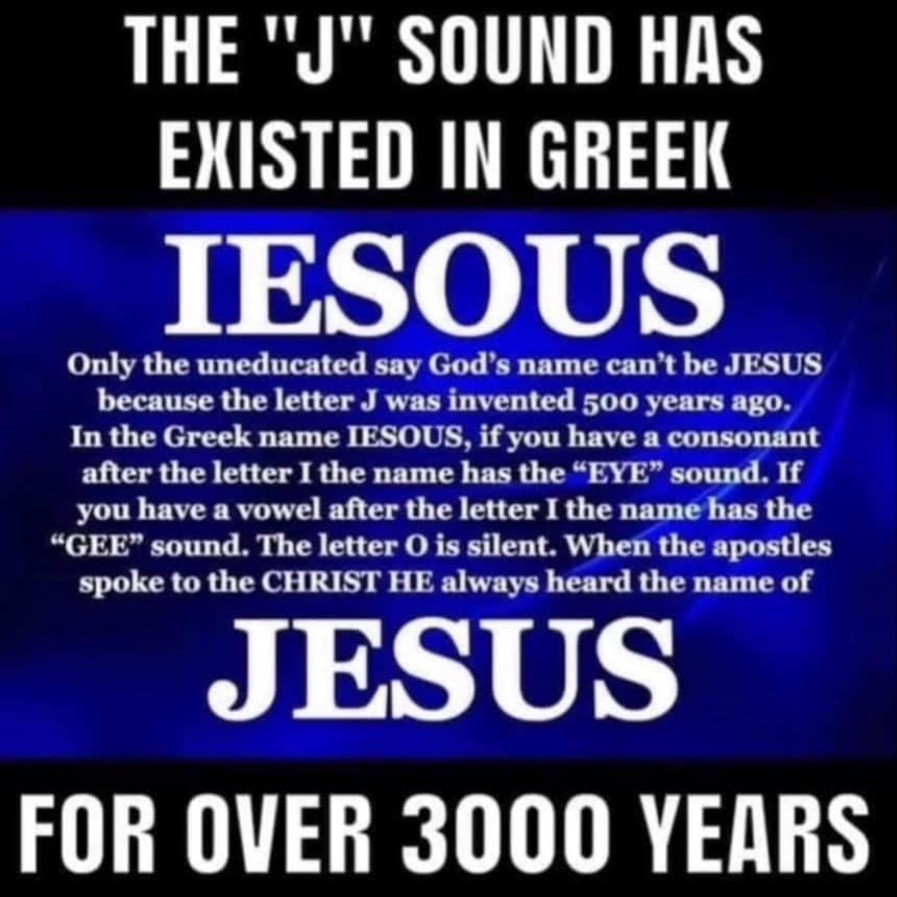
Beware of the uptick in the use of the cult of “yah” ….. that always puts up red flags for this disciple. HIS name is JESUS CHRIST. SAY IT WITH ME OUT LOUD – JESUS CHRIST!!!!! EVERY KNEE WILL BOW TO JESUS CHRIST!
“Wherefore God also hath highly exalted him, and given him a name which is above every name: 10 That at the name of JESUS every knee should bow, of things in heaven, and things in earth, and things under the earth; 11 And that every tongue should confess that JESUS CHRIST is Lord, to the glory of God the Father.” Philippians 2:9-11
There is “NONE other name” whereby one can be saved.
“… Jesus Christ of Nazareth … Neither is there salvation in any other: for there is none other name under heaven given among men, whereby we must be saved.” Acts 4:10, 12
ANY QUESTIONS?
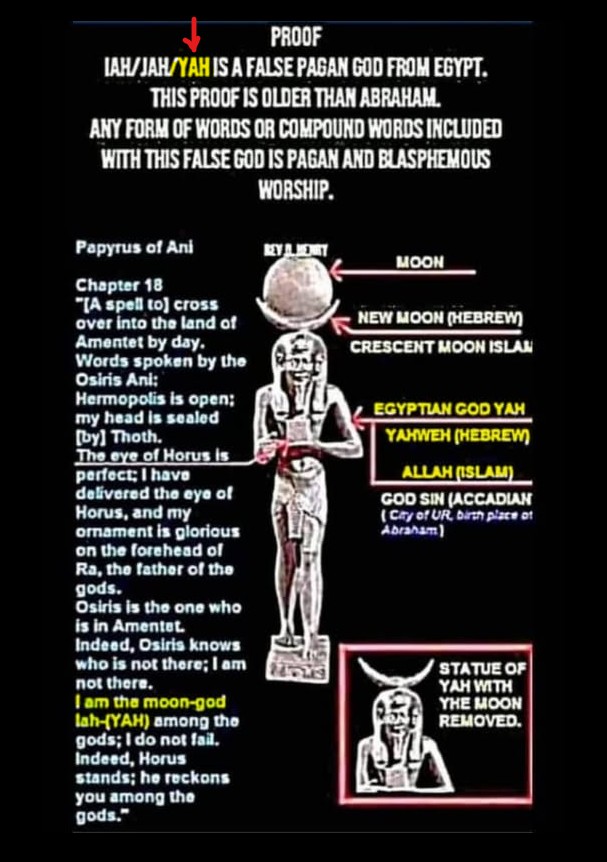

Gail Riplinger on the name false names Yahweh, Yahushua, and Yuhuah.
Riplinger on the name game.
The name of God is spelled with the Hebrew letters yod, heh, vav, and heh, read from right to left and then transliterated into English as JHVH (called the Tetragrammaton). In the KJV Old Testament it is translated ‘JEHOVAH’ seven times (and rendered ‘LORD’ the remaining times; see New Age Bible Versions, pp. 373-385). Each of the letters of the Hebrew alphabet paints a picture. The letters in the name of God illustrate the following:
J = jod It suggests a ‘giving, extending hand’ (Marc-Alain Oauknin, Mysteries of the Alphabet, New York: Abbeville Press, 1999, p. 207).
H = heh =
It represents an ‘enclosure,’ like heaven or a window (Mysteries, p.191).
V = vav = It symbolizes a nail (Mysteries, p. 168). A ‘v’ in English is a pictogram of the chiseled end of a nail.
H = heh =
The H is repeated at the end of the name because “Jesus was risen” and “received up into heaven” again (Mark 16:19).
God reached his hand out of the windows of heaven, and we put a nail in it; having taken our punishment for sin, he has returned to heaven. The “nail” “pierced” “hands” of Jesus were foretold in Ps. 22:16 and Isa. 22:23-25. (Dr. Floyd Jones has even suggested that the sign recorded in John 19:19 might have been written in Hebrew, “JESUS OF NAZARETH AND THE KING OF THE JEWS,” creating an acrostic of the name JHVH, as the vav for ‘and’ begins the word for King, melek (see Hebrew O.T. Gen. 14:8 for Hebrew form). This could explain why the Jews immediately asked Pilate to change it to “he said, I am King of the Jews” (v. 21).
Jesus is a transliteration of the Hebrew ‘Joshua,’ meaning ‘JEHOVAH is salvation.’ Jesus Christ is shown to be the J, the jod “the arm of the LORD” in Isaiah 53:1-12 and Isaiah 59:16, which says, “therefore his arm brought salvation.” Isaiah 63:2, 5 repeats this theme. The jod, is a picture of an arm and hand, drawn in a tiny and compact form. Professor Ouaknin traced the jod from pictograms of a praising upright arm and hand, to outstretched arms, as if on a cross, and finally, to an arm and hand reaching down, like the letter reaching like Jesus to rescue perishing mankind (Mysteries, pp. 200-207).
In the 19th century, as unbelieving German critics of the Bible were hammering away at the word of God, they tried to refashion God’s name, JEHOVAH. They asserted that the God of Israel’s name should be pronounced Yahweh because, to them, he was nothing more than an offshoot of the pagan deity “Yaho.” Nothing could be further from the truth.
The Jews, who generally did not utter the name of God, had used, but ceased using the name JEHOVAH “centuries before the Christian era” notes the classic scholar’s edition of the Encyclopedia Britannica. It affirms that, “…reading what actually stood in the text, they would inevitably pronounce the name Jehovah” (Encyclop)dia Britannica, 11thedition (New York: Encyclop)dia Britannica, Inc., 1910-11), vol. 15, pp. 311-314, s.v. Jehovah). The New Schaff-Herzog Encyclopedia admits that in the “older system of transliteration, Jehovah” is the pronunciation. It states, “In the Masoretic text the usual form would give the pronunciation Yehowah [pronounced, Jehovah]” (The New Schaff-Herzog Encyclopedia of Religious Knowledge (New York: Funk and Wagnalls, 1912), vol. VI, p. 117, s.v. Jehovah; vol. XII, p. 470, s.v. Yahweh).
Thousands of years ago, perhaps 3,600, the name JEHOVAH was given by God to Moses. It is seen first in Genesis 2:4 in the Hebrew Old Testament and translated in Exodus 6:3 in the KJV. In his scholarly book, A Dissertation Concerning the Antiquity of the Hebrew Language, Letters, Vowel Points and Accents, John Gill (1697-1771), eminent theologian and writer, documents the use of the very name JEHOVAH from before 200 B.C. and throughout the centuries of the early church and the following millennium. The Hebrew’s Mishna allowed the name as a salutation (Berachoth, ix, 5); according to Thamid, the priests in the temple could use the true name, but those in the country could only use Adonai (vii, 2); Maimonides said the name was used by the priests in the sanctuary and on the Day of Atonement (Moreh Nebukim, I, 61, and “Yad chasaka,” xiv, 10). Even commentators such as Nicholas of Lyra, Tostatus, Cajetan, and Bonfrere defended the pronunciation ‘JEHOVAH’ as received by Moses on Mt. Horeb. The name is found in the writings of Raymund Martin in the 1200s and Porchetus in the 1300s. Theodore Beza, Galatinus, and Cajetan, among many others, use it in the 1500s. Scholars such as Michaelis, Drach and Stier proved the name as the original. The 1602 Spanish Bible uses the name Iehova and gave a lengthy defense of the pronunciation Jehovah in its preface. In “the 17th century the pronunciation JEHOVAH was zealously defended by Fuller, Gataker, Leusden and others, against the criticisms…”(EB, pp. 311-314). (Martin: Pugio fidei, ed. Paris, 1651, pt. III, dist. ii, cap. iii, p. 448, and Note, p. 745; Galatinus: “Areana cathol. veritatis,” I, Bari, 1516, a, p.77; Porchetus: Drusius, “Tetragrammaton,” 8-10, in “Critici Sacri,” Amsterdam, 1698, I, p.ii, col.339-42; “De nomine divino,” ibid., 512-516; see also p. 351 et. al; Michaelis: “Supplementa ad lexica hebraica,” I, 1792, p. 54; Drach: “Harmonic entre l’Eglise et la Synagogue,” I, Paris, 1844, pp. 350-53, Note 30, pp. 512-16, 469-98; Stier: Lehrgebaude der hebr. Sprache, 327.)
“Genebrardus seems to have been the first to suggest the pronunciation Iahue [pronounced Yahweh], but it was not until the 19th century that it became generally accepted” (EB, pp. 311-314). Anti-Semitic German liberals, like Driver and Delitzsch, eagerly grasped the new pronunciation, Yahweh. They and other unsaved ‘higher critics,’ denied that the Old Testament was actually given by God. They grasped at any straw to shelter their unbelief, asserting that the Old Testament was the creation of men who adopted and adapted stories, words, and names from neighboring pagan religions and languages. The higher critics used the new pronunciation, Yahweh, as so-called proof that the God of Israel was nothing more than a tribal god, whose name had evolved from pagan gods like Yaho or Ya-ve, worshipped by the Babylonians and Canaanites, the Hebrews’ captors and neighbors. They said, Yahweh “meant Destroyer” (EB, p. 312). The German critics said, “Yahweh is not a Hebrew name;” such a pronunciation would prove the Hebrews borrowed it (EB, 310-314). Critic Rudolf Kittel asserts, “yahu…do[es] not lead back to a pronunciation represented by Yehovah (or Jehovah)” (The New Schaff, vol. XII, p. 470, s.v. Yahweh). The critics cited ancient documents, like the “magical texts,” Aramaic papyri, and Babylonian tablets that tell of pagan gods named Yaho, Yahu, or Ya-ve. this pagan deity and mocking the God of Israel?)
Driver tried to provide as evidence, an Ethiopic list of magical names for Jesus, which included Yawe. Other Bible critics, anxious to find a linguistic, rather than a supernatural source for the name of the God of Israel, grasped the ‘Canaanite connection’ and the new pronunciation. (These critics include: von Bohlen (Genesis, 1835, p. civ.), Von der Alm (Theol. Briefe, I, 1862, pp. 524-527), Colenso (The Pentateuch, V, 1865, pp. 269-84), and Goldziher (Der Mythusbei den Hebr#ern, 1867, p. 327). (See also: Driver, Studia Biblica, I. 20; I, 5; Encyclopedia Britannica, 11th edition, 1910-11, vol. 15, pp. 311-314, s.v. Jehovah; Delitzsch, “Wo lag das Paradies,” 1881, pp. 158-164; “LesestKcke,” 3rd ed., 1885, p. 42, Syllab. A, col. I, 13-16).
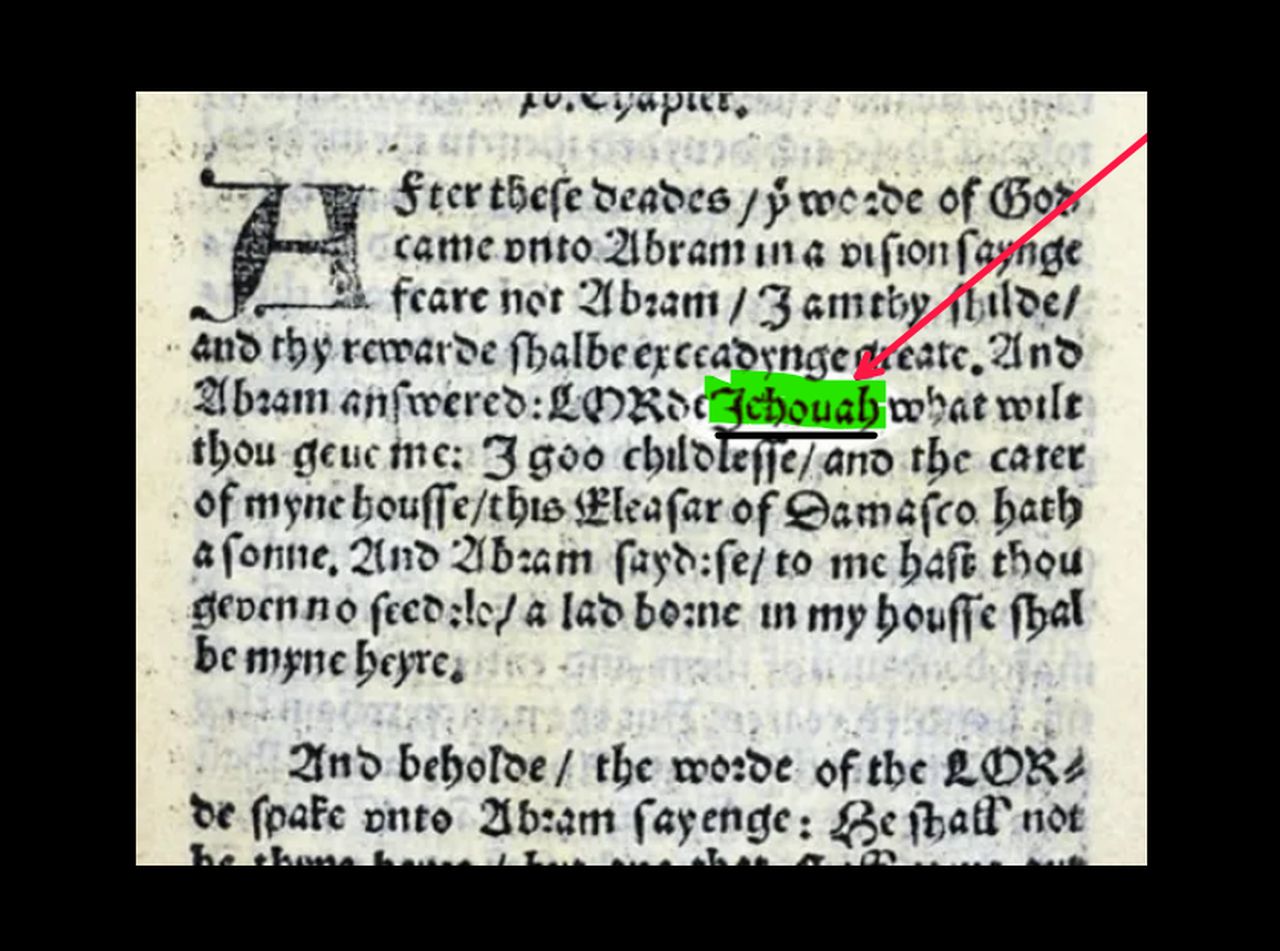
Even the Oxford English Dictionary warns that “this origin is now disputed” (OED, s.v. Jehovah). So let’s examine why the critics of ‘JEHOVAH’ are wrong. The first letter, jod, could be pronounced in Hebrew, as ‘ye’ in Yeshua, the Hebrew pronunciation of Jesus, but it could not be pronounced that way in English. The English pronunciation and spelling of words which begin with the same Hebrew letter (jod) and vowel pointing (silent sheva Je ) – words like Jerusalem, Jericho or Jew – break the critic’s Canaanite idol, Yaho, in pieces. It cannot be pronounced ‘Ya’ in English. The sound of the Hebrew letter jod came into English as the letter ‘I,’ used as a consonant and having the soft ‘g’ sound, like today’s ‘j.’ In the past the letter ‘I’ was used as both a vowel (i) sound and as the consonant ‘j’ sound. The OED says that the sound of ‘j,’ though originally printed as ‘I,’ was pronounced as a soft ‘g’ (Oxford English Dictionary, Unabridged, 2nd Edition, Oxford: Clarendon Press, 1991, s.v. J). The ‘JE’ sound in JEHOVAH was spelled ‘IE’ and pronounced as ‘JE.’ To distinguish the consonant sound (soft ‘g’) of the letter ‘I’ from the vowel sound of ‘I,’ many scribes in the 1200s began putting a tail on the soft ‘g’ ‘I’,’ making it look like our modern ‘J.’ The Spanish, in the 1500s, were the first to more consistently try to distinguish the consonant I (soft ‘g’) sound as the shape of a ‘J.’ At that same time English printers used ‘J’ and ‘I’ fonts interchangeably (as documented elsewhere in this book). During the 1600s, most languages began consistently using the extended ‘I’ form, now called a ‘J,’ to represent the ‘j’ (soft ‘g’) sound. (World Book Encyclopedia, Chicago, Ill.: Field Enterprises, vol. 10, s.v. J.)
The Hebrews used Psalm 119 to teach the Hebrew alphabet. Psalm 119:73 was used to teach, the letter Jod (not yod), the hand pictogram. Interestingly, the first words of verse 73 are “Thy hands” ! These Hebrew letters are shown in King James Bibles printed by Cambridge University Press. The transliteration of the Hebrew letters as the Roman letters Yahweh requires a German accent (‘Je’ is ‘Ya’ in German), invented vowels, and a translator who does not know that the Germans, who transliterated it that way, pronounce the letter ‘w’ as ‘v’! Only the Latins (Roman Catholicism) and Germans (Higher Criticism), using the Roman alphabet, team up to pronounce ‘J’ as ‘Y.’ (There are no native German words that begin with ‘y.’) Even the untrustworthy Hebrew Aramaic Interlinear Old Testament, by Jay Green, admits, “…the letter J in German is pronounced like an English Y. The bulk of theological studies having come from German sources, there has been an intermixed usage in English of the J and the Y. Our English translations of the Bible reflect this, so we have chosen to use J, thus Jehovah, rather than Yahweh, because this is established English usage for Biblical names beginning with this Hebrew letter. No one suggests we ought to change Jacob, Joseph, Jehoshaphat, Joshua, etc. to begin with a Y, and neither should we at this late date change Jehovah to Yahweh” (The Interlinear Hebrew Aramaic Old Testament, 2nd ed., Peabody, Mass: Hendrickson Publishers, 1993, vol. 1, p. xii).
In summary, ‘JEHOVAH’ and ‘JESUS’ have always sounded and been pronounced exactly as they are today, as ‘JEHOVAH’ and ‘JESUS,’ although the type fonts used to represent these sounds sometimes looked like ‘Iehovah’ and ‘Iesvs.’ The letter ‘V’ is the other disputed consonant in JEHOVAH. “The vav is pronounced like a V in vehicle,” writes Professor Marc-Alain Ouaknin of the Department of Comparative Literature at the Hebrew Bar-Illan University and the Jewish Research and Study Center in Paris. Therefore the ending in JEHOVAH would be pronounced in Hebrew and in English as, ‘VAH’ not ‘weh.’ Professor Ouaknin also said that the letter vav went into the Greek alphabet, “bearing the name digamma and being pronounced “v” as in vehicle.” (Mysteries, pp.168, 170). The Ww in Gesenius’ [German] Hebrew Grammar and other Hebrew textbooks is pronounced Vav, in English and Hebrew. Readers misunderstand charts which say “Pronunciation…w,” not knowing that the letter ‘w’ is pronounced as a ‘v’ in German The sounds of Vav and the vowel which follows it, Kamatz (a), can be heard on the instructional Hebrew web site http://www.ejemm.com, pronounced exactly as it would be in JEHOVAH. (E. Kautzsch and A.E. Cowley, Gesenius Hebrew Grammar, 2nd English Edition, Oxford: Clarendon Press, 1910, pp. 2628 et. al; See also Menahem Mansoor, Biblical Hebrew, Grand Rapids,Mich: Baker Book House, 1980, pp. 18, 19, 21.)
Even Americans have heard Hogan’s Heroes, Sergeant Schultz say to Colonel Klink, ‘Ya vool Kammandant,’ (spelled “Ja wohl Kammandant,” meaning ‘Yes, indeed Commander’). In German restaurants Schultz said, ‘viener schnitzel’ (spelled wiener), vile he listened to the tunes of V gnr (spelled, Wagner) and Lood-vikh fan Beethofen, (spelled, Ludwig van Beethoven). In German, the letter ‘v’ is pronounced like an ‘f.’ Consequently, in Hebrew textbooks it was necessary to put the letter ‘w’ after the Hebrew vav (‘v’) so that German readers would know that the Hebrew letter ‘v,’ was not the German ‘f’ sound, but the sound of the letter ‘v’ represented by their letter ‘w.’ English speaking textbook authors and seminary professors have misunderstood this and misconveyed to their students that the Hebrew letter should be pronounced like the English ‘w,’ not the German ‘w.’
Where did the phony ‘weh’ sound in Yahweh come from? As Green said, “German sources.” In German “the “v” sound is rendered by the “double u” (“w”). Although the German critics spelled the name Yahweh, they pronounced it, Yahveh. “In German…W takes the value that V has in English…In German the same symbol w is called Vey, because in that language it has the value of the English v…” (EB, s.v. V; s.v. W; see also The Mysteries of the Alphabet, pp. 168, 170, 171). Because Germans use the letter ‘w’ for the ‘v’ sound, those reading or translating German theological works have brought in the German letter ‘w’ for ‘v.’ It is not to be pronounced like an English ‘w,’ but like a ‘v.’
To further compound the confusion, unbelieving Catholic Bible critics have brought their Latin ‘w’ pronunciation to the letter ‘v.’ “The Latin V, however, was…like the English w…Early borrowings, like wine(Latin vinum [pronounced winum]) [and] wall (Latin vallum [pronounced wallum]), retain the w sound and are therefore spelt with w” (EB, s.v. V; s.v. W). So we have Latin speaking Roman Catholic scholars and liberal German higher critics joining together to fight WW II against the God of Israel and the word of God. Even the NIV translators and editors of the corrupt Theological Wordbook of the Old Testament admit that confusion arises in part “because of past German influence on Hebrew studies.” Imagine 19th century anti-Semitic German scholars recasting the name of the God of Israel in the mold of Yaho, a pagan idol, who speaks with an untrained German accent! To further compound the confusion, there are two conflicting Hebrew systems of pronunciations: 1.) the Ashkenazi, a German method from Jews who immigrated to Germany and central Europe and then some to America and 2.) the classic Sephardi. (R. Laird Harris, Gleason L. Archer, Bruce Waltke, Theological Wordbook of the Old Testament, Chicago: Moody Press, 1980, vol. 2, p. x; The American Dictionary of the English Language, s.v. W; Mansoor, p. 33.)
Where did the VOWELS in JEHOVAH come from? Most believe the Bible record which states that the vowels in JEHOVAH were heard as, “the LORD said unto Moses…my name JEHOVAH” (Exod. 6:3). The statement, “the LORD said unto Moses,” is repeated over and over in the book of Exodus. Moses heard the pronunciation of words.“ And the LORD said unto Moses, Write…in a book…And Moses wrote all the words of the LORD” (Ex. 17:14, 24:4, 34:27, Num. 33:2, Deut. 31:9, 24.) The book titles in the KJV state that the first five books of “Moses” are the “beginning” of the “old testament” (Luke 24:27, 2 Cor. 3:14, 15).
-Gail Riplinger
Support | STORE | Podcasts | Jail/Prison Ministry | Mexico Mission here | All Ministry Updates | H.O.T. Bible Study [podcast] | Church History Exposed | Bible Agnostics Exposed | How to Spot a Fake Bible [podcast] | WHAT ABOUT PEOPLE WHO CAN’T UNDERSTAND THE KJB? [podcast] | New American Standard Version “Bible” NASV Catastrophe Exposed | The Audacity of Defending the New Versions | Do We Have God’s Word or Do You Need to Know the Original Languages? [podcast] | Bible Versions Category |

Articles
JT with Todd Tomasella of SAFEGUARD YOURSOUL – Evangelism Encouragement [video]

Joe Telford and Todd Tomasella – Evangelism Encouragement
Support | STORE | Podcasts | Light of the World | Evangelism | Jesus, Light of the Word | Compassion in Light of Christ’s Soon Return | Striving Together for the Faith of the Gospel [podcast] | Prepared to be Used of God | The Return of Christ


Abiding
7 Ways to Forgive [podcast]
PRAY
“But I say unto you, Love your enemies, bless them that curse you, do good to them that hate you, and pray for them which despitefully use you, and persecute you;” Matthew 5:44
LOVE AND DO GOOD TO THE OFFENDER
“Let love be without dissimulation. Abhor that which is evil; cleave to that which is good.” Romans 12:9
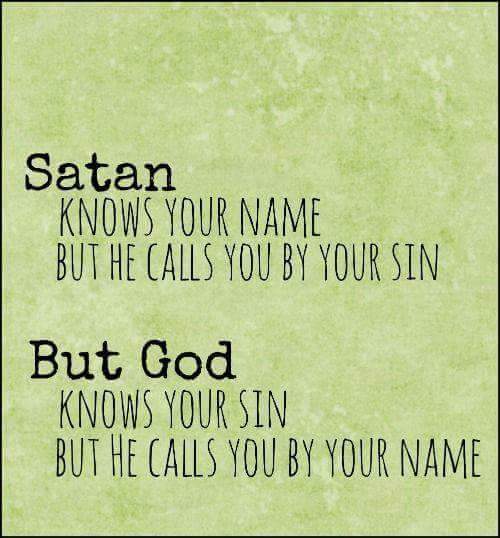
REFUSE TO SPEAK EVIL OF THE OFFENDER
“Bless them which persecute you: bless, and curse not.” Romans 12:14
RELEASE THEM FROM YOUR PUNISHMENT
“Recompense (repay) to no man evil for evil. Provide things honest in the sight of all men. 18 If it be possible, as much as lieth in you, live peaceably with all men. 19 Dearly beloved, avenge not yourselves, but rather give place unto wrath: for it is written, Vengeance is mine; I will repay, saith the Lord.” Romans 12:17-19
DON’T CELEBRATE THEIR FAILURES
“Rejoice not when thine enemy falleth, and let not thine heart be glad when he stumbleth: 18 Lest the LORD see it, and it displease him, and he turn away his wrath from him.” Proverbs 24:17-18
TREAT THEM THE WAY YOU WANT TO BE TREATED
“And as ye would that men should do to you, do ye also to them likewise.” Luke 6:31
STOP DWELLING ON THE PAST
“Remember ye not the former things, neither consider the things of old.” Isaiah 43:18
The blessedness of being merciful to others:
“Blessed are the merciful: for they shall obtain mercy.” Matthew 5:7
The only way to prevent holding a grudge, is to simply forgive them – as God freely forgave you through the infinite price Christ paid for your sins on the cross, of which you don’t deserve (Psalms 103:10).
“Be patient therefore, brethren, unto the coming of the Lord. Behold, the husbandman waiteth for the precious fruit of the earth, and hath long patience for it, until he receive the early and latter rain. 8 Be ye also patient; stablish your hearts: for the coming of the Lord draweth nigh. 9 Grudge not one against another, brethren, lest ye be condemned: behold, the judge standeth before the door.” James 5:7-9
“And grieve not the holy Spirit of God, whereby ye are sealed unto the day of redemption. 31 Let all bitterness, and wrath, and anger, and clamour, and evil speaking, be put away from you, with all malice: 32 And be ye kind one to another, tenderhearted, forgiving one another, even as God for Christ’s sake hath forgiven you.” Ephesians 4:30-32
Being kind and forgiving towards others becomes simple as we look in the mirror and declare with Paul the apostle: “For I know that in me (that is, in my flesh,) dwelleth no good thing.” (Romans 7:18)
“He hath not dealt with us after our sins; nor rewarded us according to our iniquities.” Psalms 103:10
Forgiveness becomes easy when we look in the mirror to see the person (us, me) who needs God’s mercy more than any other person alive on the earth! Memorize Ephesians 4:32 now. KJB
“For the wrath of man worketh not the righteousness of God.” James 1:20
“Put on therefore, as the elect of God, holy and beloved, bowels of mercies, kindness, humbleness of mind, meekness, longsuffering; 13 Forbearing one another, and forgiving one another, if any man have a quarrel against any: even as Christ forgave you, so also do ye. 14 And above all these things put on charity, which is the bond of perfectness.” Colossians 3:12-14
Forgiveness Quotes
Forgiveness is ultra important to God. If you don’t forgive all others, you are not forgiven of your own sin and are as sure for hell as if you were already there. If you refuse to forgive you damn your own soul, non-negotiably. irrevocably.
“Forgiveness does not mean what happened is okay. It means not letting what happened take any more of your happiness.” Michelle Maros
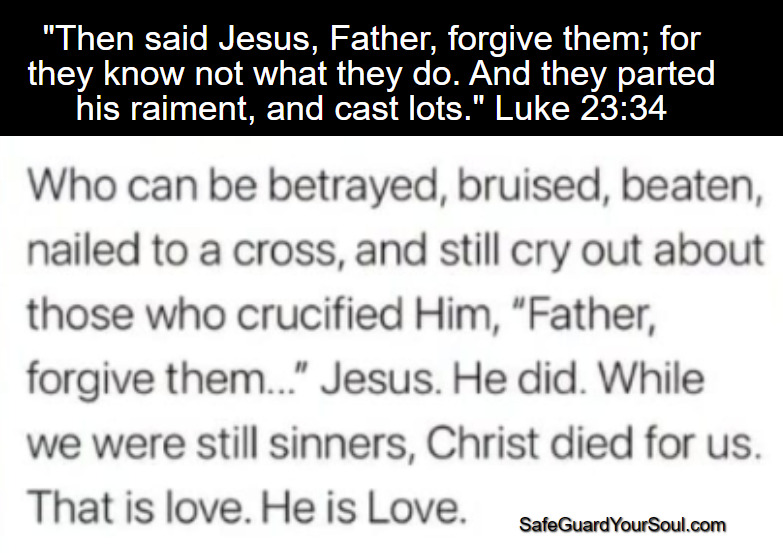
“There is no love without forgiveness, and there is no forgiveness without love.” Bryant McGill
“Love is an act of endless forgiveness. Forgiveness is me giving up my right to hurt you for hurting me. Forgiveness is the final act of love.” Reinhold Niebuhr
“Holding a grudge doesn’t make you strong; it makes you bitter. Forgiving doesn’t make you weak; it sets you free.” unknown

Forgiveness | Fresh Start with God | Making Peace with God

Abiding
Christ’s Non-Negotiable Original Gospel Imperative [podcast]

“He that is not with me is against me; and he that gathereth not with me scattereth abroad.” Matthew 12:30
It’s one thing to claim we are with Christ and He with us, and it’s another thing to prove we are with the Savior by adhering to His words. Jesus told us that those who are “of God” hear and obey His words (John 8:47).
If one chooses not to love Jesus enough to obey His stated terms, such a man has rejected the Son of God for the love of sinful self and will perish in his own corruption (Matthew 22:37-40; Luke 9:23-24; 14:33; 17:33; John 14:15; 1 John 2:3-6, etc.).
“Repentance is to TAKE SIDES with God against yourself. It is a CHANGE of attitude toward SELF, toward SIN, toward GOD, toward CHRIST that is so REAL that it RESULTS in a changed life. It is raising the WHITE FLAG in SURRENDER to God and turning to Christ as your only LORD and Savior. Repentance is NOT a work … works are the fruit of repentance (Ephesians 2:8-10).” Trent Austin
Only the counterfeit will get upset at this Gospel message because such a rebel wants nothing to do with taking personal responsibility for his sin, the denial of self, the crucified life to be set apart, holy, and having the Savior reign!
Notice how Jesus knits the denial of self, the daily cross, the putting off the deeds of the body, of keeping under the body (the iniquitous fallen nature) with the destiny of the eternal soul.
“And he said to them all, If any man will come after me, let him deny himself, and take up his cross daily, and follow me. 24 For whosoever will save his life shall lose it: but whosoever will lose his life for my sake, the same shall save it. 25 For what is a man advantaged, if he gain the whole world, and lose himself, or be cast away?” Luke 9:23-25
Jesus made it clear here that the cross is an original Gospel essential, an absolute imperative to eternal glory with Him!
Each of us proves exactly who we love the most by the way we are living! – God or self!
Everything that is happening in your life now is being allowed by God in order to get you down low into the death and burial with Christ. Read 2 Corinthians 4.
“But we have this treasure in earthen vessels, that the excellency of the power may be of God, and not of us. 8 We are troubled on every side, yet not distressed; we are perplexed, but not in despair; 9 Persecuted, but not forsaken; cast down, but not destroyed; 10 Always bearing about in the body the dying of the Lord Jesus, that the life also of Jesus might be made manifest in our body. 11 For we which live are alway delivered unto death for Jesus’ sake, that the life also of Jesus might be made manifest in our mortal flesh. 12 So then death worketh in us, but life in you.” 2 Corinthians 4:7-12
Support | STORE | Podcasts | Christology | Be Ready in the Morning [podcast] | The Sure Mercies of David [podcast] | That Repentance and Remission of Sins should be Preached [podcast] | At His Feet | Modern Church | Peace with God | The Cross | Christ-Centered Podcasts |








JT with Todd Tomasella of SAFEGUARD YOURSOUL – Evangelism Encouragement [video]

7 Ways to Forgive [podcast]

Christ’s Non-Negotiable Original Gospel Imperative [podcast]

The Book of Proverbs Alexander Scourby [video]

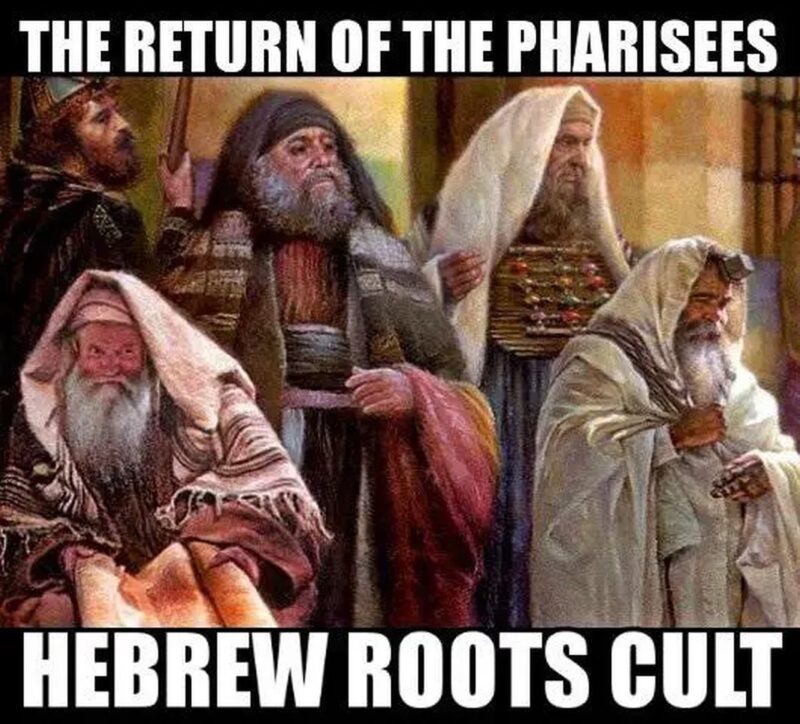
TORAH Keepers Slammed

What is our Highest Priority as we see Christ’s Return Nearing? [podcast]

“But God, who is Rich in Mercy” [podcast]

Dancing on Hell’s Grave: Why We Need not Fear Death: Resurrection Joy – Fearless in Death [podcast]

Young’s Literal Translation YLT Exposed

Jacked Up Jezebel Rebuked [podcast]

Gospel Action in Mexico Part 36 [video]

Racism: Nation Rising Against Nation [radio]

LESS than the Least! Filthy Rags Fellowship! [podcast]

God Blesses those who Read His Word [book]

Summary of Tom Wadsworth’s teaching on modern worship as compared to the New Testament church [video]

4 Verse KJV Comparison [podcast]
Dancing on Hell’s Grave: Why We Need not Fear Death: Resurrection Joy – Fearless in Death [podcast]
Young’s Literal Translation YLT Exposed
TORAH Keepers Slammed

The More Blessed Life [podcast]
Racism: Nation Rising Against Nation [radio]

Laying Up Treasure in Heaven 60 second video #shorts
The Book of Romans Narrated [podcast]

Overcoming Whoredom [podcast]
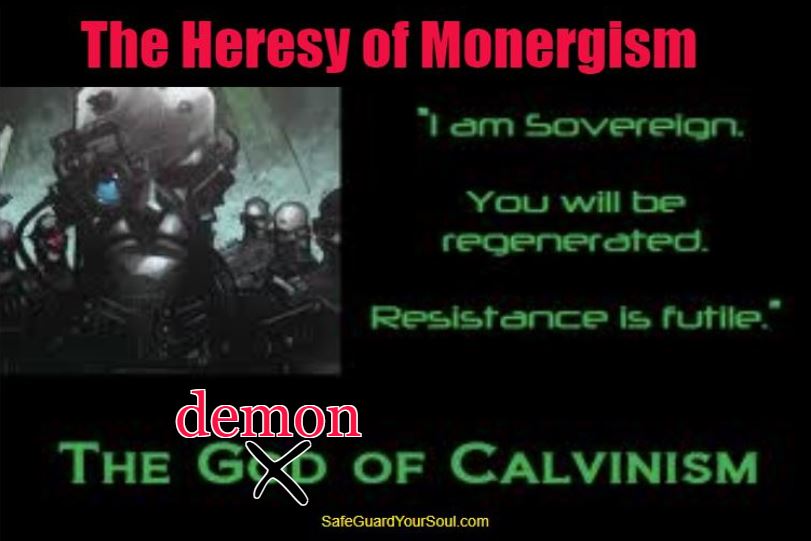
Which Came First? Faith or Regeneration-Monergism Maniacs Exposed [video]

When God Says to STOP PRAYING! [podcast]
LESS than the Least! Filthy Rags Fellowship! [podcast]

What’s Wrong with the Modern Church World? [podcast]

Full of The Holy Ghost [podcast]
Christ’s Non-Negotiable Original Gospel Imperative [podcast]
JT with Todd Tomasella of SAFEGUARD YOURSOUL – Evangelism Encouragement [video]
7 Ways to Forgive [podcast]
Christ’s Non-Negotiable Original Gospel Imperative [podcast]


 America1 year ago
The Drugging of America: The Pharmakeia Sorcery Deception [podcast]
- Articles2 years ago
Children being Rescued in Tunnels: Happening Now – UPDATE!
- Articles8 years ago
Self-Examination in Preparation for the Lord’s Return
- Apostasy2 years ago
SHOCKING List of False Prophets Most Believe are True