






by Will Kinney
The word Hell in the King James Bible
The Doctrine of Hell in the King James Bible
Hell or Hades or Sheol or the Grave?
 The doctrine of Hell is getting a lot cooler in the modern versions.
In fact, a lot of theologically important words in the Holy Bible are being toned down or even lost entirely. As examples, here is a partial list of the frequency of certain words comparing the King James Bible Old Testament, with the NKJV, the NASB, ESV and the NIV Old Testament.
TRUTH KJB – 118 times; NKJV – about same; NASB – 92; ESV – 44; NIV – 41
GRACE KJB -38 times; NKJV – 20; NASB – 9; ESV – 7; NIV – 8
MERCY, MERCIFUL KJB – 288 times; NKJV -same; NASB – 51; ESV – 132; NIV – 85
SOUL KJB – 478 times; NKJV – same; NASB – 255; NIV – 110
LUCIFER KJB – 1 time; NKJV – 1 time; NASB – 0; ESV – 0; NIV – 0
JEHOVAH KJB – 7 times; NKJV – 0; NASB – 0; ESV – 0; NIV – 0
HELL KJB – 31 times; NKJV – 19; NASB – 0; ESV – 0; NIV – 0
Examples of other words in the whole Bible, both testaments.
DOCTRINE KJB – 56 times; NKJV – 42; NASB – 14; ESV – 13; NIV – 7
 SAINTS KJB – 98 times; NKJV – 98; NASB – 68; ESV – 82; NIV 2011 – 0
FORNICATION KJB – 44 times; NKJV – 21; NASB – 8; ESV – 0; NIV – 0
DAMNATION, DAMNED KJB – 9 times; NKJV – 0; NASB – 0; ESV – 0; NIV – 0
HELL (whole Bible) KJB – 53 times; NKJV – 32; NASB -13; ESV – 14; NIV – 13
HUMAN – The word “human” is the gender-neutral, New Age, Evolutionary Buzz-word.
How many times does it appear?
In the King James Bible, Geneva Bible, ASV 1901 – ZERO times.
In the NKJV – 15 times
(a few examples)
Leviticus 5:3 – Or if he touches HUMAN uncleanness—whatever uncleanness with which a man may be defiled, and he is unaware of it—when he realizes it, then he shall be guilty.
John 16:21 – A woman, when she is in labor, has sorrow because her hour has come; but as soon as she has given birth to the child, she no longer remembers the anguish, for joy that a HUMAN being has been born into the world.
 Romans 6:19 – I speak in HUMAN terms because of the weakness of your flesh. For just as you presented your members as slaves of uncleanness, and of lawlessness leading to more lawlessness, so now present your members as slaves of righteousness for holiness.
1 Corinthians 2:4 – And my speech and my preaching were not with persuasive words of HUMAN wisdom, but in demonstration of the Spirit and of power,
1 Corinthians 4:3 – But with me it is a very small thing that I should be judged by you or by a HUMAN court. In fact, I do not even judge myself.
Hebrews 12:9 – Furthermore, we have had HUMAN fathers who corrected us, and we paid them respect. Shall we not much more readily be in subjection to the Father of spirits and live?
NASB – 39 times
ESV – 65 times
Holman Christian Standard – 141 times
NIV – 214 times
 Examples from Genesis 6 – “When HUMAN beings began to increase in number on the earth and daughters were born to them, the sons of God saw that the daughters of HUMANS were beautiful, and they married any of them they chose. Then the Lord said, “My Spirit will not contend with HUMANS forever, for they are mortal; their days will be a hundred and twenty years.”
Dan Wallace’s NET version – 233 times
One Bible Critic, named Reese Currie, posts at his site this ignorant criticism of the KJB saying –
“Luke 16:23 KJV: And in hell he lift up his eyes, being in torments, and seeth Abraham afar off, and Lazarus in his bosom.
NKJV: “And being in torments in Hades, he lifted up his eyes and saw Abraham afar off, and Lazarus in his bosom.”
The Greek word is hades, which means, “the abode of the dead.” Here, the NKJV transliterates the Greek word hades to differentiate “Hades,” the abode of the dead, from “Gehenna,” the lake of fire. It is much more accurate to do so, since Hades is going to be thrown into the lake of fire in Revelation 20:14. The wording is Jesus’ wording and I have no issues with it. The NKJV is more accurate.” (End of his comments)
First, all this Bible Rummager and unbeliever in the inerrancy of ANY Bible is giving us, is his own personal opinion. Many others disagree with him.
And secondly, the word Gehenna is never translated as the “lake of fire” and he cannot prove from Scripture his assertion that Gehenna and the lake of fire are the same thing. He just made that up and gave us his opinion. That’s all he did, and his personal opinion cannot be backed up from the Bible.
Hell in the Modern Versions – hades, geenna and tartaros = A very mixed up and inconsistent mess
The words still translated as hell in the N.T. of these modern versions (NKJV, NIV, NASB, ESV) are geenna 12 times (Matthew 5:22, 29, 30; 10:28; 18:9; 23:15,33; Mark 9:43,45,47; Luke 12:5 and James 3:6) and tartaros 1 time (2 Pet. 2:4).
The 2001 – 2011 ESVs still translate hades as “hell” in Matthew 16:18 “the gates of hell shall not prevail against it.”
The NIV editions of 1973 and 1984 translated hades as “hell” in Luke 16:23 “in hell he lift up his eyes, being in torments”, but the 2011 “new” New International Version now has “hades”.
The ISV (International Standard Version) has translated hades as “hell” in Matthew 16:18 “the gates of hell”.
Petterson’s 2002 The Message has translated hades as “hell” in Matthew 16:18, Luke 16:23, Revelation 6:8, and Revelation 20:13 and 14.
Dan Wallace’s NET version 2006 is a study in confusion. He has “gehenna” as hell and “tartaros” as hell, but when it comes to “hades” most of the time he has the transliteration “hades” but in Luke 16:23 he goes with “hell” saying – “And in HELL, as he was in torment, he looked up and saw Abraham far off with Lazarus at his side.”
And then he twice “translates” a word that is not hell as hell. He does this in Galatians 1:8 and 9 –
“But even if we (or an angel from heaven) should preach a gospel contrary to the one we preached to you, let him be condemned to HELL! As we have said before, and now I say again, if any one is preaching to you a gospel contrary to what you received, let him be condemned to HELL!”
The Catholic Connection
It is interesting to compare and contrast the ever changing Catholic bible versions. The other Greek word that is often translated as “hell” in the King James Bible and many others is hades. In the older Catholic Douay-Rheims version, every time the KJB has hades as “hell”, so did this older Catholic bible – See Matthew 11:23; 16:18; Luke 10:15; 16:23; Acts 2:27,31; Rev. 1:18; 6:8 and 20:13 and 14.
But the New Jerusalem bible (catholic) of 1985 has translated the Greek word hades as “hell” in Matthew 11:23 and Luke 10:15, as “the underworld” in Mat. 16:18, and as Hades in Mat. 11:23; Luke 16:23, Acts 2:27,31, and in Rev.1:18; 6:8 and 20:13,14. So we see that all these modern versions are consistently inconsistent.
This particular study will focus on the word Hell and how it is being air conditioned by degrees in many modern versions. There are many who criticize the King James Bible as being wrong for translating certain Hebrew and Greek words as Hell.
In the King James Old Testament the Hebrew word Sheol is variously translated as HELL – 31 times; THE GRAVE – 31 times, and as THE PIT – 3 times.
The modern versions disagree among themselves and have little room in which to criticize the KJB.
 The NKJV transliterates this same word as Sheol 18 times, but then translates it as HELL 19 times, rather than the 31 times as in the KJB. It also has translated the word as the GRAVE and the PIT.
The NIV never translates it as hell or even as Sheol, but instead has the GRAVE 55 times, DEATH 6 times, the DEPTHS 2 times, the DEPTHS OF THE GRAVE 2 times, and as THE REALM OF DEATH once.
The NASB and the ESV on the other hand, transliterate rather than translate this word every single time as SHEOL. How many Christians know what Sheol is? It strikes fear in the heart, doesn’t it?
What we see here is that the very scholars who criticize the King James Bible for translating the word at times as HELL can’t seem to agree even among themselves as to what the word means in various contexts.
Let’s look at a few examples.
Psalm 9:17
King James Bible – “The wicked shall be turned into HELL, and all the nations that forget God.”
NIV – “The wicked RETURN TO THE GRAVE, all the nations that forget God.”
There are two big problems with the NIV rendering here. First, you can only RETURN TO someplace you have already been before. Does the NIV teach reincarnation? You can teach it using the NIV, but you cannot get the doctrine of reincarnation from the King James Bible.
Second, most everyone, the wicked and the righteous, go to the grave. So what else is new? The context is the fate of the wicked, and it is not the same as that of the righteous. The NIV rendering is silly at best, and diabolical at worst.
NASB, ESV 2001 – “The wicked will RETURN TO SHEOL, even all the nations who forget God.”
The NASB, ESV have two similar problems. How do people return to someplace if they have not been there before? Also what in the world is Sheol? Many criticize the KJB for being hard to understand, but how many of them know what Sheol is?
And again there is no distinction between the wicked and the righteous in the NASB rendering. The liberal RSV has: “The wicked shall depart to Sheol”, the ESV 2011 is similar with “the wicked shall RETURN to Sheol” and the Catholic New Jerusalem bible of 1985 has: “May the wicked turn away to Sheol.”
 The Jewish translations differ among themselves as well. The 1917 JPS (Jewish Publication Society) says: “The wicked shall return to THE NETHER-WORLD, even all the nations that forget God.” The Jewish Family Bible 1864 – “Wicked ones shall return unto the GRAVE, and all nations that forget God.”
The Ancient Hebrew Bible 1907 and the 1936 The Holy Scriptures, Hebrew Publishing Company, say: “The wicked shall be turned into HELL” and the Complete Jewish Bible 1998 says: “The wicked will return to SH’OL, all the nations that forget God.”
Psalms 9:17 – “The wicked shall be turned into HELL”
The NKJV – “The wicked shall be turned into hell, and all the nations that forget God.” = the KJB here. Also agreeing with the King James Bible are Wycliffe 1395, Coverdale 1535, the Great Bible 1540, Matthew’s Bible 1549, the Bishops’ Bible 1568, the Geneva Bible 1587, the Douay-Rheims Bible of 1610, the Bill Bible 1671, The Longman Version 1841, The Boothroyd Bible 1853, the Lesser Bible 1853, The Revised English Bible 1877, The Sharpe Bible 1883, the Douay of 1950 (Though the 1970 St. Joseph NAB says “to the NETHER WORLD” and the New Jerusalem bible 1985 says “turn away to SHEOL”) The Word of Yah 1993, the KJV 21st Century Version 1994, the Third Millennium Bible 1998, God’s First Truth 1999, The Revised Geneva Bible 2005, the Bond Slave Version 2009, the Catholic Public Domain Version of 2009, The Work of God’s Children Illustrated Bible 2011 and A Conservative Bible 2011 – “The wicked shall be turned into HELL, and all the nations that forget God.”, The Revised Douay-Rheims Bible 2012, the BRG Bible 2012.
In 1395 Wycliffe wrote: “Synneris be turned togidere in to HELLE; alle folkis, that foryeten God.”
And the 2002 Message paraphrases it in this way: “The wicked bought a one-way ticket to HELL.”
This online Hebrew Interlinear Old Testament – “shall be turned The wicked into HELL, all the nations that forget God.”
Jewish Virtual Library The Tanakh [Full Text] 1998
“The wicked shall be TURNED INTO HELL, and all the nations that forget God.”
Foreign Language Bibles
The Portuguese de Almeida of 1681, and the Portuguese La Biblia Sagrada and the 2000 O Livro all read exactly like the KJB saying: “Os ímpios seräo lançados no INFERNO, e todas as naçöes que se esquecem de Deus.” , as does the French Ostervald of 1996 – “Les méchants reculeront jusqu’aux ENFERS, et toutes les nations qui oublient Dieu.”, the Italian Diodati of 1649 – ” Andranno in volta NELL’INFERNO.” and the Conferenza Episcopale Italiana Bible – “ornino gli empi negli INFERI”, and the Spanish Cipriano de Valera of 1602, 1865, 1909 and the 2010 Reina-Valera Gomez Bible – “Los malos serán trasladados al INFIERNO.”, The Romanian Fidela Bible 2014 – “Cei stricaţi vor fi întorşi în iad împreună cu toate naţiunile care uită pe Dumnezeu.” = “the wicked shall be turned into HELL, and all the nations that forget God.”
Likewise Baptist Bible commentator John Gill states: “The wicked shall be turned into hell,…. Some render it, “shall return to the grave”, to the earth, the original dust from whence they came; but this is common to all men, to the righteous as well as the wicked; rather lwav here signifies the place of torment, commonly called HELL, where devils and damned spirits are; hither the souls of the wicked go immediately upon their departure from their bodies, Luke 16:23; and after the judgment is over, they will be remanded thither in soul and body; and their damnation is called the destruction of soul and body in HELL;… this is true of all the wicked, the beast and false prophet, who shall be cast alive into the lake of fire burning with brimstone, Revelation 19:20″
The Hebrew word Sheol communicates nothing to us in the English language. There are many different views among the scholars themselves as to what this word signifies and it seems to vary with different contexts. Many Hebrew and Greek words have multiple meanings which change their sense according to the context and scholars argue over them all the time.
The 1987 Amplified Bible (Lockman Foundation) translates Psalms 9:17 as: “The wicked shall be turned back [headlong into premature death] into Sheol (the place of the departed spirits of the wicked), even all the nations that forget or are forgetful of God.” But we know from the New Testament that the place of the departed spirits of the wicked is called HELL!
The 2012 ISV (International Standard Version) translates Psalms 9:17 differently than most, saying: “The wicked will turn back TO WHERE THE DEAD ARE.”
There are times when the word simply means the GRAVE, as in Genesis 42:38 where Jacob says: “My son shall not go down with you (into Egypt)…if mischief befall him…then shall ye bring down my gray hairs with sorrow to THE GRAVE.”
At other times the word means HELL, as the place of the dead in the heart of the earth. Scripture tells us in both the Old and New Testaments that there are compartments or degrees of hell. Both Deuteronomy 32 and Psalm 86 speak of THE LOWEST HELL.
In Deuteronomy 32:22 God says: “For a fire is kindled in mine anger and shall burn unto the lowest hell”, and in Psalm 86:13 David says to God: “For great is thy mercy toward me: and thou hast delivered my soul from THE LOWEST HELL.”
Shoel as HELL in the Old Testament
Among the various Bible versions that sometimes translate the Hebrew word sheol as “hell” are the following: Wycliffe 1395, Coverdale 1535, the Great Bible 1540, Matthew’s Bible 1549, the Bishop’s Bible 1568, the Geneva Bible 1599, Douay-Rheims 1610, the Bill Bible 1671, Webster’s 1833 translation, Living Oracles 1835, The Longman Version 1841, the Lesser Bible 1853, The Boothroyd Bible 1853, The Revised English Bible 1877, The Sharpe Bible 1883, the Revised Version 1881, The Ancient Hebrew Bible 1907, the Jewish 1936 Hebrew Publishing Company translation by Alexander Harkavy into English, Luther’s German Bible 1545, Brenton’s translation of the Septuagint 1851, the Spanish Reina Valera 1569, 1602, 1909, the Italian Diodati 1602, the Portuguese de Almeida 1681, Portuguese O Livro of 2000, Rotherham’s Emphasized Bible 1902, the Douay 1950, the Bible in Basic English 1961 (2 Sam.22:6; Psalm 18:5), New Life Version 1969 (Pro. 5:5, 7:27, 19:18, 15:24,23:14), God’s Word Translation 1995, the KJV 21st Century Version 1994, New Living Translation, the NKJV 1982, Third Millennium Bible 1998, and the 2002 version called The Message in 2 Samuel 22:6; Job 26:6, Psalm 9:17, 16:10, 18:5, 31:17, 49:14, 55:15, 88:3, 89:68, 116:3, 141:7, Proverbs 5:5, 7:27, 9:18, 15:24, 27:20, and Isaiah 57:9!!!
Other Bible translations that have HELL in places like Deuteronomy 32:22 – “For a fire is kindled in mine anger and shall burn unto THE LOWEST HELL” are The Jewish Family Bible 1864 – “shall burn unto the lowest HELL”, The Word of Yah 1993, God’s First Truth 1999, J.P. Green’s ‘literal’ 2005, The Apostolic Bible 2006, Hebraic Transliteration Scripture 2010, Jubilee Bible 2010 – “For it is a fire that consumes unto HELL and would root out all my increase.” (Job 31:12; Psalm 88:11; Proverbs 15:11; 17:20), Conservative Bible 2011, The Work of God’s Children Illustrated Bible 2011, Names of God Bible 2011 – “My anger has started a fire that will burn to the depths of HELL.” (12 times in O.T. See Ps. 139:8; Job 11:8; Ps. 49:14,15; 83:13; 139:8; Pro. 5:5 “Her steps lead straight to HELL”, Pro. 9:18; 15:24; 27:20 – “HELL and decay are never satisfied”, the Biblos Interlinear Bible 2011 – “the lowest HELL”, The Revised Douay-Rheims Bible 2012, The New Brenton Translation 2012 – “shall burn unto the lowest HELL”, The Biblos Bible 2013, the Modern English Version 2014 – “Yet you shall be brought down to HELL, to the sides of the pit.” (Isaiah 14:9,15; 28:15; 28:18)
Hades or HELL in the New Testament
In the New Testament the same confusion among the various bible versions is seen in the manner in which they translate or not the word Hades. There are many Bible critics who tell us the King James Bible is in error for translating the word Hades as Hell. Yet, as we shall see, the “scholars” are in total disagreement among themselves regarding this.
Luke 16:19-31 is the classic case showing the division that existed in hell before the resurrection of Christ from the dead. There we see the beggar Lazarus in Abraham’s bosom being comforted and in contrast we see the rich man IN HELL being tormented. There was a great gulf fixed between the two sections dividing the righteous from the wicked.
The Greek word used here is hades – αδης. The King James Bible translated it as hell, while the NKJV and NASB have Hades.
A simple visit to the “Oxford Compact English Dictionary” would clear it up for all but the most rabid of ”scholars”! “Hades” is a proper noun for A MYTH!
The NIV is interesting in that it has variously translated this same word as “Hades -5 times, depths – 2 times, grave – 1 time; and as Hell only once and that is here in Luke 16:23!
Oh, but wait. Apparently that one time as “hell” in Luke 16:23 in the NIVs of 1973 and 1984 was one time too many. Now the late$t NIV revi$ion of 2011 has come out and they have now decided that this should “Hades”.
The ESV likewise translates Luke 16:23 as “and in HADES, being in torment”, yet they have inconsistently translated this same word as HELL in Matthew 16:18 – “the gates of HELL shall not prevail against it.”
Hell itself is not the final state of the wicked. After the great white throne judgment we are told in Revelation 20:14 “And death and hell were cast into the lake of fire. This is the second death.”
Those who complain about this word being translated as “hell” should check out some other bible versions to see what others, who have just as much education as they do, have done with these passages.
Hades – αδης – as HELL in the New Testament
Even today in the modern Greek language, the word αδης (hades) means HELL. I have a hard copy of Divry’s Modern English-Greek and Greek-English Dictionary. If you look up the word “hell” is says αδης, and if you go to the Greek to English side of the dictionary and look up αδης it defines it as HELL; Hades. Hades is a transliteration and Hell is a translation into English of what the word means.
Online Greek Dictionary
Type in the word άδης and the first definition is “hell”
άδης
hell (proper) – in various religions, the place where sinners are said to go after death.
underworld – world of the dead
hades (noun)
inferno (noun)
Not only does the King James Bible translate the Greek word hades (αδης) as “hell” but so do the following Bible versions: Wycliffe 1395, Tyndale 1525, Coverdale 1535, the Great Bible 1540, Matthew’s Bible 1549, the Bishop’s Bible 1568, Geneva Bible 1599, The Beza New Testament 1599, The Bill Bible 1671, John Wesley’s N.T. 1755, Worsley Version 1770, Thomas Haweis N.T. 1795, The Clarke N.T. 1795, The Revised Translation 1815, Webster’s 1833 translation, The Longman Version 1841, The Hewett N.T. 1850, The Commonly Received Version 1851, The Revised N.T. 1862, The Alford N.T. 1870, the Smith Bible 1876, The Revised English Bible 1877, The Sharpe Bible 1883, The Clarke N.T. 1913, the Douay 1950, The Basic English Bible 1965, The New Life Version 1969, the New Living Translation 1996 (Mat. 16:18), Today’s English Version 1992 (Mat.11:23, Luke 10:15), Good News Bible 1992 (Mat. 11:23; Luke 10:15), Bible in Basic English 1961 (Mat. 11:23; 16:18, Luke 10:15, 16:23, Acts 2:27,31, and the 4 in Revelation), Living Bible 1971- “His soul went INTO HELL”, Contemporary English Version 1995 – “He went TO HELL and was suffering terribly”, God’s Word Translation 1995 – “He went TO HELL, where he was constantly tortured”, (Mat. 11:23, 16:18, Luke 10:15, 16:23, Rev.1:18, 6:8, 20:13-14), KJV 21st Century 1994, Third Millennium Bible 1998, and The Message of 2002 (Mat. 16:18, Luke 10:15, 16:23, Rev. 1:18, 6:6, 20:13-14), ESV 2011 (Matthew 16:18) Dan Wallace’s NET version 2006 in Luke 16:23, New Heart English Bible 2010 – “In HELL he lifted up his eyes, being in torment”, and the Names of God Bible 2012 – “He went to HELL, where he was constantly tortured.”
Other English Bibles that have the word HELL in places like Luke 16:23 – “and in HELL he lift up his eyes, being in torments” are The Word of Yah 1993, Lawrie Translation 1998, God’s First Truth 1999, Last Days Bible 1999, The Evidence Bible 2003, Bond Slave Version 2009, The Public Domain Version 2009, The Hebraic Transliteration Scripture 2010, The Work of God’s Children Illustrated Bible 2011, Conservative Bible 2010 – “And he reopened his eyes in Hell, being in torment there”
Many foreign language Bible translate the Greek word hades as HELL. These include Luther’s German Bible 1545 (Luke 16:23) -“in der Hölle”, the Spanish Sagradas Escrituras 1569, Cipriano de Valera 1602 – “en EL INFIERNO, alzó sus ojos, estando en tormentos, y ve a Abraham lejos, y a Lázaro en su seno.”, Reina Valera 1909, and 2004 Reina Valera Gomez Bible (infierno), the NIV Spanish edition Nueva Versión Internacional 1999 – “ En EL INFIERNO, en medio de sus torments” = “in HELL, in the midst of his torments”, the Portuguese de Almeida 1681 “E no INFERNO, ergueu os olhos estando em tormentos” – “and in HELL, he lift up his eyes, being in torments””, the Italian Diodati of 1649 and the New Diodati of 1991 and the 2006 La Biblia della Gioia – “essendo tra i tormenti nell’INFERNO”, the French Martin 1744 and the French Ostervald of 1996 – “Et étant en ENFER.”, the Maori Bible – “A i te reinga ka titiro ake ia, i a ia e whakamamaetia ana” = “and in HELL he looked up in torments”, the Chinese Union Traditional Bible – 他 在 陰 間 受 痛 苦 – “IN HELL”, the Hungarian Karoli Bible – “És a pokolban felemelé az õ szemeit” = “IN HELL he lift up his eyes”, the Polish Updated Gdansk Bible 2013 – “A będąc w piekle i cierpiąc męki” = “and being IN HELL and suffering torment”, the Romanian Cornilescu Bible – “ Pe cînd era el în Locuinţa morţilor, în chinuri” = “while he was IN HELL in torment”, the 2006 Russian Slovo Zhizny Bible – “В аду, где богач терпел мучения” = “the rich man, IN HELL, being in torment”, the Afrikaans Bible 1953 – “En toe hy in die doderyk sy oë ophef” = “And IN HELL he lift up his eyes, being in torment”, the Danish Bible Det Gamle Testamente 1931 – “Og da han slog sine Øjne op i Dødsriget” = “IN HELL he lift up his eyes”, the Czech Kralicka Bible – “Potom v pekle pozdvih očí svých” = “IN HELL he lift up his eyes in torments”, the Swahili N.T. – “Huyo tajiri, alikuwa na mateso makali huko kuzimu” = “Rich man, he was IN HELL torments”, the Ukranian N.T. – “І в пеклї зняв він очі свої, бувши в муках” = “IN HELL he lift up his eyes being in torment”.
Wordsmyth Dictionary defines Hades as:
- in Greek mythology, the underworld inhabited by the dead, or the god who rules there; Pluto. 2. in the New Testament, the state or home of the dead. 3. the place of punishment for the wicked after death; HELL.
The American Heritage Dictionary 2000 defines Hades as:
- Greek Mythology a. The god of the netherworld and dispenser of earthly riches. b. This netherworld kingdom, the abode of the shades of the dead. 2. also hades HELL.
Notice that the first definitions given refer to Hades as myth, or merely as the place of the dead, without any reference to suffering or torment. For a preacher to say: “Repent and believe on the Lord Jesus Christ or you will go to Hades” seems to lack the visceral impact of “or you will go to Hell.” What do you think?
The American Heritage dictionary defines hell as: 1. Hell – The abode of condemned souls and devils in some religions; the place of eternal punishment for the wicked after death. b. A state of separation from God; exclusion from God’s presence. 2. The abode of the dead, identified with the Hebrew Sheol and the Greek Hades; the underworld.
The New KJV is not the same as the King James Bible. Here are some examples:
Matthew 16:18
KJV: “And I say also unto thee, That thou art Peter, and upon this rock I will build my church; and the gates of HELL shall not prevail against it.”
NKJV: “And I also say to you that you are Peter, and on this rock I will build My church, and the gates of HADES shall not prevail against it.” Luke 16:23
KJV: “And in HELL he lift up his eyes, being in torments, and seeth Abraham afar off, and Lazarus in his bosom.”
NKJV: “And being in torments in HADES, he lifted up his eyes and saw Abraham afar off, and Lazarus in his bosom.”
The New KJV is inconsistent in the Old Testament in that it does render the word sheol as “hell” 19 times, yet it transliterates this same word as Shoel 18 times to match the NASB rendering. The word Hell is removed in 2 Samuel 22:6, Job 11:8, 26:6, Psalm 16:10, 18:5, 86:13, 116:3, Isaiah 5:14, 14:15, 28:15,18, 57:9, Jonah 2:2, Matt. 11:23, 16:18, Luke 10:15, 16:23, Acts 2:27, 31, Rev. 1:18, 6:8, 20:13,14.
Some Bible critics, mockers and others who would try in vain to do away with the doctrine of hell appeal to the book of Jonah where Jonah prays to God from the whale’s belly saying: “out of the belly of HELL cried I, and thou heardest my voice.” “See”, they say, “Jonah wasn’t literally in HELL, so no such place really exists. It is just a figure of speech.”
Well, in part, they are right. It is a figure of speech here. Most older and more correct Bibles have the word “hell” here, like Wycliffe, Coverdale, Great Bible, Matthew’s Bible, the Bishops’ Bible, the Geneva Bible and even the Douay Rheims bible. Newer versions like the RSV, NKJV, ESV, NASB have “Sheol” while the NIV has “the grave”, but Jonah was not literally in Sheol (the realm of the dead) nor in a literal grave.
The story of Jonah (real history, not an allegory) is a type or prophetic picture of the Lord Jesus Christ. In Jonah the “type” is figurative, but in the anti-type or the fulfilled reality, the language is literal. Jonah pre-figured the death, burial and resurrection of our Lord Jesus Christ. The Lord Himself tells us in Matthew 12:40 “For as Jonas was three days and three nights in the whale’s belly; so shall the Son of man be three days and three nights in the heart of the earth.”
Jesus Christ did literally die, spent three days and nights in the heart of the earth and was then literally raised from the dead. “He seeing this before spake of the resurrection of Christ, that His soul was not left in HELL, neither his flesh did see corruption. This Jesus hath God raised up, whereof we all are witnesses.” Acts 2:31-32.
It seems that our Lord visited both sections of this realm of the dead. He told the dying thief on the cross who believed in Him – “Verily I say unto thee, To day shalt thou be with me in paradise.” Luke 23:43 It appears that the section referred to as “Abraham’s bosom” is the region of the Old Testament saints who had faith in God, and was also referred to as “paradise”.
But it appears from Scripture that our Lord also visited the section called “hell”, but we are not told how long He stayed there. This seems to be alluded to in 1 Peter 3:18-20 where we read: “For Christ also hath once suffered for sins, the just for the unjust, that he might bring us to God, being put to death in the flesh, but quickened by the Spirit: By which also he went and preached unto the spirits in prison; Which sometime were disobedient, when once the long-suffering of God waited in the days of Noah, while the ark was a preparing, wherein few, that is, eight souls were saved by water.”
It does appear that our Lord did go to the “prison” side called Hell where he perhaps announced His victory over death and hell. Bible commentators have lots of different opinions about where He went and what He did when he got there, but as I presently understand the Scriptures, I think this explanation makes sense.
Hell | Is ‘Hell’ Missing from Your “Bible”? | Soul Sleep Exposed | Fake Bibles Exposed
Abiding
Top 12 Missing Essential Doctrines in the Modern Church World! [podcast]
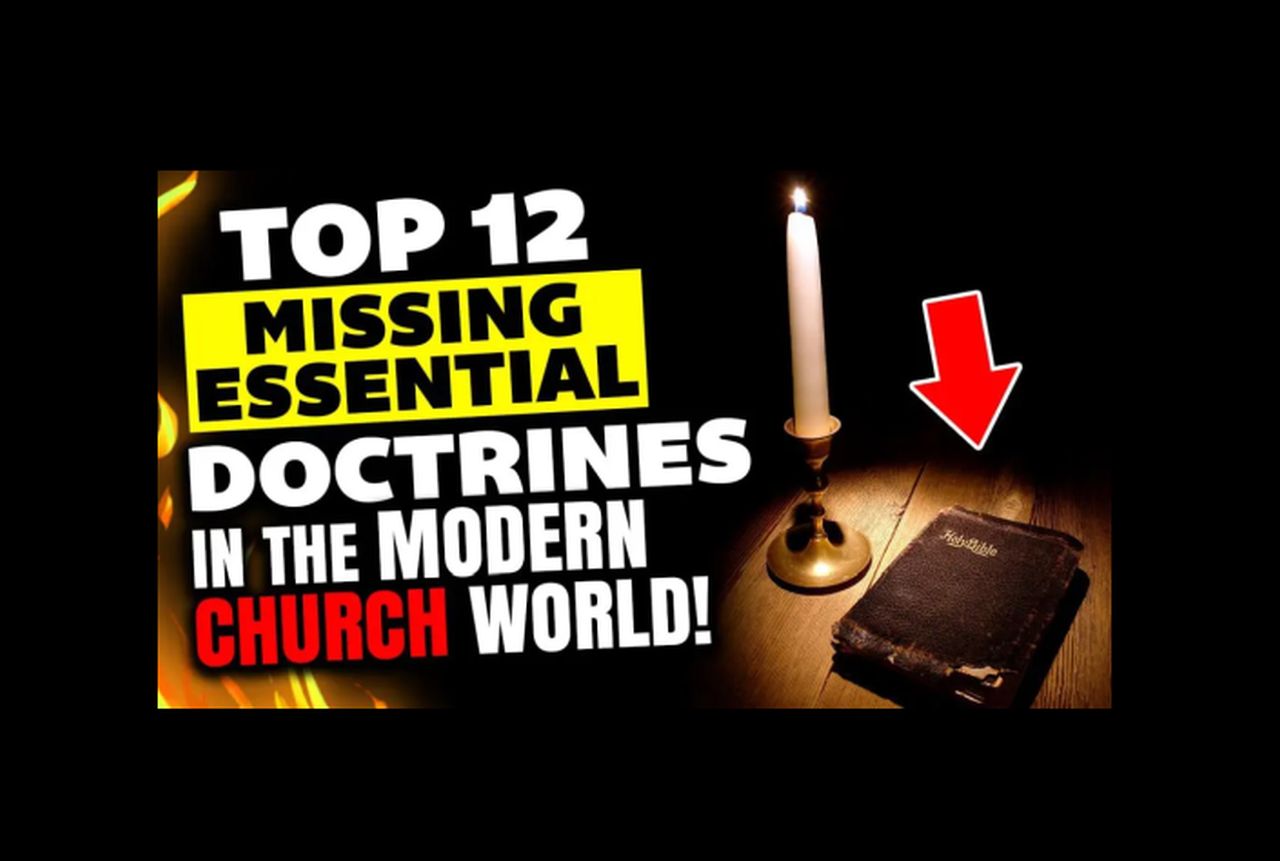
DOES THIS SOUND LIKE YOUR “CHURCH” OR FAVORITE PREACHER? It’s real simple… if they are not preaching the cardinal doctrines of the original Gospel given to us in the New Testament, they are preaching “another gospel” and are “accursed.” (Galatians 1:6-9).
 “For MANY DECEIVERS ARE ENTERED INTO THE WORLD, who confess not that Jesus Christ is come in the flesh. This is a deceiver and an antichrist. 8 Look to yourselves, that we lose not those things which we have wrought, but that we receive a full reward. 9 Whosoever transgresseth, and abideth not in the doctrine of Christ, hath not God. He that abideth in the doctrine of Christ, he hath both the Father and the Son. 10 If there come any unto you, and bring not this doctrine, receive him not into your house, neither bid him God speed: 11 For he that biddeth him God speed is partaker of his evil deeds.” 2 John 1:7-11
Modern church wolves refuse to preach the original Gospel of Jesus Christ from the pages of Holy Scripture and in the power of the Holy Ghost. No, instead they preach sermonettes that cater to the self-worshiping idolaters they entertain and collect money from (2 Timothy 3:1-7). They don’t even use the King James Bible but rather some cheap counterfeit. Their ear-tickling topics range from healing damaged emotions, 5 love languages, best life now, recovery, learning to love yourSELF, coping platitudes, loneliness, psychobabble band aids, law of attraction, being a successful single, purpose driven delusionment, etc.
LOTS of lying going on when we have counterfeits peddling affirmation without salvation, the “promise” of things “getting better” when their prey are heading straight to hell. Especially certain social media platforms are flooded with this false gospel coming out of “Christians.” There is no sin or repentance in their message which alone identifies it as a false gospel. You see, the things that are happening to the sinners around us are allowed by God in order to lead them to repentance and yet, the counterfeits among us are assuring those sinners it’s all going to get better and never giving them the 10 Commandments to show them they are sinners (Galatians 3:24) and then, leading them to Jesus (Romans 10:9-10, 13, etc.). 10 Commandments Evangelism
In the modern church world, there is …..
No cross. No Jesus. No blood. No judgment. No sin. No repentance. No hell. No readiness for the soon return of Jesus. No Heaven. No equipping preparation for ministry. No Scripture memory. No holiness. No Messianic prophecies and their fulfillment. No Christology. No fear of God. No repentance. etc., all of which are Bible doctrines essential to salvation and/or essential to sound foundation in Christ and are missing in the modern church world.
“Study to shew thyself approved unto God, a workman that needeth not to be ashamed, rightly dividing the word of truth.” 2 Timothy 2:15
THE TOP ESSENTIAL BIBLICAL DOCTRINES NEVER HEARD IN THE APOSTATE MODERN CHURCH WORLD!
- The divinity of Jesus Christ (John 1:1-4, 14; 1 Timothy 3:16). | Jesus Christ is God
- The virgin birth of the only begotten Son of God (Isaiah 7:14; Matthew 1:23). | The Virgin Birth of Jesus
- The essential precious blood of Jesus Christ (Matthew 26:28; Hebrews 9:22; 1 Peter 1:18-19). | The Blood
- The inherent fallen nature of mankind (Genesis 6:5, 12; Jeremiah 17:9; Romans 7:18). | Fallen, Sinful Man
- Worshipping God not idols (Exodus 20:3-5). | Idolatry
- The essential doctrine and necessity of repentance (Luke 13:3). | Repentance
- The Return of Christ and being ready for it (Luke 12:40; 21:34-36). | The Return
- Who Jesus is returning for and who will be shut out of His eternal kingdom (Matthew 25:1-13; Ephesians 5:25-27). | Ready for Christ’s Return
- The essential of enduring to the end to be with Christ eternally, initial and final salvation (Matthew 10:22; 24:13; Hebrews 3:6, 12-15; 10:26-30; Revelation 2:26). | Enduring to the End
- The essential daily cross, the crucified life, which Jesus required in following Him (Luke 9:23-24). | Living the Crucified Life
- Forgiving all others from the heart (Matthew 18:21-35). | Forgiveness
- Walking in God’s love (Ephesians 5:1). | The Love Walk
- Holiness – including the necessity of personal holiness (Hebrews 12:14; 1 Peter 1:15-16). | Holiness
- Judgment (Psalms 9:15-17). | Judgment
- Hell (Matthew 8:12; Mark 3:29; Luke 16:19-31). | Hell
- Fearing God (Psalms 2:11; Luke 12:4-5). | Fearing God
When’s the last time you heard verses like this in the modern church?
 “So likewise, whosoever he be of you that forsaketh not all that he hath, he cannot be my disciple.” Luke 14:33
“Whosoever shall seek to save his life shall lose it; and whosoever shall lose his life shall preserve it.” Luke 17:33
The modern church is going down in flames into the flames of hell. It cannot be reformed. Come out from it.
“And I heard another voice from heaven, saying, Come out of her, my people, that ye be not partakers of her sins, and that ye receive not of her plagues.” Revelation 18:4
In 2 Timothy 4:3 to “endure sound doctrine” means to hold oneself accountable to it. WHAT’s at the root of those who refuse to “endure sound doctrine”? – They simply do not love Jesus like He commanded them to (Matthew 22:37-39). They profess Christ as Savior and yet love self supremely and therefore serve the god of self. The Holy Ghost through Paul told us this of those who have a mere “form of godliness” in the last day resumé found in 2 Timothy 3:1-7.
Notice by divine design the very first thing he reveals is that “men shall be lovers of their own selves.” All the following evil comes out of self love, refusal to love God supremely and therefore repent, deny self, take up the cross and follow Jesus:
“This know also, that in the last days perilous times shall come. 2 For men shall be lovers of their own selves, covetous, boasters, proud, blasphemers, disobedient to parents, unthankful, unholy, 3 Without natural affection, trucebreakers, false accusers, incontinent, fierce, despisers of those that are good, 4 Traitors, heady, highminded, lovers of pleasures more than lovers of God; 5 Having a form of godliness, but denying the power thereof: from such turn away. 6 For of this sort are they which creep into houses, and lead captive silly women laden with sins, led away with divers lusts, 7 Ever learning, and never able to come to the knowledge of the truth.” 2 Timothy 3:1-7
God is toppling all the heart idols (Ezekiel 14:3)… because He’s Jealous and wants us looking to Him and not these mere men, these vile wolves, these celebrity sinners posing as His representatives (Exodus 34:14).
“For thou shalt worship no other god: for the LORD, whose name is Jealous, is a jealous God:” Exodus 34:14

Support | STORE | Podcasts | The Return of Christ | Stewardship | Apostate Modern Church Exposed | Beware of the BUZZ WORD Bandits [podcast] | Preach the Word | Wolves Exposed

Abiding
Swept Away in the “Strong Delusion” [podcast]

Recorded at a fellowship in Houston, Texas
God Himself personally sends a “strong delusion” to all who do not love His truth so that they WILL believe lies. He greases their pole to hell. That’s how personally He takes it when people call Him a liar by not believing His Word.
“Even him, whose coming is after the working of Satan with all power and signs and lying wonders, 10 and with all deceivableness of unrighteousness in them that perish; because they received not the love of the truth, that they might be saved. 11 And for this cause God shall send them strong delusion, that they should believe a lie: 12 that they all might be damned who believed not the truth, but had pleasure in unrighteousness.” 2 Thessalonians 2:9-12
“Beware lest any man spoil you through philosophy and vain deceit, after the tradition of men, after the rudiments of the world, and not after Christ.” Colossians 2:8
Notice “of God” and “NOT of God”
“He that is OF GOD heareth God’s words: ye therefore hear them not, because ye are NOT OF GOD.” John 8:47
Support | STORE | Podcasts | Because You Care Page | The Greatest of these is Charity | Be Ready in the Morning [podcast] | The Sure Mercies of David [podcast] | That Repentance and Remission of Sins should be Preached [podcast] | At His Feet | Prepared to be Used of God | Grace and Truth Bible School [modules] | 7 Study Guides to a Greater Foundation in Christ


Abiding
Nourished Up and Enduring to the End [podcast]
Recently a dear brother in Christ related this testimony to me of our LORD’s work in his life:
“I had a ‘back to Jesus’ moment after the election. As I was horribly disappointed in our country and the dividing of even my own friends, I was praying: ‘I’ve lost faith in my country, I’ve lost faith in my friends…’ then it hit me… I had put my faith in the wrong things. It’s so easy to depend on others. But now I am trusting only in my Lord and Savior.”
“For he looked for a city which hath foundations, whose builder and maker is God.” Hebrews 11:10
“For here have we no continuing city, but we seek one to come.” Hebrews 13:14
Satan seeks to seduce God’s people with counterfeit causes – causes outside of that which is clearly defined by Holy Scripture as Christ’s Gospel cause! A moral cause is not necessarily the work of the Messiah. Loving the LORD with all of our being and doing His work, the work of the Gospel is His will as we are “new creature(s)” in Christ and His “ambassadors,” sent forth by Him to teach His Word (Matthew 28:18-20; 2 Corinthians 5:20).
HAVE WE EXALTED FREEDOM ABOVE CHRIST – THE ONLY ONE WHO CAN GIVE IT? “Thou shalt have no other gods before me” (Exodus 20:3-5) and “No man can serve two masters” right? (Matthew 6:24)
Do we love Jesus more than freedom? Do we love His Great Commission more than the cause of getting our country back?
In fact we have no freedom if we are not born again and presently walking with and abiding in Jesus on HIS stated terms (John 8:31-32; 15:1-16). Jesus came to save, heal, and grant freedom in the Spirit, from Satan, and freedom from sin to those who are His (Matthew 1:21; Luke 4:18; John 1:29; Acts 26:18; Titus 2:11-14; 1 John 3:1-10, etc.). Here, listen to the Son of God ….
“As he spake these words, many believed on him. 31 Then said Jesus to those Jews which believed on him, IF ye continue in my word, then are ye my disciples indeed; 32 And ye shall know the truth, and the truth shall make you free.” John 8:30-32
The LORD makes free those whom He saves, those who continue in an abiding relationship with Him (John 15).
You must “desire the sincere milk of the word” and feed your spirit the Word of God daily or you will grow weak very quickly and fall away (1 Peter 2:2). Jesus calls us to be “Nourished up in the words of faith and of good doctrine” (1 Timothy 4:6).
A Good Servant of Christ Jesus
Jesus is KING and kingdom living is all about exalting KING Jesus – not mere men or organizations or ministries! It’s only then that His divine “nourishment” is going to flow down into His beloved body!
“Let no man beguile you of your reward in a voluntary humility and worshipping of angels, intruding into those things which he hath not seen, vainly puffed up by his fleshly mind, 19 And not holding the Head, from which all the body by joints and bands having nourishment ministered, and knit together, increaseth with the increase of God.” Colossians 2:18-19
Heaven’s “nourishment” only transpires when KING Jesus is truly exalted.
“I am the LORD: that is my name: and my glory will I not give to another, neither my praise to graven images.” Isaiah 42:8
Modern church pawns want you to become enamored with THEM, not CHRIST. It’s a sales job! Beware. Read Colossians 2:18-19 closely.
“If thou put the brethren in remembrance of these things, thou shalt be a good minister of Jesus Christ, nourished up in the words of faith and of good doctrine, whereunto thou hast attained.” 1 Timothy 4:6
Feed. Feast. Fuel. Those who choose not to feast upon and fuel their hearts and minds with God’s Word daily, are not going to make it. They will walk weak, empty, and malnourished, just as the 5 foolish virgins did and were shut out of the kingdom (Matthew 25:1-13). They have freely chosen not to be “nourished up in the words of faith and of good doctrine” (1 Timothy 4:6).
“As newborn babes, desire the sincere milk of the word, that ye may grow thereby:” 1 Peter 2:2
Daily drinking the healing oil of God’s Word assures divine nourishment and wholeness in your spirit. God’s Word gets in us only when we get into it – and seek Him in it daily. Memorize Jeremiah 15:16 now.
“Thy words were found, and I did eat them; and thy word was unto me the joy and rejoicing of mine heart: for I am called by thy name, O LORD God of hosts.” Jeremiah 15:16
JUST as none of us understand but know the blessing of food nourishing our physical bodies, so the Word of God nourishes our spirit man, our hearts. It’s a daily must. Feeding and being nourished by the words of God is an imperative (Job 12:23; Jeremiah 15:16; Hebrews 5:11-14; 1 Peter 2:2, etc.). His Word cannot get into us and nourish us until we get into it! Let the nourishment begin!
“Let the word of Christ dwell in you richly (abundantly)…” Colossians 3:16
Note here in the above passage, we see Christ instructing those who believed upon Him to “continue in my word.” This was Jesus’ perfect opportunity to tell these new believers that they were “eternally secure” but He didn’t because He’s the Son of God and not a false prophet!
Jesus says that it’s only “IF ye continue in my word” that you will know the truth, be made free and walk in the liberty, the freedom He alone can grant from sin! See John 8:31-32, 36. YOU GOT SAVED? GOOD – NOW STAY SAVED!
“Sow to yourselves in righteousness, reap in mercy; break up your fallow ground: for it is time to seek the LORD, till he come and rain righteousness upon you.” Hosea 10:12
You must turn your heart to the LORD – in true worship – in order to walk in the liberty that He alone can give!
“Nevertheless when it (your heart) shall turn to the Lord, the vail (that blinds) shall be taken away. 17 Now the Lord is that Spirit: and where the Spirit of the Lord is, there is liberty.” 2 Corinthians 3:16-17
Fake “bibles” such as the NIV teach that “It is for freedom that Christ has set us free” (Galatians 5:1). Read that again. In the context of the whole of Scripture, we must ask: Did Jesus come to set us free for freedom’s sake or to be set free from sin in order to serve Him as new creatures? (2 Corinthians 5:17-18). Any student of God’s Word knows that this NIV rendering of Galatians 5:1 is a contradiction, a lie. | Fake “bibles” Exposed!
“For, brethren, ye have been called unto liberty; only use not liberty for an occasion to the flesh, but by love serve one another.” Galatians 5:13
“As free, and not using your liberty for a cloke of maliciousness, but as the servants of God.” 1 Peter 2:16
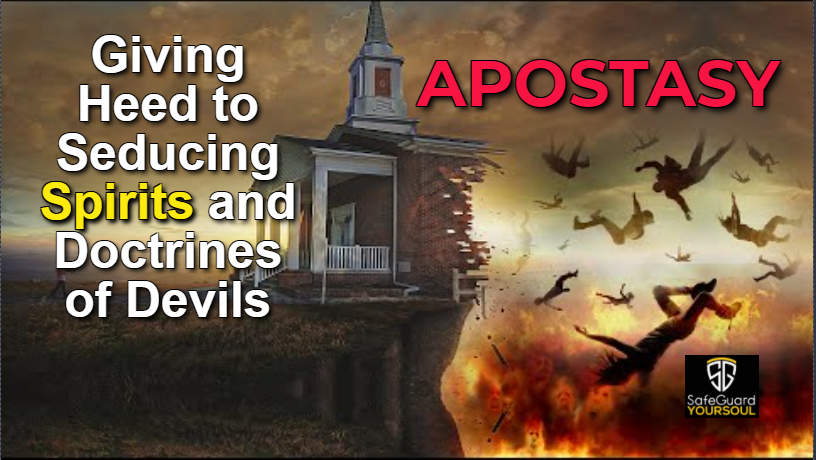
As was foretold, we are seeing that some are departing from the faith, listening to devils and their doctrines from the fake “bibles” and false prophets of today, instead of being daily nourished up in the pure words of God and helping feed Christ’s flock. Get a King James Bible.
“Now the Spirit speaketh expressly, that in the latter times some shall depart from the faith, giving heed to seducing spirits, and doctrines of devils; 2 Speaking lies in hypocrisy; having their conscience seared with a hot iron; … 6 If thou put the brethren in remembrance of these things, thou shalt be a good minister of Jesus Christ, nourished up in the words of faith and of good doctrine, whereunto thou hast attained. … 16 Take heed unto thyself, and unto the doctrine; continue in them: for in doing this thou shalt both save thyself, and them that hear thee.” 1 Timothy 4:1-2, 6, 16
Any person who is teaching that it’s impossible to “depart from the faith” (to leave Christ) after being saved, is a false teacher (Luke 8:13).
“Take heed, brethren, lest there be in any of you an evil heart of unbelief, in departing from the living God. 13 But exhort one another daily, while it is called To day; lest any of you be hardened through the deceitfulness of sin. 14 For we are made partakers of Christ, if we hold the beginning of our confidence stedfast unto the end; 15 While it is said, To day if ye will hear his voice, harden not your hearts, as in the provocation.” Hebrews 3:12-15
“For ye had compassion of me in my bonds, and took joyfully the spoiling of your goods, knowing in yourselves that ye have in heaven a better and an enduring substance. 35 Cast not away therefore your confidence, which hath great recompence of reward. 36 For ye have need of patience, that, after ye have done the will of God, ye might receive the promise. 37 For yet a little while, and he that shall come will come, and will not tarry. 38 Now the just shall live by faith: but if any man draw back, my soul shall have no pleasure in him. 39 But we are not of them who draw back unto perdition; but of them that believe to the saving of the soul.” Hebrews 10:34-39
“And let us not be weary in well doing: for in due season we shall reap, if we faint not.” Galatians 6:9
Be not deceived: You cannot sustain a life with Christ without daily fellowship with Him!
“In your patience possess ye your souls.” Luke 21:19
“And ye shall be hated of all men for my name’s sake: but he that endureth to the end shall be saved.” Matthew 10:22
So many today who claim Christ view salvation as something they did in the past and not a present relationship with Christ on His stated terms (John 15; Titus 1:16).
Okay so think about the last time you heard this passage read in a “church” gathering. Well, have you ever heard it read? These are the warning words of the very and soon coming LORD and Savior.
“All these are the beginning of sorrows. 9 Then shall they deliver you up to be afflicted, and shall kill you: and ye shall be hated of all nations for my name’s sake. 10 And then shall many be offended, and shall betray one another, and shall hate one another. 11 And many false prophets shall rise, and shall deceive many. 12 And because iniquity shall abound, the love of many shall wax cold. 13 But he that shall endure unto the end, the same shall be saved.” Matthew 24:10-13
“And these are they by the way side, where the word is sown; but when they have heard, Satan cometh immediately, and taketh away the word that was sown in their hearts. 16 And these are they likewise which are sown on stony ground; who, when they have heard the word, immediately receive it with gladness; 17 And have no root in themselves, and so endure but for a time: afterward, when affliction or persecution ariseth for the word’s sake, immediately they are offended. 18 And these are they which are sown among thorns; such as hear the word, 19 And the cares of this world, and the deceitfulness of riches, and the lusts of other things entering in, choke the word, and it becometh unfruitful. 20 And these are they which are sown on good ground; such as hear the word, and receive it, and bring forth fruit, some thirtyfold, some sixty, and some an hundred.” Mark 4:15-19
Support | STORE | Podcasts | Because You Care Page | The Greatest of these is Charity | Be Ready in the Morning [podcast] | The Sure Mercies of David [podcast] | That Repentance and Remission of Sins should be Preached [podcast] | At His Feet | Prepared to be Used of God | Word of Faith Wolves and Delusion Exposed | Confess This | Personal Testimony of Todd Tomasella | Beware of False Promises and Half Truths | Exposing the False Prophetic Movement [podcast]










The Sheep vs the Goats as Defined in Scripture [podcast]

Dirty Ox Stalls bring Dividends [podcast]

Top 12 Missing Essential Doctrines in the Modern Church World! [podcast]

Fulfilling Your Calling [podcast]

Swept Away in the “Strong Delusion” [podcast]

Jesus Saved Jose! Mission Mexico Part 51

Dead, Buried, and Raised Up Daily [podcast]

Nourished Up and Enduring to the End [podcast]

Naming Names: Is It Biblical? [podcast]

Paul’s Prophetic Vision of Heretical Wolves Flooding the Church World During the Whole New Testament Era [podcast]

The Surrender of the Cross [podcast]

Sola Scriptura vs the Catholic Church and its Traditions [podcast]

“Pastors According to Mine Heart” [podcast]

Ridiculous King James Bible Corrections

Darwin’s Demise: What they don’t want You to know about Charles Darwin! [podcast]

John Wesley on Calvinism, Once Saved Always Saved, and Conditional Security
Paul’s Prophetic Vision of Heretical Wolves Flooding the Church World During the Whole New Testament Era [podcast]

Beware of “Private Interpretation” [podcast]
Naming Names: Is It Biblical? [podcast]
Top 12 Missing Essential Doctrines in the Modern Church World! [podcast]

The Flesh will Never be Reformed it Must be Crucified [podcast]

The High Treason of False Leaders [podcast]
Nourished Up and Enduring to the End [podcast]

A PLACE CALLED HELL [podcast]
“Pastors According to Mine Heart” [podcast]

Arrogant Bible Correctors Rebuked

Nicolaitan Nightmare [podcast]
Sola Scriptura vs the Catholic Church and its Traditions [podcast]

Doubt Casting Wolves Exposed
Ridiculous King James Bible Corrections
The Sheep vs the Goats as Defined in Scripture [podcast]
Dirty Ox Stalls bring Dividends [podcast]
Top 12 Missing Essential Doctrines in the Modern Church World! [podcast]


 America2 years ago
The Drugging of America: The Pharmakeia Sorcery Deception [podcast]
- Articles3 years ago
Children being Rescued in Tunnels: Happening Now – UPDATE!
- Articles9 years ago
Self-Examination in Preparation for the Lord’s Return
- Apostasy3 years ago
SHOCKING List of False Prophets Most Believe are True