The Dangers of Spiritual Formation and Spiritual Disciplines






The Dangers of Spiritual Formation and Spiritual Disciplines
A Critique of Dallas Willard and The Spirit of the Disciplines
I recently took a seminary course on the book of Luke. It was a summer intensive and was one of only two classes being offered at the time. About midway through the week, while the class was steeped in trying to discern the intent and significance of the book of Luke, we began to hear the echoes of mystic chanting coming through the walls. As it turned out, the other class being offered was parked right next to ours. The paper thin walls were carrying the choruses of a class exploring the life and teachings of Catholic mystic Henry Nouwen. We proceeded, trying to concentrate on studying the Scriptures while tuning out the chants that were carrying on next door. Perhaps what was more unsettling though is the class studying Nouwen was chock full, while there were plenty of empty seats next door for anyone wanting to learn about the inspired book of Luke.1
How can this be? A Baptist seminary was favorably studying the teachings of this Catholic mystic whose own biographers describe as having had emotional problems and homosexual inclinations.2 Soon after talking to Ryan, I met a lady who attends a Christian college. As part of her study program she was required to take a course on spiritual formation at her college. Spiritual formation in her class also concerned the study of Roman Catholic mystics and the search for techniques to help those who implement them feel closer to God. This study also explored “spiritual disciplines” which promised to make those who practiced them more Christ-like. After she finished the class she shared her textbooks with me. This article will focus on the claims of one of these text books, The Spirit of the Disciplines, by Dallas Willard.3 In our study we shall see that those promoting spiritual disciplines in courses of study called “spiritual formation” make claims that are unbiblical and dangerous.
Jesus’ “Yoke” as “Spiritual Disciplines”
Dallas Willard bases his entire spiritual disciplines book on his understanding of Matthew 11:29, 30, which says, “Take my yoke upon you, and learn of me; for I am meek and lowly in heart: and ye shall find rest unto your souls. 30 For my yoke is easy, and my burden is light.
Willard cites this passage at the beginning of a chapter entitled “The Secret of the Easy Yoke,”4 Willard says, “And in this truth lies the secret of the easy yoke: the secret involves living as he lived in the entirety of his life—adopting his overall life-style.”5 He also says, “We have to discover how to enter into his disciplines from where we stand today—and no doubt, how to extend and amplify them to suit our needy cases.”6 He claims that the “yoke” is to try to emulate Jesus’ lifestyle in every possible way.7 Willard interprets Jesus’ “yoke” as the practice of spiritual disciplines like solitude, silence, and simple living. He later adds voluntary banishment and others that we will discuss later.
Willard is very critical of traditional Protestant doctrine and practice, declaring it a massive failure.8 His remedy for this failure is to see the body and certain ascetic practices using the body as the means of change: “Looking back over our discussion to this point, we have connected the reality of the easy yoke with the practice of the spiritual disciplines. These in turn have led us to the body’s role in redemption.”9 He claims that we have been misguided by being concerned with the forgiveness of sins and “theories of the atonement.” He says, “Salvation as conceived today is far removed from what it was in the beginnings of Christianity and only by correcting it can God’s grace in salvation be returned to the concrete, embodied existence of our human personalities walking with Jesus in his easy yoke.”10 According to this thinking, the yoke of Jesus involves using the body in certain ways to accomplish changed lives:
Although we call the disciplines “spiritual”—and although they must never be undertaken apart from a constant, inward interaction with God and his gracious Kingdom—they never fail to require specific acts and dispositions of our body as we engage in them. We are finite and limited to our bodies. So the disciplines cannot be carried out except as our body and its parts are surrendered in precise ways and definite actions to God.11
So evidently, rather than concerning ourselves with the blood atonement, averting God’s wrath against sin, salvation by faith through grace, we should be practicing spiritual disciplines with our bodies so that we could then be more like Jesus.
The concept of Jesus’ “yoke” being interpreted as an invitation to practice His life-style is reiterated throughout Willard’s book; see pages 91, 121, and 235. This idea is the framework and logical foundation of Willard’s entire thesis. But the question is, “Is this what Jesus meant in Matthew 11:29, 30?” Let us examine the passage in context to see if teaches the spiritual disciplines.
The True Meaning of Jesus’ “Yoke”
If we want to understand Matthew 11:29, 30 it is essential that we understand the context, particularly the meaning of verse 28. Jesus said, “ Come unto me, all ye that labour and are heavy laden, and I will give you rest” (Matthew 11:28). We must understand Jesus’ offer of rest in the context of His debates with the religious leaders. Their “yoke” demanded the strict observance of Sabbath rules and their oral tradition. Immediately after Jesus’ offer of “rest” in Him, there ensued a Sabbath debate with the religious leaders accusing Jesus and His disciples of being Sabbath breakers (see Matthew 12). They plucked grain on the Sabbath and Jesus healed on the Sabbath. Jesus was offering true Sabbath rest and the Jewish leaders were offering the yoke of the Law. Jesus’ yoke was different. Jesus perfectly kept the law so that all who would come to him would enter into the true Sabbath rest that could never be achieved by keeping the rules laid down by the religious leaders.
Taking this understanding of the term “yoke” we can see what Jesus meant in Matthew 11. His words came in the middle of a dispute with Jewish leadership. He had pronounced woe upon cities that did not repent (Matthew 11:20-24). He uttered this prayer:
At that time Jesus answered and said, I thank thee, O Father, Lord of heaven and earth, because thou hast hid these things from the wise and prudent, and hast revealed them unto babes. 26 Even so, Father: for so it seemed good in thy sight. 27 All things are delivered unto me of my Father: and no man knoweth the Son, but the Father; neither knoweth any man the Father, save the Son, and he to whomsoever the Son will reveal him.” (Matthew 11:25-27)
The wise and intelligent were the Jewish Scribes and Pharisees who accused Jesus of being a Sabbath breaker and who refused to repent when they witnessed His miracles. They rejected both Jesus and John the Baptist in a most fickle manner (Matthew 11:16-19). They refused to come to God on His terms, but demanded that God the Son obey them on their terms! So Jesus pronounced the judgment of hardening on them and chose instead to reveal Himself to babes.
When Jesus said, “Come unto me, all ye that labour and are heavy laden, and I will give you rest” (Matthew 11:28), He was offering them what the Jewish leadership rejected—Messianic salvation. True Sabbath rest is only found in Christ (see Hebrews 4:1-9). Ironically, the people who accused Jesus of being a Sabbath breaker were the ultimate Sabbath breakers because they rejected the only one who could give true rest. They put the yoke of law keeping on the people but kept them from the one true Law keeper, Christ who died for their sins. Therefore, no matter how scrupulous and religious a person is, if he or she does not come to Christ by faith, that person is under the yoke of bondage rather than the Sabbath rest for the people of God.
There are other places in the New Testament where the term “yoke” is used in the sense of the requirement of law keeping. Two of them are very pertinent to interpreting Matthew 11:28-30. In Acts 15 the apostles gathered in Jerusalem to determine whether the new Gentile converts would be required to keep the Law. The three most prominent laws that marked off the Jews as unique were the food laws, Sabbath, and circumcision. Peter’s speech convinced the apostles that the Gentiles were not obliged to follow such Jewish laws:
“And when there had been much disputing, Peter rose up, and said unto them, Men and brethren, ye know how that a good while ago God made choice among us, that the Gentiles by my mouth should hear the word of the gospel, and believe. 8 And God, which knoweth the hearts, bare them witness, giving them the Holy Ghost, even as he did unto us; 9 and put no difference between us and them, purifying their hearts by faith. 10 Now therefore why tempt ye God, to put a yoke upon the neck of the disciples, which neither our fathers nor we were able to bear? 11 But we believe that through the grace of the Lord Jesus Christ we shall be saved, even as they.” (Acts 15:7-11)
The “yoke” was being under the Law.
Now consider how Paul used the same term: “Stand fast therefore in the liberty wherewith Christ hath made us free, and be not entangled again with the yoke of bondage” (Galatians 5:1). The Judaizers wanted to put Christians under obligation to be circumcised and Paul called this “a yoke of slavery.”
So Jesus’ yoke is in stark contrast to the “yoke” that the religious leaders put on the people. He is offering salvation to all who come to Him by faith. Craig Blomberg summarizes this section in Matthew 11:
The sequence of thought of vv. 25-30 thus progresses as follows. The increasing polarization of response to Jesus in fact reflects God’s sovereign choices (vv. 25-26). Jesus is God’s unique agent in the outworking of those choices (v. 27). This gives him God’s authority to call people to himself (vv. 28-30). The invitation to come to Christ remains for all today, but now as then it requires the recognition that persons cannot come by exalting themselves (recall v. 23) but only by completely depending on and trusting Christ.12
Jesus’ Yoke is to Practice Spiritual Disciplines?
Therefore our conclusion is that in Matthew 11 Jesus was offering salvation to all who come to Him. Now let us examine Willard’s claim that Jesus was telling people to try to emulate His life-style. Willard claims that we are failing to practice the disciplines that would make us able to live better lives and that most Christians are failing to live lives pleasing to God. He further states that the solution is that we practice spiritual disciplines that are based on Jesus’ lifestyle and supplemented by practices of the Medieval Catholic Church. So he sees Jesus’ “yoke” as an offer to take up a life-style that will make us better people, rather than an offer of true Sabbath rest through Christ’s finished work on the cross. This is tantamount to substituting works for grace, and making Jesus an ethical teacher whose example can be followed rather than the unique Son of God who alone always does the things that please the Father. Willard offers no exegetical analysis of the passage in Matthew to defend his interpretation. In my opinion, his position is not defensible.
Does the Bible Prescribe the Spiritual Disciplines?
The spiritual disciplines are not taught in Matthew 11:29, 30 (Willard’s primary proof test), and even Willard admits they cannot be found elsewhere in scripture (we shall show this momentarily). But he is nevertheless enthusiastic about the recent rediscovery of the disciplines.
Dallas Willard is excited to tell us that finally, through the lead of people like Richard Foster, we are having a revival of the use of spiritual disciplines. Writes Willard: “Today, for the first time in our history as a nation, we are being presented with a characteristic range of human behaviors such as fasting, meditation, simple living, and submission to a spiritual overseer, in an attractive light.”13 He claims that ordinary means such as Bible study, prayer, fellowship, and evangelism are inadequate and having failed, have left most Christians as failures. He writes, “All pleasing and doctrinally sound schemes of Christian education, church growth, and spiritual renewal came around at last to this disappointing result. But whose fault was this failure?”14 The “failure,” according to Willard is that, “. . . the gospel preached and the instruction and example given these faithful ones simply do not do justice to the nature of human personality, as embodied, incarnate.”15 So what does this mean? It means that we have failed because our gospel had too little to do with our bodies.
The spiritual disciplines are supposed to remedy this deficiency. Willard says, “By contrast, the secret of the standard, historically proven spiritual disciplines is precisely that they do respect and count on the bodily nature of human personality.”16 Willard claims that Paul understood the need for such practices but that they were lost: “Paul’s teaching, especially when added to his practices, strongly suggest that he understood and practiced something vital about the Christian life that we have lost—and that we must do our best to recover.”17 Of course, had Paul bothered to write about these “lost” disciplines in his epistles, they would not have been lost.
So why did Paul fail to write about these secret, lost disciplines? Willard’s answer is that Paul had in mind, “. . . a precise course of action he understood in definite terms, carefully followed himself, and called others to share . . . So obviously so, for him and the readers of his own day, that he would feel no need to write a book on the disciplines for the spiritual life that explained systematically what he had in mind.”18 Translated that means that Paul did not write about the spiritual disciplines because everyone was practicing them. Willard goes on to say, “It is almost impossible in the thought climate of today’s Western world to appreciate just how utterly unnecessary it was for Paul to say explicitly, in the world in which he lived, that Christians should fast, be alone, study, give, and so forth as regular disciplines for the spiritual life.”19 There is a serious problem here that Willard overlooks: Paul did write about approaches like these—he wrote against them!
Wherefore if ye be dead with Christ from the rudiments of the world, why, as though living in the world, are ye subject to ordinances, 21 (touch not; taste not; handle not; 22 which all are to perish with the using;) after the commandments and doctrines of men? 23 which things have indeed a shew of wisdom in will worship, and humility, and neglecting of the body; not in any honour to the satisfying of the flesh. (Colossians 2:20-23)
They had ascetics in Paul’s day and he rebuked them. Willard never discusses this passage which teaches explicitly that “severe treatment of the body” cannot help us find freedom from sinfulness.
Where do we find this “wisdom” that Paul failed to write about? Says Willard, “This is not something St. Paul had to prove or even explicitly state to his readers—but it also was not something he overlooked, leaving it to be thought up by crazed monks in the Dark Ages. It is, rather, a wisdom gleaned from millennia of collective human experience.”20 So the disciplines we need to be more like Christ cannot be found in the Bible, but they can be gleaned from religious history. Willard tells us, “But thoughtful and religiously devout people of the classical and Hellenistic world, from the Ganges to the Tiber, knew that the mind and body of the human being had to be rigorously disciplined to achieve a decent individual and social existence.”21
The obvious problem with this is that if this type of logic is valid, we could claim that we need Ouija Boards as part of our spiritual practice and that Paul and other early Christians must have been using them so regularly there was no need to write about them. Ironically, Willard admits that the Bible does not command us to practice the spiritual disciplines he prescribes.
To hear evangelicals like Dallas Willard and Richard Foster tell us that we need practices that were never spelled out in the Bible to become more like Christ or to get closer to God is astonishing. What is more astonishing is that evangelical colleges and seminaries are requiring their students to study practices that are relics of Medieval Rome, not found in the Bible, and closely akin to the practices of many pagan societies.
The False Gospel of Human Ability
As with most unbiblical approaches, the spiritual disciplines are based on the idea of innate human powers that can be harnessed for good. Holding a false concept of sin as a “disruption of that higher [spiritual] life,”22 Willard looks for a solution through finding our true potential, individually and corporately, through spiritual disciplines that will enable us to reconstruct the rule of God now. Willard says, “The evil that we do in our present condition is a reflection of a weakness caused by spiritual starvation.”23 Rather than wicked rebels abiding under God’s wrath, humans are bundles of huge potential who have lost their way through “disruption of the higher powers.” We supposedly have great potential: “It is the amazing extent of our ability to utilize power outside ourselves that we must consider when we ask what the human being is. The limits of our power to transcend ourselves utilizing powers not located in us—including of course, the spiritual—are yet to be fully known.”24 Willard gives this interpretation of 1John 3:2: “Because of his personal experience with spiritual powers brought to him in Christ, John sensed unimaginable greatness in our destiny.”25
So how do we tap into this great human potential? He says we must tap into the spiritual dimension using spiritual disciplines. Willard shares his definition of “spirit”: “If the missing element in the present human order is that of the spirit, what then is spirit? Very simply, spirit is unembodied personal power.”26 His idea is that “spirit” is the missing nutrient that we need to realize our full potential. The ideas of total depravity, the wrath of God against sin, the blood atonement, and the cross are either absent or distorted in Willard’s theology. What replaces these truths is the hope that we will realize our potential through tapping into the spiritual kingdom of God. This is to be done by the use of spiritual disciplines to obtain the necessary power to transform the world. The terminology that Willard uses is strange and unbiblical. For example, he writes,
“When the human organism is brought into willing, personal relationship with the spiritual Kingdom of God, ‘sucking in orderliness’ from that particular part of the human environment, it becomes pervasively transformed, as a corn stalk in drought is transformed by the onset of drenching rain—the contact with the water transforms the plant inwardly and then extends it outwardly. In the same way, people are transformed by contact with God.”27
These ideas are more akin to Eastern Religion than Biblical Christianity. Our problem is not the need to suck in more “unembodied personal power” by techniques to contact God. We are dead sinners facing God’s wrath unless we repent and believe the gospel. Willard’s concepts are foreign to the Bible. He says, “A ‘spiritual life’ consists in that range of activities in which people cooperatively interact with God—and with the spiritual order deriving from God’s personality and action.”28 This means practicing asceticism through the spiritual disciplines. He says, “The disciplines are activities of the mind and body purposely undertaken, to bring our personality and total being into effective cooperation with the divine order.”29 This depends on us: “Yet even as we reach for more grace to this end, we also learn by experience that the harmonization of our total self with God will not be done for us. We must act.”30
What results are in store for the church when we take action to tap into this spiritual dimension to realize our full potential? The church will be the incarnation of Christ and the kingdom of God will come through us, now, before Christ’s bodily return. Rejecting the pre-millennial doctrine, Willard says, “Often, we are told that the rule of God upon the earth will be fulfilled in a great act of violence, in which multitudes of people are slain by God, followed by a totalitarian government of literally infinite proportions, headquartered in Jerusalem.”31 He fails to mention that this “totalitarian” rule is the rule of Christ Himself as promised in the Bible. What is Willard’s alternative? – “I believe, to the contrary, that the coming rule of God is to be a government by grace and truth mediated through personalities mature in Christ.”32 It is amazing that he would consider Christ Himself reigning as “totalitarian” and us reigning as “grace and truth.”
For Willard, Christ is not coming for the church but in the church: “The real presence of Christ as a world-governing force will come solely as his called out people occupy their stations in the holiness and power characteristic of him, as they demonstrate to the world the way to live that is best in every respect.”33 We gain the ability to reign over the world for Christ through spiritual disciplines.
Since these disciplines were the order of the day for Rome at a period where her goal was to rule over the world, I wonder why the result was the Dark Ages? What kind of glib optimism would make us think that if we try them again, this time we will have a better outcome? Whenever theology turns to human potential and human ability aided by some type of spiritual infusion, the result is utopian dreaming. Supposedly we do not need to have Christ return in judgment and set up His Kingdom; we just need to tap into great human potential that has never been fully implemented. Willard says that Christ’s way has not yet been tried.34
According to Willard’s theology, just like Christ coming at the fullness of time during the first advent, the church will be the answer (not Christ’s bodily return) for the coming kingdom. We, not Jesus, will be the new incarnation: “[T]here is likewise a fullness of time for his people to stand forth with the concrete style of existence for which the world has hungered in its thoughtful moments and praised through its poets and prophets. As a response to this world’s problems, the gospel of the Kingdom will never make sense except as it is incarnated—we say ‘fleshed out’—in ordinary human beings in all ordinary conditions of human life.”35
By downplaying the doctrine of total depravity and the sin nature, Willard makes it seem plausible that we can be infused by divine power and establish the kingdom now. The Bible, however, predicts apostasy and the revealing of the man of lawlessness just before Christ returns in judgment (2 Thessalonians 2:3-8). Willard’s assertions lack sound exegetical work from the scriptures for their support. He needs to offer a clearer definition of the kingdom of God and provide Biblical support for the idea that we can establish it before Christ returns. Lacking Biblical support, his arguments are unconvincing.
Which Spiritual Disciplines?
The spiritual disciplines that are supposedly necessary for spiritual formation are not defined in the Bible. If they were, there would be a clear description of them and concrete list. But since spiritual disciplines vary, and have been invented by spiritual pioneers in church history, no one can be sure which ones are valid. Willard says, [W]e need not try to come up with a complete list of disciplines. Nor should we assume that our particular list will be right for others.”36 The practices are gleaned from various sources and the individual has to decide which ones work the best. Willard lists the following: voluntary exile, night vigil of rejecting sleep, journaling, OT Sabbath keeping, physical labor, solitude, fasting, study, and prayer.37 Willard then lists “disciplines of abstinence” (solitude, silence, fasting, frugality, chastity, secrecy, sacrifice) and “disciplines of engagement” (study, worship, celebration, service, prayer, fellowship, confession, submission).38
Willard offers a discussion of each of these, citing people like Thomas Merton, Thomas a Kempis, Henri Nouwen, and other mystics. We are told that practices like solitude and silence are going to change us, even though the Bible does not prescribe them. Willard writes, “This factual priority of solitude is, I believe, a sound element in monastic asceticism. Locked into interaction with the human beings that make up our fallen world, it is all but impossible to grow in grace as one should.”39 So if we cannot grow in grace without solitude, how come the Bible never commands us to practice solitude? The same goes for many other items on Willard’s list.
Willard tells us that the list of disciplines he provides is not exhaustive. Others can be pragmatically determined. He says, “As we have indicated, there are many other activities that could, for the right person and upon the right occasion, be counted as spiritual disciplines in the strict sense stated of our previous chapter. The walk with Christ certainly is one that leaves room for and even calls for individual creativity and an experimental attitude in such matters.”40 However, there is a serious problem with Willard’s logic here. Earlier he rejected such practices as self-flagellation, exposing the body to severities including being eaten by beetles, being suspended by iron shackles, and other means of severely treating the body in order to become more holy.41 Willard rejects these on the following grounds: “Here it is matter of taking pains about taking pains. It is in fact a variety of self-obsession—narcissism—a thing farthest removed from the worship and service of God.”42
Willard had admitted that there is no clear list of the disciplines and that each person might choose different practices through pragmatic means. This does not give sufficient ground for rejecting such practices as self-flagellation. So Willard resorts to arguing that those who do such things have bad motives. But he cannot really know their motives, perhaps they determined that these practices “worked” using the same means Willard offered. If pragmatic tests are the means of determining which practices are valid, and if these people feel closer to God and more like Christ through their practices, then Willard has no valid way of rejecting their practices. Having no valid argument, he resorts to an invalid ad hominem argument.
He cannot have it both ways. Either God’s Word determines both how we come to God and how we grow in grace, or humans determine these things by pragmatic means. Willard has chosen the latter. But then he steps in and tells us that some practices are wrong, even though they fit his own criteria for validity. If a person feels that sleeping in a tiny stone crevice with all the heat being sucked out of his body makes him more spiritually disciplined, then who is to say that is wrong? Had he been willing to submit to the authority of Scripture, Willard could have refuted these practices based on Colossians 2:21-23.
Even though decrying some of the excesses of monasticism, Willard is fond of the monastics and thinks that the Reformation left us with no practical means of spiritual growth. He says, “It [Protestantism] precluded ‘works’ and Catholicism’s ecclesiastical sacraments as essential for salvation, but it continued to lack any adequate account for what human beings do to become, by the grace of God, the kind of people Jesus obviously calls them to be.”43 This is simply false. Luther believed in means of grace that God has provided all true believers that they might grow in the grace and knowledge of the Lord.44 The difference is that means of grace are what God has provided for all Christians for all ages and they are determined by God, not man. These are revealed in the Bible. Spiritual disciplines are man-made, amorphous, and not revealed in the Bible; they assume that one is saved by grace and perfected by works.
Paul wrote, “Are ye so foolish? having begun in the Spirit, are ye now made perfect by the flesh? (Galatians 3:3). Paul rejected the idea that we are saved by grace and perfected by works. We are saved by grace and we grow by grace. Willard seems to miss this point. Here is how he views it: “The activities mentioned—when we engage in them conscientiously and creatively and adapt them to our individual needs, time and place—will be more than adequate to help us receive the full Christ-life and become the kind of person that should emerge in the following of him.”45 Elsewhere he suggests that growth comes through human will power: “The entire question of discipline, therefore, is how to apply acts of the will at our disposal in such a way that the proper course of action, which cannot always be realized by direct and untrained effort, will nevertheless be carried out when needed.”46 It is hard to see how this is anything other than [being] “made perfect by the flesh” which Paul said was impossible.
The Reformation understanding of means of grace was that they were God’s gracious means of working in a person of faith’s life. What ever is not of faith is sin. Even the Word and sacraments as Luther understood them were of no avail unless they were received in faith. No works righteousness could be tolerated. Willard’s approach is works oriented and man-centered; it was created by spiritual innovators who mostly did not find their practices in the Bible.
The Spiritual Disciplines as Presumption
The spiritual disciplines, as we have seen, are bodily activities that we engage in hoping to become more Christ-like. So we decide what discipline we need, perhaps with the help of a “spiritual director.” Since we have established (and Willard admits) that most of these disciplines are not prescribed in the Bible, we have to decide which ones will work for us. The problem is that this is the very opposite of what the Bible says about discipline: “And ye have forgotten the exhortation which speaketh unto you as unto children, My son, despise not thou the chastening of the Lord, nor faint when thou art rebuked of him: 6 for whom the Lord loveth he chasteneth, and scourgeth every son whom he receiveth” (Hebrews 12:5, 6). God, not man, determines what each of us needs because only God knows exactly what each of us needs.
For example, consider Paul’s thorn in the flesh described in 2 Corinthians 12: “And lest I should be exalted above measure through the abundance of the revelations, there was given to me a thorn in the flesh, the messenger of Satan to buffet me, lest I should be exalted above measure” (2Corinthians 12:7). Paul did not determine he needed this, God did. When Paul asked for it to be removed, this was the result: “And he said unto me, My grace is sufficient for thee: for my strength is made perfect in weakness. Most gladly therefore will I rather glory in my infirmities, that the power of Christ may rest upon me” (2 Corinthians 12:9). God allowed the thorn in the flesh for Paul’s spiritual good. God’s discipline is what He does sovereignly and providentially to bring each of us ultimately into the image of Christ. Willard is right that every person is different and has different needs. He is wrong that therefore we must experiment with spiritual disciplines to see what works for us. We don’t even know our own needs fully, only God does. If we need poverty to help us learn to trust God, He can arrange that. There is no need to take an oath of poverty and join a monastery.
God disciplines us in ways we could never imagine or never arrange. The Bible tells us, “And we know that all things work together for good to them that love God, to them who are the called according to his purpose” (Romans 8:28). Obviously everything in the universe is at His disposal. Do we think He is unable to discipline us according to His infinite wisdom? Do we suppose that we know better what we need than God does? For one person God’s discipline could be the sorrow of loosing a job and the need to trust Him to find a different one. For another it may be that God thrusts him into a situation of great responsibility that stretches him to the utmost. If we need solitude, God can grant that. He might make it so the only job we can find is being a midnight shift watchman.
What is presumptuous about the spiritual disciplines approach is that the practitioner presumes to know what he or she needs when only God knows such things. The monk who takes a vow of chastity presumes to know that he is going to be more Christ like single than married. The person who leaves civilization on a voluntary exile into solitude presumes to know that he will be more Christ like exiled than interacting with others. This is the case no matter what activity we presume will make us more spiritual. The only exceptions are those things God has ordained for ALL Christians. We are never presumptuous to, in faith, avail ourselves of those practices that God has ordained. But this brings us back to means of grace, not spiritual disciplines.47
Therefore, those things that are unique to the individual in regard to discipline God is in charge of. He disciplines every Christian for his or her own good according to His own infinite wisdom. Those matters that are necessary and common to all Christians are clearly described in the Bible; they are means of grace.
Conclusion
We began this discussion with a description of strange teachings and practices entering evangelical Bible Colleges and seminaries. They have been borrowed from Medieval Rome and dressed up for evangelical consumption. We have examined the teachings of one of the visible leaders of this movement. Starting with a serious misinterpretation of Matthew 11:29, 30, Dallas Willard built his entire system on the idea that Jesus’ “yoke” consists of various spiritual disciplines. The issue in Matthew 11 was Messianic salvation—finding true Sabbath rest in Christ rather than following meticulous religious rules decreed by the Scribes and Pharisees. The idea of practicing spiritual disciplines was imported to the text, not found there.
We live in an age of mysticism. People lust for spiritual reality and spiritual experiences. The danger is that unbiblical practices will give people a real spiritual experience, but not from God. Deception is the likely outcome. God puts a boundary around the means by which we come to Him and grow in Him for our own protection. If we ignore the boundary set by Biblical guidelines, there is no telling were we will end up. If however, we come to God on His terms, knowing that we have a High Priest who is at the right hand of God, and that we have access through His blood into the holiest place, we can be assured we cannot be any closer to God this side of heaven.
“Let us therefore come boldly unto the throne of grace, that we may obtain mercy, and find grace to help in time of need.” (Hebrews 4:16)
End Notes
- This happened during the summer of 2005 at Bethel Theological Seminary in Arden Hills, MN.
- Michael Ford, Wounded Prophet (Image: New York, 1999); for a review: http://www.spiritualityhealth.com/newsh/items/bookreview/item_1589.html
- Dallas Willard, The Spirit of the Disciplines, Understanding How God Changes Lives, (HarperCollins: New York, 1991)
- Ibid. 1.
- Ibid. 5.
- Ibid. 9.
- Ibid. 10.
- Ibid. 11-18.
- Ibid. 40.
- Ibid. 33.
- Ibid. 40.
- Craig L. Blomberg, “Matthew” in The New American Commentary (Broadman: Nashville, 1992) 195.
- Willard, 17.
- Ibid. 18.
- Ibid. emphasis his.
- Ibid. 19.
- Ibid.
- Ibid. 95.
- Ibid. 99.
- Ibid.
- Ibid.
- Ibid. 63.
- Ibid.
- Ibid. 62.
- Ibid. Willard errors in failing to tell us that this “destiny” is not one that is actualized now, but is linked to Christ’s return: 1John 3:2b –“but we know that, when he shall appear, we shall be like him; for we shall see him as he is.”
- Ibid. 64.
- Ibid. 65.
- Ibid. 67.
- Ibid. 68.
- Ibid. emphasis his.
- Ibid. 238.
- Ibid.
- Ibid. 239.
- Ibid. 243.
- Ibid.
- Ibid. 157.
- Ibid.
- Ibid. 158.
- Ibid. 161, 162.
- Ibid. 190.
- Ibid. 142-144.
- Ibid. 144.
- Ibid. 145.
- See Bob DeWaay, “Means of Grace” in Critical Issues Commentary, Issue 84, Sept./Oct. 2004. HTTP://CICMINISTRY.ORG/COMMENTARY/ISSUE84.HTM
- Willard, 191.
- Ibid. 151, 152 emphasis his.
- The Bible does tell us to “discipline ourselves”; but in this context: “But refuse profane and old wives’ fables, and exercise thyself rather unto godliness. 8 For bodily exercise profiteth little: but godliness is profitable unto all things, having promise of the life that now is, and of that which is to come” (1Timothy 4:7, 8). Notice however that Paul is teaching the practice of godliness not “bodily discipline” to create godliness. Willard’s promotion of bodily activities as “discipline” is not supported by this text.
Spiritual Formation and Contemplative Prayer Exposed
Support | STORE | Podcasts | Jail/Prison Ministry | Mexico Mission here | All Ministry Updates | More on Assurance here | Because You Care Page | The Greatest of these is Charity | Be Ready in the Morning [podcast] | The Sure Mercies of David [podcast] | That Repentance and Remission of Sins should be Preached [podcast] | At His Feet | Knowing God | The Cross Life | 100’s of Christ-centered Scripture-rich Podcasts | Christology = the Study of Christ
Antichrist
THE ESSENTIAL IMPORTANCE OF CHRISTOLOGY [podcast]
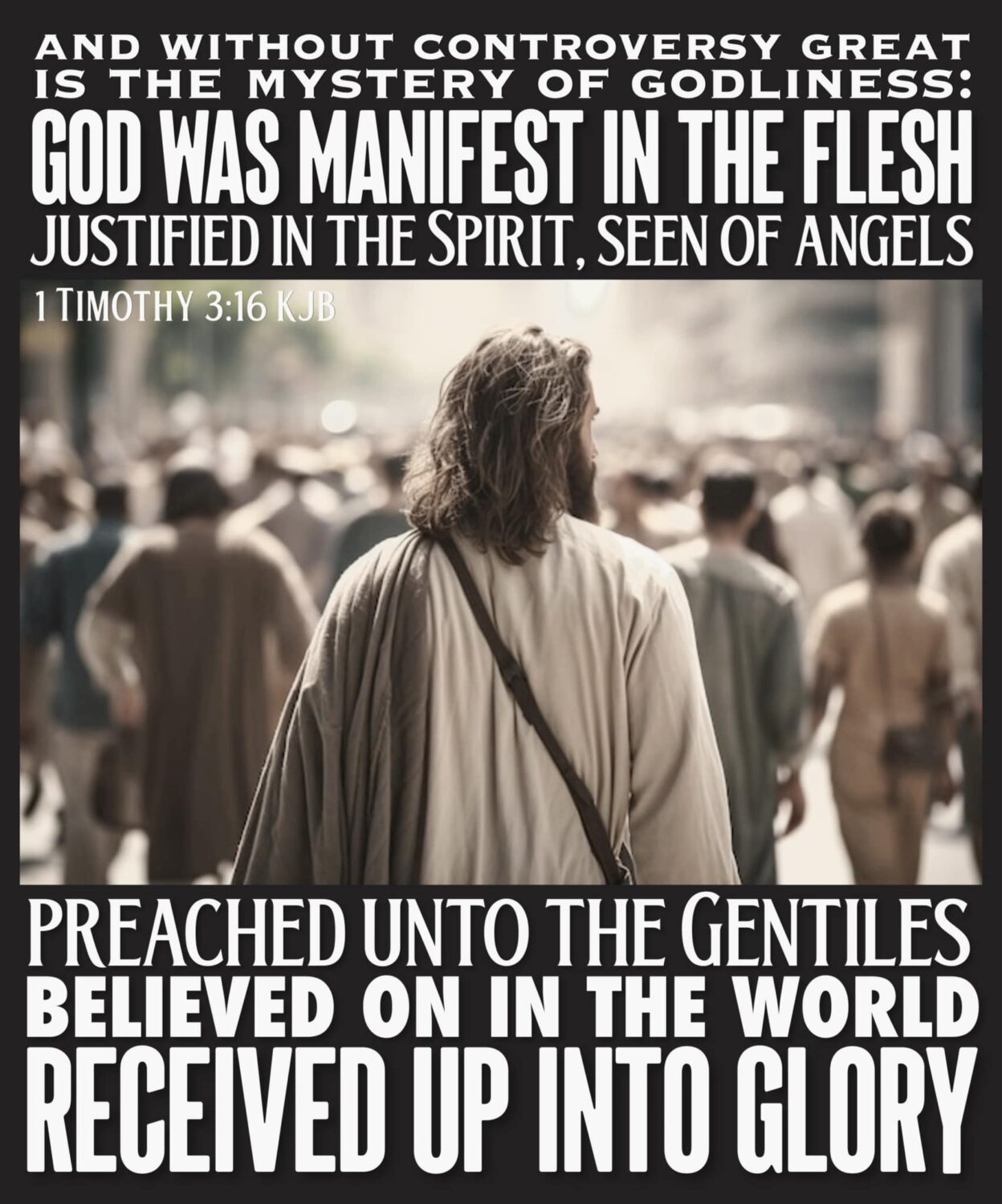
WHO do WE say that Jesus is?
“Jesus Christ the same yesterday, and to day, and for ever” (Hebrews 13:8), and He is asking us the exact questions today that He asked His disciples while on earth.
“Whom do men say that I the Son of man am?” Matthew 16:13
“But whom say ye that I am?” Matthew 16:15
Jesus is asking each of us “What are others saying of Me and Who do you say that I am?” In other words, perhaps He’s asking us “In a world of many swirling ideas about Me, who do you say that I am – who do you know Me to be?”
If you were asked right now to give a 5 minute talk about the uniqueness and exclusivity of Jesus Christ from the Bible, could you do it?
“The doctrine of Christ” is revealed in “the RECORD that God gave of his Son” (2 John 9; 1 John 5:10).
If we don’t believe that Jesus is who the Bible says He is then we cannot be saved. Who does the Bible tell us that Jesus Christ is?
“I said therefore unto you, that ye shall die in your sins: for if ye believe not that I am he (“the mighty God” prophesied Messiah Isaiah 9:6-7), ye shall die in your sins.” John 8:24
“The record that God gave of his Son” includes that Jesus Christ is divine. | Jesus Christ is God
“The doctrine of Christ” informs us of who He is (2 John 9).
Among other things, Jesus Christ is ….
- The Word made flesh (John 1:1-18)
- Born of a virgin (Isaiah 7:14; Matthew 1:23)
- Creator of all that is (John 1:1-4; Ephesians 3:9; Colossians 1:16-17)
- “The Head” of His one church – remnant elect (Colossians 1:18; 2:19)
- “The Son of God” (Matthew 4:3, etc.)
- “The true God, and Eternal life” (1 John 5:20)
- The living water (John 4)
- “The bread of life” (John 6)
- “The light of the world” (John 8:12)
- “The door” (John 10:9)
- “The Good Shepherd” (John 10:11, 14; Hebrews 13:20)
- “The resurrection and the life” (John 11:25)
- “The way the truth and the life” (John 14:6)
- “KING OF KINGS, AND LORD OF LORDS” (Revelation 19:16)
- “Alpha and Omega, the beginning and the ending … the Almighty” (Revelation 1:8)
The very first Messianic prophecy: Of necessity, from the very first declaration of God to fallen mankind, His promise to save us from our now fallen state, the virgin birth was asserted as a necessity….
“And I will put enmity between thee and the woman, and between thy seed and her seed; it shall bruise thy head, and thou shalt bruise his heel.” Genesis 3:15
As we know, “her seed,” the “seed” in Mary’s womb was God the Father’s miracle of virgin birth, the eternal Word Jesus Christ made flesh to dwell among us and die to save us, fallen mankind (John 1:10, 14; Galatians 4:4, etc.).
The Messiah that was yet to appear, to come to the earth to die for the sins of the world, had to be divine – Isaiah the prophet foretold that the Messiah would be “the mighty GOD” (Isaiah 9:6).
“Her seed” – Women do not have seed. The man, the father, has the seed. The seed of the woman was going to be by God the Father in Mary…. A divine miracle that never had nor will happen again. “Therefore the Lord himself shall give you a sign; Behold, a virgin shall conceive, and bear a son, and shall call his name Immanuel (GOD with us) (Isaiah 7:14).
The fulfillment of Isaiah’s prophecy: “And she shall bring forth a son, and thou shalt call his name JESUS: for he shall save his people from their sins. 22 Now all this was done, that it might be fulfilled which was spoken of the Lord by the prophet, saying, 23 Behold, a virgin shall be with child, and shall bring forth a son, and they shall call his name Emmanuel, which being interpreted is, God with us” (Matthew 1:21-23).
Jesus Christ is the God man. – “The Son of man” means God’s man to redeem man.
“…his Son Jesus Christ. This is the true God, and eternal life.” 1 John 5:20
“And we know that the Son of God is come, and hath given us an understanding, that we may know him that is true, and we are in him that is true, even in his Son Jesus Christ. This is the true God, and eternal life.” 1 John 5:20
“Therefore the Jews sought the more to kill him, because he not only had broken the sabbath, but said also that God was his Father, making himself equal with God.” John 5:18
“Jesus said unto them, Verily, verily, I say unto you, Before Abraham was, I am.” John 8:58
“I and my Father are one. Then the Jews took up stones again to stone him.” John 10:30-31″
“And Thomas answered and said unto him, My Lord and my God.” John 20:28
The Sacred Substance, the Central Theme of all of Holy Scripture
Jesus Christ came to the earth exactly how and when the “more sure word of prophecy”, the Scriptures, foretold that He would come and to fulfill the Messianic prophecies of Himself to the exact detail (2 Peter 1:19-21).
“Then said I, Lo, I come: in the volume of the book it is written of me, 8 I delight to do thy will, O my God: yea, thy law is within my heart.” Psalms 40:7-8
“From cover to cover of the OT it was foretold not only that Christ would come into the world but that He would come with an eager, ready spirit to do the will of God. The will of God was not just in His head—it was inscribed in His very heart.” Believer’s Bible Commentary
If we truly love Christ, will we not search, read, and study the LORD Jesus Christ…. ?
“The heart of Christianity is Christ. It is to know Christ. It is to follow Christ. It is to love Christ. It is to adore Christ. The sum and the substance of the Christian life is Jesus Christ.” Steve L.
IF we miss Christ in studying His Word, we have missed all. As is clear from our LORD’s interaction and rebuke of the false religionists of His day, this is quite possible. In fact, it’s clear by what Jesus said that we can know the Scriptures and not the Savior. We can know the words of God without knowing the God of that Word.
John 5:39-47
“Search the scriptures; for in them ye think ye have eternal life: and they are they which testify of me.
40 And ye will not come to me, that ye might have life.
41 I receive not honour from men.
42 But I know you, that ye have not the love of God in you.
43 I am come in my Father’s name, and ye receive me not: if another shall come in his own name, him ye will receive.
44 How can ye believe, which receive honour one of another, and seek not the honour that cometh from God only?
45 Do not think that I will accuse you to the Father: there is one that accuseth you, even Moses, in whom ye trust.
46 For had ye believed Moses, ye would have believed me: for he wrote of me.
47 But if ye believe not his writings, how shall ye believe my words?”
IF doctrine weren’t important, explain this….
“Whosoever transgresseth, and abideth not (does not remain) in the DOCTRINE of Christ, hath not God. He that abideth in the doctrine of Christ, he hath both the Father and the Son.” 2 John 9
The only way we can be assured we are following the Jesus of the Bible and not “another Jesus” is to ascertain that we are established in “the doctrine of Christ” which is simply what the Bible teaches us about Jesus Christ the Messiah.
“For if he that cometh preacheth another Jesus, whom we have not preached, or if ye receive another spirit, which ye have not received, or another gospel, which ye have not accepted, ye might well bear with him.” 2 Corinthians 11:4
HOW do we know that the coming of Jesus is at hand? Jesus warns. When asked He tells us that he first sign of His soon return will be the proliferation, the invasion of “MANY false prophets”:
“The disciples came unto him privately, saying, Tell us, when shall these things be? and what shall be the sign of thy coming, and of the end of the world? 4 And Jesus answered and said unto them, Take heed that no man deceive you. 5 For many shall come in my name, saying, I am Christ; and shall deceive many. … 11 And many false prophets shall rise, and shall deceive many. … 24 For there shall arise false Christs, and false prophets, and shall shew great signs and wonders; insomuch that, if it were possible, they shall deceive the very elect.” Matthew 24:3-5, 11, 24
“The Doctrine of Christ”
51 times the Bible uses the word “doctrine,” and the central truth of biblical “doctrine” is what Scripture tells us about Jesus, the sacred substance of the Scriptures Himself, the eternal Word of God – Jesus Christ.
Christology chapters of note to pour over regularly: John 1; Colossians 1; Hebrews 1.
Beloved saints, make sure you are drilling down on “the doctrine of Christ” – laying the foundation that will stand against the evil winds of false doctrine that is being peddled by the vilest and most popular wolves on this planet (Ephesians 4:14-15; Hebrews 13:9, etc.).
The Bible phrase “the doctrine of Christ” refers by divine priority, plainly to Himself as the divine Person, the divine Word, the Son of God. Jesus Christ is revealed as God’s eternal Word, as the Messiah, LORD, Creator, Sustainer, and Great High Priest, Jesus Christ. It seems only after these biblical facts about Christ that “the doctrine of Christ” would then apply to our repenting and putting our whole faith in Christ for salvation (Acts 2:38; 3:19; 20:21, etc.).
Say it aloud: “the doctrine of Christ.” What saith the Holy Scriptures of Christ?
- the Messiah in prophecy
- virgin birth
- divinity
- exclusivity
- death and burial
- resurrection
- return
“Whosoever transgresseth, and abideth not (does not remain) in THE DOCTRINE OF CHRIST, hath not God. He that abideth in the doctrine of Christ, he hath both the Father and the Son.” 2 John 9
So what does this verse (above) mean? It means that you are going to hell irrevocably if you don’t remain grounded, holding to, embracing what the Bible says about Christ, the Messiah.
In the context of the above cited verse, 2 John 9, the apostle John is warning us about the “MANY deceivers” and to be careful not to “lose …. those things” we know of Christ – lest we “abideth not in the doctrine of Christ” which will result in us having not God at all, being an apostate lost soul. Also he warns of bidding Godspeed to the antichrist’s who peddle “another Jesus” – lest you go to Hell (be also judged) with that antichrist who preaches “another Jesus,” one that is not according to the biblical “doctrine of Christ.” See also 2 Corinthians 11:4.
2 John 7-11
“7 For many deceivers are entered into the world, who confess not that Jesus Christ is come in the flesh. This is a deceiver and an antichrist.
8 Look to yourselves, that we lose not those things which we have wrought, but that we receive a full reward.
9 Whosoever transgresseth, and abideth not in the doctrine of Christ, hath not God. He that abideth in the doctrine of Christ, he hath both the Father and the Son.
10 If there come any unto you, and bring not this doctrine, receive him not into your house, neither bid him God speed:
11 For he that biddeth him God speed is partaker of his evil deeds.”
Of “the doctrine of Christ” one writer notes:
“In the Gospel of John, the apostle had already written that God’s word is truth (John 17:17). He also proclaimed that Jesus Himself (who is Deity – John 1:1) was the truth (John 14:6). It is clear from his gospel that if we love Jesus, we will keep His commandments (John 14:15; 15:14). We must also receive the truth that Jesus is deity who came in the flesh (John 1:14; 1 John 4:2-3). In his letter to the elect lady, John reiterates what he already stated in his gospel, namely, that the doctrine of Christ is composed of (1) Jesus’ commandments/doctrine which we are to obey and (2) Jesus’ deity.”
Example: John MacArthur is teaching that there is nothing special about the blood of Jesus. How anyone can still listen to that diabolical wolf is beyond belief. Yes he says a lot of good stuff which alone makes him even more insidious a tool of Satan. Say this Word from God aloud here and now beloved of God: Just “A LITTLE leaven leaveneth (ruins) the whole lump” (Galatians 5:9). This biblical phrase, statement refers to false doctrine and sin (1 Corinthians 5:6). And false doctrine IS sin.
New message under construction which will expose more about this blasphemous heresy including the statement by John MacArthur.
Follow Jesus saints. THAT’s why God gave us His written Word (2 Timothy 3:16-17). Drill down on your knowledge of God – “the doctrine of Christ” – via personal Bible study in the King James Bible.
***THERE ARE OVER 2,000 POSTS ON SAFEGUARDYOURSOUL AND THIS IS THE MOST IMPORTANT ONE. PLEASE TAKE YOUR TIME AND GO THROUGH EACH BIBLE TRUTH/VERSE.
More examples of the glory-robbing antichrist denigration of Christ by the religious world today:
“Exactly what Satan is doing, taking the deity of Christ, humanizing Him. In ‘The Chosen’ (movie) when Jesus was 12 and preaching in the temple, Joseph told Him ‘You need to go and confess your transgressions to your mother’ because they did not know where He was. But Luke 2:49. Jesus says ‘wist (knew) ye not that I must be about my Father’s business’?
He is also shown pacing and nervous when he is going to preach before the masses. He was the Son of God. Would He have been nervous and pacing? It’s mocking Jesus. Why Christians do not see this is beyond me! Nothing biblical about any of it. This show has gone out into other countries now. Bringing a false gospel. Mark 13:22.” Karen Cochran
Support | STORE | Podcasts | Making Peace with God | It is Finished! | Discipleship | The Gospel Centers Upon Christ’s Blood | Christology | The Gospel: What is It?

Abiding
The Good Shepherd and His True Sheep [podcast]
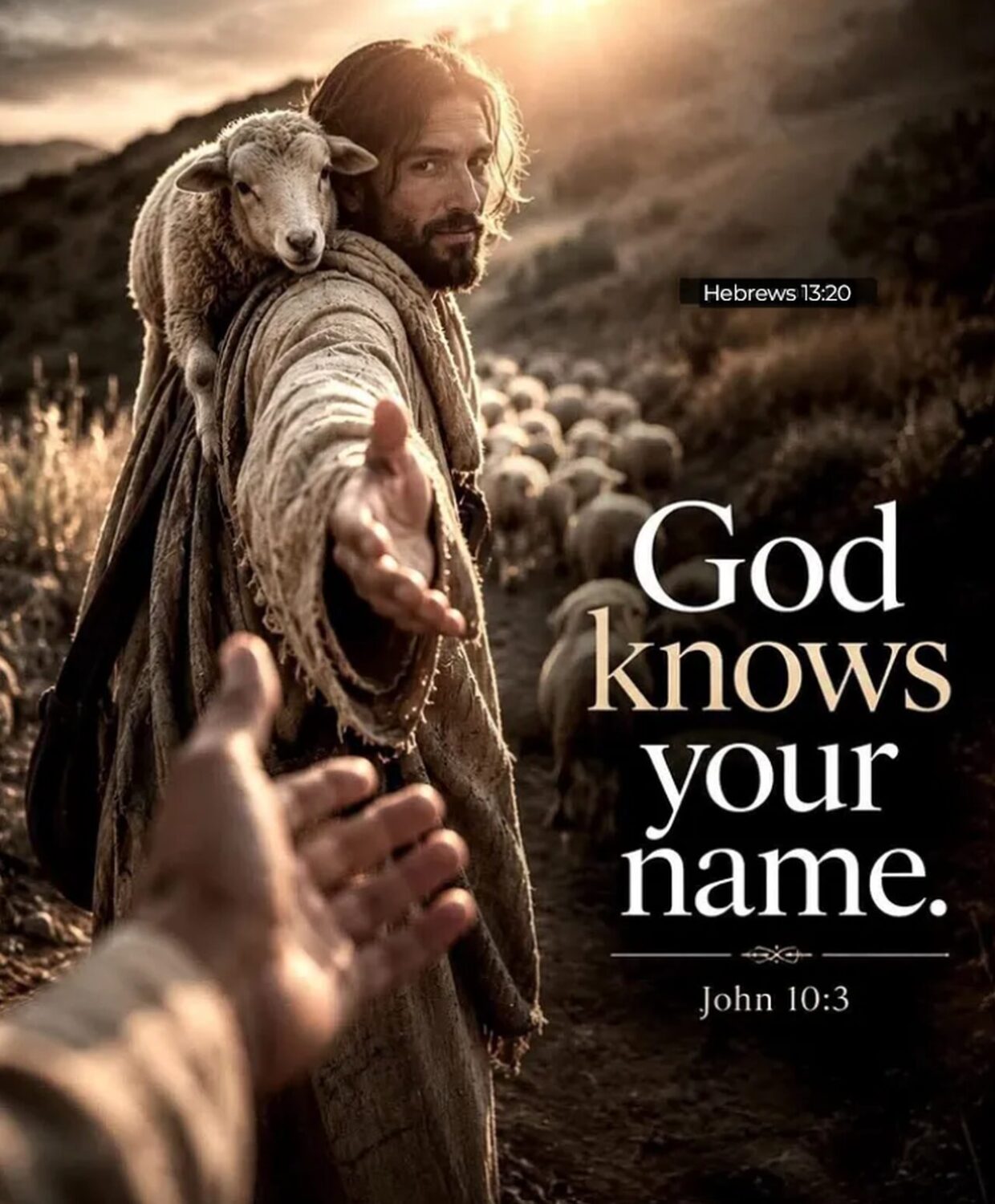
“Now the God of peace, that brought again from the dead our Lord Jesus, that great shepherd of the sheep, through the blood of the everlasting covenant …” Hebrews 13:20
“To him the porter openeth; and the sheep hear his voice: and he calleth his own sheep by name, and leadeth them out.” John 10:3
“My sheep hear my voice, and I know them, and they follow me: 28 and I give unto them eternal life; and they shall never perish, neither shall any man pluck them out of my hand. 29 My Father, which gave them me, is greater than all; and no man is able to pluck them out of my Father’s hand.” John 10:27-29
“This know also, that in the last days perilous times shall come. For men shall be lovers of their own selves, covetous, boasters, proud, blasphemers, disobedient to parents, unthankful, unholy, 3 without natural affection, trucebreakers, false accusers, incontinent, fierce, despisers of those that are good, 4 traitors, heady, highminded, lovers of pleasures more than lovers of God; 5 having a form of godliness, but denying the power thereof: from such turn away. 6 For of this sort are they which creep into houses, and lead captive silly women laden with sins, led away with divers lusts, 7 ever learning, and never able to come to the knowledge of the truth. 8 Now as Jannes and Jambres withstood Moses, so do these also resist the truth: men of corrupt minds, reprobate concerning the faith. 9 But they shall proceed no further: for their folly shall be manifest unto all men, as theirs also was.
10 But thou hast fully known my doctrine, manner of life, purpose, faith, longsuffering, charity, patience, 11 persecutions, afflictions, which came unto me at Antioch, at Iconium, at Lystra; what persecutions I endured: but out of them all the Lord delivered me. 12 Yea, and all that will live godly in Christ Jesus shall suffer persecution. 13 But evil men and seducers shall wax worse and worse, deceiving, and being deceived.” 2 Timothy 3:1-13
“And he said to them all, If any man will come after me, let him deny himself, and take up his cross daily, and follow me. 24 For whosoever will save his life shall lose it: but whosoever will lose his life for my sake, the same shall save it. 25 For what is a man advantaged, if he gain the whole world, and lose himself, or be cast away?” Luke 9:23-25
Support | STORE | Podcasts | Jail/Prison Ministry | Mexico Mission here | All Ministry Updates | Fresh Start with God | “Fear hath Torment” – 100% Deliverance from all Fear! [podcast] | Resurrection Grace [podcast] | G.O.D. = Game Over Devil [podcast] | Justification | Grace and Good Works [podcast] | More on Assurance here | Eternal Security Debunked | The Cross Life | 100’s of Christ-centered, Scripture-rich podcasts for your edification in Christ.
Apostasy
Eating the Fat, and Drinking the Sweet! [podcast]

Mourning Trumps Merriment in Christ’s Kingdom
PRAYER: Heavenly Father, I’d like to walk in Your bless-ed joy, filling my life to overflowing, no matter what’s transpiring. LORD, I ask You to do Your deeper work in my heart, in my life. Please set apart my life to truly glorify You, being full of the fruits of Your righteousness. In Jesus’ Name, amen.
Everyone desires the joy of the LORD, right? Yes, yet only those who are willing to devour His Word – to get it into their hearts and keep it flowing into their hearts, will experience that great joy of the LORD which is our strength! In context, the joy of the LORD is the strength of those who read it, hear it, embrace it, adhere to it, and keep it flowing into their mind and heart daily! (Nehemiah 8:8, 10)
“So they read in the book in the law of God distinctly (directly), and gave the sense, and caused them to understand the reading. … 10 Then he said unto them, Go your way, eat the fat, and drink the sweet, and send portions unto them for whom nothing is prepared: for this day is holy unto our Lord: neither be ye sorry; for the joy of the LORD is your strength.” Nehemiah 8:8, 10
After they had feasted on God’s Word, the elders of Israel said to them: You are now full of the Word. Now “Go your way”, that is, go home and be blessed to “send portions” of the bounty of the LORD you’ve been filled with today to overflowing. “Freely ye have received, freely give.” (Matthew 10:8) Let your cup run over and bless others! Let your light shine into others, may your cup run over onto others, to bless them with the bountiful blessings of the LORD you have received.
We have to eat the fat and drink the sweet of the Word of God to be filled with the joy of the LORD which is our strength!
“Thy words were found, and I did eat them; and thy word was unto me the joy and rejoicing of mine heart: for I am called by thy name, O LORD God of hosts.” Jeremiah 15:16
Nourishing the Body of Christ
“If thou put the brethren in remembrance of these things, thou shalt be a good minister of Jesus Christ, nourished up in the words of faith and of good doctrine, whereunto thou hast attained.” 1 Timothy 4:6

DO people know they can find the rich treasures of God’s Word when they walk into your life, when they visit your social media page? (Colossians 3:16) Will they be “nourished” by the milk and meat of God’s bless-ed Word when they are graced to be in your company?
“There is treasure to be desired and oil in the dwelling of the wise.” Proverbs 21:20
Holy Father, we ask You in the name of Jesus to make us happy in Jesus as You’ve forgiven and freed us from our sin and so of all people on Your earth, only Your people can be truly happy in Thee dear LORD. Please bless each of Your beloved saints to be anointed for the death and burial of the self life and raised up in Your blessed resurrection grace and joy. In Jesus’ name let it be dear LORD.
“These things have I spoken unto you, that my joy might remain in you, and that your joy might be full.” John 15:11
Support | STORE | Podcasts | H.O.T. Bible Study [podcast] | Divine Blessings | Exhort One Another Daily | The Return of Christ | The Joy of Fulfilling the Great Commission | The Love of Many Shall Wax Cold | Lie of the Ages (book) | Soul Damning Sins (small book) | Why We Need not Fear Death | Revelation Bombshell!






“The Supply of the Spirit of Jesus Christ” [podcast]

“I Love You Son” [podcast]

THE ESSENTIAL IMPORTANCE OF CHRISTOLOGY [podcast]

Money, Material Wealth, and Riches [podcast]

The Joy of Seed Sowing

The Good Shepherd and His True Sheep [podcast]

“He that Loveth Pureness of Heart” [podcast]

Out of the Mouth of Babes – “What is Love?” Hilarious. Revealing [podcast]

Mission Mexico Part 44

The Supremacy of Jesus Christ [podcast]

Personal Evangelism

Eating the Fat, and Drinking the Sweet! [podcast]

The Death before the Death [podcast]

“Rend Your Heart, and Not Your Garments” [podcast]

God and His Word are Unchanging [podcast]
Money, Material Wealth, and Riches [podcast]
Out of the Mouth of Babes – “What is Love?” Hilarious. Revealing [podcast]

How to Spot a Fake Bible [podcast]

Jesus Christ is God [podcast]
“The Supply of the Spirit of Jesus Christ” [podcast]
The Supremacy of Jesus Christ [podcast]

Read the Handwriting

Soul Sleep Exposed: Where Do We Go When We Die? When do we Go there? [podcast]

Salvation is Not a One-Time Experience but a Lifelong Walk [podcast]
THE ESSENTIAL IMPORTANCE OF CHRISTOLOGY [podcast]
“I Love You Son” [podcast]

Mug Shots and Mercy Moments! [podcast]

How do We Know Who is “of God” and Who is “Not of God”? [podcast]

Concerns about the writings of C.S. Lewis [podcast]

What the Bible says about Effeminate Men [podcast] [shorts video]
“The Supply of the Spirit of Jesus Christ” [podcast]
“I Love You Son” [podcast]
THE ESSENTIAL IMPORTANCE OF CHRISTOLOGY [podcast]


 America1 year ago
The Drugging of America: The Pharmakeia Sorcery Deception [podcast]
- Articles3 years ago
Children being Rescued in Tunnels: Happening Now – UPDATE!
- Articles8 years ago
Self-Examination in Preparation for the Lord’s Return
- Apostasy3 years ago
SHOCKING List of False Prophets Most Believe are True