






Is God Good, Or, Does He Have Evil Intent?
Whether we realize it yet or not, many of us who are authentic believers, have the erroneous idea that God is somehow against us. Could this be so?
TO PONDER:
Question #1: If in fact you do not think God is for you (in your favor), but rather against you, how do you think you’ve been able to protect yourself from Him for all these years?
Question #2: If God didn’t have goodwill toward us, then why would He have created us in His very image and for His very pleasure? (Read Genesis 1:24-31; Rev. 4:11.) We are His only creatures who have this superior and yet fearful distinction in relation to the rest of His creation (Psalms 139:14).
Question #3: Why would God have gone to such great lengths to redeem you out of your sin into His glorious kingdom if He didn’t love you? Consider Romans 8:31-32: “What shall we then say to these things? If God be FOR US, who can be against us? He that spared not his own Son, but delivered him up for us all, how shall he not with him also freely give us all things?”
THE GOD OF GOODNESS
Do you desire to know God and His nature deeper?
It could certainly be stated that the very first attribute of God, if there were an order, would have to be His goodness. The initial attribute that the sinner encounters is God’s goodness. Have you ever pondered deeply the fact that He chose to create you, and if He hadn’t of, you wouldn’t even exist (be a consciously and eternally existent soul)?
“Thou art GOOD, and DOEST GOOD; teach me thy statutes.” Psalms 119:68
“The earth is full of the GOODNESS of the LORD.” Psalms 33:5
“The GOODNESS of God endureth continually.” Psalms 52:1
“Behold therefore the GOODNESS and severity of God…” (Romans 11:22). One of the two divine attributes we are instructed to “behold” here, is His “goodness.” The English word “goodness” comes from the Greek word CHRESTOTES which means gentleness, goodness, kindness. The word “Good” in the NT denotes virtue or righteousness in the sense of what is upright; goodwill as expressed in the kindness of heart or act; easy. CHRESTOTES signifies not merely goodness as a quality, rather it is goodness in action, goodness expressing itself in deeds.
REDEMPTION GOODNESS: The life of Jesus was the price that the Father paid to manifest to us His forgiveness: “God was in Christ, reconciling the world unto himself, not imputing their trespasses unto them.” 2 Corinthians 5:19
Obviously the cross of Christ was the ultimate expression of divine goodness expressed to mankind. It was the great exchange, where God took man’s place in paying the ultimate price to judge sin once and for all…“It is finished” (John 19:30). At the cross, mercy and goodness triumphed over judgment (James 2:13; Rom. 2:4; Heb. 2:9; 4:16; 10:17; Jn 3:16…Tit. 3:3).
In fact, the apostles John and Paul wrote to inform us that Jesus Christ’s sacrifice for us is how we understand how much He loves us:
“Hereby perceive we the love of God, because he laid down his life for us…” 1 John 3:16
“Greater love hath no man than this, that a man lay down his life for his friends.” John 15:13
“But God commendeth (displayed, exhibited) his love toward us, in that while we were yet sinners, Christ died for us.” Romans 5:8
When we deserved His wrath, it was God’s goodness which led us to repentance. Check this out:
“Or despiseth thou the riches of his goodness and forbearance and longsuffering; not knowing that the goodness of God leadeth thee to repentance.” Romans 2:4
We Are Called to Experience His Love
“O taste (experience) and see that the LORD is good…” Psalms 34:8
Our heavenly Father looks on us with joy and designs pleasure for us now and forever. “Taste” means experience. As the objects of His love, we are to experience His goodness. Whenever we are fearful, hurting, downhearted, or just empty in our hearts, we should remember that in the presence of the Savior is fullness, wholeness, goodness and joy: “In thy presence is fullness of joy; at thy right hand are pleasures for evermore” (Psalms 16:11).
Remember, one of the words used to describe God’s goodness is easy. God is not uptight as some humans are. To this, someone might reply; “But wait a minute! The Bible says that God’s wrath and anger are kindled against sin!” Yes they are kindled against the rebellious (Romans 1:18-20), but not against those whom He has redeemed from sin and forgiven and has made His very own. This goodness is reserved for and abounds toward those who are presently living in the Spirit, not after the flesh (Romans 8:1). For the born-again Christian, the power, penalty, and punishment of sin is completely canceled. We are safe from His wrath through Christ’s sinless blood (Romans 5:9). God is good.
CHOSEN, PREDESTINATED TO HIS GOOD PLEASURE: “According as he hath chosen us in him before the foundation of the world… in love. Having predestinated us unto the adoption of children by Jesus Christ to himself, according to the good pleasure of his will…Having made known unto us the mystery of his will, according to his good pleasure which he hath purposed in himself.” Ephesians 1:4-5,9
GOD’S THOUGHTS TOWARD YOU – LET THIS BE SETTLED FOREVER: “For I know the thoughts that I think toward you, saith the Lord, THOUGHTS OF PEACE, and NOT of evil, to give you an expected end.” Jeremiah 29:11 (A good verse to memorize.)
Is it possible that one could think upon the unfathomable vastness of divine goodness without the Fatherly heart of God being revealed? I think not. He is our Savior, Caretaker, Comforter, LORD, Friend and Redeemer. Our heavenly Father is not postured/bent upon hurting His own “special people,” rather His desire is the total reconciliation, restoration and healing of each of those created in His image (Deut. 7:6; 1 Tim. 2:4; 2 Pet. 3:9, etc.). God’s disposition toward His creation, namely those redeemed and made in His image, is one of warmth and benevolence, not harm (Jer. 29:11; Rev. 4:11; 1 Pet. 5:7; Matt. 7:7-11). He is our “Abba Father” which is equivalent to “Daddy” (Romans 8:15).
“For thou art an holy people unto the LORD thy God: the LORD thy God hath chosen thee to be a special people unto himself, above all people that are upon the face of the earth. The LORD did not set his love upon you, nor choose you, because ye were more in number than any people; for ye were the fewest of all people: But because the LORD loved you…” Deuteronomy 7:6-8
HIS GOODNESS ACTUALLY PURSUES THOSE WHO ALLOW HIM TO BE THEIR SHEPHERD: “Surely GOODNESS and mercy shall follow me all the days of my life.” Psalms 23:6
HIS GREAT AFFECTION FOR HIS PEOPLE: “…as the bridegroom rejoiceth over the bride, so shall thy God rejoice over thee.” Isaiah 62:5
GOD CELEBRATES OVER HIS PEOPLE: “The LORD thy God in the midst of thee is mighty; he will save, he will rejoice over thee with joy; he will rest in his love, he will joy over thee with singing.” Zephaniah 3:17
A PITFALL TO AVOID: When a person neglects seeking to know the full counsel of God revealed in His inspired words, the Holy Bible, he will forfeit knowing the wholeness of God’s nature. The person who neglects the study of the Saviour will inevitably concoct in his mind the image of a false god. He will thereby break God’s commandments by erecting in his mind the “graven image” of a god who does not exist (Exodus 20:2-3).
Tip: Jesus said; “Search the scriptures…for they are they which testify of me” (John 5:39.) A fresh reading of Ephesians Chapter 1 will rejuvenate and establish within your heart the “good pleasure” and the “goodness” God has occasioned and predestined His children to enjoy both now and forever. It would be profitable to get this in your heart by reading it every morning for at least one week (two weeks recommended).
THE REASON WE WERE CREATED: “Thou art worthy, O Lord…for thou hast created all things, and FOR THY PLEASURE they are and were created.” Revelation 4:11
“…trust…in the living God, who giveth us richly all things to enjoy.” 1 Timothy 6:17
UNCHANGING GOODNESS TOWARD HIS OWN: “Every good gift and every perfect gift is from above, and cometh down from the Father of lights, with whom is no variableness, neither shadow of turning.” James 1:17
WHO IS GOD GOOD TO?
1. All men, even sinners – Matt. 5:44-48; Gal. 5:22-23; 1 Tim. 2:4; 2 Pet. 3:9; Ez. 33:11; God looks/waits for sinners to repent; when they do He welcomes them home – Luke 15. When the people of Nineveh turned to God, Jonah was mad, but God was glad (Jonah 3:10).
2. The Almighty is especially good to His own. The LORD has not dealt with us according to our sins. Consider Ezra 9:13: “God hast punished us less than our iniquities deserve, and hast given us such deliverance as this.” Also see Psalms 103:10.
“If thou, Lord , shouldest mark iniquities, O Lord, who shall stand?” Psalms 130:3
“Let the redeemed of the Lord say so, who he hath redeemed from the hand of the enemy.” Psalms 107:2
We should exude goodness toward sinners as God does – even when and as we declare His judgment to come upon every unrepentant soul. “He maketh his sun to rise on the evil and on the good”(Matthew 5:45). This same goodness that we have received from God we are to display to our neighbors, both saved and unsaved. Galatians 6:10 says: “As we have therefore opportunity, let us do good unto all men, especially unto them who are of the household of faith.”
BECAUSE HE IS GOOD, HE DESIRES TO FORGIVE: “For thou, Lord, art GOOD, and ready to forgive; and plenteous in mercy unto all them that call upon thee.” Psalms 86:5
Might this be a good moment to bow our hearts and give Him thanks for the enormity of His goodness?
It continues to occur to me by the quickening of the Holy Spirit to be alwayssss giving God thanks for who He is and for how He loves us, and for His innumerable blessings to us in Christ (James 1:17). Our hearts droop when we don’t celebrate His goodness. God is so good!
The Goodness of God Reserved for the Chosen – Those who Choose Him, His Plan
God has set up an eternal plan.
“That in the dispensation of the fulness of times he might gather together in one all things in Christ, both which are in heaven, and which are on earth; even in him:” Ephesians 1:10
“Behold, what manner of love the Father hath bestowed upon us, that we should be called the sons of God: therefore the world knoweth us not, because it knew him not. 2 Beloved, now are we the sons of God, and it doth not yet appear what we shall be: but we know that, when he shall appear, we shall be like him; for we shall see him as he is. 3 And every man that hath this hope in him purifieth himself, even as he is pure.” 1 John 3:1-3
“But God, who is rich in mercy, for his great love wherewith he loved us, 5 Even when we were dead in sins, hath quickened us together with Christ, (by grace ye are saved;) 6 And hath raised us up together, and made us sit together in heavenly places in Christ Jesus: 7 That in the ages to come he might shew the exceeding riches of his grace in his kindness toward us through Christ Jesus.” Ephesians 2:4-7
God’s Goodness in Evangelism
“The goodness of God leadeth thee to repentance.”
WHERE will people find goodness in this fallen world…. other than by way of the witnesses of how good our God is?! WHERE else shall they turn except to Him who “is love” (1 John 4:8,16).
“Or despisest thou the riches of his goodness and forbearance and longsuffering; not knowing that the goodness of God leadeth thee to repentance?” Romans 2:4
YOUR PRAYER: Holy Father, You have been so very good to us, to me. While You foreknew of me living in sin, as your enemy, You exhibited Your love by sending Your only begotten Son to die for me. I love You LORD Jesus. Please pour Your holy love into and through my life. I surrender all, right this moment. I want to be full of You and not me. Please do it Jesus. Have Your way in me. In Jesus’ Name, amen.
Memory Verses: Ps. 86:5, 15; Jeremiah 29:11; Romans 2:4; 11:22
Is God Guilty of the Horrible things that Happen on His Earth? [podcast]
Articles
“Pastors According to Mine Heart” [podcast]
“The cross life is the truth! The Joel Osteen gospel is the American gospel. It is all about me and how I can live my best life now! Yesterday in the elderly home Tom and I are blessed to minister in, a resident (elder) testified, ‘I was struggling and got down on my knees, praying to Jesus for help, and asking Him to forgive my sins. And I know He did because I have joy again.’ This was such a simple prayer but I could hear the heart of a child. Jesus said, we must become like a little child to enter the kingdom of heaven (Mat 18:3).” Karen Cochran
“… but to this man will I look, even to him that is poor and of a contrite spirit, and trembleth at my word.” Isaiah 66:2
Jesus taught Us
“But Jesus called them unto him, and said, Ye know that the princes of the Gentiles exercise dominion over them, and they that are great exercise authority upon them. 26 But it shall not be so among you: but whosoever will be great among you, let him be your minister; 27 And whosoever will be chief among you, let him be your servant: 28 Even as the Son of man came not to be ministered unto, but to minister, and to give his life a ransom for many.” Matthew 20:20-28
“But be not ye called Rabbi: for one is your Master, even Christ; and all ye are brethren. 9 And call no man your father upon the earth: for one is your Father, which is in heaven. 10 Neither be ye called masters: for one is your Master, even Christ. 11 But he that is greatest among you shall be your servant. 12 And whosoever shall exalt himself (by using titles) shall be abased; and he that shall humble himself shall be exalted.” Matthew 23:8-12
The next time some clown let’s you know he’s a “pastor” or “minister of Christ, or that he has a seminary degree or reads the Bible in Hebrew and Greek, etc., …..” kindly ask him when the last time was that he ministered to 10 lost souls in a day or led someone to Jesus.”
“Preach the word” AND “DO the work of an evangelist.” 2 Timothy 4:1-4
Jesus was not playing when He warned us of “MANY false prophets” who would “deceive MANY.” (Matthew 24:11)
“People better heed these warnings now because when the man of lawlessness comes the deception will be so strong that if possible even the elect will be deceived (Mat 24:24). He will come as a religious figure-trying to mimic Jesus. There will be no greater false Christ than him.” Karen Cochran
People are Leaving the Fake “Church” System
People aren’t leaving these false “churches” because they’re leaving the faith. No. They are leaving these wolf-run “churches” in order to preserve their faith. The SCAM-d3mic further exposed the 501(C)(3) charlatans who took orders from the gov’t. Jesus warns us in these final days before His return that “many false prophets shall rise, and shall deceive many.” (Matthew 24:11)
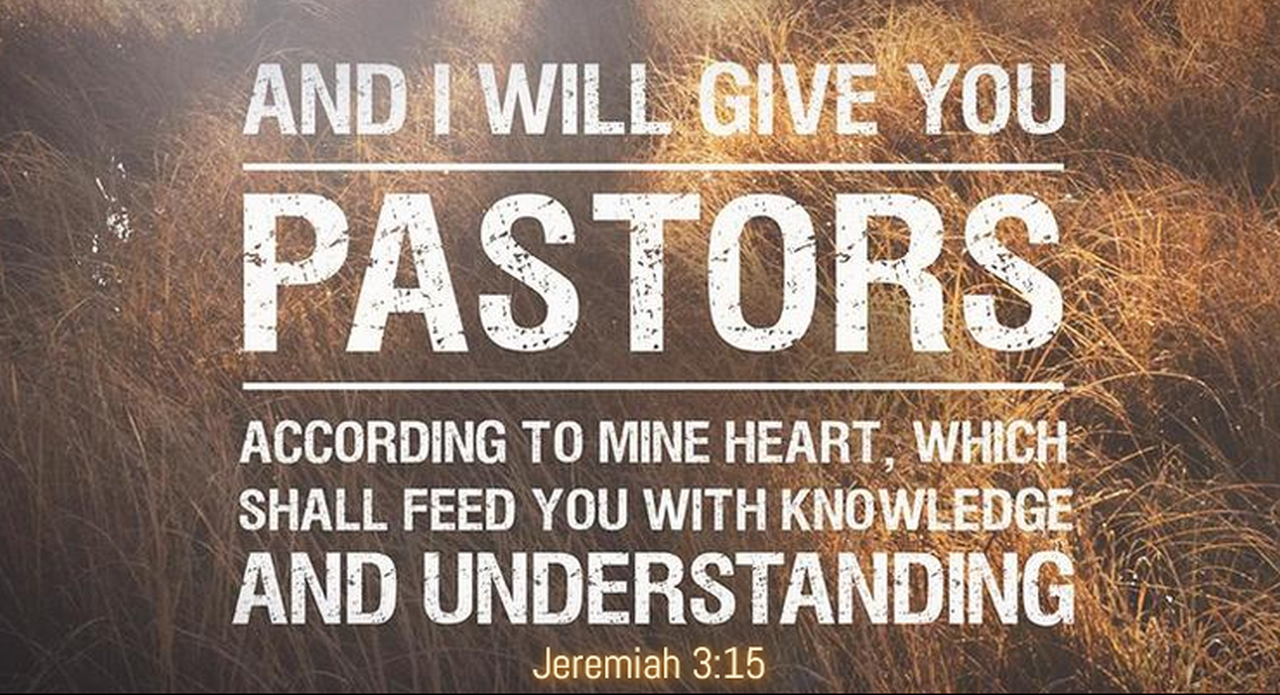
“And I will give you pastors according to mine heart, which shall feed you with knowledge and understanding.” Jeremiah 3:15
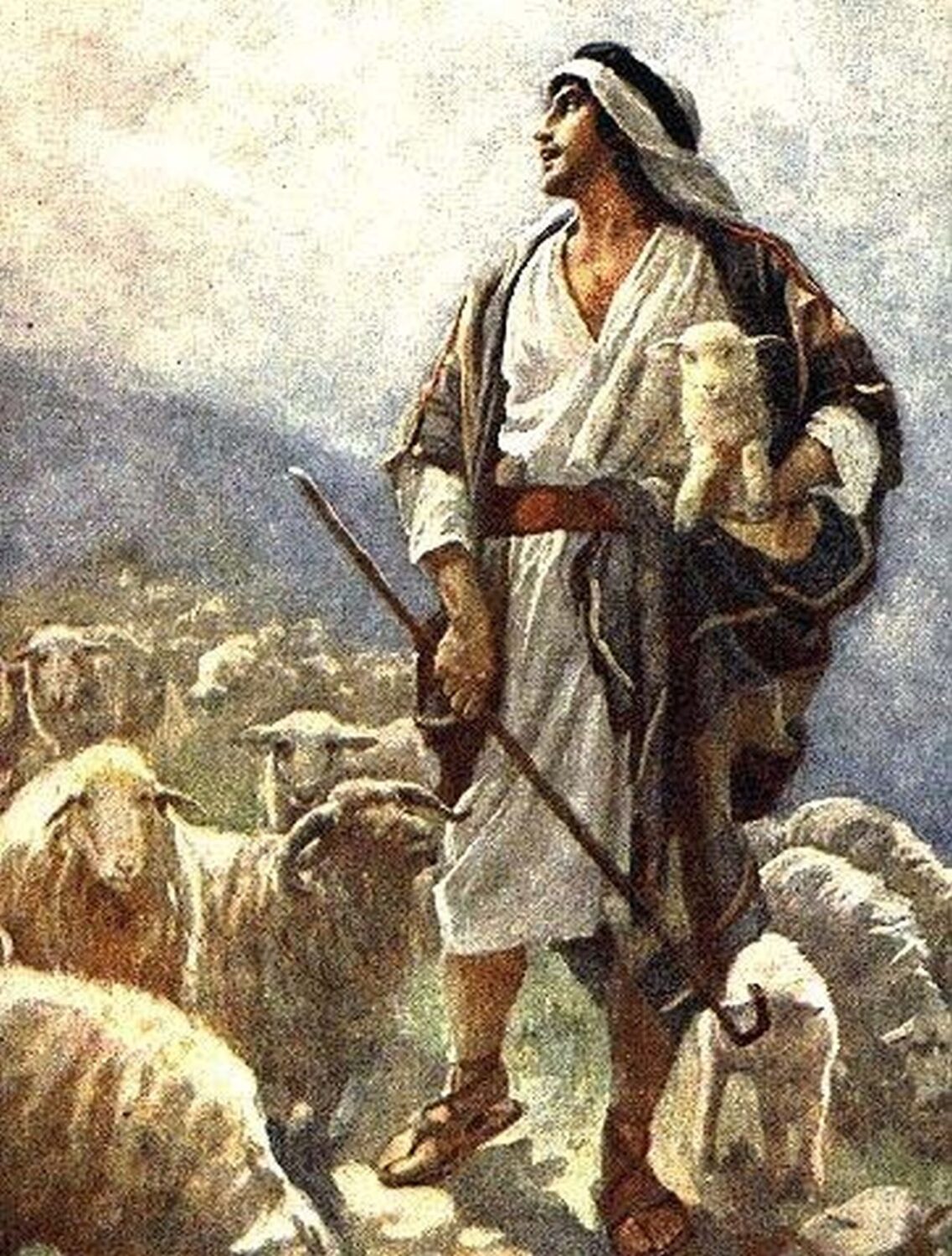
PASTORING is not occupying a physical building as a real estate manager! By biblical definition and under the anointing of “the Great Shepherd of the sheep”, PASTORING involves feeding, tending to, exhorting, correcting, encouraging, teaching, equipping, warning, comforting, and nourishing the sheep of Christ for whom He died and rose again from the dead (John 21:15-17; Hebrews 13:7, 17, 20). Pastoring involves instruction and perpetual preparation in light of the soon return of the Savior (Ephesians 5:25-27; Colossians 1:28; 1 John 3:3; Revelation 2-3, etc.). Hiding away in a physical building actually hinders a man from going out and about to the people who must be reached, you know like Jesus and His apostles did (Matthew 9:35-38; Acts 8:4, etc.).
The biblical qualifications for being an elder, a servant of God to oversee His flock are found in 1 Timothy 3. Go read it and notice that no where do we see that a pastor must be cool, be eloquent of speech, a good entertainer, wear fancy clothes, have a piece of real estate he calls “church,” run a choir, etc.
As we read in the passage below, Jesus, “the Great Shepherd of the sheep” (Hebrews 13:20), was slandered by the religious devils of His day, but that didn’t phase Him. He kept marching, fulfilling His Father’s calling – reaching out in compassion to and feeding those scattered abroad without a shepherd.

“But the Pharisees said, He casteth out devils through the prince of the devils. 35 And Jesus went about all the cities and villages, teaching in their synagogues, and preaching the gospel of the kingdom, and healing every sickness and every disease among the people. 36 But when he saw the multitudes, he was moved with compassion on them, because they fainted, and were scattered abroad, as sheep having no shepherd. 37 Then saith he unto his disciples, The harvest truly is plenteous, but the labourers are few; 38 Pray ye therefore the Lord of the harvest, that he will send forth labourers into his harvest.” Matthew 9:34-38
Today most modern pastors are mere hirelings who are lukewarm if they are even saved and do very little true Gospel work as we see Jesus and His apostles doing. This would mean that they are not “worthy of their hire.” Seems it would be different if they would “LABOUR in the word and doctrine” and therefore “worthy of double honour (compensation)“. See 1 Timothy 5:17-18; 1 Corinthians 9:1-14, etc…..
Do we have a heart after the LORD? Are we filled with tender mercies and loving kindness toward His people and the lost who He came “to seek and to save”? (Luke 19:10)
Are we, as did Jesus and His holy apostles, going about preaching the Word of God, reproving, rebuking, and exhorting His sheep with all longsuffering and pure biblical doctrine?
“Preach the word; be instant in season, out of season; reprove, rebuke, exhort with all longsuffering and doctrine. 3 For the time will come when they will not endure sound doctrine; but after their own lusts shall they heap to themselves teachers, having itching ears; 4 And they shall turn away their ears from the truth, and shall be turned unto fables. 5 But watch thou in all things, endure afflictions, do the work of an evangelist, make full proof of thy ministry.” 2 Timothy 4:2-5
In the above passage of Holy Scripture, the true disciple of Jesus can be seen …
- Preaching the word instant in season, out of season,
- reproving,
- rebuking,
- exhorting with all longsuffering and doctrine
- watching thou in all things,
- endure afflictions,
- doing the work of an evangelist,
- making full proof of thy ministry
Jesus Christ is “that great shepherd of the sheep.” He instructed us to follow Him and, in doing so, to “FEED my sheep” which includes more than just exposing false teaching.
Every single disciple of Christ is to be pastoral in heart and life. We are each to tend to our fellowship with Christ daily and to His people.
“Feed the flock of God which is among you.” 1 Peter 5:2
In order to become a balanced, fully-equipped, and mature disciple (1 Cor. 4:15), we must tend to feeding, nourishing, and also warning (Colossians 1:28). The apostolic PWT model is seen in Colossians 1:28 – Preach, Warn, Teach Christ’s body.
Some of us have learned to warn and that is so very important. We must also feed and nourish in order to “seal the law among my disciples”, says the LORD (Isaiah 8:16). There are those who are aware of wolves operating on the internet and only seek to expose them and warn us. These individuals bear fruit of rage and anger as they do nothing except tear at other ministries and people. They never take the time to feed the sheep. This alone reveals them to be wolves. They pose as watchmen and yet are wolves. Because they pose as watchmen, they can catch you off guard. Beware saints. If you don’t see kindness, mercy, grace, God’s love, and true concern for others, run!
“Bind up the testimony, seal the law among my disciples.” Isaiah 8:16
With no exception, Christ’s servants will always get YOU into HIS Word for yourself. They desire you to be faithful, loyal to GOD, not themselves!
“Study to shew thyself approved unto God, a workman that needeth not to be ashamed, rightly dividing the word of truth.” 2 Timothy 2:15
THE BEAUTY AND THE LOVE OF OUR LORD AND HIS MINISTERING
“And Jesus went about all Galilee, teaching in their synagogues, and preaching the gospel of the kingdom, and healing all manner of sickness and all manner of disease among the people. 24 And his fame went throughout all Syria: and they brought unto him all sick people that were taken with divers diseases and torments, and those which were possessed with devils, and those which were lunatick, and those that had the palsy; and he healed them. 25 And there followed him great multitudes of people from Galilee, and from Decapolis, and from Jerusalem, and from Judaea, and from beyond Jordan.” Matthew 4:23-25
As our memories glance across the record of the 4 glorious Gospels, we see among many things that the ministry of our LORD was perfect. He is the Model of perfection in all things, including ministering to others. As we read the Holy Scriptures, we observe the perfectly balanced wisdom He used in feeding, rebuking, warning, showing mercy, and admonishing. Jesus knew the hearts of all men and He taught appropriately and justly to all whom He ministered to (John 2:24). Due to there being no sin in Him, Christ did not get moody or have mood swings. He did not minister according to how He was feeling, but rather according to as His Father led Him and according to the hearts of those He ministered to – “he knew all men.” (John 2:24) Remember how He was “moved with compassion” upon and so merciful to sinners, lambasted the rich and the religious, healed the lame and blind, raised the dead, opened blinded eyes, cast out devils to deliver souls, and preached His good tidings of great joy, calling all men to repent and believe His Gospel? (Luke 4:18)
Being “Nourished Up in the Words of Faith and Good Doctrine” and Feeding the Saints
“If thou put the brethren in remembrance of these things, thou shalt be a good minister of Jesus Christ, nourished up in the words of faith and of good doctrine, whereunto thou hast attained.” 1 Timothy 4:6
It all begins with taking personal responsibility over our own souls – “Take heed unto THYSELF.”
“Take heed unto thyself, and unto the doctrine; continue in them: for in doing this thou shalt both save thyself, and them that hear thee.” 1 Timothy 4:16
The disciple whom God uses is the disciple who truly puts Him first – “daily.” (Luke 9:23-24) The LORD is not a second class citizen in the life of the Heaven bound true disciple of Jesus. Like Mary, this disciple chooses that good part of worshiping, seeking, and loving on Jesus (Luke 10:38-42). Out of the overflow of that abundant and rich fellowship and communion with our LORD, this disciple receives an outpouring of His Holy Spirit, which is then used to bless others. Truly, this disciple’s cup is running over and blessing many.
In order to be used of God to feed and tend to His blessed sheep for whom He bled, one must qualify. All bitterness, self-promotion, selfishness, must be laid aside. The girdle of servant hood must be taken up. Ministry that pleases our LORD is Christ is others-centered, not self-centered. It all begins with recognizing and seeking Him as LORD, Savior, and Master of our lives.
Jesus told Peter three times to “feed” His beloved people and coupled this essential duty to Peter’s love for Him. Without fail, those who love Christ will feed His sheep and care for them with a genuinely concerned and compassionate heart. Notice here in this platinum passage that it all begins with dining or fellowshipping – intimate communing with the Savior.
Loving Jesus and feeding His beloved sheep are connected. Check this out:
“So when they had dined, Jesus saith to Simon Peter, Simon, son of Jonas, lovest thou me more than these? He saith unto him, Yea, Lord; thou knowest that I love thee. He saith unto him, Feed my lambs. 16 He saith to him again the second time, Simon, son of Jonas, lovest thou me? He saith unto him, Yea, Lord; thou knowest that I love thee. He saith unto him, Feed my sheep. 17 He saith unto him the third time, Simon, son of Jonas, lovest thou me? Peter was grieved because he said unto him the third time, Lovest thou me? And he said unto him, Lord, thou knowest all things; thou knowest that I love thee. Jesus saith unto him, Feed my sheep.” John 21:15-17
Those who love Jesus will pour His love on others. They serve Christ first, then people, and then themselves (Matthew 22:37-40). Wicked wolves serve themselves first and foremost. This is why they possess no true concern for others.
“Ye call me Master and Lord: and ye say well; for so I am. 14 If I then, your Lord and Master, have washed your feet; ye also ought to wash one another’s feet. 15 For I have given you an example, that ye should do as I have done to you. 16 Verily, verily, I say unto you, The servant is not greater than his lord; neither he that is sent greater than he that sent him. 17 If ye know these things, happy are ye if ye do them.” John 13:13-17
Most of us have seen the many hirelings abounding in that which calls itself the church in this late hour. Their self-promotion is sickening and many times it is subtle, so beware. Most of us are learning to discern between the true and the false (Ezekiel 44:23-24). Watch out for those who have no compassion towards others. In other words, they are hard-hearted. The sin of selfishness and pride always brings a hardened apostate heart (Hebrews 3:12-14). These wolves in sheep’s clothing are more interested in being heard than actually being used of the LORD to bless the people.
We can follow the Apostle Paul’s example and also His warning about wolves among us who “mind” or tend to “earthly things”, such as their own ministries, so-called “church buildings,” and other temporal trinkets. These savage wolves are so busy serving the god of self that they have no true concern for Christ and the precious sheep He bled to redeem.
“Brethren, be followers together of me, and mark them which walk so as ye have us for an ensample. 18 (For many walk, of whom I have told you often, and now tell you even weeping, that they are the enemies of the cross of Christ: 19 Whose end is destruction, whose God is their belly, and whose glory is in their shame, who mind earthly things.) 20 For our conversation is in heaven; from whence also we look for the Saviour, the Lord Jesus Christ: 21 Who shall change our vile body, that it may be fashioned like unto his glorious body, according to the working whereby he is able even to subdue all things unto himself.” Philippians 3:16-21
What is a pastor? Is it someone who merely holds a title or position? Many today hold the title and have no clue as to the heart of “that great shepherd of the sheep” and what He desires of them. Pastor is a calling to help bring God’s people to (Ephesians 4:11-13).
Ra ah is the Hebrew word for “pastor.” To pastor means to tend to a flock or person, to feed as a friend, and to shepherd. Now, as usual, the definition of anything in God’s economy, is best defined by what the whole of Scripture says about that word or topic. Here’s is the apostle Peter’s instructions to overseers.
“The elders which are among you I exhort, who am also an elder, and a witness of the sufferings of Christ, and also a partaker of the glory that shall be revealed: 2 Feed the flock of God which is among you, taking the oversight thereof, not by constraint, but willingly; not for filthy lucre, but of a ready mind; 3 Neither as being lords over God’s heritage, but being examples to the flock. 4 And when the chief Shepherd shall appear, ye shall receive a crown of glory that fadeth not away. 5 Likewise, ye younger, submit yourselves unto the elder. Yea, all of you be subject one to another, and be clothed with humility: for God resisteth the proud, and giveth grace to the humble. 6 Humble yourselves therefore under the mighty hand of God, that he may exalt you in due time:” 1 Peter 5:1-6
So many today – most – who have the title of “pastor” have never learned to be pastored themselves by “that great shepherd of the sheep,” even Jesus (Hebrews 13:20). They could care less about the people other than to get those people to listen to them and give them their money. The apostate modern church priesthood today is made up of moral cowards who refuse to die to self and truly learn to walk with Jesus but rather trust in their flimsy certificates they paid good money to earn in seminary where they learned what mere sinful men said about God’s Word instead of learning God’s Word. They are too busy with their idols and loving this fleeting and sinful world and its pleasures than to bother with serving God and His people according to the biblical pattern (James 4:4; 1 John 2:15). Most people who are true Bible students can clearly see that the majority of those who hold the mere title of “pastor,” are not even saved. If they were, they would be loving and serving God and not themselves. See Philippians 3:18-19, Jeremiah 23, and Ezekiel 34.
Jesus commands us to “Feed my sheep” and yet we know that ultimately HE is “the Great Shepherd” and feeder of His beloved sheep (John 21:15-17; Hebrews 13:20).
God-fearing people who pastor others, feed the people and don’t exploit the people for their own self-serving purposes.
“Woe be unto the pastors that destroy and scatter the sheep of my pasture! saith the Lord. 2 Therefore thus saith the Lord God of Israel against the pastors that feed my people; Ye have scattered my flock, and driven them away, and have not visited them: behold, I will visit upon you the evil of your doings, saith the Lord. … 4 And I will set up shepherds over them which shall feed them: and they shall fear no more, nor be dismayed, neither shall they be lacking, saith the Lord.” Jeremiah 23:1-4
PRAYER: Holy Father, rebuke me. Bless this life to be full of the fear of God, broken, contrite, and living in true humility, serving and lifting up others above self and as unto You. In Jesus’ name. Amen.
Support | STORE | Podcasts | Because You Care Page | The Greatest of these is Charity | Be Ready in the Morning [podcast] | The Sure Mercies of David [podcast] | That Repentance and Remission of Sins should be Preached [podcast] | At His Feet | Prepared to be Used of God | Grace and Truth Bible School [modules] | 7 Study Guides to a Greater Foundation in Christ



Articles
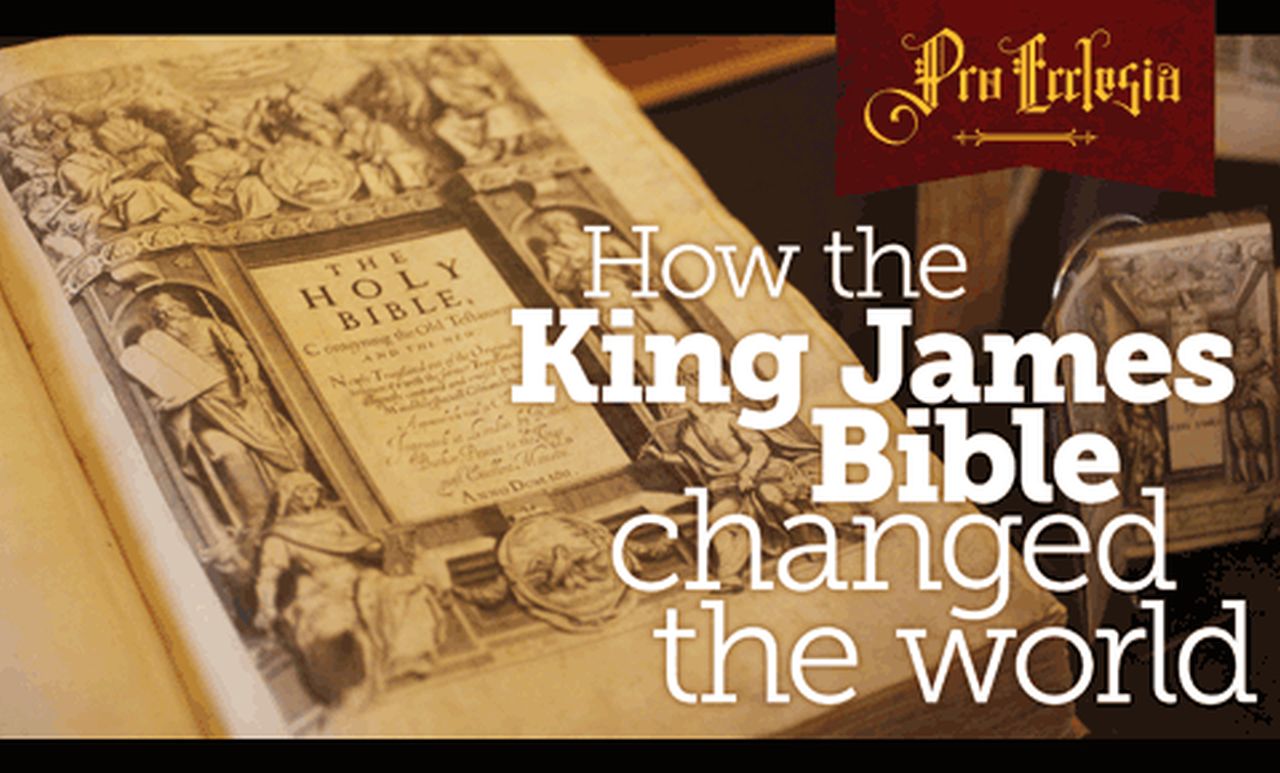
Ridiculous King James Bible Corrections
New Version Attack on the Deity of Christ….They remove the word “begotten” in John 3:16 …. The new versions are Gnostic!
“Therefore the Lord himself shall give you a sign; Behold, a virgin shall conceive, and bear a son, and shall call his name Immanuel.” Isaiah 7:14
Jesus Christ could not be divine if He were born from an earthly father.

“But while he thought on these things, behold, the angel of the Lord appeared unto him in a dream, saying, Joseph, thou son of David, fear not to take unto thee Mary thy wife: for that which is conceived in her is of the Holy Ghost. 21 And she shall bring forth a son, and thou shalt call his name JESUS: for he shall save his people from their sins. 22 Now all this was done, that it might be fulfilled which was spoken of the Lord by the prophet, saying, 23 Behold, a virgin shall be with child, and shall bring forth a son, and they shall call his name Emmanuel, which being interpreted is, God with us.” Matthew 1:20-23
On this account alone we know that the new versions cannot possibly be of God because they remove the fulfillment of prophecy concerning the one Messiah.
NEVER foolishly pretend to correct the Bible! No, correct your own foolish self!
Below is from by John Hinton, Ph.D.
jhinton@post.harvard.edu
John 3:16, Only Begotten
John 3:16 KJV For God so loved the world, that he gave his only begotten Son, that whosoever believeth in him should not perish, but have everlasting life.
John 3:16 is quoted more than any other verse in the Bible, at least by Christians and other church-goers. There may be no verse that is more frequently perverted than this one, but most people still know the full verse as presented by the KJV. Why then, is it so hard to find the word ‘begotten’ in other versions? The word in question is ‘monogenes’. This is a compound of two words monos and genes, the latter being drawn from the verb genao, which means to beget or cause to be produced. Monos means only or single, as is clear by its many appearances in English, such as monotony, monopoly, monotone, etc. Genao has come into the English language as well in words like generation, genesis, genes, generate, and so forth. The two words together mean only-begotten! It could not possibly mean anything else. In spite of this obvious, uncontestable, and invariable meaning, it is perverted with great frequency. The perversion of this verse appears to have begun, not with Christians, but with Gnostics in Egypt. These Gnostics not only denied the nature of Christ, but rewrote much of the New Testament in order to pervert the truth. These Gnostics had to lie through their teeth in order to suggest that the second half of this compound word did not count. Followers of the Alexandrian heresies, such as today’s New Age Bible version translators, being unconcerned with integrity, were more than happy to follow the Gnostic lead. It should be noted that the Gnostics did not even speak Greek as a native language. Their language was Coptic, which is about as close to Greek as Turkish is to Arabic. This means that it is less close to Greek than English is to Polish. Coptic adopted and adapted the Greek for their form of Egyptian, and borrowed many New Testament Greek words, just as Turkish borrowed the Arabic alphabet (until modern times) and many vocabulary words, as did Malaysian, Swahili, Farsi, Urdu, and many other unrelated languages, but this makes for only the most superficial comparisons. In both cases this is as far as the similarities go. Their language families are unconnected and their grammars are entirely dissimilar. Why on earth would anyone with a half a lick of sense accept a nonsensical definition of a Greek word by heretical, non-Christian Coptic speakers for a Greek word that is completely clear in its meaning to start with?
The ASV was not bold enough to pervert this verse, but the RSV and almost every modern version since has done so.
RSV For God so loved the world that he gave his only Son, that whoever believes in him should not perish but have eternal life.
NIV: For God so loved the world that he gave his one and only Son, that whoever believes in him shall not perish but have eternal life.
This is not the only place where only begotten son is changed to only son. The modern versions do the same thing in the following verses.
Joh 1:14 And the Word was made flesh, and dwelt among us, (and we beheld his glory, the glory as of the only begotten of the Father,) full of grace and truth.
Joh 1:18 No man hath seen God at any time; the only begotten Son, which is in the bosom of the Father, he hath declared him.
Joh 3:18 He that believeth on him is not condemned: but he that believeth not is condemned already, because he hath not believed in the name of the only begotten Son of God.
1Jo 4:9 In this was manifested the love of God toward us, because that God sent his only begotten Son into the world, that we might live through him
Unfortunately, many foreign Bible translations no longer have legitimate translations of these verses, and there are many languages that have never had one. No translation in French history has failed to pervert this verse. Not only do the modern perversions like the Louis Segonde, which is below, fail to say begotten, but even the much better earlier versions, such as the Olivetan and the Martin do so.
Car Dieu a tant aimé le monde qu’il a donné son Fils unique, afin que quiconque croit en lui ne périsse point, mais qu’il ait la vie éternelle.
They all say unique son, which is clearly wrong. The first French translation to include the whole verse is my KJV oriented revision of the Martin Bible, which I hope to make available soon.
The Arabic Bible is a fairly good Bible, but it botched this verse too. I suspect that the reason for this is that the Arabic translators may have used the French as their model. The Arabic says “ibn wahid”, which means unique son. I had to think about the French for a while, but the proper Arabic translation came to me instantly and quite naturally: “ibn wahid wulida bihi”. It sounds even more natural in Arabic than it does in English. I don’t understand why it didn’t occur to the original translators. I cannot believe that it had anything to do with technical issues. Most Gideon’s KJV Bibles include several translations of John 3:16 before the Bible text itself. I cannot read several of the languages at all, but among those that I can read the Arabic, French, Hindi, and Hebrew mistranslate it. If I were to compare verses from Bibles from all over the world the list of corrupted verses would go on for page after page.
I’ve had many people tell me that they see these verses as stating that Jesus is God’s unique Son in a very special way, but that is not even a relevant argument. It is irrelevant not only because the Greek does not say that he is unique, but because it is a subjective term with little meaning. Is Jesus God’s unique son? Yes, of course he is, but so is every other born-again Christian. As a born-again believer I am counted as a son of God. I also am unique. How many multilingual, KJV defenders who are Arabic translators, survival instructors, classical guitar players, wild critter gourmets, ex-hermitic mountain men, and former freight train-riding, chicken-farming Ivy League graduates who nearly flunked out of high school (due to truancy) are there out there? In the unlikely event that there are any, they are not going to look like me, sound like me, or share all of my other traits, faults and experiences. Everyone born-again Christian reading this can claim their own brand of uniqueness. We are all unique. Being unique is not unique and calling someone unique is not saying much of anything at all. Jesus is not just a unique son of God, but he is unique because he was his only-begotten Son!
Why is it so important to make such a big deal of this one word, some ask? There are many reasons, but the following come to my mind right away.
1) It is a lie to translate the word as “only” or “unique”. The word doesn’t mean unique. That is an attempt to rob Jesus of his true nature. This is a trick learned from Gnostics, Arians, and other heretics.
2) It is a lie that Jesus is the only son of God.
Joh 1:12 But as many as received him, to them gave he power to become the sons of God, even to them that believe on his name:
Ro 8:14 For as many as are led by the Spirit of God, they are the sons of God.
Ro 8:19 For the earnest expectation of the creature waiteth for the manifestation of the sons of God.
Php 2:15 That ye may be blameless and harmless, the sons of God, without rebuke, in the midst of a crooked and perverse nation, among whom ye shine as lights in the world;
1Jo 3:1 Behold, what manner of love the Father hath bestowed upon us, that we should be called the sons of God: therefore the world knoweth us not, because it knew him not.
1Jo 3:2 Beloved, now are we the sons of God, and it doth not yet appear what we shall be: but we know that, when he shall appear, we shall be like him; for we shall see him as he is.
3) If translators can’t get a plain statement like John 3:16 right, what credibility does that give to the rest of their translation?
Finally, it needs to be pointed out that Jesus is not the only son to be described as an only begotten one. Isaac also is described as only begotten.
Heb 11:17 By faith Abraham, when he was tried, offered up Isaac: and he that had received the promises offered up his only begotten son,
We know that Abraham had another son, Ishmael, and the modern version translators were just as aware of it. In this example Isaac is his only begotten son because he was the only one to be born of his lawful wife through him, the same way that Mary begot the only Son to ever be begotten through God. So why did they, once again, ignore the word begotten, and translate this verse as “only son” as they did with the references to Jesus? This is surely an act of incompetence, but it was more a desire to follow Gnostic/New Age philosophy that dictated the modern version translation than it was one of incompetence. They knew that if they were to translate this correctly, and it were to be noted by anyone looking at the Greek, their corruption would be disclosed. They had to cover their tracks by corrupting the verse regarding Isaac for that reason. As a result they make the ridiculous error of saying that Isaac had only one son.
Whatever the motive for the modern perversions’ treatment of these verses, they are glaring proofs that their alleged superior knowledge of Greek is as phony as Bill Clinton’s repentance. It is most sad that they have been allowed to get away with it by so many church-goers throughout the ages. The emperors need to put on some clothes, because they are guilty of indecent exposure.
The preceeding is part of a series of examples of KJV verses that arrogant would-be scholars have tried to correct and showed themselves to be fools. These examples are for the benefit of those who would like more ammunition to defend God’s Word against the attacks of the arrogant Bible “correcting” modernists. I hope that some of you find them useful.
Your servant in Christ,
John Hinton, Ph.D.
Bible Restoration Ministry: A ministry seeking the translating and reprinting of KJV equivalent Bibles in all the languages of the world.
by Will Kinney
“Doesn’t the KJV talk about unicorns?”
Yes, the KJB and many others as well, both in English and other languages, refer to unicorns. Unicorns DO exist; they just aren’t what you think they are.
Are you willing to look into this a bit more and learn something?
https://brandplucked.webs.com/unicorns.htm
Question for you. Most Bible agnostics and unbelievers in the inerrancy of ANY Bible refuse to answer it because they are too dishonest to admit what they REALLY believe about “the Bible”. How about you?
Here is the question.
Do you believe there IS (present tense) ANY Bible in ANY language, translated or untranslated, that you can SHOW US (Give us a link to where we can see it) that you honestly believe IS the complete and inerrant (infallible, 100% true) words of God? Yes or No?
If Yes, which one
is it?
If No, or simply “I don’t know” are you honest enough to admit it.
Thank you.
THINK ABOUT THIS – ARROGANT, UN-REPENTANT REBELS MANIFESTED:
“All scripture is given by inspiration of God, and is profitable for doctrine, for reproof, for correction, for instruction in righteousness:” 2 Timothy 3:16
Obviously some are foolishly arrogant and therefore refuse to receive the “correction” the real Bible brings. No wonder they love Satan’s corruptions and despise God’s preserved Word, the King James Bible.
If you don’t believe God kept His holy hand on the preserving His Word to us, all the way through to the King James Bible…..
“Behold, he that keepeth Israel shall neither slumber nor sleep.” Psalms 121:4
Oh what a great God and King Jesus we serve!
LET’S LEARN GOD’S WORD TOGETHER – ONE TRUTH AT A TIME: This message was sent out to each person who is on the Moments for My Master e-mail devotional list. In supplementation to your personal daily study of God’s Word, we would love to add you and have the privilege of nourishing your heart with God’s Word (Jn. 5:39; 1 Tim. 4:6, 16; Heb. 5:11-14; 1 Pet. 2:2). Sign up here.
Support | STORE | Podcasts | Jail/Prison Ministry | Mexico Mission here | All Ministry Updates | H.O.T. Bible Study [podcast] | Church History Exposed | Bible Agnostics Exposed | How to Spot a Fake Bible [podcast] | WHAT ABOUT PEOPLE WHO CAN’T UNDERSTAND THE KJB? [podcast] | New American Standard Version “Bible” NASV Catastrophe Exposed | The Audacity of Defending the New Versions | Do We Have God’s Word or Do You Need to Know the Original Languages? [podcast] | Bible Versions Category |

Articles
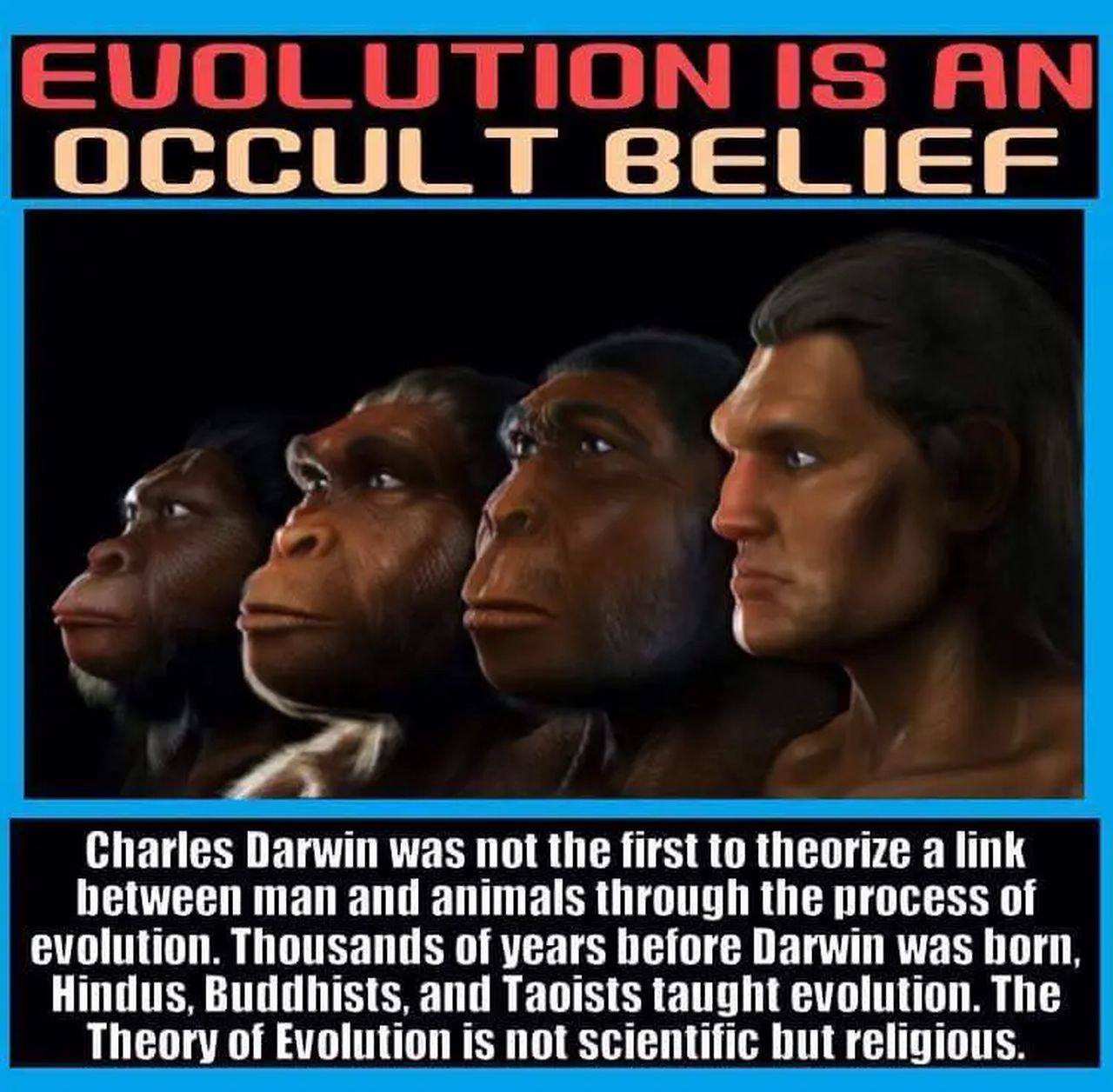
Darwin’s Demise: What they don’t want You to know about Charles Darwin! [podcast]
“Darwin’s theories are hardly irrefutable. He refuted them himself. This is how science works. Even he conceded that his theories would never be proven. Any actual learned Darwinist would have to concede the same. Also, we use the term ‘evolution’ so improperly that it’s become desensitized to actual facts of biology. We misuse it. Evolution is most often times intertwined with ‘adaptation’, which it is not. It’s like saying the term ‘free’ is the same as the term ‘no cost to you.’ Those are also obviously different. In any case, the ‘evolution of hominids’ is nonsense. These are nothing more than piles of various bones cherry picked to put the skeletons that they hope to display together. God made man in His image. Not in a monkey’s image. His.” Dave Fury
Darwin himself described the lack of transitional fossils as, “… the most obvious and gravest objection which can be urged against my theory.”
With the theory of evolution, we still lack much evidence. Where do we go from here?
Why do we not have unlimited fossil records of missing links of transitional forms if Darwin’s theory of evolution is true?

For example: If man came from apes, why are there still apes? And, where is the fossil record of the intermediary, transitional stages?
Shocking Charles Darwin Quotes
“But, as by this theory, innumerable transitional forms must have existed, why do we not find them embedded in countless numbers in the crust of the earth?” (Darwin, Origin of Species, 1859).
“When we descend to details we can prove that no one species has changed (i.e., we cannot prove that a single species has changed): nor can we prove that the supposed changes are beneficial, which is the groundwork of the theory.” Charles Darwin, 1863
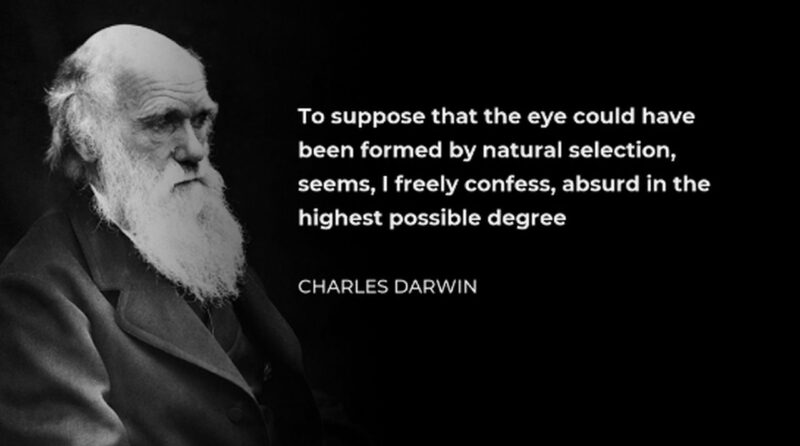
“To suppose that the eye, with all its inimitable contrivances for adjusting the focus to different distances, for admitting different amounts of light, and for the correction of spherical and chromatic aberration, could have been formed by natural selection, seems, I freely confess, absurd in the highest possible degree.” – Charles Darwin, Origin of Species, 1st Ed., p. 186.
“I have asked myself whether I may not have devoted my life to a fantasy . . . I am ready to cry with vexation at my blindness and presumption” Charles Darwin [12].
“Often a cold shudder has run through me, and I have asked myself whether I may have not devoted myself to a fantasy.” (Charles Darwin, Life and Letters, 1887, Vol. 2, p. 229)
“The number of intermediate varieties, which have formerly existed must be truly enormous. Why then is not every geological formation and every stratum full of such intermediate links? Geology assuredly does not reveal any such finely graduated organic chain; and this, perhaps is the most obvious and serious objection which can be urged against the theory.” (Darwin, Charles, Origin of Species, 6th edition, 1902 p. 341-342)
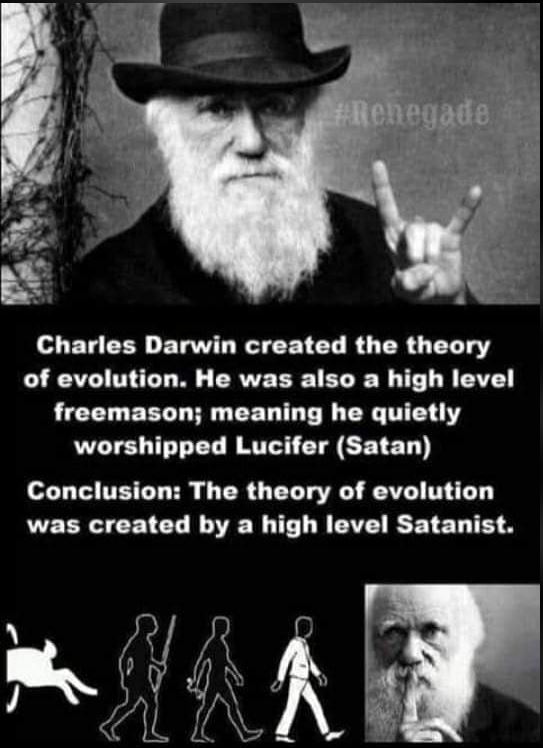
“The FOOL hath said in his heart, There is no God.” Psalms 14:1
If “The fool hath said in his heart, There is no God,” the wise people say in their hearts that “There is a God, you’re not Him – and we are all accountable to Him.”
“As it is appointed unto men once to die, but after this the judgment.” Hebrews 9:27
Not one library the world over contains a stitch of proof that evolution is true.
“Professing themselves to be wise, they became fools,” Romans 1:22
Atheism – The belief that there was nothing and nothing happened to nothing and then nothing magically exploded for no reason, creating everything and then a bunch of everything magically rearranged itself for no reason whatsoever into self-replicating bits which then turned into dinosaurs. Makes perfect sense.
It simply doesn’t matter how many scientific sounding words or theories one uses, we know from the first law of thermodynamics that matter cannot appear accidentally, by chance. We didn’t need someone to coin a “law” to know what the very first law of thermodynamics admits – that something cannot come out of nothing.
In His Word, God warns us of “avoiding profane and vain babblings, and oppositions of science falsely so called” (1 Timothy 6:20). False science is designed to oppose true science which acknowledges that which is self-evident. Much of what presents itself today, that which comes in the mere name of “science” is nothing more than an atheistic religion designed to deny that creation has a Creator. Consider the source. The atheistic peddlers of the debunked mere theory of evolution can be found to be miserable deniers of the obvious. More in a moment on how it’s been rightly stated that evolution is a “fairy tale for grownups.”
Remember, science is the mere study of the creation of an Almighty infinite Creator by the mere finite human.
Making Peace with God – Before it’s too late. | Atheism/Evolution
Support | STORE | Podcasts | Jail/Prison Ministry | Mexico Mission here | All Ministry Updates | Purifying Ourselves as He is Pure [podcast] | 10 Clues Your Love for God is Waxing Cold [podcast]







“Pastors According to Mine Heart” [podcast]

Ridiculous King James Bible Corrections

Darwin’s Demise: What they don’t want You to know about Charles Darwin! [podcast]

Beware of “Private Interpretation” [podcast]

The Benefits of Knowing and Delighting in the LORD [podcast]

Cons and Crooks who Do Not Preach the Cross [podcast]

NET New English Translation Fake “bible” Exposed

Doubt Casting Wolves Exposed

Thank You for Declaring that the Mexican People Matter to Jesus! Mission Mexico Part 50

John Wesley on Calvinism, Once Saved Always Saved, and Conditional Security

Arrogant Bible Correctors Rebuked

In a Small Prison Cell, Justin was about to Commit Suicide … [podcast]

“A Land Flowing with Milk and Honey” [podcast]

Nicolaitan Nightmare [podcast]

A PLACE CALLED HELL [podcast]
John Wesley on Calvinism, Once Saved Always Saved, and Conditional Security

Why Did God Give Us His Word? [podcast]
Beware of “Private Interpretation” [podcast]

Beware of the Hebrew Roots Judaizing Snakes! [podcast]

The Highest Form of His Creation

The Flesh will Never be Reformed it Must be Crucified [podcast]

The High Treason of False Leaders [podcast]

Direction in God’s Word? [podcast]

Can and Will God Use You? [podcast]
A PLACE CALLED HELL [podcast]
Arrogant Bible Correctors Rebuked
“Pastors According to Mine Heart” [podcast]
Nicolaitan Nightmare [podcast]

The Daily Cross in Prayer [podcast]
Doubt Casting Wolves Exposed
“Pastors According to Mine Heart” [podcast]
Ridiculous King James Bible Corrections
Darwin’s Demise: What they don’t want You to know about Charles Darwin! [podcast]


 America2 years ago
The Drugging of America: The Pharmakeia Sorcery Deception [podcast]
- Articles3 years ago
Children being Rescued in Tunnels: Happening Now – UPDATE!
- Articles9 years ago
Self-Examination in Preparation for the Lord’s Return
- Apostasy3 years ago
SHOCKING List of False Prophets Most Believe are True