





Evidence that the Ten Commandments have been Abolished for Righteousness
author unknown
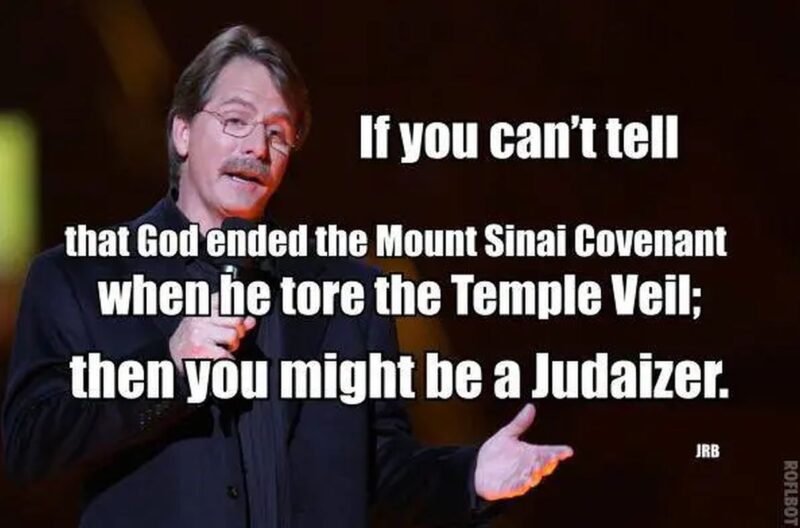
When referring to the law of commandments, the verses below use the same word for “Abolished”. Sabbatarians (those who strictly observe Saturday as the Sabbath, such as Seventh Day Adventists and other judaizers) say the latter verse is referring to the ceremonial law.
“Having abolished in his flesh the enmity, even the law of commandments contained in ordinances; for to make in himself of twain one new man, so making peace;” Ephesians 2:15
The “commandments contained in ordinances” refers specifically to the Ten Commandments.
“Know ye not, brethren, (for I speak to them that know the law,) how that the law hath dominion over a man as long as he liveth? or the woman which hath an husband is bound by the law to her husband so long as he liveth; but if the husband be dead, she is loosed from the law of her husband. So then if, while her husband liveth, she be married to another man, she shall be called an adulteress: but if her husband be dead, she is free from that law; so that she is no adulteress, though she be married to another man. Wherefore, my brethren, ye also are become dead to the law by the body of Christ; that ye should be married to another, even to him who is raised from the dead, that we should bring forth fruit unto God. For when we were in the flesh, the motions of sins, which were by the law, did work in our members to bring forth fruit unto death. But now we are delivered from the law, that being dead wherein we were held; that we should serve in newness of spirit, and not in the oldness of the letter. What shall we say then? Is the law sin? God forbid. Nay, I had not known sin, but by the law: for I had not known lust, except the law had said, Thou shalt not covet.” Romans 7:1-7
The following verses in Corinthians 3 clearly state that the Ten Commandments are abolished (four times) by using the same word for “Abolished” that was used in Ephesians 2:15.
“Do we begin again to commend ourselves? or need we, as some others, epistles of commendation to you, or letters of commendation from you? Ye are our epistle written in our hearts, known and read of all men: Forasmuch as ye are manifestly declared to be the epistle of Christ ministered by us, written not with ink, but with the Spirit of the living God; not in tables of stone, but in fleshy tables of the heart. And such trust have we through Christ to God-ward: Not that we are sufficient of ourselves to think any thing as of ourselves; but our sufficiency is of God; Who also hath made us able ministers of the new testament; not of the letter, but of the spirit: for the letter killeth, but the spirit giveth life. But if the ministration of death, written and engraven in stones, was glorious, so that the children of Israel could not stedfastly behold the face of Moses for the glory of his countenance; which glory was to be done away: How shall not the ministration of the spirit be rather glorious? For if the ministration of condemnation be glory, much more doth the ministration of righteousness exceed in glory. For even that which was made glorious had no glory in this respect, by reason of the glory that excelleth. For if that which is done away was glorious, much more that which remaineth is glorious. Seeing then that we have such hope, we use great plainness of speech: And not as Moses, which put a veil over his face, that the children of Israel could not stedfastly look to the end of that which is abolished: But their minds were blinded: for until this day remaineth the same vail untaken away in the reading of the old testament; which vail is done away in Christ. But even unto this day, when Moses is read, the vail is upon their heart. Nevertheless when it shall turn to the Lord, the vail shall be taken away. Now the Lord is that Spirit: and where the Spirit of the Lord is, there is liberty. But we all, with open face beholding as in a glass the glory of the Lord, are changed into the same image from glory to glory, even as by the Spirit of the Lord.” 2 Corinthians 3
Adventists and other torah/law keeping heretics say that the whole book of Galatians deals only with the ceremonial law, but a simple reading Galatians 4 proves them wrong;
“But when the fulness of the time was come, God sent forth his Son, made of a woman, made under the law, To redeem them that were under the law, that we might receive the adoption of sons. And because ye are sons, God hath sent forth the Spirit of his Son into your hearts, crying, Abba, Father. Wherefore thou art no more a servant, but a son; and if a son, then an heir of God through Christ. Howbeit then, when ye knew not God, ye did service unto them which by nature are no gods. But now, after that ye have known God, or rather are known of God, how turn ye again to the weak and beggarly elements, whereunto ye desire again to be in bondage? Ye observe days, and months, and times, and years. I am afraid of you, lest I have bestowed upon you labour in vain.” Galatians 4: 1-11
Colossians 2:14-16 clearly states that the weekly Sabbath is abolished. Adventists are at a loss as to know what to do with this verse!
Blotting out the handwriting of ordinances that was against us, which was contrary to us, and took it out of the way, nailing it to his cross; And having spoiled principalities and powers, he made a shew of them openly, triumphing over them in it. Let no man therefore judge you in meat, or in drink, or in respect of an holyday, or of the new moon, or of the sabbath days: Colossians 2:14-16
The idea that the Ten Commandments are separate from the ceremonial law, as Adventists claim, is a false doctrine not found in the Bible!
The Sabbatarians say that the Ten Commandments are for all mankind and are God’s universal eternal law. In response to this assertion, we reply:
If keeping the Sabbath was a moral law intended for all mankind, then why did God NEVER charge the Gentiles with breaking it. God charges the Gentiles many times for breaking all of the nine moral commandments on the tablets of stone, but NEVER ONCE says anything about breaking the Sabbath! This proves that Sabbath keeping is not inherently moral, but was just another ceremonial law given ONLY TO THE Jews!
The very words of the Ten Commandments clearly tell us that they were for the Jewish people ONLY! God never brought me or my ancestors out of Egypt! (Ex 20:2) The Lord has not given me the promised land of Canaan! (Ex 20:12) The Sabbath is a sign between God and fleshly Israel. There is no requirement for non-Jews to keep it! (Ex 31:1, 17; Ezek 20:12, 20) If Sabbath keeping was intended for all mankind, then why does Holy Scripture specifically state “strangers within your gates”? Obviously, the Gentiles (strangers) were never required at any point in history to keep the Sabbath!
Imagine that the Ten Commandments were a postal letter with no mailing address. The post office could easily determine who the intended recipient of the letter was by identifying the people being addressed.
• People who sometimes had strangers within their gates. (Ex 20:10)
• People who assembled at the mount on which there was a cloud. (Ex 19:16; Deut 5:22
• People who were slaves in Egypt. (Deut 5:15)
• People who had been delivered from Egyptian bondage. (Deut 5:15)
• People who were on their way to posses the land of Canaan. (Ex 20:12; Deut 5:16)
• People that God made a covenant with at Horeb. (Deut 5:1-3; Neh 9:14)
It would be impossible for people living in the Arctic Circle to keep the Sabbath. How could they, from sunset to sunset? Obviously God never intended anyone but the Jews living in Palestine to keep the Sabbath.
Historical archives prove the common view between 150AD and 200AD was that the Patriarchs never kept the Sabbath!
JUSTIN (150 AD): Moreover, all those righteous men already mentioned [after mentioning Adam. Abel, Enoch, Lot, Noah, Melchizedek, and Abraham], though they kept no Sabbaths, were pleasing to God; and after them Abraham with all his descendants until Moses… And you [fleshly Jews] were commanded to keep Sabbaths, that you might retain the memorial of God. For His word makes this announcement, saying, “That you may know that I am God who redeemed you.” (Dialogue With Trypho the Jew, 150-165 AD, Ante-Nicene Fathers, vol. 1, page 204)
TERTULLIAN (200 AD): Let him who contends that the Sabbath is still to be observed a balm of salvation, and circumcision on the eighth day because of threat of death, teach us that in earliest times righteous men kept Sabbath or practiced circumcision, and so were made friends of God. .. …Therefore, since God originated Adam uncircumcised, and inobservant of the Sabbath, consequently his offspring also, Abel, offering Him sacrifices, uncircumcised and inobservant of the Sabbath, was by Him commended… Noah also, uncircumcised – yes, and inobservant of the Sabbath – God freed from the deluge. For Enoch, too, most righteous man, uncircumcised and inobservant of the Sabbath, He translated from this world… Melchizedek also, “the priest of most high God,” uncircumcised and inobservant of the Sabbath, was chosen to the priesthood of God.
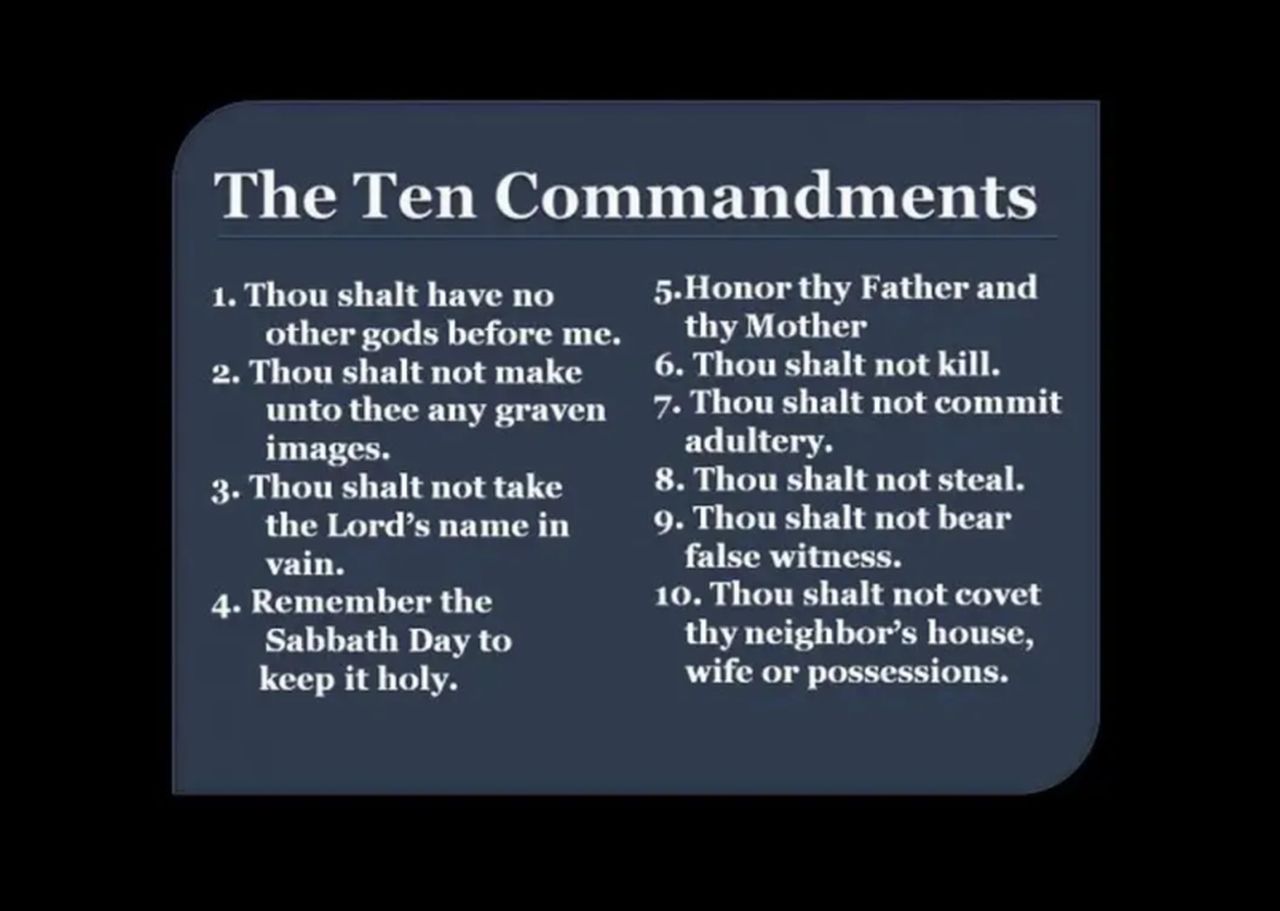
The Ten Commandments are the Old Covenant. (Ex 34:27-28)
The Old Covenant was abolished. (Heb 8:13)
The Ten Commandments are therefore abolished!
Points to consider regarding the Sabbath
1. If every man from Adam to Moses kept the Sabbath, why is the Hebrew word for the weekly Sabbath found in the Ten Commandments and never in the book of Genesis?
2. Why was it that, before Moses, no one was told to keep the Sabbath and why are there no examples of anyone keeping the Sabbath?
4. Why were the Patriarchs never instructed about he Sabbath, but were instructed as to offerings (Gen 4:3-4), altars (Gen 8:20), priests (Gen 14:18), tithes (Gen 14:20), circumcision (Gen 17:10), and marriage (Gen 2:24, 34:9)?
5. Why was there no weekly Sabbath commandment given in the New Testament?
6. Why was the Sabbath the only one of the Ten Commandments that are said to be “throughout your generations”, the usual phrase that indicates it was a temporary ceremonial law only for the Jews?
7. Why is there no example of Christians exclusively coming together on the Sabbath day as a church or prayer meeting after the resurrection of Christ?
8. Why is there no command in the New Testament for Christians to keep the Sabbath holy? Paul taught in the synagogues as many as 84 times. Why does the Bible never say he kept the Sabbath?
9. How could Adam, Noah and Abraham keep the Sabbath, when Deuteronomy 5:2-4 says that the Ten Commandment covenant was not made with any of the fathers of Israel who lived before Moses?
10. If we must follow the example of Jesus in all things like keeping the Sabbath, then why do Sabbatarians not follow the example of Jesus in circumcision, animal sacrifices and keeping Passover?
11. If the Sabbath was for Gentiles, then why was the Sabbath a sign to remind the Jews of their exodus from Egypt? (Ex 16:23, 29; 31:13-18)
13. If the Sabbath law is still in force, then why do they not stone their own members when they break the Sabbath as the law said?
14. Ellen G. White, who is considered inspired by Seventh-day Adventists, said that the Pope changed the Sabbath in about 321 AD. Why do all Adventists today reject their inspired prophet and say the change of the Sabbath occurred in about 140 AD?
15. If White was wrong about this, was she wrong when she traveled to heaven and saw the 4th commandment glowing brighter than all the rest?
16. If the current position of the Seventh-day Adventist church is that the change from Saturday to Sunday took place in 140 AD, doesn’t that mean that they have come a long way from White’s claim that this occurred in 325 AD?
17. If the change from Saturday to Sunday actually happened, why is there absolutely no discussion of this for the first 600 years of church history? Merely calling Sunday the Sabbath doesn’t count!
19. If Sabbatarians reject White’s assertion that Constantine changed the Sabbath day to Sunday, why do they keep bringing him up as proof? If Constantine changed the Sabbath to Sunday, why does here merely legislate that work must stop on Sunday with no actual mention of the day being moved?
20. If the first/old covenant was abolished according to Hebrews 8:13, and the Ten Commandment law was that first covenant (Ex 34:27-28; 1 Kings 8:9, 21; Heb 9:1-4), then why do Sabbatarians want to keep the first/old covenant?
21. Why is the universal record of history (75-500AD) 100% in unanimous agreement that Christians never kept the Sabbath (7th day) and have always worshipped on Sunday?
22. Why is the universal record of history (75-500AD) 100% in unanimous agreement that Christians ate the Lord’s Supper every Sunday in the tradition of Acts 20:7?
23. Why is the universal record of history (75-500AD) 100% in unanimous agreement that Christians always called Sunday the Lord’s Day because this was the day Jesus rose from the dead?
24. Why has no Sabbatarian every produced even one historical quote (75-500AD) that states Christians kept the Sabbath?
25. If the Sabbath is not a ceremonial law, then why is it lumped into the same identical class of “holy convocations” as the rest of the Jewish feast days? (Lev 23:2; Ex 20:9; 31:17)
26. If the Ten Commandments remain, but the book of law was abolished, then why did God put two copies of the 10 commandments in the book of the law? (Ex 20; Deut 5)
27. How can there possibly be a difference between “The Law of God” and the “Law of Moses”, when God gave the Law of Moses (Ezra 7:6; Neh 8:1) and Moses gave the Law of God (Neh 10:29; 2 Chron 34:14)?
28. If there is a distinction between the moral and ceremonial laws, why are the Jewish feast days called part of the Law of the Lord? (2 Chron 31:3)
29. If there is a distinction between the moral and ceremonial laws, then why in a single chapter of Nehemiah 8 are the following phrases all used interchangeably: “book of the law of Moses” v1, “the law” v2, “book of the law” v3, “the law of god” v8, “book of the law of god” v18?
30. Why are the two most important commandments contained within the Law of Moses unrelated to Sabbath keeping? (Mat 22:36-40)
31. What did Jesus say about the law that Moses gave the Jews? (John 7:19)
32. If, according to the Adventists, the Sabbath cannot change because God cannot change (Mal 3:6), then what about all the other feast days and laws that changed (Heb 7:12), and why did Jesus give a new commandment in John 13:34?
33. If the Ten Commandments are going to be in heaven, what is the use of “thou shalt not commit adultery”, if there is no marriage in heaven? (Luke 20:34-35)
34. If the Sabbath was given to all men, why then were Gentiles called “strangers”. Why were Gentiles outside the gates not required to keep the Sabbath? (Ex 20:10)
35. How could the Sabbath be a sign between God and Israel if all nations were expected to keep it? (Ex 31:17)
36. Why did God send the Jews into Babylonian Captivity for breaking the Sabbath, but never ever criticized any Gentiles for never keeping the Sabbath?
37. Why did God often criticize the Gentiles via the prophets for moral violations, but never for breaking the Sabbath?
38. If the Gentiles were supposed to keep the Sabbath, why are they called “strangers of the Covenant” in Ephesians 2:12?
39. If the term “commandments” always means the Ten Commandments, then why are the laws that are not part of the Ten Commandments called commandments in Matthew 19:16-19 not also included?
40. If the term “commandments” always means the Ten Commandments, then what did Paul call the injunction for prophet’s wives to keep silent in the assemblies, a “commandment of the Lord” in 1 Corinthians 14:37?
41. If the term “keep my commandments” always means the Ten Commandments, then why is there a new commandment? (John 15:10-12, John 13:34)
42. If only the Ten Commandments are going to endure until heaven and earth pass away, why did Jesus say the law AND THE PROPHETS? (Mat 5:17-18)
43. When Jesus was asked, “Teacher, which is the great commandment in the Law?” why did Jesus NOT QUOTE from the Ten Commandments, but from the abolished ceremonial law of Moses? (Mat 22:36-40)
44. If the Ten Commandments are the highest and most complete expression of God’s will, then why did they lack the two most important commandments? (Mat 22:36-40) and where is the prohibition against drunkenness, homosexuality and fornication?
45. If the Ten Commandments are the highest and most complete expression of God’s will, then why did Jesus give a new commandment to “love one another, even as I have loved you”? (John 13:34) Where were the Jews told to love their neighbor as God loved them?
46. If Christians worshipping on Sunday is equal to Sun Worship, then is Messianic/Adventists worshipping on Saturday equal to Saturn worship?
47. If Sabbatarians will boldly quote “scholars” who are really Bible trashers and skeptics who claim “the origin of Sunday worship is entirely pagan”, like Arthur Weigall in his ridiculous little book, “the paganism in our Christianity”, will these same Sabbatarians turn a few pages later where these same authors say the origin of the Sabbath is also pagan? “I have, already mentioned that Sunday, too, was a pagan holy-day; and in this chapter I propose to discuss the origin of this custom of keeping one day in the week as a Sabbath, or “day of rest,’ and’ to show that the practice was forcefully opposed by Jesus Christ. The origin of the seven-day week which was used by the Jews and certain other peoples, but not till, later by the Greeks or Romans, is to be sought in some primitive worship of the moon (The Paganism in Our Christianity, Arthur Weigall, 1928, p209, 210-211)
48. If the Sabbath is a moral law, why did Jesus say that David, the priests, and a man with his donkey could all break the Sabbath without sin? (Mat 12:1-14; Mark 2:23, Luke 13:10-17; 14:1-6 John 5:8-18; 7:19-24; 9:14-16)
49. If the Sabbath is a moral law, why did God grow tired of the Jews keeping it and told them to stop keeping the Sabbath? (Isa 1:13-14) Did God ever grow weary of anyone not committing adultery or murder, and tell them to be immoral and kill?
50. If the Sabbath is a moral law, how could Jesus break it without sinning? (John 5:18)
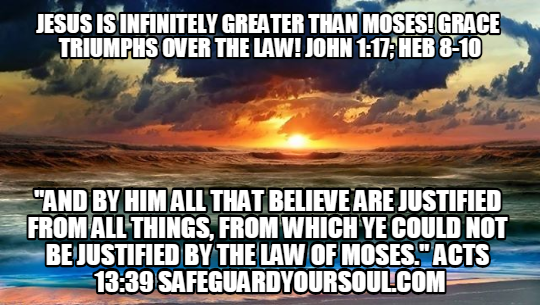
YES the whole 66 book canon of the Bible is for us and yet, IT reveals that a NEW covenant superseded the Old one. The book of Hebrews reveals to us that a “BETTER covenant” with “BETTER promises” made the old covenant obsolete “for righteousness.” (Hebrews 7:22; 8:6; Romans 10:4) The faith of the NEWWWW Testament saint, saved by grace, is not set upon trying to keep the law (“keeping Torah”) but rather set upon the only ONE to ever keep the law perfectly – then He. Christ, nailed it to the cross and “took it out of the way.” (Colossians 2:14-19) It’s over so repent and get over it, now! The infinitely inferior old was a mere shadow of the infinitely superior NEW Testament that was to come and HAS come with Christ! (Hebrews 10:1) Beware of the demonic judaizing devils in our midst. They are snakes!
Support | STORE | Podcasts | Jail/Prison Ministry | Mexico Mission here | All Ministry Updates | Fresh Start with God | “Fear hath Torment” – 100% Deliverance from all Fear! [podcast] | Resurrection Grace [podcast] | G.O.D. = Game Over Devil [podcast] | Justification | Grace and Good Works [podcast] | More on Assurance here | Eternal Security Debunked | The Cross Life | 100’s of Christ-centered, Scripture-rich podcasts for your edification in Christ.
Abiding
The Sheep vs the Goats as Defined in Scripture [podcast]
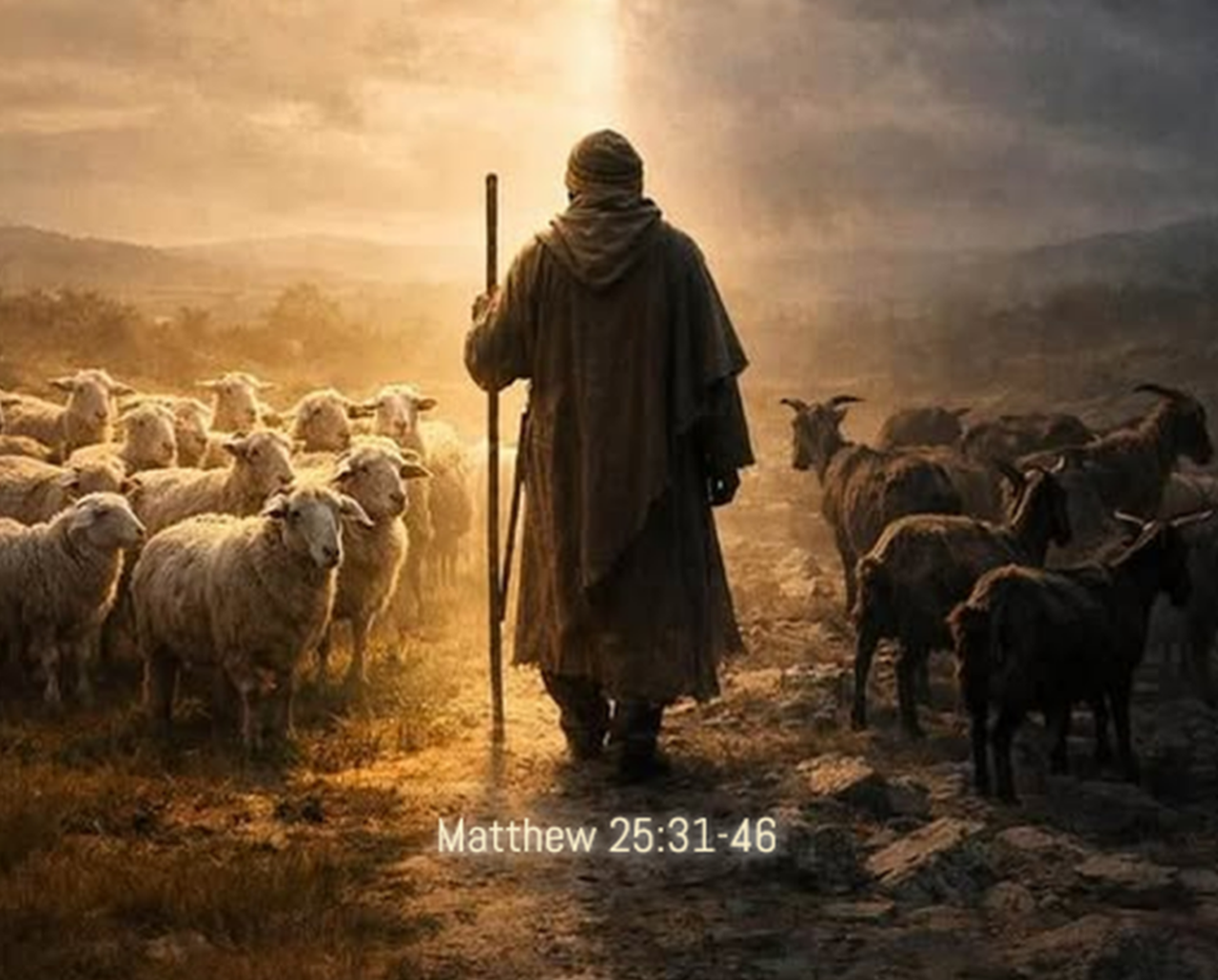
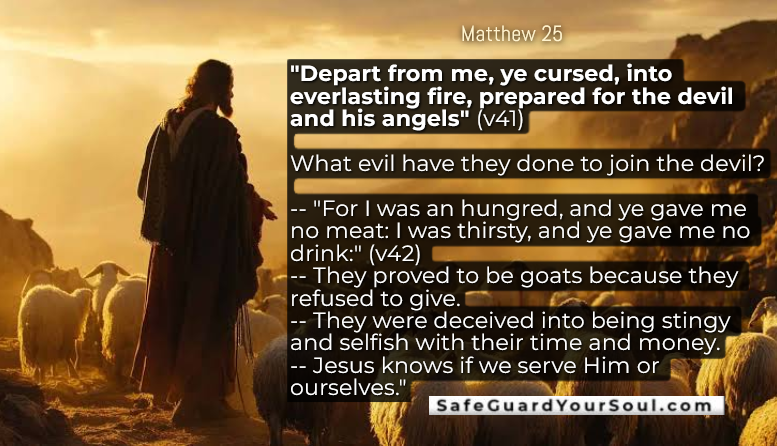
“The goats feed their carnal appetite. The sheep of Christ feed on the Word of God! Jesus’ sheep know His voice. They follow and obey their Lord Jesus (John 10:27). The goats obey their fleshy desires (Galatians 5:16-21), and follow the hirelings and not the Great Shepherd, the LORD Jesus (John 10; Heb 13:20). Christ’s sheep are known by Him! (John 10:14,27; 1 Corinthians 8:3). The goats will be cast out and told, ‘I never knew you: depart from Me, ye that work iniquity.’ (Matthew 7:23). Terrifying words! Are you Jesus’ sheep, or are you a goat, a counterfeit? Search your heart today. Ask God if He knows you! It matters not if we claim to know Him. He must also know us, as this Scriptures clearly reveal!” Karen Cochran
“Search me, O God, and know my heart: try me, and know my thoughts: 24 And see if there be any wicked way in me, and lead me in the way everlasting.” Psalms 139:23-24
Of sheep and goats, one source notes:
“Jesus shares the story of the Sheep and the Goats in Matthew 25:31–46 to describe the final judgment. In the story, the Son of Man separates all of humanity just like a shepherd sorts sheep from goats, placing the sheep on His right side and the goats on His left.”
The Naked Truth about Who’s Going to Heaven and Who’s Going to Hell
WANT to see those whom the LORD calls His own? Want to see who the true Heaven bound remnant are? Look at those who are about the “Father’s business” which is the Great Commission (Luke 2:49; 24:47; Matthew 28:18-20; Mark 16:15; Acts, etc.). Everyone else is doing their own thing.
“Not every one that saith unto me, Lord, Lord, shall enter into the kingdom of heaven; but he that doeth the will of my Father which is in heaven.” Matthew 7:21
With their life, the rebel declares “Not Thy will but mine be done!”
With their life, the righteous declare with Christ “not my will, but thine, be done” (Luke 24:42).
“At that day ye shall know that I am in my Father, and ye in me, and I in you. 21 He that hath my commandments, and keepeth them, he it is that loveth me: and he that loveth me shall be loved of my Father, and I will love him, and will manifest myself to him. 22 Judas saith unto him, not Iscariot, Lord, how is it that thou wilt manifest thyself unto us, and not unto the world? 23 Jesus answered and said unto him, If a man love me, he will keep my words: and my Father will love him, and we will come unto him, and make our abode with him. 24 He that loveth me not keepeth not my sayings: and the word which ye hear is not mine, but the Father’s which sent me.” John 14:21-24
“And hereby we do know that we know him, IF we keep his commandments. 4 He that saith, I know him, and keepeth not his commandments, is a liar, and the truth is not in him. 5 But whoso keepeth his word, in him verily is the love of God perfected: hereby know we that we are in him. 6 He that saith he abideth in him ought himself also so to walk, even as he walked.” 1 John 2:3-6
Walk and live as Jesus lived? Yes. Those who know and love Him are about the work and “the will of him that sent” them.
Take a look:
“Jesus saith unto them, My meat is to do the will of him that sent me, and to finish his work” (John 4:34). Jesus then speaks of evangelism, something every one of His people are to be doing (John 4:34-38).
“For I came down from heaven, not to do mine own will, but the will of him that sent me.” John 6:38
“And this is the will of him that sent me, that every one which seeth the Son, and believeth on him, may have everlasting life: and I will raise him up at the last day.” John 6:40
“He that is not with me is against me; and he that gathereth not with me scattereth abroad.” Matthew 12:30
Anyone not fully with Jesus, is against Him, the only Savior.
So you claim Christ as Savior but don’t participate in prayer, support, and Great Commission action? Time to repent for real. The fruit of your life is rotten. You are presently a Savior-rejecting, self-serving counterfeit.
Read 1 Corinthians 9. The first half is concerning our privilege to give to HIS work. Then the apostle Paul speaks of running the race, to the end, becoming all things to all men to see them saved, being crucified with Christ.
The more I read God’s Word, the more convinced I am that the Heaven bound remnant are known in that they are about the “Father’s business” —the Great Commission—and not their own (Luke 2:49). They have laid down and are forsaking their own lives in this fleeting world in their supreme love for Christ Jesus (Acts 20:24). Anyone claiming to be Christ’s and not doing, participating in the Great Commission command … clearly reveals that they are in need of repentance, before it’s too late. Jesus is not their “first love” —which means they are committing spiritual adultery on Christ, the Great and coming Bridegroom (Revelation 2:4-5). Repent and obey Him or perish.
If you are committed to Christ, with no exception, you are committed to studying, knowing, and walking out His Word. You are committed to carrying out the Savior’s Great Commission command.
YOUR PRAYER: Right now dear holy and heavenly Father, please begin a fresh work in this heart. May Your love fill this heart and may You alone be my “first love.” May the love in me for You burn. Let it far exceed all other loves and interests! In Jesus’ name. Amen.
Support | STORE | Podcasts | Jail/Prison Ministry | Mexico Mission here | All Ministry Updates | H.O.T. Bible Study [podcast] | Divine Blessings | Exhort One Another Daily | The Return of Christ | The Joy of Fulfilling the Great Commission | The Love of Many Shall Wax Cold | Lie of the Ages (book) | Soul Damning Sins (small book) | Why We Need not Fear Death | Revelation Bombshell!


Abiding
Dirty Ox Stalls bring Dividends [podcast]
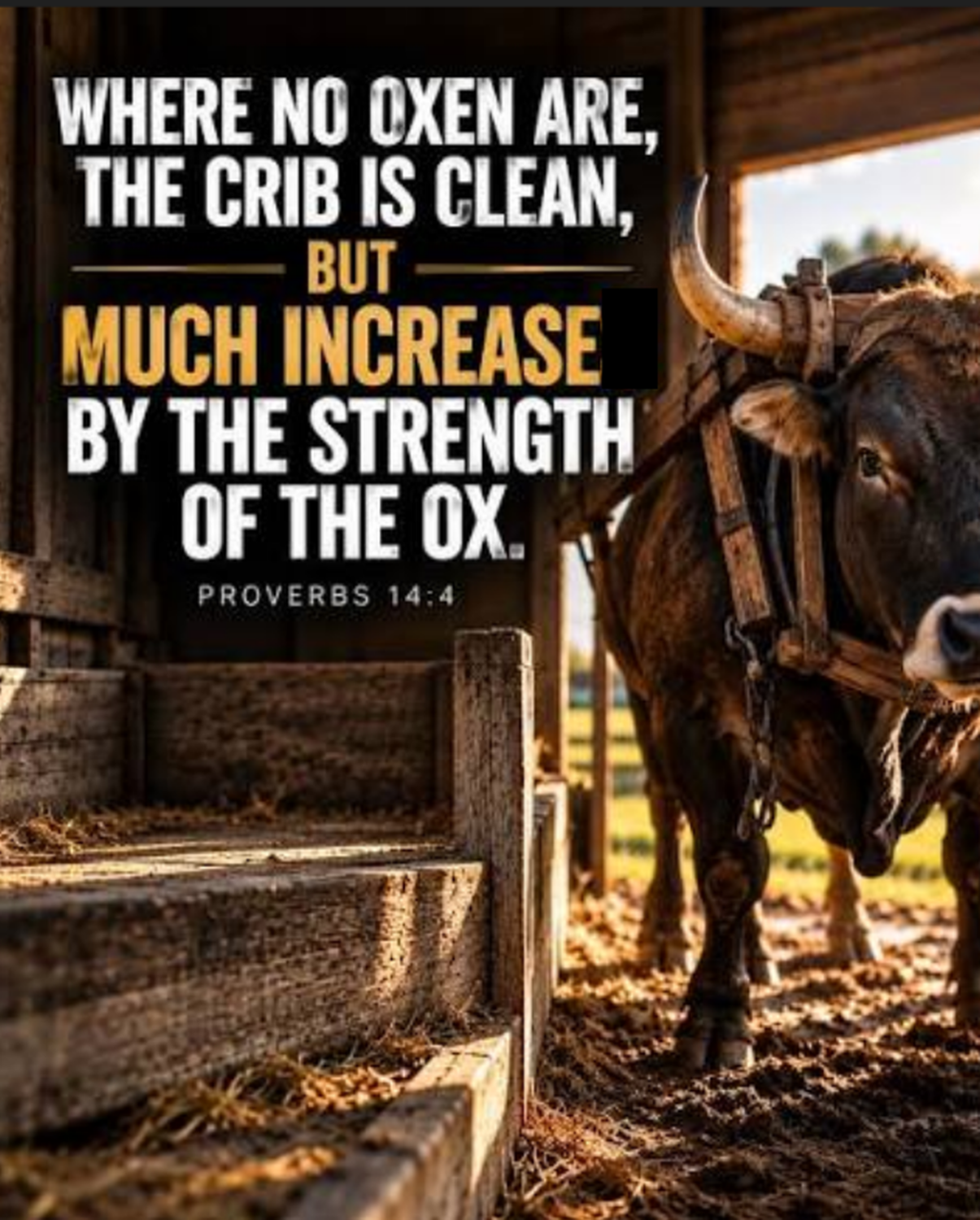
An intriguing proverb that applies directly to our daily lives and the stewardship of the time our LORD has afforded us in this brief life. Gaining traction via the wisdom of our great God and King Jesus Christ. How to avoid spending our lives “spinning our wheels.”
“Where no oxen are, the crib is clean: but much increase is by the strength of the ox.” Proverbs 14:4
The blessing of a dirty ox stall…. What’s most important to God is productivity, not neatness, not tidy-ness, not a clean stall.
Here’s a proverb from the Holy Spirit and Solomon which breathe wisdom into our lives. Let’s read it again:
“Where no oxen are, the crib is clean: but much increase is by the strength of the ox.” Proverbs 14:4
The proverbs of the LORD we have in His Word hold hidden meaning which breathe wisdom into our lives.
A proverb is a figure of speech, words that impart truth by using natural illustrations to convey spirit truths.
Jesus taught in parables. Parables are earthly stories with heavenly meaning, divine wisdom to establish us in our relationship with Him as we love, worship and obey the LORD.
This is exactly what we have in Proverbs 14:4, where an ox and his stall are featured in order to convey the divine truth that productivity is more important to God than the pettiness of cleanliness.
The proverbs often use simple images to convey a deeper moral or practical lesson.
Active, working oxen bring dirt and dividends. Clean ox stalls glitter but produce no gold.
When commenting on this proverb, one man said: “Don’t be deterred by the dung.”
Fruitful saints aren’t known by how clean their house is but rather how full, how abundant their treasure in in Heaven (Matthew 6:19-21). Their prayer and work is focused upon pleasing their LORD Jesus and not with how clean their temporal living space looks, by how sparkling clean their life looks to mere sinful men.
One pastor notes the following about the divine truth imparted to us in Proverbs 14:4:
“There are some proverbs that stick in our heads more than others and this is one of them for me. The image is memorable and the lesson is unforgettable. Solomon paints the picture of a barn without oxen and because of no oxen, the stalls are clean and pristine. This is a barn that the perfectionist likes; a barn that can be organized, cleaned and maintained without interruption. This is a barn that the neat freak and the clean freak crave; a barn that they can come into and know that everything is clean and tidy. This is a barn that needs no work. This is a barn that, after working in the field, demands no additional time or effort to clean. This is a barn that needs no attending to after hours. It demands no thought when heading out of town. It never smells. It doesn’t even make a sound. There is no sickness in this barn nor does death ever visit its crib. This is a barn that requires no food or water and as such, it doesn’t require any constant removal of dung. It’s clean and pristine! … While that sounds appealing to the average man or woman, the average farmer doesn’t pursue an empty crib. He knows that the tradeoff is well worth it. It’s the cost of doing business in agriculture. He knows that he could farm his land on his own and that he could produce “some” increase on his own. He knows that he doesn’t need oxen to till the ground, to sow the seed or to harvest the crops but if he’s going to have “MUCH” increase, he needs oxen and there are no oxen that clean up after themselves.”
The mess is worth the money.
The dirt is worth the dividends it brings.
Dirty spaces bring special graces.
The progress and productivity are worth the pile of trash.
Men who are dirty from working all day will go home with fruitfulness for their family. They are satisfied and blessed to do so and so we wake up the next morning and gladly go do the same. The trade off that brings wages is worth it.
This proverb also brings into mind the harvest that can being produced by you alone, in contrast with the harvest produced having others to labor with you to bring forth “much increase.”
Also, by not inviting others to join you in doing our LORD’s work, we deprive them from being blessed to lay up treasure in Heaven as our LORD commanded each of us who His children to do (Matthew 6:19-21).
The following is from Josh Denhart:
“In ministry we think, “If you want a job done right, do it yourself.” You may avoid messes, but you have just stepped into the “Trap of the Clean Stall”.
Proverbs 14:4 reads, “Where no oxen are, the crib is clean: but much increase is by the strength of the ox. “
In the ancient agrarian world, animals brought a massive advantage. To have an animal meant you could accomplish so much more. Today we refer to a car as having a certain amount of “horse power”. In times past, an animal brought with it a certain amount of power. Power to increase the harvest and get the job done. Here, the writer of Proverbs is referring to “Ox Power”. The power and advantage is brought through the strength of an ox.
The writer of Proverbs says that it is really a trade off. On one hand you get a significant increase through the strength of an ox, yet with it you get, poop. Yes, good, ol’ fashioned ox poop.
Goal: Huge Harvest
Let’s compare the alternative. You have no oxen, but you have an amazingly clean manger stall.
More harvest with a poopy stall vs. a perfectly clean stall and a diminished harvest.
Our goal is not a clean stall. Our goal is a huge harvest. A natural side effect of a huge harvests are messes. What do you want? Do you crave a super clean stall over a bountiful harvest? Listen, a tidy stall in and of itself is a bad trade for a compromised harvest.
Let me shoot straight with you. I have a well-managed case of OCD. I crave order. If you serve in children’s ministry, you probably do too. I hate disorder. Yet the calling of the harvest trumps our neurotic desire for order.
Do not fall into the trap of the clean stall.
You Can’t Do It Alone
We must define our goal for the harvest over and over! Our goal is reaching the lost through equipping the fold. Our ultimate goal is not order for order sake. Our goal is the good news of Jesus going deep into the hearts and heads of kids, which brings messes. Get used to it. And get over it.
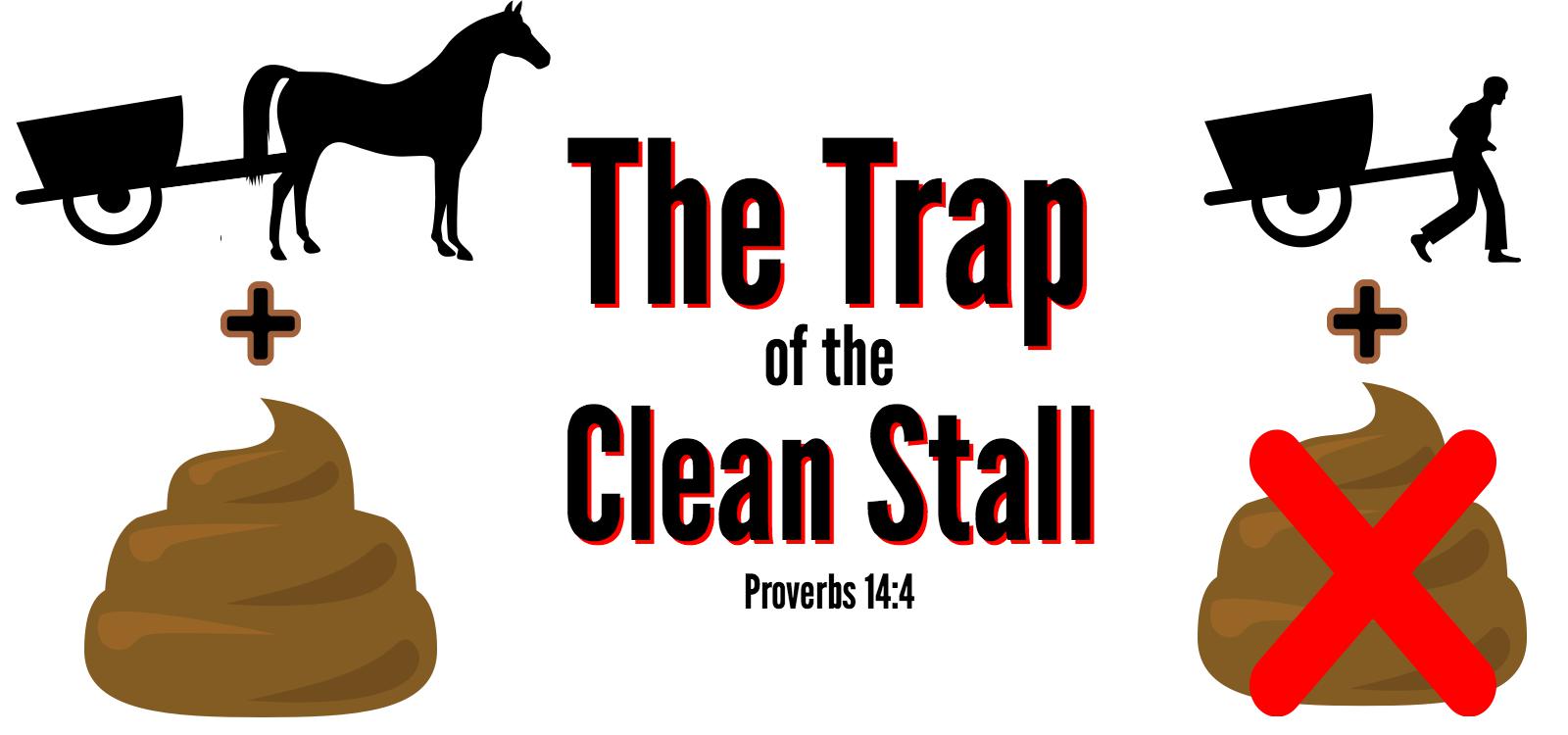
We can have order as we achieve a large harvest, but uncomfort with messes can short circuit great harvests.
Let’s take this proverbial analogy a step further. You as a ministry leader are essentially the farmer. You can’t and don’t want to do it alone. You need help. Those willing to help you from a staff or a volunteer perspective can bring great strength and accomplish more for the harvest than you by yourself. And, yes, I am equating associates and volunteers to oxen.
The Harvest is Plentiful
Oxen and people are living beings. Both bring messes. Farming, like ministry, is just messy. Jesus said He came not for the healthy but for the sick. Sick people vomit physically and emotionally, have issues and need attention. That is our job. Years ago, someone sarcastically said, “Ministry would be great were it not for all these people!”
Listen, if you want order more than you want the harvest, you may find yourself doing it alone. Doing it alone equals to a field white for harvest with no one to get the job done. The harvest is plentiful, but the workers are few. More workers means more messes. We as farmers must manage the messes and rise above the stall to see the harvest.
Do you want a harvest more than you want order? Absolutely. Therefore, we had better embrace the reality of a poopy stall. Do not fall into the trap of the clean stall.”
One has to roll up his sleeves and get dirty to produce dividends to the glory of the divine.
Ever see construction works at the end of a work day? They are dirty and yet earned dollars, dividends. They will do it the next day also. Why? – because the trade off is productivity, earning that which is desirable.
Lots of work brings movement and a mess.
Lot’s of dirt when you much to diligently do and bring dividends.
A clean workspace brings no coin.
Do you want to work and get dirty, cause a mess, and yet make a profit? Or do you want to keep your place clean with the outcome being no coin?
The blessing of “much increase” comes at the expense of a clean crib, work space. It’s a bless-ed trade-off, right?
Personally, I could care less about a disheveled work place. My goal is to be fruitful, fruit-filled for Christ, bearing – “fruit … more fruit … much fruit.” (John 15)
In your business life, would you rather a disheveled work space and work to do, or a clean work space with no work?
It is better to have dirt to clean up with work that brings wages than to have a clean work place with no work.
Increase in material prosperity, productivity, fruitfulness comes by utilizing the oxen for labor and as a result there will be a mess made. The fruit produced far outweighs having to clean the stall, the work place.
“A barn can be kept cleanly swept where there are no oxen, but isn’t it better to have some dust and dirt around, knowing that the labor of an ox will lead to a bountiful harvest? The rewards of toil more than compensate for its disagreeable aspects.
This proverb is not intended to encourage homes or chapels that look like disaster areas. But it does discourage that passion for order and dustlessness that puts the brakes on progress and productiveness.” Believer’s Bible Commentary
Dust and dirt bring dividends.
Productivity makes for progress.
The grind brings the goods.
Labor brings some loot.
Someone has wisely stated:
“Salons always have hair on the floor.
Garages always have oil on the floor.”
The oxen serve a good purpose and produce productivity.
What is it to have a clean work place? That just means you aren’t being productive, you don’t have work that is bring wages and blessings.
“Straining at a gnat”…. Swallowing a Camel
This idiom Jesus uses means over-emphasizing the minors while under-emphasizing the majors, “the weightier matters of the law.”
Matthew 23
“Woe unto you, scribes and Pharisees, hypocrites! for ye pay tithe of mint and anise and cummin, and have omitted the weightier matters of the law, judgment, mercy, and faith: these ought ye to have done, and not to leave the other undone.
24 Ye blind guides, which strain at a gnat, and swallow a camel.
25 Woe unto you, scribes and Pharisees, hypocrites! for ye make clean the outside of the cup and of the platter, but within they are full of extortion and excess.
26 Thou blind Pharisee, cleanse first that which is within the cup and platter, that the outside of them may be clean also.
27 Woe unto you, scribes and Pharisees, hypocrites! for ye are like unto whited sepulchres, which indeed appear beautiful outward, but are within full of dead men’s bones, and of all uncleanness.
28 Even so ye also outwardly appear righteous unto men, but within ye are full of hypocrisy and iniquity. “
Martha and Mary – Mary had the Divine Priorities in their Rightful Place
“38 Now it came to pass, as they went, that he entered into a certain village: and a certain woman named Martha received him into her house.
39 And she had a sister called Mary, which also sat at Jesus’ feet, and heard his word.
40 But Martha was cumbered about much serving, and came to him, and said, Lord, dost thou not care that my sister hath left me to serve alone? bid her therefore that she help me.
41 And Jesus answered and said unto her, Martha, Martha, thou art careful and troubled about many things:
42 But one thing is needful: and Mary hath chosen that good part, which shall not be taken away from her.”
No, it’s not a sin to keep things clean, to be organized. Yet, at the judgment, Jesus is not going to say “Oh wow, you kept your living and workspace clean! Enter thou into the joy of the LORD.” No, but rather….
“His lord said unto him, Well done, thou good and faithful servant: thou hast been faithful over a few things, I will make thee ruler over many things: enter thou into the joy of thy lord.” Matthew 25:21
At the coming judgment what we did for His glory, in His holy name, will be rewarded.
Matthew 25
“And he shall set the sheep on his right hand, but the goats on the left.
34 Then shall the King say unto them on his right hand, Come, ye blessed of my Father, inherit the kingdom prepared for you from the foundation of the world:
35 For I was an hungred, and ye gave me meat: I was thirsty, and ye gave me drink: I was a stranger, and ye took me in:
36 Naked, and ye clothed me: I was sick, and ye visited me: I was in prison, and ye came unto me.
37 Then shall the righteous answer him, saying, Lord, when saw we thee an hungred, and fed thee? or thirsty, and gave thee drink?
38 When saw we thee a stranger, and took thee in? or naked, and clothed thee?
39 Or when saw we thee sick, or in prison, and came unto thee?
40 And the King shall answer and say unto them, Verily I say unto you, Inasmuch as ye have done it unto one of the least of these my brethren, ye have done it unto me.”
Read John 15 and underline “fruit” and “more fruit” and “much fruit.” “Fruit” emanates from the life that is soundly grounded in an abiding relationship with Jesus Christ.
“Ye have not chosen me, but I have chosen you, and ordained you, that ye should go and bring forth fruit, and that your fruit should remain: that whatsoever ye shall ask of the Father in my name, he may give it you. 17 These things I command you, that ye love one another.” John 15:16-17
Support | STORE | Podcasts | Jail/Prison Ministry | Mexico Mission here | All Ministry Updates
Holy Ghost Baptism Study Guide (highly recommended) | Beware of the Gift Thieves | No Pentecost, No Power! | Power to Fulfill (audio) | Holy Ghost Baptism (audio) | The Return of Christ |


Abiding
Top 12 Missing Essential Doctrines in the Modern Church World! [podcast]
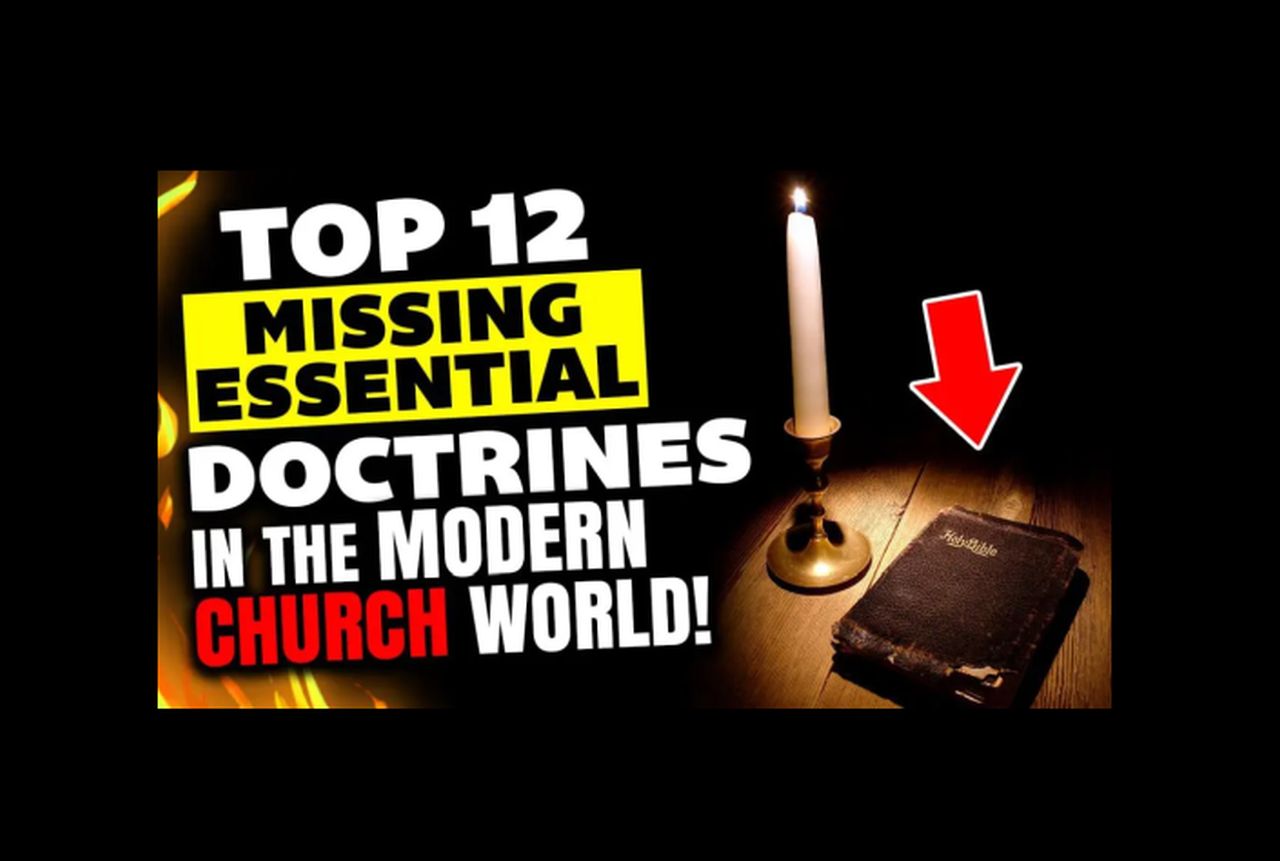
DOES THIS SOUND LIKE YOUR “CHURCH” OR FAVORITE PREACHER? It’s real simple… if they are not preaching the cardinal doctrines of the original Gospel given to us in the New Testament, they are preaching “another gospel” and are “accursed.” (Galatians 1:6-9).
 “For MANY DECEIVERS ARE ENTERED INTO THE WORLD, who confess not that Jesus Christ is come in the flesh. This is a deceiver and an antichrist. 8 Look to yourselves, that we lose not those things which we have wrought, but that we receive a full reward. 9 Whosoever transgresseth, and abideth not in the doctrine of Christ, hath not God. He that abideth in the doctrine of Christ, he hath both the Father and the Son. 10 If there come any unto you, and bring not this doctrine, receive him not into your house, neither bid him God speed: 11 For he that biddeth him God speed is partaker of his evil deeds.” 2 John 1:7-11
Modern church wolves refuse to preach the original Gospel of Jesus Christ from the pages of Holy Scripture and in the power of the Holy Ghost. No, instead they preach sermonettes that cater to the self-worshiping idolaters they entertain and collect money from (2 Timothy 3:1-7). They don’t even use the King James Bible but rather some cheap counterfeit. Their ear-tickling topics range from healing damaged emotions, 5 love languages, best life now, recovery, learning to love yourSELF, coping platitudes, loneliness, psychobabble band aids, law of attraction, being a successful single, purpose driven delusionment, etc.
LOTS of lying going on when we have counterfeits peddling affirmation without salvation, the “promise” of things “getting better” when their prey are heading straight to hell. Especially certain social media platforms are flooded with this false gospel coming out of “Christians.” There is no sin or repentance in their message which alone identifies it as a false gospel. You see, the things that are happening to the sinners around us are allowed by God in order to lead them to repentance and yet, the counterfeits among us are assuring those sinners it’s all going to get better and never giving them the 10 Commandments to show them they are sinners (Galatians 3:24) and then, leading them to Jesus (Romans 10:9-10, 13, etc.). 10 Commandments Evangelism
In the modern church world, there is …..
No cross. No Jesus. No blood. No judgment. No sin. No repentance. No hell. No readiness for the soon return of Jesus. No Heaven. No equipping preparation for ministry. No Scripture memory. No holiness. No Messianic prophecies and their fulfillment. No Christology. No fear of God. No repentance. etc., all of which are Bible doctrines essential to salvation and/or essential to sound foundation in Christ and are missing in the modern church world.
“Study to shew thyself approved unto God, a workman that needeth not to be ashamed, rightly dividing the word of truth.” 2 Timothy 2:15
THE TOP ESSENTIAL BIBLICAL DOCTRINES NEVER HEARD IN THE APOSTATE MODERN CHURCH WORLD!
- The divinity of Jesus Christ (John 1:1-4, 14; 1 Timothy 3:16). | Jesus Christ is God
- The virgin birth of the only begotten Son of God (Isaiah 7:14; Matthew 1:23). | The Virgin Birth of Jesus
- The essential precious blood of Jesus Christ (Matthew 26:28; Hebrews 9:22; 1 Peter 1:18-19). | The Blood
- The inherent fallen nature of mankind (Genesis 6:5, 12; Jeremiah 17:9; Romans 7:18). | Fallen, Sinful Man
- Worshipping God not idols (Exodus 20:3-5). | Idolatry
- The essential doctrine and necessity of repentance (Luke 13:3). | Repentance
- The Return of Christ and being ready for it (Luke 12:40; 21:34-36). | The Return
- Who Jesus is returning for and who will be shut out of His eternal kingdom (Matthew 25:1-13; Ephesians 5:25-27). | Ready for Christ’s Return
- The essential of enduring to the end to be with Christ eternally, initial and final salvation (Matthew 10:22; 24:13; Hebrews 3:6, 12-15; 10:26-30; Revelation 2:26). | Enduring to the End
- The essential daily cross, the crucified life, which Jesus required in following Him (Luke 9:23-24). | Living the Crucified Life
- Forgiving all others from the heart (Matthew 18:21-35). | Forgiveness
- Walking in God’s love (Ephesians 5:1). | The Love Walk
- Holiness – including the necessity of personal holiness (Hebrews 12:14; 1 Peter 1:15-16). | Holiness
- Judgment (Psalms 9:15-17). | Judgment
- Hell (Matthew 8:12; Mark 3:29; Luke 16:19-31). | Hell
- Fearing God (Psalms 2:11; Luke 12:4-5). | Fearing God
When’s the last time you heard verses like this in the modern church?
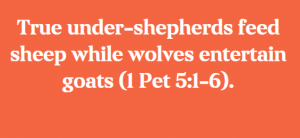 “So likewise, whosoever he be of you that forsaketh not all that he hath, he cannot be my disciple.” Luke 14:33
“Whosoever shall seek to save his life shall lose it; and whosoever shall lose his life shall preserve it.” Luke 17:33
The modern church is going down in flames into the flames of hell. It cannot be reformed. Come out from it.
“And I heard another voice from heaven, saying, Come out of her, my people, that ye be not partakers of her sins, and that ye receive not of her plagues.” Revelation 18:4
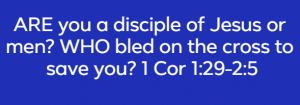
In 2 Timothy 4:3 to “endure sound doctrine” means to hold oneself accountable to it. WHAT’s at the root of those who refuse to “endure sound doctrine”? – They simply do not love Jesus like He commanded them to (Matthew 22:37-39). They profess Christ as Savior and yet love self supremely and therefore serve the god of self. The Holy Ghost through Paul told us this of those who have a mere “form of godliness” in the last day resumé found in 2 Timothy 3:1-7.
Notice by divine design the very first thing he reveals is that “men shall be lovers of their own selves.” All the following evil comes out of self love, refusal to love God supremely and therefore repent, deny self, take up the cross and follow Jesus:
“This know also, that in the last days perilous times shall come. 2 For men shall be lovers of their own selves, covetous, boasters, proud, blasphemers, disobedient to parents, unthankful, unholy, 3 Without natural affection, trucebreakers, false accusers, incontinent, fierce, despisers of those that are good, 4 Traitors, heady, highminded, lovers of pleasures more than lovers of God; 5 Having a form of godliness, but denying the power thereof: from such turn away. 6 For of this sort are they which creep into houses, and lead captive silly women laden with sins, led away with divers lusts, 7 Ever learning, and never able to come to the knowledge of the truth.” 2 Timothy 3:1-7
God is toppling all the heart idols (Ezekiel 14:3)… because He’s Jealous and wants us looking to Him and not these mere men, these vile wolves, these celebrity sinners posing as His representatives (Exodus 34:14).
“For thou shalt worship no other god: for the LORD, whose name is Jealous, is a jealous God:” Exodus 34:14
Support | STORE | Podcasts | The Return of Christ | Stewardship | Apostate Modern Church Exposed | Beware of the BUZZ WORD Bandits [podcast] | Preach the Word | Wolves Exposed







The Sheep vs the Goats as Defined in Scripture [podcast]

Dirty Ox Stalls bring Dividends [podcast]

Top 12 Missing Essential Doctrines in the Modern Church World! [podcast]

Fulfilling Your Calling [podcast]

Swept Away in the “Strong Delusion” [podcast]

Jesus Saved Jose! Mission Mexico Part 51

Dead, Buried, and Raised Up Daily [podcast]

Nourished Up and Enduring to the End [podcast]

Naming Names: Is It Biblical? [podcast]

Paul’s Prophetic Vision of Heretical Wolves Flooding the Church World During the Whole New Testament Era [podcast]

The Surrender of the Cross [podcast]

Sola Scriptura vs the Catholic Church and its Traditions [podcast]

“Pastors According to Mine Heart” [podcast]

Ridiculous King James Bible Corrections

Darwin’s Demise: What they don’t want You to know about Charles Darwin! [podcast]

John Wesley on Calvinism, Once Saved Always Saved, and Conditional Security
Paul’s Prophetic Vision of Heretical Wolves Flooding the Church World During the Whole New Testament Era [podcast]

Beware of “Private Interpretation” [podcast]
Naming Names: Is It Biblical? [podcast]
Top 12 Missing Essential Doctrines in the Modern Church World! [podcast]

The Flesh will Never be Reformed it Must be Crucified [podcast]

The High Treason of False Leaders [podcast]
Nourished Up and Enduring to the End [podcast]

A PLACE CALLED HELL [podcast]
“Pastors According to Mine Heart” [podcast]

Arrogant Bible Correctors Rebuked

Nicolaitan Nightmare [podcast]
Sola Scriptura vs the Catholic Church and its Traditions [podcast]

Doubt Casting Wolves Exposed
Ridiculous King James Bible Corrections
The Sheep vs the Goats as Defined in Scripture [podcast]
Dirty Ox Stalls bring Dividends [podcast]
Top 12 Missing Essential Doctrines in the Modern Church World! [podcast]


 America2 years ago
The Drugging of America: The Pharmakeia Sorcery Deception [podcast]
- Articles3 years ago
Children being Rescued in Tunnels: Happening Now – UPDATE!
- Articles9 years ago
Self-Examination in Preparation for the Lord’s Return
- Apostasy3 years ago
SHOCKING List of False Prophets Most Believe are True