





by Carol Tharp Almy, M.D.
The Bible views women and men as equally responsible before God for their sin. However, the church has followed the world into viewing women as innocent victims with their “mistakes” being due to such things as a bad husband, abuse as a child, or chemical imbalance. A typical illustration of this error is seen in an article by Mary Kassian in the Council on Biblical Manhood and Womanhood Newsletter (CBMW).1
Kassian says she only had “good men” in her life. Her article leads me to assume she means that her male associates have not been wife beaters and child molesters like the male associates of the woman she describes. However, Scripture does not divide mankind into good and bad. It simply says that no one is good or does good. All have turned away and are unrighteous (Romans 3: 10-12).
Kassian contends that a woman “who has been molested by her grandfather, ignored by her father, sexually derided by her brother, slapped by her husband, and ridiculed by her male friends . . . reacts to the wounding by adopting a feminist and/or egalitarian philosophy which assures her of worth and value as a woman.”
This basic view of women is rampant within the modern church, even though it is in direct disobedience to Jesus’ directive not to judge (Matthew 7:1). Kassian makes a judgment of another person’s heart by adopting the doctrinal base of the insight-oriented therapy industry. She views the woman as essentially innocent, a clean slate written upon by an evil environment, and controlled by her past, which comes bubbling up in ways the “wounded woman” does not recognize. Only someone like Kassian, trained to read the symbols and secrets, can know this woman in ways that Scripture ascribes only to God. Via certain special, gnostic knowledge, available only to an educated elite with psychology degrees, Kassian claims to know what produced the thinking and actions defined as “feminist philosophy.”
What does Scripture say is the problem when a woman refuses to acknowledge the headship of her husband in the home or participates in Sophia conferences worshiping female secretions? The Bible makes no allowance whatsoever for the “wounded woman” portrayed by Kassian and simply says that refusal to take our place in God’s order is reason for God’s judgment. (Jude 6,7)
Kassian continues in the mindset of the psychotherapist, saying that the woman “needs healing of her pain before she is able to respond to truth.” Remember that the cities into which the apostles moved were not filled with “good men.” These cities were at least as depraved as the places where you and I live. Yet the apostles did not approach either male or female with the diagnosis of wounding nor did they ever suggest that truth could not be accepted until the pain was healed.
Read Acts 16:13-15, about the women whom Paul found praying together. Note the contrast between Kassian’s teaching and Scripture. No issue is made at all as to whether Lydia was surrounded by “good men.” No mention is made of the people with whom Lydia grew up or with whom she lived at the time. That seems strangely beside the point, does it not? Are we going to read between the lines and imagine that Paul spoke a different gospel to these women, because no men were present? If this were the case, would not Luke have recorded at least a portion of this crucial variation?
It is unlikely that this woman dealing in purple cloth from the city of Thyatira had grown up without pain. It is equally unlikely that Lydia had achieved what the therapeutic community calls “healing of her pain” before Paul arrived. Yet Scripture tells us that Lydia responded to the truth of Paul’s message. How could such a thing be?
Luke does not tell us whether these women who gathered outside the city gate by the river had rebelliously left home against the wishes of the “good men” in their life. Had their fathers and husbands beat them and locked them out for the day? Since Lydia is described as a Godfearer, it is not likely this was a group of lesbians seated in a ritualistic circle seeking to blend with Gaia down by the river. Beyond that, we can come to few conclusions about the home life of these women. Surely we should note that the inspired Word of God does not emphasize the influence of the men present in the lives of these women to whom Paul spoke. Circumstances, such as their environment, their past, or their “father-image,” do not appear to determine their ability to respond to Truth.
Look carefully at what Lydia did. She opened her heart, responded to Paul’s message with obedience in baptism, and began serving her God through hospitality. There is no hint that Lydia had a self-centered motive in this hospitality, desiring the preachers to stay at her house so she could get time with them to pour out details of past abuse by bad men in her life. There is no hint that Lydia was seeking any apostolic 12-step program to heal her wounded heart.
Is Lydia’s case unique? Look at Acts 5:1-11. Note that Peter quizzes Sapphira in the same way that he questioned Ananias. Peter does not analyze Sapphira’s upbringing; neither does he seem to consider what kind of men Sapphira had in her life. God’s Word gives us no permission to assume that Sapphira lied about the price of the land in order to gain worth and value as a woman. Peter shows no concern as to whether Sapphira was searching for security and significance, and he does not seem to have been informed of Sapphira’s need for healing of her pain before she could respond to truth.
Had they lived in our era, Ananias may even have modeled the seven promises of a Promise Keeper and Sapphira may even have helped him model what CBMW calls the complementary roles for men and women. However, about three hours after Ananias fell down and died for having lied to God, Sapphira did the same. There is no hint that the three hour delay was spent investigating Sapphira for codependency, panic disorder, adult ADHD, etc.
It must be emphasized that Sapphira was not excused due to wounding by a dishonest husband. It is no minor issue for church leaders to present a woman’s sin as healed by “a godly man who loves and blesses her as a woman,” facing “her woundedness,” repenting “of bitterness and unforgiveness,” and releasing “her pain to Jesus.” When a woman has accepted feminist philosophy, she needs far more than “the faithful love of a good man and her willingness to forgive those who had wounded her.” The church today seems content taking theology from romance novels or from the channel playing old movies.
Kassian goes on to say that “truth is not an end in and of itself, but rather the means . . . to be set fully free.” Scripture says that Jesus is the Truth, the fulfillment and end of the law, the alpha and omega, the beginning and the end. My freedom comes from the Messiah; it is not vice-versa and it cannot be so. My freedom is not the fulfillment, the omega; my freedom is not the goal, the end. Scripture gives me no license to make God’s Truth some ill-defined secondary luxury nice to have around after a “good man” or man’s techniques have healed my wounded heart. This is no minor theological issue!
Kassian says, “Most feminists will not be persuaded by theological finesse or expertise. Theirs is a wounding of the heart and their minds and will only be set aright as their hearts are healed.” In contrast, Paul said that they “perish; because they received not the love of the truth, that they might be saved. And for this cause God shall send them strong delusion, that they should believe a lie: That they all might be damned who believed not the truth, but had pleasure in unrighteousness” (2 Thes. 2:10-12).
Sin is not produced, as Kassian contends, by an assault on a woman’s personhood. Beware of terminology that lacks definition. Paul said, “And I, brethren, when I came to you, came not with excellency of speech or of wisdom, declaring unto you the testimony of God. For I determined not to know any thing among you, save Jesus Christ, and him crucified” (1 Cor. 2:1,2). Today’s church would do well to remember this warning about intellectualized, silly terminology. Sort through the fancy talk with its compassionate-sounding words, because it is basically saying that my sin is produced by my environment. We cannot afford to forget that Eve became a feminist in the perfect environment. Her grandfather had not molested her, her father had not ignored her, her brother had not sexually derided her, her husband had not slapped her, and male friends had not ridiculed her. Scripture says you and I fall for the lie for the same reason as Eve did. We would love to gain the wisdom and be like God. We would love to be in the driver’s seat. We hope that via a good husband, good parenting, visualization techniques, hypnosis, positive thinking, forgiveness methods, weigh-down—whatever fad is passing through—we can be set free. And, if we can use some Jesus-words as a means, then all the better!
Christian leaders, both conservative and liberal, are taking their doctrine from the same father of lies and thus are taking women in the same destructive direction. My problem is not the men in my life (and that is not to say that men are all models of righteousness). My problem is not what Daddy did. My problem is my own sin and rebellion. Kassian leaves me with no answers and no hope. If environmental wounding is my problem, I limp for the rest of my life. However, if sin is my problem, Jesus has died for that. Lidie Edmunds wrote a hymn in the 19th century, and I think we can safely say she would not have fallen for the “wounded woman” deception.
- My faith has found a resting place,
- Not in device or creed;
- His wounds for me shall plead.
- I trust the everliving One,
- I need no other argument,
- I need no other plea.
- It is enough that Jesus died,
- And that He died for me.
That is really the only question for you and for me. Is it enough that Jesus died; IS IT ENOUGH?
1 Mary Kassian, “For Those Who Hate Feminists—And Those Who Don’t.” Council on Biblical Manhood and Womanhood Newsletter , Vol. 1, No. 2.
(From PAL, V7N1)
Path to Popularity: Catapulted on the success of his book titled “Women Thou Art Loosed,” Jakes played on the emotions of women nationwide. He became popular by convincing women they are victims without ever calling them to repentance for their own sin and wrongdoing. Satan has not changed – he likes to go to “the weaker vessel” in order to gain a foothold into the family (1 Peter 3:1-7) Remember in the Garden of Eden how the serpent approached Eve and not Adam? (1 Timothy 2:9-14) This is how Satan, the most subtle beguiler, gains entrance and bring his stealing, killing, and destroying (John 10:10).
“For Adam was first formed, then Eve. 14 And Adam was not deceived, but the woman being deceived was in the transgression.” 1 Timothy 2:13-14
Without exception, the true Gospel begins with repentance and not before (Matthew 3:2; 4:17; Acts 2:38; 3:19). Women are not innocent victims and their core problem is not men (males) but rather their own sin. This is the case with all humans. The woman was integrally involved in the fall of mankind – “the woman being deceived was in the transgression (sin).” Jakes fails to mention this but rather coddles women in their wounds without giving them the biblical command to repent of their own sin which is where all divine healing begins and not before (Acts 3:19).
Sign up for free email devotional HERE… The Moments with My Master email devotional is sent out for the edification of the body of Christ.
Jezebel Unmasked! Invasion of the Warrior Princess Jezebels [podcast]
Abiding
The Sheep vs the Goats as Defined in Scripture [podcast]
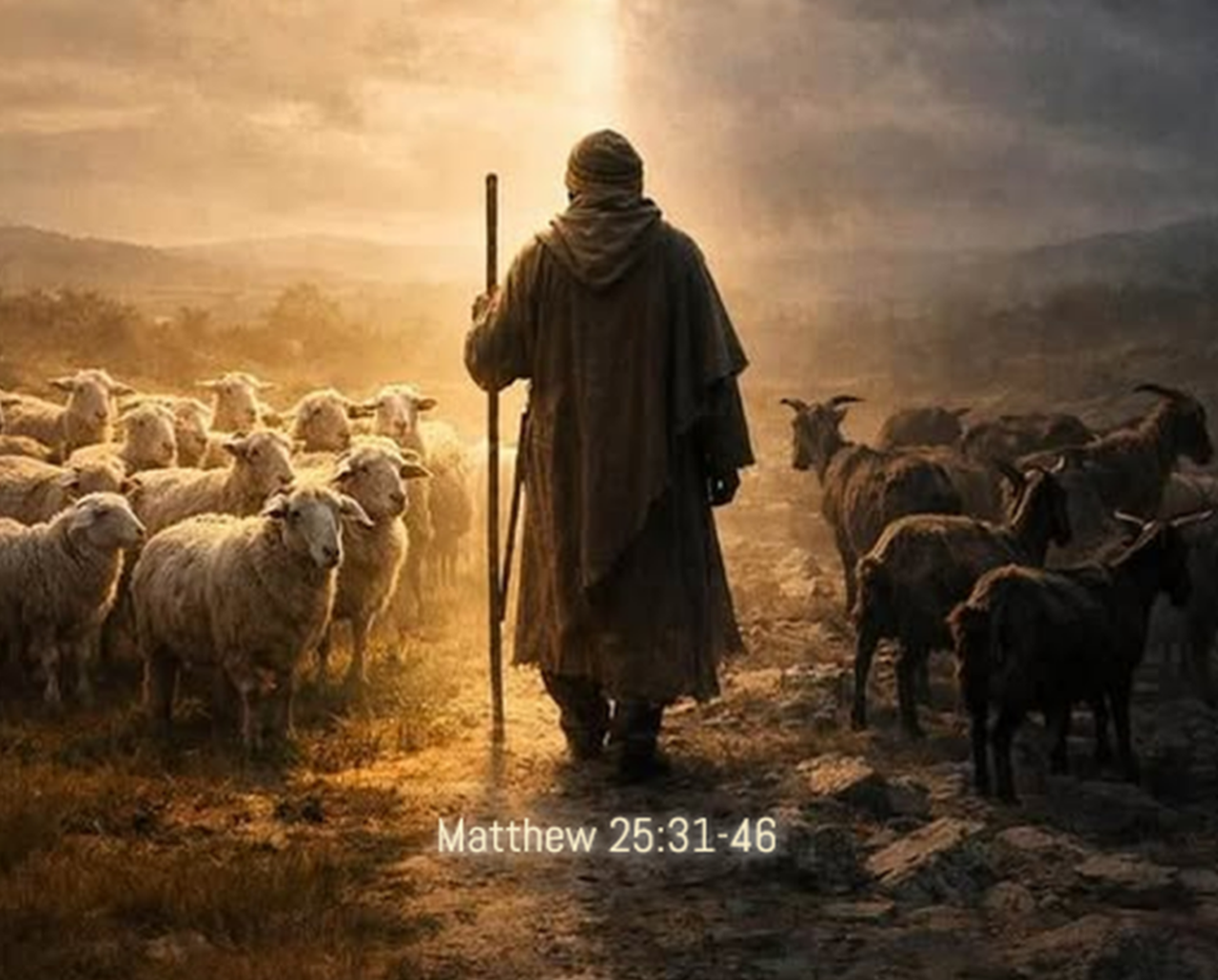
“The goats feed their carnal appetite. The sheep of Christ feed on the Word of God! Jesus’ sheep know His voice. They follow and obey their Lord Jesus (John 10:27). The goats obey their fleshy desires (Galatians 5:16-21), and follow the hirelings and not the Great Shepherd, the LORD Jesus (John 10; Heb 13:20). Christ’s sheep are known by Him! (John 10:14,27; 1 Corinthians 8:3). The goats will be cast out and told, ‘I never knew you: depart from Me, ye that work iniquity.’ (Matthew 7:23). Terrifying words! Are you Jesus’ sheep, or are you a goat, a counterfeit? Search your heart today. Ask God if He knows you! It matters not if we claim to know Him. He must also know us, as this Scriptures clearly reveal!” Karen Cochran
“Search me, O God, and know my heart: try me, and know my thoughts: 24 And see if there be any wicked way in me, and lead me in the way everlasting.” Psalms 139:23-24
Of sheep and goats, one source notes:
“Jesus shares the story of the Sheep and the Goats in Matthew 25:31–46 to describe the final judgment. In the story, the Son of Man separates all of humanity just like a shepherd sorts sheep from goats, placing the sheep on His right side and the goats on His left.”
The Naked Truth about Who’s Going to Heaven and Who’s Going to Hell
WANT to see those whom the LORD calls His own? Want to see who the true Heaven bound remnant are? Look at those who are about the “Father’s business” which is the Great Commission (Luke 2:49; 24:47; Matthew 28:18-20; Mark 16:15; Acts, etc.). Everyone else is doing their own thing.
“Not every one that saith unto me, Lord, Lord, shall enter into the kingdom of heaven; but he that doeth the will of my Father which is in heaven.” Matthew 7:21
With their life, the rebel declares “Not Thy will but mine be done!”
With their life, the righteous declare with Christ “not my will, but thine, be done” (Luke 24:42).
“At that day ye shall know that I am in my Father, and ye in me, and I in you. 21 He that hath my commandments, and keepeth them, he it is that loveth me: and he that loveth me shall be loved of my Father, and I will love him, and will manifest myself to him. 22 Judas saith unto him, not Iscariot, Lord, how is it that thou wilt manifest thyself unto us, and not unto the world? 23 Jesus answered and said unto him, If a man love me, he will keep my words: and my Father will love him, and we will come unto him, and make our abode with him. 24 He that loveth me not keepeth not my sayings: and the word which ye hear is not mine, but the Father’s which sent me.” John 14:21-24
“And hereby we do know that we know him, IF we keep his commandments. 4 He that saith, I know him, and keepeth not his commandments, is a liar, and the truth is not in him. 5 But whoso keepeth his word, in him verily is the love of God perfected: hereby know we that we are in him. 6 He that saith he abideth in him ought himself also so to walk, even as he walked.” 1 John 2:3-6
Walk and live as Jesus lived? Yes. Those who know and love Him are about the work and “the will of him that sent” them.
Take a look:
“Jesus saith unto them, My meat is to do the will of him that sent me, and to finish his work” (John 4:34). Jesus then speaks of evangelism, something every one of His people are to be doing (John 4:34-38).
“For I came down from heaven, not to do mine own will, but the will of him that sent me.” John 6:38
“And this is the will of him that sent me, that every one which seeth the Son, and believeth on him, may have everlasting life: and I will raise him up at the last day.” John 6:40
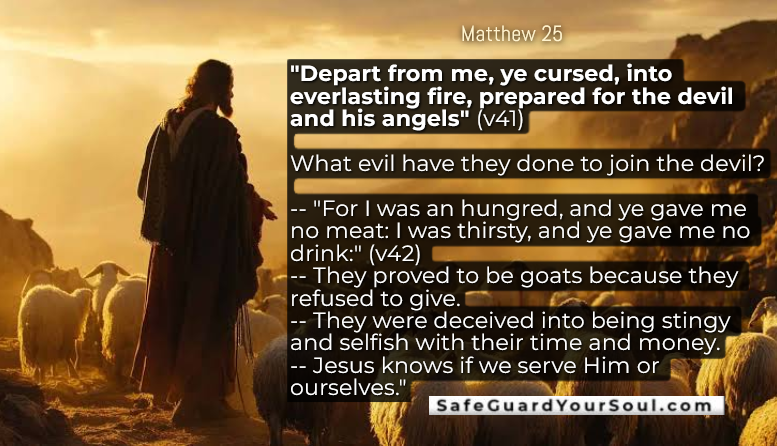
“He that is not with me is against me; and he that gathereth not with me scattereth abroad.” Matthew 12:30
Anyone not fully with Jesus, is against Him, the only Savior.
So you claim Christ as Savior but don’t participate in prayer, support, and Great Commission action? Time to repent for real. The fruit of your life is rotten. You are presently a Savior-rejecting, self-serving counterfeit.
Read 1 Corinthians 9. The first half is concerning our privilege to give to HIS work. Then the apostle Paul speaks of running the race, to the end, becoming all things to all men to see them saved, being crucified with Christ.
The more I read God’s Word, the more convinced I am that the Heaven bound remnant are known in that they are about the “Father’s business” —the Great Commission—and not their own (Luke 2:49). They have laid down and are forsaking their own lives in this fleeting world in their supreme love for Christ Jesus (Acts 20:24). Anyone claiming to be Christ’s and not doing, participating in the Great Commission command … clearly reveals that they are in need of repentance, before it’s too late. Jesus is not their “first love” —which means they are committing spiritual adultery on Christ, the Great and coming Bridegroom (Revelation 2:4-5). Repent and obey Him or perish.
If you are committed to Christ, with no exception, you are committed to studying, knowing, and walking out His Word. You are committed to carrying out the Savior’s Great Commission command.
YOUR PRAYER: Right now dear holy and heavenly Father, please begin a fresh work in this heart. May Your love fill this heart and may You alone be my “first love.” May the love in me for You burn. Let it far exceed all other loves and interests! In Jesus’ name. Amen.
Support | STORE | Podcasts | Jail/Prison Ministry | Mexico Mission here | All Ministry Updates | H.O.T. Bible Study [podcast] | Divine Blessings | Exhort One Another Daily | The Return of Christ | The Joy of Fulfilling the Great Commission | The Love of Many Shall Wax Cold | Lie of the Ages (book) | Soul Damning Sins (small book) | Why We Need not Fear Death | Revelation Bombshell!



Abiding
Dirty Ox Stalls bring Dividends [podcast]
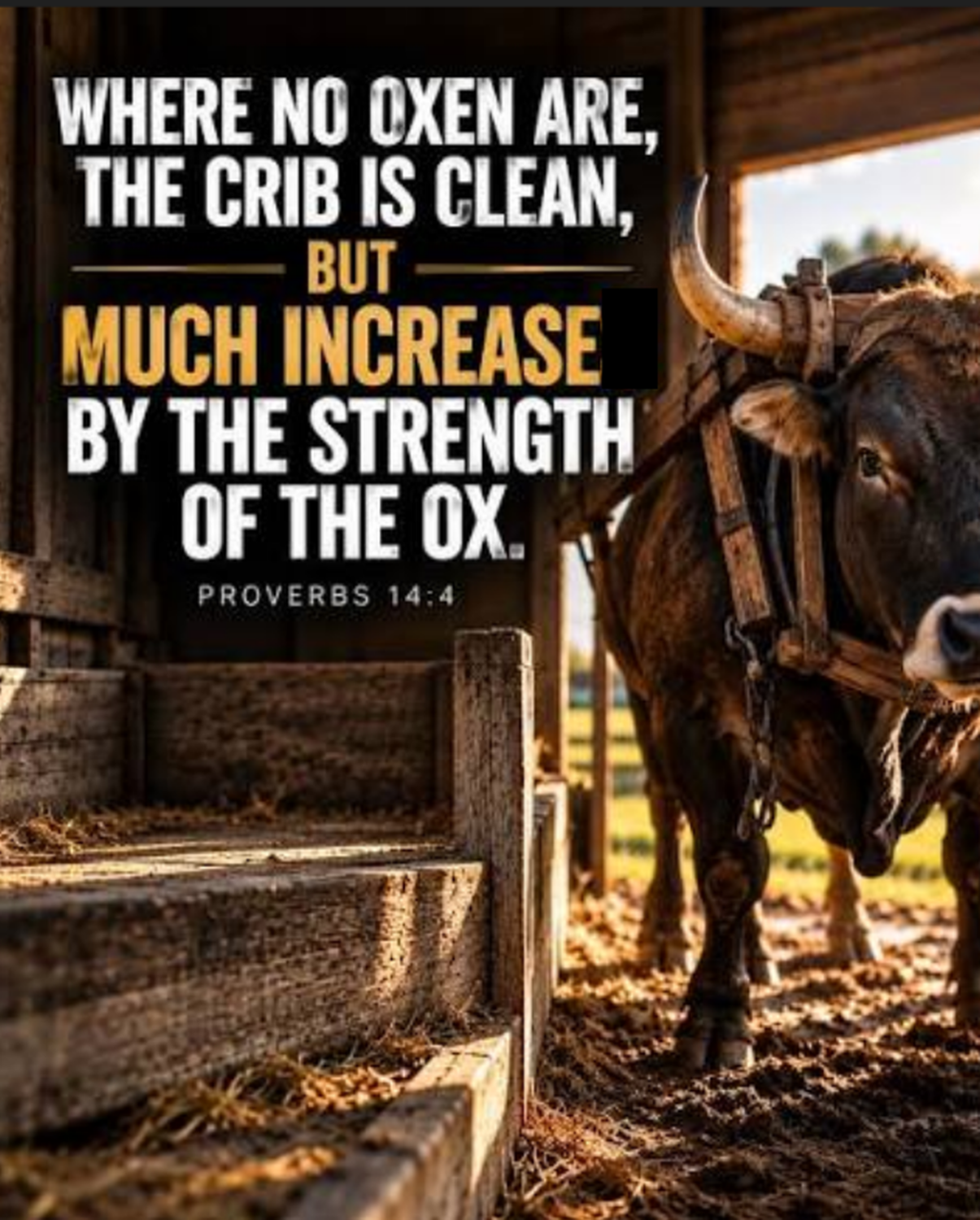
An intriguing proverb that applies directly to our daily lives and the stewardship of the time our LORD has afforded us in this brief life. Gaining traction via the wisdom of our great God and King Jesus Christ. How to avoid spending our lives “spinning our wheels.”
“Where no oxen are, the crib is clean: but much increase is by the strength of the ox.” Proverbs 14:4
The blessing of a dirty ox stall…. What’s most important to God is productivity, not neatness, not tidy-ness, not a clean stall.
Here’s a proverb from the Holy Spirit and Solomon which breathe wisdom into our lives. Let’s read it again:
“Where no oxen are, the crib is clean: but much increase is by the strength of the ox.” Proverbs 14:4
The proverbs of the LORD we have in His Word hold hidden meaning which breathe wisdom into our lives.
A proverb is a figure of speech, words that impart truth by using natural illustrations to convey spirit truths.
Jesus taught in parables. Parables are earthly stories with heavenly meaning, divine wisdom to establish us in our relationship with Him as we love, worship and obey the LORD.
This is exactly what we have in Proverbs 14:4, where an ox and his stall are featured in order to convey the divine truth that productivity is more important to God than the pettiness of cleanliness.
The proverbs often use simple images to convey a deeper moral or practical lesson.
Active, working oxen bring dirt and dividends. Clean ox stalls glitter but produce no gold.
When commenting on this proverb, one man said: “Don’t be deterred by the dung.”
Fruitful saints aren’t known by how clean their house is but rather how full, how abundant their treasure in in Heaven (Matthew 6:19-21). Their prayer and work is focused upon pleasing their LORD Jesus and not with how clean their temporal living space looks, by how sparkling clean their life looks to mere sinful men.
One pastor notes the following about the divine truth imparted to us in Proverbs 14:4:
“There are some proverbs that stick in our heads more than others and this is one of them for me. The image is memorable and the lesson is unforgettable. Solomon paints the picture of a barn without oxen and because of no oxen, the stalls are clean and pristine. This is a barn that the perfectionist likes; a barn that can be organized, cleaned and maintained without interruption. This is a barn that the neat freak and the clean freak crave; a barn that they can come into and know that everything is clean and tidy. This is a barn that needs no work. This is a barn that, after working in the field, demands no additional time or effort to clean. This is a barn that needs no attending to after hours. It demands no thought when heading out of town. It never smells. It doesn’t even make a sound. There is no sickness in this barn nor does death ever visit its crib. This is a barn that requires no food or water and as such, it doesn’t require any constant removal of dung. It’s clean and pristine! … While that sounds appealing to the average man or woman, the average farmer doesn’t pursue an empty crib. He knows that the tradeoff is well worth it. It’s the cost of doing business in agriculture. He knows that he could farm his land on his own and that he could produce “some” increase on his own. He knows that he doesn’t need oxen to till the ground, to sow the seed or to harvest the crops but if he’s going to have “MUCH” increase, he needs oxen and there are no oxen that clean up after themselves.”
The mess is worth the money.
The dirt is worth the dividends it brings.
Dirty spaces bring special graces.
The progress and productivity are worth the pile of trash.
Men who are dirty from working all day will go home with fruitfulness for their family. They are satisfied and blessed to do so and so we wake up the next morning and gladly go do the same. The trade off that brings wages is worth it.
This proverb also brings into mind the harvest that can being produced by you alone, in contrast with the harvest produced having others to labor with you to bring forth “much increase.”
Also, by not inviting others to join you in doing our LORD’s work, we deprive them from being blessed to lay up treasure in Heaven as our LORD commanded each of us who His children to do (Matthew 6:19-21).
The following is from Josh Denhart:
“In ministry we think, “If you want a job done right, do it yourself.” You may avoid messes, but you have just stepped into the “Trap of the Clean Stall”.
Proverbs 14:4 reads, “Where no oxen are, the crib is clean: but much increase is by the strength of the ox. “
In the ancient agrarian world, animals brought a massive advantage. To have an animal meant you could accomplish so much more. Today we refer to a car as having a certain amount of “horse power”. In times past, an animal brought with it a certain amount of power. Power to increase the harvest and get the job done. Here, the writer of Proverbs is referring to “Ox Power”. The power and advantage is brought through the strength of an ox.
The writer of Proverbs says that it is really a trade off. On one hand you get a significant increase through the strength of an ox, yet with it you get, poop. Yes, good, ol’ fashioned ox poop.
Goal: Huge Harvest
Let’s compare the alternative. You have no oxen, but you have an amazingly clean manger stall.
More harvest with a poopy stall vs. a perfectly clean stall and a diminished harvest.
Our goal is not a clean stall. Our goal is a huge harvest. A natural side effect of a huge harvests are messes. What do you want? Do you crave a super clean stall over a bountiful harvest? Listen, a tidy stall in and of itself is a bad trade for a compromised harvest.
Let me shoot straight with you. I have a well-managed case of OCD. I crave order. If you serve in children’s ministry, you probably do too. I hate disorder. Yet the calling of the harvest trumps our neurotic desire for order.
Do not fall into the trap of the clean stall.
You Can’t Do It Alone
We must define our goal for the harvest over and over! Our goal is reaching the lost through equipping the fold. Our ultimate goal is not order for order sake. Our goal is the good news of Jesus going deep into the hearts and heads of kids, which brings messes. Get used to it. And get over it.
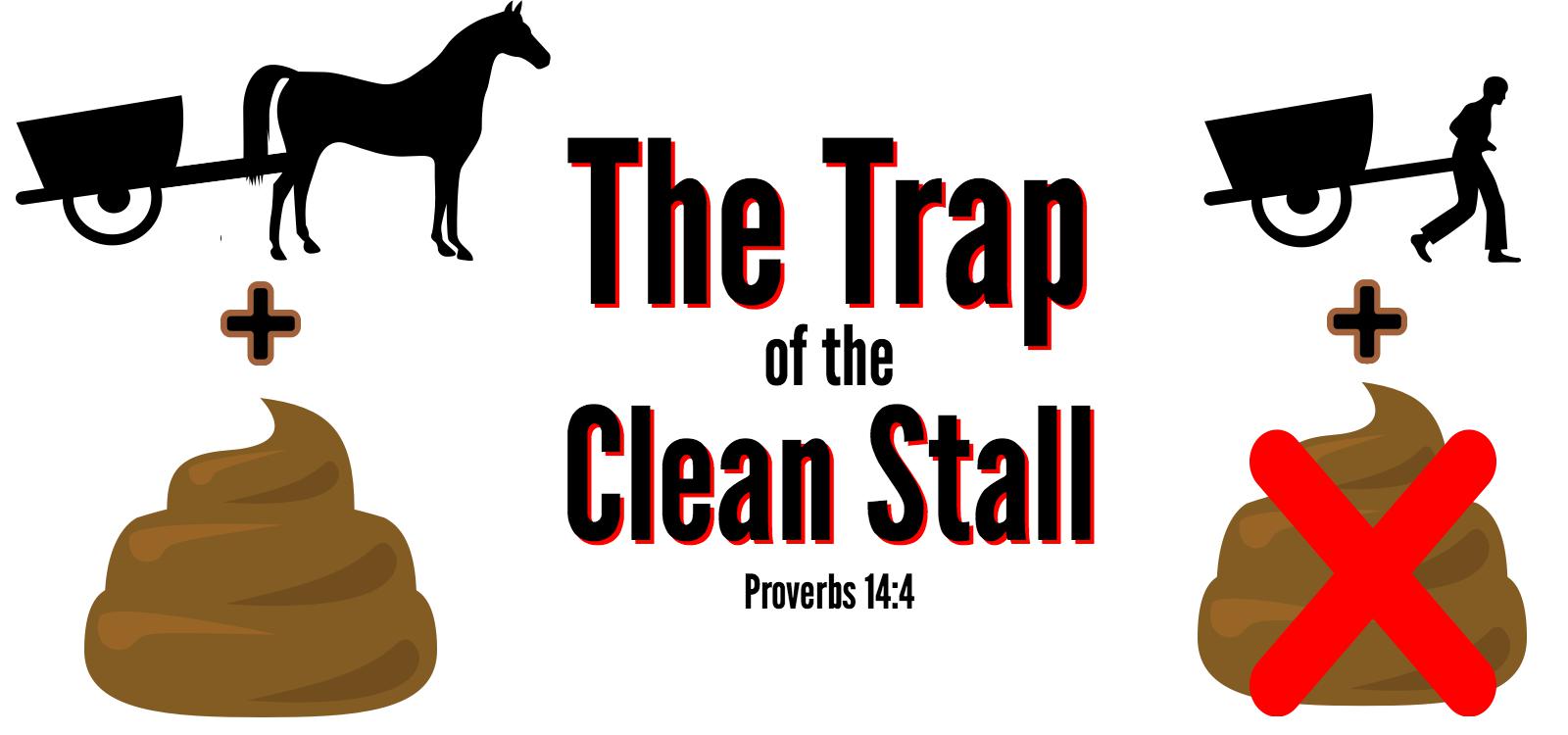
We can have order as we achieve a large harvest, but uncomfort with messes can short circuit great harvests.
Let’s take this proverbial analogy a step further. You as a ministry leader are essentially the farmer. You can’t and don’t want to do it alone. You need help. Those willing to help you from a staff or a volunteer perspective can bring great strength and accomplish more for the harvest than you by yourself. And, yes, I am equating associates and volunteers to oxen.
The Harvest is Plentiful
Oxen and people are living beings. Both bring messes. Farming, like ministry, is just messy. Jesus said He came not for the healthy but for the sick. Sick people vomit physically and emotionally, have issues and need attention. That is our job. Years ago, someone sarcastically said, “Ministry would be great were it not for all these people!”
Listen, if you want order more than you want the harvest, you may find yourself doing it alone. Doing it alone equals to a field white for harvest with no one to get the job done. The harvest is plentiful, but the workers are few. More workers means more messes. We as farmers must manage the messes and rise above the stall to see the harvest.
Do you want a harvest more than you want order? Absolutely. Therefore, we had better embrace the reality of a poopy stall. Do not fall into the trap of the clean stall.”
One has to roll up his sleeves and get dirty to produce dividends to the glory of the divine.
Ever see construction works at the end of a work day? They are dirty and yet earned dollars, dividends. They will do it the next day also. Why? – because the trade off is productivity, earning that which is desirable.
Lots of work brings movement and a mess.
Lot’s of dirt when you much to diligently do and bring dividends.
A clean workspace brings no coin.
Do you want to work and get dirty, cause a mess, and yet make a profit? Or do you want to keep your place clean with the outcome being no coin?
The blessing of “much increase” comes at the expense of a clean crib, work space. It’s a bless-ed trade-off, right?
Personally, I could care less about a disheveled work place. My goal is to be fruitful, fruit-filled for Christ, bearing – “fruit … more fruit … much fruit.” (John 15)
In your business life, would you rather a disheveled work space and work to do, or a clean work space with no work?
It is better to have dirt to clean up with work that brings wages than to have a clean work place with no work.
Increase in material prosperity, productivity, fruitfulness comes by utilizing the oxen for labor and as a result there will be a mess made. The fruit produced far outweighs having to clean the stall, the work place.
“A barn can be kept cleanly swept where there are no oxen, but isn’t it better to have some dust and dirt around, knowing that the labor of an ox will lead to a bountiful harvest? The rewards of toil more than compensate for its disagreeable aspects.
This proverb is not intended to encourage homes or chapels that look like disaster areas. But it does discourage that passion for order and dustlessness that puts the brakes on progress and productiveness.” Believer’s Bible Commentary
Dust and dirt bring dividends.
Productivity makes for progress.
The grind brings the goods.
Labor brings some loot.
Someone has wisely stated:
“Salons always have hair on the floor.
Garages always have oil on the floor.”
The oxen serve a good purpose and produce productivity.
What is it to have a clean work place? That just means you aren’t being productive, you don’t have work that is bring wages and blessings.
“Straining at a gnat”…. Swallowing a Camel
This idiom Jesus uses means over-emphasizing the minors while under-emphasizing the majors, “the weightier matters of the law.”
Matthew 23
“Woe unto you, scribes and Pharisees, hypocrites! for ye pay tithe of mint and anise and cummin, and have omitted the weightier matters of the law, judgment, mercy, and faith: these ought ye to have done, and not to leave the other undone.
24 Ye blind guides, which strain at a gnat, and swallow a camel.
25 Woe unto you, scribes and Pharisees, hypocrites! for ye make clean the outside of the cup and of the platter, but within they are full of extortion and excess.
26 Thou blind Pharisee, cleanse first that which is within the cup and platter, that the outside of them may be clean also.
27 Woe unto you, scribes and Pharisees, hypocrites! for ye are like unto whited sepulchres, which indeed appear beautiful outward, but are within full of dead men’s bones, and of all uncleanness.
28 Even so ye also outwardly appear righteous unto men, but within ye are full of hypocrisy and iniquity. “
Martha and Mary – Mary had the Divine Priorities in their Rightful Place
“38 Now it came to pass, as they went, that he entered into a certain village: and a certain woman named Martha received him into her house.
39 And she had a sister called Mary, which also sat at Jesus’ feet, and heard his word.
40 But Martha was cumbered about much serving, and came to him, and said, Lord, dost thou not care that my sister hath left me to serve alone? bid her therefore that she help me.
41 And Jesus answered and said unto her, Martha, Martha, thou art careful and troubled about many things:
42 But one thing is needful: and Mary hath chosen that good part, which shall not be taken away from her.”
No, it’s not a sin to keep things clean, to be organized. Yet, at the judgment, Jesus is not going to say “Oh wow, you kept your living and workspace clean! Enter thou into the joy of the LORD.” No, but rather….
“His lord said unto him, Well done, thou good and faithful servant: thou hast been faithful over a few things, I will make thee ruler over many things: enter thou into the joy of thy lord.” Matthew 25:21
At the coming judgment what we did for His glory, in His holy name, will be rewarded.
Matthew 25
“And he shall set the sheep on his right hand, but the goats on the left.
34 Then shall the King say unto them on his right hand, Come, ye blessed of my Father, inherit the kingdom prepared for you from the foundation of the world:
35 For I was an hungred, and ye gave me meat: I was thirsty, and ye gave me drink: I was a stranger, and ye took me in:
36 Naked, and ye clothed me: I was sick, and ye visited me: I was in prison, and ye came unto me.
37 Then shall the righteous answer him, saying, Lord, when saw we thee an hungred, and fed thee? or thirsty, and gave thee drink?
38 When saw we thee a stranger, and took thee in? or naked, and clothed thee?
39 Or when saw we thee sick, or in prison, and came unto thee?
40 And the King shall answer and say unto them, Verily I say unto you, Inasmuch as ye have done it unto one of the least of these my brethren, ye have done it unto me.”
Read John 15 and underline “fruit” and “more fruit” and “much fruit.” “Fruit” emanates from the life that is soundly grounded in an abiding relationship with Jesus Christ.
“Ye have not chosen me, but I have chosen you, and ordained you, that ye should go and bring forth fruit, and that your fruit should remain: that whatsoever ye shall ask of the Father in my name, he may give it you. 17 These things I command you, that ye love one another.” John 15:16-17
Support | STORE | Podcasts | Jail/Prison Ministry | Mexico Mission here | All Ministry Updates
Holy Ghost Baptism Study Guide (highly recommended) | Beware of the Gift Thieves | No Pentecost, No Power! | Power to Fulfill (audio) | Holy Ghost Baptism (audio) | The Return of Christ |


Abiding
Top 12 Missing Essential Doctrines in the Modern Church World! [podcast]
DOES THIS SOUND LIKE YOUR “CHURCH” OR FAVORITE PREACHER? It’s real simple… if they are not preaching the cardinal doctrines of the original Gospel given to us in the New Testament, they are preaching “another gospel” and are “accursed.” (Galatians 1:6-9).
 “For MANY DECEIVERS ARE ENTERED INTO THE WORLD, who confess not that Jesus Christ is come in the flesh. This is a deceiver and an antichrist. 8 Look to yourselves, that we lose not those things which we have wrought, but that we receive a full reward. 9 Whosoever transgresseth, and abideth not in the doctrine of Christ, hath not God. He that abideth in the doctrine of Christ, he hath both the Father and the Son. 10 If there come any unto you, and bring not this doctrine, receive him not into your house, neither bid him God speed: 11 For he that biddeth him God speed is partaker of his evil deeds.” 2 John 1:7-11
Modern church wolves refuse to preach the original Gospel of Jesus Christ from the pages of Holy Scripture and in the power of the Holy Ghost. No, instead they preach sermonettes that cater to the self-worshiping idolaters they entertain and collect money from (2 Timothy 3:1-7). They don’t even use the King James Bible but rather some cheap counterfeit. Their ear-tickling topics range from healing damaged emotions, 5 love languages, best life now, recovery, learning to love yourSELF, coping platitudes, loneliness, psychobabble band aids, law of attraction, being a successful single, purpose driven delusionment, etc.
LOTS of lying going on when we have counterfeits peddling affirmation without salvation, the “promise” of things “getting better” when their prey are heading straight to hell. Especially certain social media platforms are flooded with this false gospel coming out of “Christians.” There is no sin or repentance in their message which alone identifies it as a false gospel. You see, the things that are happening to the sinners around us are allowed by God in order to lead them to repentance and yet, the counterfeits among us are assuring those sinners it’s all going to get better and never giving them the 10 Commandments to show them they are sinners (Galatians 3:24) and then, leading them to Jesus (Romans 10:9-10, 13, etc.). 10 Commandments Evangelism
In the modern church world, there is …..
No cross. No Jesus. No blood. No judgment. No sin. No repentance. No hell. No readiness for the soon return of Jesus. No Heaven. No equipping preparation for ministry. No Scripture memory. No holiness. No Messianic prophecies and their fulfillment. No Christology. No fear of God. No repentance. etc., all of which are Bible doctrines essential to salvation and/or essential to sound foundation in Christ and are missing in the modern church world.
“Study to shew thyself approved unto God, a workman that needeth not to be ashamed, rightly dividing the word of truth.” 2 Timothy 2:15
THE TOP ESSENTIAL BIBLICAL DOCTRINES NEVER HEARD IN THE APOSTATE MODERN CHURCH WORLD!
- The divinity of Jesus Christ (John 1:1-4, 14; 1 Timothy 3:16). | Jesus Christ is God
- The virgin birth of the only begotten Son of God (Isaiah 7:14; Matthew 1:23). | The Virgin Birth of Jesus
- The essential precious blood of Jesus Christ (Matthew 26:28; Hebrews 9:22; 1 Peter 1:18-19). | The Blood
- The inherent fallen nature of mankind (Genesis 6:5, 12; Jeremiah 17:9; Romans 7:18). | Fallen, Sinful Man
- Worshipping God not idols (Exodus 20:3-5). | Idolatry
- The essential doctrine and necessity of repentance (Luke 13:3). | Repentance
- The Return of Christ and being ready for it (Luke 12:40; 21:34-36). | The Return
- Who Jesus is returning for and who will be shut out of His eternal kingdom (Matthew 25:1-13; Ephesians 5:25-27). | Ready for Christ’s Return
- The essential of enduring to the end to be with Christ eternally, initial and final salvation (Matthew 10:22; 24:13; Hebrews 3:6, 12-15; 10:26-30; Revelation 2:26). | Enduring to the End
- The essential daily cross, the crucified life, which Jesus required in following Him (Luke 9:23-24). | Living the Crucified Life
- Forgiving all others from the heart (Matthew 18:21-35). | Forgiveness
- Walking in God’s love (Ephesians 5:1). | The Love Walk
- Holiness – including the necessity of personal holiness (Hebrews 12:14; 1 Peter 1:15-16). | Holiness
- Judgment (Psalms 9:15-17). | Judgment
- Hell (Matthew 8:12; Mark 3:29; Luke 16:19-31). | Hell
- Fearing God (Psalms 2:11; Luke 12:4-5). | Fearing God
When’s the last time you heard verses like this in the modern church?
 “So likewise, whosoever he be of you that forsaketh not all that he hath, he cannot be my disciple.” Luke 14:33
“Whosoever shall seek to save his life shall lose it; and whosoever shall lose his life shall preserve it.” Luke 17:33
The modern church is going down in flames into the flames of hell. It cannot be reformed. Come out from it.
“And I heard another voice from heaven, saying, Come out of her, my people, that ye be not partakers of her sins, and that ye receive not of her plagues.” Revelation 18:4
In 2 Timothy 4:3 to “endure sound doctrine” means to hold oneself accountable to it. WHAT’s at the root of those who refuse to “endure sound doctrine”? – They simply do not love Jesus like He commanded them to (Matthew 22:37-39). They profess Christ as Savior and yet love self supremely and therefore serve the god of self. The Holy Ghost through Paul told us this of those who have a mere “form of godliness” in the last day resumé found in 2 Timothy 3:1-7.
Notice by divine design the very first thing he reveals is that “men shall be lovers of their own selves.” All the following evil comes out of self love, refusal to love God supremely and therefore repent, deny self, take up the cross and follow Jesus:
“This know also, that in the last days perilous times shall come. 2 For men shall be lovers of their own selves, covetous, boasters, proud, blasphemers, disobedient to parents, unthankful, unholy, 3 Without natural affection, trucebreakers, false accusers, incontinent, fierce, despisers of those that are good, 4 Traitors, heady, highminded, lovers of pleasures more than lovers of God; 5 Having a form of godliness, but denying the power thereof: from such turn away. 6 For of this sort are they which creep into houses, and lead captive silly women laden with sins, led away with divers lusts, 7 Ever learning, and never able to come to the knowledge of the truth.” 2 Timothy 3:1-7
God is toppling all the heart idols (Ezekiel 14:3)… because He’s Jealous and wants us looking to Him and not these mere men, these vile wolves, these celebrity sinners posing as His representatives (Exodus 34:14).
“For thou shalt worship no other god: for the LORD, whose name is Jealous, is a jealous God:” Exodus 34:14

Support | STORE | Podcasts | The Return of Christ | Stewardship | Apostate Modern Church Exposed | Beware of the BUZZ WORD Bandits [podcast] | Preach the Word | Wolves Exposed







The Sheep vs the Goats as Defined in Scripture [podcast]

Dirty Ox Stalls bring Dividends [podcast]

Top 12 Missing Essential Doctrines in the Modern Church World! [podcast]

Fulfilling Your Calling [podcast]

Swept Away in the “Strong Delusion” [podcast]

Jesus Saved Jose! Mission Mexico Part 51

Dead, Buried, and Raised Up Daily [podcast]

Nourished Up and Enduring to the End [podcast]

Naming Names: Is It Biblical? [podcast]

Paul’s Prophetic Vision of Heretical Wolves Flooding the Church World During the Whole New Testament Era [podcast]

The Surrender of the Cross [podcast]

Sola Scriptura vs the Catholic Church and its Traditions [podcast]

“Pastors According to Mine Heart” [podcast]

Ridiculous King James Bible Corrections

Darwin’s Demise: What they don’t want You to know about Charles Darwin! [podcast]

John Wesley on Calvinism, Once Saved Always Saved, and Conditional Security
Paul’s Prophetic Vision of Heretical Wolves Flooding the Church World During the Whole New Testament Era [podcast]

Beware of “Private Interpretation” [podcast]
Naming Names: Is It Biblical? [podcast]
Top 12 Missing Essential Doctrines in the Modern Church World! [podcast]

The Flesh will Never be Reformed it Must be Crucified [podcast]

The High Treason of False Leaders [podcast]
Nourished Up and Enduring to the End [podcast]

A PLACE CALLED HELL [podcast]
“Pastors According to Mine Heart” [podcast]

Arrogant Bible Correctors Rebuked

Nicolaitan Nightmare [podcast]
Sola Scriptura vs the Catholic Church and its Traditions [podcast]

Doubt Casting Wolves Exposed
Ridiculous King James Bible Corrections
The Sheep vs the Goats as Defined in Scripture [podcast]
Dirty Ox Stalls bring Dividends [podcast]
Top 12 Missing Essential Doctrines in the Modern Church World! [podcast]


 America2 years ago
The Drugging of America: The Pharmakeia Sorcery Deception [podcast]
- Articles3 years ago
Children being Rescued in Tunnels: Happening Now – UPDATE!
- Articles9 years ago
Self-Examination in Preparation for the Lord’s Return
- Apostasy3 years ago
SHOCKING List of False Prophets Most Believe are True