The Translators of the King James Bible Brief Summary







At the Hampton Court Conference, convened by King James I in 1603, John Reynolds, the head of the Puritan Church in England, proposed a new English translation of the Scriptures that would unite the churches and the people of England. Reynold’s goal was one universal authority or standard for all English-speaking Christians. There was division and strife between the churches and the people over the two primary English translations of the time the Bishops’ Bible and the Geneva translation. The Bishops’ Bible, published in 1568 by leaders in the Church of England by the authority of Queen Elizabeth, was the official Bible for usage in the churches. The Geneva Bible, produced in 1560 by exiled Protestant leaders in Geneva, Switzerland, had been adopted and embraced as the beloved Bible of the common people. Although both translations were made from the same textual foundation the Textus Receptus Greek and the Masoretic Text of the Hebrew in many places the English renderings differed, resulting in strife and confusion between pulpit and pew. King James received Reynold’s proposal gladly, and was anxious for work on a new English Bible translation to begin.
A list of the names of fifty-four men was forwarded to the king, who approved the proposed list of translators submitted by the Dean of Westminster and the Regius Professor of Hebrew at Oxford and Cambridge Universities.
The next three years were set aside by the select group of translators for time in private research, prayer, fasting and preparation for the task that lay ahead. The King James translation team was comprised of fifty-four godly men, and arguably the most scholarly men ever assembled for any similar endeavor.
The company met together in 1607 to commence work on the translation and divided themselves into six committees: two met at Oxford, two at Cambridge, and two at Westminster Abbey. The whole of the Bible was distributed in six portions among the various committees: John Reynolds and Miles Smith chaired the committee responsible for the Books of Isaiah through Malachi; Bishop George Abbott oversaw the committee working on the Gospels, Acts and the Book of Revelation; Edward Lively headed the committee which translated I Chronicles through the Song of Solomon;
John Bois’ company worked on the translation of the Apocryphal books; Genesis through II Kings were assigned to Lancelot Andrewes and his group; and the New Testament Epistles were translated by a committee led by Dr. William Bedwell.
The conditions for translation work for a project of the magnitude of the entire English Bible were ideal in the early seventeenth century in England. The translators operated with the blessing and the financial aid of the king himself. All of the scholarship and resources of Cambridge University, Oxford University and Westminster Abbey were at the translators’ disposal. An invitation was extended to “all principal learned men of the kingdom” to participate as consultants or advisors. Historians concur that during this era the English language had “ripened to its full perfection” (from Alexander McClure’s The Translators Revived). McClure also stated that “the study of Greek, and of the oriental languages, and of rabbinical lore, had been carried to a greater extent in England than ever before or since.” The character and credentials of the translators were impeccable. Lancelot Andrewes, while a young student at Cambridge, learned a new language each year during Easter break. After several years, he had mastered most of the languages of Europe. Andrewes spoke Latin, Greek, Hebrew, Chaldee, Syriac, Arabic and at least fifteen other languages. It was said of him that he could have been “interpreter general” at the Tower of Babel! He was also reputed to have spent an average of five hours each day in prayer. Among the Christians of his day he was known as “the star of preachers.” It was said that “those who stole his sermons could never steal his preaching.” Andrewes had the privilege of being selected, from among all the preachers in the land, to deliver the annual Christmas Day sermon for the royal family, beginning with Queen Elizabeth and continuing for many years during the reign of King James.
William Bedwell produced translations of the Scriptures into Hebrew, Syriac, Chaldee and Arabic. He produced a Persian dictionary and a three-volume Arabic lexicon. He was a master of the Semitic languages, which shed much light on Hebrew words and phrases, most importantly those Hebrew words and phrases that found their way into the Greek language of the New Testament.
John Bois read through the Hebrew Bible by age five, and by age six was writing Hebrew legibly. He was often found studying Greek at the Cambridge library from four a.m. until 8 p.m. (sixteen hours a day!). Bois tutored many of his fellow students at the University in Greek, and his class was also attended by many of his Greek professors! John Bois served as pastor of St. John’s Church before, during, and after his work as Bible translator. He preached without notes, but not without much prayer and study. He had the entire Greek New Testament committed to memory. He practiced fasting twice a week, and often gave to help the poor until he had no more to give himself. Among Bois’ writings was a commentary in Latin on the Gospels and Acts. Even after his retirement, he spent eight hours a day in study, mostly reading and correcting the ancient authors.
Dr. Miles Smith was known as “a walking library.” He was called by his contemporaries “an incomparable theologist.” He had studied all of the writings of the Latin and Greek church fathers, and was as well versed in Arabic, Chaldee and Syriac as he was in English. It was said of Smith that he “had Hebrew at his fingers’ ends.” He was chosen by the other translators to write the Preface to the King James Bible, The Translators to the Reader. Concerning his fellow translators, he wrote: “There were many chosen who were greater in other men’s eyes than their own, and who sought the truth rather than their own praise.” Miles Smith served as the final editor on the King James translation, perusing the entire text of the Bible before it went to press in 1611.
At age 23, John Reynolds was made a Greek lecturer at Corpus Christi College. He gave himself to the study of the Scriptures in the original languages, and was an “able and successful preacher of God’s Word.” He had read all the Greek and Latin fathers, and all the records of the ancient church. He was known as “a living library” and “a third university” (Oxford, Cambridge, and John Reynolds!). These are a few observations of Reynolds contemporaries: “As to virtue, integrity, piety, and sanctity of life, he was so eminent and conspicuous, that to name Reynolds is to commend virtue itself.” “He alone was a well-furnished library, full of all faculties, all studies, and all learning. The memory and reading of that man were near to a miracle.” “He was most excellent in all tongues useful or ornamental to a divine. He was so well skilled in all arts and sciences, as if he had spent his whole life in each of them.”
 Of the fifty-four translators, four were college presidents, six were bishops, five were deans, thirty held PhD’s, thirty-nine held Masters degrees, there were forty-one university professors, thirteen were masters of the Hebrew language, and ten had mastered Greek. Every man involved in the King James Bible translation believed in the verbal inspiration of the Scriptures, all believed in the deity of our Lord Jesus Christ, and all were men of prayer. Many were not only Biblical scholars and master linguists, but also God-called, Spirit-filled preachers. Yet the translators considered themselves “poor instruments to make God s holy truth to be yet more and more known unto the people.”
A look at some of the statements of the translators themselves reveals the depth of their convictions concerning the eternal Word of God. They spoke of the Scriptures as “that inestimable treasure which excelleth all the riches of the earth.” They acknowledged the Bible as being “so full and so perfect,” “a fountain of most pure water, springing up into everlasting life.” They believed “the original (Scriptures were) from heaven, not earth; the author being God, not men; the penmen, such as were sanctified from the womb and endued with a principal portion of God’s Spirit.” They referred to the Bible as “God’s Word,” “God s Truth,” “God’s testimony,” “the Word of salvation.” Study of the Scriptures brought “light of understanding, stableness of persuasion, repentance from dead works, newness of life, holiness, peace, joy in the Holy Ghost, fellowship with the saints, participation of the heavenly nature, fruition of an inheritance immortal, undefiled, and that shall never fade away.” From the translators Epistle Dedicatory, the dedication letter of their Bible translation to King James I:
“Among all our joys, there was not one that more filled our hearts, than the blessed continuance of the preaching of God s sacred Word among us.”
Some closing comments from The Translators to the Reader: Gentle Reader, we commend thee to God, and to the Spirit of His grace. He removeth the scales from our eyes, the veil from our hearts, opening our wits that we may understand His Word, enlarging our hearts, yea correcting our affections, that we may love it above gold and silver, yea that we may love it to the end. Ye are brought unto fountains of living water which ye digged not. Others have labored, and you may enter into their labors; O receive not so great things in vain, O despise not so great salvation! It is a fearful thing to fall into the hands of the living God; but a blessed thing it is, and will bring us to everlasting blsessedness in the end, when God speaketh unto us, to hearken; when He setteth His Word before us, to read it; when He stretcheth out His hand and calleth, to answer, Here am I, here we are to do thy will O God.”
In the final analysis, the translators of the King James Bible believed that what they had spent nearly seven years of their lives producing was an “exact translation of the holy Scriptures into the English tongue.”
By Bill Bradley, Professor of Bible and History,
Landmark Baptist College,
The Land Mark Anchor
Support | STORE | Podcasts | H.O.T. Bible Study [podcast] | Bible Agnostics Exposed | How to Spot a Fake Bible [podcast] | WHAT ABOUT PEOPLE WHO CAN’T UNDERSTAND THE KJB? [podcast] | New American Standard Version “Bible” NASV Catastrophe Exposed | The Audacity of Defending the New Versions | Do We Have God’s Word or Do You Need to Know the Original Languages? [podcast] | Bible Versions Category |

Apostasy
Naming Names: Is It Biblical? [podcast]
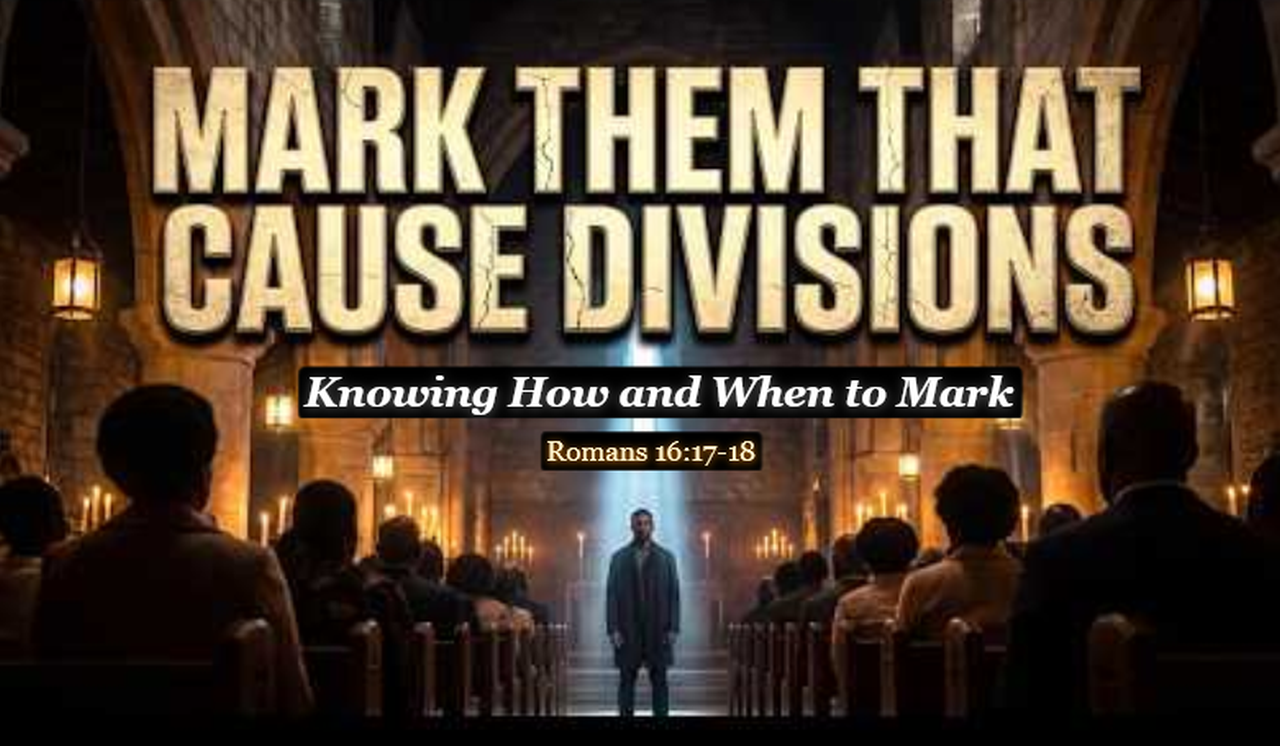
Scoping, Identifying, and Taking Aim at Deceivers
Knowing How and When to Mark
(A Must-Read for all who desire more discernment to escape the evil one in this late hour. This is an excerpt from the book titled Deceivers False Prophets Among Us which is available on this site)
THE witches and warlocks parading their witchcraft as they pretend to be Christ’s ministers vainly believe they are not going to be exposed by Christ’s true disciples! NOTTTTT!!!!!! Both barrels blazing!!!!! Unleashing the power of God on these devils!!!
“Mark them which cause divisions and offences contrary to the doctrine which ye have learned; and avoid them.” Romans 16:17
Identifying and marking “them which cause divisions and offences contrary to the doctrine” of the LORD, is to be a regular part of the Christian life. In an hour when the proliferation of false teaching is mutating at an increasingly exponential rate, those who love the LORD must examine and test everything against the final authority of the recorded oracles of God (Acts 17:11).
Note: There’s a difference between Satan accusing God’s people and God’s people identifying and marking wolves in sheep’s clothing among us. Be careful not to mix things up: Note that Satan is the “accuser of our BRETHREN” (Revelation 12:10)… and the “brethren” are NOT the wolves the “brethren” are commanded to “MARK” and “earnestly contend” AGAINST (Romans 16:17-18; Jude 3). Read that again. God commands His disciples to “MARK” which means to make known, to identify those wolves so God’s people can be protected. Beware of those who are misusing Scripture. Stop it now. You cannot “rightly” divide the Word of truth until you are daily, diligently studying and walking with other of His saints in the revelation that is the written Word of God (2 Timothy 2:15).
The following warning enlightens us to understand this:

“Beware lest any man spoil you through philosophy and vain deceit, after the tradition of men, after the rudiments of the world, and not after Christ.” Colossians 2:8
Would the all-knowing God have put such a warning in His Word if being spoiled were not possible? People can be spoiled (derailed, made shipwreck of) through false doctrines and philosophies, which, without fail, elevate men and demote Christ (Col. 2:8-9; 18-19).
These derailment elements are designed to steal glory from Christ. If we love Him, we are to “hear God’s words” and “hate every false way.” (Jn. 8:47; Ps. 119:104, 128; Amos 5:14-15)
GOD told you to “mark them” and not support them! (Romans 16:17-18)
SO WHY aren’t you exposing Christ’s enemies? Is it because 1. you are a moral coward who refuses to lay down your life in this world?, or is it 2. because you do not truly know Him who “is love” and therefore could care less about the protection of others?
IF you aren’t warning, you aren’t walking in God’s love. Repent now! Obey!
Let’s break this extremely important Bible text down:
“Mark them” – Beloved, we are mandated to simply and truly hearken to this divinely given instruction, to personally own this truth and walk in it, to be possessed with the protective love of our holy and “Great Shepherd of the sheep.” (Heb. 13:20) One of the ways the “Great Shepherd” protects the sheep of His pasture, is by His other sheep, scoping out and marking the wolves whose venomous lies would devour.
The clear instruction of the Word is to “mark them which cause divisions and offences contrary to the doctrine.” All human sentiments, reasonings, and excuses must be crucified.
“Mark them” – the Greek word here for “mark” is skopeo, which means “to scope out; to take aim at, consider, watch.”

Believers are here mandated to wisely scope out closely, observe and scrutinize all teachings and spiritual leaders under the lamp of God’s holy Word. We are to closely discern between true and false doctrines and leaders and sound the alarm on that which is found to be inconsistent with holy Writ. This is to be done especially when dealing with foundational, essential truths (which are a salvation issue).
Did Jesus ever instruct His people to debate the wolves? No. Yet He did command us through His apostle Paul to “rebuke them sharply” and to “mark them.” (Titus 1:13; Romans 16:17-18)
“Therefore I esteem all thy precepts concerning all things to be right; and I hate every false way.” Psalms 119:128
Looking closely at leaders from a Bible perspective is a mandate. Such only becomes a negative when done out of a critical spirit instead of out of love and obedience to the LORD and for the keeping of the way of the LORD in ourselves and others (1 Tim. 4:6, 16). Disciples are to examine every teaching, philosophy, and notion encountered in the light of His holy oracles. In such, the disciple is to identify deceivers, false teachings and practices and “mark them,” that is, watch out for and take aim at them, while warning others. The Holy Spirit also says we are to “avoid them.” (Rom. 16:17)
Concerning this text in Romans 16, Donald Stamps, in the Life In the Spirit Study Bible, writes:
“At the end of his letter, Paul gives a strong warning to the church in Rome to be alert to all those who do inestimable damage to the church by corrupting and extorting the ‘doctrine’ (teaching) of Paul and the other apostles. They are to ‘mark’ the proponents of false doctrine and ‘avoid them’ and their ministry. Those marked may have been antinomians (i.e., against the law), who taught that because salvation is by grace, saving faith does not necessarily include obedience to Christ Jesus (cf. 6:1-2; 2 Cor. 4:2; 11:3; Eph. 4:14; Rev. 2:4-5).”
They believed that a person could live in sin and reject God’s moral law, and yet possess eternal salvation. These false teachers were eloquent orators, speaking with comforting words and flattering speeches (cf. Jude 16), but deceiving simple Christians.” (p. 1759)
This commentator denotes a specific teaching, all too alive and well in the modern church, that is to be marked and avoided along with those who propagate it.
William MacDonald states:
“It is an ungodly tolerance that has allowed so many pulpits in America to be filled with ‘false apostles and deceitful workers, transforming themselves into apostles of Christ’. Detecting a resemblance to conditions in Elijah’s day, J Sidlow Baxter writes ‘Such are the people who today, with sickly kindness, will tolerate teachers of errors in our pulpits because they are such smooth-mannered and amiable gentlemen. They would rather allow error to be preached and souls to be deceived than hurt the preacher’s feelings. Let Baal be worshipped rather than drought come! Let the cancer kill its victim rather than the cruel surgeon use the knife!…The best thing that could happen to some so-called Christian ministers of today is that they should be denounced in God’s name by their hearers.’
It is a sinful tolerance [1] that refuses to castigate a false church system that leads millions to eternal destruction with its perverted gospel. [2] That honours its head as a great evangelist at the same time that he is condemning evangelicals as wolves. [3] That labels God’s prophets as divisive when they denounce its idolatry, its mariolatry and its other heresies. [4] That sends converts back into its deadening clutches.
What has happened to the church of the martyrs?
We have an enormous craving for popularity. This is the stuff of which false prophets are made. We have a desire to avoid unpleasantness at all cost. A desire like this keeps us from confronting, from intervening when we should.
We have a distaste for being different. We find it easier to move along with the crowd, to drift with the tide. It is all too easy to remain silent when we are in an adverse theological climate. We are ‘slaves who dare not to be right with two or three’.
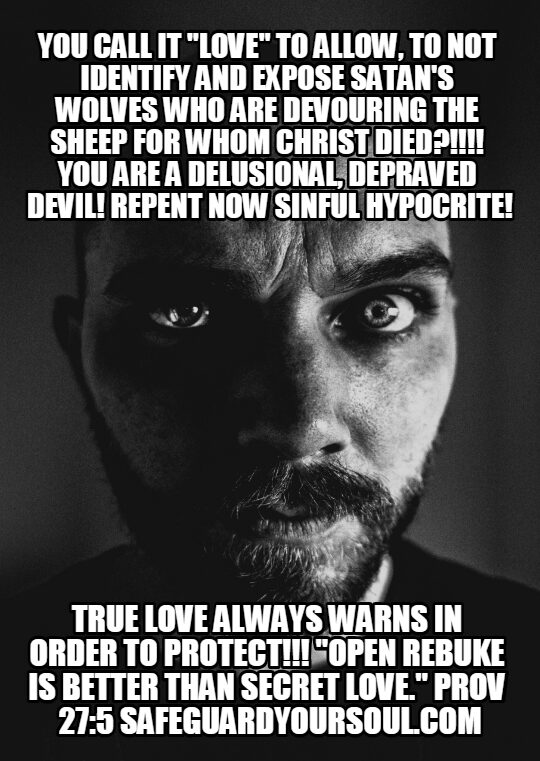
We have lost the capacity for being angry. We are not easily enough disturbed. We are in the sorry state of having no capacity for indignation. We are experts at putting off decisiveness simply because we don’t want to act.
Sometimes we are too blinded by friendship to stand against wrong. When a Christian spoke out against E. J. Carnell’s book ‘The Case For Orthodoxy’ because it argued against the inspiration of the Scriptures, a friend of the author said ‘Well you do not know him personally as I do. He is a gracious gentleman, a godly man’.
Jay Adams was right when he said ‘In some circles, the fear of controversy is so great that preachers and congregations following after them will settle for peace at any cost – even the cost of the truth – God’s truth. The idea is that peace is all- important. Peace is a biblical ideal…but so is purity. The peace of the church may never be bought at the price of the purity of the church. The price is too dear’.
Ecumenism and catholicity are two great buzzwords today. Let’s all get together. Don’t do or say anything to rock the boat. Doctrine divides, they say. What we need is unity.
What we really need is to contend earnestly for the faith in a day when it is being attacked, diluted and denied. We will be tolerant in matters of indifference but intolerant of departure from the truth of God. With Luther, ‘Here we stand. We can do no other’.”
Disciples of Christ are held accountable for progressively learning and proclaiming the whole will and counsel of God, which includes warning others of false teachings and those responsible for them (see also Isa. 58:1; Ezek. 33:7-9; 34:1-10; Acts 20:26-32; Gal. 1:6-9; 2 Tim. 2:17-18).
Christ’s true representatives are known by their purity of character and doctrine (Tit. 1:5-9; 2:6-8).
Friend of Christ, are you beginning to see this truth and understand the reason our LORD instituted such?
“Mark (scope out, take aim at and watch) them which cause divisions and offences contrary (against; opposed) to the doctrine which ye have learned; and avoid them.” Romans 16:17
Christians are held accountable for proclaiming the whole counsel of God and warning others of false teachings and those responsible for them.
Dark Works are to be Exposed
“And have no fellowship with the unfruitful works of darkness, but rather reprove (EXPOSE) them.” Ephesians 5:11
When false teaching is discovered, it is to be exposed. At times, when a false prophet or teacher is detected, if unrepentant, they are also to be exposed.
Discernment Hint: If someone continues to teach false doctrine, they simply have not repented and are to be exposed and marked for their rebellion. God counts heretics to be rebels whom He told us to “reject.” (Tit. 3:10).
Sinning elders are to be openly rebuked in order that all may learn and more fervently fear God:
“Them that sin rebuke before all, that others also may fear.” 1 Timothy 5:20
It is a sin to condone and not expose deadly falsehoods propagated by leaders “who privily (secretly) shall bring in damnable heresies.” (2 Pet. 2:1) The divine purpose here is to identify and announce those who are marked for destruction so they don’t bring others with them.
Here in 2 Peter, the Holy Spirit speaks of “false teachers” and “false prophets” who teach “damnable heresies” –which means lies that damn their listeners to hell (2 Pet. 2:1-3).
The LORD has identified those who teach falsehoods as Satan’s ministers – “such are false apostles, deceitful workers, transforming themselves into the apostles of Christ.” (2 Cor. 11:12-15) In this passage, we are told that Satan’s “ministers also be transformed as the ministers of righteousness; whose end shall be according to their works.”
Let us no more deny Christ the LORD by hiding Satan’s prophets and teachers. Why would any child of God want to jeopardize the souls of those around them? How can we so misunderstand the LORD by thinking that silence in this matter is loving? At times, silence can be hatred instead of love.
“If thou faint in the day of adversity, thy strength is small. If thou forbear to deliver them that are drawn unto death, and those that are ready to be slain; If thou sayest, Behold, we knew it not; doth not he that pondereth the heart consider it? and he that keepeth thy soul, doth not he know it? and shall not he render to every man according to his works?” Proverbs 24:10-12
For the sake of the offending party and those under his influence, there are instances where open rebuke is called for instead of love that is hidden and withheld.
“Open rebuke is better than secret love.” Proverbs 27:5
Who is to be marked?
“I marvel that ye are so soon removed from him that called you into the grace of Christ unto another gospel: Which is not another; but there be some that trouble you, and would pervert the gospel of Christ. But though we, or an angel from heaven, preach any other gospel unto you than that which we have preached unto you, let him be accursed. As we said before, so say I now again, If any man preach any other gospel unto you than that ye have received, let him be accursed.” Galatians 1:6-9
Those who teach “any other gospel” are “accursed” of God and to be marked. The term “ANY other gospel” is incriminating, and cuts closer into the core of Christian leadership than many may want to acknowledge. Yet, any other gospel than that given by Christ and His apostles is false and identifies the one who espouses and teaches it as a deceiver.
On a personal note: Throughout my walk with the LORD, I have seen several people fall away who once served Him. Several of these who have fallen away have been derailed due to false teachings they bought into. One particular long-time friend was diverted from Christ by beginning to make Saturday his new “savior.” Jesus no longer remained as his Rest, but rather the idolatry of a certain day that Christ made. Paul warned strongly against this and other pagan idolatrous emphases which are designed to rob glory from Christ. It is fine to gather on Saturday or any day, but when the day becomes the focus instead of Jesus Christ, the Head of the Church, the leaven of idolatry is present (Col. 2:14-19).
The convincing cult was successful in alluring and snaring this man with their false emphasis and diabolically diversionary tactics. What might have been the outcome if someone would have preemptively taught this man biblical truth and warned him against the cult that snared him?
Beware of “Fair Speeches”
“Now I beseech you, brethren, mark them which cause divisions and offences contrary to the doctrine which ye have learned; and avoid them. For they that are such serve not our Lord Jesus Christ, but their own belly; and by good words and fair speeches deceive the hearts of the simple.” Romans 16:17-18
The apostle Paul tells people here to “mark them which cause divisions and offences contrary to the doctrine” of the LORD which is found in the Holy Scriptures.
Carefully note the phrase “fair speeches” which is defined as “fine style of utterance, giving the appearance of reasonableness.” So, the Scripture here informs us that such beguilers will “deceive the hearts of the simple” by “fair speeches.” This is the very way so many are being led astray in this late hour. The message and manner of these men have the appearance of godliness, and might even include a few tears, but their hidden motives center around their own agenda and not the LORD’s. This alone makes one a false prophet.
Does anyone you know come to mind when you hear these words of holy Writ?
While attending a local fellowship for some time, I had observed the sentiments of the senior pastor month after month, year after year. There was an arrogant spirit, which was like a perfume, sensed more than seen. I witnessed the tears and emotions of this pastor and his wife (as they stood with their thousand dollar outfits – seldom, if ever, worn twice). I tried to be patient but there never seemed to be a difference in the way they lived. There was seemingly no reduction in the high-mindedness. Pride and self-service seemed to fill their lives and therefore exuded from their ministry. So, after ample time had expired, it was time to move on to be with the humble in heart (Prov. 16:19). O how refreshing!
The stylish, persuasive reasonings of this pastor, even his use of Scripture, were compelling. His “fair speeches” were commanding and emotionally and intellectually stimulating. They gave the appearance of reasonableness and godliness. In the final analysis, many of those eloquent of speech and rich with persuasive words, are found to be empty hearted, void of the life of Jesus due to serving self instead of the Savior – “whose god is their belly.” (Phil. 3:19) Paul purposely avoided becoming an eloquent orator in order to establish God’s people in the LORD Himself and not in the wisdom of mere men (1 Cor. 2:1-5).
“And I, brethren, when I came to you, came not with excellency of speech or of wisdom, declaring unto you the testimony of God. For I determined not to know any thing among you, save Jesus Christ, and him crucified. And I was with you in weakness, and in fear, and in much trembling. And my speech and my preaching was not with enticing words of man’s wisdom, but in demonstration of the Spirit and of power: That your faith should not stand in the wisdom of men, but in the power of God.” 1 Corinthians 2:1-5
Saints, the LORD promised us that He was going to shake all things in these last days. As he shakes the foundations of our lives – that is, tests with fire the actual materials our faith is based upon, what shall we do? Shall we be willingly broken before His holiness, letting Him have His way in us?
“…but now he hath promised, saying, Yet once more I shake not the earth only, but also heaven. And this word, Yet once more, signifieth the removing of those things that are shaken, as of things that are made, that those things which cannot be shaken may remain. Wherefore we receiving a kingdom which cannot be moved, let us have grace, whereby we may serve God acceptably with reverence and godly fear: For our God is a consuming fire.” Hebrews 12:26-29
We have all unduly espoused the teachings and personalities of certain men and women in ministry. He is calling us to repent of our spiritual adulteries, where we have alienated our heart affections from Him and placed them in mere men.
Beloved, let us see the big picture of eternity in this. – “Wherefore we receiving a kingdom (forever with Jesus) which cannot be moved, let us have grace, whereby we may serve God acceptably with reverence and godly fear: For our God is a consuming fire.” May He grant us His “grace” with “godly fear” and bring upon our lives His “consuming fire” to burn away all spiritual adultery, that we might soundly worship Him alone in spirit and in truth.
A tell-tale sign: If we can peacefully receive the expose’ of one of these ministers we have grown to like, we know that the LORD has delivered us from spiritual adultery. Perhaps if we get upset and come to the defense of these mere men while excusing their deadly errors, we have not yet laid down our idolatry of these men.
Like Paul, the apostle of Christ, true disciples of Jesus who serve in leadership go through painstaking measures to root and ground their audiences in Christ alone and not themselves – “For I determined not to know any thing among you, save Jesus Christ, and him crucified…That your faith should not stand in the wisdom of men, but in the power of God.” (1 Cor. 2:1-5)
The Savior is calling His remnant to relinquish all idols of the heart and place our affections upon Him alone who is our life and salvation.
In the ultimate end, many who tickle ears and move hearts and have spent lots of God’s monies to establish themselves, are discovered to be those who bellow out empty words from hollow hearts, void of the fruit of authentic Christ-likeness. These men are what Jude identified as “clouds they are without water, carried about of winds; trees whose fruit withereth, without fruit, twice dead, plucked up by the roots.” (Jude 12) All this is being perpetrated while these people are drowning in the wealth they reap from God’s people, most of whom have no clue as to the disingenuous nature of this type of deceiver. These men, multitudes of whom operate in our midst, “by good words and fair speeches deceive the hearts of the simple.” (Rom.16:18)
Doesn’t it seem like those who have no guile or malice in their hearts are most vulnerable to deception? Could this be due to the fact that it may seldom if ever enter such a pure mind that anyone would be operating according to an insidious, selfish, malicious agenda? The harmless heart many times cannot imagine someone could operate this way since such motives are not within themselves.
Is Silence Really Golden?
Refusing to sound the alarm by speaking out and warning others of Satan’s lies is paramount to being in league with the evil one! In such a case, does not Satan say, “Silence is Golden”?
Such unjust silence endangers the souls of others and will be brought to light in the Judgment.
On numerous occasions, Jesus audibly verbalized His righteous anger toward the Pharisees of His day and so are we called to do at times.
We should ask ourselves: Are we reasoning or seeking to simply obey what God told us to do? Who are we trying to please?
Those who expose false teaching and ministers do the work of God.
- “Behavior unchallenged is behavior condoned.” Unknown
Love that emanates from the LORD speaks the truth (Prov. 12:17; 16:6; Eph. 4:15).
The defense of the New Testament, apostolic faith, once given to the saints, will bring division and persecutions (2 Cor. 11:12-15; Gal. 1:9; Phil. 1:15-17). The enemy does not like his strongholds being plundered by the cannons of divine truth spoken by the LORD’s saints.
Jesus commanded HIS people to “JUDGE righteous judgment.” (John 7:24) And, He commanded us to know/discern others “BY THEIR FRUITS” and that’s exactly what we’re doing under the command of KING JESUS (Matthew 7:16, 20). Dare you interfere with HIS work and become His enemy? You are bidding Godspeed to evil doers, satan’s wolves in sheep’s clothing, and you will be judged with those enemies of Christ if you don’t repent (2 John 10-11).
When discernment and separation are enacted, a sharp sword of division seems to unfailingly separate the remnant from the tares (those who do not love the truth). The tares are those who live to gratify the fleshly lusts in the guise of being a real Christian (Rom. 6).
“Blessed are they which are persecuted for righteousness’ sake: for theirs is the kingdom of heaven. Blessed are ye, when men shall revile you, and persecute you, and shall say all manner of evil against you falsely, for my sake. Rejoice, and be exceeding glad: for great is your reward in heaven: for so persecuted they the prophets which were before you.” Matthew 5:10-12
The returning LORD Himself is our reward, comfort, and consolation (Rev. 22:12; 2 Cor. 1:3-7).
The LORD dislikes when men are not strong in His truth and don’t stand for it and defend it:
“They are not valiant for the truth upon the earth.” Jeremiah 9:3
“…if any man draw back, my soul shall have no pleasure in him.” Hebrews 10:38
He actually equips and anoints men to preach and defend His truth – and sometimes this is in a violent fashion.
“But truly I am full of power by the spirit of the LORD, and of judgment, and of might, to declare unto Jacob his transgression, and to Israel his sin.” Micah 3:8
“Hearken unto me, ye that know righteousness, the people in whose heart is my law; fear ye not the reproach of men, neither be ye afraid of their revilings… I, even I, am he that comforteth you: who art thou, that thou shouldest be afraid of a man that shall die, and of the son of man which shall be made as grass; And forgettest the LORD thy maker…” Isaiah 51:7, 12-13
Gospel workers are to be ever ready to “…reprove, rebuke, exhort with all longsuffering and doctrine” with “the Word.” (2 Tim. 4:2)
Naming Names? Is that Biblical?
Have you ever personally counted the people the apostle Paul marked by name in the book of 2 Timothy? Try it. Read 2 Timothy (4 chapters) and keep a count of the deceivers Paul identifies and names. You will find 8 men named by name as deceivers in 2 Timothy alone.
“Brethren, be followers together of me, and mark them which walk so as ye have us for an ensample. (For many walk, of whom I have told you often, and now tell you even weeping, that they are the enemies of the cross of Christ: Whose end is destruction, whose God is their belly (selfish interests), and whose glory is in their shame, who mind earthly things.) For our conversation is in heaven; from whence also we look for the Saviour, the Lord Jesus Christ: Who shall change our vile body, that it may be fashioned like unto his glorious body, according to the working whereby he is able even to subdue all things unto himself.” Philippians 3:17-21
Saints, are we so naive as to believe that in our day there are no “enemies of the cross of Christ”? Not only are there Christ’s enemies in our day, the Bible foretold that just before the return of our LORD there would come a great falling away at the hands of these end-time predators who operate in the church world, many who are very famous ministers (2 Thess. 2:3; 1 Tim. 4; 2 Tim. 3-4; 1 Jn. 4:1-6).
There are some essential truths embedded and revealed here in this Bible text that are very important to know concerning these “enemies of the cross of Christ.” Let’s look at some:
- They are many (plentiful) not a few – “For many walk…”
- Paul repeatedly warned of deceivers – “I have told you often…”
- Paul warned with tears – “…now tell you even weeping…”
- These men pose as His servants but are actually His enemies – “they are the enemies of the cross of Christ”
- These men are going to hell unless they repent – “Whose end is destruction…”
- They serve themselves in ministry while supposedly representing Christ – “whose God is their belly (selfish interests)…”
- They revel in things they should be ashamed of – “whose glory is in their shame…”
- They speak affectionately of movies and other secular interests and tend to things of this fleeting world – “who mind earthly things…”
- These “ENEMIES of the cross of Christ” must be marked by the LORD’s remnant no matter what the cost (Rom. 16:17-18). We are mandated to “mark them which cause divisions and offences contrary to the doctrine” of Christ in order to protect the sheep of the LORD’s pasture.
Have you ever personally counted the people the apostle Paul marked in the book of 2 Timothy? Try it. Read 2 Timothy (4 chapters) and keep a count of the deceivers Paul identifies by name. You will find several men named by name as deceivers in 2 Timothy alone. When the Holy Spirit moved upon Paul to foretell that “evil men and seducers shall wax worse and worse, deceiving, and being deceived,” he also led him to name some of those “enemies of the cross” in his and previous days (Phil. 3:17-20). The naming of these men is for an eternal memorial of the just wrath of the Almighty upon those who defame His holy name through deception and false teaching (2 Pet. 2, 3; Jude). When reading the Old Testament especially, we see a Redeemer who will destroy the enemies of His people – because He loves His people (Isa. 49:25; 54:17, etc.). This is the protective love of the LORD.
SETTING THE BIBLICAL RECORD STRAIGHT
Here is the list of the 8 evil doers the great apostle was divinely inspired to justifiably identify by name in 2 Timothy – in order to protect God’s people:
- 1) Phygellus 1:15
- 2) Hermogenes 1:15
- 3) Hymenaeus 2:17
- 4) Philetus 2:17
- 5) Jannes 3:8
- 6) Jambres 3:8
- 7) Demas 4:10 (apostate)
- 8) Alexander the coppersmith 4:14
Note that Philetus was a false teacher who was teaching cancerous lies – false doctrines – and Paul said that the “word” Philetus was teaching will eat up the faith of believers like a cancer. – “Study to shew thyself approved unto God, a workman that needeth not to be ashamed, rightly dividing the word of truth. 16 But shun profane and vain babblings: for they will increase unto more ungodliness. 17 And their word will eat as doth a canker: of whom is Hymenaeus and Philetus; 18 Who concerning the truth have erred, saying that the resurrection is past already; and overthrow the faith of some.” (2 Timothy 2:15-18)
It is interesting to observe here that in the same letter Paul names these names of beguilers, he also states:
“I have fought a good fight, I have finished my course, I have kept the faith: Henceforth there is laid up for me a crown of righteousness, which the Lord, the righteous judge, shall give me at that day: and not to me only, but unto all them also that love his appearing.” 2 Timothy 4:7-8
We readily gather here that naming names is an integral part of real New Testament ministry and those who obey can like this apostle of Jesus, be confident that they have completely fulfilled the will of God – “I have finished my course, I have kept the faith: Henceforth there is laid up for me a crown.” In this text, the Holy Ghost says that the LORD is a “righteous judge.” I believe that those who mark deceivers in obedience to divine mandate, are going to be rewarded eternally for such obedience.
We see clearly here that fighting the good fight and finishing our course involves and includes marking deceivers.
Men of God today are mandated to do the same, yet only by the revelation of the Word of God. Marking people is commanded in the Bible (Rom. 16:17-18). If a public leader is teaching people falsehood, he is to be confronted and exposed. The fruit of truly repenting of teaching something that contradicts God’s Word is that the leader will publicly amend his way and doctrine.
Naming names must never be done recklessly or out of a personal vendetta, but only according to the Word and in the Spirit for the glory of God and protection of His beloved people.
We are instructed to rightly divide the Word of truth (2 Tim. 2:15). When Jesus’ disciples sought to call down fire from Heaven to destroy those who would not receive the Messiah into their town, the LORD rebuked them, and said, “Ye know not what manner of spirit ye are of. For the Son of man is not come to destroy men’s lives, but to save them.” (Lk. 9:55-56) Jesus instructed us to “judge righteous judgment” and in this case He obviously counted the judgment of His disciples to be unrighteous instead of righteous (Jn. 7:24). Though sin also, unbelief of a group of lost people is obviously different than wolves who operate in disguise among His people in sheep’s clothing and deceive the sheep of His pasture. Of these the Word tells us that they have “crept in unawares” and “privily (secretly) shall bring in damnable heresies.” (2 Pet. 2:1; Jude 4) The “Great shepherd of the sheep” broods jealously over His beloved people and will smite the wolves who seek to devour His precious sheep (Ps. 23; 91; Matt. 23:37; Heb. 13:20; James 5:5-7). The same LORD who corrected His disciples for having a wrong spirit in trying to call down fire upon unbelievers also instructed those who serve Him to “mark” those who mislead His people and to “earnestly contend for the faith which was once delivered unto the saints” against the “certain men” who are “crept in unawares.” He told us that those men who would mislead His people “were before of old ordained to this condemnation, ungodly men, turning the grace of our God into lasciviousness, and denying the only Lord God, and our Lord Jesus Christ.” (Jude 3-4) Concerning those who would mislead any one of His precious children, Jesus says that “it were better for him that a millstone were hanged about his neck, and that he were drowned in the depth of the sea.” (Matt. 18:6)
WHAT IS SATAN’S FAVORITE VERSE TO TWIST AND MISUSE? ! ATTN Whining “judge not” Scripture twisters: Jesus was speaking of HYPOCRITICAL JUDGING in Matthew 7:1-5 and not all judging. READ the passage. Jesus commands His people to “JUDGE righteous judgment.” (John 7:24) – YOU need to get into the Word. You are a novice and are judging others for judging and therefore hypocritically breaking the very thing you are judging others for. Now, it’s time to repent, to get into and obey God’s Word which mandates that all false teachers and false teaching be exposed. You must die, to lay down your life and when you do, Jesus will embolden you to obey Him. If calling out, naming, and exposing false teachers is wrong judgment, Jesus and His apostles were sinning by often doing so. The LORD would have us to repent and “judge righteous judgment.” (John 7:24).
Those leaders who refuse to expose lies clearly reveal that they are operating in ministry for themselves and not the LORD. They are not protecting God’s sheep and are thereby disobeying the LORD. Identifying falsehoods and at times the people teaching them, is a protective measure to keep God’s people from being spoiled/deceived (Col. 1:27-2:8). By the way, this Bible topic like all others, does not hinge upon what you or I think should be done – BUT UPON WHAT THE LORD HAS CLEARLY TOLD US. So it is time to die to the self-life and all of its emotional affinities and sentiments and just DO the Word.
“For what if some did not believe? shall their unbelief make the faith of God without effect? God forbid: yea, let God be true, but every man a liar…” Romans 3:3-4
Note “Let God be true, but every man (including ourselves) a liar… ”
What makes people get upset when names of deceivers are mentioned? It’s biblical, so what are they stirred about? Are the scalded dogs barking? Are those who have made idols of these mere sinful men covering for them? What’s at stake?
Saints, naming names is a divine mandate. Naming names has its place in God’s economy. If one has a problem with that, let him argue with Him. It’s time to catch up with truth and begin to walk in it – seasoned with the protective love of Christ.
Taking offense because certain ministries name the false doctrine in the church world or even the names of false leaders just may be a matter of the heart. Perhaps we need to look within and beg the LORD to search us out and lead us in His way everlasting (Ps 139:23-24).
What does God say about this?
Who are we truly worshipping? Whom do we fear? Who do we seek to please? Upon whom are our affections set? If a person gets upset because their favorite limelight leader or pet pastor or prophet is identified by name as false, perhaps that person has an unnatural soul tie to that leader and his ministry. Is this not idolatry of the heart?
“Woe to the idol shepherd…” Zechariah 11:17
Friend, God’s kingdom is all about Jesus Christ and His eternal, unchanging Word, not any mere man or group of men (Mk. 13:31).
“I am the LORD: that is my name: and my glory will I not give to another, neither my praise to graven images.” Isaiah 42:8
Why Some Don’t Want to Expose
Could it be self-preservation? What is it that is behind the refusal of some to dispense God’s truth after He has clearly instructed us to do such? And on top of that, why is it that some who fear men and therefore refuse to identify and expose the false, exude an air of spiritual pride as if they are being “loving” by allowing people to remain under the dark shadow of false teaching while hiding the doctors of deception who espouse these falsehoods? How perverse a picture is this and how very absurd for some to believe they are being “loving” by hiding this soul-saving information!
Could it be that these are cloaking pride and self-preservation behind a pseudo “love”? God’s pure love rejoices in and speaks the truth – (Prov. 12:17; 1 Cor. 13:6; Eph. 4:15). When God’s love is truly made perfect in us, we will speak His truth in His love.
“He that speaketh truth showeth forth righteousness: but a false witness deceit.” Proverbs 12:17
Is it not personal and evil pride that is at the foundation of such thinking and inaction, cloaking itself in a false “love” that is not according to the constitution (Word, Counsel) of the One who is love?
Jesus told us He is the “truth” and the Word tells us that “God is love.” (Jn. 14:6; 1 Jn. 4:8, 16) These two attributes are equally a part of the divine character and an imbalance is the result of His people not acknowledging both. God’s method is to get to the root of our iniquities and purge them with His “mercy and truth.” Study Jeremiah 1:10 and Proverbs 16:6.
Do we realize what is at stake here?
“For many deceivers are entered into the world, who confess not that Jesus Christ is come in the flesh. This is a deceiver and an antichrist. Look to yourselves, that we lose not those things which we have wrought, but that we receive a full reward. Whosoever transgresseth, and abideth not in the doctrine of Christ, hath not God. He that abideth in the doctrine of Christ, he hath both the Father and the Son. If there come any unto you, and bring not this doctrine, receive him not into your house, neither bid him God speed: For he that biddeth him God speed is partaker of his evil deeds.” 2 John 7-11
In case you were still wondering if what a person believes is important to their eternal destination, wonder no more. Let these sobering words of Holy Scripture grip your soul deeply:
“Whosoever transgresseth, and abideth (remains) not in the doctrine of Christ, hath not God.” 2 John 9
“Let that therefore abide (remain) in you, which ye have heard from the beginning. If that which ye have heard from the beginning shall remain in you, ye also shall continue in the Son, and in the Father.” 1 John 2:24
Weakness, Disobedience, Self-love Masking Itself as Tolerance
“Thou shalt not hate thy brother in thine heart: thou shalt in any wise rebuke thy neighbour, and not suffer sin upon him.” Leviticus 19:17
Here the LORD equates hating one’s brother to the neglect of rebuking and allowing sin to prosper in his life. The Bible tells us that “the wages of sin is death” and so to allow sin to prosper in our brethren is to hate them (Rom. 6:23). “Open rebuke is better than secret love” right? (Prov. 27:5-6) We should admonish, correct, and at times even rebuke each other for espousing unbiblical teachings and/or living in sin.
“Let the word of Christ dwell in you richly in all wisdom; teaching and admonishing one another in psalms and hymns and spiritual songs, singing with grace in your hearts to the Lord.” Colossians 3:16
In Colossians 3:16 we are told to:
“Let the word of Christ dwell in you richly”
Handle the Word of God
- “in all wisdom”
- “teach and admonish one another”
- “singing with grace in your hearts to the Lord”
Hatred withholds truth that would otherwise set someone free as only the truth can do when communicated and adhered to (Jn. 8:31-32, 36). This applies not only to sin but also to loving our neighbor enough to wisely and lovingly attempt to guard him with truth from being deceived and drawn away from pure devotion to the One who died to save us.
Some of us act as if it is a Christian virtue to tolerate any and everything that comes down the pike – “every wind of doctrine” (Eph. 4:14). We mask our selfish preservation and self-idolatry behind a false “love” that has no reconciliation with Bible truth.
In his book Man to Man, Richard Halverson wrote:
“There are times when tolerance is not a virtue, but weakness. There is certainly no virtue in being tolerant if one holds no convictions, and it is not uncommon for the man who believes nothing, who speaks themost of tolerance, to be the most intolerant of one who really believes something. Jesus’ absolute intolerance of sin and error was in no way inconsistent with His love for men, even the sinner or the liar.” (p. 59)
Martin Luther said:
“I was born to fight devils and factions. It is my business to remove obstructions, to cut down thorns, to fill up quagmires, and to open and make straight paths. But if I must have some failing, let me rather speak the truth with too great severity than once to act the hypocrite and conceal the truth.”
When teachings that flood the church world would bring God’s people into spiritual deception, are speared and exposed, God will bless.
“Real valor consists not in being insensible to danger, but in being prompt to confront and disarm it.” ~ Sir Walter Scott
God rewards those who vigilantly expose His enemies, especially when He leads them to do so – and He certainly will lead His people to do so (Romans 16:16-18; Ephesians 5:11; Jude 3). The LORD can only use us inasmuch as we have His Word in our hearts. Thank God for the modern-day Jaels (Judges 5:24). Thank God for the valiant Phinehas’ of today who spear the sin of false doctrine. These are the resolute defenders of God’s glory who decisively deal with the evil corruption of the divine image in the minds and hearts of His people.
When lies are exposed with divine truth, God will bless (Num. 25; Judges 5:24-31).
When God’s love is truly made perfect in us, we will speak His truth with boldness and kindness (Eph. 4:15).
There is a “Difference”
Matthew 18:15-17 ….This passage is often misapplied. DOES Matthew 18:15-17 apply to wolves? No. Notice how He begins – “Moreover if thy brother (not a lost soul or wolf) shall trespass against thee…” What Jesus was teaching us in Matthew 18:15-17 is for the members of His body exclusively. Wolves are Satan’s plants to deceive His body and not members His body but rather ministers of Satan (2 Corinthians 11:12-15).
“Moreover if thy brother (not a lost soul or wolf) shall trespass against thee, go and tell him his fault between thee and him alone: if he shall hear thee, thou hast gained thy brother. 16 But if he will not hear thee, then take with thee one or two more, that in the mouth of two or three witnesses every word may be established. 17 And if he shall neglect to hear them, tell it unto the church: but if he neglect to hear the church, let him be unto thee as an heathen man and a publican.” Matthew 18:15-17
As we discern we are then responsible to expose our findings to others (1 Tim. 4:6, 16).
“And they shall teach my people the difference between the holy and profane, and cause them to discern between the unclean and the clean. And in controversy they shall stand in judgment; and they shall judge it according to my judgments: and they shall keep my laws and my statutes in all mine assemblies; and they shall hallow my sabbaths.” Ezekiel 44:23-24
Discernment is not condemnation. Discernment is simply the ability and act of distinguishing between holy and unholy, true and false.
Jesus Christ condemned hypocritical judgment, and commanded “righteous judgment.” (Matt.7:1-5; Jn. 7:24)
Speaking of those who follow Him, the LORD tells us here in Ezekiel 44:23 that “They shall teach my people the difference” – to discern between “holy and profane” and “unclean and clean.” The love of God which abides in true under-shepherds, is protective and trains others to discern and be guarded from the mischief intended upon them by the evil one who works through deceivers disguised in sheep’s clothing and their teachings.
Naivety is not a virtue in God’s kingdom, it is a curse.
Our LORD instructed us to pray for and obtain discernment and 1 John tells us to test every spirit and to not blindly receive and believe every person who comes in the name of Jesus because “many (not a few) false prophets are gone out among you.” (Rev. 3:18; 1 Jn. 4:1; Matt. 24:11)
The Bible speaks of the overseer as one who must “Take care of the church of God.” (1 Tim. 3:5) According to Proverbs 27:23, the overseer of the sheep of God’s pasture must be diligent to know the state of his flocks and to look well (oversee closely with the jealous love of God) to his herds.
“Be thou diligent to know the state of thy flocks, and look well to thy herds.” Proverbs 27:23
He should diligently look out over the horizon for wolves coming in to devour the LORD’s sheep with their deadly lies. All doctrinal error must be met with the full force of divine truth by those who love Him. Divine truth is the safety of the believer in abiding in Christ to the end (Prov. 30:5).
Discernment is simply the dividing of truth from error, relying fully upon God’s Word, which is the final authority for all matters concerning the faith once delivered to the saints (Mk. 13:31; Jn. 10:35; 2 Tim. 3:16; Jude 3-4). When the believer studies to show himself approved unto God, he will then be able to “rightly” divide “the word of truth” from error (2 Tim. 2:15).
In the Scriptures, the Holy Ghost divides between “the spirit of truth, and the spirit of error.” One of the earmarks of the “spirit of antichrist” and the foretold “many false prophets” is that “the world heareth them.” Those under the “spirit of antichrist” do not endure sound doctrine, they cannot hear it – instead they rebel. These love darkness rather than light. See John 3:19-21; 8:47; 2 Timothy 4:2-4; 1 John 4:1-6. These are those leaders and followers who purposely affirm instead of rebuking their sinful nature (2 Tim. 4:2-4). We must discern those deceivers who affirm people in their sins by not declaring God’s holiness, the biblical definition of sin, and the essential nature of repentance.
When Solomon became king, he was asked what he desired from the LORD.
“In Gibeon the LORD appeared to Solomon in a dream by night: and God said, Ask what I shall give thee…(Solomon answered) Give therefore thy servant an understanding heart to judge thy people, that I may discern between good and bad: for who is able to judge this thy so great a people? And the speech pleased the Lord, that Solomon had asked this thing.” 1 Kings 3:5, 9-10
Solomon wisely chose to covet from the LORD the ability to “discern between good and bad.” The Bible records that this request “pleased the Lord.”
Shouldn’t discernment be what we covet from our LORD in this late hour where we have been told to watch closely for deceivers? – “Now the Spirit speaketh expressly, that in the latter times some shall depart from the faith, giving heed to seducing spirits, and doctrines of devils; Speaking lies in hypocrisy…” (1 Tim. 4:1-2)
Discernment is sought out and then taught to others by leaders who are true to the LORD (Ezek. 44:23). They are ever diligent to feed and guard “the flock of God” from the spiritual rabies of the promised wolves who “lie in wait to deceive.” (1 Pet. 5; Eph. 4: 14)
Check out the state of the people of God in Isaiah’s day, when wolf packs had hijacked the positions of authority, designed to be occupied by men who authentically feared God.
“The Lord GOD which gathereth the outcasts of Israel saith, Yet will I gather others to him, beside those that are gathered unto him. All ye beasts of the field, come to devour, yea, all ye beasts in the forest. His watchmen are blind: they are all ignorant, they are all dumb dogs, they cannot bark; sleeping, lying down, loving to slumber.” Isaiah 56:8-10
Do we think that our day is altogether different from Isaiah’s when the leaders of the people were self-serving, “blind… ignorant…dumb dogs…sleeping, lying down” and “loving to slumber”?
At the helm, insidiously guiding the Church into deep darkness, are men who have only an outward form or formula of godliness, yet are not submitted under the Lordship of Jesus Christ.
“Wolves” and “beasts of the field” must be marked so that “his people, and the sheep of his pasture” can be warned, be wise to them and able to stay out of harm’s way (Matt. 7:15; Ps. 100:3).
“Warn Them from Me”
“So thou, O son of man, I have set thee a watchman unto the house of Israel; therefore thou shalt hear the word at my mouth, and warn them from me.” Ezekiel 33:7
God told Israel that its leaders “are all dumb dogs, they cannot bark; sleeping, lying down, loving to slumber.” (Isa. 56:10)
A watchdog instinctively sounds the alarm by barking. What should be instinctive is now asleep in the hearts of those in leadership who have slipped away from their first love. Because of this, they do not warn the people of God of the many dangers that are lurking and being openly taught in the church world.
The Ancient of Days told His prophet Jeremiah:
“I have set thee for a tower and a fortress among my people, that thou mayest know and try (test) their way.” Jeremiah 6:27
“Like People, Like Priest”
“And there shall be, like people, like priest: and I will punish them for their ways, and reward them their doings.” Hosea 4:9
It appears that the influence of priest and people works both ways. Although the leaders will bear the greatest responsibility, the influence seems to work in both directions. Leaders and non-leaders within the realm of professing Christendom will be rewarded according to their adherence to the clear will of God (Hos. 4:9-11; Matt. 15:14; Prov. 29:12; Isa. 9:16, 24:1-11).
To the one who has never heard a balanced diet of God’s Word, including love, judgment, discernment and correction, the person who exposes may automatically be viewed as judgmental. Someone who exposes is seen by regular churchgoers, who have been conditioned under a soft and incomplete false gospel, as judgmental, divisive, etc. This is only because their pastors are doing NOTHING to protect them from the MANY deceptions that abound in the church world. This is sad. Who is really at fault?
According to the biblical record, the defense of the faith should be a regular part of New Testament Christianity. Paul stated:
“I am set for the defence of the gospel.” Philippians 1:17
Or, perhaps they have heard some who “expose” and realize that they themselves (the exposers) are needing to expose their own self-righteous, pride-filled Pharisaical hearts before seeking to get the speck out of another’s eye (Matt. 7:1-6). Nonetheless, the defense of the faith is a biblical, essential, and regular part of New Testament Christianity, which all believers should be as actively engaged in as Paul was.
Due to his ceaseless intercessory praying for the LORD’s people, James, the brother of our LORD and human author of the book of James, was called “The Just” and “The safeguard of the people.” As a martyr, James died at the hands of antichrist religious zealots, but not before he set the example of diligently seeking to protect God’s flock as every servant-leader is called to do – to be “set for the defence of the gospel.” (Phil. 1:17)
Paul Marked Alexander the Coppersmith
“Alexander the coppersmith did me much evil: the Lord reward him according to his works: Of whom be thou ware also; for he hath greatly withstood our words. At my first answer no man stood with me, but all men forsook me: I pray God that it may not be laid to their charge.” 2 Timothy 4:14-16
Paul told the brethren to “be thou ware” of “Alexander the coppersmith” who “did me much evil.” Note here that the apostle Paul warned these believers to beware of someone he named and who had done him “much evil.” Today when someone dares to do as Paul did in this instance, they are accused of being “judgmental.” Instead, we tolerate what God never intended us to. Paul marked several men by name in his two letters to Timothy alone.
The apostle warned the believers of those who worked against the true work of the Gospel.
Beloved, you may be being tempted in your thinking to pander to the sinful nature of men, instead of leading them to the Fountain of Living Waters by showing them, by divine strength, grace and Word, their need to understand what He stated. Now is the time to submit all to the LORD and to accept that we are called to suffer as He did (Phil. 1:29; 1 Pet. 4:1, 2, 12). We are not our own, but bought with the very price of His blood and should be willing to say with Christ, “Father, if thou be willing, remove this cup from me: nevertheless not my will, but thine, be done.” (Lk. 22:42)
Our own will must be laid down and His given total reign. This is what He has called us to beloved.
- “It is not a difficult matter to learn what it means to delight ourselves in the LORD. It is to live so as to please Him, to honor everything we find in His Word, to do everything the way He would like to have it done, and for Him.” ~ S. Maxwell Coder
Defending the faith is a standard and vital part of the Christian life. The faith must be defended by its adherents. We must die to self-isms and obey the One we claim to serve.
Friend, when you create your own Universe, you can then decide what the rules are, but until then, those who claim to know Christ are to submit our lives to Him fully and simply follow His clear directions.
We must mature and realize that exposing false teaching and teachers has always been and will always be an integral, essential and regular occupation of New Testament Christianity and the responsibility of Christ’s disciples of all ages.
PRAYER: Heavenly Father, please strengthen my heart with the might of Your Holy Spirit. LORD Jesus You must increase in my life and I decrease. Please break me and make me LORD and cause me to wisely discern while walking in the Spirit. May I be dead to the self life and reputation and fully obedient to walk in Your eternal truth, including being ready to answer your call to expose those doctrines which are contrary to Your holy Word. Lead me my LORD Jesus and allow this to be done in Your love. Please protect Your people Jesus and turn men’s hearts back to Yourself. Bless Your body to see and live in Your Spirit and holy, eternal truth. I love You Jesus. In Jesus’ name, Amen.
Support | STORE | Podcasts | Christology | Be Ready in the Morning [podcast] | The Sure Mercies of David [podcast] | That Repentance and Remission of Sins should be Preached [podcast] | At His Feet | Modern Church | Peace with God
ORDER Deceivers and False Prophets Among Us
Beware of Wolf Defenders | List of Wolves
Part 2 Below
Abiding
Paul’s Prophetic Vision of Heretical Wolves Flooding the Church World During the Whole New Testament Era [podcast]

“And how I kept back nothing that was profitable unto you, but have shewed you, and have taught you publickly, and from house to house, … 25 And now, behold, I know that ye all, among whom I have gone preaching the kingdom of God, shall see my face no more. 26 Wherefore I take you to record this day, that I am pure from the blood of all men. … 27 For I have not shunned to declare unto you all the counsel of God. 28 Take heed therefore unto yourselves, and to all the flock, over the which the Holy Ghost hath made you overseers, to feed the church of God, which he hath purchased with his own blood. 29 For I know this, that after my departing shall grievous wolves enter in among you, not sparing the flock. 30 Also of your own selves shall men arise, speaking perverse things, to draw away disciples after them. 31 Therefore watch, and remember, that by the space of three years I ceased not to warn every one night and day with tears. 32 And now, brethren, I commend you to God, and to the word of his grace, which is able to build you up, and to give you an inheritance among all them which are sanctified.” Acts 20:20-32
Seems clear that the Holy Spirit in Paul foresaw the vile heretical wolves that were going to invade the professing church world for the whole era of the New Testament leading up to when Jesus returned. So, the Holy Spirit quickened in Paul to commend us to the Word of God (Acts 20:32).
“Study to shew thyself approved unto God, a workman that needeth not to be ashamed, rightly dividing the word of truth.” 2 Timothy 2:15
So, we see here that “rightly dividing the word of truth” is only possible by studying the Scriptures and not some man’s charts and system.
By the Holy Spirit, the LORD’s apostle Paul is instructing Timothy and us, to study the Word of God itself and not man’s system or charts.
BEWARE of those who arrogantly believe they they can dismiss certain biblical truths because in their own puny minds, they don’t understand how it all fits together. Be not deceived, these are pride-filled wolves and there are many among us! They go to seed on one truth to the exclusion of the whole of Scripture. Rebuke and run! (2 Peter 2:1-3)
“For we are not as many, which corrupt the word of God: but as of sincerity, but as of God, in the sight of God speak we in Christ.” 2 Corinthians 2:17
The unchanging Word of God, the Bible itself, and the Holy Spirit are the divine Source and Teachers of truth – and not mere men or sinful man’s concocted theological systems and/or charts! Beware saints. See Psalms 119:105, 130; Mark 13:31; John 14:26; 16:13; 2 Timothy 3:15-17, etc.
“Thy word is a lamp unto my feet, and a light unto my path.” Psalms 119:105
“The entrance of thy words giveth light; it giveth understanding unto the simple.” Psalms 119:130
“But the Comforter, which is the Holy Ghost, whom the Father will send in my name, he shall teach you all things, and bring all things to your remembrance, whatsoever I have said unto you.” John 14:26
“Howbeit when he, the Spirit of truth, is come, he will guide you into all truth: for he shall not speak of himself; but whatsoever he shall hear, that shall he speak: and he will shew you things to come. 14 He shall glorify me: for he shall receive of mine, and shall shew it unto you.” John 16:13-14
“Behold, I come quickly: hold that fast which thou hast, that no man take thy crown.” Revelation 3:11
“… Christ also loved the church, and gave himself for it; 26 That he might sanctify and cleanse it with the washing of water by the word, 27 That he might present it to himself a glorious church, not having spot, or wrinkle, or any such thing; but that it should be holy and without blemish.” Ephesians 5:25-27
Is your favorite minister warning you to be ready for Christ to return?
Here’s why you must study God’s Word – the whole of it – for yourself:
Perhaps the most insidious, dangerous thing false teachers do is that they over emphasize the minors while evading or under emphasizing or never mentioning the majors – the doctrinal majors of God’s Word.
“Woe unto you, scribes and Pharisees, hypocrites! for ye pay tithe of mint and anise and cummin, and have omitted the weightier matters of the law, judgment, mercy, and faith: these ought ye to have done, and not to leave the other undone. 24 Ye blind guides, which strain at a gnat, and swallow a camel. 25 Woe unto you, scribes and Pharisees, hypocrites! for ye make clean the outside of the cup and of the platter, but within they are full of extortion and excess.” Matthew 23:23-25
False Leaders are Know by their Refusal to Warn as did Paul
God’s men are to call out and not cover the sins of His people.
“Cry aloud, spare not, lift up thy voice like a trumpet, and shew my people their transgression, and the house of Jacob their sins.” Isaiah 58:1
The LORD cites the false teachers among us in that they specifically do not tell the people what God says is sin – They refuse to lift up their voice and “shew my people their transgression, and the house of Jacob their sins.”
Very important truth here. False leaders refuse to show God’s people what GOD calls sin which is the only way people in sin (includes any of us) can be made free. Take note and make record of this verse:
“Thy prophets (leaders) have seen vain and foolish things for thee: and they have not discovered thine iniquity, to turn away thy captivity; but have seen for thee false burdens and causes of banishment.” Lamentations 2:14
“The fear of the LORD is to hate evil: pride, and arrogancy, and the evil way, and the froward mouth, do I hate.” Proverbs 8:13
Paul’s Prophetic Vision of Heretical Wolves Flooding the Church World During the Whole New Testament Era [podcast]
Dispensationalism Exposed | Calvinism Exploded | Hebrews Roots Heresies
Support | STORE | Podcasts | The Return of Christ | Stewardship | Where to Give and Where Not to Give | Fruit Abounding to Your Account! | Victory in Jesus | Discipleship | The Glorious Grace of God | The Restoring Love of Our God | God’s Mercy | Spiritual Warfare | Justification | Grace and Good Works [podcast]


Abiding
The Surrender of the Cross [podcast]

“For whom he did foreknow, he also did predestinate to be conformed to the image of his Son, that he might be the firstborn among many brethren.” Romans 8:29
One writer notes:
“Your sin is not the disqualification. Your refusal to repent is.
The strongest men in scripture weren’t the sinless ones. They were the ones who fell and did not stay down.
David: adultery, a murder ordered from a throne, a dead son. And the psalm he wrote on his face: “The sacrifices of God are a broken spirit: a broken and a contrite heart, O God, thou wilt not despise.”
Peter: three denials in one night. “And Peter went out, and wept bitterly.” Fifty days later he stood in the same city and preached the sermon that saved three thousand.
Paul: dragged Christians to prison and death. “Christ Jesus came into the world to save sinners; of whom I am chief.”
“But we have this treasure in earthen vessels, that the excellency of the power may be of God, and not of us.”
God is not collecting monuments. He’s raising men who get on their face, get clean, and get back in the fight.”
Brother Billy, a friend of mine, asked “What is the cross?” We’re going to talk about that in this podcast message.
So many today have this idol image of the cross. They do not understand what Jesus and His holy apostles taught us about what the cross is as it pertains to our daily life in following Jesus.
Some think there is power bowing down before an image of the cross. Not.
Some believe it’s of God to carry a little cross in their pocket, nearly like a good luck charm. Not.
Others believe that making the sign of the cross is of God. Not.
In one word, the cross, as it applies to us as Jesus taught, is surrender in repentance and thereafter daily.
When we’ve repented and received Christ as the LORD and Savior of our lives, He washes us clean of all our sin. That is initial salvation and thereafter we must walk with Christ and live in the victory He died and rose again to grant His people.
Did Jesus die on that cross to set us free to sin for the remaining of our days on the earth after He saves us? No.
The cross separates us from self and therefore sin. Jesus knew we’d need this in order to walking holy after He initially saves us, washing us of all sin. That’s initial salvation and in order to thereafter walk with our LORD, we must be crucified with Him which will keep us from living in sin.
“But if we walk in the light, as he is in the light, we have fellowship one with another, and the blood of Jesus Christ his Son cleanseth us from all sin.” 1 John 1:7
Jesus Christ is the only One who can save and sanctify us. Regrettably, so many stop at initial salvation and as Satan would have it, they are told the “eternal security” lie. This is the lie that led the first man and woman to sin which plunged the human race into darkness, separation (Genesis 2:17 > 3:4).
Jesus died to “take away our sins” – initially and ongoing as we “endure to the end” abiding, remaining, continuing in and with our LORD (Matthew 10:22; 24:13; John 15:1-6, etc.).
“he was manifested to take away our sins”
“And ye know that he was manifested to take away our sins; and in him is no sin. 6 Whosoever abideth in him sinneth not: whosoever sinneth hath not seen him, neither known him.” 1 John 3:5-6
“If any man will come after me, let him deny himself, and take up his cross daily, and follow me. 24 For whosoever will save his life shall lose it: but whosoever will lose his life for my sake, the same shall save it.” Luke 9:23-24
Ask God to let His message of the cross be absorbed and deeply permeate your heart and mind.
“Let these sayings sink down into your ears: for the Son of man shall be delivered into the hands of men.” Luke 9:44
Karen Cochran writes:
“’Only in the light of Calvary will we discover how the pain of our suffering can be transformed into a ministry.’
Our deepest transformations happen during our times of sufferings! I have found Jesus more in my darkest valleys than on the mountain tops, because in the high places I did not think I needed Him. But when I am in the valley of the shadow of death, and cry out, ‘Please Jesus I am poor in spirit and can doing nothing without You.’ In His grace He reaches down into that place and gives me the comfort of God, and raises me up out of my troubles. The cross life! Romans 6. We go down into death and He raises us up into newness of life.
When we experience His compassion, we are then required to comfort others with the same comfort we have received from God. 2 Cor 1:3-5. That is how He births ministry in us!”
“For the preaching of the cross is to them that perish foolishness; but unto us which are saved it is the power of God.” 1 Corinthians 1:18
IF in your fellowship you are not hearing the cross, the crucified life biblical message and knowing Jesus and the Father, you are sitting under “another gospel.” (John 17:3; Galatians 1:6-9; 2:20; 6:14; Philippians 3:10; Colossians 1-2)
Jesus is “the life” and Jesus taught and demonstrated by His own life and mission that death and burial must of necessity precede resurrection (John 14:6). YET, you will seldom if ever hear this original, central Gospel cross truth mentioned in a modern church. Think: “Life Surge”, another fad ministry campaign. They speak of the “surge” or resurrection and yet they will never mention the death and burial Christ requires as a condition to raise, to cause one to surge. This means they are raising themselves up instead of dying and letting God raise them up.
Beware of the false gospel being peddled at nearly EVERY so-called “church” in this late hour. The wolves who occupy those pulpits are “accursed” for preaching “another gospel.” (Galatians 1:6-9) A gospel without the cross of Christ and the one He mandated that you take up, is a false gospel .
“And many false prophets shall rise, and shall deceive many.” Matthew 24:11
WHO ELSE needs a rest from the vile rage of the flesh?
“For I know that in me (that is, in my flesh,) dwelleth no good thing: for to will is present with me; but how to perform that which is good I find not. … O wretched man that I am! who shall deliver me from the body of this death?” Romans 7:18, 24
There is nothing good in me, nor in you, other than Christ. This is why we must be “crucified with Christ.”
“I am crucified with Christ: nevertheless I live; yet not I, but Christ liveth in me: and the life which I now live in the flesh I live by the faith of the Son of God, who loved me, and gave himself for me.” Galatians 2:20
Your relationship with the LORD and the corresponding fruit are dependent upon you “Letting go and letting God.”
Without being born again and living the crucified life Jesus has called us to, there is no hope of remaining in Christ – of abiding in Christ and seeing God produce “fruit … more fruit” and “much fruit.” See John 15:1-16.
Putting to rest the deeds of the body is the crucify the flesh.
WHO are truly Christ’s?
“And they that are Christ’s have crucified the flesh with the affections and lusts.” Galatians 5:24
IF one is not crucifying the flesh daily, he is living in the flesh, in sin.
Reading Romans 6 each morning will be a blessing to your life.
“Not my will, but thine, be done.”
Jesus tells His disciples to “Watch and pray” – to remain vigilant perpetually in prayer and watching. Then He tells us why – because “the flesh is weak.”
“Watch and pray, that ye enter not into temptation: the spirit indeed is willing, but the flesh is weak. 42 He went away again the second time, and prayed, saying, O my Father, if this cup may not pass away from me, except I drink it, thy will be done.” Matthew 26:41-42
“Saying, Father, if thou be willing, remove this cup from me: nevertheless not my will, but thine, be done.” Luke 22:42
Our Savior demonstrated the cross, before the cross when He declared to His and our Father “not my will, but thine, be done.”
This is divine prayer material for us saints – “not my will, but thine, be done.”
One source notes the following concerning Jesus’ submission and surrender to the Father:
“Jesus yielded up His spirit to the Father after completing His perfect sacrifice.
- Luke 23:46: “And when Jesus had cried with a loud voice, he said, Father, into thy hands I commend my spirit: and having said thus, He gave up the ghost.”
- John 19:30: “When Jesus therefore had received the vinegar, he said, It is finished: and he bowed his head, and gave up the ghost.”
- Philippians 2:8: “And being found in fashion as a man, he humbled himself, and became obedient unto death, even the death of the cross.”
The Meaning of Surrender at the Cross
- Complete Submission: Jesus willingly submitted to the Father’s will, finishing the work of redemption.
- The Believer’s Response: Scripture calls followers of Jesus to model this surrender by taking up their own cross daily (Luke 9:23).”
Slaves to “Christian” or “Church” Conmen and Cross-less Counselors
The cross is the opposite of what the fake “church’s” calls “self-care.” “Self-care” is a fake “solution” that brings repeat busine$$ to those who perpetrate it. The cross is God’s solution – beginning at the foot of Christ’s redemptive cross and the cross He mandates you to take up daily. Beware of the cross-less deceivers (Philippians 3:18-19). There is no salvation or solution from sin outside of Christ, and Christ commands us to take up the cross, be crucified with Him, daily after He initially saves us (Luke 9:23-24). If not, you are not following Him. One can only follow Jesus the way He prescribed. Read that again.
There are lots of people peddling the lie of “self care” which is ultimately nothing more than absolute self-idolatry. Pure evil. We need SAVIOR care! Such “self-care” only perpetuates the prey, the victim, in their misery. The only way to deal with the wicked iniquitous nature, is to crucify it, not pamper it (Luke 9:23-24). It’s your time to get into God’s Word and follow Jesus (KJB). Repent, deny yourself, lay down your life and serve God and others, not yourself. Loving your wicked self IS your problem and so all “self care” is accomplishing is to make your problem bigger, to fortify the evil within (Galatians 5:16-24). Crucifying that evil by the power of the Holy Spirit who is then raising your upward in His grace, glory, and power, is the divine prescription (Romans 8:13; Colossians 3:3, etc.). Read Philippians 2:3-5 each morning this week. Jesus commands you to love God. Worship God. Obey God (Matthew 22:37-39).

Jesus conquered sin, death, hell, and the grave by surrendering – by dying to self and honoring and executing the will of the Father.
“Forasmuch then as the children are partakers of flesh and blood, he also himself likewise took part of the same; that THROUGH DEATH he might destroy him that had the power of death, that is, the devil;” Hebrews 2:14
The daily cross, the surrender of self, is essential to keep sin out of our lives. It is our submission to God – giving back to Him the life he gave which is us – and came and died to redeem.
“He must increase, but I must decrease.” John 3:30
“ye are not your own? For ye are bought with a price”
“What? know ye not that your body is the temple of the Holy Ghost which is in you, which ye have of God, and ye are not your own? 20 For ye are bought with a price: therefore glorify God in your body, and in your spirit, which are God’s.” 1 Corinthians 6:19-20
Surely we don’t believe Jesus initially saved us only to approve of us thereafter living in sin.
“What shall we say then? Shall we continue in sin, that grace may abound? 2 God forbid. How shall we, that are dead to sin, live any longer therein?” Romans 6:1-2
Beware of the cross-evading “eternal security” deceivers whom Jude calls “ungodly men”, who by their serpentine heresy, are “turning the grace of our God into lasciviousness (license to sin)” and by doing so they are “denying the only Lord God, and our Lord Jesus Christ.” (Jude 3-4) These are “enemies of the CROSS of Christ.” (Philippians 3:18-19)
How do we know that those who teach “once saved always saved” are of the devil? – Because that was Satan’s first lie which led to the fall of mankind in the Garden and it’s resulting in the same falling away today. Read what God said in Genesis 2:17 and then what Satan said in Genesis 3:4.
Now read Romans 6 each morning for the next 3 days. Ask yourself: Can you live in communion with God who is holy, without the crucified life”? No.
“For he that is dead is freed from sin.” Romans 6:7
Read that verse again and ask: “WHO are the only people ‘freed from sin’”? – It’s exclusively those who are “dead” and buried with Christ. They are then raised upward in the glory and power of Jesus Christ, walking fruit-filled lives for His eternal glory (Romans 8:11-14).
PRAYER: Holy Father, I come to You afresh, and I ask You to have Your way in my life. Please overcome all evil dear LORD. You must increase but I must decrease – now and till You return. Not my will but Thine be done Jesus. Please help me to love and trust You more. In Jesus’ name.
Support | STORE | Podcasts | Mexico Mission here | Jail/Prison Ministry | All Ministry Updates | More on Assurance here | Because You Care Page | The Greatest of these is Charity | Be Ready in the Morning [podcast] | The Sure Mercies of David [podcast] | That Repentance and Remission of Sins should be Preached [podcast] | At His Feet | Knowing God | The Cross Life | 100’s of Christ-centered Scripture-rich Podcasts | Christology = the Study of Christ | Faithfulness to God
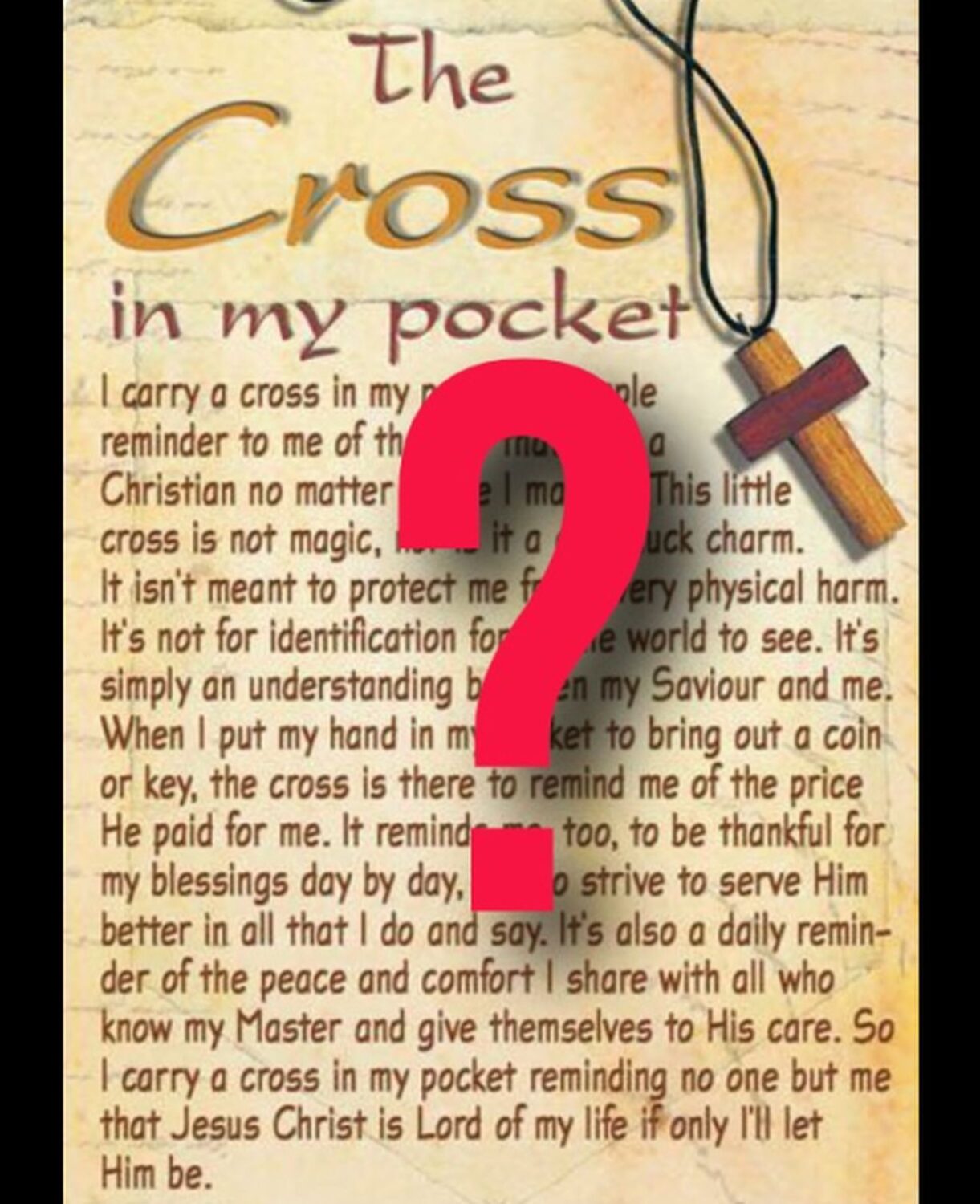






Naming Names: Is It Biblical? [podcast]

Paul’s Prophetic Vision of Heretical Wolves Flooding the Church World During the Whole New Testament Era [podcast]

The Surrender of the Cross [podcast]

Sola Scriptura vs the Catholic Church and its Traditions [podcast]

“Pastors According to Mine Heart” [podcast]

Ridiculous King James Bible Corrections

Darwin’s Demise: What they don’t want You to know about Charles Darwin! [podcast]

Beware of “Private Interpretation” [podcast]

The Benefits of Knowing and Delighting in the LORD [podcast]

Cons and Crooks who Do Not Preach the Cross [podcast]

NET New English Translation Fake “bible” Exposed

Doubt Casting Wolves Exposed

Thank You for Declaring that the Mexican People Matter to Jesus! Mission Mexico Part 50

John Wesley on Calvinism, Once Saved Always Saved, and Conditional Security

Arrogant Bible Correctors Rebuked
John Wesley on Calvinism, Once Saved Always Saved, and Conditional Security

Why Did God Give Us His Word? [podcast]
Paul’s Prophetic Vision of Heretical Wolves Flooding the Church World During the Whole New Testament Era [podcast]
Beware of “Private Interpretation” [podcast]

Beware of the Hebrew Roots Judaizing Snakes! [podcast]
Naming Names: Is It Biblical? [podcast]

The Highest Form of His Creation

The Flesh will Never be Reformed it Must be Crucified [podcast]

The High Treason of False Leaders [podcast]

Direction in God’s Word? [podcast]

Can and Will God Use You? [podcast]

A PLACE CALLED HELL [podcast]
Arrogant Bible Correctors Rebuked
“Pastors According to Mine Heart” [podcast]

Nicolaitan Nightmare [podcast]
Naming Names: Is It Biblical? [podcast]
Paul’s Prophetic Vision of Heretical Wolves Flooding the Church World During the Whole New Testament Era [podcast]
The Surrender of the Cross [podcast]


 America2 years ago
The Drugging of America: The Pharmakeia Sorcery Deception [podcast]
- Articles3 years ago
Children being Rescued in Tunnels: Happening Now – UPDATE!
- Articles9 years ago
Self-Examination in Preparation for the Lord’s Return
- Apostasy3 years ago
SHOCKING List of False Prophets Most Believe are True