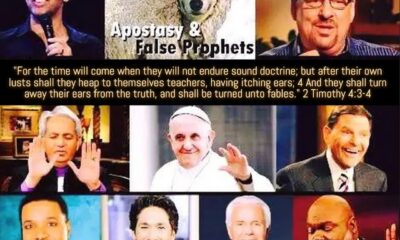







“I am the only ‘god’ there is. I have to fix things, make sure things turn out right, try to get a handle on people and events… and frankly, I do a very poor job for it… this playing god thing.” William P. Young, Author of The Shack
First, it is interesting to see how many people who think they are genuine Christians run out and get the latest fad book and drink in its theology. These same people do not study the Word of God daily to show themselves approved unto God (2 Tim. 2:15). The true disciples of Christ, whose lamps are full, as they look for His soon return, live in His Word daily and so are not impressed with the latest celebrity wolf who writes a book. Wise virgin disciples are established in Jesus Christ and not moved about with “every wind of doctrine” that blows through the apostate church world (Eph. 4:14; Col. 2:4-10). These fear and look to the One who is above all others and gave His life for us. The LORD also gave to us the very “thoughts of His heart” in his Word (Ps. 33:11; Jn. 15:13).
“All scripture is given by inspiration of God, and is profitable for doctrine, for reproof, for correction, for instruction in righteousness: That the man of God may be perfect, throughly furnished unto all good works.” 2 Timothy 3:16-17
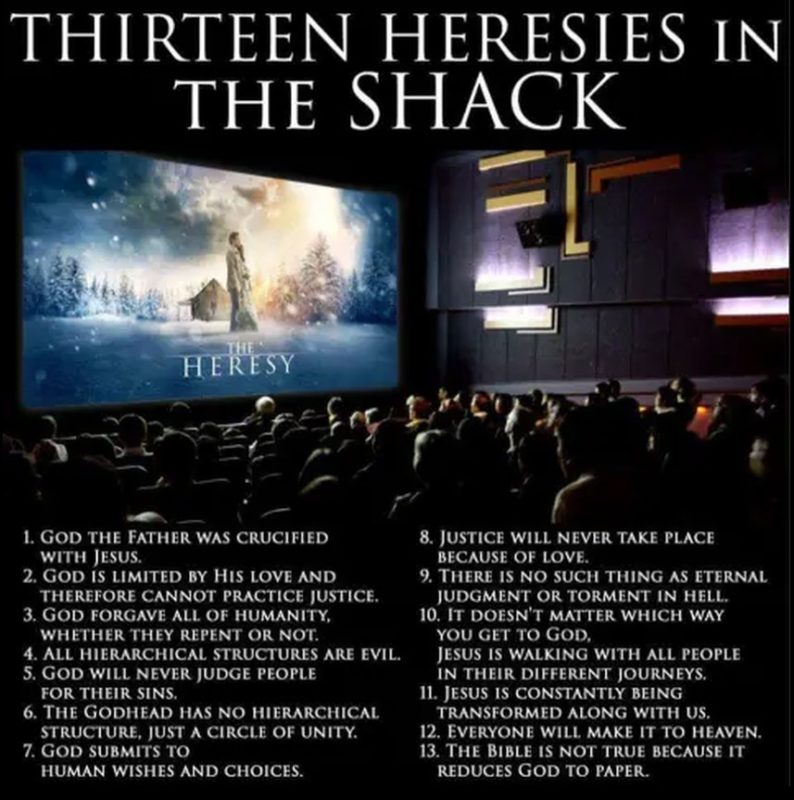
One positive thing that is coming out of the expose’ of the evil doctrines in this diabolical book, is that the false teachers or hirelings who fill positions and pulpits today who endorsed this book, are now openly seen for who they really are. The remnant sheep of Christ can now more clearly see the wolves who endorsed this antichrist book called The Shack. Those who gave accolades to or endorsed Satan’s shack book are false prophets and will receive the very same judgment as the wolf who wrote this book – they bid god speed to a liar who has brazenly misrepresented the LORD. – “If there come any unto you, and bring not this doctrine, receive him not into your house, neither bid him God speed: 11 For he that biddeth him God speed is partaker of his evil deeds.” 2 John 1:10-11 (KJV)
Concerning this pagan book, The Shack, one believer notes:
“Makes me sad, to see how many people claim to like this book, yet with the same mouth, they claim to be followers of Christ. That’s like saying you love children, but then supporting abortion. You can’t love God, and like a book like that, whether it is ‘just a story’ or not, is nothing but heresy against God!”
Another disciple who read the books says:
“I read that book based on a recommendation from someone that I love and respect. This person was my former pastor. I read it two years ago and hated it. I didn’t realize the heresy in it at the time but in these 2 years, I’ve grown so much that I can now recognize a vast majority of the false teaching. It is full of new age stuff. I learned something new about it 2 weeks ago. I was reading a post on someone else’s wall where they mentioned Sophia Wiccan and it was like a light bulb went off in my head. Sophia….wasn’t that name used in The Shack….and I bet it means more than I imagine? I started googling and I was right. Sophia represented the Holy Spirit in The Shack and represented wisdom and is also a goddess. We now have goddess worship slipped in as a disguise for a female Holy Spirit in The Shack. This book is full of new age teaching and is just plain heresy.” Linda Reynolds
We received the following recently pertaining to the latest fad book sweeping the “Christian” marketplace. There is some real important wisdom in brother McMahon’s words here as he answered the question. It is a very dangerous undertaking to write a “Christian” fiction book and remain within the bounds of Holy Scripture without misrepresenting the LORD. Such is grave sin. Feel free to pass this on to others and oh, I placed a link to an audio message exposing The Shack as false (see end of article).
Question: I’m confused by a book that is very popular among my circle of Christian friends. It’s titled The Shack, and although it is endorsed by some leading evangelicals, I was freaked out by it and couldn’t actually finish it. I don’t understand how anyone thinks he can put God, Jesus, and the Holy Spirit in a fictional situation and then have them speak the words out of his own imagination. Isn’t this dead wrong?
Response: Yes. It’s also blasphemy. Here is a definition of that word from Noah Webster’s 1828 American Dictionary of the English Language: “[It] is an injury offered to God, by denying that which is due and belonging to Him, or attributing to Him that which is not [true to] His nature.” The Shack‘s author, William P. Young, conjures up God the Father as a hip-talking, now-and-then crude black woman referred to as “Papa,” Jesus as a sometimes inept good ol’ boy enamored with His humanity and creation, and the Holy Spirit as a wisp of a woman from Asia, who gardens and collects tears. Shouldn’t that be enough to turn off or offend those who profess to truly know the God of the Bible? Evidently not. Christians have pushed sales of The Shack to beyond one million copies at this writing.
Idolatry is another major abomination of the book. Young manufactures out of his own imagination an image of God and the Holy Spirit. That is condemned (Exodus 20:4) by God for understandable reasons. Any attempt by finite, fallen man even to hint at a material image of Deity would result in an absolutely false representation, let alone an offensive caricature of Almighty God. Furthermore, these two Persons of the Trinity are Spirits, who never appear in physical form, certainly not as females (nor in drag, which the Scriptures condemn!), nor are they ever referred to as female.
The Shack is clearly the work of a false prophet. The sense in which we’re using the word “prophet” here is not that of declaring forthcoming events but rather speaking forth the words of God (2 Peter 1:20-21). The dialogue Young has created for his fictional God the Father, Jesus, and the Holy Spirit is heretical and a defamation against the character of the Persons of the Godhead. For example, Papa declares to the central figure, “Well, Mackenzie, don’t just stand there gawkin’ with your mouth open like your pants are full.” Jesus, who can’t seem to restrain his giggles and chuckles, after receiving a kiss from Papa and loving “her” earthiness, declares, “She’s a riot.” “Mack’s” interaction with his “trinity” is part-time funfest, part-time inner healing methodologies and catharses, and part-time God explaining Himself (which He left out of the Bible!), and all of it intermingled with hugs, kisses, and other displays that reveal them to be so much like us.
The audacity of anyone putting his own words in the mouth of God, Jesus, or the Holy Spirit (under the guise of fiction or not) is beneath contempt. Incredibly, that hasn’t deterred conservative evangelical leader Gale Erwin, charismatic leader James Ryle, Emerging Church writer Jim Palmer, and evangelical celebrity Michael W. Smith from endorsing The Shack, and many Christians can’t seem to get enough of its “make me feel better about myself and God” talk.
Cultists have written volumes claiming to speak for God; now we have it in the church! Ravi Zacharias wrote three supposedly apologetic books not too long ago featuring Jesus in conversation with Buddha, Oscar Wilde, and Confucius. Eugene Peterson, whose The Message Bible majored in substituting his own words for God’s, is the featured endorser of The Shack (“This book has the potential to do for our generation what John Bunyan’s Pilgrim’s Progress did for his. It’s that good!”). No, “this book” is one more instrument of Satan’s grand scheme to undermine the Word of God for this generation, the basis of which began in the Garden of Eden with his seductive words to Eve: “Yea, hath God said…?”
Space prevents me from further exposing the rampant heresies, psychobabble, and the pervasive denigration of God, His Word, and His church throughout The Shack. But then, if what has been presented above isn’t reason enough to reject the book, or an appeal to be a Berean, it’s unlikely that a few more pages of input will be either convincing or convicting, especially for the many who claim their lives have been forever changed by this work of antibiblical fiction.”
LET’S LEARN GOD’S WORD TOGETHER – ONE TRUTH AT A TIME: This message was sent out to each person who is on our Moments For My Master email devotional list. We would love to add you and have the privilege of nourishing your heart with God’s Word (1 Tim. 4:6). Sign up here.
How long shall gullible people, claiming to be Christians, run out and buy the latest fad book that is supposedly Christian and be further deceived? Anyone who claims to be a follower of Jesus and yet reads anything (newspaper, magazines, books) more than His Holy Word, should be ashamed of themselves and repent before it’s too late!
“Study to shew thyself approved unto God, a workman that needeth not to be ashamed, rightly dividing the word of truth.” 2 Timothy 2:15
THE SHACK Its New Age Leaven
God IN Everything?
The new fad book titled “The Shack” is chock full of new age teaching. God bless and prosper watchmen like brother Warren Smith for obeying Jesus and exposing this work of Satan to lure away and lead astray God’s sheep!
God IN Everything? (from http://herescope.blogspot.com/2008/06/shack-its-new-age-leaven.html )
By Warren Smith
“A little leaven leaveneth the whole lump.”
– Galatians 5:9
The Shack is being described as a “Christian” novel and is currently ranked number one on the New York Times bestseller list for paperback fiction. Many believers are buying multiple copies and giving them to friends and family. The Shack reads as a true story, but is obviously allegorical fiction. The book conveys postmodern spiritual ideas and teachings that challenge biblical Christianity – all in the name of “God” and “Jesus” and the “Holy Spirit.” Author William P. Young’s alternative presentation of traditional Christianity has both inspired and outraged his many readers. All the while his book continues to fly off the shelves of local bookstores.
Much like New Age author James Redfield’s book The Celestine Prophecy, The Shack is a fictional vehicle for upending certain religious concepts and presenting contrary spiritual scenarios. Allegorical novels can be a clever way to present truth. They can also be used to present things that seem to be true but really are not. Some books like The Shack do both.
I was drawn into the New Age Movement years ago by books and lectures containing parabolic stories that were not unlike The Shack. They felt spiritually uplifting as they tackled tough issues and talked about God’s love and forgiveness. They seemed to provide me with what I spiritually needed as they gave me much needed hope and promise. Building on the credibility they achieved through their inspirational and emotive writings, my New Age authors and teachers would then go on to tell me that “God” was “in” everyone and everything.
I discovered that author William P. Young does exactly the same thing in The Shack. He moves through his very engaging and emotional story to eventually present this same New Age teaching that God is “in” everything.
But I am getting ahead of myself. Let me first provide some background material concerning this key New Age doctrine that “God is in everything.” A good place to start is with Eugene Peterson, the author of the controversial Bible paraphrase The Message. After all, Peterson’s enthusiastic endorsement of The Shack is featured right under the author’s name on the front cover.
Ironically, it was Peterson’s endorsement that caused me to be immediately suspicious of this high-profile, bestselling “Christian” book. Through his questionable paraphrasing of the Bible, Peterson had already aligned himself in a number of areas with New Age/New Spiritualityteachings. One obvious example was where he translated a key verse in the Lord’s Prayer to read “as above, so below” rather than “in earth, as it is in heaven.” “As above, so below” was a term that I was very familiar with from my previous involvement in the New Age Movement. This esoteric saying has been an occult centerpiece for nearly five thousand years. It is alleged by New Age metaphysicians to be the key to all magic and all mysteries. It means that God is not only transcendent — “out there”— but He is also immanent — “in” everyone and everything.
But, as I found out just before abandoning the deceptive teachings of the New Age for the Truth of biblical Christianity, God is not “in” everyone and everything. The Bible makes it clear that man is not divine and that man is not God (Ezekiel 28:2, Hosea 11:9, John 2:24-25, etc.) In Deceived on Purpose: The New Age Implications of the Purpose-Driven Church, I quoted the editors of the New Age Journal as they defined “as above, so below” in their book, As Above, So Below:
“’As above, so below, as below, so above.’ This maxim implies that the transcendent God beyond the physical universe and the immanent God within ourselves are one.” (p. 32)
My concern about Peterson’s undiscerning use of “as above, so below” in the Lord’s Prayer was underscored when the 2006 bestseller, The Secret, showcased this same occult/New Age phrase. In fact, it was the introductory quote at the very beginning of the book. By immediately featuring “as above, so below” the author Rhonda Byrne was telling her readers in definite New Age language that “God is in everyone and everything.” Towards the end of the book, The Secret puts into more practical words what the author initially meant by introducing the immanent concept of “as above, so below.” On page 164 The Secret tells its readers—“You are God in a physical body.”
Most significantly, in his book The Reappearance of the Christ and the Masters of Wisdom, New Age leader Benjamin Creme reveals that a New World Religion will be based on this foundational “as above, so below” teaching of immanence — this idea that God is “in” everyone and everything:
“But eventually a new world religion will be inaugurated which will be a fusion and synthesis of the approach of the East and the approach of the West. The Christ will bring together, not simply Christianity and Buddhism, but the concept of God transcendent — outside of His creation — and also the concept of God immanent in all creation — in man and all creation.” (p. 88)
New Age matriarch Alice Bailey, in her book The Reappearance of the Christ, wrote:
“…a fresh orientation to divinity and to the acceptance of the fact of God Transcendent and God Immanent within every form of life. “These are foundational truths upon which the world religion of the future will rest.” (p. 88) [link added]
In a November 9, 2003 Hour of Power sermon – just two months before he was a featured speaker at the annual meeting of the National Association of Evangelicals – Crystal Cathedral minister Robert Schuller unabashedly aligned himself with this same New Age/New World Religion teaching. The man who claims to have mentored thousands of pastors, including Bill Hybels and Rick Warren, stated:
“You know in theology — pardon me for using a couple of big words — but in theology the God we believe in, this God of Abraham, is a transcendent God. But He is also an immanent God. Transcendent means up there, out there, above us all. But God is also an immanent God — immanence of God and the transcendence of God — but then you have a balanced perspective of God. The immanence of God means here, in me, around me, in society, in the world, this God here, in the humanities, in the science, in the arts, sociology, in politics — the immanence of God…. Yes, God is alive and He is in every single human being!”
But God is not in every single human being. God is not in everything. One of the many reasons I wrote Deceived on Purpose was because Rick Warren presented his readers with this same “God in everything” teaching. Quoting an obviously flawed New Century Bible translation of Ephesians 4:6, Rick Warren — whether he meant to or not — was teaching his millions of readers the foundational doctrine of the New World Religion. Describing God in his book, The Purpose-Driven Life, he wrote:
“He rules everything and is everywhere and is in everything.” (p. 88)
Compounding the matter further, “immanence” has been taught as part of the Foundations class at Rick Warren’s Saddleback Church. An ill-defined reference to immanence on page 46 of the Saddleback Foundations Participants Guide plays right into the hands of the New Spirituality/New World Religion by stating:
“The fact that God stands above and beyond his creation does not mean he stands outside his creation. He is both transcendent (above and beyond his creation) and immanent (within and throughout his creation).”
All of this discussion about “God in everything” immanence is to explain why The Shack is such a deceptive book. It teaches this same heresy. This book ostensibly attempts to deal with the deeply sensitive issues surrounding the murder of a young child. Because of the author’s intensely personal story line, most readers become engaged with the book on a deep emotional level. However, the author’s use of poetic license to convey his highly subjective, and often unbiblical, spiritual views becomes increasingly problematic as the story line develops. This is most apparent when he uses the person of “Jesus” to suddenly introduce the foundational teaching of the New Spirituality/New World Religion — God is “in” everything. Using the New Age term “ground of being” to describe “God,” the “Jesus” of The Shack states:
“God, who is the ground of all being, dwells in, around, and through all things….” (p. 112)
This false teaching about a “God” who “dwells in, around, and through all things” is the kind of New Age leaven that left unchallenged could leaven the church into the New Age/New Spirituality of the proposed New World Religion. And while many people have expressed a great deal of emotional attachment to The Shack and its characters — this leaven alone contaminates the whole book.
Clearly, the “Jesus” of The Shack is not Jesus Christ of the Bible. The apostle Paul chided the Corinthians and warned them that they were vulnerable and extremely susceptible to “another Jesus”and “another gospel” and “another spirit” that were not from God (2 Corinthians 2:11). In the Bible, the real Jesus Christ warned that spiritual deception would be a sign before His return. He further warned that there would be those who would even come in His name, pretending to be Him (Matthew 24:3-5;24).
Without ascribing any ill motive to William Young and his book The Shack, the author’s use of spiritual creativity seems to give a “Christian” assent to the New Age/New Spirituality of the proposed New World Religion. His mixing of truth and error can become very confusing to readers, and God is not the author of confusion (I Corinthians 14:33).
One pastor emphasized the fact that truth mixed with error results in “all error” — a direct refutation of the Emergent Church teaching to find “truth” wherever it may be found — including books like The Shack. He wrote wrote:
“Error is like leaven, of which we read, ‘A little leaven leaveneth the whole lump.’ Truth mixed with error is equivalent to all error, except that it is more innocent looking and, therefore, more dangerous. God hates such a mixture! Any error, or any truth-and-error mixture, calls for definite exposure and repudiation. To condone such is to be unfaithful to God and His Word and treacherous to imperiled souls for whom Christ died.”
The Shack has touched the hearts and emotions of many people. While there are many other examples of the author’s unbiblical liberality, introducing the heretical New Age teaching that “God dwells in, and around, and through all things” is in and by itself enough to completely undermine any value the book might otherwise have for faithful believers. To allow yourself to get carried away by this story, while disregarding the book’s New Age/New Spirituality leaven, is to fall prey to the “truth-and-error” mixture that pervades The Shack. And he warned—“God hates such a mixture.”
Before Christians buy one more copy of this book, they need to come to terms with what this author is ultimately teaching and what it is they are passing along to their friends and fellow believers.
The Truth:
“And they shall turn away their ears from the truth, and shall be turned unto fables.” (1 Timothy 4:4)
Warren Smith is the author of numerous articles and books on the topic of the New Age/New Spirituality and how it is entering the evangelical church.
Deceived on Purpose: The New Age Implications of the Purpose-Driven Church
The Light that was Dark: From the New Age to Amazing Grace
Reinventing Jesus Christ: The New Gospel
LINKS
Sign up for free email devotional HERE… The Moments with My Master email is sent out for the edification of the body of Christ.
Abiding
Top 12 Missing Essential Doctrines in the Modern Church World! [podcast]
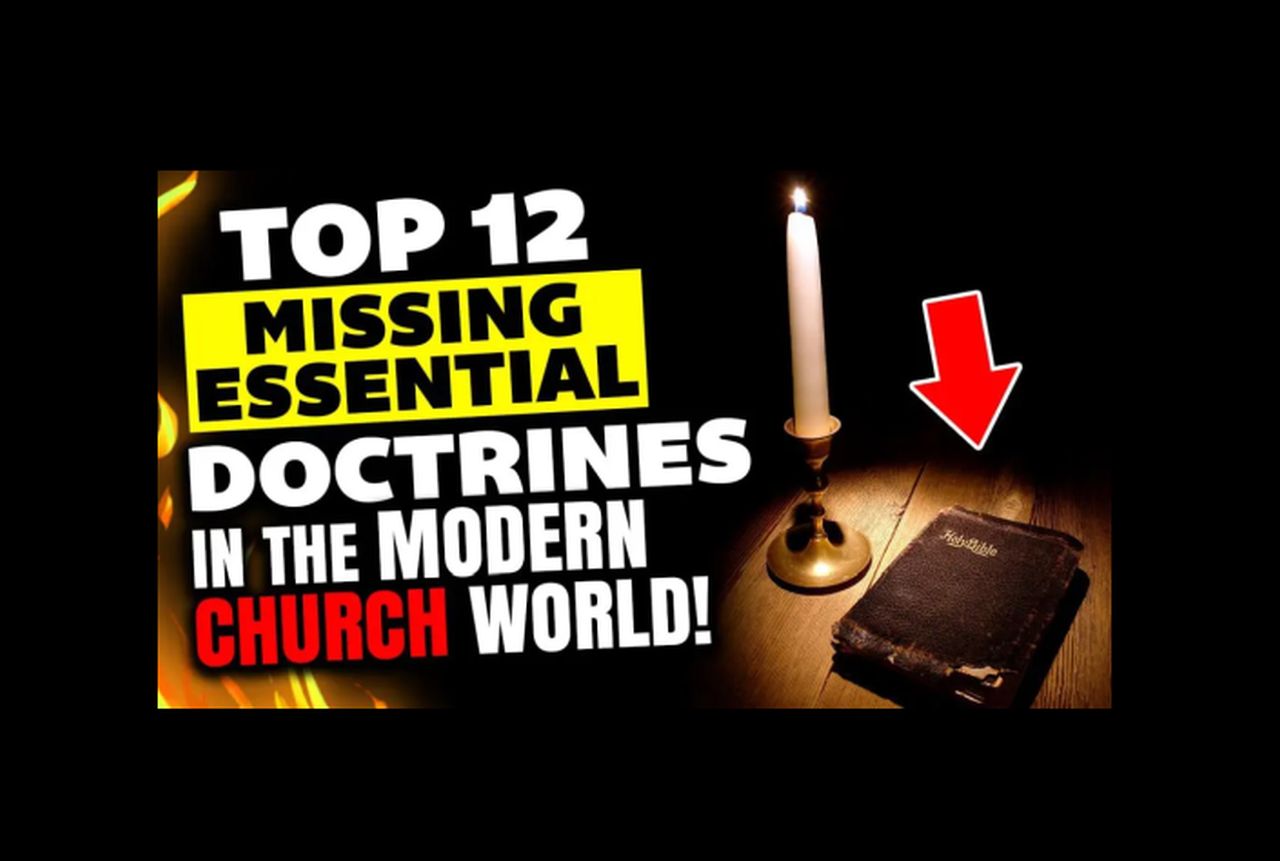
DOES THIS SOUND LIKE YOUR “CHURCH” OR FAVORITE PREACHER? It’s real simple… if they are not preaching the cardinal doctrines of the original Gospel given to us in the New Testament, they are preaching “another gospel” and are “accursed.” (Galatians 1:6-9).
 “For MANY DECEIVERS ARE ENTERED INTO THE WORLD, who confess not that Jesus Christ is come in the flesh. This is a deceiver and an antichrist. 8 Look to yourselves, that we lose not those things which we have wrought, but that we receive a full reward. 9 Whosoever transgresseth, and abideth not in the doctrine of Christ, hath not God. He that abideth in the doctrine of Christ, he hath both the Father and the Son. 10 If there come any unto you, and bring not this doctrine, receive him not into your house, neither bid him God speed: 11 For he that biddeth him God speed is partaker of his evil deeds.” 2 John 1:7-11
Modern church wolves refuse to preach the original Gospel of Jesus Christ from the pages of Holy Scripture and in the power of the Holy Ghost. No, instead they preach sermonettes that cater to the self-worshiping idolaters they entertain and collect money from (2 Timothy 3:1-7). They don’t even use the King James Bible but rather some cheap counterfeit. Their ear-tickling topics range from healing damaged emotions, 5 love languages, best life now, recovery, learning to love yourSELF, coping platitudes, loneliness, psychobabble band aids, law of attraction, being a successful single, purpose driven delusionment, etc.
LOTS of lying going on when we have counterfeits peddling affirmation without salvation, the “promise” of things “getting better” when their prey are heading straight to hell. Especially certain social media platforms are flooded with this false gospel coming out of “Christians.” There is no sin or repentance in their message which alone identifies it as a false gospel. You see, the things that are happening to the sinners around us are allowed by God in order to lead them to repentance and yet, the counterfeits among us are assuring those sinners it’s all going to get better and never giving them the 10 Commandments to show them they are sinners (Galatians 3:24) and then, leading them to Jesus (Romans 10:9-10, 13, etc.). 10 Commandments Evangelism
In the modern church world, there is …..
No cross. No Jesus. No blood. No judgment. No sin. No repentance. No hell. No readiness for the soon return of Jesus. No Heaven. No equipping preparation for ministry. No Scripture memory. No holiness. No Messianic prophecies and their fulfillment. No Christology. No fear of God. No repentance. etc., all of which are Bible doctrines essential to salvation and/or essential to sound foundation in Christ and are missing in the modern church world.
“Study to shew thyself approved unto God, a workman that needeth not to be ashamed, rightly dividing the word of truth.” 2 Timothy 2:15
THE TOP ESSENTIAL BIBLICAL DOCTRINES NEVER HEARD IN THE APOSTATE MODERN CHURCH WORLD!
- The divinity of Jesus Christ (John 1:1-4, 14; 1 Timothy 3:16). | Jesus Christ is God
- The virgin birth of the only begotten Son of God (Isaiah 7:14; Matthew 1:23). | The Virgin Birth of Jesus
- The essential precious blood of Jesus Christ (Matthew 26:28; Hebrews 9:22; 1 Peter 1:18-19). | The Blood
- The inherent fallen nature of mankind (Genesis 6:5, 12; Jeremiah 17:9; Romans 7:18). | Fallen, Sinful Man
- Worshipping God not idols (Exodus 20:3-5). | Idolatry
- The essential doctrine and necessity of repentance (Luke 13:3). | Repentance
- The Return of Christ and being ready for it (Luke 12:40; 21:34-36). | The Return
- Who Jesus is returning for and who will be shut out of His eternal kingdom (Matthew 25:1-13; Ephesians 5:25-27). | Ready for Christ’s Return
- The essential of enduring to the end to be with Christ eternally, initial and final salvation (Matthew 10:22; 24:13; Hebrews 3:6, 12-15; 10:26-30; Revelation 2:26). | Enduring to the End
- The essential daily cross, the crucified life, which Jesus required in following Him (Luke 9:23-24). | Living the Crucified Life
- Forgiving all others from the heart (Matthew 18:21-35). | Forgiveness
- Walking in God’s love (Ephesians 5:1). | The Love Walk
- Holiness – including the necessity of personal holiness (Hebrews 12:14; 1 Peter 1:15-16). | Holiness
- Judgment (Psalms 9:15-17). | Judgment
- Hell (Matthew 8:12; Mark 3:29; Luke 16:19-31). | Hell
- Fearing God (Psalms 2:11; Luke 12:4-5). | Fearing God
When’s the last time you heard verses like this in the modern church?
 “So likewise, whosoever he be of you that forsaketh not all that he hath, he cannot be my disciple.” Luke 14:33
“Whosoever shall seek to save his life shall lose it; and whosoever shall lose his life shall preserve it.” Luke 17:33
The modern church is going down in flames into the flames of hell. It cannot be reformed. Come out from it.
“And I heard another voice from heaven, saying, Come out of her, my people, that ye be not partakers of her sins, and that ye receive not of her plagues.” Revelation 18:4
In 2 Timothy 4:3 to “endure sound doctrine” means to hold oneself accountable to it. WHAT’s at the root of those who refuse to “endure sound doctrine”? – They simply do not love Jesus like He commanded them to (Matthew 22:37-39). They profess Christ as Savior and yet love self supremely and therefore serve the god of self. The Holy Ghost through Paul told us this of those who have a mere “form of godliness” in the last day resumé found in 2 Timothy 3:1-7.
Notice by divine design the very first thing he reveals is that “men shall be lovers of their own selves.” All the following evil comes out of self love, refusal to love God supremely and therefore repent, deny self, take up the cross and follow Jesus:
“This know also, that in the last days perilous times shall come. 2 For men shall be lovers of their own selves, covetous, boasters, proud, blasphemers, disobedient to parents, unthankful, unholy, 3 Without natural affection, trucebreakers, false accusers, incontinent, fierce, despisers of those that are good, 4 Traitors, heady, highminded, lovers of pleasures more than lovers of God; 5 Having a form of godliness, but denying the power thereof: from such turn away. 6 For of this sort are they which creep into houses, and lead captive silly women laden with sins, led away with divers lusts, 7 Ever learning, and never able to come to the knowledge of the truth.” 2 Timothy 3:1-7
God is toppling all the heart idols (Ezekiel 14:3)… because He’s Jealous and wants us looking to Him and not these mere men, these vile wolves, these celebrity sinners posing as His representatives (Exodus 34:14).
“For thou shalt worship no other god: for the LORD, whose name is Jealous, is a jealous God:” Exodus 34:14

Support | STORE | Podcasts | The Return of Christ | Stewardship | Apostate Modern Church Exposed | Beware of the BUZZ WORD Bandits [podcast] | Preach the Word | Wolves Exposed

Abiding
Fulfilling Your Calling [podcast]

“And say to Archippus, Take heed to the ministry which thou hast received in the Lord, that thou fulfil it.” Colossians 4:17
MINISTRY which pleases God is simply helping people know and grow in Christ for themselves – by the cross life and getting into HIS Word for themselves so they can follow HIM, not you! True ministry fosters in the hearers faith in God, not the preacher or local church organization! Read 1 Corinthians 2:1-5; 2 Corinthians 1:9; 3:5; 4:5.
Your communications and ministry are fed and fueled by your personal daily study and knowledge of God’s Word (Proverbs 22:17-21; 2 Timothy 2:15).
Ephesians 4:1-14
“I therefore, the prisoner of the Lord, beseech you that ye walk worthy of the vocation wherewith ye are called, 2 With all lowliness and meekness, with longsuffering, forbearing one another in love; 3 Endeavouring to keep the unity of the Spirit in the bond of peace. 4 There is one body, and one Spirit, even as ye are called in one hope of your calling; 5 One Lord, one faith, one baptism, 6 One God and Father of all, who is above all, and through all, and in you all. 7 But unto every one of us is given grace according to the measure of the gift of Christ. 8 Wherefore he saith, When he ascended up on high, he led captivity captive, and gave gifts unto men. 9 (Now that he ascended, what is it but that he also descended first into the lower parts of the earth? 10 He that descended is the same also that ascended up far above all heavens, that he might fill all things.) 11 And he gave some, apostles; and some, prophets; and some, evangelists; and some, pastors and teachers; 12 For the perfecting (equipping, maturing) of the saints, for the work of the ministry, for the edifying of the body of Christ: 13 Till we all come in the unity of the faith, and of the knowledge of the Son of God, unto a perfect man, unto the measure of the stature of the fulness of Christ: 14 That we henceforth be no more children, tossed to and fro, and carried about with every wind of doctrine, by the sleight of men, and cunning craftiness, whereby they lie in wait to deceive;” Ephesians 4:1-14
Ephesians | Galatians Outline | Grounded in Grace | 100’s of Christ-centered, Scripture-rich podcasts for your edification in Christ. |
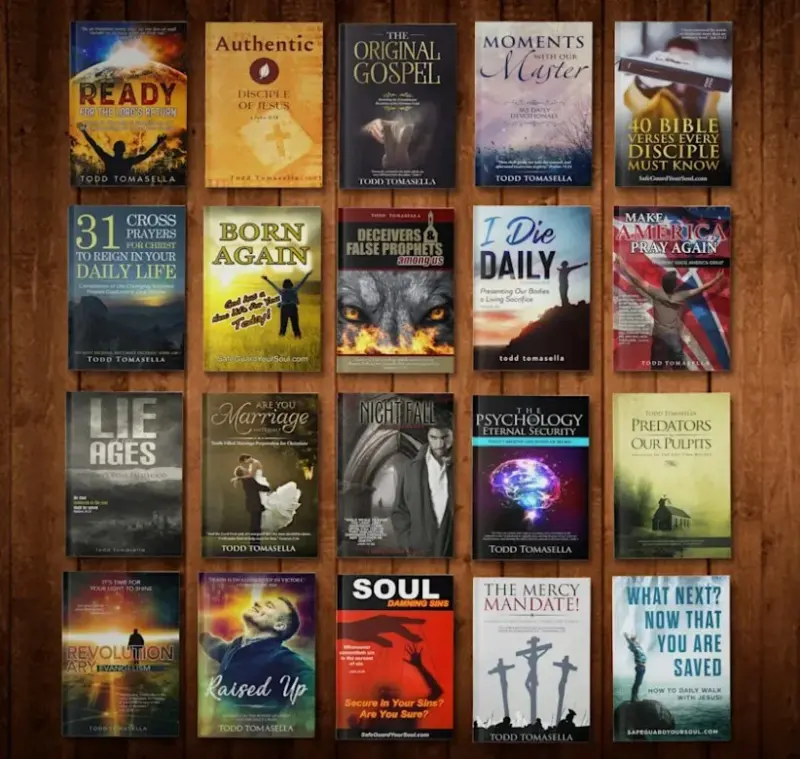
Support | STORE | Podcasts | Colossians | Upholding Jesus | H.O.T. Bible Study [podcast] | Divine Blessings | Exhort One Another Daily | The Return of Christ | The Joy of Fulfilling the Great Commission | The Love of Many Shall Wax Cold | Lie of the Ages (book) | Soul Damning Sins (small book) | Why We Need not Fear Death | Revelation Bombshell!


Abiding
Swept Away in the “Strong Delusion” [podcast]

Recorded at a fellowship in Houston, Texas
God Himself personally sends a “strong delusion” to all who do not love His truth so that they WILL believe lies. He greases their pole to hell. That’s how personally He takes it when people call Him a liar by not believing His Word.
“Even him, whose coming is after the working of Satan with all power and signs and lying wonders, 10 and with all deceivableness of unrighteousness in them that perish; because they received not the love of the truth, that they might be saved. 11 And for this cause God shall send them strong delusion, that they should believe a lie: 12 that they all might be damned who believed not the truth, but had pleasure in unrighteousness.” 2 Thessalonians 2:9-12
“Beware lest any man spoil you through philosophy and vain deceit, after the tradition of men, after the rudiments of the world, and not after Christ.” Colossians 2:8
Notice “of God” and “NOT of God”
“He that is OF GOD heareth God’s words: ye therefore hear them not, because ye are NOT OF GOD.” John 8:47
Support | STORE | Podcasts | Because You Care Page | The Greatest of these is Charity | Be Ready in the Morning [podcast] | The Sure Mercies of David [podcast] | That Repentance and Remission of Sins should be Preached [podcast] | At His Feet | Prepared to be Used of God | Grace and Truth Bible School [modules] | 7 Study Guides to a Greater Foundation in Christ







Top 12 Missing Essential Doctrines in the Modern Church World! [podcast]

Fulfilling Your Calling [podcast]

Swept Away in the “Strong Delusion” [podcast]

Jesus Saved Jose! Mission Mexico Part 51

Dead, Buried, and Raised Up Daily [podcast]

Nourished Up and Enduring to the End [podcast]

Naming Names: Is It Biblical? [podcast]

Paul’s Prophetic Vision of Heretical Wolves Flooding the Church World During the Whole New Testament Era [podcast]

The Surrender of the Cross [podcast]

Sola Scriptura vs the Catholic Church and its Traditions [podcast]

“Pastors According to Mine Heart” [podcast]

Ridiculous King James Bible Corrections

Darwin’s Demise: What they don’t want You to know about Charles Darwin! [podcast]

Beware of “Private Interpretation” [podcast]

The Benefits of Knowing and Delighting in the LORD [podcast]

John Wesley on Calvinism, Once Saved Always Saved, and Conditional Security

Why Did God Give Us His Word? [podcast]
Paul’s Prophetic Vision of Heretical Wolves Flooding the Church World During the Whole New Testament Era [podcast]
Beware of “Private Interpretation” [podcast]
Naming Names: Is It Biblical? [podcast]
Top 12 Missing Essential Doctrines in the Modern Church World! [podcast]

The Flesh will Never be Reformed it Must be Crucified [podcast]

The High Treason of False Leaders [podcast]
Nourished Up and Enduring to the End [podcast]

A PLACE CALLED HELL [podcast]
“Pastors According to Mine Heart” [podcast]

Arrogant Bible Correctors Rebuked

Nicolaitan Nightmare [podcast]
Sola Scriptura vs the Catholic Church and its Traditions [podcast]

Doubt Casting Wolves Exposed
Top 12 Missing Essential Doctrines in the Modern Church World! [podcast]
Fulfilling Your Calling [podcast]
Swept Away in the “Strong Delusion” [podcast]


 America2 years ago
The Drugging of America: The Pharmakeia Sorcery Deception [podcast]
- Articles3 years ago
Children being Rescued in Tunnels: Happening Now – UPDATE!
- Articles9 years ago
Self-Examination in Preparation for the Lord’s Return
- Apostasy3 years ago
SHOCKING List of False Prophets Most Believe are True