





God Cannot be Tempted with Evil
God is “Holy, holy, holy.”
“And one cried unto another, and said, Holy, holy, holy, is the Lord of hosts: the whole earth is full of his glory.” Isaiah 6:3
“And the four beasts had each of them six wings about him; and they were full of eyes within: and they rest not day and night, saying, Holy, holy, holy, Lord God Almighty, which was, and is, and is to come.” Revelation 4:8
All sin is man’s doing, not God’s. Man alone is to be blamed, not the LORD. All who would blame the LORD with their lame, self-serving excuses indict the Almighty!
We sure do strive against sin (Hebrews 12:4) and yet are given full divine grace and enablement to overcome all sin – “For sin shall not have dominion over you: for ye are not under the law, but under grace.” (Romans 6:14)
Those who conveniently ignore the divine mandate of Romans 6 to crucify the sinful man and his evil, sinful deeds are denying Christ who died to take away all sin from our lives. To deny such is to deny the Gospel.
The Bible never separates being saved from sin and being saved for eternity.
They are always connected and so anyone claiming to be saved and yet is not presently saved from their sin, is completely deluded. They have bought into the life of the ages which Satan launched in the Garden of Eden when he told the first man and woman that they could sin against the LORD and “not surely die” or be separated from Him (Genesis 2:17; 3:4). This lie from hell caused the fall of the first man and woman and is causing the fall of millions today who vainly believe they are saved for Heaven while living in their sins unrepentant!
At the Day of Pentecost, when the LORD’s church was born, Jesus’ apostle Peter testified to those saved: “And with many other words did he testify and exhort, saying, Save yourselves from this untoward generation.” (Acts 2:40)
“But as he which hath called you is holy, so be ye holy in all manner of conversation; 16 Because it is written, Be ye holy; for I am holy.” 1 Peter 1:15-16
I can hear it now: “BUT BUT BUT……. being holy is a nice thought and theory, BUT BUT BUT… does God really expect to be what He commanded us to be? Will He not overlook our sins? Doesn’t He see us through the blood of Christ?”
Excuses, Excuses, Excuses
Those who are living in unrepentant sin and somehow believe God is going to forgive them in the end may wish to consider that:
1. You may never have the chance to repent, sudden, instant death happens to thousands daily (Hebrews 9:27; Revelation 22:11).
2. You may call upon the LORD and He will not hear you (Proverbs 1).
Let me pause to say that obviously, this writer is a disciple also and so just like yourself, he knows the gravity of sin and yet is also blessed to know the power of Jesus Christ to crucify all sin out of his personal life, but only as this follower is truly abiding crucified with Christ. Only as we are abiding crucified with Christ are we free from the entanglement and defilement of all sin!
“I am crucified with Christ: nevertheless I live; yet not I, but Christ liveth in me: and the life which I now live in the flesh I live by the faith of the Son of God, who loved me, and gave himself for me.” Galatians 2:20
Satan and sinful self are always at work, making excuse for soul damning sin. Yet the Bible has all of God’s answers for all sin, not just some sin. Learning to die – to lay aside self for the greater glory of Jesus’ reign – is at the heart of Christ’s message of the daily cross (Matthew 16:24-25; Luke 9:23-24; John 12:23-26, etc.). Those who deny the daily cross Christ commanded, are the very “enemies of the cross of Christ.” (Philippians 3:18-19)
The list of excuses goes on and on and on, yet they’re all based on rebellion and unbelief against our Maker who through the perfect sacrifice of Jesus Christ made full and complete provision through to save us from all sin.
In fact, is that not exactly why Jesus came?
The announcements of the Messiah’s birth, Ministry, and Divine Mission:
“And she shall bring forth a son, and thou shalt call his name Jesus: for he shall save his people from their sins.” Matthew 1:21
“The next day John seeth Jesus coming unto him, and saith, Behold the Lamb of God, which taketh away the sin of the world.” John 1:29
To deny that God sent His only begotten Son to save us from all sin is to deny Christ.
You are calling God a liar to say you can’t be blessed by Him to overcome all sin and sinning. Those who dare indict the Almighty this way despise the perfect salvation of Jesus Christ.
“The spirit of holiness” as from the resurrection of Jesus Christ, is to possess all of God’s children, enabling them to “through the (Holy) Spirit … mortify the deeds of the body.” (Romans 1:4; 8:13-14)
“Therefore, brethren, we are debtors, not to the flesh, to live after the flesh. 13 For if ye live after the flesh, ye shall die (be separated from God): but if ye through the Spirit do mortify the deeds of the body, ye shall live (have life with Christ). 14 For as many as are led by the Spirit of God, they are the sons of God (those living in sin are not being led of the Spirit and are not the sons of God). 15 For ye have not received the spirit of bondage again to fear; but ye have received the Spirit of adoption, whereby we cry, Abba, Father (why fear if God has given you His full divine power over all sin?). 16 The Spirit itself beareth witness with our spirit, that we are the children of God (as we live in His holiness by the power of His Holy Spirit): 17 And if children, then heirs; heirs of God, and joint-heirs with Christ; IF so be that we suffer with him, that we may be also glorified together (notice that this is clearly condistional). 18 For I reckon that the sufferings of this present time are not worthy to be compared with the glory which shall be revealed in us (suffering death to self).” Romans 8:12-18
Excuse makers are not true disciples of Jesus. They put more trust in the sinful nature than they do in the saving power of Jesus Christ which means they have “an evil heart of unbelief” and have departed from the saving faith of Christ Jesus (Hebrews 3:12-15; 1 Timothy 4:1).
“Take heed, brethren (not lost souls), lest there be in any of YOU (brethren) an EVIL heart of unbelief, in departing from the living God. 13 But (in light of this jeopardy of soul) exhort one another daily, while it is called To day; lest any of you be hardened through the deceitfulness of sin. 14 For we are made partakers of Christ, IF IF IF we hold the beginning of our confidence stedfast unto the end; 15 While it is said, To day if ye will hear his voice, harden not your hearts, as in the provocation.” Hebrews 3:12-15
The same excuse-making sinners who use Romans 7 to justify their sin, refuse to be confronted with Paul’s words in the very previous chapter – Romans 6. They refuse to repent of all sin and be crucified with Christ and are kindling for the fires of eternal damnation. Saving grace saves us from sin and quickens us to repent and confess any and all sin if we make choice to commit such as is named in Scripture and defiles our wedding garments (Mark 7:20-23; Galatians 5:19-21). Listen closely to this Titus 2 passage beloved:
“For the grace of God that bringeth salvation hath appeared to all men, 12 Teaching us that, denying ungodliness and worldly lusts, we should live soberly, righteously, and godly, in this present world; 13 Looking for that blessed hope, and the glorious appearing of the great God and our Saviour Jesus Christ; 14 Who gave himself for us, that he might redeem us from all iniquity, and purify unto himself a peculiar people, zealous of good works.” Titus 2:11-14
It is clear from this Bible passage that only those who are by the enabling grace of God, learning of Him and “denying ungodliness and worldly lusts, we should live soberly, righteously, and godly, in this present world” are ready to meet Christ at His soon return.
According to Titus 2, exactly what is divine saving grace teaching those who are truly possessed with it? – “Teaching us that, denying ungodliness and worldly lusts, we should live soberly, righteously, and godly, in this present world.” (v12) This means that anyone who claims to be Christ’s and yet is not learning to daily deny “ungodliness and worldly lusts, we should live soberly, righteously, and godly, in this present world,” is utterly deceived. Whatever you do, pour over and learn this passage! Let it take full precedence in your heart and mind, overruling the message of those wolves who have taken sin lightly and made you feel comfortable while living in soul-damning sin. Cast down those wicked false images of God beloved (2 Corinthians 10:5).
Deborah Blanchard notes:
“God is Holy and to be feared. He demands holiness from us. It is our choice and when we choose to be obedient to Him He gives us the power to overcome. It is a fearful thought of mine to come before a Holy God. At the same time, it is a loving God who provides all we need when we decide to come to Him on His terms.”
Continuing in sin and yet still saved?
“What shall we say then? Shall we continue in sin, that grace may abound? 2 God forbid. How shall we, that are dead to sin, live any longer therein?” Romans 6:1-2
If you are not currently saved from sin, you are not saved, period.
Let’s review the above passage:
Question:
“Shall we continue in sin, that (saving, essential) grace may abound?”
Answer:
“God forbid. How shall we, that are dead to sin, live any longer therein?”
“This Present Evil World”
“Who gave himself for our sins, that he might deliver us from this present evil world, according to the will of God and our Father.” Galatians 1:4
Of Galatians 1:4, the late Donald Stamps aptly noted:
“DELIVER US FROM THIS PRESENT EVIL WORLD. This verse if probably an early confession of faith that was well known throughout the N.T. churches. It connects the death of Christ with the forgiveness of sin and deliverance from ‘this present evil world.’ Essential to the saving purpose is the deliverance of believers from the evil that dominates the societies of this world. The first gospel message preached after the Pentecostal outpouring of the Holy Spirit contained the words: ‘Save yourselves from this untoward generation.’ (Acts 2:40) Believers must live for God and refuse to be governed by the prevailing values, wisdom, opinions, corrupt desires, ambitions, and pleasures of the people of the world.” Donald Stamps, Life in the Spirit Study Bible, p. 1830
If you love your sin more than Christ, you have openly denied Him and are in danger of hellfire. If you don’t repent and return to Him, allowing Him to make you holy as is defined by Him alone, He is going to deny you access to eternal glory and terminate you into the bowels of eternal damnation.
“It is a faithful saying: For IF we be dead with him, we shall also live with him: 12 IF we suffer, we shall also reign with him: if we deny him, he also will deny us: 13 IF we believe not, yet he abideth (remains) faithful: he cannot deny himself.” 2 Timothy 2:11-13
Notice that the LORD says of Himself here that “he cannot deny himself.” It never says He can’t deny you. Say what?! Yes, read the passage above again very carefully and you will note that many have been misled by false teachers to believe that God will never deny them because they had once been saved in their past. But is that what the LORD is saying in the passage above? No! He says that He cannot deny Himself – not us. It never says He cannot and will not deny us. In fact, it says in plain daylight that “if we deny him, he also will deny us.” The “if” means it’s possible to deny Christ and the divine promise here is that “if we (do) deny him, he also will deny us.”
Note also that this passage assures us that only “if we be dead with him” shall we “live (eternally) with him.” And, only “IF we suffer (death to self)” shall we “reign with him.”
Make no mistake: The blessing of eternal glory is condition, not un-conditional as many false teachers teach.
It’s time to snap out of the spell of all fictitious notions and falsehoods we have been fed by the epidemic of beguilers who now fill books, pulpits, audio messages, videos, websites, and otherwise with their lies from hell. Get into God’s Word and take Him who is the Judge of your eternal soul at His Word. Decide to “Let God be true and EVERY man a liar.”(Romans 3:4)
A Willingly Deceived Generation
“There is a generation that are pure in their own eyes, and yet is not washed from their filthiness.” Proverbs 30:12
Foolish, deceived souls somehow believe that they can be saved and have “eternal security” while they refuse to be saved from their sin. Nothing could be further from the truth as any honest hearted Bible student knows. This is a brazen denial of Christ who died “that he might redeem us from all iniquity,” not just some iniquity (Titus 2:14).
Those who refuse to submit to the “daily” dying to self will find any speck of Bible truth to twist to justify their rebellion and make excuse for their rebellion and sin (Luke 9:23-24; 2 Corinthians 2:17; 2 Peter 3:16).
It’s essential to be “honest” in all things as Jesus taught and yet He also said that “men loved darkness rather than light.” (Luke 9:23-24; John 3:19-21)
2 Corinthians 7:1 says: “Having therefore these promises, dearly beloved, let us cleanse ourselves from ALL filthiness of the flesh and spirit, perfecting holiness in the fear of God.”
Departing from all Iniquity is Commanded by the LORD
“Nevertheless the foundation of God standeth sure, having this seal (stamp, earmark), The Lord knoweth them that are his. And, let every one that nameth the name of Christ depart from iniquity.” 2 Timothy 2:19
It’s clear from this above passage that every single person who is currently in Christ’s body and secure with Him, is departing “from iniquity.” Contrast with those who revel in sin and them make excuses for doing so.
Nothing in God’s Word could be more clear than the fact that all who die in sin – all – will spend eternity in the lake of fire (Ezekiel 33:12-13; 18:30; Romans 6:23; Galatians 5:19-21; Revelation 21:8, 27, etc.).
When speaking to His very own people, Jesus promised that only those among them that “overcome” would be with Him eternally (Revelation 2-3). The Holy Spirit told us through Peter that in the end “the righteous” would “scarcely be saved.” Many have fallen away or not endured to the end which is a requirement imposed upon us by the LORD. “And if the righteous scarcely be saved, where shall the ungodly and the sinner appear?” (1 Peter 4:18)
Whether previously saved or not, all those who die in sin are going to the lake of fire. The whole of God’s Word testifies to this fact. Jesus said to cut off the hand and pluck out the eye that causes us to offend the one true God who said He is “Holy, holy, holy.” (Isaiah 6:3; Revelation 4:8) Read Mark 9:42-49, a passage purposely dodged by the spineless, self-serving cowards behind today’s pulpits who claim to be representing Christ while refusing to declare the full counsel of His Word (2 Timothy 4:1-5). The Son of God promised us that He will be ashamed of them in the Judgment, which means they will be vanquished into the bowels of eternal damnation (Mark 8:38; John 8:47). There’s no doubt that after we have been saved, we have all sinned against God and yet there are those who openly and honestly admit they have sinned and repent, turning back to the LORD (Luke 8:15; 1 John 1:7-10; Revelation 3:17-19). And then, there are those who use false doctrine like OSAS (once saved always saved) to cloak themselves in that sin, falsely claiming they are still secure. Nothing could be further from the truth.
The LORD Jesus and the Father, the One who will judge our eternal souls, made it clear that we must repent of any sin committed. Only then does He “cleanseth us from all unrighteousness.” (1 John 1:9) The LORD made full provision for all sin in the perfect sacrifice of Christ and yet, the benefits of that sacrifice are only appropriated (received) by those who meet the divinely stated conditions.
Notice what the divine counsel reveals through Jesus’ apostle Paul in the end of 2 Corinthians 12:
“For I fear, lest, when I come, I shall not find you such as I would, and that I shall be found unto you such as ye would not: lest there be debates, envyings, wraths, strifes, backbitings, whisperings, swellings, tumults: 21 And lest, when I come again, my God will humble me among you, and that I shall bewail many which have sinned already, and have not repented of the uncleanness and fornication and lasciviousness which they have committed.” 2 Corinthians 12:20-21
Read this passage several times prayerfully. You will notice that as Paul is writing this to the church at Corinth, he is dreading having to go and have to deal with their sin – that is, the sin of those who had not yet repented of the sins they committed. He never denied that perhaps all of them had committed some sin since he last saw them. Yet, the ones he was exclusively concerned about were the ones who had not yet repented of their sin.
Sin is always a choice of the individual. The old sinful nature cannot be used as a scapegoat. It’s present with us and yet, must be kept under subjection to the divine power of the Holy Ghost.
“But I keep under my body, and bring it into subjection: lest that by any means, when I have preached to others, I myself should be a castaway.” 1 Corinthians 9:27
The word “keep” here once again makes it clear that the denial of the sinful self is an ongoing requirement. It’s also obvious that Paul didn’t believe or teach the “once saved always saved” heresy, otherwise he would never have stated that he himself could also become “a castaway” which simply means he could ultimately cast away from Christ into eternal damnation.
To intimate in any way that we are relegated to live in sin, would be saying that God’s regenerating, transforming, saving, enabling grace is not enough to keep us from all sin. That’s a lie from hell.
If you sin, be honest and admit it to the LORD. How foolish of us to think that He doesn’t see and know our sin in the first place? (Proverbs 15:3; Matthew 10:26; Hebrews 4:13) Who are we trying to fool?
“He that covereth (tries to hide) his sins shall not prosper: but whoso confesseth and forsaketh them shall have mercy.” Proverbs 28:13
The above Bible verse speaks about the necessity of being honest before the One who sees all. Also, it makes crystal clear that all sin that the believer chooses to commit must be confessed and forsaken.
Memorize Proverbs 28:13 (KJV). Write it on an index card and read, meditate upon, and memorize this truth. Share this with others.
Do you believe we have to be perfect after we become a Christian? Yes, perfect in heart, which without fail brings “fruit unto holiness, and the end everlasting life” with Christ in glory (Romans 6:22). Many misuse the Bible truth that “the LORD looketh on the heart.” (1 Samuel 16:7) Some use this as a cloak/excuse for their sin, acting as if God overlooks their sins, even if they refuse to repent, confess, and forsake them.
“What fruit had ye then in those things whereof ye are now ashamed? for the end of those things is death. 22 But now being made free from sin, and become servants to God, ye have your fruit unto holiness, and the end everlasting life. 23 For the wages of sin is death; but the gift of God is eternal life through Jesus Christ our Lord.” Romans 6:21-23
God looks upon the heart first and foremost as His eyes search to and fro throughout the earth, looking for that person whose HEART (not necessarily their performance) is perfect toward Him (2 Chronicles 16:9). The thief on the cross was utterly wicked until he turned his heart to Jesus and Jesus freely saved him in his last moment on earth. The fruit of and outward actions of our lives will begin to align with the abiding heart that is perfectly fixed upon and abiding in Christ (John 15:1-6; Colossians 3:1-8, etc.). We must not cover but rather repent of and forsake sin (Proverbs 28:13). Jesus said “Blessed are the pure in heart for they shall see God.”(Matthew 5:6) Moses, David, Peter and many others throughout Scriptural history had sinful failings but repented while others (their contemporary counterparts) refused to return to the LORD in repentance. It’s interesting to contrast this phenomenon with these historical, biblical contemporary pairs: Cain/Abel, Jacob/Esau, David/Saul, and Peter/Judas. What was the difference? The heart. In each comparison, one repented and the other rebelled and was hardened through the deceitfulness of sin, departing from the LORD (Heb. 3:12-14).
Mercy, forgiveness, and divine enabling grace is always granted to those saved and who continue to come to God through Christ.
Our heavenly Father be thanked for the “throne of grace” He established through the perfect, precious blood of Jesus where our sins can be blotted out afresh upon repentance (Hebrews 4:14-16; 1 John 1:7, 9; 2:1-2).
Jesus is coming and every one that has “this hope” of His return in their heart “purifieth himself even as he is pure.” (1 John 2:28-3:3)
Initial and final salvation is based on Christ’s perfect sacrifice and the reception of it is based on the individual’s initial and enduring faith – to the end (Matthew 10:22; 24:13; Colossians 1:23; Hebrews 3:6; 10:26-39; Revelation 2-3, etc.).
Should we consider the Almighty harsh for giving us in His Word several lists of sins that violate Him? Do we consider Him to be as He told us He is – holy? Did He not give us ample fair warning that all sin will be judged, either by repentance now or when it is too late – when one stands before His holy throne in trembling ruins?
“For what the law could not do, in that it was weak through the flesh, God sending his own Son in the likeness of sinful flesh, and for sin, condemned sin in the flesh: That the righteousness of the law might be fulfilled in us, who walk not after the flesh, but after the Spirit.” Romans 8:3-4
Jesus came, not to grant free license to sin, but to the contrary, to forever judge sin in the flesh, by the sacrifice of His own body and to grant the blessed power to live in the Spirit and not live in sin. Because Jesus forever judged sin in the flesh by His perfect sacrifice, He defeated all notions and excuses for sin. There will be no defense when we stand before Him naked on Judgment Day. Why then would any person claiming to know Christ teach anything that justifies the sins that violate His holiness?
What does the Holy Spirit promise will happen to any person who has the fruit of any of these “works of the flesh” manifesting in his life?
“…of the which I tell you before, as I have also told you in time past, that they which do such things SHALL NOT inherit the kingdom of God.” Galatians 5:19-21
The believer has already been judged when he or she got saved. Jesus died for ALL our sins, past, present, and future. Jesus sure did do His work perfectly-“It is finished” (John 19:30) and yet the appropriation of His propitiation (atoning sacrifice) is contingent upon our faith – both initially and ongoing. The idea that all my future sins are already forgiven is erroneous and not a New Testament teaching because God is not obligated to continue forgiving any soul that continues in sin. In fact, He told us that “the soul that sinneth, is SHALL die.” (Ezekiel 18:4) The fact that Jesus paid fully for our future sins is truth. It’s reality and set in stone, and yet, the forgiven, redeemed believer must endure in saving faith the end or he will be cast into the lake of fire. See. Matthew 10:22; 24:10-13; Colossians 1:23; Hebrews 3:6, 12-14; 10:26-39; 1 Peter 1:5, 9; 2 Peter 2:20-22; Revelation 2-3, etc. There is no such thing as un-conditional eternal security. All of Scripture refutes this lie that is widely peddled by modern false teachers. This is the same lie Satan told Adam and Eve – he told them that if they disobeyed God that God would not separate them from Him (spiritual death). But God booted them from the Garden (His holy presence). See Genesis 2:17 and 3:4. Notice that one 3-letter word Satan added to God’s Word and how it led to the loss of the fear of God in the first man and woman and led to their fall into sin. God ushered them out of His Garden/presence.
Eternal life surely is eternal and yet the possession of it is forfeitable (Luke 8:13; Galatians 5:4; Hebrews 12:14-15; Jude 1, etc.). We are told that the blood of Jesus Christ cleanses us from “all sin” but only “IF IF IF we walk in the light as he is in the light,” confessing our sins (1 John 1:7-10). After being saved, our sins are not arbitrarily forgiven. We must of necessity take personal accountability for them. We must agree with God’s pronouncements of what sin is and repent if we commit any of them (1 John 1:6-2:2). We shall eternally perish if we die with sin having spotted the pure white garments of His righteousness He graciously gave us, when He found and saved us. God’s Word warns that we are to make our“calling and ELECTION sure” and to keep ourselves “UNSPOTTED from the world,” otherwise we will be found rebels who “obey not the gospel of our Lord Jesus Christ” and will be eternally condemned (2 Thessalonians 1:7-9; James 1:27; 2 Peter 1:10). We must set aside all tradition and things we have been taught of mere men and be washed with the water of God’s Word, being blessed to attain to His wise counsel. When we do, we will discover a conditional eternal security, not un-conditional. In speaking concerning the person who has believed and was saved initially, Jesus invented the term “fall away” and so such must be possible (Luke 8:13). To deny such would be to disagree with the One we claim to be our Savior.
Forgiven but also Reaping
David sinned and repentant and yet had to reap gross reward for his sin. Sin does have a price tag.
Yes God will forgive our sins and yet, we must reap what we have sowed (Galatians 6:7-8).
Jesus is able to keep us from sin that defiles and makes us unclean in His sight:
“Now unto him that is able to keep you from falling, and to present you faultless before the presence of his glory with exceeding joy.” Jude 24
The LORD “IS able to keep you from falling” into sin and to “keep” you ready to be presented “faultless” to in judgment – ready to meet Christ and be with Him and not cast away.
“Therefore I will judge you, O house of Israel, every one according to his ways, saith the Lord God. Repent, and turn yourselves from all your transgressions; so iniquity shall not be your ruin.” Ezekiel 18:30
Be bold and courageous in God. Know that He is able to keep you! Repent of any excuse making. Repent at once of all rebellion and damnable unbelief. If not, you will be “hardened through the deceitfulness of sin” and ultimately be damned, all the while thinking you were saved (Hebrews 3:6, 12-14; 10:26-39; Revelation 2-3, etc.).
“Follow peace with all men, and holiness, without which no man shall see the Lord: 15 Looking diligently lest any man fail of the grace of God; lest any root of bitterness springing up trouble you, and thereby many be defiled; 16 Lest there be any fornicator, or profane person, as Esau, who for one morsel of meat sold his birthright. 17 For ye know how that afterward, when he would have inherited the blessing, he was rejected: for he found no place of repentance, though he sought it carefully with tears.” Hebrew 12:14-17
The “wages of sin” is still spiritual “death.” (Romans 6:23) Like it or not – if you die in sin, you will spend eternity in hell/lake of fire.
Here’s the divine warning to God’s people, not the lost:
“Say unto them, As I live, saith the Lord God, I have no pleasure in the death of the wicked; but that the wicked turn from his way and live: turn ye, turn ye from your evil ways; for why will ye die, O house of Israel? (the covenant people of God are being addressed) 12 Therefore, thou son of man, say unto the children of thy people, The righteousness of the righteous shall not deliver him in the day of his transgression: as for the wickedness of the wicked, he shall not fall thereby in the day that he turneth from his wickedness; neither shall the righteous be able to live for his righteousness in the day that he sinneth. 13 When I shall say to the righteous, that he shall surely live; if he trust to his own righteousness, and commit iniquity, all his righteousnesses shall not be remembered; but for his iniquity that he hath committed, he shall die for it.” Ezekiel 33:11-13
Still stuck on the “eternal security” or “once saved always saved” fairytale?
“For if after they have escaped the pollutions of the world through the knowledge of the Lord and Saviour Jesus Christ, they are again entangled therein, and overcome, the latter end is worse with them than the beginning. 21 For it had been better for them not to have known the way of righteousness, than, after they have known it, to turn from the holy commandment delivered unto them. But it is happened unto them according to the true proverb, The dog is turned to his own vomit again; and the sow that was washed to her wallowing in the mire.” 2 Peter 2:20-22
Are you returning to the “vomit” God delivered you from and then making excuse and justifying yourself in your sin? If so, you are a spiritual “dog” in God’s holy eyes which means you are defiled and unfit to have fellowship with Him here and now or in eternity.
Refuse to make any excuse for any sin you may commit. First off, you must realize that you are not forced to commit any single sin. It’s always a choice if it happens and you alone are to blame, period.
“Let no man say when he is tempted, I am tempted of God: for God cannot be tempted with evil, neither tempteth he any man: 14 But every man is tempted, when he is drawn away of his own lust, and enticed. 15 Then when lust hath conceived, it bringeth forth sin: and sin, when it is finished, bringeth forth death. 16 Do not err, my beloved brethren.” James 1:13-16
Read Romans 6 every single morning for the rest of this week or month! And do it! Own it! Pray that the LORD will make it reality in your life!
The holy fear of the LORD is only cultivated in the hearts and lives of those who honestly take Him at His holy Word. All others are denying Christ, hate His truth, and being turned over by God to “strong delusion” and to ultimately “damned.”(2 Thessalonians 2:10-12)
Whatever you do, repent, learn to love and obey the truth, fast and pray, and learn the daily cross Jesus commanded you to take up.
Get the books: Soul Damning Sins, I Die Daily, and Lie of the Ages. STORE (all resources)
Is Doubting Your Salvation Always a Bad Thing?
Sign up for free email devotional HERE… The Moments with My Master email devotional is sent out for the edification of the body of Christ.
Abiding
Paul’s Prophetic Vision of Heretical Wolves Flooding the Church World During the Whole New Testament Era [podcast]
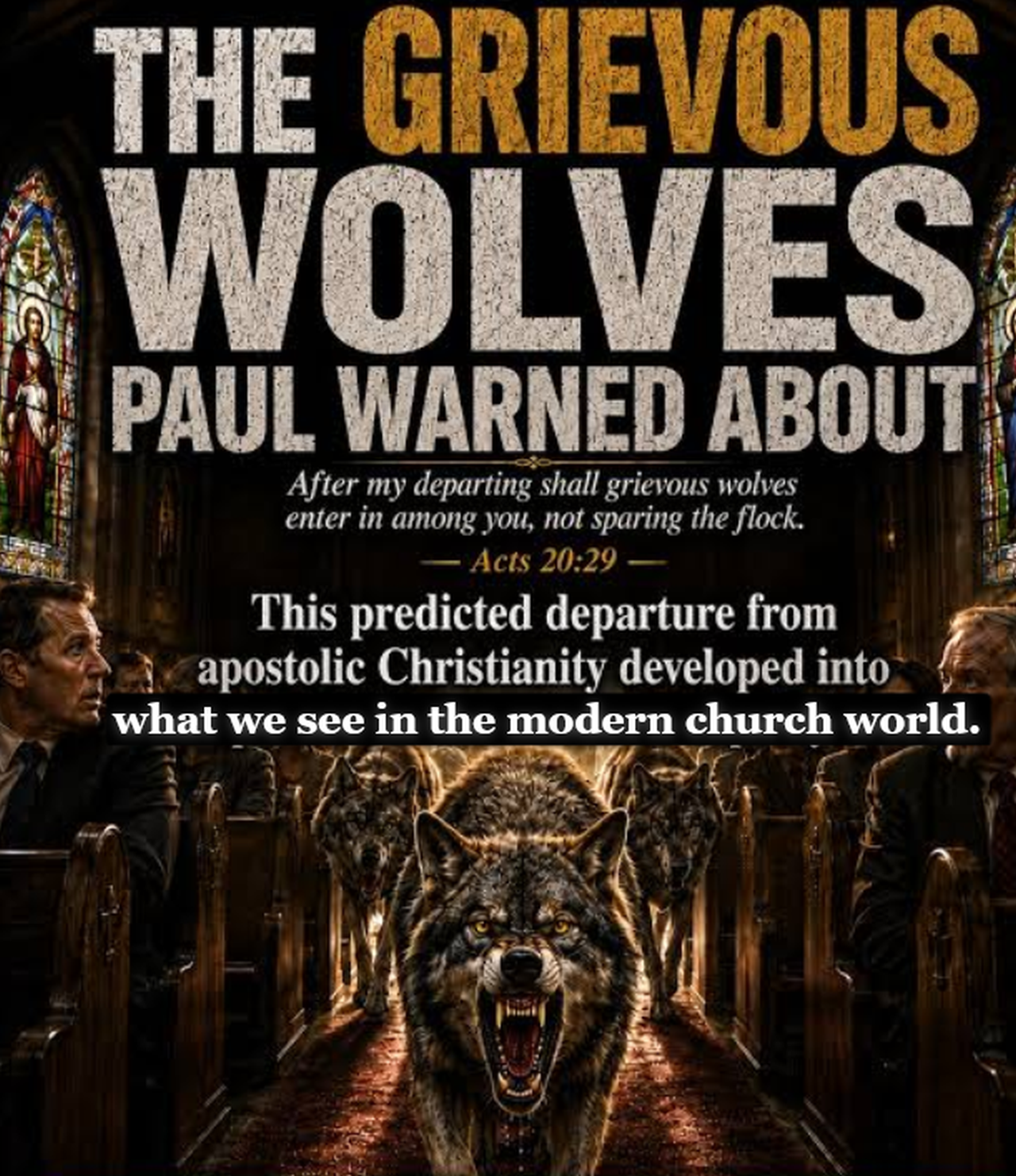
“And how I kept back nothing that was profitable unto you, but have shewed you, and have taught you publickly, and from house to house, … 25 And now, behold, I know that ye all, among whom I have gone preaching the kingdom of God, shall see my face no more. 26 Wherefore I take you to record this day, that I am pure from the blood of all men. … 27 For I have not shunned to declare unto you all the counsel of God. 28 Take heed therefore unto yourselves, and to all the flock, over the which the Holy Ghost hath made you overseers, to feed the church of God, which he hath purchased with his own blood. 29 For I know this, that after my departing shall grievous wolves enter in among you, not sparing the flock. 30 Also of your own selves shall men arise, speaking perverse things, to draw away disciples after them. 31 Therefore watch, and remember, that by the space of three years I ceased not to warn every one night and day with tears. 32 And now, brethren, I commend you to God, and to the word of his grace, which is able to build you up, and to give you an inheritance among all them which are sanctified.” Acts 20:20-32
Seems clear that the Holy Spirit in Paul foresaw the vile heretical wolves that were going to invade the professing church world for the whole era of the New Testament leading up to when Jesus returned. So, the Holy Spirit quickened in Paul to commend us to the Word of God (Acts 20:32).
“Study to shew thyself approved unto God, a workman that needeth not to be ashamed, rightly dividing the word of truth.” 2 Timothy 2:15
So, we see here that “rightly dividing the word of truth” is only possible by studying the Scriptures and not some man’s charts and system.
By the Holy Spirit, the LORD’s apostle Paul is instructing Timothy and us, to study the Word of God itself and not man’s system or charts.
BEWARE of those who arrogantly believe they they can dismiss certain biblical truths because in their own puny minds, they don’t understand how it all fits together. Be not deceived, these are pride-filled wolves and there are many among us! They go to seed on one truth to the exclusion of the whole of Scripture. Rebuke and run! (2 Peter 2:1-3)
“For we are not as many, which corrupt the word of God: but as of sincerity, but as of God, in the sight of God speak we in Christ.” 2 Corinthians 2:17
The unchanging Word of God, the Bible itself, and the Holy Spirit are the divine Source and Teachers of truth – and not mere men or sinful man’s concocted theological systems and/or charts! Beware saints. See Psalms 119:105, 130; Mark 13:31; John 14:26; 16:13; 2 Timothy 3:15-17, etc.
“Thy word is a lamp unto my feet, and a light unto my path.” Psalms 119:105
“The entrance of thy words giveth light; it giveth understanding unto the simple.” Psalms 119:130
“But the Comforter, which is the Holy Ghost, whom the Father will send in my name, he shall teach you all things, and bring all things to your remembrance, whatsoever I have said unto you.” John 14:26
“Howbeit when he, the Spirit of truth, is come, he will guide you into all truth: for he shall not speak of himself; but whatsoever he shall hear, that shall he speak: and he will shew you things to come. 14 He shall glorify me: for he shall receive of mine, and shall shew it unto you.” John 16:13-14
“Behold, I come quickly: hold that fast which thou hast, that no man take thy crown.” Revelation 3:11
“… Christ also loved the church, and gave himself for it; 26 That he might sanctify and cleanse it with the washing of water by the word, 27 That he might present it to himself a glorious church, not having spot, or wrinkle, or any such thing; but that it should be holy and without blemish.” Ephesians 5:25-27
Is your favorite minister warning you to be ready for Christ to return?
Here’s why you must study God’s Word – the whole of it – for yourself:
Perhaps the most insidious, dangerous thing false teachers do is that they over emphasize the minors while evading or under emphasizing or never mentioning the majors – the doctrinal majors of God’s Word.
“Woe unto you, scribes and Pharisees, hypocrites! for ye pay tithe of mint and anise and cummin, and have omitted the weightier matters of the law, judgment, mercy, and faith: these ought ye to have done, and not to leave the other undone. 24 Ye blind guides, which strain at a gnat, and swallow a camel. 25 Woe unto you, scribes and Pharisees, hypocrites! for ye make clean the outside of the cup and of the platter, but within they are full of extortion and excess.” Matthew 23:23-25
False Leaders are Know by their Refusal to Warn as did Paul
God’s men are to call out and not cover the sins of His people.
“Cry aloud, spare not, lift up thy voice like a trumpet, and shew my people their transgression, and the house of Jacob their sins.” Isaiah 58:1
The LORD cites the false teachers among us in that they specifically do not tell the people what God says is sin – They refuse to lift up their voice and “shew my people their transgression, and the house of Jacob their sins.”
Very important truth here. False leaders refuse to show God’s people what GOD calls sin which is the only way people in sin (includes any of us) can be made free. Take note and make record of this verse:
“Thy prophets (leaders) have seen vain and foolish things for thee: and they have not discovered thine iniquity, to turn away thy captivity; but have seen for thee false burdens and causes of banishment.” Lamentations 2:14
“The fear of the LORD is to hate evil: pride, and arrogancy, and the evil way, and the froward mouth, do I hate.” Proverbs 8:13
Paul’s Prophetic Vision of Heretical Wolves Flooding the Church World During the Whole New Testament Era [podcast]
Dispensationalism Exposed | Calvinism Exploded | Hebrews Roots Heresies
Support | STORE | Podcasts | The Return of Christ | Stewardship | Where to Give and Where Not to Give | Fruit Abounding to Your Account! | Victory in Jesus | Discipleship | The Glorious Grace of God | The Restoring Love of Our God | God’s Mercy | Spiritual Warfare | Justification | Grace and Good Works [podcast]

Abiding
The Surrender of the Cross [podcast]
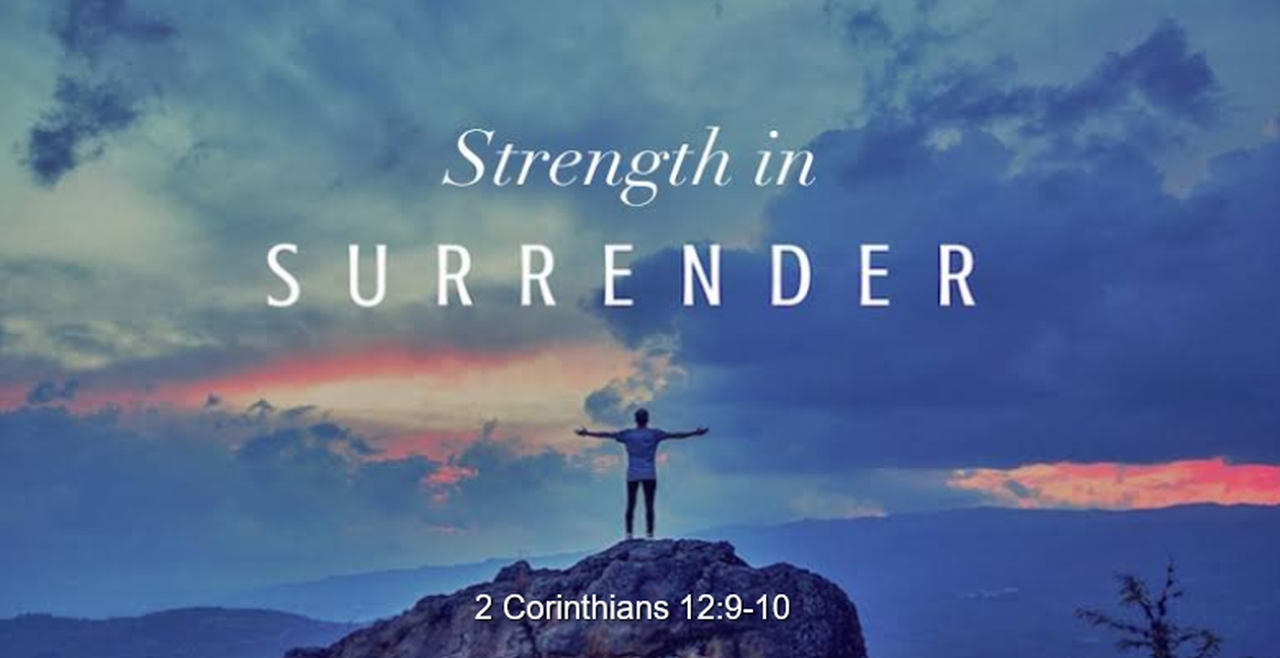
“For whom he did foreknow, he also did predestinate to be conformed to the image of his Son, that he might be the firstborn among many brethren.” Romans 8:29
One writer notes:
“Your sin is not the disqualification. Your refusal to repent is.
The strongest men in scripture weren’t the sinless ones. They were the ones who fell and did not stay down.
David: adultery, a murder ordered from a throne, a dead son. And the psalm he wrote on his face: “The sacrifices of God are a broken spirit: a broken and a contrite heart, O God, thou wilt not despise.”
Peter: three denials in one night. “And Peter went out, and wept bitterly.” Fifty days later he stood in the same city and preached the sermon that saved three thousand.
Paul: dragged Christians to prison and death. “Christ Jesus came into the world to save sinners; of whom I am chief.”
“But we have this treasure in earthen vessels, that the excellency of the power may be of God, and not of us.”
God is not collecting monuments. He’s raising men who get on their face, get clean, and get back in the fight.”
Brother Billy, a friend of mine, asked “What is the cross?” We’re going to talk about that in this podcast message.
So many today have this idol image of the cross. They do not understand what Jesus and His holy apostles taught us about what the cross is as it pertains to our daily life in following Jesus.
Some think there is power bowing down before an image of the cross. Not.
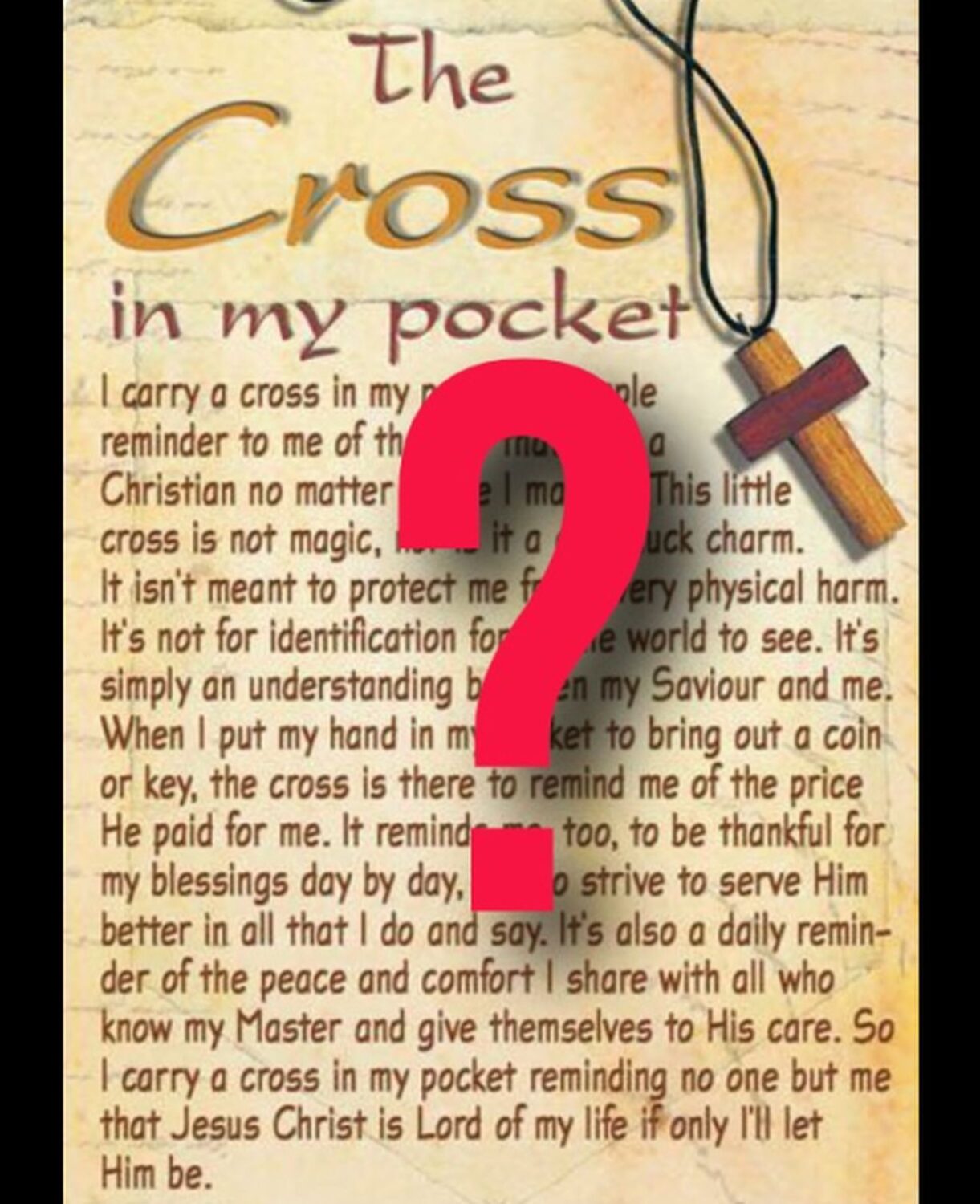
Some believe it’s of God to carry a little cross in their pocket, nearly like a good luck charm. Not.
Others believe that making the sign of the cross is of God. Not.
In one word, the cross, as it applies to us as Jesus taught, is surrender in repentance and thereafter daily.
When we’ve repented and received Christ as the LORD and Savior of our lives, He washes us clean of all our sin. That is initial salvation and thereafter we must walk with Christ and live in the victory He died and rose again to grant His people.
Did Jesus die on that cross to set us free to sin for the remaining of our days on the earth after He saves us? No.
The cross separates us from self and therefore sin. Jesus knew we’d need this in order to walking holy after He initially saves us, washing us of all sin. That’s initial salvation and in order to thereafter walk with our LORD, we must be crucified with Him which will keep us from living in sin.
“But if we walk in the light, as he is in the light, we have fellowship one with another, and the blood of Jesus Christ his Son cleanseth us from all sin.” 1 John 1:7
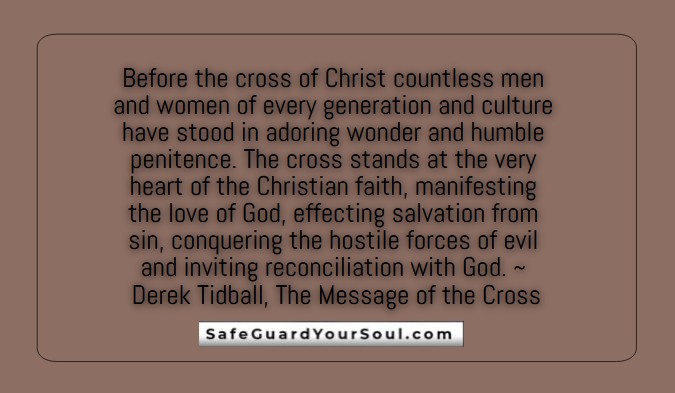
Jesus Christ is the only One who can save and sanctify us. Regrettably, so many stop at initial salvation and as Satan would have it, they are told the “eternal security” lie. This is the lie that led the first man and woman to sin which plunged the human race into darkness, separation (Genesis 2:17 > 3:4).
Jesus died to “take away our sins” – initially and ongoing as we “endure to the end” abiding, remaining, continuing in and with our LORD (Matthew 10:22; 24:13; John 15:1-6, etc.).
“he was manifested to take away our sins”
“And ye know that he was manifested to take away our sins; and in him is no sin. 6 Whosoever abideth in him sinneth not: whosoever sinneth hath not seen him, neither known him.” 1 John 3:5-6
“If any man will come after me, let him deny himself, and take up his cross daily, and follow me. 24 For whosoever will save his life shall lose it: but whosoever will lose his life for my sake, the same shall save it.” Luke 9:23-24
Ask God to let His message of the cross be absorbed and deeply permeate your heart and mind.
“Let these sayings sink down into your ears: for the Son of man shall be delivered into the hands of men.” Luke 9:44
Karen Cochran writes:
“’Only in the light of Calvary will we discover how the pain of our suffering can be transformed into a ministry.’
Our deepest transformations happen during our times of sufferings! I have found Jesus more in my darkest valleys than on the mountain tops, because in the high places I did not think I needed Him. But when I am in the valley of the shadow of death, and cry out, ‘Please Jesus I am poor in spirit and can doing nothing without You.’ In His grace He reaches down into that place and gives me the comfort of God, and raises me up out of my troubles. The cross life! Romans 6. We go down into death and He raises us up into newness of life.
When we experience His compassion, we are then required to comfort others with the same comfort we have received from God. 2 Cor 1:3-5. That is how He births ministry in us!”
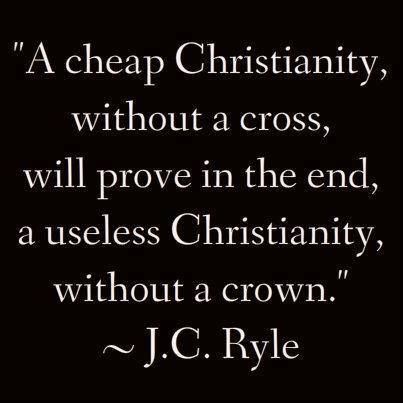
“For the preaching of the cross is to them that perish foolishness; but unto us which are saved it is the power of God.” 1 Corinthians 1:18
IF in your fellowship you are not hearing the cross, the crucified life biblical message and knowing Jesus and the Father, you are sitting under “another gospel.” (John 17:3; Galatians 1:6-9; 2:20; 6:14; Philippians 3:10; Colossians 1-2)
Jesus is “the life” and Jesus taught and demonstrated by His own life and mission that death and burial must of necessity precede resurrection (John 14:6). YET, you will seldom if ever hear this original, central Gospel cross truth mentioned in a modern church. Think: “Life Surge”, another fad ministry campaign. They speak of the “surge” or resurrection and yet they will never mention the death and burial Christ requires as a condition to raise, to cause one to surge. This means they are raising themselves up instead of dying and letting God raise them up.
Beware of the false gospel being peddled at nearly EVERY so-called “church” in this late hour. The wolves who occupy those pulpits are “accursed” for preaching “another gospel.” (Galatians 1:6-9) A gospel without the cross of Christ and the one He mandated that you take up, is a false gospel .
“And many false prophets shall rise, and shall deceive many.” Matthew 24:11
WHO ELSE needs a rest from the vile rage of the flesh?
“For I know that in me (that is, in my flesh,) dwelleth no good thing: for to will is present with me; but how to perform that which is good I find not. … O wretched man that I am! who shall deliver me from the body of this death?” Romans 7:18, 24
There is nothing good in me, nor in you, other than Christ. This is why we must be “crucified with Christ.”
“I am crucified with Christ: nevertheless I live; yet not I, but Christ liveth in me: and the life which I now live in the flesh I live by the faith of the Son of God, who loved me, and gave himself for me.” Galatians 2:20
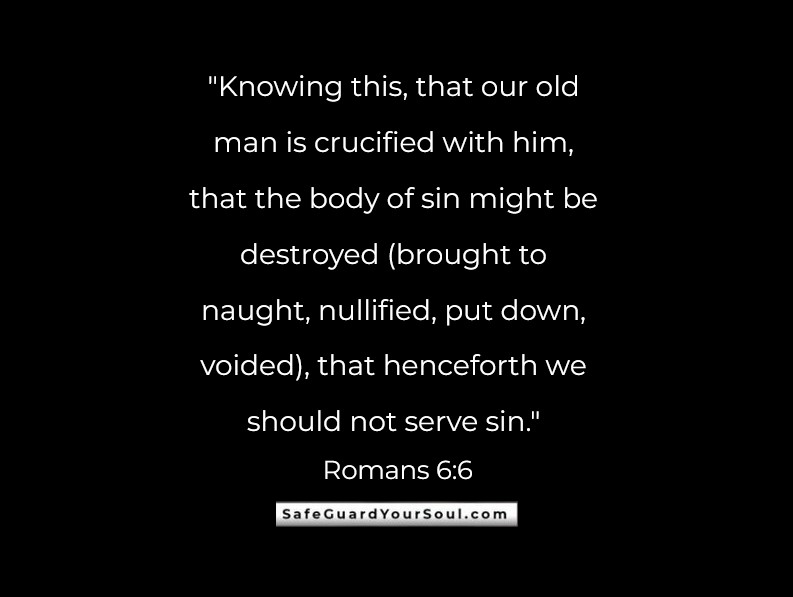
Your relationship with the LORD and the corresponding fruit are dependent upon you “Letting go and letting God.”
Without being born again and living the crucified life Jesus has called us to, there is no hope of remaining in Christ – of abiding in Christ and seeing God produce “fruit … more fruit” and “much fruit.” See John 15:1-16.
Putting to rest the deeds of the body is the crucify the flesh.
WHO are truly Christ’s?
“And they that are Christ’s have crucified the flesh with the affections and lusts.” Galatians 5:24
IF one is not crucifying the flesh daily, he is living in the flesh, in sin.
Reading Romans 6 each morning will be a blessing to your life.
“Not my will, but thine, be done.”
Jesus tells His disciples to “Watch and pray” – to remain vigilant perpetually in prayer and watching. Then He tells us why – because “the flesh is weak.”
“Watch and pray, that ye enter not into temptation: the spirit indeed is willing, but the flesh is weak. 42 He went away again the second time, and prayed, saying, O my Father, if this cup may not pass away from me, except I drink it, thy will be done.” Matthew 26:41-42
“Saying, Father, if thou be willing, remove this cup from me: nevertheless not my will, but thine, be done.” Luke 22:42
Our Savior demonstrated the cross, before the cross when He declared to His and our Father “not my will, but thine, be done.”
This is divine prayer material for us saints – “not my will, but thine, be done.”
One source notes the following concerning Jesus’ submission and surrender to the Father:
“Jesus yielded up His spirit to the Father after completing His perfect sacrifice.
- Luke 23:46: “And when Jesus had cried with a loud voice, he said, Father, into thy hands I commend my spirit: and having said thus, He gave up the ghost.”
- John 19:30: “When Jesus therefore had received the vinegar, he said, It is finished: and he bowed his head, and gave up the ghost.”
- Philippians 2:8: “And being found in fashion as a man, he humbled himself, and became obedient unto death, even the death of the cross.”
The Meaning of Surrender at the Cross
- Complete Submission: Jesus willingly submitted to the Father’s will, finishing the work of redemption.
- The Believer’s Response: Scripture calls followers of Jesus to model this surrender by taking up their own cross daily (Luke 9:23).”
Slaves to “Christian” or “Church” Conmen and Cross-less Counselors
The cross is the opposite of what the fake “church’s” calls “self-care.” “Self-care” is a fake “solution” that brings repeat busine$$ to those who perpetrate it. The cross is God’s solution – beginning at the foot of Christ’s redemptive cross and the cross He mandates you to take up daily. Beware of the cross-less deceivers (Philippians 3:18-19). There is no salvation or solution from sin outside of Christ, and Christ commands us to take up the cross, be crucified with Him, daily after He initially saves us (Luke 9:23-24). If not, you are not following Him. One can only follow Jesus the way He prescribed. Read that again.
There are lots of people peddling the lie of “self care” which is ultimately nothing more than absolute self-idolatry. Pure evil. We need SAVIOR care! Such “self-care” only perpetuates the prey, the victim, in their misery. The only way to deal with the wicked iniquitous nature, is to crucify it, not pamper it (Luke 9:23-24). It’s your time to get into God’s Word and follow Jesus (KJB). Repent, deny yourself, lay down your life and serve God and others, not yourself. Loving your wicked self IS your problem and so all “self care” is accomplishing is to make your problem bigger, to fortify the evil within (Galatians 5:16-24). Crucifying that evil by the power of the Holy Spirit who is then raising your upward in His grace, glory, and power, is the divine prescription (Romans 8:13; Colossians 3:3, etc.). Read Philippians 2:3-5 each morning this week. Jesus commands you to love God. Worship God. Obey God (Matthew 22:37-39).
Jesus conquered sin, death, hell, and the grave by surrendering – by dying to self and honoring and executing the will of the Father.
“Forasmuch then as the children are partakers of flesh and blood, he also himself likewise took part of the same; that THROUGH DEATH he might destroy him that had the power of death, that is, the devil;” Hebrews 2:14
The daily cross, the surrender of self, is essential to keep sin out of our lives. It is our submission to God – giving back to Him the life he gave which is us – and came and died to redeem.
“He must increase, but I must decrease.” John 3:30
“ye are not your own? For ye are bought with a price”
“What? know ye not that your body is the temple of the Holy Ghost which is in you, which ye have of God, and ye are not your own? 20 For ye are bought with a price: therefore glorify God in your body, and in your spirit, which are God’s.” 1 Corinthians 6:19-20
Surely we don’t believe Jesus initially saved us only to approve of us thereafter living in sin.
“What shall we say then? Shall we continue in sin, that grace may abound? 2 God forbid. How shall we, that are dead to sin, live any longer therein?” Romans 6:1-2
Beware of the cross-evading “eternal security” deceivers whom Jude calls “ungodly men”, who by their serpentine heresy, are “turning the grace of our God into lasciviousness (license to sin)” and by doing so they are “denying the only Lord God, and our Lord Jesus Christ.” (Jude 3-4) These are “enemies of the CROSS of Christ.” (Philippians 3:18-19)
How do we know that those who teach “once saved always saved” are of the devil? – Because that was Satan’s first lie which led to the fall of mankind in the Garden and it’s resulting in the same falling away today. Read what God said in Genesis 2:17 and then what Satan said in Genesis 3:4.
Now read Romans 6 each morning for the next 3 days. Ask yourself: Can you live in communion with God who is holy, without the crucified life”? No.
“For he that is dead is freed from sin.” Romans 6:7
Read that verse again and ask: “WHO are the only people ‘freed from sin’”? – It’s exclusively those who are “dead” and buried with Christ. They are then raised upward in the glory and power of Jesus Christ, walking fruit-filled lives for His eternal glory (Romans 8:11-14).
PRAYER: Holy Father, I come to You afresh, and I ask You to have Your way in my life. Please overcome all evil dear LORD. You must increase but I must decrease – now and till You return. Not my will but Thine be done Jesus. Please help me to love and trust You more. In Jesus’ name.
Support | STORE | Podcasts | Mexico Mission here | Jail/Prison Ministry | All Ministry Updates | More on Assurance here | Because You Care Page | The Greatest of these is Charity | Be Ready in the Morning [podcast] | The Sure Mercies of David [podcast] | That Repentance and Remission of Sins should be Preached [podcast] | At His Feet | Knowing God | The Cross Life | 100’s of Christ-centered Scripture-rich Podcasts | Christology = the Study of Christ | Faithfulness to God
Apostasy
Sola Scriptura vs the Catholic Church and its Traditions [podcast]
When Paul spoke of “tradition” it was simply the thing he had and was teaching, the Word of God, and not some antichrist pagan practice the cult of rome calls a “tradition.”
“Tradition” is mostly used in a negative way in God’s Word:
“And he said unto them, Full well ye reject the commandment of God, that ye may keep your own TRADITION.” Mark 7:9
“Making the word of God of none effect through your TRADITION, which ye have delivered: and many such like things do ye.” Mark 7:13
“Beware lest any man spoil you through philosophy and vain deceit, after the TRADITION of men, after the rudiments of the world, and not after Christ.” Colossians 2:8
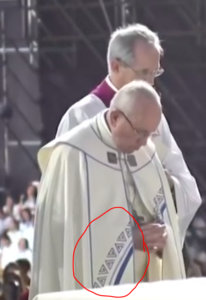
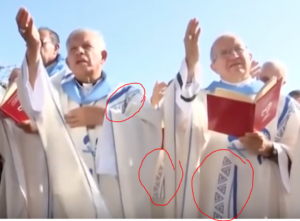
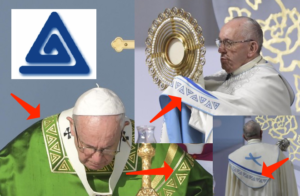
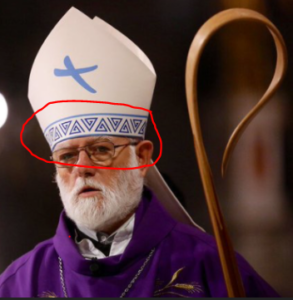
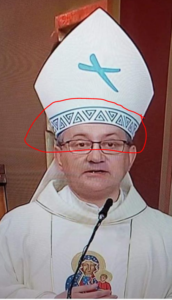
Before we talk about Sola Scriptura vs catholic tradition and catechism, please allow me to ask you to take a look with your own eyes at the pictures below: HOW can you possibly defend this? Isn’t it time you came to Jesus?
“Forbidding to marry” is the recipe for disaster in this scenario.
The Holy Spirit foresaw that the catholic church was coming and gave us specific warnings concerning this “Mother of harlots” described in detail in Revelation 17.
“Now the Spirit speaketh expressly, that in the latter times some shall depart from the faith, giving heed to seducing spirits, and doctrines of devils; 2 Speaking lies in hypocrisy; having their conscience seared with a hot iron; 3 Forbidding to marry, and commanding to abstain from meats, which God hath created to be received with thanksgiving of them which believe and know the truth.” 1 Timothy 4:1-3
The warning of the Holy Spirit, the 2 teachings to look for are:
- “Forbidding to marry”, and
- “commanding to abstain from meats”
Yet Peter, supposedly, laughably called “the first pope”, was married (Matthew 8:14).
Then, it’s the catholic church who “abstain from meats” during their annual cultic lent season.
There’s only one system this fits as is the case in Revelation 17 which describes “THE MOTHER OF HARLOTS AND ABOMINATIONS OF THE EARTH.”
“And upon her forehead was a name written, MYSTERY, BABYLON THE GREAT, THE MOTHER OF HARLOTS AND ABOMINATIONS OF THE EARTH.” Revelation 17:5
Jesus created you. Jesus died for your sins. Jesus Christ gave you every breath you’ve ever breathed and every morsel of food you’ve ever put in your mouth. What has the catholic church ever done for you except lie to you to send you to hell eternally, irrevocably?
Sola Scriptura vs Catholic Teaching
The term Sola Scriptura simply means Scripture alone is the final divine authority. Yet the antichrist catholic church doesn’t like this very much because if God gave us His Word to establish truth, they they can’t teach their erroneous dogmas to the world and freely deceive them.
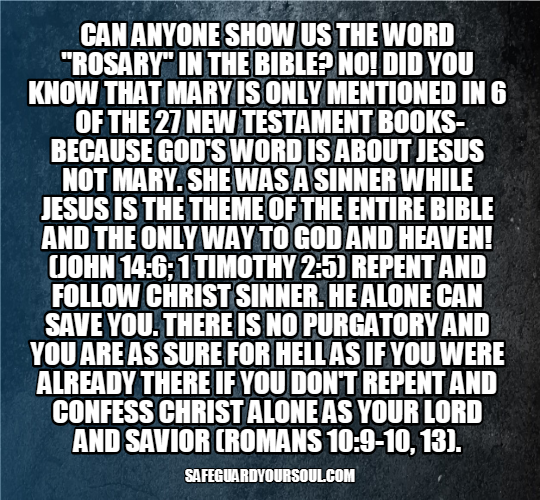
Any person whose been around a few catholics, knows that the fruit of their lives is strife, unrest, turmoil, and anything but God’s love. This alone reveals their doctrines to be false – because God does not bless the wicked, those who believe lies but rather only those who walk in His truth (Psalms 1, etc.).
“Great peace have they which love thy law (Word): and nothing shall offend them.” Psalms 119:165
Only those who live by the Word of God are possessed by the peace of God.
It’s laughable to think that mere sinful religious men can make up any fabled lie they can concoct in their depraved minds and say it’s of God. But Jesus told us exactly who is “of God” and who is “NOT of God.”
“He that is of God heareth God’s words: ye therefore hear them not, because ye are not of God.” John 8:47
As is clearly witnessed in the lives of catholics, those who follow tradition are full of turmoil. Those who follow Bible truth are full of divine peace.
“And Jesus answered him, saying, It is written, That man shall not live by bread alone, but by every word of God.” Luke 4:4
Notice above that Jesus pointed no man to religion. In fact His greatest enemy was and still is – false religionists (Matthew 23; Mark 7:6-10, etc.).
Friends, God gave us His Word in tangible, written form in order to protect us from the “MANY false prophets” He promised would “deceive MANY” in these finals days before the return of our LORD (Matthew 24:11).
Those who choose to love God will seek Him in His own Word and nowhere else. They alone will be protected by Him.
“Every word of God is pure: he is a shield (protector) unto them that put their trust in him. 6 Add thou not unto his words, lest he reprove thee, and thou be found a liar.” Proverbs 30:5-6
The moment I prayed in repentance to receive Jesus Christ into my life, He washed me of all my sins. The ensuing days brought about a clear conscience, a sound mind, a peace, love and joy that made it clear to me that I’d been lied to by the cult of Rome my whole life. Needless to say, I never return to the catholic church.
Catholic deceivers have to constantly combat the many followers of Jesus who expose the heresy of catholic tradition being equal to the Bible. These pawns fight to perpetrate this tradition lie in order to be able to continue to perpetuate some of the vilest and strangest heresies known to mankind.
Many Christians believe that the Christian tradition of communion is the same as the Catholic tradition of the Eucharist. But this is not so. The Eucharist (i.e., Transubstantiation) is a Catholic term for communion when the bread and the wine supposedly become the very, the actual body and blood of Jesus Christ; thus when taken, the partaker is said to experience the presence of Jesus. These transformed elements are placed in what is called a monstrance and can then be worshipped as if worshipping Jesus Himself. The implications are tied in with salvation. In the catholic system, with the Eucharist, salvation becomes sacramental (participation in a ritual) as opposed to justification by faith in Christ alone. The mystical experience called the Eucharist is clearly a form of gross idolatry (as well as the very heart of Catholicism).
CATHOLIC TEACHING ON TRANSUBSTANTIATION is a complete theological statement and the name of a doctrine, out of which springs the most astounding set of beliefs and practices that have ever been taught in the name of religion. Yet few people know what the Catholic Church actually believes and teaches concerning this subject.
TRANS-SUBSTANTIATION CHALLENGE: PLEASE PROVIDE “EMPIRICAL EVIDENCE” – If the wheat wafer and wine TRULY become the actual and literal body and blood of Jesus Christ, as the catholic church teaches, then let’s do a DNA test to see what the composition of the elements truly are. That fair? Clue: Do they taste like flesh and blood, or bread and wine?
CATHOLIC MASS IS CLEARLY A MOCKERY and BLASPHEMY AGAINST CHRIST’S FINISHED WORK – it supposes to re-sacrifice Christ who paid ONCE for all sins on the cross according to God’s Word.
DID YOU KNOW THAT drinking blood is forbidden by God? Lev 7:27 “Whatsoever soul it be that eateth any manner of blood, even that soul shall be cut off from his people” BOTH TESTAMENTS CONDEMN DRINKING BLOOD – ACTS 15:28. So, why would the Son of God instruct us to do such (transubstantiation)??
Only a rebel rejects the divine truth that God gave us His Word so we’d not be misled by false prophet religions like this antichrist cult of Rome. The RCC teaches that tradition is equal to the Bible. Nonsense. They do so in order to be able to teach the myriad of heresies peddled by the antichrist roman cult which diametrically contradict the Word of God.
I grew up catholic, altar boy, catholic school, etc…. yet when Jesus saved me, immediately I knew that I’d been lied to my whole life. Instantly all my sins were forgiven and conscience cleared. What a blessing. Salvation is a personal relationship with Jesus, not a religion and this happens when we surrender, when we admit the reality that we’ve sinned against our Maker, are 100% guilty, and ask then ask Jesus to take over our lives from that moment forward. | Making Peace with God – Receiving His Forgiveness and Salvation
Recently I saw a catholic video titled “Sola Scriptura and Catholic Questions for Protestants.” The description said “This video is about Sola Scriptura and Catholic questions for Protestants, and why the teaching of the Bible alone is itself unbiblical.” Then he poses 5 questions. My replies are in blue.
**Catholic Questions for Protestants:** (from a catholic)
Note: 2 Timothy 3:16 is the Bible answer to each of these foolish questions from this catholic heretic.
#1. Where in the Bible does it say the bible is all you need?
The more pertinent question is: Where does the Bible say you need anything else but the Word of God, which it is? Where does the Bible say that tradition is all you need? Where does the Bible say the Word of God can be mixed with tradition? Where does God’s Word say that tradition is equal to Holy Scripture?
“ALL scripture (not tradition) is given by inspiration of God, and is profitable for DOCTRINE, for reproof, for correction, for instruction in righteousness:” (2 Timothy 3:16)
#2. Where does Scripture teach that the Bible is the ONLY or FINAL authority?
Where does the Bible say that there is authority anywhere else but in itself, as the very Word of God. Friends, the only ones who want you to look away from the Bible, God’s Word, are those who have lies to teach you.
First off, only a biblically illiterate person could ask such a question.
Jesus told the false religionists of His day and today “Ye do err, not knowing the scriptures, nor the power of God.” (Matthew 22:29) Those who don’t know God’s Word go into error. “My people are destroyed for lack of knowledge: because thou hast rejected knowledge, I will also reject thee, that thou shalt be no priest to me: seeing thou hast forgotten the law (Word) of thy God, I will also forget thy children.” (Hosea 4:6) Those who choose to look elsewhere, who do not seek God in His own Word, will be destroyed and rejected in the end. Satan’s religions exists for this very, this express purpose – to lead you away from the LORD and His truth. Beware.
God’s Word is Going to Judge Us, Not Sinful Man’s Traditions
“He that rejecteth me, and receiveth not my words, hath one that judgeth him: the word that I have spoken, the same shall judge him in the last day.” John 12:48
“In the day when God shall judge the secrets of men by Jesus Christ according to my gospel.” Romans 2:16
Is tradition or is Holy Scripture given to us for “doctrine”? “ALL scripture (not tradition) is given by inspiration of God, and is profitable for DOCTRINE, for reproof, for correction, for instruction in righteousness:” (2 Timothy 3:16) This would clearly reveal that any tradition or teaching that contradicts “scripture” is heresy.
Any person following the roman catholic religion instead of Holy Scripture has made a decision to reject the LORD.
“He that is of God heareth God’s words: ye therefore hear them not, because ye are not of God.” John 8:47
“Heaven and earth shall pass away: but my words (not catechism or tradition) shall not pass away.” Mark 13:31
“Thy word (not catechism or tradition) is a lamp unto my feet, and a light unto my path. Psalms 119:105
The longest chapter in the Bible is 176 verses of which each and every verse speaks of the written Word of God, not tradition or the catechism of some self-proclaimed religion of sinful men. Read Psalms 119.
#3. How do we know, according to the Bible alone, know that the books in the Bible are inspired Scripture? Where in the Bible does it give a list of inspired Scripture and how do we know what is inspired and what is not? – Where does it say in the Bible that the Book of Hebrews is inspired Scripture? – Where does it say in the Bible that Matthew is inspired? Or Philemon?
To even ask these questions reveals that this man is demon possessed. It was and is Satan who casts doubt on what God has said – “Hath God said?” (Genesis 3:1)
“ALL scripture (not tradition) is given by inspiration of God, and is profitable for DOCTRINE, for reproof, for correction, for instruction in righteousness:” (2 Timothy 3:16)
The Bible never once hints or says that truth is found in tradition or the teachings of man’s religions. In fact, we are often warned against this specifically (Colossians 2:8, etc.).
#4. According to the Bible alone, how do we even know Matthew wrote Matthew? How do we know who wrote the Book of Hebrews?
It doesn’t matter if we know exactly who the mere human author it. We know God intended it to be in His Word, part of “ALL scripture.” (2 Timothy 3:16) Not being able to ascertain the exact human author in no way diminishes the truth, the reality of divine inspiration.
How do we know catholic traditions are not of God? Answer: They clearly contradict Holy Scripture.
The LORD told the man in hell that his brothers, who were still on the earth, had the Word of God – “Moses and the prophets” – and that’s all they need. And, if they won’t hear and obey them, they are going to hell also (Luke 16:27-30) This clearly demonstrates that any person who will not hear and obey God’s Word is going to hell. “Whoso despiseth the word shall be destroyed: but he that feareth the commandment shall be rewarded.” (Proverbs 13:13)
The following Bible verse makes is clear that anyone who puts away, rejects, does not obey it as being from God, is “unworthy of everlasting life.”
“Then Paul and Barnabas waxed bold, and said, It was necessary that the word of God should first have been spoken to you: but seeing ye put it from you, and judge yourselves unworthy of everlasting life, lo, we turn to the Gentiles.” Acts 13:46
#5. Where in the Bible does it say the Bible alone is the Word of God?
Where does the Bible say that there is truth outside of it that God’s true people are to trust in? Nowhere. Where in the Bible does it say that tradition is equal with Scripture? Where does the Bible say that the tradition of the antichrist catholic cult is to be mixed with Scripture?
God’s Word states:
“All scripture (not tradition) is given by inspiration of God, and is profitable for doctrine, for reproof, for correction, for instruction in righteousness: 17 That the man of God may be perfect, throughly furnished unto all good works.” 2 Timothy 3:16-17
Case closed. Oh, and where’s tradition in that? What did the Bible say is profitable for “doctrine, for reproof, for correction, for instruction in righteousness”? “Scripture.” Actually when Paul spoke of “tradition”, he was speaking of the Word of God he had taught and not making any ole pagan cult’s traditions equal the the Word of God (2 Thessalonians 3:6).
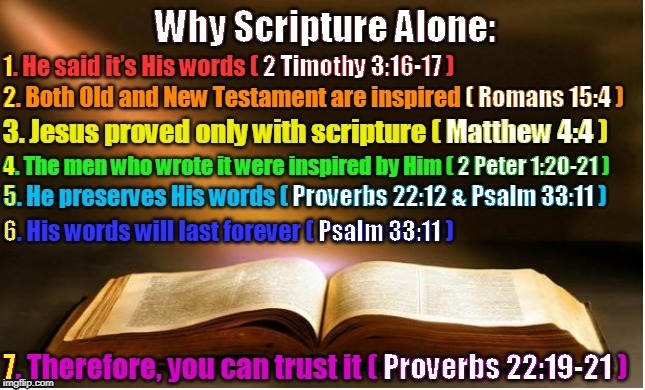
In fact, the vast majority of times that we find the word “tradition(s)” in the New Testament canon, it’s a warning against the false religionists… of which the catholic church fits the description distinctly.
“Why do ye also transgress the commandment (Word of God) of God by your TRADITION?” Matthew 15:3
“Thus have ye made the commandment (Word) of God of none effect by your TRADITION.” Matthew 15:6
“And he said unto them, Full well ye reject the commandment (Word) of God, that ye may keep your own TRADITION.” Mark 7:9
“Making the word of God of none effect through your TRADITION, which ye have delivered: and many such like things do ye.” Mark 7:13
“Beware lest any man spoil (ruin) you through philosophy and vain deceit, after the TRADITION of men, after the rudiments of the world, and not after Christ.” Colossians 2:8
The very reason God gave us His Word in written form was so that cults like the roman catholic church would not mislead His true people – so that we’d not be deceived by false prophet religions like “MYSTERY, BABYLON THE GREAT, THE MOTHER OF HARLOTS AND ABOMINATIONS OF THE EARTH.” (Revelation 17:5)
Read chapters 17 and 18 of the book of Revelation.
Is the catholic system based on God’s Word? No.
Catholics claim they go through the whole Bible yearly in their weekly mass. Is that true or is it just another lie? A lie. There are 1,189 chapters in the Bible. Catholics don’t read 52 chapters a year in their masses. Think about it: If they read just 1 chapter each Sunday, which they don’t, that would only be 52 chapters. Far short of 1,189 chapters. That would 1,137 chapters short of reading the whole Bible yearly.
Did the Catholic Church Give us the Bible, as they Claim?
Catholics will even dare say that the Bible came from the catholic church. Is this true? No.
THE CATHOLIC CHURCH WASN’T EVEN FORMED TILL THE 3RD OR 4TH CENTURY A.D. THE BOOKS OF THE BIBLE WERE COMPLETED ABOUT 90 A.D. BY JEWISH MEN WHO WERE INSPIRED BY THE HOLY SPIRIT (2 Peter 1:20-21; 2 Timothy 3:16)
So-Called “AUTHORITY” THAT VIOLATES UNCHANGING DIVINE TRUTH IS SIMPLY ILLEGITIMATE – REGARDLESS OF ITS CLAIMS. JESUS SAID HIS WORD IS FINAL AUTHORITY. Jesus says:
“Heaven and earth shall pass away: but my words shall not pass away.” Mark 13:31
Catholics do not believe the Bible is final authority – they are taught that catholic tradition and early church fathers are on the same level – this is strategically taught them, in order that the catholic religion might have open game to deceive them – by making up their own religion of mere sinful men.
“We have also a more sure word of prophecy; whereunto ye do well that ye take heed, as unto a light that shineth in a dark place, until the day dawn, and the day star arise in your hearts: 20 Knowing this first, that no prophecy of the scripture is of any private interpretation. 21 For the prophecy came not in old time by the will of man: but holy men of God spake as they were moved by the Holy Ghost.” 2 Peter 1:19-21
Personally, I waste no time on early church fathers or church history. They weren’t ordained, sanctioned by God exclusively to pen the words of Holy Writ, the Bible, which is God’s Word and the highest divine authority (2 Peter 1:19-21; 2 Timothy 2:15; 3:16-17). What’s it matter if you know what they said? The LORD didn’t ordain them to communicate His truth to the world. This does nothing but create confusion (1 Corinthians 14:33). Many would rather listen to what mere men had to say about God and the Bible than to learn for themselves what God said in His own Word. The LORD has always instructed His people to study and learn and attend to HIS words (Deuteronomy 4, 6, 11, Isaiah 34:16, etc.).
“Study to shew thyself approved unto God, a workman that needeth not to be ashamed, rightly dividing the word of truth.” 2 Timothy 2:15
The Catholic Council of Trent declares that: “It is lawful to have images in the church and to give honour and worship to them … Images are put in churches that they may be worshipped.” The Oxford dictionary defines an idol as: “An image used as an object of worship. A person or thing that is the object of excessive devotion.” An Idolater is a devoted admirer of idols.
IF THE BIBLE IS A CATHOLIC BOOK, THEN:
- Why does it condemn clerical dress? (Matt. 23:5-6; Luke 20:46).
- Why does the Bible teach against the adoration of Mary if the Bible is catholic? (Luke 11:27-28).
- Why does it show that all Christians are priests? (1 Pet. 2:5,9).
- Why does God’s Word condemn the observance of special days if it’s catholic? (Gal. 4:9-11).
- Why does the Bible teach that all Christians are saints if it’s catholic? (1 Cor. 1:2).
- If the Bible were truly catholic, WHY does it condemn the making and adoration of objects of worship, of graven images? (Ex. 20:4-5).
- Why does the Bible teach that baptism is immersion instead of sprinkling or pouring if the Bible is catholic? (Col. 2:12).
- If the Bible is truly catholic, WHY does it forbid us to address religious leaders as “father”? (Matt. 23:9)
- If the Bible is truly catholic, why does it teach that Christ is the only foundation and not the apostle Peter? (1 Cor. 3:11).
- Why does it address only God Himself as the “Holy Father”? (John 17:11)
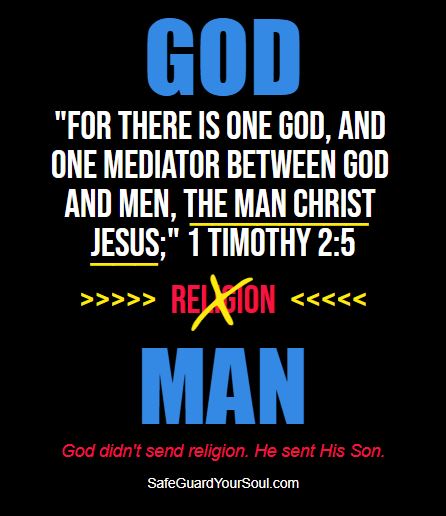
- If the Bible is catholic, why does it teach that there is one mediator instead of many? (1 Tim. 2:5).
- If the Bible is catholic, why is the Bible completely silent about infant baptism, indulgence$, purgatory, confession to priests, the rosary, the mass, and many other things taught by the Catholic Church?
- If the Bible is catholic, why then did the Pope put the Bible on the Index of forbidden books in the 12th century?
EVERY breath and morsel of food you’ve ever received was from GOD, not your stupid religion. WHO died on that cross for you? Jesus Christ did. Repent and follow Jesus – and not the devil’s religion which exists for one purpose – to lead you to hell.
Support | STORE | Podcasts | The Catholic church | “MYSTERY, BABYLON THE GREAT, THE MOTHER OF HARLOTS AND ABOMINATIONS OF THE EARTH” [podcast] | Did Mary Die for Our Sins? [podcast] | SATAN IN THE VATICAN | The Chosen and Jonathan Roumie Exposed [podcast] | Peace with God







Paul’s Prophetic Vision of Heretical Wolves Flooding the Church World During the Whole New Testament Era [podcast]

The Surrender of the Cross [podcast]

Sola Scriptura vs the Catholic Church and its Traditions [podcast]

“Pastors According to Mine Heart” [podcast]

Ridiculous King James Bible Corrections

Darwin’s Demise: What they don’t want You to know about Charles Darwin! [podcast]

Beware of “Private Interpretation” [podcast]

The Benefits of Knowing and Delighting in the LORD [podcast]

Cons and Crooks who Do Not Preach the Cross [podcast]

NET New English Translation Fake “bible” Exposed

Doubt Casting Wolves Exposed

Thank You for Declaring that the Mexican People Matter to Jesus! Mission Mexico Part 50

John Wesley on Calvinism, Once Saved Always Saved, and Conditional Security

Arrogant Bible Correctors Rebuked

In a Small Prison Cell, Justin was about to Commit Suicide … [podcast]
John Wesley on Calvinism, Once Saved Always Saved, and Conditional Security

Why Did God Give Us His Word? [podcast]
Paul’s Prophetic Vision of Heretical Wolves Flooding the Church World During the Whole New Testament Era [podcast]
Beware of “Private Interpretation” [podcast]

Beware of the Hebrew Roots Judaizing Snakes! [podcast]

The Highest Form of His Creation

The Flesh will Never be Reformed it Must be Crucified [podcast]

The High Treason of False Leaders [podcast]

Direction in God’s Word? [podcast]

Can and Will God Use You? [podcast]

A PLACE CALLED HELL [podcast]
Arrogant Bible Correctors Rebuked
“Pastors According to Mine Heart” [podcast]

Nicolaitan Nightmare [podcast]
Sola Scriptura vs the Catholic Church and its Traditions [podcast]
Paul’s Prophetic Vision of Heretical Wolves Flooding the Church World During the Whole New Testament Era [podcast]
The Surrender of the Cross [podcast]
Sola Scriptura vs the Catholic Church and its Traditions [podcast]


 America2 years ago
The Drugging of America: The Pharmakeia Sorcery Deception [podcast]
- Articles3 years ago
Children being Rescued in Tunnels: Happening Now – UPDATE!
- Articles9 years ago
Self-Examination in Preparation for the Lord’s Return
- Apostasy3 years ago
SHOCKING List of False Prophets Most Believe are True