

Self-Examination in Preparation for the Lord’s Return







by Paul Roberts
I’ve been doing some self-examination in preparation for the Lord’s return. The Lord is coming back for a glorious church, one without spot or wrinkle (i. e. blemish). Since the Lord’s return is imminent, we should redeem the time left by examining our own hearts before his return to prepare ourselves and be ready at his coming. Since it is easy for us to deceive ourselves into thinking our hearts are clean through our own eyes, I’ve had to go to the Word of God to allow it to discern and reveal to me the thoughts of my heart. I found that Galatians 5:19-21 is a good starting point to begin cleaning up the thoughts of my heart. The sins of the flesh, which are enumerated in these verses, I’ve found to be very revealing and those who are of the OSAS doctrine need to visit and meditate upon these verses and seek God’s mercy to forgive them and to cleanse them from any of these unrighteous “works of the flesh”.
Following are those “works of the flesh” which will, according to Galatians 5:19-21, prevent us from inheriting the kingdom of God and the peace of mind which passes all understanding. I used Strong’s Concordance, W. E. Vines Expository Greek Dictionary of New Testament Words, Webster’s Dictionary, and some scripture verses to define, as clearly as possible, these “works of the flesh” . These clearly defined sins of the flesh will allow us to elevate to a conscious level the sinful thoughts that may now reside in our hearts and minds so we can confess them to God before the return of Jesus and consciously begin to replace them with thoughts produced from the truth of the Word of God. We must necessarily go to the Word of God since it is quick and powerful and sharper than any two edged sword, piercing even to the dividing asunder of soul and spirit, and of the joints and marrow, and is a discerner of the thoughts and intents of the heart(Hebrews 4:12 KJV). For the kingdom of God is not meat and drink; but righteousness, and peace, and joy, in the Holy Ghost (Romans 14:17 KJV). Those sinful thoughts that will prevent us from inheriting the kingdom of God are enumerated in Galatians 5:19-21as follows:
I. Galatians 5:19-21: “Now the works of the flesh are manifest, which are these; Adultery, fornication, uncleanness, lasciviousness, idolatry, witchcraft, hatred, variance, emulations, wrath, strife, seditions, heresies, envyings, murders, drunkenness, revellings, and such like: of the which I tell you before, as I have also told you in time past, that they which dosuch things shall not inherit the kingdom of God.”
A. The sin of Adultery (Moicheia – Greek): Unlawful sexual intercourse with the spouse of another. Whoever looks on a woman to lust after her hath committed adultery with her already in his heart (Matthew 5:28 KJV). Lust, in this sense, is defined in scripture to mean: “to set the heart upon, i. e. long for (rightfully or otherwise): – covet, desire, would fain, lust (after).
B. The sin of Fornication (Porneia – Greek): Harlotry (incl. adultery and incest): fig. idolatry:—fornication. Illicit sexual intercourse. To act the harlot; indulge in unlawful lust (of either sex), practice idolatry:—-commit fornication. Metaphorically, of the association of pagan acts of idolatry with doctrines of, and professed adherence to, the Christian faith.
C. The sin of Uncleanness: (Akatharsia – Greek): impurity (the quality), physical or moral – uncleanness. Impure [lewd] or specifically [demonic]: – foul, unclean. Morally unclean (suggestive of the fact that sensuality and evil doctrine are frequently associated).
D. The sin of Lasciviousness: (Aselgeia – Greek): Licentious (sometimes including other vices including filthy conversation): – filthy, lasciviousness, wantonness. Denotes excess, licentiousness, absence of restraint, indecency, wantonness; one of the evils that proceed from the heart. The prominent idea is shameless conduct.
E. The sin of Idolatry:(Eidololatreia – Greek): image worship (literally or figuratively); – idolatry. Idolatry is breaking the first and greatest commandment of the blood covenant which prohibits having any other gods before Him (Exodus 20:3-6; KJV). An idolater is a slave to the depraved ideas his secret idols represent in the thoughts of his heart and mind on which he/she obsesses, and thereby, a slave to divers lusts such as the lust of the flesh, the lust of the eye, and the pride of life all of which include, but are not limited to, either food – Philippians 3:19 (KJV); outward appearances – 1st Samuel 16:7 (KJV); Matthew 6:1-18 (KJV); 1st Peter 3:1-4 (KJV); alcohol – Proverbs 20:1 (KJV); Isaiah 5:11 (KJV); Joel 1:5 (KJV); drugs or sorceries (i. e. Pharmakon – Greek: – a drug, i. e. a spell giving potion; a druggist [pharmacist] or poisoner) – Revelations 9:21 (KJV); sex – Matthew 5:28 (KJV); money – Ezekiel 7:19 (Amplified version); Matthew 6:19-24 (KJV); 1st Timothy 6:3-11 (KJV); Revelation 3:17 KJV; or graven images – Deuteronomy 4:15-19 (KJV), etc.)
F. The sin of Witchcraft: (Pharmakeia – Greek) Medication (Pharmacy – English translation), i. e. (by extens.) magic (lit. or fig.): — sorcery, witchcraft; (a drug, i. e. spell giving potion); a druggist (“pharmacist”) or poisoner, i. e. (by extens.) a magician:–sorcerer. Pharmakeia signified the use of medicine, drugs, spells; then, poisoning; then sorcery.
G. The sin of Hatred: (Echthra – Greek) – hostility; by impl. A reason for opposition: — enmity, hatred. (to hate) (pass. Odious, or act. Hostile); usually as a noun, an adversary (espec. Satan):—enemy, foe.
H. The sin of Variance: (Dichazo – Greek) A quarrel, i. e. (by implication) wrangling: – contention, debate, strife, variance. To cut apart, divide in two. Strife in Galatians 5:20 is rendered variance. Variance is both in a “good” sense and a “bad” sense. In Matthew 10:35 variance is used in a good sense as respects the position of a believer being at variance with his non-believing family when Jesus said that he didn’t come to send peace on the earth: but a sword. For he came to set a man at variance against his father——. Contention, or variance, is used in a bad sense when it emanates from pride as shown in Proverbs 13:10.
I. The sin of Emulations: (Zelos- Greek) – Zeal in a favorable sense, ardor; in an unfavorable sense, jealousy, as of a husband [figuratively of God], or an enemy, malice): – emulation, envy (-ing). fervent mind, indignation, jealousy, zeal. Jealousies (incl. jealousies of a husband) are used in an unfavorable sense in Galatians 5:20. Jealously in its word definition means: Intolerant of rivalry or unfaithfulness. Disposed to suspect rivalry or unfaithfulness. Apprehensive of the loss of another’s exclusive devotion. Hostile toward a rival or one believed to enjoy an advantage. Vigilant in guarding a possession. Distrustfully watchful, suspicious. The spirit of jealousy based on unfounded suspicions is a sin. There is no court of law that would throw out the “rules of admissible evidence” and convict a person based on suspicions alone. Those suspicions arising from probable cause will not suffice to convict. Only upon truth being received by way of either revelation of the Lord according to His prescribed test for infidelity could a person be convicted of infidelity or by the presentation of hard evidence that is admissible in a court of law could a jury truthfully convict another person of infidelity or unfaithfulness (e. g. Numbers 5:14-31; Deuteronomy 17:6; Matthew 18:16 KJV). So, unless a jealous spouse can put forward hard evidence to substantiate their suspicions based on probable cause then they should repent of their sin of “emulation” or jealousy which would, otherwise, prevent them from inheriting the kingdom of God.
J. The sin of Wrath: (Thumos – Greek) – passion (as if breathing hard); – fierceness, indignation, wrath. Hot anger, passion. An agitated condition of the feelings, or an outward burst of wrath arising suddenly from inward indignation. Unlike the Greek word “orge” which suggests a more settled or abiding condition of the mind, frequently with a view to taking revenge.
K: The sin of Strife: (Eritheia – Greek) – to stimulate (espec. To anger): – provoke. Intrigue, i. e. (by impl.) faction: – contention (-ious), strife. Denotes ambition, self-seeking, rivalry, self-will being an underlying idea in the word; hence it denotes party-making (i. e. sectarian or denominationalism). It is derived, not from eris, strife, but from erithos, a hireling; hence the meaning of seeking to win followers, “factions,” so rendered in R. V. or 2nd Corinthians 12:20, A. V., “strifes;” not improbably the meaning here is rivalries, or base ambitions.
L: The sin of Seditions: (Dichostasia – Greek) – Literally, a “standing apart (dicha, asunder, apart, stasis, a standing). Hence, a dissension, division, is translated seditions. Disunion, i. e. (fig.) dissension: – division, sedition. A derivative of the Greek word “stasis” which means popular uprising; fig. controversy: – dissension, insurrection.
M: The sin of Heresies: (Hairesis – Greek) – denotes (a) a choosing, choice (from haireomai, to choose); then, that which is chosen, and hence, an opinion, especially a self-willed opinion, which is substituted for submission to the power of truth, and leads to division and the formation of sects, Galatians 5:20 (marg., “parties”); such erroneous opinions are frequently the outcome of personal preference or the prospect of advantage. A choice, i. e. (spec.) a party or (abstr.) disunion: – heresy [which is the Greek word itself], sect. An opinion or doctrine contrary to the truth. Adherence to a religious opinion contrary to church dogma established by the inspired scriptures.
N: The sin of Envyings: (Phthonos – Greek) – envy, is the feeling of displeasure produced by witnessing or hearing of the advantage or prosperity of others; this evil sense always attaches to this word. There is a distinction between jealously and envy. Envy desires to deprive another of what he/she has whereas jealously desires to retain possession of that which he/she already has to the exclusion of all others. Envy is a painful or resentful awareness of an advantage enjoyed by another joined with a desire to possess the same advantage.
O. The sin of Murders: (Phonos – Greek) – in the plural of murders. The word “murders” is also rendered slaughter.
P. The sin of Drunkenness: (Methe) – strong drink (akin to methu, wine), denotes drunkenness, habitual intoxication – Galatians 5:21. The fact that habitual intoxication will prevent us from inheriting the kingdom of God in that it is considered a sin or a work of the flesh, should point up the truth that one can only be set free from captivity to that sin by redemption through the redeeming blood of Jesus. Redemption in it’s word definition means: “To pay the price for something with the idea of setting it free,——-live a slave.” Jesus paid the ransom price of His blood to set us free from captivity to sin which includes “drunkenness”.
This definition of drunkenness as a sin and redemption as sin’s cure should scuttle the heresy of the doctrine of Alcoholics Anonymous which puts forth the idea that alcoholism is a sickness, not a sin, and that it can be managed by help from a higher power whatever or whoever that power may be in the eyes of the alcoholic, by attending meetings regularly, and by stating at each meeting that they are alcoholics. First of all, as scripture clearly states, drunkenness is a sin not a sickness (Galatians 5:21 KJV). Secondly, not just any higher power will do the job of delivering us from sin. There is no other name under heaven, given among men whereby we must be saved other than the name of Jesus (Acts 4:12 KJV). Finally, someone repetitively stating that they are an alcoholic is contrary to scripture’s instruction to those sinners who are redeemed to say so (Psalms 107:2 KJV). Following is an account of the state of the apostle Paul who described his captivity to sin prior to being redeemed by the blood of Jesus: “For we know that the law is spiritual: but I am carnal, sold under sin. For that which I do I allow not: for what I would, that do I not; but what I hate, that do I. If then I do that which I would not, I consent unto the law that it is good. Now then it is no more I that do it, but sin that dwelleth in me. For I know that in me (that is in my flesh) dwelleth no good thing: for to will is present with me; but how to perform that which is good I find not. For the good that I would I do not: but the evil which I would not, that I do. Now if I do that I would not, it is no more I that do it, but sin that dwelleth in me. I find then a law that, when I would do good, evil is present with me. For I delight in the law of God after the inward man: But I see another law in my members, warring against the law of my mind, and bringing me into captivity to the law of sin which is in my members. O wretched man that I am! Who shall deliver me from this body of death? I thank God through Jesus Christ our Lord. So then with the mind I myself serve the law of God; but with the flesh the law of sin” – (Romans 7:14-25 & 8:3-4 KJV). Notice, he was delivered from captivity to the law of sin in his members through Jesus Christ, not some organization like AA.
Scripture, contrary to the so-called “BIG BOOK” put out by Alcoholics Anonymous, states the following regarding our former captivity to habitual sin before our redemption by blood through faith in the crucifixion of our flesh with Christ: “For if we have been planted together in the likeness of his death, we shall also be in the likeness of his resurrection: Knowing this, that our old man is crucified with him, that the body of sin might be destroyed, that henceforth we should not serve sin. For he that is dead is freed from sin. Now if we be dead with Christ, we believe that we shall also live with him: Knowing that Christ being raised from the dead dieth no more: death hath no more dominion over him. For in that he died, he died unto sin once: but in that he liveth, he liveth unto God. Likewise reckon ye also yourselves to be dead indeed unto sin, but alive unto God through Jesus Christ our Lord. Let not sin therefore reign in your mortal body, that ye should obey it in the lusts thereof. Neither yield ye your members as instruments of unrighteousness unto sin: but yield ye yourselves unto God, as those that are alive from the dead, and your members as instruments of righteousness unto God. For sin shall not have dominion over you: for ye are not under the law, but under grace. What then? shall we sin, be cause we are not under the law, but under grace? God forbid. Know ye not, that to whom ye yield yourselves servants to obey, his servants ye are to whom ye obey; whether of sin unto death, or of obedience unto righteousness? But God be thanked, that ye were the servants of sin, but ye have obeyed from the heart that form of doctrine which was delivered unto you. Being made free from sin, ye became the servants of righteousness. For what the law could not do, in that it was weak through the flesh, God sending his own Son in the likeness of sinful flesh, and for sin, condemned sin in the flesh: that the righteousness of the law might be fulfilled in us, who walk not after the flesh, but after the Spirit” (Romans 6:5-18 KJV).
Read chapters 6, 7, and 8 of Romans to understand that Romans 7:14-24 is not Paul’s condition after his redemption by blood, but before his redemption and, therefore, stop trying to manage the sin of habitual intoxication as though it’s just a sickness or some genetic predisposition. How do I know this to be true? First and foremost, it’s the truth according to scripture. Secondly, I was once alcoholic but was delivered instantly by the power of God. Now, rather than saying my name is Paul Roberts and I’m an alcoholic, I say instead, I am redeemed (i. e. I am delivered and set free from the sin of drunkenness for whoever the Lord sets free is free indeed – John 8:36 KJV). Let the redeemed of the Lord say so (Psalms 107:2 KJV).
Q. The sin of Revellings: (Komos – Greek) – a revel, carousal (as if a letting loose), the concomitant and consequence of drunkenness, is used in the plural in Galatians 5:21.
Thought my examination of the thoughts of my own heart through means of the discerning words of Scripture would be helpful to others as well.
Paul Roberts
Making Peace with God | Fresh Start with God
Sign up for free email devotional HERE… The Moments with My Master email devotional is sent out for the edification of the body of Christ.
Abiding
Top 12 Missing Essential Doctrines in the Modern Church World! [podcast]
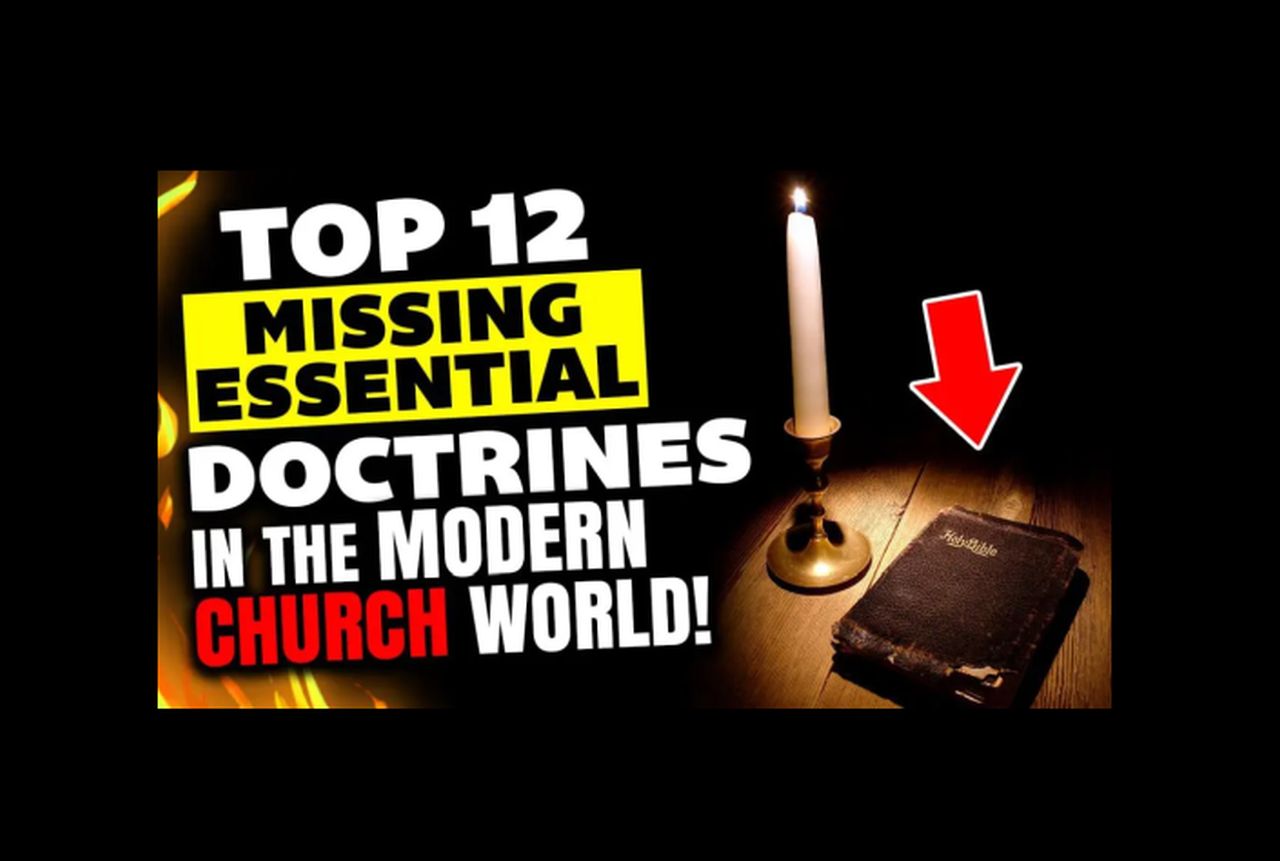
DOES THIS SOUND LIKE YOUR “CHURCH” OR FAVORITE PREACHER? It’s real simple… if they are not preaching the cardinal doctrines of the original Gospel given to us in the New Testament, they are preaching “another gospel” and are “accursed.” (Galatians 1:6-9).
 “For MANY DECEIVERS ARE ENTERED INTO THE WORLD, who confess not that Jesus Christ is come in the flesh. This is a deceiver and an antichrist. 8 Look to yourselves, that we lose not those things which we have wrought, but that we receive a full reward. 9 Whosoever transgresseth, and abideth not in the doctrine of Christ, hath not God. He that abideth in the doctrine of Christ, he hath both the Father and the Son. 10 If there come any unto you, and bring not this doctrine, receive him not into your house, neither bid him God speed: 11 For he that biddeth him God speed is partaker of his evil deeds.” 2 John 1:7-11
Modern church wolves refuse to preach the original Gospel of Jesus Christ from the pages of Holy Scripture and in the power of the Holy Ghost. No, instead they preach sermonettes that cater to the self-worshiping idolaters they entertain and collect money from (2 Timothy 3:1-7). They don’t even use the King James Bible but rather some cheap counterfeit. Their ear-tickling topics range from healing damaged emotions, 5 love languages, best life now, recovery, learning to love yourSELF, coping platitudes, loneliness, psychobabble band aids, law of attraction, being a successful single, purpose driven delusionment, etc.
LOTS of lying going on when we have counterfeits peddling affirmation without salvation, the “promise” of things “getting better” when their prey are heading straight to hell. Especially certain social media platforms are flooded with this false gospel coming out of “Christians.” There is no sin or repentance in their message which alone identifies it as a false gospel. You see, the things that are happening to the sinners around us are allowed by God in order to lead them to repentance and yet, the counterfeits among us are assuring those sinners it’s all going to get better and never giving them the 10 Commandments to show them they are sinners (Galatians 3:24) and then, leading them to Jesus (Romans 10:9-10, 13, etc.). 10 Commandments Evangelism
In the modern church world, there is …..
No cross. No Jesus. No blood. No judgment. No sin. No repentance. No hell. No readiness for the soon return of Jesus. No Heaven. No equipping preparation for ministry. No Scripture memory. No holiness. No Messianic prophecies and their fulfillment. No Christology. No fear of God. No repentance. etc., all of which are Bible doctrines essential to salvation and/or essential to sound foundation in Christ and are missing in the modern church world.
“Study to shew thyself approved unto God, a workman that needeth not to be ashamed, rightly dividing the word of truth.” 2 Timothy 2:15
THE TOP ESSENTIAL BIBLICAL DOCTRINES NEVER HEARD IN THE APOSTATE MODERN CHURCH WORLD!
- The divinity of Jesus Christ (John 1:1-4, 14; 1 Timothy 3:16). | Jesus Christ is God
- The virgin birth of the only begotten Son of God (Isaiah 7:14; Matthew 1:23). | The Virgin Birth of Jesus
- The essential precious blood of Jesus Christ (Matthew 26:28; Hebrews 9:22; 1 Peter 1:18-19). | The Blood
- The inherent fallen nature of mankind (Genesis 6:5, 12; Jeremiah 17:9; Romans 7:18). | Fallen, Sinful Man
- Worshipping God not idols (Exodus 20:3-5). | Idolatry
- The essential doctrine and necessity of repentance (Luke 13:3). | Repentance
- The Return of Christ and being ready for it (Luke 12:40; 21:34-36). | The Return
- Who Jesus is returning for and who will be shut out of His eternal kingdom (Matthew 25:1-13; Ephesians 5:25-27). | Ready for Christ’s Return
- The essential of enduring to the end to be with Christ eternally, initial and final salvation (Matthew 10:22; 24:13; Hebrews 3:6, 12-15; 10:26-30; Revelation 2:26). | Enduring to the End
- The essential daily cross, the crucified life, which Jesus required in following Him (Luke 9:23-24). | Living the Crucified Life
- Forgiving all others from the heart (Matthew 18:21-35). | Forgiveness
- Walking in God’s love (Ephesians 5:1). | The Love Walk
- Holiness – including the necessity of personal holiness (Hebrews 12:14; 1 Peter 1:15-16). | Holiness
- Judgment (Psalms 9:15-17). | Judgment
- Hell (Matthew 8:12; Mark 3:29; Luke 16:19-31). | Hell
- Fearing God (Psalms 2:11; Luke 12:4-5). | Fearing God
When’s the last time you heard verses like this in the modern church?
 “So likewise, whosoever he be of you that forsaketh not all that he hath, he cannot be my disciple.” Luke 14:33
“Whosoever shall seek to save his life shall lose it; and whosoever shall lose his life shall preserve it.” Luke 17:33
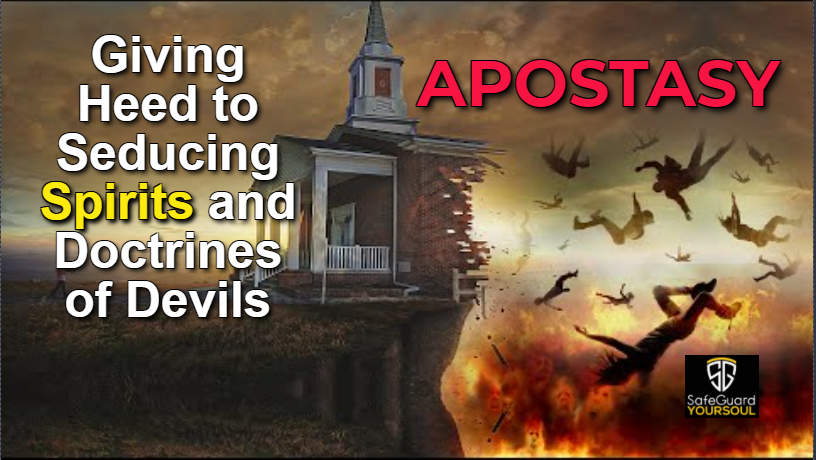
The modern church is going down in flames into the flames of hell. It cannot be reformed. Come out from it.
“And I heard another voice from heaven, saying, Come out of her, my people, that ye be not partakers of her sins, and that ye receive not of her plagues.” Revelation 18:4
In 2 Timothy 4:3 to “endure sound doctrine” means to hold oneself accountable to it. WHAT’s at the root of those who refuse to “endure sound doctrine”? – They simply do not love Jesus like He commanded them to (Matthew 22:37-39). They profess Christ as Savior and yet love self supremely and therefore serve the god of self. The Holy Ghost through Paul told us this of those who have a mere “form of godliness” in the last day resumé found in 2 Timothy 3:1-7.
Notice by divine design the very first thing he reveals is that “men shall be lovers of their own selves.” All the following evil comes out of self love, refusal to love God supremely and therefore repent, deny self, take up the cross and follow Jesus:
“This know also, that in the last days perilous times shall come. 2 For men shall be lovers of their own selves, covetous, boasters, proud, blasphemers, disobedient to parents, unthankful, unholy, 3 Without natural affection, trucebreakers, false accusers, incontinent, fierce, despisers of those that are good, 4 Traitors, heady, highminded, lovers of pleasures more than lovers of God; 5 Having a form of godliness, but denying the power thereof: from such turn away. 6 For of this sort are they which creep into houses, and lead captive silly women laden with sins, led away with divers lusts, 7 Ever learning, and never able to come to the knowledge of the truth.” 2 Timothy 3:1-7
God is toppling all the heart idols (Ezekiel 14:3)… because He’s Jealous and wants us looking to Him and not these mere men, these vile wolves, these celebrity sinners posing as His representatives (Exodus 34:14).
“For thou shalt worship no other god: for the LORD, whose name is Jealous, is a jealous God:” Exodus 34:14
Support | STORE | Podcasts | The Return of Christ | Stewardship | Apostate Modern Church Exposed | Beware of the BUZZ WORD Bandits [podcast] | Preach the Word | Wolves Exposed

Abiding
Fulfilling Your Calling [podcast]

“And say to Archippus, Take heed to the ministry which thou hast received in the Lord, that thou fulfil it.” Colossians 4:17
MINISTRY which pleases God is simply helping people know and grow in Christ for themselves – by the cross life and getting into HIS Word for themselves so they can follow HIM, not you! True ministry fosters in the hearers faith in God, not the preacher or local church organization! Read 1 Corinthians 2:1-5; 2 Corinthians 1:9; 3:5; 4:5.
Your communications and ministry are fed and fueled by your personal daily study and knowledge of God’s Word (Proverbs 22:17-21; 2 Timothy 2:15).
Ephesians 4:1-14
“I therefore, the prisoner of the Lord, beseech you that ye walk worthy of the vocation wherewith ye are called, 2 With all lowliness and meekness, with longsuffering, forbearing one another in love; 3 Endeavouring to keep the unity of the Spirit in the bond of peace. 4 There is one body, and one Spirit, even as ye are called in one hope of your calling; 5 One Lord, one faith, one baptism, 6 One God and Father of all, who is above all, and through all, and in you all. 7 But unto every one of us is given grace according to the measure of the gift of Christ. 8 Wherefore he saith, When he ascended up on high, he led captivity captive, and gave gifts unto men. 9 (Now that he ascended, what is it but that he also descended first into the lower parts of the earth? 10 He that descended is the same also that ascended up far above all heavens, that he might fill all things.) 11 And he gave some, apostles; and some, prophets; and some, evangelists; and some, pastors and teachers; 12 For the perfecting (equipping, maturing) of the saints, for the work of the ministry, for the edifying of the body of Christ: 13 Till we all come in the unity of the faith, and of the knowledge of the Son of God, unto a perfect man, unto the measure of the stature of the fulness of Christ: 14 That we henceforth be no more children, tossed to and fro, and carried about with every wind of doctrine, by the sleight of men, and cunning craftiness, whereby they lie in wait to deceive;” Ephesians 4:1-14
Ephesians | Galatians Outline | Grounded in Grace | 100’s of Christ-centered, Scripture-rich podcasts for your edification in Christ. |
Support | STORE | Podcasts | Colossians | Upholding Jesus | H.O.T. Bible Study [podcast] | Divine Blessings | Exhort One Another Daily | The Return of Christ | The Joy of Fulfilling the Great Commission | The Love of Many Shall Wax Cold | Lie of the Ages (book) | Soul Damning Sins (small book) | Why We Need not Fear Death | Revelation Bombshell!


Abiding
Swept Away in the “Strong Delusion” [podcast]

Recorded at a fellowship in Houston, Texas
God Himself personally sends a “strong delusion” to all who do not love His truth so that they WILL believe lies. He greases their pole to hell. That’s how personally He takes it when people call Him a liar by not believing His Word.
“Even him, whose coming is after the working of Satan with all power and signs and lying wonders, 10 and with all deceivableness of unrighteousness in them that perish; because they received not the love of the truth, that they might be saved. 11 And for this cause God shall send them strong delusion, that they should believe a lie: 12 that they all might be damned who believed not the truth, but had pleasure in unrighteousness.” 2 Thessalonians 2:9-12
“Beware lest any man spoil you through philosophy and vain deceit, after the tradition of men, after the rudiments of the world, and not after Christ.” Colossians 2:8
Notice “of God” and “NOT of God”
“He that is OF GOD heareth God’s words: ye therefore hear them not, because ye are NOT OF GOD.” John 8:47
Support | STORE | Podcasts | Because You Care Page | The Greatest of these is Charity | Be Ready in the Morning [podcast] | The Sure Mercies of David [podcast] | That Repentance and Remission of Sins should be Preached [podcast] | At His Feet | Prepared to be Used of God | Grace and Truth Bible School [modules] | 7 Study Guides to a Greater Foundation in Christ








Top 12 Missing Essential Doctrines in the Modern Church World! [podcast]

Fulfilling Your Calling [podcast]

Swept Away in the “Strong Delusion” [podcast]

Jesus Saved Jose! Mission Mexico Part 51

Dead, Buried, and Raised Up Daily [podcast]

Nourished Up and Enduring to the End [podcast]

Naming Names: Is It Biblical? [podcast]

Paul’s Prophetic Vision of Heretical Wolves Flooding the Church World During the Whole New Testament Era [podcast]

The Surrender of the Cross [podcast]

Sola Scriptura vs the Catholic Church and its Traditions [podcast]

“Pastors According to Mine Heart” [podcast]

Ridiculous King James Bible Corrections

Darwin’s Demise: What they don’t want You to know about Charles Darwin! [podcast]

Beware of “Private Interpretation” [podcast]

The Benefits of Knowing and Delighting in the LORD [podcast]

John Wesley on Calvinism, Once Saved Always Saved, and Conditional Security

Why Did God Give Us His Word? [podcast]
Paul’s Prophetic Vision of Heretical Wolves Flooding the Church World During the Whole New Testament Era [podcast]
Beware of “Private Interpretation” [podcast]
Naming Names: Is It Biblical? [podcast]
Top 12 Missing Essential Doctrines in the Modern Church World! [podcast]

The Flesh will Never be Reformed it Must be Crucified [podcast]

The High Treason of False Leaders [podcast]
Nourished Up and Enduring to the End [podcast]

A PLACE CALLED HELL [podcast]
“Pastors According to Mine Heart” [podcast]

Arrogant Bible Correctors Rebuked

Nicolaitan Nightmare [podcast]
Sola Scriptura vs the Catholic Church and its Traditions [podcast]

Doubt Casting Wolves Exposed
Top 12 Missing Essential Doctrines in the Modern Church World! [podcast]
Fulfilling Your Calling [podcast]
Swept Away in the “Strong Delusion” [podcast]






Todd
September 30, 2023 at 12:20 pm
Hope you are well Gregory. May God’s blessings abound to you in the name of Jesus Christ our LORD. Glad to have you as a friend. Todd