






Excerpt from the book I Die Daily
“But God forbid that I should glory, save in the cross of our Lord Jesus Christ, by whom the world is crucified unto me, and I unto the world.” Galatians 6:14
“The cross” is all about relationship. “The blood of His cross” purchased us back to God from sin (Acts 20:28; Col. 1:20). Paul here says in essence that His love for the Savior, who bled for his sins, warranted his full allegiance to Him and crucifixion with Him. Nothing was more important to this servant apostle than knowing Christ and remaining in Him (1 Cor. 9:27; Phil. 3:7-10). All else was counted as “dung” compared to the supreme and surpassing importance of his relationship with Jesus Christ. This is the “mark” the apostle pressed “toward” with all of his being (Phil. 3:7-14). Paul knew the eternal danger of not keeping under the sins of his body and in the end becoming a “castaway.” (1 Cor. 9:27) He was fully aware of the five specific sins that kept God’s own people out of their promised land, and would keep him out of the promised land of Heaven if he allowed his sinful nature, which was at “enmity against God,” to rule in his life, bringing defilement in the eyes of a holy God (Mk. 7:20-23; Rom. 8:7; 1 Cor. 9:27-10:12; Heb. 12:14-16). God’s stated will is to bring people “out from” spiritual death and “in” to the place of His divine life, that He might preserve them alive (with His life—Deut. 6:23-24; Rom. 8:1-13).
The purpose and point of “the cross” is not that God is trying to deprive anyone of something valuable, but rather that He seeks relationship with that person—“for our good always.” (Deut. 6:23-24) It is by the blood of Christ’s cross that we are saved, and “through faith” in Him that we are “kept.” (1 Pet. 1:5) Those in Him must “endure to the end.” (Matt. 10:22; 24:13)
It is “the goodness of God leadeth thee to repentance.” (Rom. 2:4) From the beginning, He made us for relationship with Him (Exod. 25:8). This is why Jesus came to the earth—“And this is life eternal (the reason for it), that they might know thee the only true God, and Jesus Christ, whom thou hast sent.” (John 17:3)
Since the LORD is holy, and the self-life or nature is sinful and at enmity with Him, it must be put to death because He who is “Holy, holy, holy” will not commune with a sinful vessel (Isa. 6:3; 59:2; 2 Cor. 6:14 -7:1; 1 Jn. 1:3-9; Rev. 4:8). Sin breaks that fellowship (Rom. 6:23). Like it or not, “the wages of sin is” still spiritual “death” and always will be, due to God’s eternal and unchangeable nature of holiness. The cross of Christ is the answer.
Holiness or pureness of heart and thought is of supreme importance in the eyes of the Almighty. His eyes are upon our hearts and the thoughts that we are dwelling upon (1 Sam. 16:7; Ps. 51:10; 139:23-24; Prov. 15:3; Matt. 5:8; Acts 15:9). The cross, which must be daily applied to the inner life by the disciple, is the implement of death to the sinfully self-loving, self-driven, self-willed, and self -consumed life. The fervent worship of Jesus, which always leads one to the application of the cross, brings the glorious liberty that only Christ can grant—to be fully filled, led, and made free by the Holy Ghost of God.
One manifests his love in relationship with the LORD when he chooses to obey Him in denying the iniquitous deeds of the sinful nature, in order that he might commune with and serve the Father and Savior, who died on the cross to reconcile him to the One who is “Holy, holy, holy.” (Isa. 6:3; 1 John 1:3-10; Rev. 4:8) Otherwise, sin will prevent his relationship with the LORD. Sin must be confessed to be cleansed (1 John 1:9). Saving faith will always drive one to obey Christ, which includes the premium He places on His people being “pure in heart.” (Matt. 5:8; 1 John 2:3-5; James 1:22) Christ told us that only the “pure in heart” will be blessed.” (Matt. 5:8) If one who has been saved goes back and ceases to obey Christ, it’s because he no longer loves Christ supremely, nor does he now possess saving faith (1 Tim. 5:12; 2 Tim. 4:10; James 2; 2 Pet. 2:20-21).
If a person does not want more of Jesus, he is not a part of the remnant of Christ’s elect (Rev. 17:14). If a person is always looking to circumvent the “daily” cross, and looking for doctrinal ways to justify not giving over his whole will and being to Christ, he is willingly lost (Rom. 12:1). Those who are truly His “depart from iniquity,” as they daily “present” their “bodies a living sacrifice, holy and acceptable unto God.” (Rom. 12:1; 2 Tim. 2:19)
If one will guard his heart and be preserved to the end in his relationship with Christ, he must beware of the numerous cross-less and Calvinistic wolves who occupy positions of leadership and influence in the modern church world. Millions have already been deceived and will be shocked on Judgment Day (Matt. 7:15-23; Luke 13:27-28).
The LORD bless you richly today, and fill you with His Holy Ghost afresh to subdue your own self-life, that Jesus’ life might be manifested in your life (2 Cor. 4:10-12). God is able as we do things His way. His grace is fully sufficient for us (Rom. 6:14; 1 Cor. 15:10; 2 Cor. 12:9-10).
In God’s economy, holiness in His people is a must, and it’s the blood of Christ that enables the recipient and possessor of His salvation to experience overcoming victory through the cross (Rom. 6; Heb. 12:14; 1 Pet. 1:15-16; Rev. 21:8, 27). His enabling grace was made possible through Christ’s redemption, and there is therefore no excuse for living in sin (Rom. 6). There can be no variance from such biblical truth in true Christian preaching. Sin separates and hell awaits all who die in sin—no matter what their previous relationship with God may have been (Rev. 21:8, 27; 22:11, 15). Relationship with Christ, personal holiness, the cross, overcoming sin, and repentance, go hand in hand; and today, none of these essentials can be found prevalent in the mouths of most so-called “Christian” pastors, writers, and leaders (Isa. 9:16; 1 Cor. 1:18; Phil. 3:18-19). By “the blood of his cross,” Christ made us holy in our position with God, and He commands each of us to take up our own cross and count ourselves crucified with Him in our daily lives, that His holiness might be manifest experientially in our lives (Rom. 6; 2 Cor. 4:10-11; Gal. 2:20).
David Kupelian, vice president and managing editor of WorldNetDaily.com, writes:
“‘I die daily’
In ages past, Christians dwelt a lot more on the concept of taking up the ‘cross’ than they do these days. Today, the phrase ‘it’s my cross to bear’ is usually a somewhat self-congratulatory reference to the fact that we have to put up with a vexing medical condition, or a child in trouble with the law, or perhaps an overbearing, live-in mother-in law.
Admonitions from the pulpit may not shed much more light. Oh sure, a well-intentioned minister will reverently read one of the scriptures cited above on ‘taking up the cross,’ and he might even briefly plug the ideal of self-denial. But too often this amounts to a polite nod to a notion that seems both archaic and almost irrelevant, or at least unattainable, and the pastor just moves on to more pleasant topics—like how grateful we are that we’re saved by Christ’s death and resurrection.
It wasn’t always so. Throughout past centuries, Christian philosophers and mystics dwelt at length on the crucial, life-and-death need for repentance, resignation, ‘mortification,’ the ‘crucifixion’ of sin in man, and the ‘death of the carnal man’ or of ‘the creaturely self’ and so on. The Apostle Paul said it most powerfully and succinctly when he wrote: ‘I die daily.’”
If they are not crucified on the cross we are instructed to “take up,” the deeds of the body will cause one to displease the LORD by the manifestation of the soul damning “works of the flesh.” (Gal. 5:19-21)
There is perhaps room to see Paul’s words “I die daily” both concerning our lives being laid down and subject to being martyred daily and also in dying daily to self that the Savior might reign (John 12:14; 2 Cor. 4:10-12). These two truths seem to dovetail together; Being dead to self is going to be essential to dying as a martyr.
The Two Cross Deaths
There are two kinds of dying seen in the Scriptures—positional and experiential.
Positional death speaks of our oneness with the death Christ experienced when He died on the cross, when he did “taste death for every man.” (Heb. 2:9) Positionally we are dead and buried with Him (Rom. 6:3-4).
Experiential death of the inner self-life = the willing crucifixion of the personal will out of a far surpassing love for and desire to see Christ reign supreme. When we love Him more than ourselves, we will die so He can live. Life can only spring out of death (Jn. 12:24). The problem is that most people who claim to be Christians love themselves more than Christ (2 Tim. 3:1-7). They have freely chosen to resist loving the LORD with all of their hearts, souls, minds, and strength (Matt. 22:37-40).
The Positional Cross
The word “baptized” is used in more than one way in the Bible. It is used to express both a literal and a figurative immersion. Immersion simply means being placed all the way into. In Romans 6, speaking figuratively of our baptism into Christ (not water), the apostle writes:
“Know ye not, that so many of us as were baptized into Jesus Christ were baptized into his death? Therefore we are buried with him by baptism into death: that like as Christ was raised up from the dead by the glory of the Father, even so we also should walk in newness of life.” Romans 6:3-4
We have been immersed (baptized) completely into Christ figuratively—“we are buried with him by baptism into death.”
Our justification and sanctification are wrapped up in being buried with Christ. We are then raised with Him and enabled to “walk in newness of life.” Our position—buried with and in Christ—enables the literally manifested life of Christ to be experienced in our daily lives.
We are united with Christ in His death, burial, and resurrection. The phrase “in Christ,” seen throughout New Testament Scripture, is short for our immersion into Him—His death, burial, and resurrection and our own death, burial, and resurrection with Him. Jesus died and was raised up once, and we died and are raised up with Him in type/proxy.
“Even when we were dead in sins, hath quickened us (made us alive) together with Christ, (by grace ye are saved;) And hath raised us up together, and made us sit together in heavenly places in Christ Jesus: That in the ages to come he might shew the exceeding riches of his grace in his kindness toward us through Christ Jesus.” Ephesians 2:5-7

THE LORD has “raised up” those He has found and saved out of their sinful state and into His eternal kingdom. They are “raised up” to “sit together” with Him—“in heavenly places in Christ Jesus.” This He did for His eternal purposes. He “made us sit together in heavenly places in Christ Jesus,” so this is our positional standing with Him; yet His desire is that such a positional place become an experiential reality in our “daily” lives, as we “follow” Him. And how does such a translation happen? This manifested “newness of life” occurs as we lay down our self-will in full surrender to His Majesty, crying out “Father, into thy hands I commend my spirit.” (Luke 23:46) Victorious living in this “newness of life” happens when we follow His instructions to “deny” ourselves and “take up” the cross, and let His will and life reign in our mortal bodies in place of our own. This positional seating in Christ and with God in heavenly places becomes a reality in our daily experience as we sentence our lives to death, being rooted in Christ, as we “take root downward.” (Isa 37:31) He then raises us upward in “newness of life”—with His life to bear fruit to His pleasing.
Our positional place with Him means that we died with Him, and we are seated in heavenly places in Christ. Yet, we are still on earth and subject to temptations. This is why the experiential cross is so important.
The Experiential Cross
“For if we have been planted together in the likeness of his death, we shall be also in the likeness of his resurrection: Knowing this, that our old man is crucified with him, that the body of sin might be destroyed, that henceforth we should not serve sin. For he that is dead is freed from sin.” Romans 6:5-6
The believer, who is buried with Christ and raised in “newness of life,” is told that he “should not serve sin.” Serving sin or the Savior is always going to be a choice as long as we are on the earth.
“For sin shall not have dominion over you: for ye are not under the law, but under grace.” Romans 6:14
Paul told us that he had to keep under the sinful desires/deeds of his body so that he would not become a “castaway” from Christ in the end (1 Cor. 9:27). What can we learn from this? Our relationship with Christ is both positional and practical. It began in our past when we were born again, and exists now daily as we deny ourselves, pick up our cross, and follow Him. This is our personal participation with Christ as we take up the yoke and walk with our Master—His blessed Gospel—dying, being buried and then raised up daily with Him.
In studying the subject of dying daily and Paul’s words in 1 Corinthians 15:31, “I die daily,” I have read a few commentaries which seemed to only acknowledge the positional death of the believer. This is because the misguided Calvinist wants no part of anything that might cost him the suffering of death to his own will. He wants to believe that God did it all, and subsequently ignores the commandments of the very same God for him to personally experience dying to self and self-will. The Calvinist is a moral coward who wants the crown without the cross, so he objects to and flees any notion of personal responsibility. In the face of a mountain of Scriptural commands and conditional blessings, he insists that there are no requirements placed upon him. If that were so, why were we then given the many commandments of Christ and His holy apostles? The diabolical dynamic of Calvinism is to escape and deny by any means possible, any teaching that calls for a personal cost. In contrast, the Bible teaches us that to lose is to gain (Matt. 10:3839; Jn. 12:24-26; Phil. 1:21). The spiritual coward wants to hide away in his false security zone, where he is protected from all that would cause him to suffer—the circumcising sword of the Word, persecutions, tribulations, dying to sin and self, purging, and the chastening of the LORD. This is why this theology always migrates to the line of least resistance to the flesh—no baptism in the Holy Spirit or lordship of Christ, due to the myth of ‘once saved always saved,’ and a pre-tribulation rapture. (Actually, although he holds no strong position on the exact timing of Christ’s return, this writer believes that there is the possibility of a pre-tribulation rapture. In the previous statement, I was just making a point.)
Some may despise the idea that people teach the Scripture “I die daily” as something that needs to be done by the individual recipient of salvation. The Calvinistically infected mindset believes that everything that needs to be done has already been done, and that man has no choice or accountability in the matter of participation. It’s true that Christ initiated and earned our salvation, and that without Him we are hopeless. It is also just as true that this same Jesus instructed those who would follow Him to be “daily” crucified with Him, by denying themselves and taking up their crosses. Romans 6 says “Our old man is crucified with him” (v 6), and yet it also says:
- “What shall we say then? Shall we continue in sin, that grace may abound?” (v 1)—The question “Shall we” denotes volition, option, and choice.
- “For if we have been planted together in the likeness of his death, we shall be also in the likeness of his resurrection.” (v 5)—The “if” here speaks of volition, option, and choice.
- “Reckon ye also yourselves to be dead indeed unto sin, but alive unto God through Jesus Christ our Lord.” (v 11)
- “Let not sin therefore reign in your mortal body, that ye should obey it in the lusts thereof.” (v 12)
- “Neither yield ye your members as instruments of unrighteousness unto sin: but yield yourselves unto God, as those that are alive from the dead, and your members as instruments of righteousness unto God.” (v 13)
- “Know ye not, that to whom ye yield yourselves servants to obey, his servants ye are to whom ye obey; whether of sin unto death, or of obedience unto righteousness?” (v 16)
The honest student of the Bible, the one that refuses to allow himself to be infected with any predisposed notion, will see this.
The work of Christ to position us in heavenly places is a settled fact and truth (Eph. 2:6). As we are discovering from Holy Writ, the experiential cross of the individual must be taken up and died upon. Paul the apostle of Christ said, “I KEEP under my body.” (1 Cor. 9:27) The denial of the self-life and following Jesus is only accomplished by the enabling grace and Holy Spirit of the LORD, who is perfecting that which concerns us as He continues His good work in us—we who have been apprehended by Him for His purpose and glory (Ps. 138:8; Phil. 1:6; 2:12-13). This occurs as we “work out” our “salvation with fear and trembling.” (Phil. 2:1213) It is “through the Spirit” that we are blessed and empowered to “mortify the deeds of the body.” (Rom. 8:13)
There are those who know only the positional application of the cross, where we “are dead” and buried with Christ, and raised up by the faith of the operation of
God, and seated together in heavenly places in Christ (Rom. 6:3-4; Eph. 2:6; Col. 3:3). In spite of understanding that we are dead, buried, and raised up with Christ, men misunderstand or do not know about the doctrine of the daily cross—the keeping under or subduing of the sinful nature on a daily basis. The essential nature of such a biblical and vital truth is tragically seldom, if ever, spoken about in most “ministry” that transpires in the modern church world.
Love is a daily test.
Love is a daily choice.
That person who has a mere “form of godliness” and yet denies the power of Christ to reign in his life, will never experience the fellowship of His sufferings and the blessed “fruit” He desires to bring forth “upward” to His glory (Isa. 37:31; Rom. 8:11; 2 Tim. 3:5). Many seek to render rote adherence to the command of Christ while lacking the positional revelation of the death, burial, and resurrection of the Gospel. In contrast, the true disciple of Christ is that one who is driven by the greater desire and love that possesses his heart for Christ. His love for Jesus far surpasses his love for self and the pleasures of this world.
Throughout Holy Scripture, we are afforded the blessing of witnessing the joyful delight many had for the LORD. Here is a sampling:
“Whom have I in heaven but thee? and there is none upon earth that I desire beside thee.” Psalms 73:25
“That I may know him, and the power of his resurrection, and the fellowship of his sufferings, being made conformable unto his death … Brethren, I count not myself to have apprehended: but this one thing I do, forgetting those things which are behind, and reaching forth unto those things which are before, I press toward the mark for the prize of the high calling of God in Christ Jesus.” Philippians 3:10, 13-14
“One thing have I desired of the LORD, that will I seek after; that I may dwell in the house of the LORD all the days of my life, to behold the beauty of the LORD, and to enquire in his temple.” Psalms 27:4
The “one thing” that most deeply and profoundly moved these men and women was knowing Him more and more, seeking His face in earnest as they experienced Him daily.
“Behold, what manner of love the Father hath bestowed upon us, that we should be called the sons of God: therefore the world knoweth us not, because it knew him not.” 1 John 3:1
The love we are blessed to possess of Him, and the cross, go hand in hand. Because of His love in us, and our own decision to reciprocate that love, we make a daily choice to experience the cross. The daily cross is the application of death applied into our life and will in order that Christ’s will and life might be in control and reign in our mortal bodies (2 Cor. 4:10-12).
God made man with a choice (Deut. 30:19; Josh. 24:15; Gal. 6:7-9). Firstly, it makes no sense at all biblically speaking, to say that the person and volitional will of the individual believer plays no part in his decisions. That is a diabolical and Calvinistic heresy that has no biblical ground beneath it. Those in denial of the cross Jesus commanded us to “daily” take up, simply do not wish to deny self and sin as Christ commanded. Many of them have placed the teachings of mere men—who were heretics—above God’s Word. Instead of setting aside the “doctrines of men” for Christ’s teachings, they set the teachings of the Son of God aside for the teachings of mere men (like John Calvin). Like the Pharisees of Christ’s day, these men love their traditions more than the LORD and His Word (Mark 7:6-9). Every generation in history has its pseudo-theologians, who cast away the Word of God for their own traditions of mere men. Every day also has a remnant, which says, “Let God be true and every man a liar.” (Rom. 3:4)
Letting “God be true” in our personal lives includes silencing the call of the sinful nature, Satan, and the voices of the myriad of cross-denying wolves, who come in Christ’s name yet do not preach His original Gospel.
“And he said to them all, If any man will come after me, let him deny himself, and take up his cross daily, and follow me.” Luke 9:23
Throughout His teachings, the Son of God taught us that following Him was a “daily” experience and not a onetime event. He made it abundantly clear that this “daily” experience of His life was only possible in conjunction with the disciple’s self-denial, and his choosing to prefer the Savior above himself (Matt. 16:24-26; Luke 9:23-24; John 12:23-26).
“Many admit the positional death (at initial salvation), but there is also a present salvation (progressive sanctification or transformation) that is experiential, the daily death, burial and resurrection. The Leviticus 1 burnt offering occurred daily. The first thing the invader always did at the Temple was to do away with the daily sacrifice. This will also be 1st order of business for the antichrist, and for those who possess the spirit of antichrist today.”
Christ told us that if we would follow Him, we must “daily” take up the cross and follow (Luke. 9:23-24). As one writer has pointed out here, the daily sacrifice is attacked by the invader and enemy of our souls, and this is seen in the absence of such preaching in that which calls itself the church today. The Bible tells us that “Satan” has his “ministers,” and these men are “deceitful workers” who have infiltrated the modern church and so-called higher learning institutions (seminaries, etc.). See 2 Cor. 11:12-15. These “false apostles,” who are imposters, have hi-jacked the pulpits and publishing houses of this last hour with a message that is void of the cross and is sending many to eternal darkness (2 Pet. 2:1-3). They can be identified as the “enemies of the cross of Christ,” who do not take up their own crosses daily, and therefore do not preach the cross as a daily implement of death to self and self denial (2 Cor. 11:12-15; Phil. 3:18-19). Instead, they “mind earthly things,” even using Scripture to justify their misplaced affections (Phil. 3:18-19).
The “adversary, the devil,” can “devour” us by drawing and seducing us out from our daily and experiential death and burial with Christ, where we are “hid with Christ in God.” (Col. 3:3) When the enemy is able to draw one out into the open, he is then vulnerable as a deer that comes out of the forest and is no longer hidden and protected by the camouflage of the trees. When a deer is out in the open and in a prairie clearing, he is then prey for predators. The lions can then see and smell him, and will seek to devour him.
Taking up the daily cross and experiencing knowing Him in “the fellowship of his sufferings” demonstrates our agreement with God that we are utterly depraved in our Adamic nature, and wholly in need of His righteousness and life to reign in our “mortal” bodies (Rom. 6; 2 Cor. 4:10-11; Phil. 3:10).
In this following passage, watch for the daily experiential cross to be practiced by every true disciple of Jesus:
“Always (daily) bearing about in the body the dying of the Lord Jesus, that the life also of Jesus might be made manifest (a reality) in our body. For we which live are alway (daily) delivered unto death for Jesus’ sake, that the life also of Jesus might be made manifest in our mortal flesh.” 2 Corinthians 4:10-11
As we related earlier in this chapter, the removal of the “daily” cross is the work of our “adversary.” The same vulnerability (removal of the daily cross) exists today wherever the redeemed saint allows for the “daily” sacrifice to be stolen from his life. The daily presenting of ourselves to Him as “a living sacrifice” is our “reasonable service” in light of what He has done for us (Rom. 12:1).
Because He loves us as His own, Christ instructs those He saves to “daily” deny themselves and take up their crosses to follow Him (Luke. 9:23-24). It is only in being
“dead” to sin and self that our lives “are hid with Christ in God.”
“For ye are dead, and your life is hid with Christ in God.” Colossians 3:3
“Precious Things” Stolen
“There is a conspiracy of her prophets (leaders)in the midst thereof, like a roaring lion ravening the prey; they have devoured souls; they have taken the treasure and precious things; they have made her many widows in the midst thereof.” Ezekiel 22:25
Ezekiel the prophet of God is writing here concerning the leaders of the very nation of Israel. This “conspiracy” he speaks of is a reality and not a theory. We have the divine word on it here. The Bible tells us definitively here that “There is a conspiracy of her prophets” or leaders who claim to be representing the LORD. We are also informed here that these beguilers “have taken the treasure and precious things.” They have stolen away those things which are most important for believers to be aware of, believe, dwell upon, and do.
The enemy invader is now empowering his agents in the pulpits and those who hold the pens of modern publishing. This is seen in the deafening silence of the modern messages we hear. There is a gross lack of hearing the essential truths of Holy Writ spoken or written by men who have positions of influence. In fact, in fulfillment of last day’s prophecy, hoards of self-serving people (who claim to be Christians) are heaping these smooth and deceitful messages, and the messengers who give them, to themselves. Their un-crucified sinful nature seeks out ear-tickling messages that feed their sinful nature instead of beckoning them to crucify it (Rom. 6; 12:1).
In his messages, the beguiling leader feeds the sinful nature, while the leader who is a true servant of Christ calls for the denial of and death of it (Rom. 16:17-18; Phil. 3:1-3; 18-21; 2 Pet. 2:1-3).
Many who love the truth, and therefore deeply desire more of Christ, are coming out of the cross-less and apostate modern church system. Like Paul, their deep desire is “to know him, and the power of his resurrection, and the fellowship of his sufferings, being made conformable unto his death.” (Phil. 3:10) They have seen the folly and the “famine in the land, not a famine of bread, nor a thirst for water, but of hearing the words of the LORD.” (Amos 8:11)
Where We Stand
In a passage often referred to as defining the true Gospel, the apostle Paul reveals that this “gospel” is that “wherein ye stand.”
“Moreover, brethren, I declare unto you the gospel which I preached unto you, which also ye have received, and wherein ye stand.” 1 Corinthians 15:1-4
As those found and regenerated by Him who first loved us, we “stand” in the Gospel of Christ—both positionally and experientially. In fact, the very next words speak to the essential responsibility of personal participation of the individual recipient of His “so great salvation.” (Heb. 2:3)
“By which also ye are saved, IF ye keep in memory what I preached unto you, unless ye have believed in vain.” 1 Corinthians 15:2
The “if” here clearly denotes condition. Our salvation is contingent upon “if” we “keep in memory” the original “gospel” the apostle Paul preached, “unless ye have believed in vain.” Our initial salvation becomes ineffectual if we do not “continue” in Christ or “endure to the end.” (Matt. 10:22; Col. 1:23; Heb. 3:6, 12-15; 10:26-39; 2 Pet. 2:20-21)
Daily experiencing death to self and the raised up life of Christ, is essential to keeping in memory the work of Christ, the coming King.
See if you can identify both the positional and the experiential standing of the believer in this Colossians 3 passage:
“If ye then be risen with Christ, seek those things which are above, where Christ sitteth on the right hand of God. Set your affection on things above, not on things on the earth. For ye are dead, and your life is hid with Christ in God.” Colossians 3:1-3
He has accomplished salvation for us and we are thereby “risen with Christ,” positionally. In light of this, we should then follow suit in seeking “those things which are above, where Christ sitteth on the right hand of God.” This includes setting our “affection(s) on things above, not on things on the earth.” Positionally, we are to count ourselves “dead,” and consider that our lives are “hid with Christ in God.”
Some erroneously teach that the believer’s positional place with Christ is irreversible, but the Bible tells us differently in a myriad of places. Only when we keep our place or position “with Christ” are we “hid with Christ in God.” Otherwise we are not hidden away from the wrath of God and the enemy. Such a place of being “hid with Christ in God” is conditional upon the recipient of His salvation remaining in Him. One’s place with God is reversible if one does not “abide” or remain “in Christ.” Jesus told us that “If a man abide (remain) not in me, he is cast forth as a branch, and is withered; and men gather them, and cast them into the fire, and they are burned.” (Jn. 15:6) Our LORD also told us that there are those “which for a while believe, and in time of temptation fall away.” (Luke. 8:13) It should be more than obvious that someone could not possibly “fall away” from something he has not previously possessed. Also, the basic fact that Jesus invented the term “fall away” plainly reveals that such is possible.
That positional standing He purchased for us is ours only as we remain “with Christ,” and “if” a redeemed person chooses to cease following Christ, he is no longer “in Christ” or “with Christ,” and is therefore no longer the recipient of any of His blessings. The Father told us on several occasions that it is only in His only begotten Son that He is “well pleased,” so anyone presently outside of Him is not pleasing to God (Matt. 3:17).
The sacrifice of Christ is a fixed reality. He is invariable and unchanging (Mal. 3:6; Jn. 19:30; James 1:17). But the experiencing of the cross of Christ in the daily life of the recipient of His salvation is volitional. One must count all else “dung” compared to knowing Christ, and in order to “know him,” one must be willing to experience “the fellowship of his sufferings, being made conformable unto his death.” (Phil. 3:7-10).
All of Holy Scripture testifies to the truth that God’s blessings to individuals are conditional (Deut. 11:26-28; 28:1-67; 30:19-20). The fulfillment of His promises and blessings are contingent upon the obedience of the individual (Gal. 6:7-9; Heb. 6:11-12). The recipient of His free gift of eternal life must by faith “abide” or remain in Him, or he will be “cut off.” (Ezek. 33:12-13; Matt.
10:22; Luke 8:13; Rom. 11:19-22; 1 Cor. 15:2; Col. 1:23; Heb. 3:6, 12-15; 10:26-39; 2 Jn. 9; Rev. 2-3) This important subject is covered extensively in the book titled Lie of the Ages, which can be ordered on this site.
“Many of His Disciples Went Back”
In the record of John 6, we read of “disciples” who continued not with Christ after He taught them. They chose not to partake in His death and life. They did not want to suffer for His sake, and therefore “many of his disciples went back, and walked no more with him.”
“From that time many of his disciples went back, and walked no more with him.” John 6:66
These people forfeited their place with Christ and all the associated benefits, both here and eternally (Ezek. 33:12 -13). Suffering is part of following Christ, and those who “draw back,” not esteeming Christ and being unwilling to suffer for His sake, will lose out (Rom. 8:17; Phil. 1:29; Heb. 10:38-39; 1 Pet. 4:1-14; Rev. 2-3).
According to God’s Word, those who refuse to follow up in their daily lives with experiential living with Christ, partaking of His blessed sufferings and the associated benefits, will lose out on their positional place they once had with Him (2 Pet. 2:20-21). Those who after being bought by His blood, “deny him,” will also be denied by Him for having “trodden under foot the Son of God.” (2 Tim. 2:12; Heb. 10:29)
One will not experience His resurrection life if he refuses to experience a dying with Him—to self, sin, Satan, and this world.
Many today are seeking to gain, but they are trying to go around the cross. These people do not yet realize that it’s only in dying to self that God’s “gain” will come to them. It’s only in dying that they can live by the resurrecting power of God in Christ, who is “the resurrection and the life.” (Jn. 11:25) He promised to raise up by the power of His Holy Spirit those that be bowed down in death to self and sin (Ps. 145:15; Rom. 8:11). The LORD promises to raise upward in fruitfulness those that “take root downward.” (Isa. 37:31)
The cross is the place of safety—being in the center of God’s will. We are safe on the cross, buried, sunk down, and hidden in Christ while being “raised up” by His power and to His glory (Rom. 6:3-4; 8:11; Col. 2:11-12; 3:3). Beware of the wiles of Satan, who seeks to lure us off the cross where we are “hid with Christ in God.” (Col. 3:3) The enemy’s design is to keep you ignorant of the necessity of the cross—to keep you from experiencing Christ’s resurrection power. When you do choose to learn of Christ to get on the cross, the enemy’s scheme will be to get you to come down from that cross—to keep you from dying that Christ’s life might reign in you and over the enemy (Luke 10:18). Is this not what he did to our LORD? (Matt. 27:42)
The only way to have upward mobility—divine resurrection power—is to plant yourself deep into the death of Christ. The further down one descends, the more powerful the raising up will be (2 Cor. 4:10-12).
Jesus told us that we must lose our lives to gain His life and eternal life.
“Verily, verily, I say unto you, Except a corn of wheat fall into the ground and die, it abideth alone: but if it die, it bringeth forth much fruit. He that loveth his life shall lose it; and he that hateth his life in this world shall keep it unto life eternal.” John 12:24-25
PRAYER: Father, not my will but Thine be done. You must increase and I must decrease. I now this moment, choose to lay my life down—to die to self and all of its fleshly facets. I honor You, LORD Jesus and Father, and joyfully bow in humility before Your Majesty. Grant Your enabling grace to my life, so I might please You in all things. I am crucified with Christ. I am dead, and my life is hid with Christ in God. In Jesus’ Name, Amen.
Capture Points
- Discuss John 12:24-26 and what it means to “fall into the ground and die,” as pertains to Christ and also all of those who would follow Him.
- According to 1 Corinthians 15:1-4, what is “the gospel” that we stand in defined as? (KJV recommended)
- What did Jesus tell us was the purpose for which He came? John 17:3
100’s of Christ-centered, Scripture-rich podcasts for your edification in Christ.
Support | STORE | Podcasts | Jail/Prison Ministry | Mexico Mission here | All Ministry Updates | The Return of Christ | Stewardship | Apostate Modern Church Exposed | Beware of the BUZZ WORD Bandits [podcast] | Preach the Word | Wolves Exposed | 100’s of Christ-centered, Scripture-rich Podcasts | Knowing God | The Cross Life |


Abiding
Following the Faith of Abraham [podcast]

“There failed not ought of any good thing which the LORD had spoken unto the house of Israel; ALL came to pass.” Joshua 21:45
The LORD Keeps His Promises to His People
God could trust Abraham:
“For I know him, that he will command his children and his household after him, and they shall keep the way of the LORD, to do justice and judgment; that the LORD may bring upon Abraham that which he hath spoken of him.” Genesis 18:19
Of Abraham who lived by faith, the LORD says “For I know him” and if we love God, like Abraham, we are known of the LORD also.
“But if any man love God, the same is known of him.” 1 Corinthians 8:3
Does the unchanging God ever tell His people to leave where they are and go to another place? Yes.
“Now the LORD had said unto Abram, Get thee out of thy country, and from thy kindred, and from thy father’s house, unto a land that I will shew thee: 2 And I will make of thee a great nation, and I will bless thee, and make thy name great; and thou shalt be a blessing: 3 And I will bless them that bless thee, and curse him that curseth thee: and in thee shall all families of the earth be blessed. 4 So Abram departed, as the LORD had spoken unto him…” Genesis 12:1-4
Abraham met the condition and God fulfilled His promise. Could the LORD have blessed Abraham had Abraham not trusted and obeyed Him?
“But without faith it is impossible to please him: for he that cometh to God must believe that he is, and that he is a rewarder of them that diligently seek him.” Hebrews 11:6
“And he believed in the Lord; and he counted it to him for righteousness.” Genesis 15:6
“And the scripture was fulfilled which saith, Abraham believed God, and it was imputed unto him for righteousness: and he was called the Friend of God.” James 2:23
“I have planted, Apollos watered; but God gave the increase. 7 So then neither is he that planteth any thing, neither he that watereth; but God that giveth the increase. 8 Now he that planteth and he that watereth are one: and every man shall receive his own reward according to his own labour. 9 For we are labourers together with God: ye are God’s husbandry, ye are God’s building.” 1 Corinthians 3:6-9
“By faith Abraham, when he was called to go out into a place which he should after receive for an inheritance, obeyed; and he went out, not knowing whither he went.” Hebrews 11:8
“And the apostles said unto the Lord, Increase our faith.” Luke 17:5
PRAYER: Heavenly Father, please forgive my unbelief, which is a sin. Please wash this heart afresh in Your precious blood dear LORD Jesus. Fill my heart with faith, with love, joy, and peace. Please order my every step and be glorified in this life You gave. In Jesus’ name. Amen.
Support | STORE | Podcasts | Jail/Prison Ministry | Mexico Mission here | All Ministry Updates | THE BLOOD OF JESUS | Blood Atonement | PEACE with GOD | Christology (the study of Christ) | Christ Crucified | Was Jesus the “One and Only Son”? [podcast] | The Remission of Sins | Prayer | Making Peace with God – Before it’s too late | The Return of Christ

Abiding
The Flesh will Never be Reformed it Must be Crucified [podcast]
The Divine Prescription is Clear and there are No Shortcuts
“And they that are Christ’s have crucified the flesh with the affections and lusts.” Galatians 5:24
The law brings repentance, salvation while thereafter the crucified life, the cross keeps us from that sin which once separated us from the LORD, who now has saved us (Psalms 19:7; Romans 6).
There are lots of people peddling the lie of “self care” which is ultimately nothing more than absolute selfishness. Pure evil. We need SAVIOR care! Such “self-care” only perpetuates the prey, the victim, in their misery. The only way to deal with the wicked iniquitous nature, is to crucify it, not pamper it (Luke 9:23-24). It’s your time to get into God’s Word and follow Jesus (KJB). Repent, deny yourself, lay down your life and serve God and others, not yourself. Loving your wicked self IS your problem and so all “self care” is accomplishing is to make your problem bigger, to fortify the evil within (Galatians 5:16-24). Crucifying that evil by the power of the Holy Spirit who is then raising your upward in His grace, glory, and power, is the divine prescription (Romans 8:13; Colossians 3:3, etc.). Read Philippians 2:3-5 each morning this week. Jesus commands you to love God. Worship God. Obey God (Matthew 22:37-39).
All whom Jesus has saved make a decision every day, including this day. All who were initially saved and yet aren’t searching out and taking up the cross daily, prove they do not love Him, even though they may claim such. Each of us prove who we really love by who reigns in our lives, and by who dies. See Matthew 6:24.
“Know ye not, that to whom ye yield yourselves servants to obey, his servants ye are to whom ye obey; whether of sin unto death, or of obedience unto righteousness?” Romans 6:16
WHO we yield ourselves to today, proves who we truly love – either the Savior or self.
“But we had the sentence of death in ourselves, that we should not trust in ourselves, but in God which raiseth the dead:” 2 Corinthians 1:9
We must declare and establish “the sentence of death in ourselves” so that our trust is in God who raised Christ from the dead and raises up all of His saints as they are crucified with Christ.
“I am crucified with Christ: nevertheless I live; yet not I, but Christ liveth in me: and the life which I now live in the flesh I live by the faith of the Son of God, who loved me, and gave himself for me.” Galatians 2:20
Tired of sinful self and wanting it out of your way? Here’s the divine prescription: “But I keep under (subdue) my body, and bring it into subjection: lest that by any means, when I have preached to others, I myself should be a castaway” (1 Corinthians 9:27).
The fact that Jesus is coming back for a church, a people who are holy, let us peer into what the Bible tells us concerning overcoming the flesh, sin (Romans 6-8).
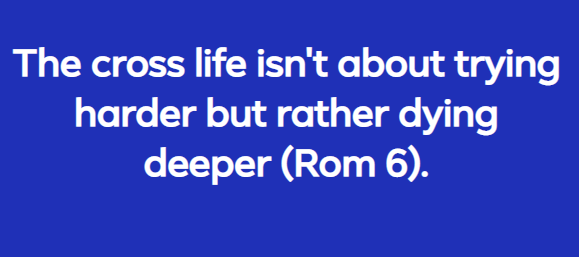
Jesus never said to try or try harder. no, Jesus says you must die to follow Him (Luke 9:23-24; John 12:23-25, etc.).
Jesus is sanctifying and cleansing by His Word a people, a church “a glorious church, not having spot, or wrinkle, or any such thing; but that it should be holy and without blemish” (Ephesians 5:25-27).

Times of fasting and prayer are doing yourself a favor and not God. Yes. You are crucifying self, getting self out of God’s way so that Christ is reigning in your life in place of sinful self! This should be viewed with absolute delight! (See Psalms 37:4; Hosea 6:6; Matthew 9:13, etc..) You are crying, you are driving a stake in the ground and declaring: “LORD, You must increase but I must decrease!” (See John 3:30.) That’s the “daily” operation of the cross God has ordained to be transpiring in our lives (Luke 9:23-24; 2 Corinthians 4:10-12; Galatians 2:20, etc.).
What’s your plan for a special time of fasting and prayer this week? There’s no mystery – you will not overcome the flesh, sin, without being crucified with Christ and there’s no better way than fasting and prayer. It’s the most direct route to being dead, buried, and raised up in the victory Christ alone can grant. Lay it all down, now. Memorize Colossians 3:3 and walk it out.
We simply can’t know just how deep we are buried in pride until we begin to obey God in fasting and prayer. Isaiah 58
Overcoming the flesh, walking in victory requires continually delighting in the LORD, worshipping Him “in spirit and in truth” (John 4:23-24).
“Seek the LORD and his strength, seek his face continually.” 1 Chronicles 16:11
HOW many of us know that the flesh is never going to behave itself, never going to be tamed …. until it’s slain by the cross, crucified?
The flesh IS going to rage, be bent toward and do evil. That’s a given (Romans 7). This is why the cross, the crucifying of the “old man” and putting on “the new man” are essential to God bringing the victory in our lives! (Romans 6-8; Ephesians 4:23-25; Colossians 3:5-10, etc.)
Doesn’t the fact that our flesh does not like the cross, only confirm the need for it? What are the “works of the flesh” that will separate a once saved Christian from God? (Galatians 5:16-21) Though it’s never heard in the apostate modern church world, Jesus commanded the cross in the life of each and every person who would follow Him (Luke 9:23-24). The fact that our flesh hates the cross in no way changes God and what He said concerning the severity in which we are to deal with the flesh, with sin – and the eternal damnation that awaits all who don’t crucify the deeds of the body (Mark 9:42-49; Romans 6; 2 Corinthians 7:1; 1 Peter 1:15-16; Revelation 21:8, 27, etc.). When’s the last time you read the words of Jesus recorded in Mark 9:42-49 and took Jesus at His Word? IF you truly love Him, you will obey Him (John 14:15).
God fully expects for His people to induce, to participate in the crucifixion of our flesh, putting the self-life to death (Isaiah 58; Matthew 6:16; 1 Corinthians 9:27; Galatians 2:20, etc.).
Holiness is not the way to Christ but rather Christ is the way to holiness. Abiding in Christ IS abiding holy – in the divine definition of holy. The key is that holiness is NOT the way to God but rather Christ is the way to holiness, His way, His definition – which is the daily cross (Luke 9:23-24). Abiding fellowship with Christ, on HIS terms, is holiness – being set apart to the LORD, in the LORD (Psalms 4:3; John 15).

Sin is man’s master until Christ is man’s Master (Matthew 6:24).
No one overcomes by accident. Those who love the LORD, truly, not just in mere profession, will seek Him diligently and obey Him and therefore are brought into His victory by Him (Matthew 7:21; 22:37-39; Titus 1:16; 1 John 2:3-6; Revelation 2-3, etc.). The disciple must truly repent and cease all excuses for the sin that displeases God and walk as “MORE than conquerors through him that loved us” (Romans 8:1, 5-6, 13-14; 37, etc.).
Jesus came from Heaven to earth and successfully confronted evil, sin, death, and the devil by going to the cross and defeating them! Read Colossians 2:14-15; Hebrews 2:14-15 and 1 John 3:8. In Christ, with Christ, we defeat death by dying, laying down our lives (Hebrews 2:14-15). And Jesus, who conquered death, hell, sin, Satan, and the grave, sends us to the cross – co-death with Him to defeat all of our sin and Satan also (Luke 9:23-24; Romans 6; 8:29, 37; 2 Corinthians 4:10-12, etc.). His precious blood alone atoned for our sins positionally, and yet to enforce that victory in defeating sin and Satan in our daily lives, Jesus prescribed to us the cross life (the practical).

The only thing we can do about this reality – about the iniquitous fleshly nature – is to crucify it (Galatians 5:16-24). There can be no negotiation.
“Likewise reckon ye also yourselves to be dead indeed unto sin, but alive unto God through Jesus Christ our Lord.” Romans 6:11
The one way to master sin is bow to Heaven’s Master and let Him master sin! The cross.
BECAUSE JESUS CHRIST ROSE AGAIN, ALL WHO ARE BORN AGAIN IN HIM ARE RAISED UP SPIRITUALLY IN THIS LIFE TO OVERCOME ALL SIN, SATAN, AND THE WORLD, AND WILL SOON be RAISED UP INTO ETERNAL GLORY WITH HEAVEN’S KING.
Rhetorical Question: What’s your fasting and prayer plan beloved? Your answer to this important, prompting question is before you and your LORD….
“I beseech you therefore, brethren, by the mercies of God, that ye present your bodies a living sacrifice, holy, acceptable unto God, which is your reasonable service. 2 And be not conformed to this world: but be ye transformed by the renewing of your mind, that ye may prove what is that good, and acceptable, and perfect, will of God.” Romans 12:1-2
You are not serious about overcoming sin if you’re not yet setting apart regular times of fasting and prayer. The fact that you don’t want to fast is the clear proof that you need to fast. Currently, your flesh is in control! Once you are broken, you will delight in, you will look forward to those times of regular fasting! Read Isaiah 58. | The Amazing Benefits of Fasting and Prayer
Times of Fasting and prayer get YOU out of the way so Jesus can reign supreme! Isaiah 58
“For if ye live after the flesh, ye shall die: but if ye through the Spirit do mortify the deeds of the body, ye shall live. 14 For as many as are led by the Spirit of God, they are the sons of God.” Romans 8:13-14

“He must increase but I must decrease.” John 3:30
FASTING IS STARVING THE FLESH AND FEEDING THE SPIRIT IN ORDER TO BE BROUGHT BY THE LORD INTO FULL ONENESS WITH HIM AND THE FATHER, AND INTO THE COMPLETE VICTORY AND FRUITFULNESS HE’S ORDAINED YOU TO WALK IN (ISAIAH 58).
Read Romans 6-8.
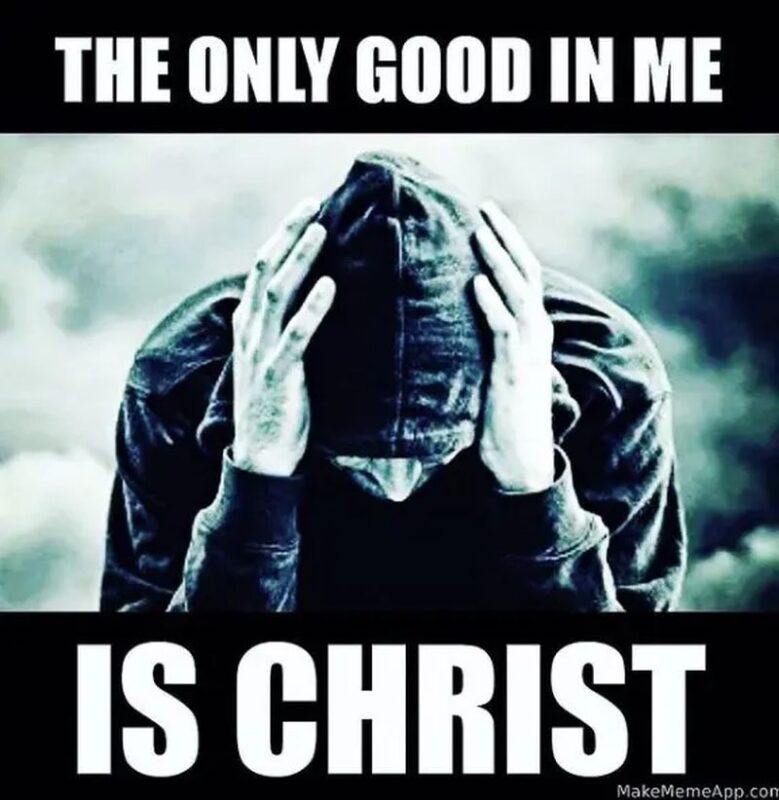
I am not a good person. Neither are you. “There is none righteous, no, not one” (Romans 3:10). Admit it. The Bible and our own failing experience in this life clearly reveal such to be the case. The sooner we become HONEST with that which is more than obvious, announcing freely and transparently that there is “no good thing” in us except CHRIST, the sooner God will begin a fresh, deeper work in us! See Romans 7:18, 24—the cross!
“For I know that in me (that is, in my flesh,) dwelleth no good thing: for to will is present with me; but how to perform that which is good I find not.” Romans 7:18
“Lie not one to another, seeing that ye have put off the old man with his deeds;” Colossians 3:9
The SINNER, the vile wretch I must first and foremost confront, is myself! See Job 19:28; Rom 7:18, 24; Ps 39:4-5 and Eccl 7:20. It’s essential to begin to understand the flesh, the fallen man, the iniquitous old man, in order to realize what we’ve been saved from and what must be crucified daily. The cross is God’s solution, His prescription to “put off the old man with his deeds.”
“That ye put off concerning the former conversation the old man, which is corrupt according to the deceitful lusts;” Ephesians 4:22
The cross subdues the flesh, it separates us from being held captive to the dictates of the old man, the carnal fallen nature.
The Root of the Matter is in Me! | The Daily Cross
Support | STORE | Podcasts | Jail/Prison Ministry | Mexico Mission here | All Ministry Updates | Because You Care Page | Bible/Word of God | The Greatest of these is Charity | Be Ready in the Morning [podcast] | The Sure Mercies of David [podcast] | That Repentance and Remission of Sins should be Preached [podcast] | At His Feet | Prepared to be Used of God | Grace and Truth Bible School [modules] | 7 Study Guides to a Greater Foundation in Christ | Knowing God | The Cross Life | Christology = the Study of Christ


Articles
Gospel Preached at Funeral of a Decorated United States Marine Officer in Mexico [podcast]

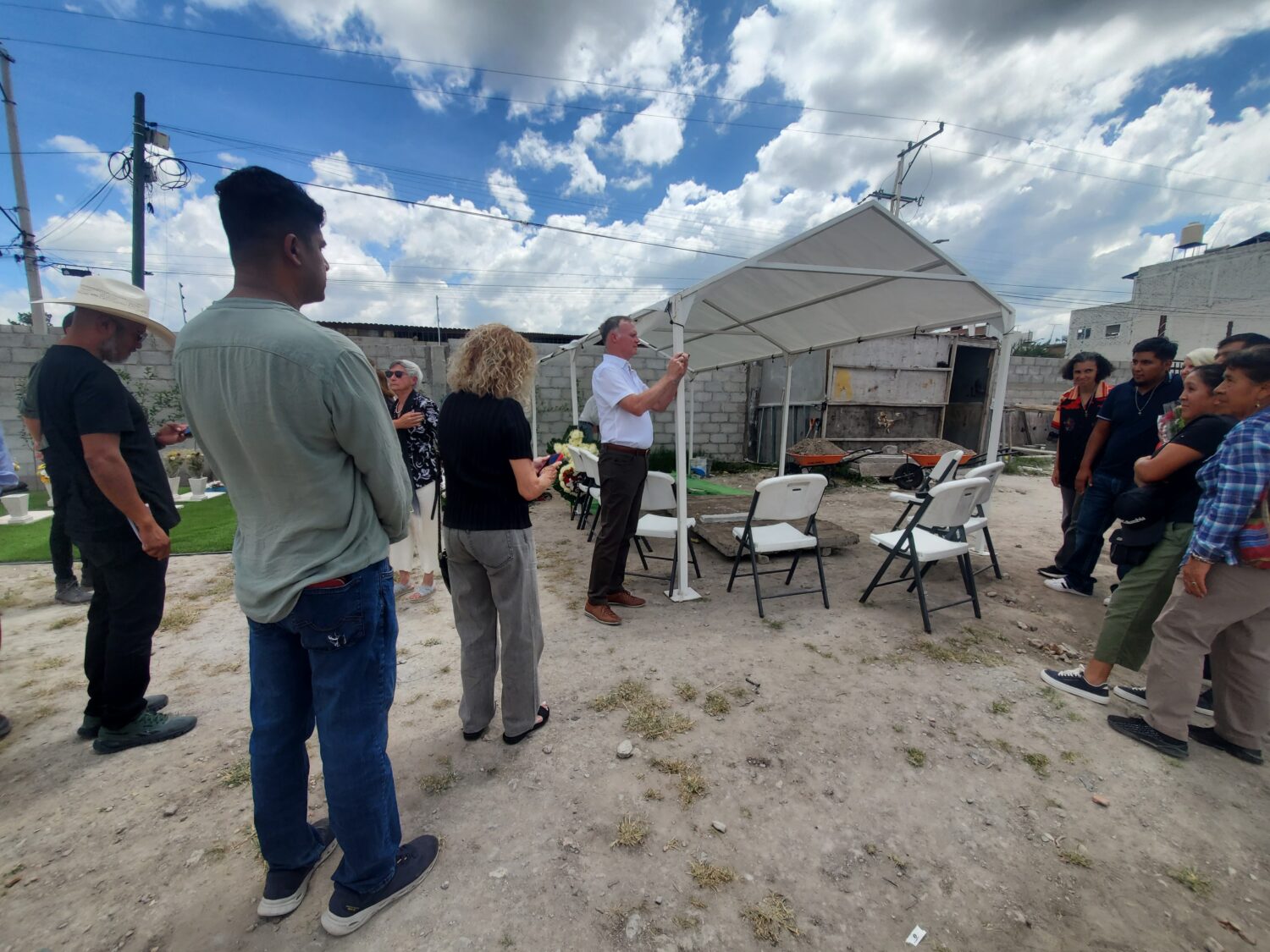
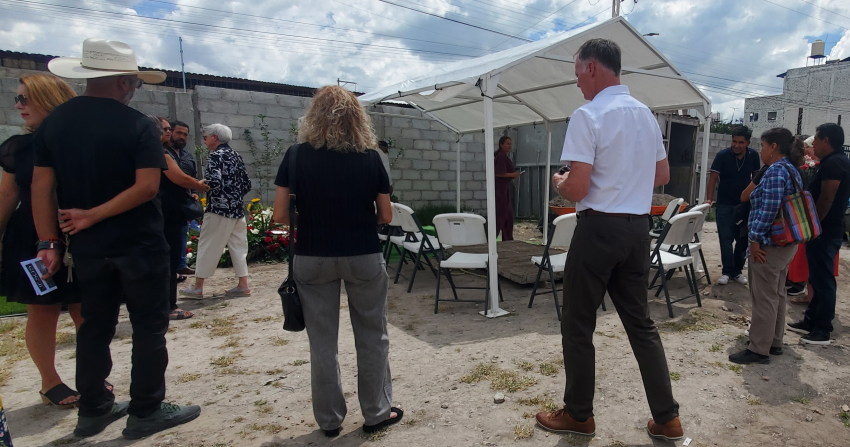
This past Sunday, here in beautiful Mexico, a saint’s temporal body was laid to rest. Brother Mark and I were given the opportunity, asked to speak to the whole group.
Our LORD Jesus’ Gospel was preached and everyone there was invited to repent and receive Christ before it’s too late—because Jesus died for them to be forgiven and receive eternal life, and that hell is forever (Revelation 22:17). Oh, the funeral attendees were also informed that “purgatory” is a lie, and that when they die, they will be going to Heaven or hell.
After a bit, an interpreter helped, joined in, and so every attendee heard the Gospel in their language—Spanish or English.
Trevor and Trish are the couple’s names. The way brother Mark met Trish, the now widow was 100% a miracle. Two weeks ago, we were invited to this couple’s home and spent the afternoon with them. Little did we know that the husband would pass shortly thereafter. God knew and orchestrated the events according to His perfect will.
Saints, thank you for your prayers for sister Trish.
After the people disbanded, several came and asked us about further fellowship. The preaching of God’s Word ignited them. A breakfast group fellowship had recently already begun to form, so they were invited.
Life springs out of death – “Thou fool, that which thou sowest is not quickened, except it die” (1 Corinthians 15:36).
Christ’s economy is a cross economy. Here we see that very thing where out of one of His saint’s death and burial, the life of Jesus is at work, raising up others. Life springs out of death (2 Corinthians 4:10-12).
“Precious in the sight of the LORD is the death of his saints.” Psalms 116:15
“And I heard a voice from heaven saying unto me, Write, Blessed are the dead which die in the Lord from henceforth: Yea, saith the Spirit, that they may rest from their labours; and their works do follow them.” Revelation 14:13
God is so very good, saints. See Psalm 86.
Here’s comfort from “the God of all comfort” for each of you, concerning losing loved ones, namely born again loved ones! You can be assured that they are with Christ and the Father and protected from ANY and ALL danger, forever! See 2 Corinthians 1:2-5, also Revelation 21:4.
“The righteous perisheth, and no man layeth it to heart: and merciful men are taken away, none considering that the righteous is taken away from the evil to come. 2 He shall enter into peace: they shall rest in their beds, each one walking in his uprightness.” Isaiah 57:1-2
Interestingly, the LORD brought together 4 United States Marines/Marine vets in Mexico to bring this to pass….
“Behold, I come as a thief. Blessed is he that watcheth, and keepeth his garments, lest he walk naked, and they see his shame.” Revelation 16:15
The Brevity of Life in this World
“Whereas ye know not what shall be on the morrow. For what is your life? It is even a vapour, that appeareth for a little time, and then vanisheth away.” James 4:14
We all face death and judgment, and the Good News is that Christ’s perfect sacrifice, as we humbly appropriate it, means we are forgiven and will avert the judgment of eternal damnation.
“And as it is appointed unto men once to die, but after this the judgment:” Hebrews 9:27
Our Prayer with Isaiah for God to Prepare and Send Us
It’s the “Here am I; send me” LORD prayer in action! (Isaiah 6:8)
Child of God, are you ready, today, to lift your heart and hands to your Maker and dare to declare this prayer to Him? – “Here am I; send me!”
If you dare to freshly surrender the life God gave you and cry out to Him, get ready beloved for the fruit-bearing adventure of your life! Remember that Abraham was in Haran (means barren, dry, fruit-less) until he was instructed by God to get up and leave. That’s when the promised blessings began to unfold in his life. See the end of Genesis 11 and thereafter.
When you cry out to Him with the prophet Isaiah, the LORD is going to hear, answer, and do things that are utterly miraculous.
“And Jesus looking upon them saith, With men it is impossible, but not with God: for with God all things are possible.” Mark 10:27
Just “Go” and watch God! (Mark 16:15). Your life is never more richly blessed by God than when you live by faith, when you surrender afresh and ask Him to take all of you, to prepare and use you.
Support | STORE | Podcasts | Jail/Prison Ministry | Mexico Mission here | All Ministry Updates | Evangelism | Jesus, Light of the Word | Compassion in Light of Christ’s Soon Return | Striving Together for the Faith of the Gospel [podcast] | Prepared to be Used of God | The Return of Christ | Christ’s Compassion Audio | Our Approach to the Lost | Kindness is a Soul Winning Weapon | Stop Sinning? Really? How? | Angry Street Preacher Warning | Faithfulness to God








Following the Faith of Abraham [podcast]

The Flesh will Never be Reformed it Must be Crucified [podcast]

Gospel Preached at Funeral of a Decorated United States Marine Officer in Mexico [podcast]

The High Treason of False Leaders [podcast]

Why Did God Give Us His Word? [podcast]

If it’s not the Word, it’s Waste [podcast]

Being Made Whole in Christ [podcast]

Mission Mexico Part 49

Beware of the Hebrew Roots Judaizing Snakes! [podcast]

Can and Will God Use You? [podcast]

The Highest Form of His Creation

Direction in God’s Word? [podcast]

The Name and Witness of Jesus Christ [podcast]

The Daily Cross in Prayer [podcast]

The Joy of God’s Word [podcast]
Why Did God Give Us His Word? [podcast]
Beware of the Hebrew Roots Judaizing Snakes! [podcast]

False Apostles Exposed!

SINLESS PERFECTIONISM: WHOSE Righteousness are You Trusting? [podcast]

Jesus Answered Questions with Questions [podcast]
The Highest Form of His Creation
The Flesh will Never be Reformed it Must be Crucified [podcast]

Obedience or Love – Which is Most Important? [podcast]
The High Treason of False Leaders [podcast]
Direction in God’s Word? [podcast]

Addiction’s Only Solution [podcast]
Can and Will God Use You? [podcast]

The Golden Rule Life: What’s that Really Mean? [podcast]
The Daily Cross in Prayer [podcast]

Should we Preach “Stop Sinning” or “Repent”?
Following the Faith of Abraham [podcast]
The Flesh will Never be Reformed it Must be Crucified [podcast]
Gospel Preached at Funeral of a Decorated United States Marine Officer in Mexico [podcast]


 America2 years ago
The Drugging of America: The Pharmakeia Sorcery Deception [podcast]
- Articles3 years ago
Children being Rescued in Tunnels: Happening Now – UPDATE!
- Articles9 years ago
Self-Examination in Preparation for the Lord’s Return
- Apostasy3 years ago
SHOCKING List of False Prophets Most Believe are True