






by Dr. Robert B. Thompson

The following is an excerpt from a book titled THE PERVERSION OF GRACE by Dr. Robert B. Thompson. This clearly identifies what “grace” in many evangelical circles is defined as.
“Grace” As Currently Defined by Many Believers
The term grace is used in our day to represent a waiving of God’s requirements concerning man’s behavior, an alternative to them. Christ is seen as coming to earth primarily to forgive the moral shortcomings of the believers so they may go to Heaven when they die.
The concept is that through the centuries man has not been able to meet God’s expectations. Therefore God in His love and mercy has made it possible for unimproved man to inherit life in the spirit Paradise in Heaven. The blood of Jesus is a “ticket” which sinful, rebellious man may use to obtain entrance to peace and joy in the spirit realm.
It is stated that it is not necessary for man to change his behavior; rather, it is his profession of “faith” in Christ that brings him into fellowship with God. In actual practice the profession of faith often proves to be a mental assent to certain theological facts rather than true faith in the living Jesus.
 Grace is currently understood to be a changing of God’s standard of righteous and holy behavior, a changing of God Himself, so that man through Christ may be able to receive the inheritance of a son of God even though he remains sinful, self-centered, and disobedient to God.
An unchanged Adam is permitted back into Paradise. He is given to eat of the tree of life. Untransformed believers serve as kings and priests of God. God accepts man as he is, through Christ.
The father comes to his prodigal son in the pigsty, runs to him and falls on his neck, kisses him, puts the best robe on him, a ring on his finger and shoes on his feet, kills the fattened calf, and restores the family inheritance to him. The son then arises from among the pigs and returns to his riotous living, knowing his father will never disown him.
How unscriptural, misleading, and destructive is the doctrine of “once saved always saved” (meaning if we once make a profession of faith in Christ we never again need to worry about the judgment of God)! How many teachers of the Christian faith will stand before God with their followers and discover that God judges every man according to his works!
The story of the prodigal son teaches not only forgiveness but also true repentance as the means of gaining that forgiveness. How would the story have ended if the prodigal had never returned to his father?
Modern Christian theology stresses the father’s forgiveness but not the son’s repentance, apart from which there could have been no forgiveness or restoration.
 The early apostles stressed repentance.
When they heard these things, they held their peace, and glorified God, saying, Then hath God also to the Gentiles granted repentance unto life. (Acts 11:18)
It is “repentance toward God, and faith toward our LORD Jesus Christ” that brings us to eternal life (Acts 20:21).
And the times of this ignorance God winked at; but now commandeth all men every where to repent: (Acts 17:30)
Repentance is more than belief or feeling sorry for our sins. To repent is to turn away from the world, from sin, and from self-will. To repent is to turn to God, to righteous and holy works and obedience to the Lord. Any conversion experience that does not include the works of repentance does not bring salvation to the believer. It is not enough to believe or be remorseful—or even to confess our sinful state. There must be the works of repentance.
The implication of current teaching is that the citizens of Heaven and Hell are not distinguished by the kind of people they are but by whether or not they profess faith in the fact that Jesus died for their sins and was raised from the dead.
We know that if Jesus comes to an individual and he refuses God’s Christ, the judgment of God abides on him. We are not implying we can refuse to bow the knee to the Lord and then please God by our works. We cannot save ourselves by our own righteousness now that God has given His Son to die for our sins on the cross.
However, in our haste to show that man cannot save himself and that God has a grand plan of redemption for us, we have thrown out the proper scriptural balance. We are discounting the value God places on godly behavior. We are forgetting that only those who practice righteousness are accepted of God:
But in every nation he that feareth him, and worketh righteousness, is accepted with him. (Acts 10:35)
The Scripture declares plainly that the person who practices unrighteousness will be judged of God whether or not he or she professes faith in Christ.
. . . I will give unto every one of you according to your works. (Revelation 2:23)
It is taught that the judgment of the believer’s sins was accomplished on the cross and all that God will judge henceforth is the believer’s works of service (meaning he will receive a marvelous reward if he serves God and a lesser reward if he does not). The contemporary doctrine is that the professor of faith in Christ has nothing to fear in the Day of the Lord even though he has neglected to serve Christ during his life on the earth.
The hastiest review of the New Testament writings will make plain that the concept of the lukewarm Christian having nothing to fear is a dreadful corruption of Paul’s doctrine of the grace of God in Christ.
And cast ye the unprofitable servant into outer darkness: there shall be weeping and gnashing of teeth. (Matthew 25:30)
We have made the Word of God of none effect by our traditions.
What a perversion of the Gospel of the Kingdom modern Christian teaching is!
Indeed, God does forgive the repentant heart. But God does not say, “I love you anyway even though you will not serve me.”
Rather, God commands, “Go and sin no more.”
God is not mocked. He understands well the difference between the truly repentant individual and the person who is presuming on God’s compassion so he may continue in his sins and rebellion.
We cannot outwit God by using the Gospel of Christ as a legal technique such that we can preserve our way of life and still receive the inheritance. God captures the crafty in their own craftiness. God deals shrewdly with the crooked (Psalms 18:26).
If we think carefully concerning what is being conveyed today, the grace of God in Christ is seen to be an admission of defeat on God’s part. Man, being hopelessly sinful and rebellious, will not serve God. God, therefore, has created a device known as “grace” whereby man can walk in unrighteousness, moral filth, and disobedience to God and still have fellowship with God through Christ.
How many ministers of the Gospel are living in sin today because of this concept of grace? They are trusting (and teaching) that God waives His standard and brings people into fellowship with Himself while they continue in their sins and rebellion against God.
“No one is perfect” they cry and proceed to practice sin and foolishness.
The logical conclusion of the present concept is that Paradise and the new Jerusalem are filled with sinful, self-centered, rebellious individuals who are “saved by grace” (meaning God does not see what they are or what they do because they are “covered” by the righteousness of Jesus). What the inhabitants are in nature and behavior has not been changed. Rather, they have been brought into a better environment (in Heaven) and partake of the righteousness of Christ by identification, not by transformed behavior..
Believers in Christ who do not, through His grace, overcome the world, their lusts, and their self-seeking, are still sinful, disobedient personalities after they die; unless being shed of our body of itself results in a change in our nature. But there is no passage of Scripture that teaches or implies that physical death results in a change in our personality or that the Lord Jesus will change our personality (other than our body) at His appearing.
Physical death is an enemy, according to the Scripture (I Corinthians 15:26), not the means of our transformation into the image of God. Also, we must consider the fact that Satan and other bodiless creatures rebelled against God while in the realm of spirits. If being in the spirit realm causes us to serve God, how, then, was it possible for the angels to transgress?
What passage of Scripture teaches us we become righteous, holy, and obedient to God on the basis of our entrance into the spirit realm, or that the Lord Jesus will transform lukewarm believers into mighty kings at His appearing? Is it not true rather that what we have become during our life on earth will be revealed at the Lord’s coming?”
Sign up for free email devotional HERE… The Moments with My Master email devotional is sent out for the edification of the body of Christ.
Abiding
“A Land Flowing with Milk and Honey” [podcast]

DADDY’S IN THE HOUSE!
There will not be even one rebel in glory …. The LORD loves and calls you to Himself today….. to settle down humbly in true repentance …. asking God to forgive your sinful stubbornness, rebellion, and self-idolatry, self-adultery. Ask Him to give you a heart of flesh and to take away every trace of a stony heart in you (Ezekiel 36:24-26).
If you had a real dad growing up, you know HE was large and in charge in his house…. and so is God!
He’s Large and in Charge!
He’s Daddy, “Abba Father”! (Romans 8:15).
He’s Your Father – yet only if you endure His chastening! (Hebrews 12:5-12)
“A land flowing with milk and honey” (Exodus 3:8) is a biblical phrase that describes a place of great abundance and prosperity, symbolizing the fulfillment of God’s promises and the richness of the Promised Land. It emphasizes a land that is fertile, nourishing, and provides an abundance of sustenance, with milk and honey serving as symbolic representations of this richness.”
“For ye have not received the spirit of bondage again to fear; but ye have received the Spirit of adoption, whereby we cry, Abba (Daddy), Father. 16 The Spirit itself beareth witness with our spirit, that we are the children of God: 17 And if children, then heirs; heirs of God, and joint-heirs with Christ; if so be that we suffer with him, that we may be also glorified together.” Romans 8:15-17
Growing up in daddy’s house, you did things his way, right? Not your way but his way…. he was the man of the house, not you. You abode under his provision and his care and love for you, as your daddy, right? Well, that’s how it is with God. He loves you beyond measure and yet you must simply humble yourself and do things His way. When you do, the blessings will flow, will overwhelm you, will consume you, will flood your life! BAM. Memorize Matthew 6:33 today.
Let’s get something straight …
NO DOUBT: There’s no doubt that God wants to bless your life! Yet, you must do it His way beloved. He wants to bless you and yet, you must ask yourself if you really want Him. Are you truly hungering and thirsting for more of Jesus, more of His righteousness?
“Blessed are they which do hunger and thirst after righteousness: for they shall be filled.” Matthew 5:6
The Old Testament summed up: In dealing with His people, His transactions, our LORD’s business concerned their salvation and restoration – promised land blessings! Read Numbers 13-14; 1 Corinthians 10:1-13. And, we are now “the Israel of God” (Galatians 6:16). All these things were written and are on record for us – for our learning, comfort, peace, and blessings (Romans 15:4; 1 Corinthians 10:11).
As was the case with Old Testament Israel, God brought you out of a life of sin in this fallen world (Egypt) in order to bring you IN – into His land of abundant blessings, walking victoriously in a cross-abiding relationship with Christ (John 15).
“And he brought us OUT from thence, that he might bring us IN, to give us the land which he sware unto our fathers.” Deuteronomy 6:23
There’s a promised land of blessedness, of abundant fruit, the likes of which we have not even begun to taste. Yet, appropriating, walking into this treasure house, this field, this gold mine of blessedness, requires that we closely, diligently trust and obey the Giver of “every good gift … every perfect gift” (James 1:17).
HE BROUGHT YOU OUT OF SOMETHING FOR GOOD REASON – TO BRING YOU INTO SOMETHING MUCH GREATER – WHICH HE PURCHASED WITH HIS OWN BLOOD ON THAT CROSS!
Many who read these words are seeking to get and to live out what God alone can provide – as you abide in a real relationship with Him, loving Him with all you are, wholeheartedly.
“Delight thyself also in the LORD; and he shall give thee the desires of thine heart.” Psalms 37:4
Delighting in the LORD assures that we will be possessed with His desires and they will be granted!

Truly Trusting and OBEYING God
Are you forgetting any of His “benefits” – the ones Jesus died to give? Are you neglecting to appropriate them by a real walk with Him? “Bless the LORD, O my soul, and forget not all his benefits” (Psalms 103:2).
Jesus was the perfect example of delighting in God. In the days of His flesh, Jesus toiling as He faced going to that cross for us, cried “not my will, but thine, be done” (Luke 22:42). Have we cried out to the LORD today with a “Not my will but thine be done”?
“First” means First, not Second. Putting God where He Belongs in Your Life – “First”
“But seek ye first the kingdom of God, and his righteousness; and all these things shall be added unto you.” Matthew 6:33
If you are out of Bible order, you are out of Bible blessings!
If your life is not in Bible order where Jesus is literally FIRST, you will not walk in the blessings of God – the blessings Jesus died to give you!
“IF”
“If ye be willing and obedient, ye shall eat the good of the land: 20 But if ye refuse and rebel, ye shall be devoured with the sword: for the mouth of the LORD hath spoken it.” Isaiah 19-20
GOD DESIRES TO BLESS YOU – to bring you into “A Land Flowing with Milk and Honey.”
The phrase “milk and honey” appears 20 times in God’s Word and in every case, refers to God’s desire and declaration to bring His people into His land of rich blessings, flowing with the bounty of His goodness!
“And I am come down to deliver them (salvation) out of the hand of the Egyptians (the world), and to bring them up out of that land unto a good land and a large, unto a land flowing with milk and honey; unto the place of the Canaanites, and the Hittites, and the Amorites, and the Perizzites, and the Hivites, and the Jebusites” (Exodus 3:8).
In other words, “I’m going to bring you into a land flowing with milk and honey right in the middle of your enemies!”
The LORD brings us OUT of sin, “OUT of darkness INTO his marvellous light”!
“But ye are a chosen generation, a royal priesthood, an holy nation, a peculiar (special) people; that ye should shew forth the praises of him who hath called you OUT of darkness INTO his marvellous light:” 1 Peter 2:9
“Unto a land flowing with milk and honey: for I will not go up in the midst of thee; for thou art a stiffnecked people: lest I consume thee in the way.” Exodus 33:3
The LORD brings, saves us out of the world and into His kingdom family and blessings!
“And I have said, I will bring you up OUT of the affliction of Egypt (sin; the lost world) unto the land of the Canaanites, and the Hittites, and the Amorites, and the Perizzites, and the Hivites, and the Jebusites, unto a land flowing with milk and honey (salvation).” Exodus 3:17
The “Milk and Honey” of Christ’s Salvation!
God brought His beloved people OUT of Egypt (represents the world) to bring them INTO the promised land He ordained for them! In the same way, God has brought you and me out of sin, out of the kingdom of the world, in order to bring us IN to His promised land of blessing in Christ! Read Ephesians 1 afresh beloved of God.
“Giving thanks unto the Father, which hath made us meet (fit) to be partakers of the inheritance of the saints in light: 13 Who hath delivered us FROM (out of) the power of darkness, and hath translated us INTO the kingdom of his dear Son: 14 In whom we have redemption through his blood, even the forgiveness of sins:” Colossians 1:12-14
God never brings you OUT of something not to bring you INTO something much better! safeguardyoursoul.com
He made us to bless us and yet – will only do so as we walk with Him on His stated terms.
“That I may perform the oath which I have sworn unto your fathers, to give them a land flowing with milk and honey, as it is this day. Then answered I, and said, So be it, O LORD.” Jeremiah 11:5
“And that ye may prolong your days in the land, which the LORD sware unto your fathers to give unto them and to their seed, a land that floweth with milk and honey.” Deuteronomy 11:9
God Sent His Son to Bless Us – His People
“Unto you first God, having raised up his Son Jesus, sent him to bless you, in turning away every one of you from his iniquities.” Acts 3:26
Repentance Always Leads to Refreshing from Heaven!
“Repent ye therefore, and be converted, that your sins may be blotted out, when the times of refreshing shall come from the presence of the Lord; 20 And he shall send Jesus Christ, which before was preached unto you: 21 Whom the heaven must receive until the times of restitution of all things, which God hath spoken by the mouth of all his holy prophets since the world began.” Acts 3:19-21
God Requires Repentance and Faith in All Who will be His and Receive His Ultimate Blessings
¨I call heaven and earth to record this day against you, that I have set before you life and death, blessing and cursing: therefore choose life, that both thou and thy seed may live: 20 That thou mayest love the LORD thy God, and that thou mayest obey his voice, and that thou mayest cleave unto him: for he is thy life, and the length of thy days: that thou mayest dwell in the land which the LORD sware unto thy fathers, to Abraham, to Isaac, and to Jacob, to give them.¨ Deuteronomy 30:19-20
¨Numbers 14:8 says if He delights in us, then He will give us a land flowing with milk and honey. This means in order to receive a land flowing with milk and honey He must delight in us. This notes a condition of obedience and faith. We have to embrace and conform with His ways (the cross) to receive the spiritual blessings and to receive eternal life.¨ Karen Cochran
¨And now, I beseech thee, let the power of my Lord be great, according as thou hast spoken, saying, 18 The LORD is longsuffering, and of great mercy, forgiving iniquity and transgression, and by no means clearing the guilty, visiting the iniquity of the fathers upon the children unto the third and fourth generation. 19 Pardon, I beseech thee, the iniquity of this people according unto the greatness of thy mercy, and as thou hast forgiven this people, from Egypt even until now.¨ Numbers 14:17-19
PRAYER: Heavenly Father thank You for being so unimaginably loving and benevolent to Your creation, to all those You made in Your very image. I love You LORD Jesus and here and now give You praise and thanksgiving for coming to die for my sins and then buried and raised again for my justification. Now dear LORD, please make me whole, from the inside out. Please pour out Your Holy Ghost on my life now and use this vessel to bring eternal glory to You. Bless Your people to abide in You Jesus, to have vital union with You and thereby the abundance of fruit, more fruit, and much fruit. In Jesus´ name. Amen.
Support | STORE | Podcasts | Jail/Prison Ministry | Mexico Mission here | More on Assurance here | Because You Care Page | The Greatest of these is Charity | Be Ready in the Morning [podcast] | The Sure Mercies of David [podcast] | That Repentance and Remission of Sins should be Preached [podcast] | At His Feet


Articles
Nicolaitan Nightmare [podcast]

The Scourge of Beguilers
Controlling, Gaslighting, Manipulating Operatives of Satan Exposed
Conquering and controlling people by deceit has long been the work of deceivers and “There is no new thing under the sun” (Ecclesiastes 1:9). In fact, in this last hour, the Bible tells us that “Evil men and seducers shall wax worse and worse” and “Woe to the inhabiters of the earth and of the sea! for the devil is come down unto you, having great wrath, because he knoweth that he hath but a short time” (2 Timothy 3:13; Revelation 12:12).
“While they promise them liberty, they themselves are the servants of corruption: for of whom a man is overcome (by lies), of the same is he brought in bondage.” 2 Peter 2:19
Why did Jesus say He Hates the Deeds and Doctrine of the Nicolaitans?
“But this thou hast, that thou hatest the deeds of the Nicolaitans, which I also hate.” Revelation 2:6
“So hast thou also them that hold the doctrine of the Nicolaitans, which thing I hate.” Revelation 2:15
Jesus told us that He hates the “doctrine” and “deeds of the Nicolaitans” (Revelation 2:6, 15). When we simply break down this word Jesus uses here – “Nicolaitans” – we gain insight into its meaning and what our LORD says He hates. Nico means “to conquer” while laitans means “the laity” which is the people. So, “Nicolaitans” simply means, “to conquer the laity.” This is the doctrine of control that the Master addresses here. In fact, this doctrine and the deeds that accompany it, so infuriate the LORD that it is the only thing that Christ ever went on record to say that He “hates”! Selah!
Beware of this usurpish witchcraft demon that seeks to bring believers under its control through false ministers.
JESUS CHRIST IS YOUR LORD AND SAVIOR! NO MERE MAN, NO SINNER DIED FOR YOUR SINS – TO PURCHASE YOU TO HIMSELF! THE DECLARATION OF EVERY ONE OF CHRIST’S TRUE UNDER-SHEPHERDS is – “Not for that we have dominion over your faith, but are helpers of your joy: for by faith ye stand.” 2 Corinthians 1:24
The fear and nightmare of nicolaitan wolves is that they will be seen for who they really are. Their nemesis is informed and discerning believers who quickly identify them and mark and expose them as the Bible says to do (Romans 16:17-18).
“For though I should boast somewhat more of our AUTHORITY, which the Lord hath given us for EDIFICATION, and not for your DESTRUCTION, I should not be ashamed:” 2 Corinthians 10:8
“Authority” from the LORD is “given us for edification, and not for your destruction.”
The Holy Ghost would never anoint any of His servants to control or destroy but rather to edify.

YOU BELONG TO JESUS CHRIST: He made you (Colossians 1:16). Then He came for you. JESUS alone died for you – on that cross where the Son of God bore, carried away your sins with His own life blood (Isaiah 53:5; John 1:29). Then He found you when you were a lost sheep. He brought you into His family. You don’t belong to some church or pastor. You belong to the LORD Himself. He is jealous over you (Exodus 34:14; Beware of the controllers, the pastors who are operating in witchcraft and seek to assert undue control over your life.
The apostle Paul espoused the members of the body of Christ to CHRIST Himself and not to Paul!
“For I am jealous over you with godly jealousy: for I have espoused you to one husband (JESUS!), that I may present you as a chaste virgin to Christ.” 2 Corinthians 11:2
Wolves are very cunning and manipulating. They deceitfully conflate you submitting to them with submitting to God Himself. Not.
Support | STORE | Podcasts | The Deeds and Doctrines of the Nicolaitans 1 | Witchcraft in the Pulpits | Witchcraft in the Church | Are You Under the Spell of Witchcraft? | Getting Delivered from Witchcraft | Fellowship God’s Way | Beware of the “I Love My Church” Deception [podcast] | Un-Biblical Local Church Structures [podcast] |
Sign up for free email devotional HERE… The Moments with My Master email devotional is sent out for the edification of the body of Christ.
MESSAGE RECEIVED:
“Good morning brother! I’m troubled by this statement I am being told …here it is: ‘You need to submit to leadership and learn humility and not rebuke an elder or pastor or any leader, no matter what you should always go with the direction of leadership.'”
REPLY:
God gave us a Bible in order to grant us discernment… and that our faith and trust and obedience would be in HIM….and in that Bible He warns us repeatedly to beware of such false Nicolaitan (means to conquer the people) wolves (Rev. 2:6, 15). The LORD primarily leads His New Testament church through the Holy Scriptures which were given by the Holy Ghost (2 Timothy 3:15-17, etc.). “THY WORD is a lamp unto my feet, and a light unto my path” (Psalms 119:105).
The LORD applauds His disciples at Berea for not taking even Christ’s apostle Paul at his word but rather searching the Scriptures daily to see if what Paul was saying was divine truth (Acts 17:10-1; 2 Timothy 3:15-17). 1 John 4:1 says “Beloved, believe not every spirit, but try the spirits whether they are of God: because many false prophets are gone out into the world.”
Any man or men saying that you must obey THEM no matter where they lead or what they say are diabolical wolves. Read 1 Corinthians 2:1-5.
There are 2 chapters in the book Deceivers and False Prophets Among Us dealing directly and in detail on this Nico-Laitan (means to conquer the people) leadership which Jesus says He hates (Revelation 2:6, 15).
Support | STORE | Podcasts | Jail/Prison Ministry | Mexico Mission here | All Ministry Updates | Because You Care Page | The Greatest of these is Charity | Be Ready in the Morning [podcast] | The Sure Mercies of David [podcast] | That Repentance and Remission of Sins should be Preached [podcast] | At His Feet | Prepared to be Used of God | Word of Faith Wolves and Delusion Exposed | Confess This | Personal Testimony of Todd Tomasella | Beware of False Promises and Half Truths | Exposing the False Prophetic Movement [podcast]


Articles
A PLACE CALLED HELL [podcast]
How does God’s Word describe hell?

A PLACE CALLED HELL ….. Below is a detailed list of the unending realities of eternal damnation!
Hell is the ultimately judgment of God upon all who refuse to repent and receive Christ and therefore die in sin.
“Let death seize upon them, and let them GO DOWN quick (alive) into hell: for wickedness is in their dwellings, and among them.” Psalms 55:15
Details about hell revealed in God’s Word, the Bible:
- A place of complete consciousness (all feelings)…..Lk. 16:25
- Torment with fire and brimstone…………………………Rev. 14:10
- Weeping and gnashing of teeth……………………….…..Matt. 8:12
- A place of eternal remorse (devastating regret)…..Luke 16:25
- A place of torments…………………………………………..…Luke 16:23
- No rest day or night forever (eternal misery)……….Rev. 14:11
- A furnace of fire with wailing…………………………..….Matt. 13:42
- A place of everlasting burnings…………….…………..Isaiah 33:14
- A lake (ocean) of fire……………………………………..…….Rev. 20:15
- Unquenchable fire (ferocious flames)………..…….……Mark 9:45
- Outer darkness (blinding loneliness)………………….Matt. 22:13
- No 2nd chance to escape (utter hopelessness)……Luke 16:26
- A place of sorrows (seething remorse and despair)….Ps. 18:5
- A place of everlasting destruction……………………..2 Thess. 1:9
Even though sinful man is still looking for life on mars and the moon….. there’s only 3 places, locations that men exist:
“And no man in HEAVEN, nor in EARTH, neither UNDER THE EARTH, was able to open the book, neither to look thereon.” Revelation 5:3
1. “in heaven”
2. “in earth”
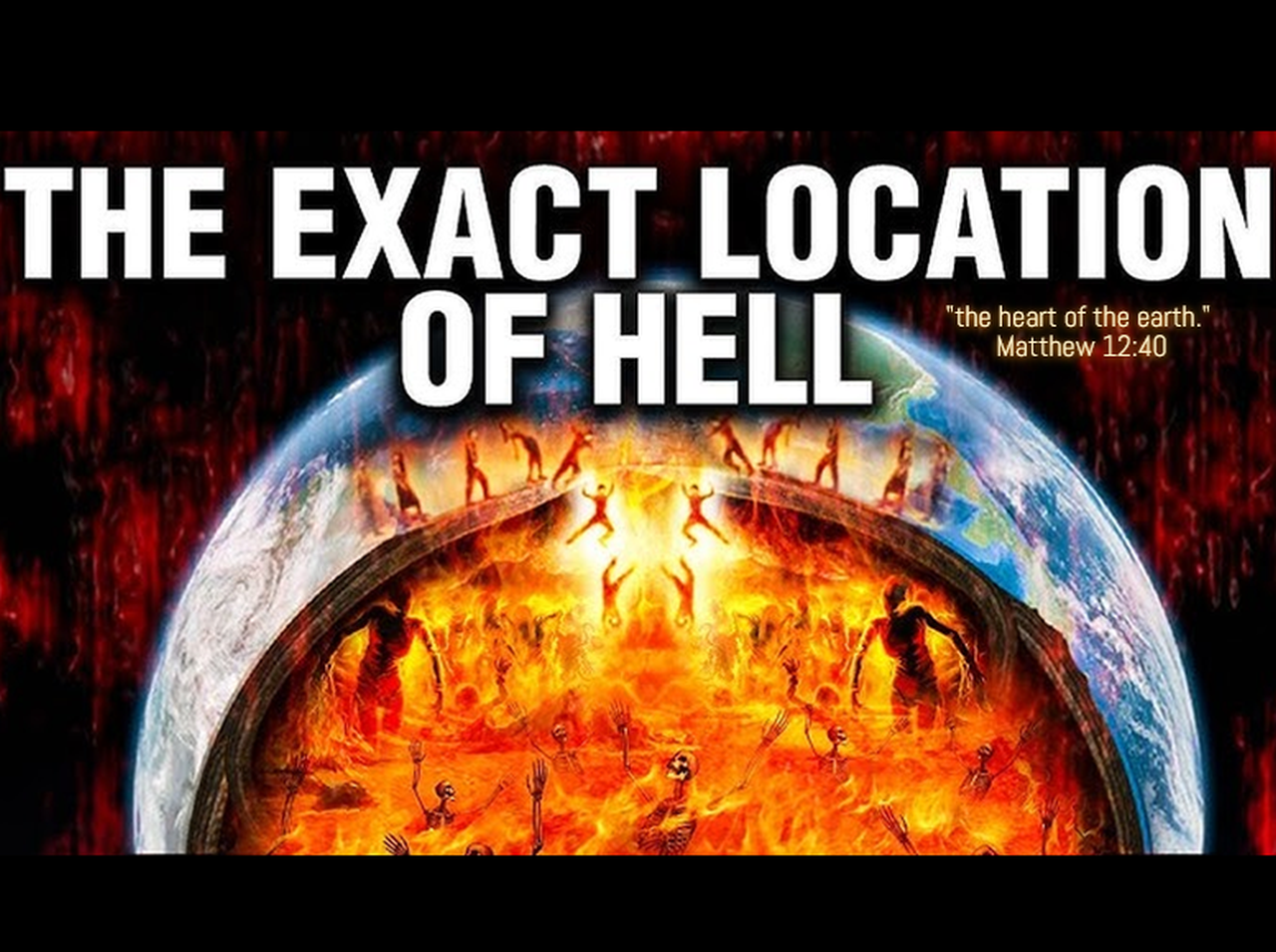
3. “under the earth” which is where hell is (Matthew 12:40).
Jesus used the words “eternal damnation” to reveal to us that hell if forever, unending (Mark 3:29). The fires of eternal damnation shall feed upon the eternally conscious helpless souls of all who die in sin (Mark 9:43-49).
The reason people preach hell fire and brimstone is because they’re trying to save your eternal soul from hell fire and brimstone. Love!
PREACHING the biblical doctrine of hell, which is the eternal judgment of God, puts a fire behind believers, convicting them to forsake their lives in this world, to deny self, take up the cross and to follow Jesus, to press toward the mark for the high calling of God in Christ Jesus, to “lay aside every weight, and the sin which doth so easily beset us, and let us run with patience the race that is set before us, 2 Looking unto Jesus the author and finisher of our faith; who for the joy that was set before him endured the cross, despising the shame, and is set down at the right hand of the throne of God.” (Hebrews 12:1-2) Are YOU preaching hell – the eternal judgment of God in the domain of the damned reserved for all who die in sin? Please hit share. | Hell
“The way of life is above to the wise, that he may depart from hell beneath.” Proverbs 15:24
Heavenly Father, please grant to Your children an eternal perspective, in Jesus’ name. Amen dear LORD.
If you don’t think hell is divinely designed to be a loving deterent (motivator) from a merciful God, go read the words of the only Savior recorded in Mark 9:43-49 in the King James Bible. Satan’s new “bibles” removed this all-important passage.
ALL who don’t slow down, take the time to seek and listen to God’s Word, to hear His voice, will have all eternity in hell to burn in conscious misery, in utter fury and remorse to sulk on how they sinned away their day of grace. Going to hell is a choice. It’s irrevocable. There are no do-overs. If you sinned your whole life away, sinned away your day of grace, you will pay for your own sins in hell forever. If you reject the only sacrifice for your many sins – the blood of the LORD and Savior Jesus Christ – the domain of the damned will be your eternal abode. If you aren’t washed in the blood of Jesus and presently serving God, abiding in Christ, you are going straight to hell if you die today. …Don’t you dare share this, unless you want people to be saved…. from eternal hell.

“And in hell he lift up his eyes, being in torments, and seeth Abraham afar off, and Lazarus in his bosom.” Luke 16:23
“And the smoke of their torment ascendeth up for ever and ever: and they have no rest day nor night, who worship the beast and his image, and whosoever receiveth the mark of his name.” Revelation 14:11
“And these shall go away into everlasting punishment: but the righteous into life eternal.” Matthew 25:46
“The Lord is not slack concerning his promise, as some men count slackness; but is longsuffering to us-ward, not willing that any should perish (in hell), but that all should come to repentance.” 2 Peter 3:9
You soul is eternal and will be conscious for all eternity – either in the bliss and comfort of Heaven or in hell.
“For what shall it profit a man, if he shall gain the whole world, and lose his own soul? 37 Or what shall a man give in exchange for his soul?” Mark 8:36-37
What’s more important to you than the LORD? Who? What? What organization? What affiliation? What religion, religious affiliation? What family member? What friend? Is it really worth your eternal soul? Is Your Sin Really Worth Going to Hell for?
“So likewise, whosoever he be of you that forsaketh not all that he hath, he cannot be my disciple.” Luke 14:33
Denying that hell exists changes nothing….
MESSAGE RECEIVED:
“Rational and educated people realize that our sun will not last for ever and will self destruct at the end of it life. When that happens it will most likely also destroy all of the planets in our solar system. Sense Hell has always been considered to be located deep within the bowels of the Earth….yeah, right…. it too will be destroyed. So Hell really isn’t for ever. And you’re just making stuff up.”
REPLY:
Hell is forever. Jesus died for our sins. Rational and educated people know basic science reveals that a molten mass is in the middle of the earth which only confirms that God’s Word is truth. God’s Word repeatedly speaks of this reality.
How to be forgiven and saved:
“That if thou shalt confess with thy mouth the Lord Jesus, and shalt believe in thine heart that God hath raised him from the dead, thou shalt be saved. 10 For with the heart man believeth unto righteousness; and with the mouth confession is made unto salvation.” Romans 10:9-10
“For whosoever shall call upon the name of the Lord shall be saved.” Romans 10:13
ALL who seek to hide/cover their sins instead of repenting and forsaking them, will perish. (Proverbs 28:13).
“He that covereth his sins shall not prosper: but whoso confesseth and forsaketh them shall have mercy.” Proverbs 28:13
There are no “secrets” with God because He sees all.
“In the day when God shall judge the secrets of men by Jesus Christ according to my gospel.” Romans 2:16
“The secrets of men” are hidden from other men and yet nothing is hidden from God.
Support | STORE | Podcasts | Jail/Prison Ministry | Mexico Mission here | All Ministry Updates | Because You Care Page | The Greatest of these is Charity | Be Ready in the Morning [podcast] | The Sure Mercies of David [podcast] | That Repentance and Remission of Sins should be Preached [podcast] | At His Feet | Prepared to be Used of God | Walking with Jesus on His Stated Terms – the Cross | Fasting and Prayer | The Old Man Must be Put Down [podcast] | The 5 Sins That Keep God’s People Out of Their Promised Land [podcast] | What Did Paul Mean by “I Keep Under My Body”? [podcast] | “Jesus the Author and Finisher of our Faith” [podcast] | A Living Sacrifice unto God [podcast] | Departing from Hell Beneath | Prayer










“A Land Flowing with Milk and Honey” [podcast]
Nicolaitan Nightmare [podcast]

A PLACE CALLED HELL [podcast]

Following the Faith of Abraham [podcast]

The Flesh will Never be Reformed it Must be Crucified [podcast]

Gospel Preached at Funeral of a Decorated United States Marine Officer in Mexico [podcast]

The High Treason of False Leaders [podcast]

Why Did God Give Us His Word? [podcast]

If it’s not the Word, it’s Waste [podcast]

Being Made Whole in Christ [podcast]

Mission Mexico Part 49

Beware of the Hebrew Roots Judaizing Snakes! [podcast]

Can and Will God Use You? [podcast]

The Highest Form of His Creation

Direction in God’s Word? [podcast]
Why Did God Give Us His Word? [podcast]
Beware of the Hebrew Roots Judaizing Snakes! [podcast]

False Apostles Exposed!

SINLESS PERFECTIONISM: WHOSE Righteousness are You Trusting? [podcast]

Jesus Answered Questions with Questions [podcast]
The Highest Form of His Creation
The Flesh will Never be Reformed it Must be Crucified [podcast]
The High Treason of False Leaders [podcast]
Direction in God’s Word? [podcast]

Addiction’s Only Solution [podcast]
Can and Will God Use You? [podcast]
A PLACE CALLED HELL [podcast]
Nicolaitan Nightmare [podcast]

The Golden Rule Life: What’s that Really Mean? [podcast]

The Daily Cross in Prayer [podcast]
“A Land Flowing with Milk and Honey” [podcast]
Nicolaitan Nightmare [podcast]
A PLACE CALLED HELL [podcast]


 America2 years ago
The Drugging of America: The Pharmakeia Sorcery Deception [podcast]
- Articles3 years ago
Children being Rescued in Tunnels: Happening Now – UPDATE!
- Articles9 years ago
Self-Examination in Preparation for the Lord’s Return
- Apostasy3 years ago
SHOCKING List of False Prophets Most Believe are True