
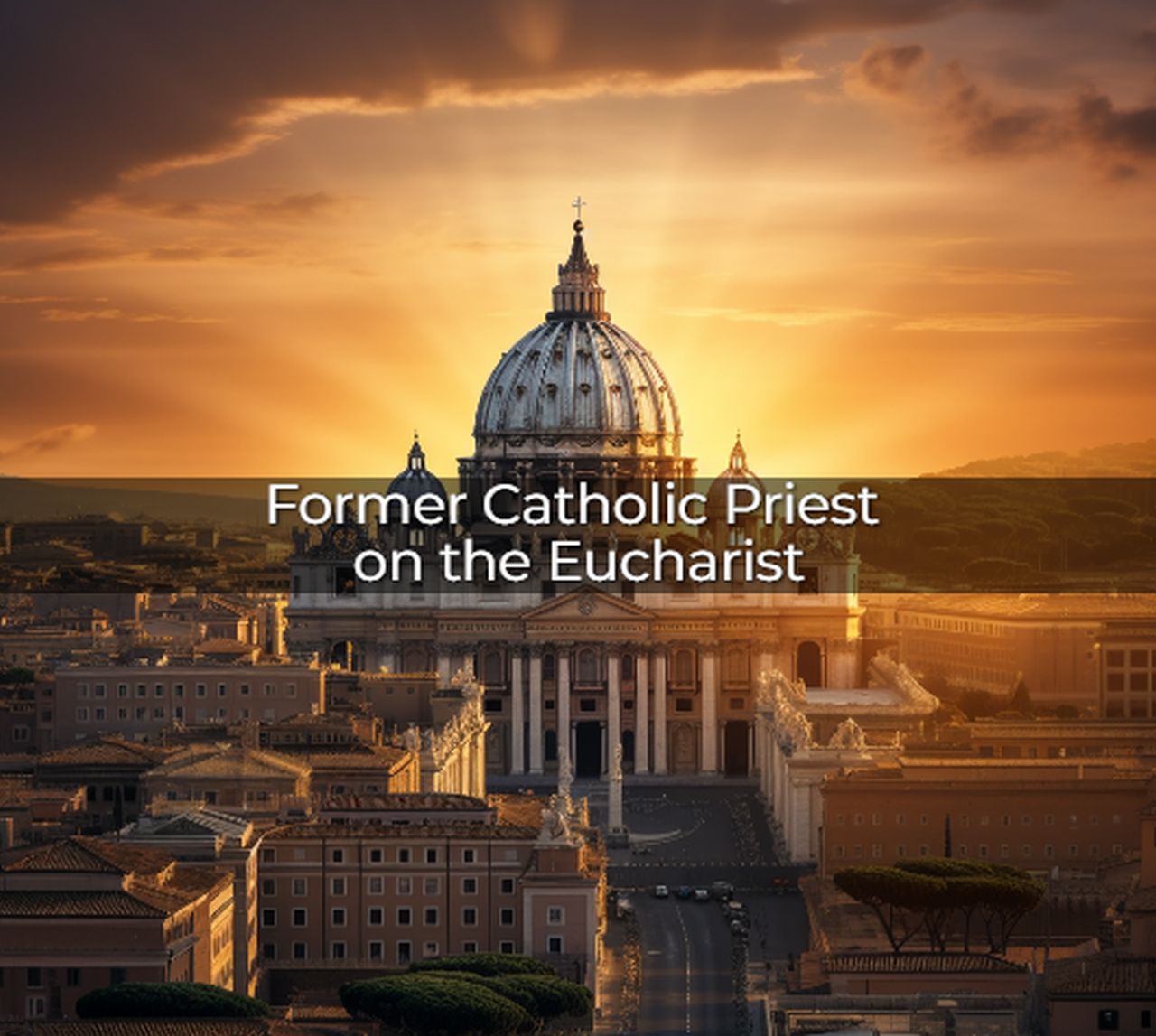
The Mystery of the Eucharist by Former Catholic Priest





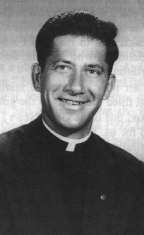
Bartholomew f. Brewer, Ph.D.
 Of all the ancient dogmas of the Roman Catholic religion, the dogma of transubstantiation is the most wicked and satanic. It is the very heart of Romanism and the key to the so-called “sacrifice of the mass.” Transubstantiation is Rome’s most lucrative, powerful and fixed dogma. Certainly it is her most effective control device for the perpetuation of her gigantic corporation whose existence is maintained by sacraments administered by a supposedly divinely empowered priesthood.
PAGAN ORIGIN
The doctrine of transubstantiation does not date back to the Last Supper as is supposed. It was a controverted topic for many centuries before officially becoming an article of faith, which means that it is essential to salvation according to the Roman Catholic Church. The idea of a corporal presence was vaguely held by some, such as Ambrose, but it was not until 831 A.D. that Paschasius Radbertus, a Benedictine monk, published a treatise openly advocating the doctrine of transubstantiation. Even then, for almost another four hundred years, theological war was waged over this teaching by bishops and people alike until at the Fourth Lateran Council in 1215 A.D., it was officially defined and canonized as a dogma.
 Like many of the beliefs and rites of Romanism, transubstantiation was first practiced by pagan religions. The noted historian Durant said that belief in transubstantiation as practiced by the priests of the Roman Catholic system is “one of the oldest ceremonies of primitive religion.” The Story Of Civilization, p. 741. The syncretism and mysticism of the Middle East were great factors in influencing the West, particularly Italy. Roman Society From Nero To Marcus Aurelius, Dill. In Egypt priests would consecrate mest cakes which were supposed to be come the flesh of Osiris. Encyclopedia Of Religions, Vol. 2, p. 76. The idea of transubstantiation was also characteristic of the religion of Mithra whose sacraments of cakes and Haoma drink closely parallel the Catholic Eucharistic rite. Ibid. The idea of eating the flesh of deity was most popular among the people of Mexico and Central America long before they ever heard of Christ; and when Spanish missionaries first landed in those countries “their surprise was heightened, when they witnessed a religious rite which reminded them of communion…an image made of flour…and after consecration by priests, was distributed among the people who ate it…declaring it was the flesh of deity…” Prescott’s Mexico, Vol. 3.
The Christian Church for the first three hundred years remained somewhat pure and faithful to the Word of God, but after the pseudo-conversion of Constantine, who for political expedience declared Christianity the state religion, thousands of pagans were admitted to the church by baptism alone with out true conversion. They brought with them pagan rites which they boldly introduced into the church with Christian terminology, thus corrupting the  primitive faith. Even the noted Catholic prelate and theologian, Cardinal Newman, tells us that Constantine introduced many things of pagan origin: “We are told in various ways by Eusebius, that Constantine, in order to recommend the new religion to the heathen, transferred into it the outward ornaments to which they had been accustomed in their own…The use of temples, and these dedicated to particular saints, and ornamented on occasions with branches of trees; incense, lamps, and candles; votive offerings on recovery from illness; holy water; asylums; holydays and seasons, use of calendars, processions, blessings on fields, sacerdotal vestments, the tonsure, the ring in marriage, turning to the East, images at a later date, perhaps the ecclesiastical chant, and the Kyrie Eleison, are all of pagan origin, and sanctified by their adoption into the Church.” An Essay On The Development Of Christian Doctrine, pp. 359, 360. This unholy alliance also allowed the continuance of the pagan custom of eating and drinking the literal flesh and literal blood of their god. This is actually how transubstantiation entered the professing church.
Communion God’s Way | Making Peace with God | The Catholic Church Exposed
Support | STORE | Podcasts | Because You Care Page | The Greatest of these is Charity | Be Ready in the Morning [podcast] | The Sure Mercies of David [podcast] | That Repentance and Remission of Sins should be Preached [podcast] | At His Feet | Prepared to be Used of God |
Articles
Laboring Fervently for Christ’s Body [podcast]
“Epaphras, who is one of you, a servant of Christ, saluteth you, always labouring fervently for you in prayers, that ye may stand perfect and complete in all the will of God. 13 For I bear him record, that he hath a great zeal for you, and them that are in Laodicea, and them in Hierapolis.” Colossians 4:12-13
“Epaphras’ prayer is a powerful New Testament model of intercession found in Colossians 4:12. As the founder of the church in Colossae, Epaphras is described by the Apostle Paul as “wrestling” or “laboring earnestly” in prayer so that his congregation would stand mature, firm, and fully assured in the will of God.”
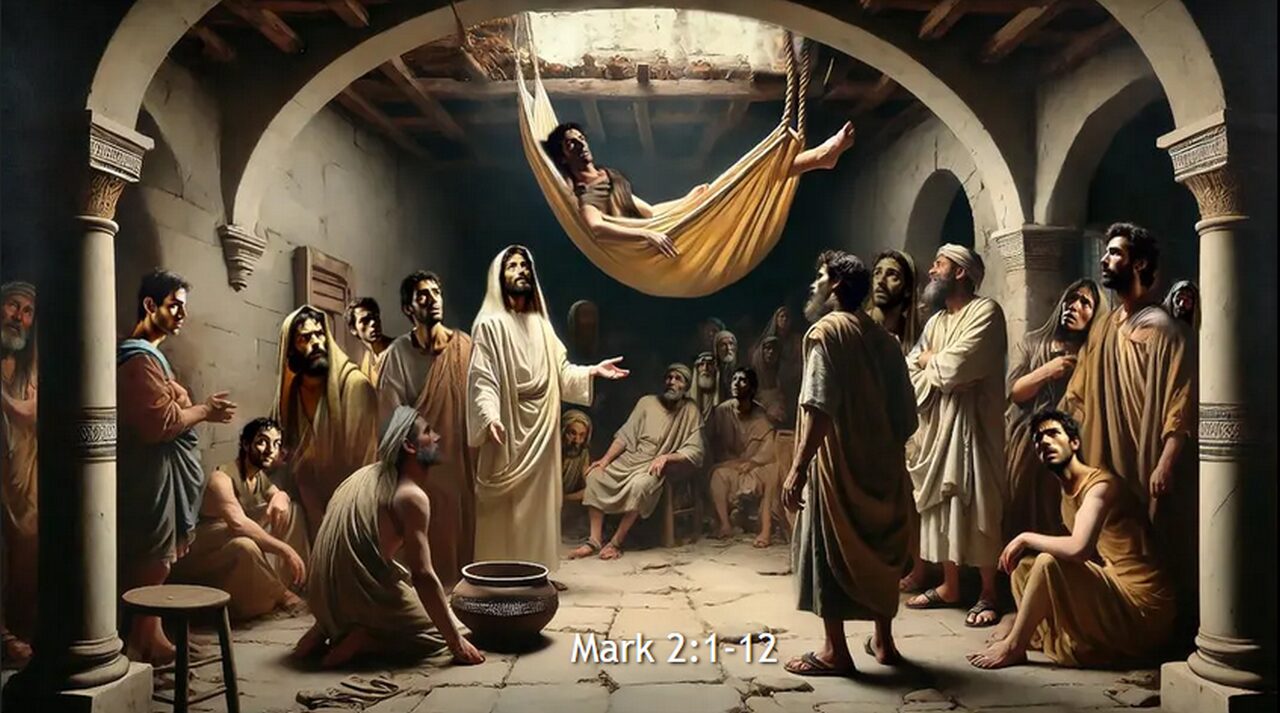
Jesus Heals the Paralytic Man who was Dropped Down to Him from the Roof
Mark 2
“1 And again he entered into Capernaum after some days; and it was noised that he was in the house.
2 And straightway many were gathered together, insomuch that there was no room to receive them, no, not so much as about the door: and he preached the word unto them.
3 And they come unto him, bringing one sick of the palsy, which was borne of four.
4 And when they could not come nigh unto him for the press, they uncovered the roof where he was: and when they had broken it up, they let down the bed wherein the sick of the palsy lay.
5 When Jesus saw their faith, he said unto the sick of the palsy, Son, thy sins be forgiven thee.
6 But there were certain of the scribes sitting there, and reasoning in their hearts,
7 Why doth this man thus speak blasphemies? who can forgive sins but God only?
8 And immediately when Jesus perceived in his spirit that they so reasoned within themselves, he said unto them, Why reason ye these things in your hearts?
9 Whether is it easier to say to the sick of the palsy, Thy sins be forgiven thee; or to say, Arise, and take up thy bed, and walk?
10 But that ye may know that the Son of man hath power on earth to forgive sins, (he saith to the sick of the palsy,)
11 I say unto thee, Arise, and take up thy bed, and go thy way into thine house.
12 And immediately he arose, took up the bed, and went forth before them all; insomuch that they were all amazed, and glorified God, saying, We never saw it on this fashion.” Mark 2:1-12
Support | STORE | Podcasts | Jail/Prison Ministry | Mexico Mission here | All Ministry Updates | Fresh Start with God | “Fear hath Torment” – 100% Deliverance from all Fear! [podcast] | Resurrection Grace [podcast] | G.O.D. = Game Over Devil [podcast] | Justification | Grace and Good Works [podcast] | More on Assurance here | Eternal Security Debunked | The Cross Life | 100’s of Christ-centered, Scripture-rich podcasts for your edification in Christ.
Abiding
Abiding Under the Shadow of the Almighty [podcast]
“O Lord, thou knowest: remember me, and visit me, and revenge me of my persecutors; take me not away in thy longsuffering: know that for thy sake I have suffered rebuke. 16 Thy words were found, and I did eat them; and thy word was unto me the joy and rejoicing of mine heart: Jeremiah 15:15-16
Dwelling “in the secret place of the most High”
“He that dwelleth in the secret place of the most High shall abide under the shadow of the Almighty. 2 I will say of the LORD, He is my refuge and my fortress: my God; in him will I trust.” Psalms 91:1-2
“In the secret place of the Most High – Spoken probably in reference to the Holy of holies. He who enters legitimately there shall be covered with the cloud of God’s glory – the protection of the all-sufficient God. This was the privilege of the high priest only, under the law: but under the new covenant all believers in Christ have boldness to enter into the holiest by the blood of Jesus; and those who thus enter are safe from every evil.” Adam Clarke
“[Psalms] 91:1, 2 Jesus is the One who in a preeminent way dwelt in the secret place of the Most High, and abode under the shadow of the Almighty. There never was a life like His. He lived in absolute, unbroken fellowship with God, His Father. He never acted in self-will but did only those things that the Father directed. Though He was perfect God, He was also perfect Man, and He lived His life on earth in utter and complete dependence on God. Without equivocation He could look up and say, “My refuge and my fortress, my God, in Him I will trust.” Believer’s Bible Commentary
Support | STORE | Podcasts | Jail/Prison Ministry | Mexico Mission here | All Ministry Updates | The Return of Christ | Stewardship | Apostate Modern Church Exposed | Beware of the BUZZ WORD Bandits [podcast] | Preach the Word | Wolves Exposed | Giving | Fellowship | Christology = the Study of Christ

Abiding
The Warnings of the Book of Jude [podcast]





Laboring Fervently for Christ’s Body [podcast]

Abiding Under the Shadow of the Almighty [podcast]

The Warnings of the Book of Jude [podcast]

Attend to My Words [podcast]

Gathering Fruit for Christ’s Eternal Glory [podcast]

Acquaint now thyself with him, and be at peace: thereby good shall come unto thee [podcast]

Dwelling in the Secret Place of the Most High [podcast]

The Over Population Delusion Exposed [video]

Are You Bless-able? English and Spanish [podcast]

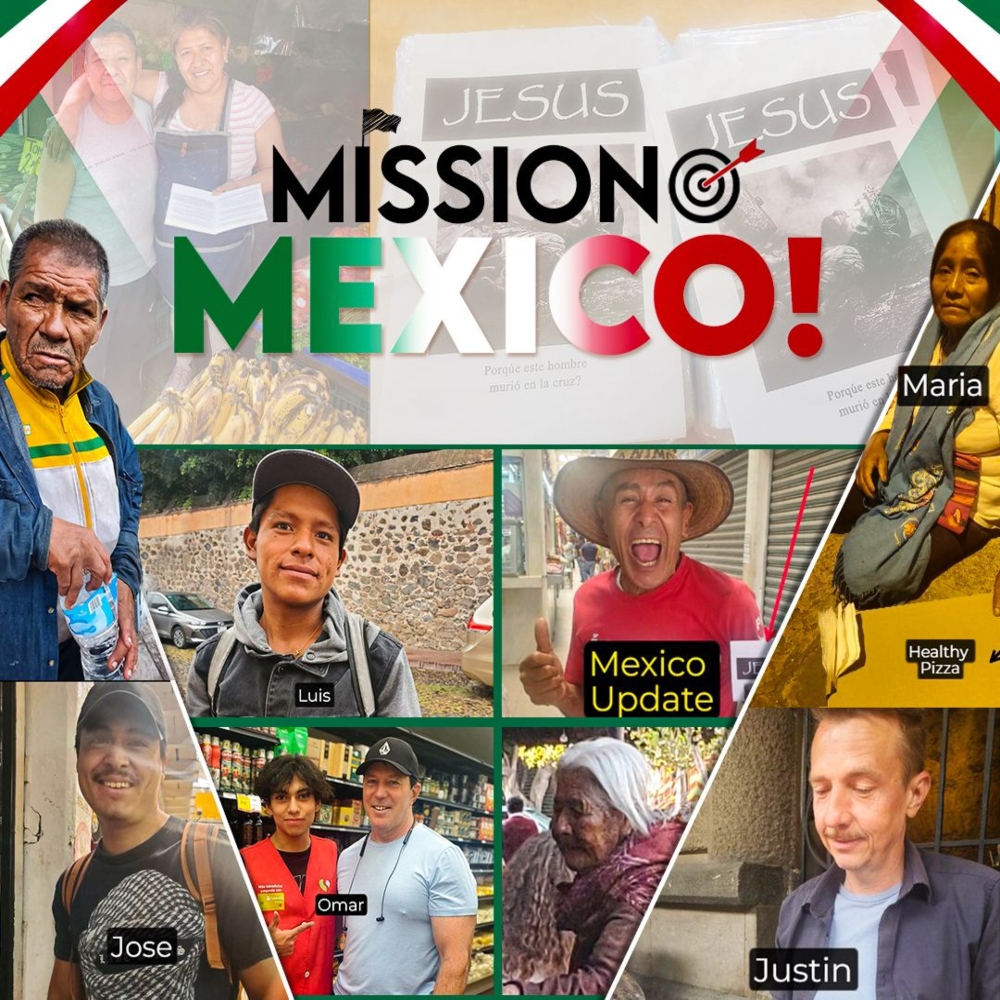
Mexico Mission Momentum Part 41

“Cursed be the Man that Trusteth in Man” [podcast]

Modern Day Cult of Personality Exposed [podcast]

The Cross and the Throne of Grace [podcast]

“I Will Uphold Thee with the Right Hand of My Righteousness” [podcast]

Diminishing Returns or Divine Blessings? [podcast]

The Damning Myth of Unconditional Eternal Security! [podcast]

Calvinism’s Origins and Historical Roots [podcast]

Name Cult Warning: Beware of the Yahweh, Yahushua, Yahuah Cults!

The FORGOTTEN Sins of Sodom [podcast]
Dwelling in the Secret Place of the Most High [podcast]
Acquaint now thyself with him, and be at peace: thereby good shall come unto thee [podcast]
The Warnings of the Book of Jude [podcast]

Hell’s Menu

“You Who are Troubled Rest with Us” [podcast]

Penknife Sacrilege [podcast]
Attend to My Words [podcast]
The Over Population Delusion Exposed [video]
Diminishing Returns or Divine Blessings? [podcast]

Be Not Moved Away from the Hope of the Gospel [podcast]

Conspiracy is Reality [podcast]
Laboring Fervently for Christ’s Body [podcast]
Abiding Under the Shadow of the Almighty [podcast]
The Warnings of the Book of Jude [podcast]


 America1 year ago
The Drugging of America: The Pharmakeia Sorcery Deception [podcast]
- Articles2 years ago
Children being Rescued in Tunnels: Happening Now – UPDATE!
- Articles8 years ago
Self-Examination in Preparation for the Lord’s Return
- Apostasy2 years ago
SHOCKING List of False Prophets Most Believe are True




“Reformed Theology“, is just a fancy way of saying ‘We know better than Paul, the old testament prophets, even David! And the very apostles who walked with Jesus must be unlearned men or liars.’ Nay, I will not say such a thing of my LORD and Saviour, Christ Jesus. Let God be true, and >every< man a liar.” Jonathan Crane
It’s “ungodly men” who mislead the gullible with the eternal security heresy, and the heretical doctrines and system of calvinism. Jude warned us of just that, as did the prophets (Jude 3-4; Jeremiah 23:17, etc.). Then Jude reminds us of God’s judgment upon His own covenant people who were saved out of Egypt (the world) and then “afterward destroyed.” Then Jude reminds us that God judged the angels, a third of them, who rebelled against Him and were terminated from His domain, Heaven (Isaiah 14:12-15; Luke 10:18; Revelation 12:7-12, etc.).
“For there are certain men crept in unawares, who were before of old ordained to this condemnation, ungodly men, turning the grace of our God into lasciviousness, and denying the only Lord God, and our Lord Jesus Christ. 5 I will therefore put you in remembrance, though ye once knew this, how that the Lord, having saved the people out of the land of Egypt, afterward destroyed them that believed not. 6 And the angels which kept not their first estate, but left their own habitation, he hath reserved in everlasting chains under darkness unto the judgment of the great day.” Jude 4-6
The Book of Jude
Greeting
1 Jude, the servant of Jesus Christ, and brother of James, to them that are sanctified by God the Father, and preserved in Jesus Christ, and called:
2 Mercy unto you, and peace, and love, be multiplied.
Judgment on False Teachers
3 Beloved, when I gave all diligence to write unto you of the common salvation, it was needful for me to write unto you, and exhort you that ye should earnestly contend for the faith which was once delivered unto the saints.
4 For there are certain men crept in unawares, who were before of old ordained to this condemnation, ungodly men, turning the grace of our God into lasciviousness, and denying the only Lord God, and our Lord Jesus Christ.
5 I will therefore put you in remembrance, though ye once knew this, how that the Lord, having saved the people out of the land of Egypt, afterward destroyed them that believed not.
6 And the angels which kept not their first estate, but left their own habitation, he hath reserved in everlasting chains under darkness unto the judgment of the great day.
7 Even as Sodom and Gomorrha, and the cities about them in like manner, giving themselves over to fornication, and going after strange flesh, are set forth for an example, suffering the vengeance of eternal fire.
8 Likewise also these filthy dreamers defile the flesh, despise dominion, and speak evil of dignities.
9 Yet Michael the archangel, when contending with the devil he disputed about the body of Moses, durst not bring against him a railing accusation, but said, The Lord rebuke thee.
10 But these speak evil of those things which they know not: but what they know naturally, as brute beasts, in those things they corrupt themselves.
11 Woe unto them! for they have gone in the way of Cain, and ran greedily after the error of Balaam for reward, and perished in the gainsaying of Core.
12 These are spots in your feasts of charity, when they feast with you, feeding themselves without fear: clouds they are without water, carried about of winds; trees whose fruit withereth, without fruit, twice dead, plucked up by the roots;
13 Raging waves of the sea, foaming out their own shame; wandering stars, to whom is reserved the blackness of darkness for ever.
14 And Enoch also, the seventh from Adam, prophesied of these, saying, Behold, the Lord cometh with ten thousands of his saints,
15 To execute judgment upon all, and to convince all that are ungodly among them of all their ungodly deeds which they have ungodly committed, and of all their hard speeches which ungodly sinners have spoken against him.
16 These are murmurers, complainers, walking after their own lusts; and their mouth speaketh great swelling words, having men’s persons in admiration because of advantage.
A Call to Persevere
17 But, beloved, remember ye the words which were spoken before of the apostles of our Lord Jesus Christ;
18 How that they told you there should be mockers in the last time, who should walk after their own ungodly lusts.
19 These be they who separate themselves, sensual, having not the Spirit.
20 But ye, beloved, building up yourselves on your most holy faith, praying in the Holy Ghost,
21 Keep yourselves in the love of God, looking for the mercy of our Lord Jesus Christ unto eternal life.
22 And of some have compassion, making a difference:
23 And others save with fear, pulling them out of the fire; hating even the garment spotted by the flesh.
Doxology
24 Now unto him that is able to keep you from falling, and to present you faultless before the presence of his glory with exceeding joy,
25 To the only wise God our Saviour, be glory and majesty, dominion and power, both now and ever. Amen.