






Divine Grace and Power in Weakness
“Yes! I grew up believing it was better to be tough and strong. I hated weakness. Then Jesus got a hold of me! I now know that is a lie from hell. God has shown me you have to first be broken and weak. That is where you find Jesus in your weaknesses! When you can no longer do it and realize how much you really need Jesus. 2 Corinthians 12:10. When I am weak, then I am strong.” Karen Cochran
Coming to the revelation that in and of ourselves, even in our very “best state” we are “altogether vanity,” is a starting point for becoming “poor in spirit” (Psalms 39:4-5; Matthew 5:3). The only righteousness we have has been freely given to us – undeserving paupers worthy only of judgment for our sin.
“Not by works of righteousness which we have done, but according to his mercy he saved us, by the washing of regeneration, and renewing of the Holy Ghost; 6 Which he shed on us abundantly through Jesus Christ our Saviour; 7 That being justified by his grace, we should be made heirs according to the hope of eternal life.” Titus 3:5-7
When we begin to come to this understanding, we will begin to cease attempting to earn God’s love or vainly imagine that we in any manner merited His gift of salvation.
“Now to him that worketh is the reward not reckoned of grace, but of debt. 5 But to him that worketh not, but believeth on him that justifieth the ungodly, his faith is counted for righteousness.” Romans 4:4-5
Saving and sanctifying grace (divine enablement/empowerment) must be understood as the working of the LORD in each of His beloved people – influencing their hearts as He alone can do, causing them to overcome and to please Him in all things as they abide in oneness with Him (John 15).
Remember always from whence ye came and where you will go back to if you are not living in the Spirit via the daily cross (1 Corinthians 9:27).
“I waited patiently for the LORD; and he inclined unto me, and heard my cry. 2 He (the LORD, not ourselves) brought me up also out of an horrible pit, out of the miry clay, and set my feet upon a rock, and established my goings. 3 And he hath put a new song in my mouth, even praise unto our God: many shall see it, and fear, and shall trust in the LORD. 4 Blessed is that man that maketh the LORD his trust, and respecteth not the proud, nor such as turn aside to lies.” Psalms 40:1-4
We cannot possibly begin to realize just how much of a blessing it is that “God so loved the world that he gave his only begotten Son” if we don’t begin to realize from where it was that He has brought us as we are and are being saved (John 3:16; 2 Corinthians 1:10). We read and know these blessed words found in John 3:16, but do we really begin to understand the reason God sent His only begotten Son for us? Get ready for your appreciation for Christ to begin to grow!
“Hearken to me, ye that follow after righteousness, ye that seek the LORD: look unto the rock whence ye are hewn, and to the hole of the pit whence ye are digged.” Isaiah 51:1
WHEN we become “weak” in self, that’s when He becomes “strong” in us and on our behalf (2 Corinthians 12:9-10). It seems apparent that the LORD ordains these times of bringing us low, so that He can bring us to realize in a greater sense and depth, just how much He loves us and is with us and that He is guiding, upholding, and undertaking our lives! Aren’t these the times when we truly cry out to Him, draw nigh to Him, and know that closeness, that oneness? We really are His (1 Corinthians 6:19-20). It was when the great apostle of our LORD Jesus suffered much with that “thorn in the flesh,” that he was brought to this place of weakness and the consequent sufficiency of God’s grace (2 Corinthians 12:9-10).
Can we possibly begin to realize the true score of things if we don’t first humble ourselves in the LORD’s holy presence – becoming “weak”? Is it not then that He becomes “strong” on our behalf?
“And he said unto me, My grace is sufficient for thee: for my strength is made perfect in weakness. Most gladly therefore will I rather glory in my infirmities, that the power of Christ may rest upon me. 10 Therefore I take pleasure in infirmities, in reproaches, in necessities, in persecutions, in distresses for Christ’s sake: for when I am weak, then am I strong.” 2 Corinthians 12:9-10
Beginning to understand what Paul called the “unspeakable gift” of Christ who is our Salvation, requires the knowledge of our own depravity (2 Corinthians 9:5).
To the degree that we are receiving the revelation of CHRIST’s righteousness, is the degree that we lose self-righteousness (Romans 3-8). Understanding your own utter depravity is never a license to sin but rather the starting point to be able to truly cherish Christ and what He did for us.
The LORD Jesus Christ taught us that the man who humbly prayed “Lord, be merciful to me a sinner” was heard while the “natural ability” of the other self-righteous religionist and his foolish, pride-filled prayer was utterly rejected (Luke 18:10-14). The self-righteous man in this illustration represents so many today who somehow believe they are accepted of God on some other basis or a shared basis with Christ Jesus’ perfection.
Mankind has NO righteousness of his own in and of himself – before and AFTER Christ saves that person. – “But we are all as an unclean thing, and ALL our righteousnesses are as filthy rags; and we all do fade as a leaf; and our iniquities, like the wind, have taken us away” (Isaiah 64:6).
Daniel and all who ever pleased God did so by trusting HIS righteousness! Listen to Daniel’s prayer and declaration:
“O my God, incline thine ear, and hear; open thine eyes, and behold our desolations, and the city which is called by thy name: for we do not present our supplications before thee for our righteousnesses, but for thy great mercies. 19 O Lord, hear; O Lord, forgive; O Lord, hearken and do; defer not, for thine own sake, O my God: for thy city and thy people are called by thy name.” Daniel 9:18-19
Beloved, beware of any and all false teaching which would dare lead you to believe that you have ANY righteousness whatsoever outside of Christ Himself who said “without me you can do nothing!” (John 15:5)
David, the man after God’s own heart, prayed to the LORD to show him his own end (finite-ness, mortality, limitations) and for God to show him just how “frail” or weak he is.
“LORD, make me to know mine end, and the measure of my days, what it is; that I may know how frail I am. Behold, thou hast made my days as an handbreadth; and mine age is as nothing before thee: verily every man at his best state is altogether vanity. Selah.” Psalms 39:4-5
MANY today are puffed up as they have gullibly bought into a self-righteous, Luciferic theology they borrowed from Charles Finney which teaches that man has his own “natural ability” to please God and can overcome all sin all by himself, even before the LORD saves him. Finney taught that man was neutral and had no sin nature. In other words, he taught that the all of man, who was previously created in a perfect state, had no effect on human nature thereafter (Genesis 6:5, 12; Jeremiah 17:9; Romans 5:18-19; Ephesians 2:1-3; 4:22, etc.). Those who teach such a diabolical heresy shun, twist, and ignore volumes of Holy Scripture including the curses pronounced upon then newly fallen mankind in Genesis 3. So, basically, this teaching that man has the “natural ability” to stop all sin and to obey God WITHOUT CHRIST would have to mean that Christ came in vain which makes this self-centered theology antichrist. That’s one way “the spirit of antichrist” denies that Jesus came in the flesh and perfectly paid for man’s sin debt as ONLY He could do (1 John 2:1-2; 4:1-6). To the utter contrary, the great apostle of Jesus taught that attitudes of self-righteousness and self-dependence are directly connected to the old law by which no man can be saved. We also notice in this passage that Paul remained perpetually in the fear of the LORD, fearing that it was possible for him to fall away from Christ.
Yes, God gives saved men the ability to overcome all sin and has made full provision for such and also, if he chooses to sin, the child of God can choose to repent and confess that sin and be cleansed (1 John 1:6-22, etc.).
It’s clear that when a man sins, he does so out of his own volition and he alone is to blame (James 1:13-15). When a man sins, he does so in the face of God’s promise to give that man the power to overcome – to choose to do what is right and pleasing in His holy eyes (1 Corinthians 10:12-13; Romans 6:14). There’s no argument there. Yet, the fact that “all (men) have sinned” and therefore have that sinful inclination to sin seems undeniable by the whole counsel of God’s Word.
“And be found in him, not having mine own righteousness, which is of the law, but that which is through the faith of Christ, the righteousness which is of God by faith: 10 That I may know him, and the power of his resurrection, and the fellowship of his sufferings, being made conformable unto his death;’ Philippians 3:9-10
Did you notice how the apostle Paul contrasted “mine own righteousness” with “the righteousness which is OF GOD by faith”? It’s one or the other. WHO are you trusting to save you?
“The more we know Christ the more we are aware we NEED Him!” Anita Villarreal
Being “poor in spirit” is the diametrical opposite of being puffed up trusting in a supposed, feigned “natural ability” which does nothing but foster that which God despises – pride and self-righteousness! (Read James 4:6-10.) The disciple must become completely and totally dependent upon Christ and His saving grace on a momentary basis. This truth of the inherent sin nature of all men, which includes each of us, makes me so aware of my utter need for Christ’s saving mercy and overcoming grace moment to moment and the need for me to get down low and stay down low and to keep going down, down, down – sinking down deep into the death of Christ! Read: Romans 6; Matthew 16:24-25; John 12:23-25; 2 Corinthians 1:9; 3:5; 4:5; Galatians 2:20; Isaiah 37:31, etc. Laying aside self as our LORD instructed, causes us to trust Him and to push away all self-dependence and self-righteousness.
“Blessed are the poor in spirit: for theirs is the kingdom of heaven.” Matthew 5:3
The LORD Jesus commanded each and every person who would truly follow Him to “deny himself, and take up his cross daily” and to “lose his life for my sake” (Luke 9:23-24). The daily cross is the essential prerequisite to a “poor in spirit” disposition.
“And he said to them all, If any man will come after me, let him deny himself, and take up his cross daily, and follow me. 24 For whosoever will save his life shall lose it: but whosoever will lose his life for my sake, the same shall save it.” Luke 9:23-24
Denying self is the opposite of “natural ability” which is nothing but Christ-denying self-dependence.
The Greek words for “poor in spirit” are defined as: to crouch (in utter humility), a beggar (as cringing), a pauper – as in a state of begging, and denotes a mental disposition.
The divine prescription for being possessed with HIS victory requires that we agree with His statement against fallen, sinful humanity and trust fully in the redemption He wrought through Christ alone! Denying our own tendency toward that which displeases God (sin, iniquity) negates the biblical doctrine of our initial saving and moment to moment (perpetual) need for the saving mercy and grace of Christ. The daily cross and divine grace in overcoming is God’s answer, not denying our own sinful state. No, we don’t deny it but rather we simply lay down our lives and allow the LORD Jesus to raise us up in His bless-ed power into the full victory He has ordained. Read Romans 6-8 as a whole.
Strength through Surrender
It’s only when we surrender and admit our own weakness that His strength is made perfect in us.
“Of such an one will I glory: yet of myself I will not glory, but in mine infirmities. 6 For though I would desire to glory, I shall not be a fool; for I will say the truth: but now I forbear, lest any man should think of me above that which he seeth me to be, or that he heareth of me. 7 And lest I should be exalted above measure through the abundance of the revelations, there was given to me a thorn in the flesh, the messenger of Satan to buffet me, lest I should be exalted above measure. 8 For this thing I besought the Lord thrice, that it might depart from me. 9 And he said unto me, My grace is sufficient for thee: for my strength is made perfect in weakness. Most gladly therefore will I rather glory in my infirmities, that the power of Christ may rest upon me. 10 Therefore I take pleasure in infirmities, in reproaches, in necessities, in persecutions, in distresses for Christ’s sake: for when I am weak, then am I strong.” 2 Corinthians 12:5-10
YOUR PRAYER: Heavenly Father, I come to You in the perfect name and righteousness of Jesus Christ alone. Here and now I confess my sins of self-righteousness, self-will, self-agenda, spiritual adultery, having other gods before You, and the sin of idolatry. Please break me dear LORD. Make me weak that You alone might be strong in this vessel. Please multiply Your heart-influencing, enabling grace in the lives of Your beloved people. We are weak but Thou art strong. I love You Jesus. Have Your way in this life. In Jesus’ name, amen.
Read these to gain a much deeper revelation on this important subject:
Charles Finney: False Teacher | No Inherent Sin Nature? | Stop Sinning? Really? | Sin: Man’s Core Problem
Sign up here to receive the Moments with My Master e-mail sent out to edify and teach the body of Christ.
Support | STORE | Podcasts | Jail/Prison Ministry | Mexico Mission here | All Ministry Updates | The Conquering Cross of Christ [podcast] | The Cross Victory | Sin – Man’s Core Problem | Non-Essentials


Abiding
Top 12 Missing Essential Doctrines in the Modern Church World! [podcast]
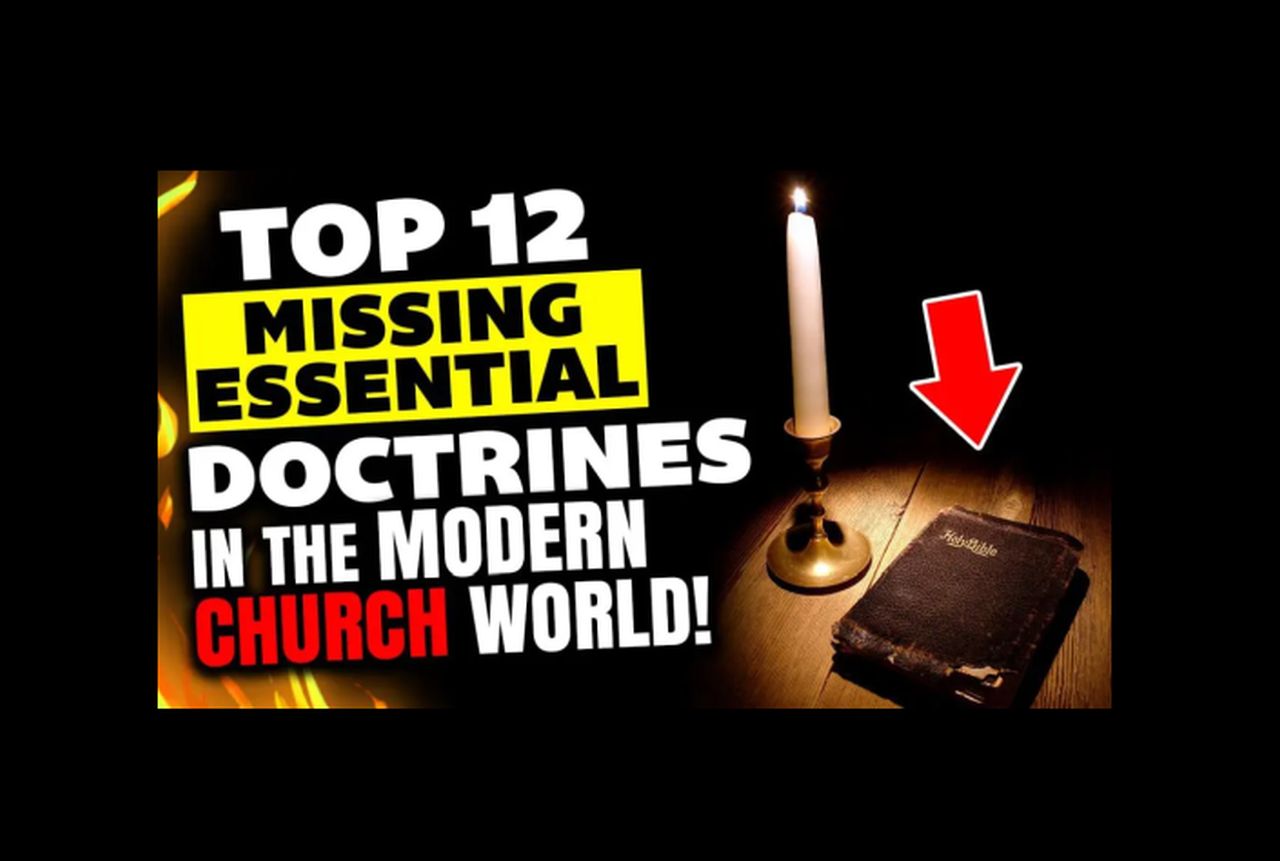
DOES THIS SOUND LIKE YOUR “CHURCH” OR FAVORITE PREACHER? It’s real simple… if they are not preaching the cardinal doctrines of the original Gospel given to us in the New Testament, they are preaching “another gospel” and are “accursed.” (Galatians 1:6-9).
 “For MANY DECEIVERS ARE ENTERED INTO THE WORLD, who confess not that Jesus Christ is come in the flesh. This is a deceiver and an antichrist. 8 Look to yourselves, that we lose not those things which we have wrought, but that we receive a full reward. 9 Whosoever transgresseth, and abideth not in the doctrine of Christ, hath not God. He that abideth in the doctrine of Christ, he hath both the Father and the Son. 10 If there come any unto you, and bring not this doctrine, receive him not into your house, neither bid him God speed: 11 For he that biddeth him God speed is partaker of his evil deeds.” 2 John 1:7-11
Modern church wolves refuse to preach the original Gospel of Jesus Christ from the pages of Holy Scripture and in the power of the Holy Ghost. No, instead they preach sermonettes that cater to the self-worshiping idolaters they entertain and collect money from (2 Timothy 3:1-7). They don’t even use the King James Bible but rather some cheap counterfeit. Their ear-tickling topics range from healing damaged emotions, 5 love languages, best life now, recovery, learning to love yourSELF, coping platitudes, loneliness, psychobabble band aids, law of attraction, being a successful single, purpose driven delusionment, etc.
LOTS of lying going on when we have counterfeits peddling affirmation without salvation, the “promise” of things “getting better” when their prey are heading straight to hell. Especially certain social media platforms are flooded with this false gospel coming out of “Christians.” There is no sin or repentance in their message which alone identifies it as a false gospel. You see, the things that are happening to the sinners around us are allowed by God in order to lead them to repentance and yet, the counterfeits among us are assuring those sinners it’s all going to get better and never giving them the 10 Commandments to show them they are sinners (Galatians 3:24) and then, leading them to Jesus (Romans 10:9-10, 13, etc.). 10 Commandments Evangelism
In the modern church world, there is …..
No cross. No Jesus. No blood. No judgment. No sin. No repentance. No hell. No readiness for the soon return of Jesus. No Heaven. No equipping preparation for ministry. No Scripture memory. No holiness. No Messianic prophecies and their fulfillment. No Christology. No fear of God. No repentance. etc., all of which are Bible doctrines essential to salvation and/or essential to sound foundation in Christ and are missing in the modern church world.
“Study to shew thyself approved unto God, a workman that needeth not to be ashamed, rightly dividing the word of truth.” 2 Timothy 2:15
THE TOP ESSENTIAL BIBLICAL DOCTRINES NEVER HEARD IN THE APOSTATE MODERN CHURCH WORLD!
- The divinity of Jesus Christ (John 1:1-4, 14; 1 Timothy 3:16). | Jesus Christ is God
- The virgin birth of the only begotten Son of God (Isaiah 7:14; Matthew 1:23). | The Virgin Birth of Jesus
- The essential precious blood of Jesus Christ (Matthew 26:28; Hebrews 9:22; 1 Peter 1:18-19). | The Blood
- The inherent fallen nature of mankind (Genesis 6:5, 12; Jeremiah 17:9; Romans 7:18). | Fallen, Sinful Man
- Worshipping God not idols (Exodus 20:3-5). | Idolatry
- The essential doctrine and necessity of repentance (Luke 13:3). | Repentance
- The Return of Christ and being ready for it (Luke 12:40; 21:34-36). | The Return
- Who Jesus is returning for and who will be shut out of His eternal kingdom (Matthew 25:1-13; Ephesians 5:25-27). | Ready for Christ’s Return
- The essential of enduring to the end to be with Christ eternally, initial and final salvation (Matthew 10:22; 24:13; Hebrews 3:6, 12-15; 10:26-30; Revelation 2:26). | Enduring to the End
- The essential daily cross, the crucified life, which Jesus required in following Him (Luke 9:23-24). | Living the Crucified Life
- Forgiving all others from the heart (Matthew 18:21-35). | Forgiveness
- Walking in God’s love (Ephesians 5:1). | The Love Walk
- Holiness – including the necessity of personal holiness (Hebrews 12:14; 1 Peter 1:15-16). | Holiness
- Judgment (Psalms 9:15-17). | Judgment
- Hell (Matthew 8:12; Mark 3:29; Luke 16:19-31). | Hell
- Fearing God (Psalms 2:11; Luke 12:4-5). | Fearing God
When’s the last time you heard verses like this in the modern church?
 “So likewise, whosoever he be of you that forsaketh not all that he hath, he cannot be my disciple.” Luke 14:33
“Whosoever shall seek to save his life shall lose it; and whosoever shall lose his life shall preserve it.” Luke 17:33
The modern church is going down in flames into the flames of hell. It cannot be reformed. Come out from it.
“And I heard another voice from heaven, saying, Come out of her, my people, that ye be not partakers of her sins, and that ye receive not of her plagues.” Revelation 18:4
In 2 Timothy 4:3 to “endure sound doctrine” means to hold oneself accountable to it. WHAT’s at the root of those who refuse to “endure sound doctrine”? – They simply do not love Jesus like He commanded them to (Matthew 22:37-39). They profess Christ as Savior and yet love self supremely and therefore serve the god of self. The Holy Ghost through Paul told us this of those who have a mere “form of godliness” in the last day resumé found in 2 Timothy 3:1-7.
Notice by divine design the very first thing he reveals is that “men shall be lovers of their own selves.” All the following evil comes out of self love, refusal to love God supremely and therefore repent, deny self, take up the cross and follow Jesus:
“This know also, that in the last days perilous times shall come. 2 For men shall be lovers of their own selves, covetous, boasters, proud, blasphemers, disobedient to parents, unthankful, unholy, 3 Without natural affection, trucebreakers, false accusers, incontinent, fierce, despisers of those that are good, 4 Traitors, heady, highminded, lovers of pleasures more than lovers of God; 5 Having a form of godliness, but denying the power thereof: from such turn away. 6 For of this sort are they which creep into houses, and lead captive silly women laden with sins, led away with divers lusts, 7 Ever learning, and never able to come to the knowledge of the truth.” 2 Timothy 3:1-7
God is toppling all the heart idols (Ezekiel 14:3)… because He’s Jealous and wants us looking to Him and not these mere men, these vile wolves, these celebrity sinners posing as His representatives (Exodus 34:14).
“For thou shalt worship no other god: for the LORD, whose name is Jealous, is a jealous God:” Exodus 34:14
Support | STORE | Podcasts | The Return of Christ | Stewardship | Apostate Modern Church Exposed | Beware of the BUZZ WORD Bandits [podcast] | Preach the Word | Wolves Exposed

Abiding
Fulfilling Your Calling [podcast]

“And say to Archippus, Take heed to the ministry which thou hast received in the Lord, that thou fulfil it.” Colossians 4:17
MINISTRY which pleases God is simply helping people know and grow in Christ for themselves – by the cross life and getting into HIS Word for themselves so they can follow HIM, not you! True ministry fosters in the hearers faith in God, not the preacher or local church organization! Read 1 Corinthians 2:1-5; 2 Corinthians 1:9; 3:5; 4:5.
Your communications and ministry are fed and fueled by your personal daily study and knowledge of God’s Word (Proverbs 22:17-21; 2 Timothy 2:15).
Ephesians 4:1-14
“I therefore, the prisoner of the Lord, beseech you that ye walk worthy of the vocation wherewith ye are called, 2 With all lowliness and meekness, with longsuffering, forbearing one another in love; 3 Endeavouring to keep the unity of the Spirit in the bond of peace. 4 There is one body, and one Spirit, even as ye are called in one hope of your calling; 5 One Lord, one faith, one baptism, 6 One God and Father of all, who is above all, and through all, and in you all. 7 But unto every one of us is given grace according to the measure of the gift of Christ. 8 Wherefore he saith, When he ascended up on high, he led captivity captive, and gave gifts unto men. 9 (Now that he ascended, what is it but that he also descended first into the lower parts of the earth? 10 He that descended is the same also that ascended up far above all heavens, that he might fill all things.) 11 And he gave some, apostles; and some, prophets; and some, evangelists; and some, pastors and teachers; 12 For the perfecting (equipping, maturing) of the saints, for the work of the ministry, for the edifying of the body of Christ: 13 Till we all come in the unity of the faith, and of the knowledge of the Son of God, unto a perfect man, unto the measure of the stature of the fulness of Christ: 14 That we henceforth be no more children, tossed to and fro, and carried about with every wind of doctrine, by the sleight of men, and cunning craftiness, whereby they lie in wait to deceive;” Ephesians 4:1-14
Ephesians | Galatians Outline | Grounded in Grace | 100’s of Christ-centered, Scripture-rich podcasts for your edification in Christ. |
Support | STORE | Podcasts | Colossians | Upholding Jesus | H.O.T. Bible Study [podcast] | Divine Blessings | Exhort One Another Daily | The Return of Christ | The Joy of Fulfilling the Great Commission | The Love of Many Shall Wax Cold | Lie of the Ages (book) | Soul Damning Sins (small book) | Why We Need not Fear Death | Revelation Bombshell!


Abiding
Swept Away in the “Strong Delusion” [podcast]

Recorded at a fellowship in Houston, Texas
God Himself personally sends a “strong delusion” to all who do not love His truth so that they WILL believe lies. He greases their pole to hell. That’s how personally He takes it when people call Him a liar by not believing His Word.
“Even him, whose coming is after the working of Satan with all power and signs and lying wonders, 10 and with all deceivableness of unrighteousness in them that perish; because they received not the love of the truth, that they might be saved. 11 And for this cause God shall send them strong delusion, that they should believe a lie: 12 that they all might be damned who believed not the truth, but had pleasure in unrighteousness.” 2 Thessalonians 2:9-12
“Beware lest any man spoil you through philosophy and vain deceit, after the tradition of men, after the rudiments of the world, and not after Christ.” Colossians 2:8
Notice “of God” and “NOT of God”
“He that is OF GOD heareth God’s words: ye therefore hear them not, because ye are NOT OF GOD.” John 8:47
Support | STORE | Podcasts | Because You Care Page | The Greatest of these is Charity | Be Ready in the Morning [podcast] | The Sure Mercies of David [podcast] | That Repentance and Remission of Sins should be Preached [podcast] | At His Feet | Prepared to be Used of God | Grace and Truth Bible School [modules] | 7 Study Guides to a Greater Foundation in Christ








Top 12 Missing Essential Doctrines in the Modern Church World! [podcast]

Fulfilling Your Calling [podcast]

Swept Away in the “Strong Delusion” [podcast]

Jesus Saved Jose! Mission Mexico Part 51

Dead, Buried, and Raised Up Daily [podcast]

Nourished Up and Enduring to the End [podcast]

Naming Names: Is It Biblical? [podcast]

Paul’s Prophetic Vision of Heretical Wolves Flooding the Church World During the Whole New Testament Era [podcast]

The Surrender of the Cross [podcast]

Sola Scriptura vs the Catholic Church and its Traditions [podcast]

“Pastors According to Mine Heart” [podcast]

Ridiculous King James Bible Corrections

Darwin’s Demise: What they don’t want You to know about Charles Darwin! [podcast]

Beware of “Private Interpretation” [podcast]

The Benefits of Knowing and Delighting in the LORD [podcast]

John Wesley on Calvinism, Once Saved Always Saved, and Conditional Security

Why Did God Give Us His Word? [podcast]
Paul’s Prophetic Vision of Heretical Wolves Flooding the Church World During the Whole New Testament Era [podcast]
Beware of “Private Interpretation” [podcast]
Naming Names: Is It Biblical? [podcast]
Top 12 Missing Essential Doctrines in the Modern Church World! [podcast]

The Flesh will Never be Reformed it Must be Crucified [podcast]

The High Treason of False Leaders [podcast]
Nourished Up and Enduring to the End [podcast]

A PLACE CALLED HELL [podcast]
“Pastors According to Mine Heart” [podcast]

Arrogant Bible Correctors Rebuked

Nicolaitan Nightmare [podcast]
Sola Scriptura vs the Catholic Church and its Traditions [podcast]

Doubt Casting Wolves Exposed
Top 12 Missing Essential Doctrines in the Modern Church World! [podcast]
Fulfilling Your Calling [podcast]
Swept Away in the “Strong Delusion” [podcast]


 America2 years ago
The Drugging of America: The Pharmakeia Sorcery Deception [podcast]
- Articles3 years ago
Children being Rescued in Tunnels: Happening Now – UPDATE!
- Articles9 years ago
Self-Examination in Preparation for the Lord’s Return
- Apostasy3 years ago
SHOCKING List of False Prophets Most Believe are True